



Description
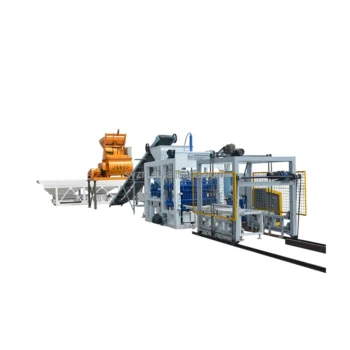
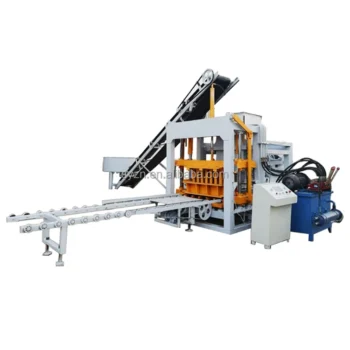
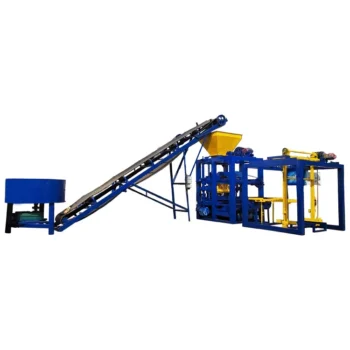
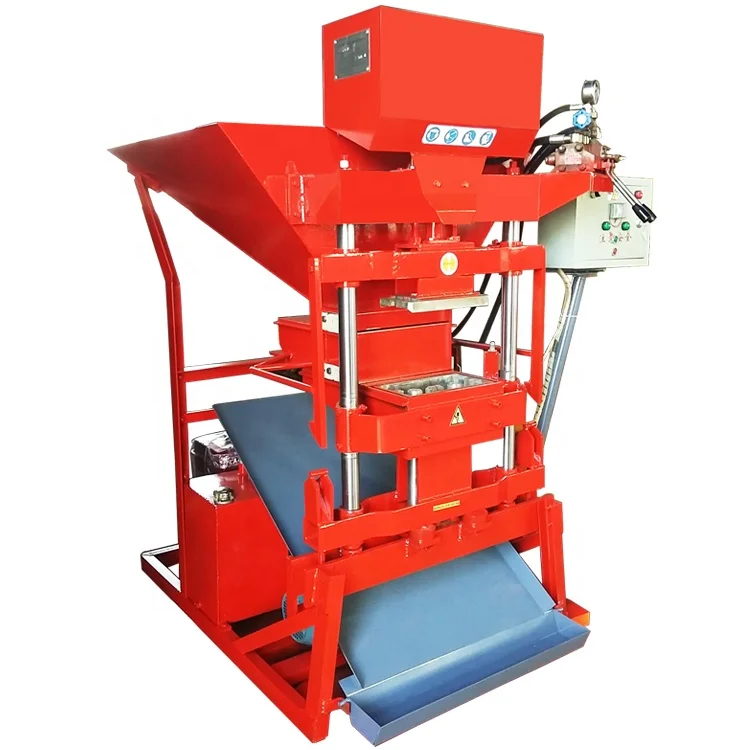
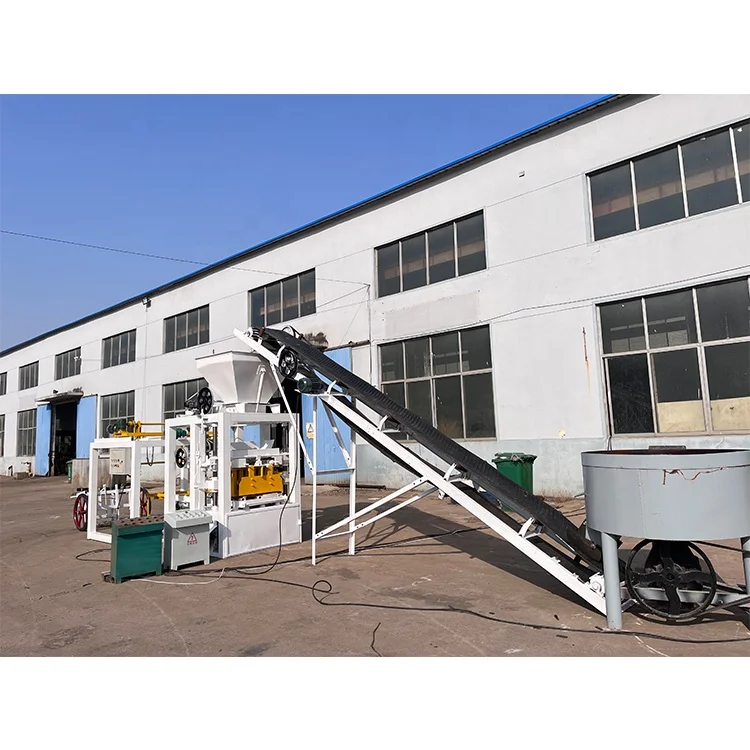
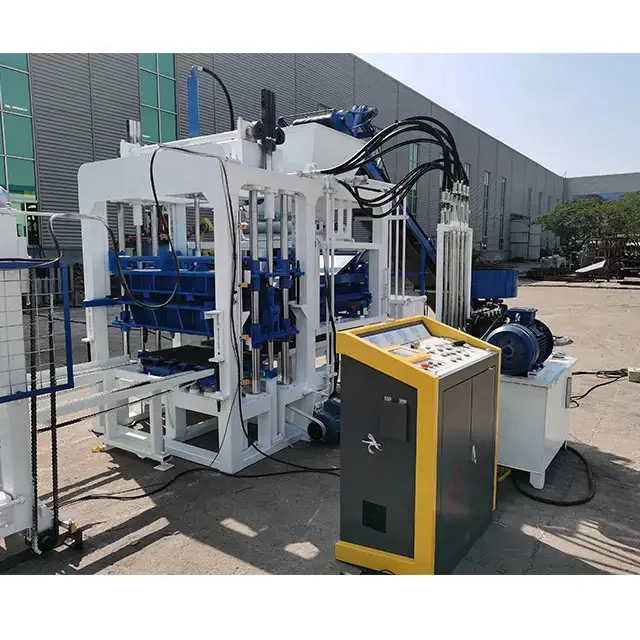
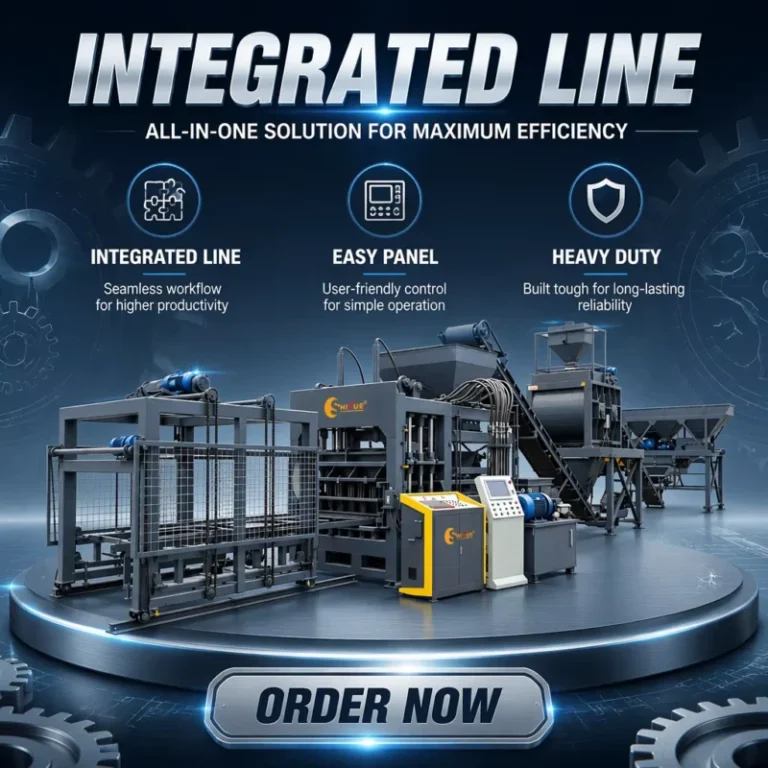
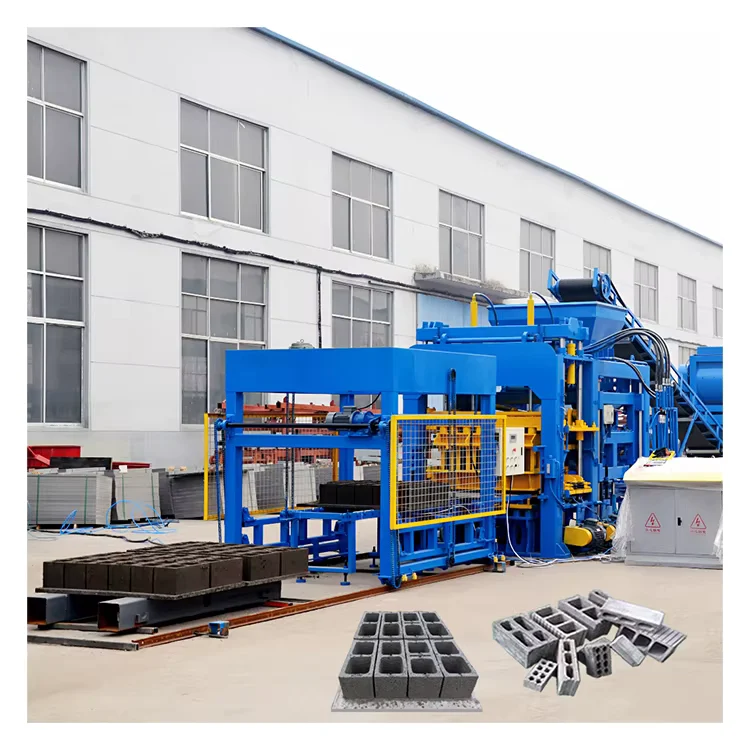
Ready-to-ship automation — This fully automatic line is pre-assembled and staged for immediate container loading, eliminating production wait times while keeping control configurations flexible for fast deployment.
Technical Specifications
| Parameter | Value |
|---|---|
| Model | QT 12-15 |
| Product Type | Fully Automatic Block Production Line |
| Production Capacity | 5,760 to 112,000 pcs/8hours (basis not stated in source — confirm block format and thickness) |
| Molding Cycle | 15s |
| Rated Pressure | 21 MPa |
| Main Vibration Form | Platform vibration |
| Pallet Size | 1350×850 mm |
| Dimension (L×W×H) | 9350×2520×2950 mm |
| Weight | 12,000 kg |
| Voltage | Local Voltage (configurable) |
| Core Components | PLC, Pressure Vessel |
| Key Features | Automatic operation, hydraulic pressure method, 2-year warranty on machine and core components |
Application Suitability
| Application | Material or Output |
|---|---|
| Hollow Block Production | Concrete and cement mixes for structural walls |
| Paving Block Production | High-density concrete for driveways and walkways |
| Interlock Block Production | Cementitious materials for dry-stack retaining walls |
| Curbstone Production | Heavy-duty concrete mixes for road edges and landscaping |
Why the Voltage Question Must Precede the Dispatch Date
Confirming the exact electrical standard prevents a three-week site delay.
When I oversaw the installation of a QT 12-15 automatic palletizer block making machine in Latin America years ago, the local voltage and frequency were not locked in before loading. The machine arrived, but the power supply did not match the PLC and motor requirements. The crew waited weeks for replacement transformers while the project deadline slipped away. Now, before any QT 12-15 block making machine in stock leaves our yard, the electrical schematic is verified against the buyer’s site data [NEED_CITE: voltage and frequency standards by export market]. Rushing a shipment without this step turns a fast delivery into a stalled project.
Staging and Loading for Immediate Transit
Speed matters when a construction milestone is at risk. The QT 12-15 block making machine in stock is dismantled into specific sub-assemblies that align with standard container dimensions. This pre-planned loading strategy means the mainframe, hydraulic station, and pallet feeders are secured quickly without last-minute cutting or welding at the port.
Securing the Arrival Timeline
Buyers working against strict handover dates need predictable logistics. By keeping the QT 12-15 fully automatic block production line ready for dispatch, we quote the arrival estimate upfront based on actual sailing schedules. The focus remains on getting the equipment through customs and onto the foundation without administrative hold-ups [NEED_CITE: typical maritime transit and customs clearance procedures for heavy machinery].
Matching Physical Footprint to Site Readiness
A fast delivery only works if the receiving site is prepared. The main host measures 9350×2520×2950 mm and weighs 12,000 kg, requiring a cured concrete foundation and adequate overhead clearance for unloading. The 1350×850 mm pallet size also dictates the layout of the adjacent curing area. Verifying these spatial requirements before the QT 12-15 block making machine in stock ships ensures the forklift and curing racks are positioned the moment the containers are opened.
The Hidden Cost of Overlooking Site Utilities
Assuming standard utility connections exist on a raw construction site leads to immediate downtime. If the local grid cannot support the peak draw of the hydraulic pumps and platform vibration motors, the main breaker trips during the first test cycle. Furthermore, if the control language on the PLC screen does not match the local operators, troubleshooting basic faults becomes a slow, error-prone process [NEED_CITE: common causes of commissioning delays in imported industrial equipment]. These oversights erase any time saved by fast shipping.
Why Procure From Our Shipping Yard
Our inventory approach treats the block machine, pallets, and handling equipment as a single matched system ready for the container. We do not assemble from separate suppliers when an order drops; the complete line is staged together. Dispatch lead times are based on actual yard availability, not factory queue estimates. Every outgoing unit is accompanied by loading photographs and verified packing lists to smooth border clearance. We focus entirely on the logistics of getting the plant to your site intact and on schedule.
Documentation & Verification
- Factory test record verifying hydraulic pressure and platform vibration before crating.
- Video outgoing-inspection showing the specific unit dismantled for loading.
- Packing photographs documenting container placement for customs review.
- Electrical schematic confirming the configured local voltage and PLC language.
- Customs documentation support tailored to the destination port requirements.
Installation, Commissioning & Support
- Foundation curing time must be calculated based on the 12,000 kg host weight.
- Dedicated power circuits must match the confirmed local voltage for the hydraulic pumps.
- Dismantled sub-assemblies are labeled for rapid reassembly upon container unloading.
- PLC display language is set prior to dispatch to ease operator familiarization.
- Initial molding cycle testing validates the 15s rhythm with your local aggregates.
- Wear parts for the 1350×850 mm pallet feeders are included in the first shipment.
Preparing Your Site for Immediate Unloading
To ensure the equipment moves straight from the port to your foundation, please provide your exact local voltage and frequency, along with the required PLC display language. We also need to know your available overhead clearance for unloading and the dimensions of your existing curing area to confirm the pallet handling layout.
Frequently Asked Questions
Q: What is the exact dispatch lead time and arrival estimate for this stocked machine?
A: Because this unit is already assembled and staged in our yard, the dispatch lead time is limited only to container booking and inland transport to the port. We provide an upfront arrival estimate based on current sailing schedules to your specific destination port, ensuring your project timeline remains predictable from the moment the order is confirmed.
Q: How is the machine dismantled and loaded into containers for fast shipment?
A: The 9350 mm mainframe and supporting stations are broken down into predefined sub-assemblies that fit standard shipping containers without requiring custom flat racks. This planned dismantling allows for rapid loading at our yard and straightforward unloading at your site, avoiding delays associated with oversized cargo handling at the port.
Q: Are standard moulds and pallets included in the ready-to-ship package?
A: Yes, the stocked package includes the standard moulds configured for your requested brick sizes and the matching 1350×850 mm pallets. Including these components in the initial container loading prevents the press from sitting idle while waiting for secondary shipments of essential forming and handling accessories.
Q: Can voltage and control language be confirmed and adjusted quickly before dispatch?
A: Absolutely. Before the equipment is crated, we verify your site’s exact electrical frequency and voltage to configure the motors and PLC. We also set the control display to your preferred language. This final check prevents the multi-week delays I have seen in the past when electrical mismatches are only discovered during on-site commissioning.
Q: What customs documentation support is provided to expedite import clearance?
A: We supply a complete set of export documents, including detailed packing lists, commercial invoices, and machinery test reports. We also provide photographs of the container loading process. This documentation package is formatted to meet the specific import requirements of your destination country, helping your broker clear the cargo without administrative holds.