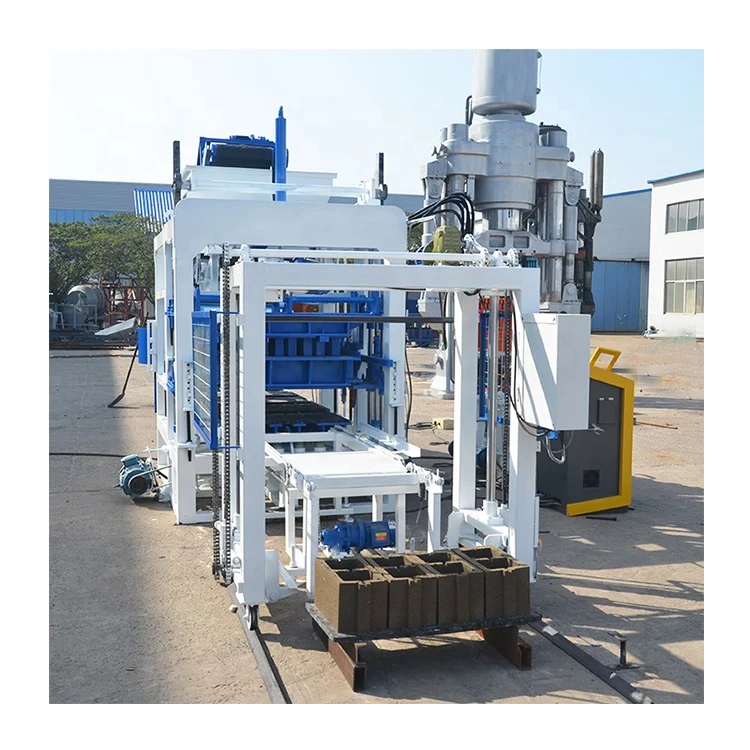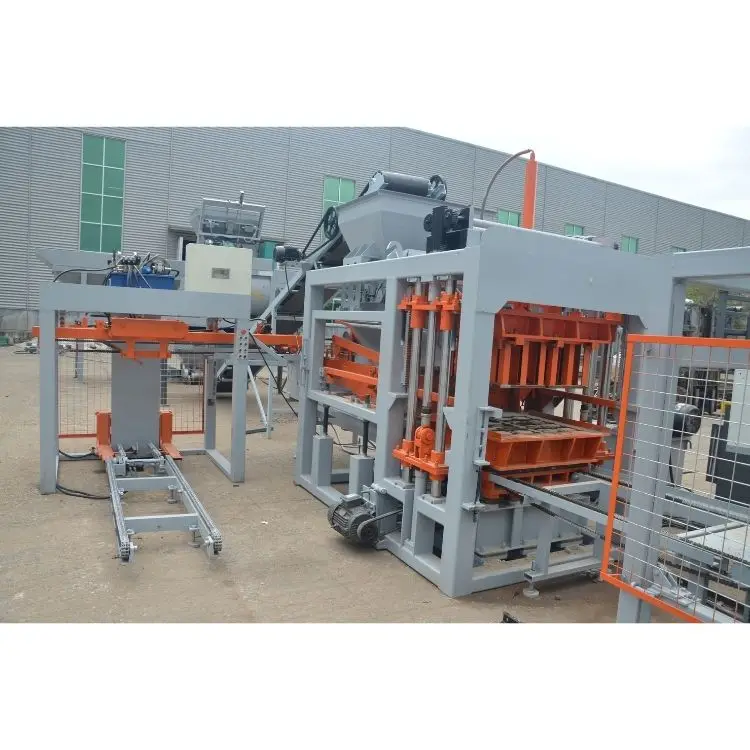
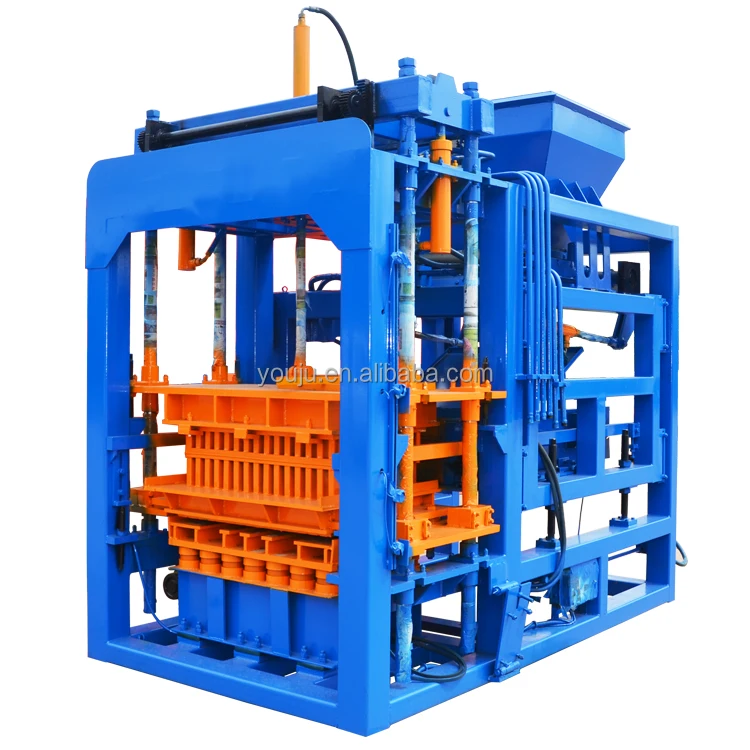
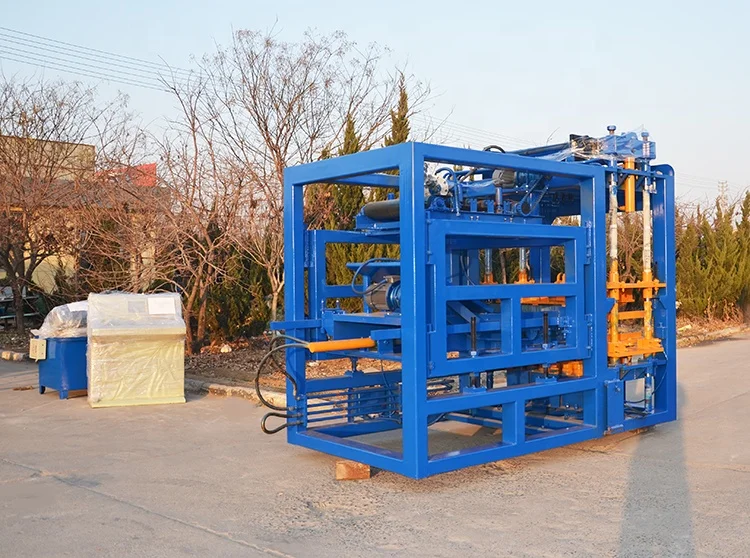
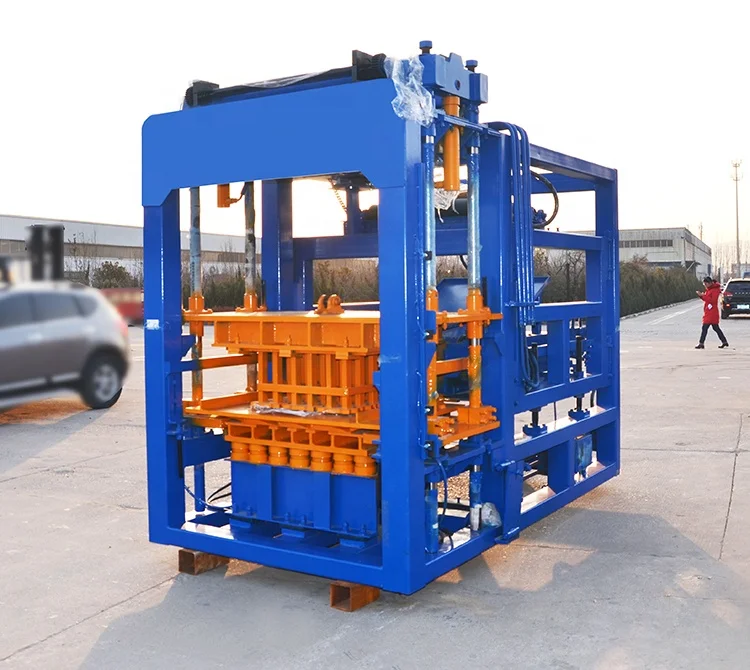
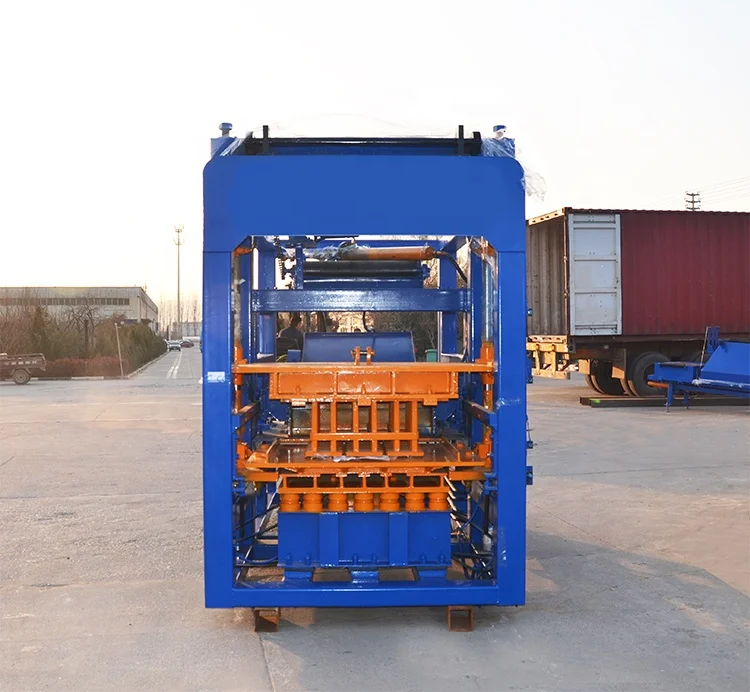
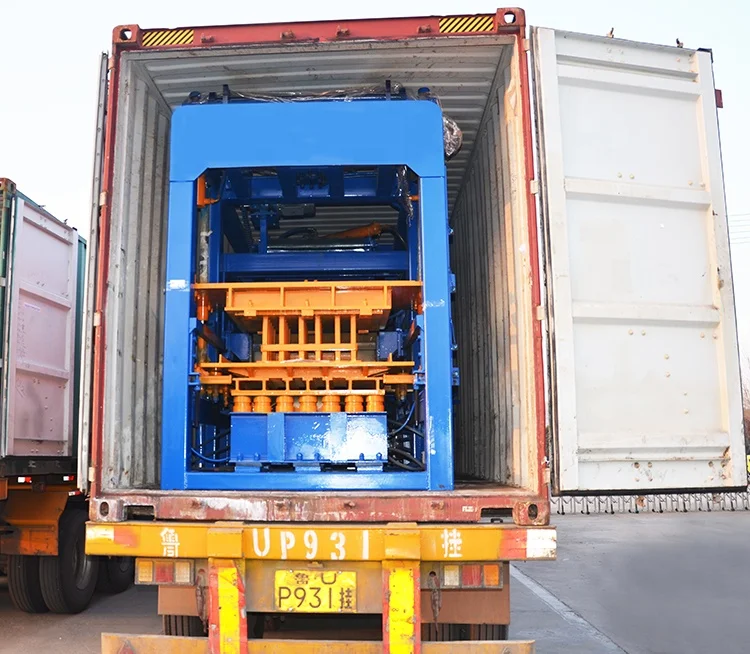
Description
Fast dispatch from stock — We confirm your raw material, voltage, and block format before any stocked QT6-15 leaves the factory, so arrival means plug in and produce, not recalibrate on site.
Technical Specifications
| Parameter | Value |
|---|---|
| Model | QT6-15 |
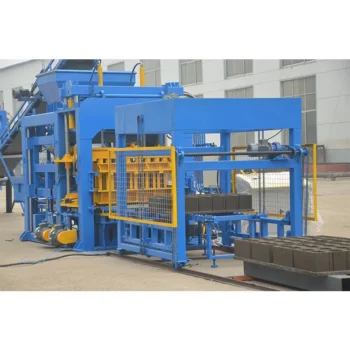
| Product Type | Semi-Automatic Concrete Block Making Machine |
| Molding Way | Vibration and hydraulic pressing |
| Rated Pressure | 21 MPa |
| Molding Cycle | 15s–20s (basis not stated in source — confirm block format / material / thickness) |
| Pallet Size | 900×700 mm |
| Main Machine Weight | 6000 kg |
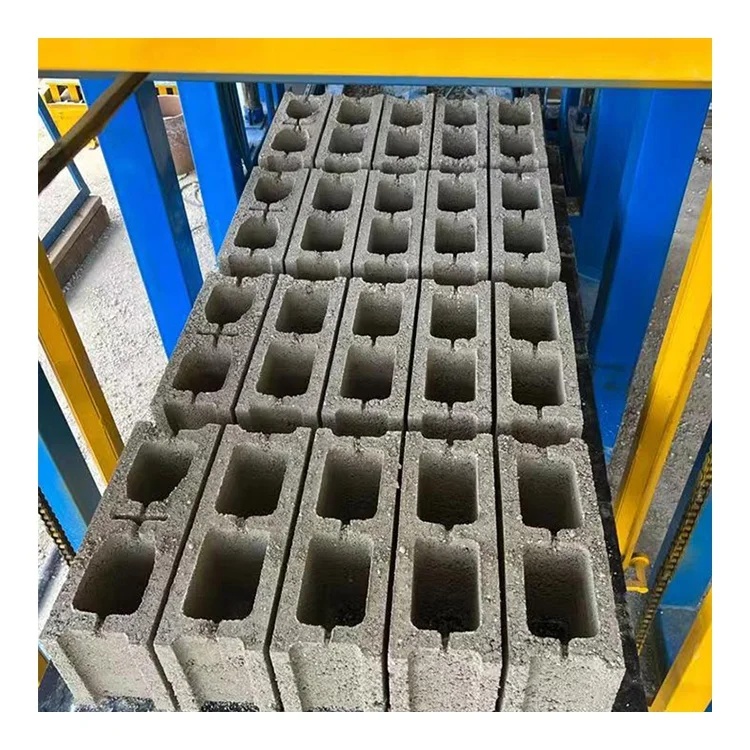
| Output — Hollow Block 400×200×200 mm | 1440 pcs/h, 11520 pcs per 8 h (6 pcs/pallet, theoretical — basis to be confirmed) |
| Output — Paving Brick 200×100×60 mm | 5040 pcs/h, 40320 pcs per 8 h (21 pcs/pallet, theoretical — basis to be confirmed) |
| Output — Solid Brick 240×115×53 mm | 7680 pcs/h, 61440 pcs per 8 h (32 pcs/pallet, theoretical — basis to be confirmed) |
| Raw Materials | Cement, sand, fly ash, stone powder, slag |
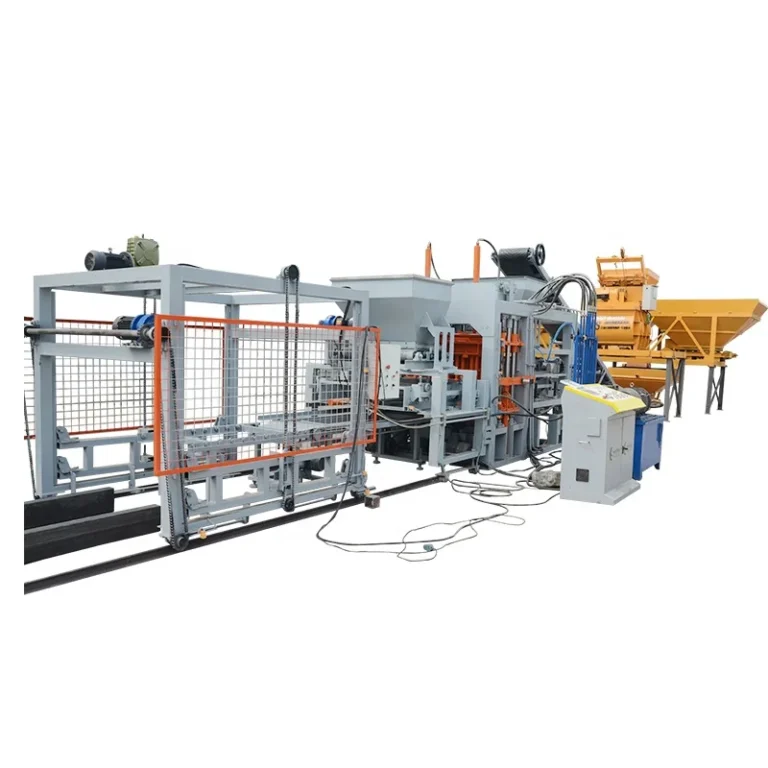
| Simple Line Configuration | JS500 mixer, 8 m belt conveyor, automatic stacker |
| Full Automatic Line Option | Cement silo, screw conveyor, cement scale, batching machine, pallet feeder, pallet separator |
| Included Moulds | One hollow block mould and two hydraulic cars (with simple line) |
| Mobility | Factory-installed wheels for on-site repositioning |
| Voltage | Configurable to local supply (value to be confirmed before dispatch) |
| Control Language | To be confirmed before dispatch |
| Warranty | 1 year (excluding wear parts) |
Application Suitability
| Application | Material or Output |
|---|---|
| Hollow block production for residential and commercial walls | Cement mixed with fly ash, sand, or stone powder |
| Paving brick manufacturing for walkways and parking areas | Crushed stone aggregate with cement binder |
| Solid brick production for load-bearing masonry | Sand and cement or slag-based concrete mix |
| Kerbstone forming for road and curb-side projects | Coarse aggregate concrete with hydraulic pressing |
| Color pavement brick for landscaping | Pigmented cement mix with fine aggregate |
What "11520 Blocks per Shift" Actually Requires on Site
Quoted capacity assumes a specific block format, mix design, and cycle time — change any one of those and your daily output shifts accordingly.
When a buyer reads a number like 11520 hollow blocks per eight-hour shift, the figure only holds if the raw material matches the test conditions, the operator maintains the stated cycle, and the curing logistics keep pace. In practice, a semi automatic block machine in stock ships with parameters set for one reference mix. If the local aggregate at your site has a different moisture content or particle shape, the vibration and pressure settings need adjustment before the first pallet of blocks meets strength requirements. I have watched crews spend their first week chasing crumbling blocks simply because the fly ash they sourced locally behaved nothing like the river sand used during factory testing [NEED_CITE: common causes of low block strength on commissioning].
Stock Readiness and Dispatch Timing
The QT6-15 is held as a stocked unit so that buyers working against a project deadline can move from order confirmation to container loading in a compressed window. Before dispatch, we verify that the included hollow block mould matches the format you actually sell in your market, and that the simple line package — JS500 mixer, 8 m belt conveyor, and automatic stacker — fits your available floor space. Confirming these details upfront prevents the situation where a semi automatic block machine in stock arrives on site only to sit idle while a missing auxiliary is sourced locally.
Matching the Machine to Your Local Aggregate
Vibration force and hydraulic pressure must be matched to your specific mix. The QT6-15 delivers 21 MPa rated pressure with adjustable vibration, but those settings only produce consistent block strength when calibrated against the raw materials you will actually feed into the JS500 mixer. I once recalibrated a machine on site for three days because the buyer switched from river sand to a high-absorption fly ash after the factory test, and the original vibration profile left every block fragile at the edges. We now ask for a sample or specification sheet of the intended aggregate before any semi automatic block machine in stock ships [NEED_CITE: effect of aggregate moisture on vibration compaction].
Understanding Cycle Time, Pallet Size, and Line Throughput
The 15s–20s molding cycle stated for the QT6-15 applies to a reference format and material thickness; denser mixes and taller blocks typically extend this window. The 900×700 mm pallet size governs not just the press output but also the curing rack dimensions, the forklift tine spacing, and the stacking pattern your crew will use daily. Choosing a pallet size without considering the existing curing area means blocks may end up stacked by hand in an unplanned yard space. The 6000 kg main machine weight requires a level concrete pad with adequate bearing capacity, and the factory-installed wheels allow repositioning during initial setup but not once full production begins. Understanding these dependencies prevents bottlenecks that have nothing to do with the press itself.
The Hidden Cost of Shipping Without Confirmation
When voltage, frequency, and PLC display language are left unconfirmed before dispatch, the machine arrives ready to produce but unable to start. A motor wound for a voltage that does not match the local grid will not simply underperform — it will overheat and trip protection circuits, and a replacement winding takes weeks. Similarly, if the control interface displays in a language the operator cannot read, parameter adjustments during the first production runs become guesswork. These are not engineering failures; they are communication gaps that delay commissioning and cost real money in idle labor and missed delivery commitments [NEED_CITE: voltage and frequency standards by export market].
Why Procurement Through This Channel Works
Block machinery is our single focus, so the QT6-15 is specified as a matched system — machine, mould, pallet, and handling — rather than assembled from separate suppliers. The simple line configuration ships together, meaning the mixer capacity, conveyor length, and stacker stroke are coordinated before loading. Dispatch lead time is quoted at inquiry stage, not buried in fine print, so your project timeline stays intact. Packing photographs and customs documentation are prepared before the container leaves the yard, smoothing import clearance. Every stocked machine carries the same verification process as a custom build: factory test record, hydraulic and electrical schematic, and a confirmed voltage and control language sheet [NEED_CITE: CE machinery directive requirements for industrial equipment].
Documentation & Verification
- Factory test record on the specific block format included in your order before dispatch
- Machine specification sheet confirming pallet size, pressure rating, and weight
- Hydraulic and electrical schematic matching the as-shipped configuration
- Voltage and control language confirmation signed off prior to container loading
- Mould drawing and format list for every mould included in the shipment
- Packing photographs taken during container loading for customs reference
Installation, Commissioning & Support
- Level concrete pad required for the 6000 kg main machine with anchor bolt provisions
- Dedicated power circuit matching confirmed voltage and frequency for the JS500 mixer and hydraulic system
- Machine ships partially dismantled; reassembly of hopper and conveyor on arrival before first run
- Vibration and pressure calibrated on site against your actual raw material mix during commissioning
- Operator training covers mould change procedure, cycle adjustment, and daily lubrication points
- Wear parts list provided with recommended reorder intervals for hydraulic seals and mould liners
Before You Request a Quote
Tell us which block formats your market demands and the daily volume you need to sustain. Share the raw materials available locally — whether sand, fly ash, stone powder, or slag — and any test reports you have. Confirm the site voltage and frequency, the control language your operators prefer, and the curing space you have available so we can verify the 900×700 mm pallet fits your existing layout.
Frequently Asked Questions
Q: Which QT6-15 configurations are currently available for immediate dispatch?
A: The semi-automatic simple line — main press, JS500 mixer, 8 m belt conveyor, automatic stacker, and one hollow block mould — is typically held in stock. Full automatic line components such as the cement silo and batching machine are configured to order. Dispatch timing depends on mould availability and the voltage confirmation step, which we complete before loading.
Q: How is the machine prepared for container loading and what arrival window should I plan for?
A: The QT6-15 is partially dismantled for loading: the hopper, conveyor, and stacker are separated from the main press to fit standard container dimensions. We provide packing photographs and a loading plan before the container seals. Ocean transit time depends on the destination port and shipping line schedules, which we quote at inquiry stage.
Q: Can I add standard paving brick or solid brick moulds from stock with the machine?
A: Standard hollow block moulds ship with the simple line. Additional mould formats for paving bricks or solid bricks are subject to stock availability at the time of order. We confirm mould inventory and lead time during the quotation stage so there are no surprises before dispatch.
Q: What voltage options can ship immediately versus requiring a production run?
A: Common industrial voltages for stocked units are confirmed during the inquiry. If your site requires a non-standard voltage or frequency, the motor and control panel must be configured before dispatch, which adds a short production window. We always confirm these details before the machine enters the container.
Q: Is installation support available if my project has a tight deadline?
A: On-site commissioning and operator training can be scheduled to align with your project timeline, subject to travel logistics and visa requirements. We recommend confirming installation dates at the order stage so that support personnel are reserved for your window, especially during peak construction seasons.