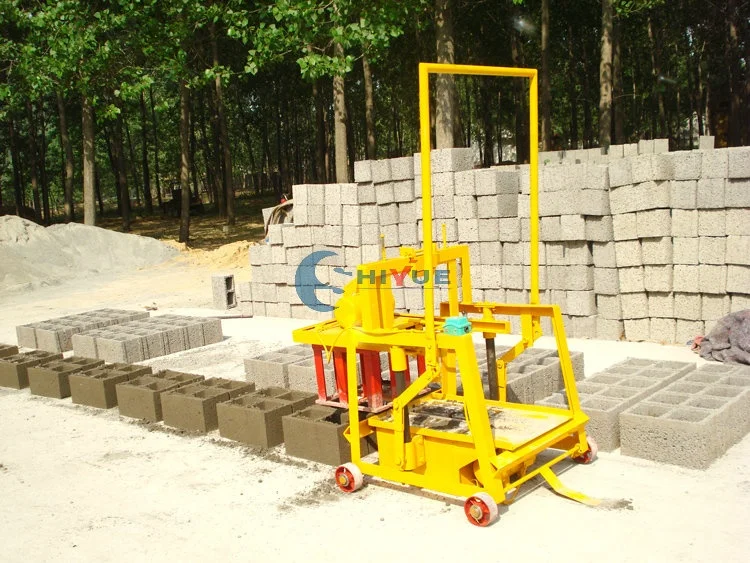
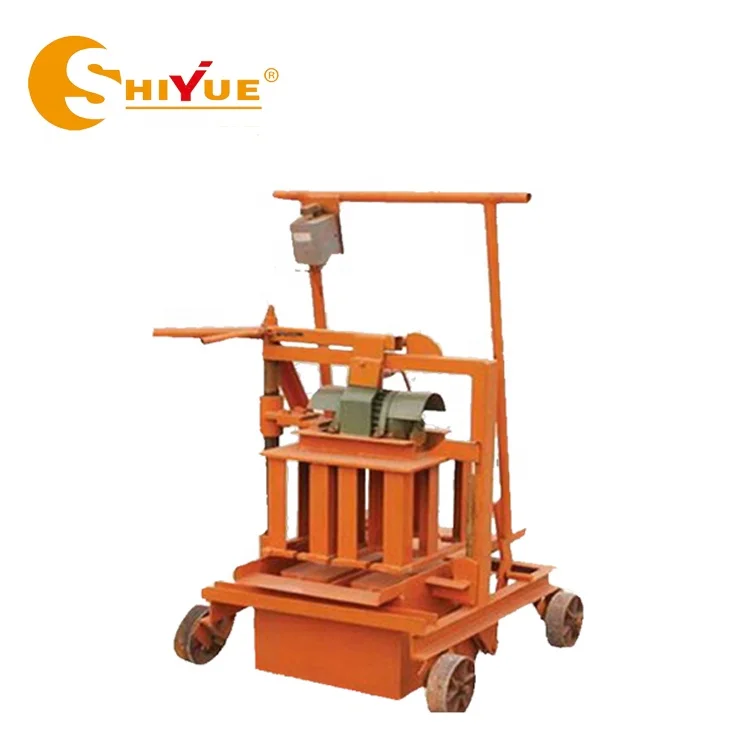
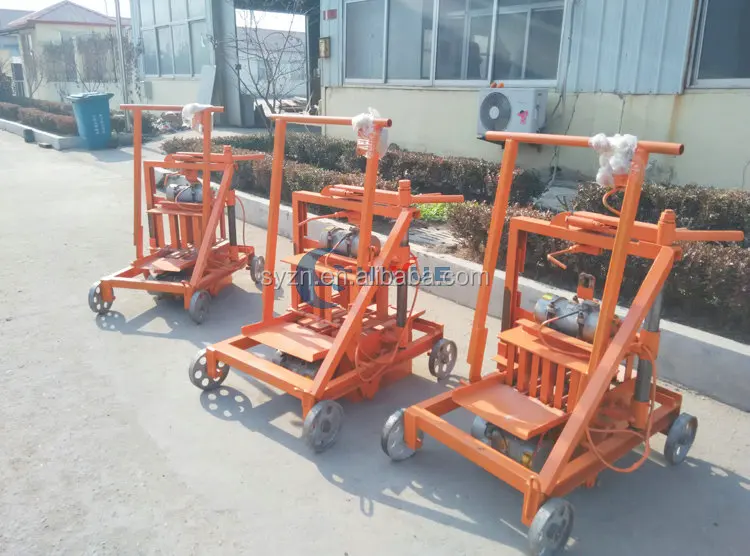
Description
Dispatch-ready configuration — we treat the QMJ2-45 as a matched system from press through spare mould parts, so it arrives on your site with everything needed to run the first shift.
Technical Specifications
| Parameter | Value |
|---|---|
| Model | QMJ2-45 |
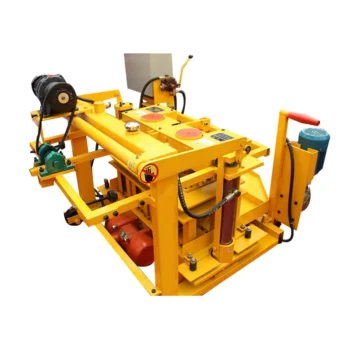
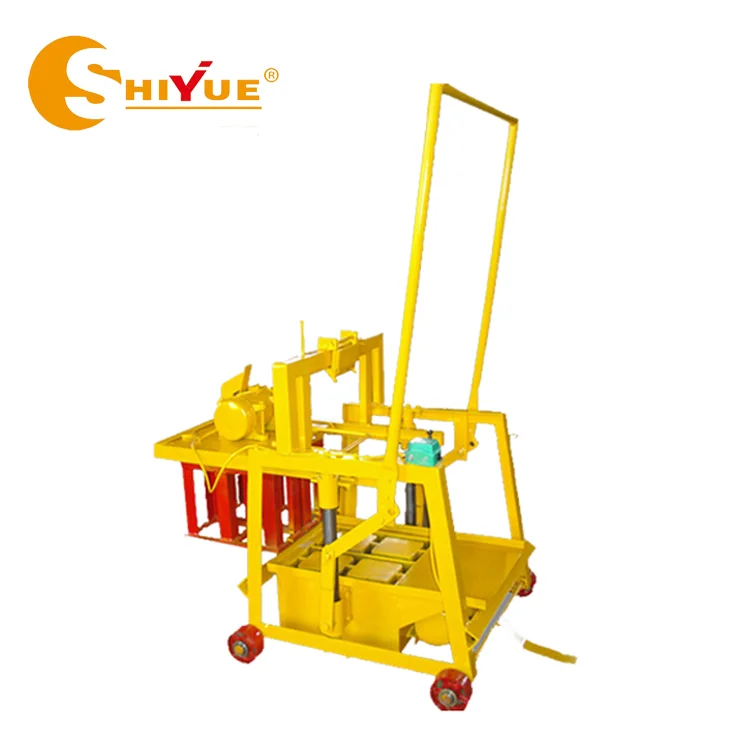
| Product Type | Mobile Mini Portable Cement Block Making Machine |
| Mould Format | Hollow brick (400×200×200mm) |
| Mould Format | Hollow brick (400×150×200mm) |
| Mould Format | Hollow brick (400×100×200mm) |
| Molding Cycle | 25–30s per mould |
| Output Capacity | 160 pcs/hour based on 400×200×200mm hollow brick |
| Output Capacity | 320 pcs/hour based on 400×100×200mm hollow brick |
| Automation Level | Manual operation |
| Pallet Requirement | No pallets required |
| Power Source | Engine-driven (fuel type to be confirmed for destination) |
| Labor Requirement | 1 to 3 workers |
| Mobility | Mobile, egg-laying design |
| Mould Change | Manual swap between hollow brick formats |
| Key Features | No fixed plant needed, operates in small spaces, no pallet procurement |
Application Suitability
| Application | Material or Output |
|---|---|
| On-site hollow block production for building contractors | Crushed stone, sand and Portland cement mixes |
| First block plant for entrepreneurs with limited space | Local aggregate with cement binder, no curing rack system |
| Remote housing and infrastructure projects | Standard concrete hollow blocks in 400×200, 400×150 and 400×100 formats |
| Building material distributors stocking for fast turnover | Mobile production deployed directly to buyer job sites |
Why "Cycle Time" Means Nothing Without the Block Format
A 25–30 second cycle only tells half the story unless you know which block size it applies to.
When a supplier quotes cycle time without naming the format, buyers often assume the fastest number applies to their largest block. On the QMJ2-45, the 25–30 second mould cycle produces different hourly volumes depending on whether you are pressing 400×200×200mm units or the narrower 400×100×200mm variant. [NEED_CITE: block format impact on daily output calculations] Over a full shift, that gap between expectation and reality can mean hundreds of blocks — and it compounds across a project timeline. We state the format alongside every capacity figure so you can plan your site schedule honestly.
Stock Status and What Ships This Week
The QMJ2-45 mobile block machine is held in stock configuration, meaning the press, engine, and standard hollow brick moulds are assembled and factory-tested before your order is confirmed. Dispatch does not wait for a production slot. Once you confirm destination port and mould format selection, we schedule container loading within the current dispatch cycle.
Container Loading and Arrival Timeline
Loading a mobile egg-laying machine requires partial dismantling of the hopper and mould guard to fit standard container door clearances. We photograph every stage — from bolt removal to crate securing — so you have packing evidence before the container is sealed. Estimated transit time is quoted against your destination port at the quotation stage, not after payment. [NEED_CITE: container loading methods for mobile block machines]
How the No-Pallet Design Changes Your Site Layout
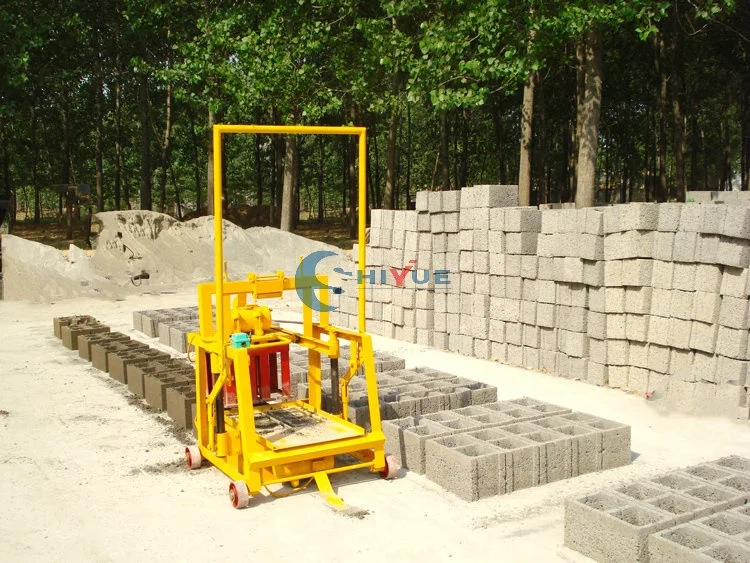
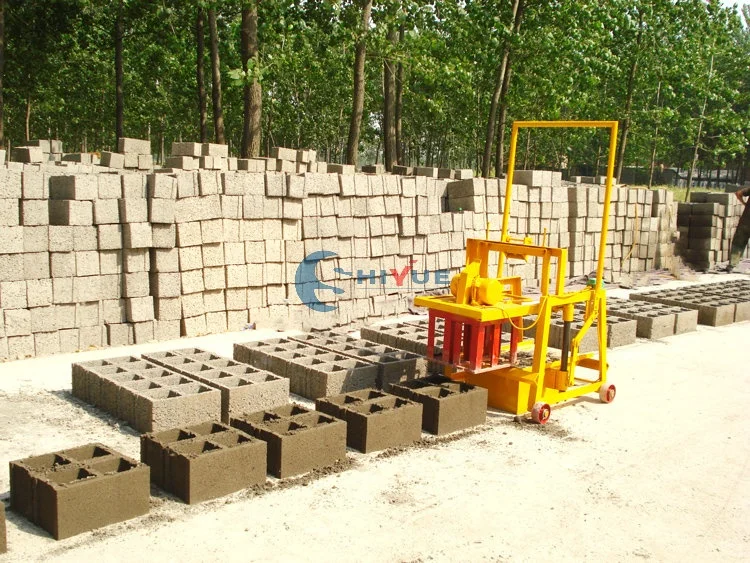
The egg-laying principle means the QMJ2-45 deposits each block directly onto the ground and moves forward, leaving the product to cure in place. This eliminates pallet purchasing, pallet storage, and the curing rack infrastructure that a static press demands. For contractors working inside a fenced project boundary, the space saving is immediate: you produce where you build, and the only handling is moving finished blocks after cure. Three mould formats — 400×200×200, 400×150×200, and 400×100×200mm — let you switch between wall, partition and infill blocks with a manual mould swap rather than a separate machine.
Reading the Numbers That Actually Matter on Site
The 25–30 second mould cycle is the mechanical rhythm of the press, but daily output depends on how fast your crew feeds the mix and clears the cured blocks behind the machine. With one to three workers, the bottleneck shifts from the press itself to material supply logistics. Engine-driven power means you are not hunting for a 380V three-phase supply on a greenfield site — the machine carries its own power source, which is the reason mobile units end up on remote housing projects where grid connection is months away. Mould changeover between the three hollow formats is manual and mechanical; no hydraulic locks or PLC menus stand between you and the next block size.
What Happens When Spare Parts Were Not in the Container
I have watched a mobile block machine sit idle on a Peruvian job site for an entire month because a worn vibration plate had no local replacement and the supplier had not included spares in the shipment. The crew was paid to stand around. The project schedule slipped. [NEED_CITE: equipment downtime costs on remote construction sites] When the QMJ2-45 ships, hydraulic seals, mould liner plates and vibration wear components go into the same container. The goal is simple: the first replacement cycle should never stop production.
Why Buyers Source This Machine From Us
Single-focus block machinery sourcing means the press, moulds, and wear parts are specified as one matched set rather than assembled from unrelated factories. Dispatch documentation — including packing photographs and export paperwork — is prepared against your specific shipment, not pulled from a generic template. We confirm destination voltage and control language before the machine leaves the factory floor, eliminating commissioning delays. Stock-held models ship on a known timeline rather than a production estimate. Mould formats are selected to match what your local market actually sells, not what happens to be on the shelf.
Documentation & Verification
- Factory test record showing mould cycle timing on your selected hollow brick format
- Packing photographs documenting container loading and crate securing for your shipment
- Export customs documentation prepared with correct HS code for your destination country
- Mould drawing and format list for all three hollow brick sizes included at dispatch
- Operation manual with engine maintenance schedule matched to your fuel type
Installation, Commissioning & Support
- No fixed foundation required; level compacted ground is sufficient for the QMJ2-45 to begin production
- Engine-driven power source removes the need for site electrical installation before first run
- Mould guard and hopper re-assembly on arrival using the bolt map photographed before shipment
- First-shift production supervised remotely with mix ratio guidance for your local aggregate
- Spare wear parts — hydraulic seals and mould liners — included in the same container to cover initial replacement cycles
- Operator training covering mould change procedure between the three hollow brick formats
What We Need to Confirm Before You Order
Tell us your destination port so we can quote transit time alongside the machine price. Confirm which of the three hollow brick mould formats you need for your first production run — additional moulds can share the same container. Let us know your local aggregate type and cement grade so we can advise on mix proportions before the machine arrives on site.
Frequently Asked Questions
Q: Is the QMJ2-45 currently in stock and how quickly can it ship?
A: Yes, the QMJ2-45 mobile block machine is held in stock configuration with standard hollow brick moulds. Once you confirm destination port and mould selection, we schedule container loading within the current dispatch cycle. Transit time is quoted against your port at the quotation stage, not after payment is received.
Q: What is included in the container and how is the machine packed?
A: The container holds the QMJ2-45 press, engine, selected hollow brick moulds, and a spare wear parts kit. The hopper and mould guard are partially dismantled to fit container door clearances. We photograph every loading stage — from bolt removal to crate securing — and share those images before the container is sealed.
Q: Which mould formats come with the standard stock package?
A: The standard stock package covers three hollow brick sizes: 400×200×200mm, 400×150×200mm, and 400×100×200mm. You select which moulds ship with the machine. Additional formats or custom sizes can be manufactured and loaded into the same container if confirmed before the loading schedule closes.
Q: Can additional moulds and spare parts ship in the same container?
A: Yes. Additional moulds and extended spare parts kits share container space with the QMJ2-45 at no extra freight cost. We recommend including hydraulic seals, mould liner plates, and vibration wear components to cover your first replacement cycle and avoid the kind of month-long downtime I have seen on remote sites.
Q: What customs and export documentation do you provide?
A: We prepare export customs paperwork with the correct HS code for your destination country, commercial invoice, packing list, and factory test record. Packing photographs document the container loading for your insurance and clearance needs. All documentation is reviewed with you before the vessel departure date.