


Description
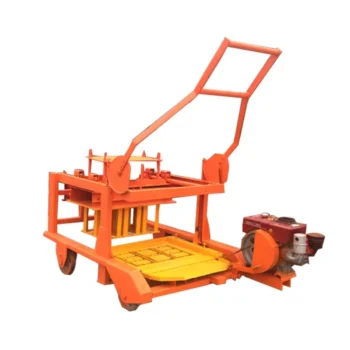
Diesel-Powered Mobility — the QMJ2-45 ships from stock with its own engine, eliminating grid-dependency delays that hold up site commissioning.
Technical Specifications
| Parameter | Value |
|---|---|
| Model | QMJ2-45 |
| Product Type | Mobile Block Making Machine |
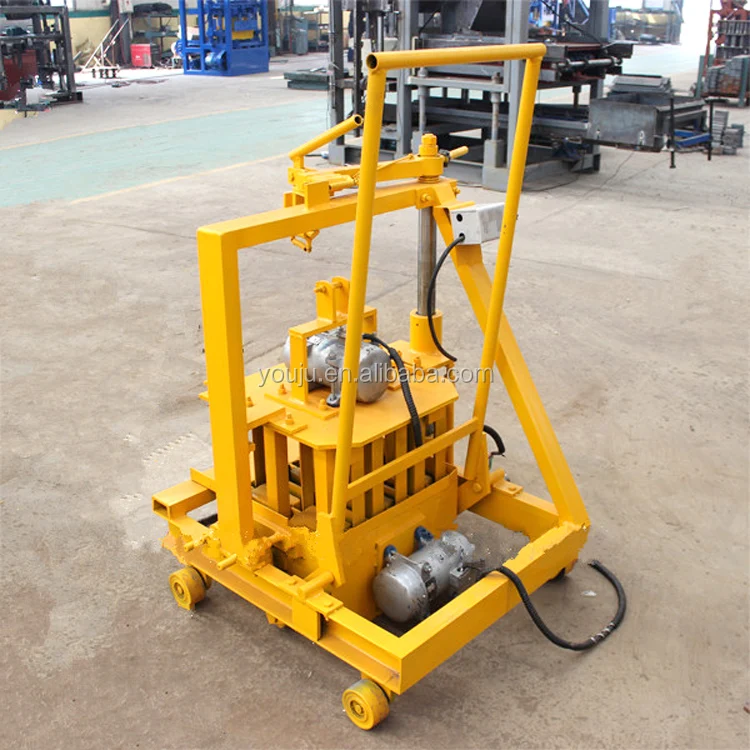
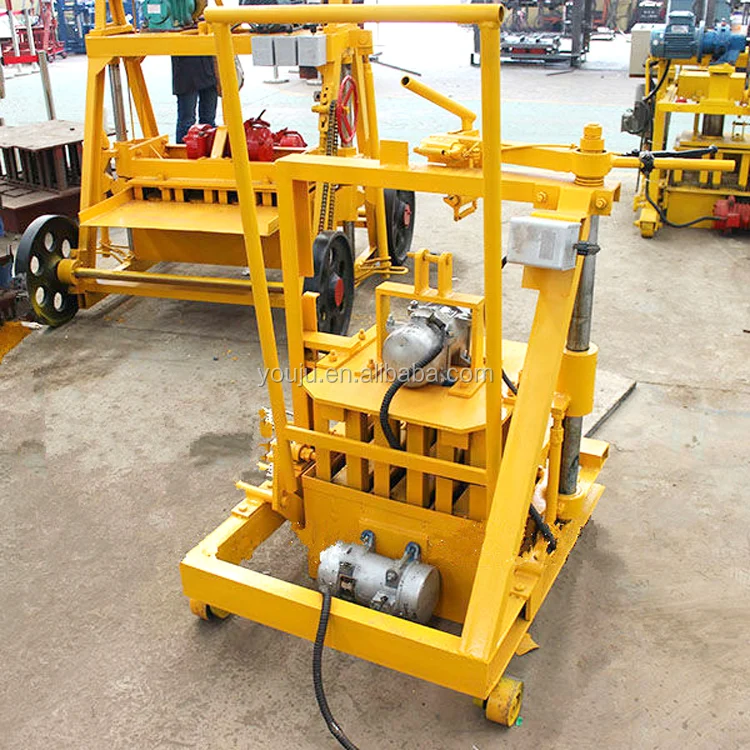
| Machine Type | Mobile, egg-laying block making machine |
| Operation Mode | Manual |
| Power Source | Diesel engine |
| Pallet Requirement | No pallets required |
| Labor Requirement | 1 to 3 workers |
| Output Capacity (400×200×200mm hollow brick) | 160 pcs/hour, 1280 pcs/8hr (basis: 2 pcs/mould, 25-30s cycle) |
| Output Capacity (400×150×200mm hollow brick) | 240 pcs/hour, 4800 pcs/8hr (basis: 3 pcs/mould, 25-30s cycle) |
| Output Capacity (400×100×200mm hollow brick) | 320 pcs/hour, 2560 pcs/8hr (basis: 4 pcs/mould, 25-30s cycle) |
| Molding Cycle | 25-30 seconds |
| Mould Change Method | Manual mould swap |
| Stacking Method | On-ground egg-laying (no pallet) |
| Automation Level | Manual / Mobile |
| Certification | ISO9001:2000, CE |
Application Suitability
| Application | Material or Output |
|---|---|
| On-site hollow block production | Crushed stone, sand, cement and water mix without a fixed batching plant |
| Remote construction sites | Off-grid locations with no reliable electrical supply, powered entirely by diesel engine |
| Small-scale block production | Limited footprint operations where fixed plant infrastructure is not justified |
| Housing project staging | Contractors producing blocks locally before the next build phase begins |
Why "In Stock" Matters More Than the Price Tag
A machine that ships this week produces blocks two months before one built to order.
When a housing project hits the masonry phase and the block supplier falls short, waiting through a typical multi-week production slot is not an option. A mobile block making machine in stock changes the critical path — it gets loaded, shipped, and arrives while a made-to-order unit is still in the assembly queue. I have watched project timelines slip because procurement focused on negotiation rather than dispatch readiness [NEED_CITE: typical lead time impact on construction phase scheduling].
The QMJ2-45 is configured for immediate container loading. Its diesel engine, manual operation, and zero-pallet design mean there are no ancillary components waiting on a separate supplier. What ships is a complete production unit, not a press waiting for its pallets and mixer to catch up.
From Stock Floor to Container in Days
Once the order is confirmed and payment clears, the QMJ2-45 moves from our Linyi stock floor to container loading within a short dispatch window. The machine is dismantled to fit standard container dimensions, with each component secured for ocean transit. Fast delivery on this model is possible precisely because it is a single, self-contained unit — no pallets to bundle, no batching plant to coordinate across different workshops.
What Fast Delivery Actually Includes
Dispatch speed only matters if the machine arrives complete and ready to run. Every QMJ2-45 we load gets a final walk-through before crating: moulds matched to the buyer’s confirmed block format, diesel engine tested under load, and a spare parts pack sealed with the shipment. Packing photographs are taken at each stage so the buyer sees exactly how their mobile block making machine in stock was secured before the container doors close [NEED_CITE: standard export packing procedures for heavy machinery].
Reading the Capacity Numbers Honestly
The output figures for the QMJ2-45 are tied directly to block format. At 400×200×200mm hollow bricks, two pieces per mould across a 25-30 second cycle yields 1,600 pieces in an eight-hour shift. Switch to the narrower 400×100×200mm format and four pieces per mould push that to 2,560 pieces in the same window. These are not interchangeable claims — the format you produce determines the output you achieve. Any supplier quoting a single headline number without naming the block format behind it is leaving the buyer to discover the gap on site.
The Hidden Cost of Ignoring Dispatch Details
A machine that arrives late or incomplete erases whatever advantage fast delivery was supposed to provide. I once shipped a diesel-powered unit where the control panel labels and engine manual were only in Chinese. The buyer’s operator could not read the start-up sequence, and commissioning stalled for days until we couriered translated documents. Now every QMJ2-45 leaving our floor has its documentation language confirmed against the buyer’s site crew before crating [NEED_CITE: common commissioning delays caused by language and documentation mismatches].
Skipping the dispatch checklist also means discovering at the port that customs paperwork is incomplete. A missing CE declaration or an incorrect HS code can hold a container at the destination terminal while demurrage charges accumulate day by day.
Why Buyers Source This Model From Our Stock
Our Linyi facility holds QMJ2-45 units as a single-focus block machinery operation, so the engine, moulds, and manual handling components are specified as one matched system rather than assembled from separate vendors. We confirm the mould format list against the buyer’s market demand before loading, ensuring the machine produces the blocks that actually sell locally. Dispatch lead time and arrival estimates are quoted upfront so project planners can lock the machine into their critical path. Factory test records and packing photographs are shared before the container is sealed, giving the buyer visibility at every handoff point.
Documentation & Verification
- Factory test record run on your specified hollow brick format before dispatch
- Mould drawing and format list confirming which block sizes ship in the container
- CE declaration and ISO9001:2000 documentation for destination customs clearance
- Packing photographs documenting crating and container loading stage by stage
- Diesel engine specification sheet with maintenance intervals and spare part numbers
Installation, Commissioning & Support
- No fixed foundation needed — the QMJ2-45 lays blocks directly on level ground at your site
- Diesel engine eliminates electrical hookup, so no dedicated circuit or transformer is required
- Machine arrives partially dismantled and is reassembled on-site within a single working day
- First production run supervised to confirm 25-30 second molding cycle on your local aggregate mix
- Operator training covers manual mould change procedure for all included block formats
- Spare wear parts pack included in shipment to cover initial production period
Before You Request a Quote
To confirm stock availability and match the QMJ2-45 to your project timeline, we need your target block format and daily output requirement, the destination port for arrival estimation, and the number of additional moulds you want loaded into the same container. Sharing your local aggregate type helps us verify the mix will work with this machine’s manual compaction method.
Frequently Asked Questions
Q: Is the QMJ2-45 currently in stock and how fast can it ship?
A: We hold QMJ2-45 units in stock at our Linyi facility. Once the order and mould format selection are confirmed, the machine moves to container loading within a short dispatch window. Exact timing depends on the current stock position and your confirmed configuration, which we verify at the inquiry stage.
Q: How is the machine loaded into a container and what dismantling is required?
A: The QMJ2-45 is partially dismantled to fit standard container dimensions. Components are secured with bracing and blocking for ocean transit. Packing photographs are taken at each loading stage and shared with the buyer before the container is sealed and dispatched.
Q: What is the estimated arrival time to my port after dispatch?
A: Arrival time depends on the destination port and current shipping schedules. We provide an estimated arrival window at the quotation stage so you can plan against your project deadline. Transit duration is quoted upfront along with the dispatch date.
Q: Which mould formats ship with the machine and can I add more to the same container?
A: The QMJ2-45 ships with moulds for 400×200×200mm, 400×150×200mm, and 400×100×200mm hollow bricks by default. Additional moulds for other block formats can be included in the same container, maximizing the shipment and reducing per-unit freight cost.
Q: What customs documentation is provided to avoid clearance delays?
A: Each shipment includes a CE declaration, ISO9001:2000 certificate, commercial invoice, packing list, and bill of lading. We prepare customs documentation support tailored to the destination country requirements to minimize hold-ups at the port of entry.