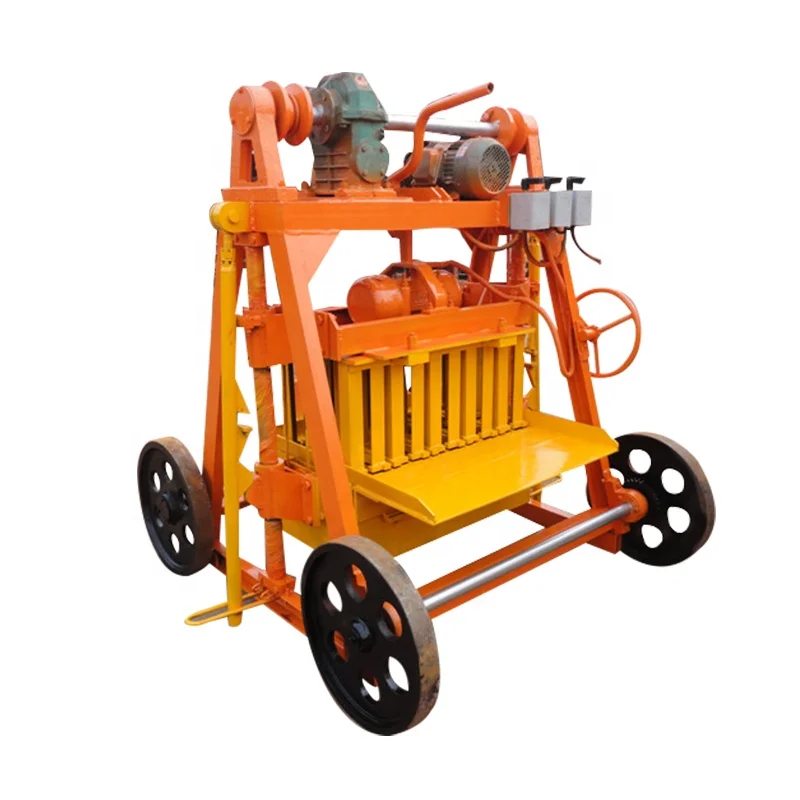
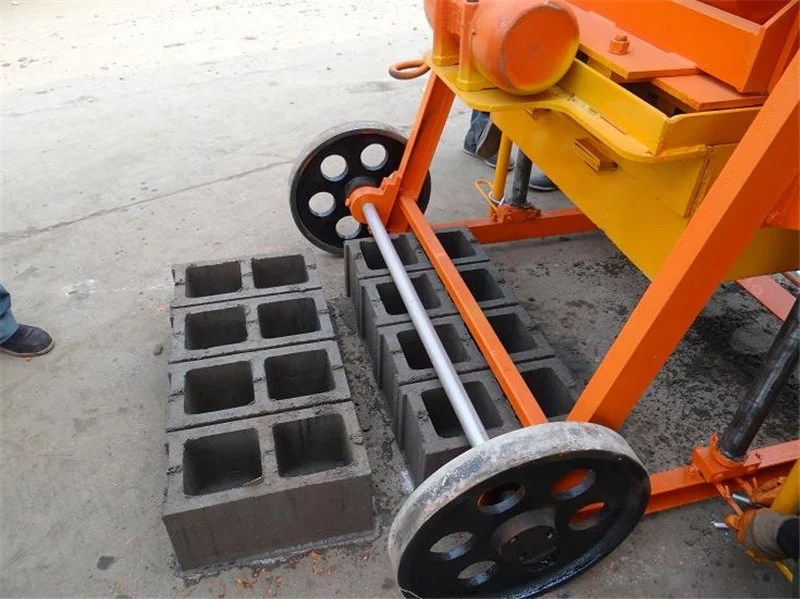
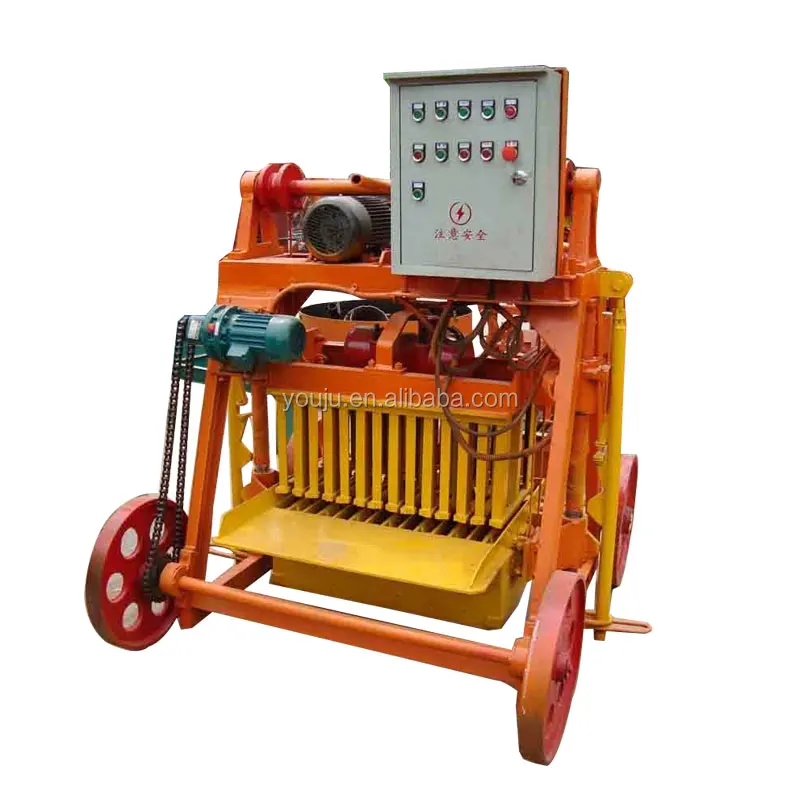
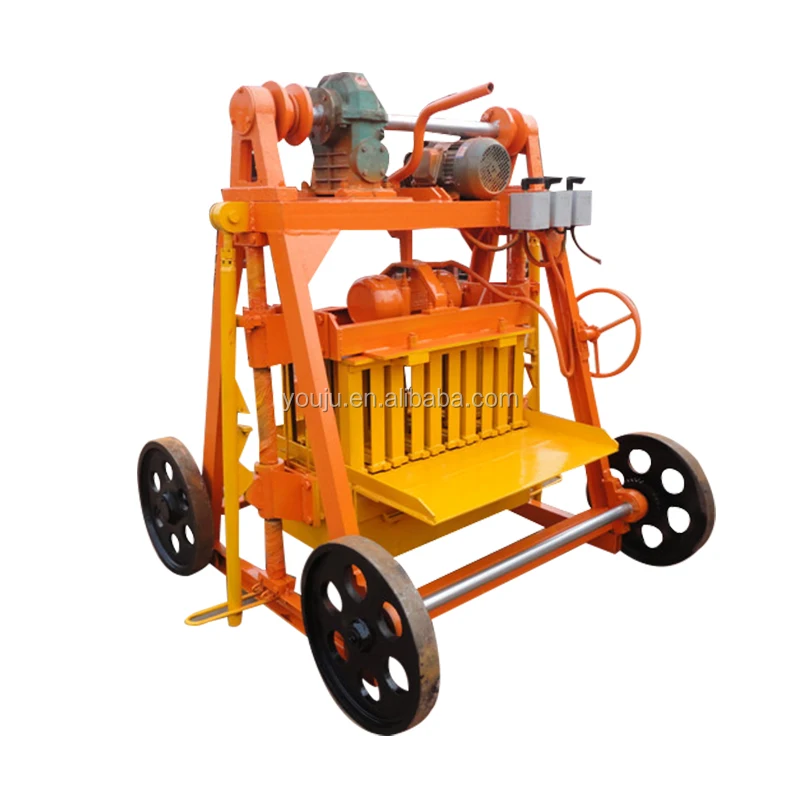
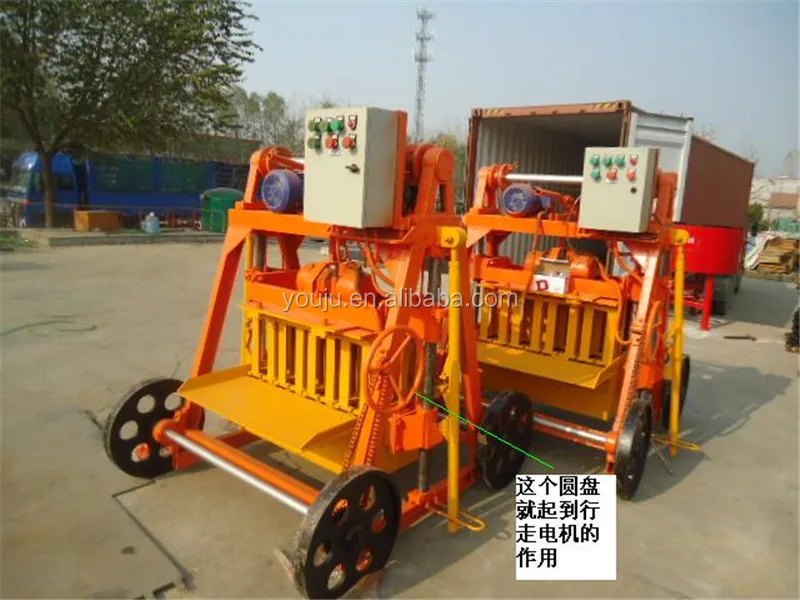
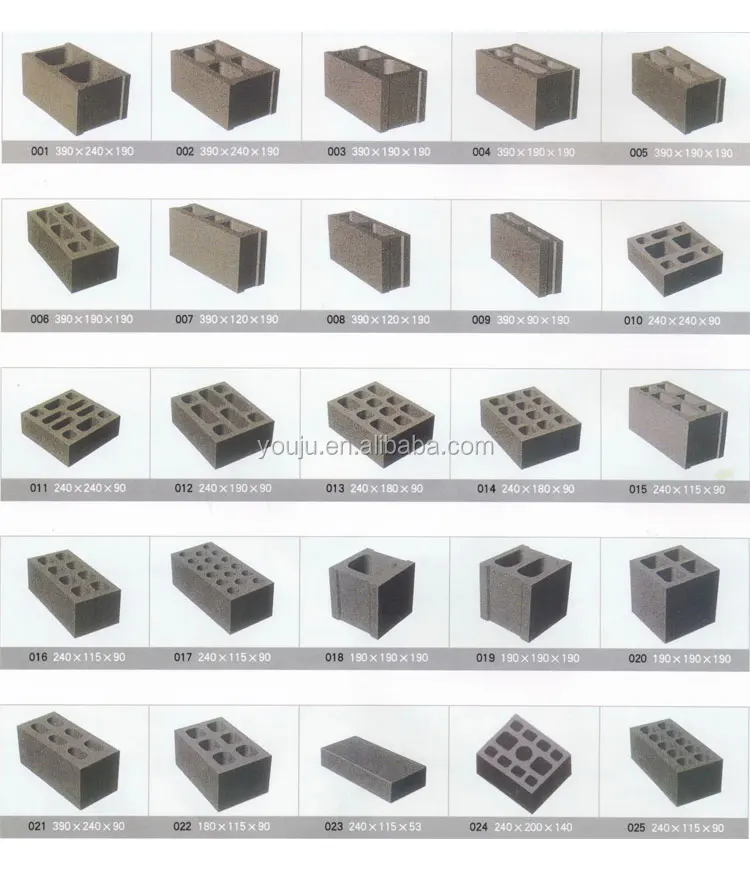
Description
Dispatch-Ready Availability — QMJ4-45 units are assembled, tested, and staged for container loading so your block production starts weeks earlier than a build-to-order timeline allows.
Technical Specifications
| Parameter | Value |
|---|---|
| Model | QMJ4-45 |
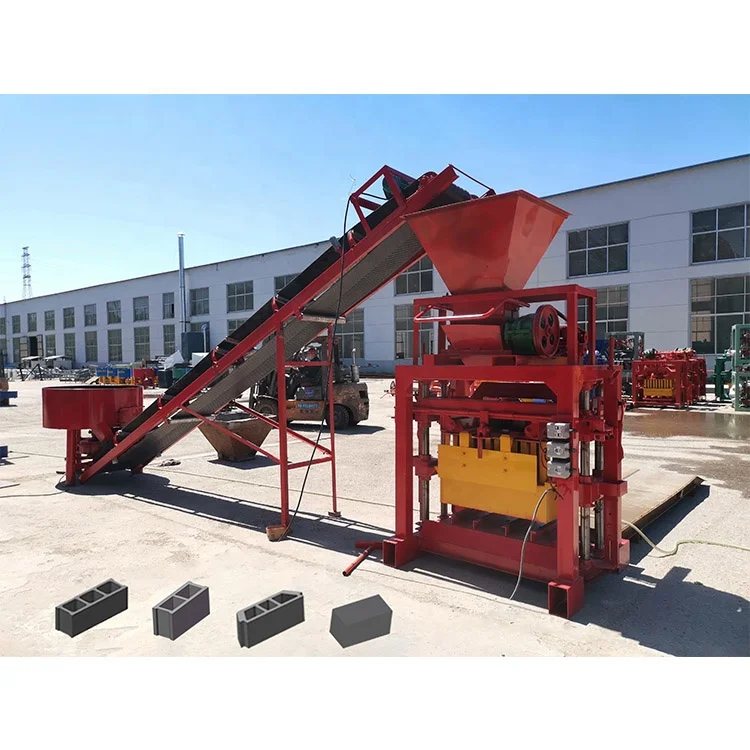
| Product Type | Manual Mobile Egg Laying Block Making Machine |
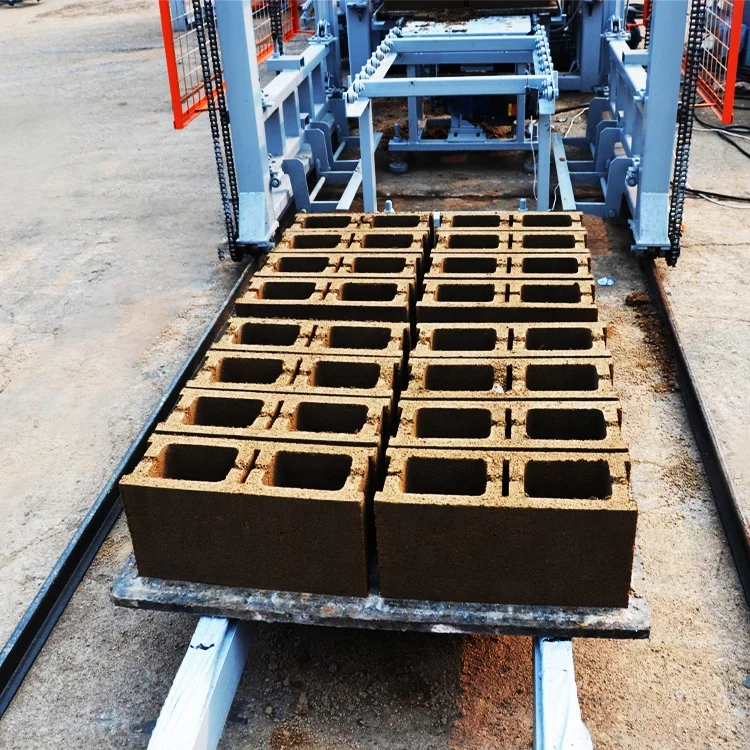
| Molding Capacity | 4 pcs/mold (400×200×200mm hollow block) |
| Vibration Frequency | 2400 r/m |
| Vibration Method | Mold vibration |
| Output Capacity | 3000 pcs/day (based on 400×200×200mm hollow block, 8 hours); 3500 pcs/day (based on 400×150×200mm hollow block, 8 hours); 4500 pcs/day (based on 400×120×200mm hollow block, 8 hours) |
| Molding Cycle | 40–45 s (varies by format) |
| Demold Method | Manual |
| Turning Method | Manual |
| Total Power | 6 kW |
| Power Source | Diesel/Petrol engine or Electric motor |
| Automation Level | Manual / Mobile egg-laying |
| Pallet Requirement | None (egg-laying type) |
Application Suitability
| Application | Material or Output |
|---|---|
| On-site hollow block production for building contractors | Crushed stone, sand, and cement mixes laid directly on flat ground |
| Small-scale cement block plant for entrepreneurs | Standard hollow blocks and multi-cellular bricks from locally sourced aggregate |
| Housing project block supply in remote areas | 400×200×200mm, 400×150×200mm, and 400×120×200mm hollow blocks without pallet infrastructure |
| Paving brick and standard brick runs | Interlocking and solid formats via mold change on existing work sites |
Why "3000 Blocks a Day" Means Nothing Without the Format Attached
Every output figure for the QMJ4-45 mobile block machine in stock is tied to a specific block dimension, and quoting capacity without that context sets buyers up for disappointment.
I have watched contractors in West Africa receive machines promised at a certain daily output, only to discover the number assumed the thinnest wall block in the catalog. When they switched to the 200mm hollow block their market actually buys, the real count dropped noticeably. The QMJ4-45 produces 3000 pieces per day based on 400×200×200mm hollow blocks over an eight-hour shift, but shifts to 4500 pieces per day only when running the 120mm format. Knowing which number applies to your product mix before you pay — not after the container arrives — is what separates a machine that meets your deadline from one that stalls your site [NEED_CITE: realistic block output calculation methods across formats].
Stock Status and Dispatch Timing
Buyers working against a project deadline cannot afford a build-to-order lead time. The QMJ4-45 mobile block machine in stock is held as a completed, factory-tested unit rather than a kit waiting for parts. When you inquire, the first confirmation you receive is whether the exact configuration — motor or diesel engine, voltage, plug type — is available for immediate dispatch or requires a short assembly window. This clarity lets you align shipping with your site preparation schedule instead of guessing.
Container Loading and Arrival Predictability
The egg-laying design of the QMJ4-45 means the machine footprint is compact and does not require pallet racks or curing chambers in the same container. Dismantling for shipment is limited to removable components such as the hopper and handle assembly, keeping re-assembly on your site straightforward. An arrival estimate is quoted before payment so you can book site labor and raw material deliveries around a known date rather than a hopeful one [NEED_CITE: typical ocean freight transit windows by region].
Vibration, Cycle Time, and What They Mean on the Ground
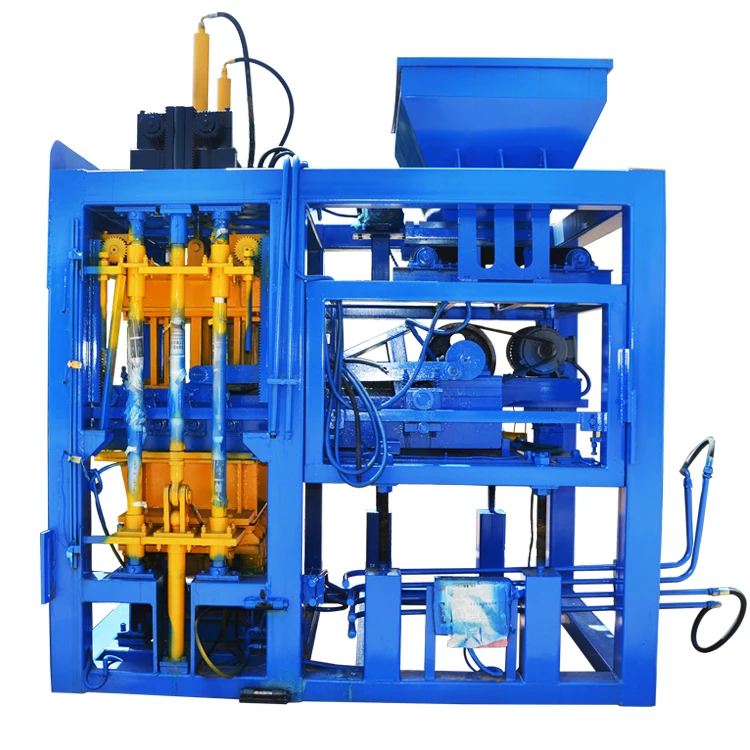
The 2400 r/m mold vibration frequency is the force that compacts the concrete mix into the mold cavity, directly influencing block density and demolding strength. A 40–45 second molding cycle means each hollow block spends enough time under vibration to consolidate before the operator manually lifts the mold. Because the machine uses mold vibration rather than table vibration, the compaction energy is concentrated on the block itself, which matters when you are producing on uneven ground where a vibrating table would lose energy into the soil. The 6 kW total power rating is modest enough to run from a portable generator, making the QMJ4-45 viable on sites without grid connection. Diesel or petrol engine options extend that independence further, a practical choice for rural housing projects where power outages would otherwise halt production mid-shift.
The Hidden Cost of Ordering Blind
I once arrived at a site in South Asia where the machine had been ordered without confirming local voltage. The motor was wired for a standard that did not match the regional grid, and production waited while a replacement was sourced locally at a premium. When buyers skip the voltage and frequency confirmation step, the machine sits idle — sometimes for weeks — while the electrical mismatch is resolved [NEED_CITE: voltage and frequency standards by export market]. The same applies to plug configuration and motor protection rating; these details take minutes to confirm at inquiry but cost significant downtime if overlooked.
Why Buyers Source This Machine Here
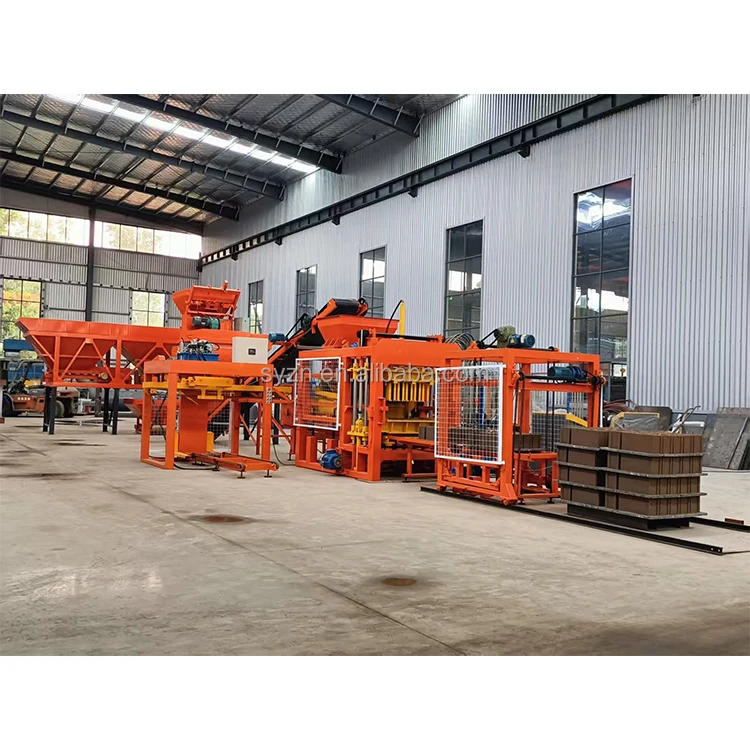
The QMJ4-45 is treated as a single matched system: machine, standard molds, and engine or motor are specified together so nothing arrives incompatible. Stock availability is confirmed at inquiry, not after payment, so you know the dispatch date before committing. Container loading plans and packing photographs are provided before the container is sealed, giving you visibility into exactly what is on the truck. Standard molds for common hollow block formats ship alongside the machine from stock, eliminating a second order cycle. Customs documentation is prepared in-house to match the destination country’s import requirements, reducing port delays.
Documentation & Verification
- Factory test record showing cycle times on your specified hollow block format before dispatch
- Voltage, frequency, and plug type confirmation sheet signed off prior to assembly
- Container loading plan with dismantling instructions for on-site re-assembly
- Packing photographs taken at the time of container sealing
- Operation manual covering mold change, engine or motor start-up, and daily maintenance
Installation, Commissioning & Support
- Flat concrete or compacted ground required; no fixed foundation needed for the 6 kW egg-laying unit
- Power supply matched to confirmed voltage and frequency; dedicated circuit recommended for motor-driven units
- Hopper and handle re-assembly on site with basic hand tools after container unloading
- First-run cycle time and block density checked against your local aggregate mix during commissioning
- Operator training covers mold change procedure, vibration timing, and manual demold technique
- Wear parts list for mold liners and vibration components provided with recommended replacement intervals
What to Include in Your Inquiry
To match the right QMJ4-45 configuration to your site, specify the hollow block dimensions your market demands, your available power supply voltage and frequency, and whether a diesel engine or electric motor suits your location. If you have an existing curing area or forklift, note the dimensions so pallet recommendations — though this model is pallet-free — align with your material handling setup. Confirming these details at inquiry ensures the mobile block machine in stock that ships is the one your site actually needs.
Frequently Asked Questions
Q: Is this model currently in stock and when can it ship?
A: The QMJ4-45 is held as a completed unit ready for dispatch. Stock status for your required voltage and engine or motor configuration is confirmed at the time of inquiry, and a dispatch date is provided before payment so you can plan your project timeline with certainty.
Q: How is the machine packed and loaded into a container?
A: The QMJ4-45 is partially dismantled — hopper and handle assembly removed — to fit standard container dimensions. Packing photographs are taken at sealing, and a loading plan with re-assembly instructions is included so your site team can prepare before arrival.
Q: What is the estimated arrival time to my port?
A: An arrival estimate is quoted before payment based on your destination port and current shipping schedules. This allows you to schedule site preparation, raw material delivery, and labor around a known date rather than an uncertain window.
Q: Can I order standard molds together with the machine from stock?
A: Standard molds for common hollow block formats such as 400×200×200mm and 400×150×200mm are available from stock and loaded in the same container. Custom mold formats require a separate lead time that is confirmed at inquiry.
Q: What payment terms apply to stocked units?
A: Payment terms for in-stock machines are confirmed during the quotation stage and are structured to align with the dispatch schedule. Full details including deposit requirements and balance timing are provided in the formal quotation before any commitment.