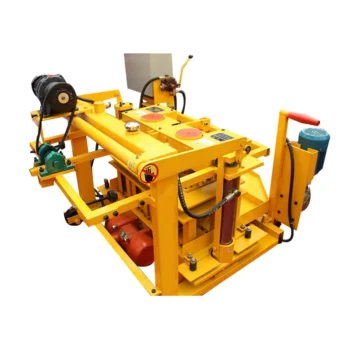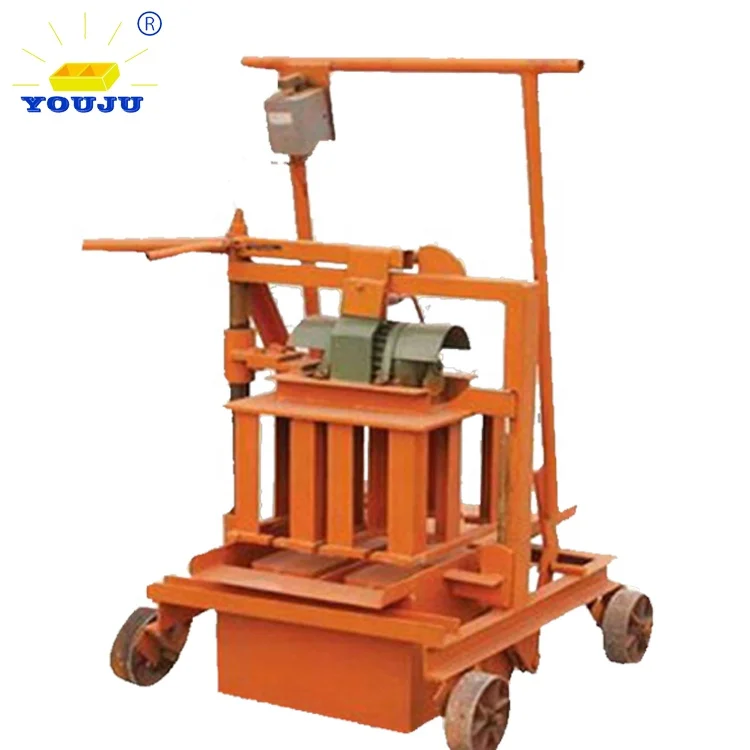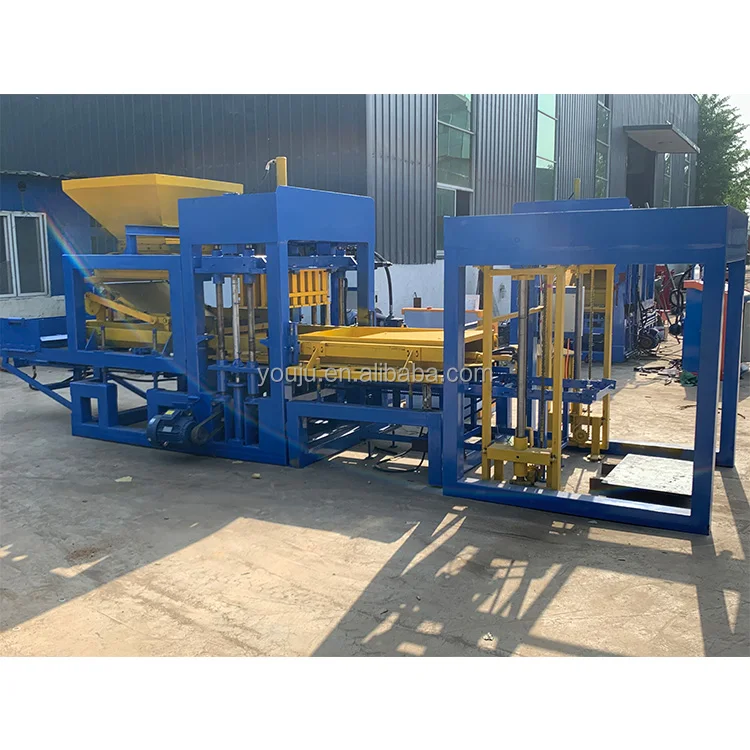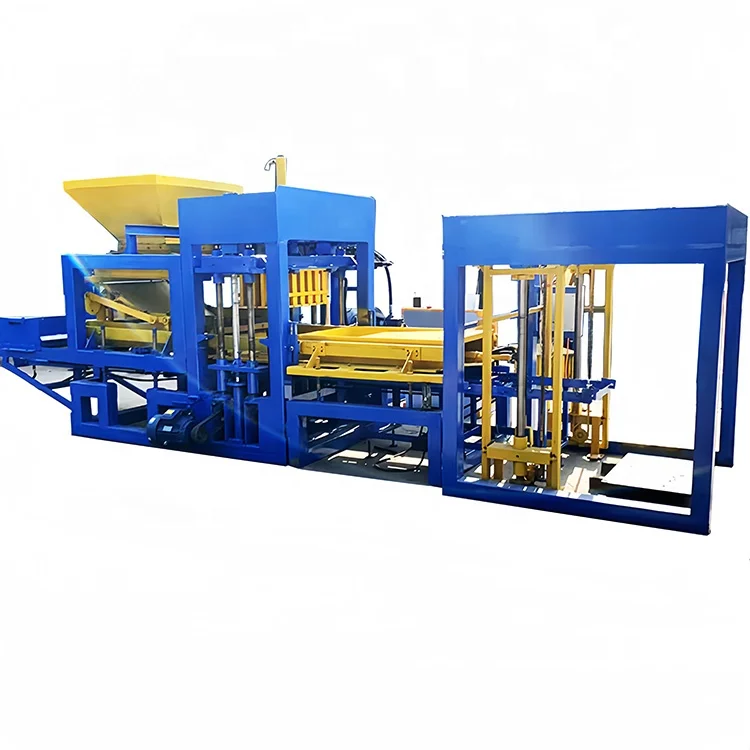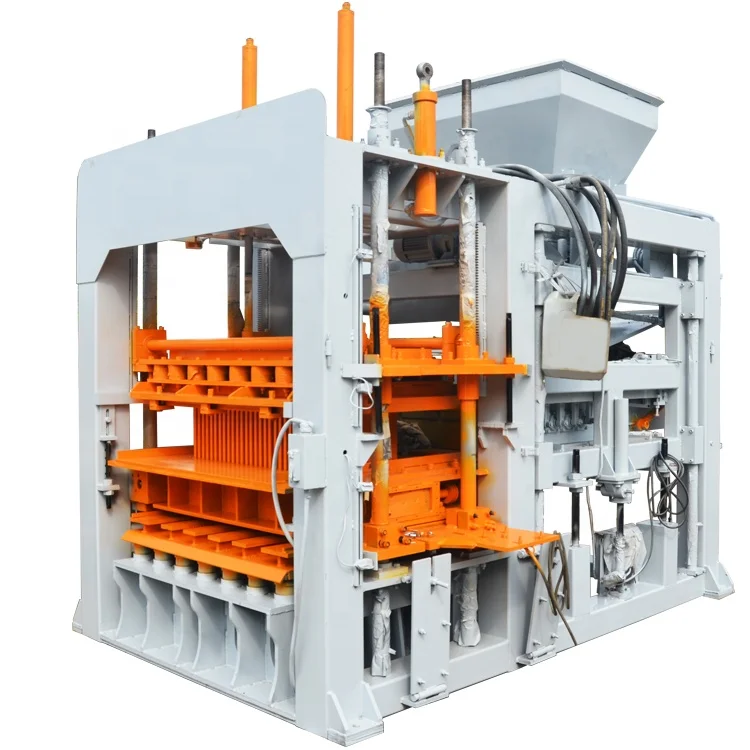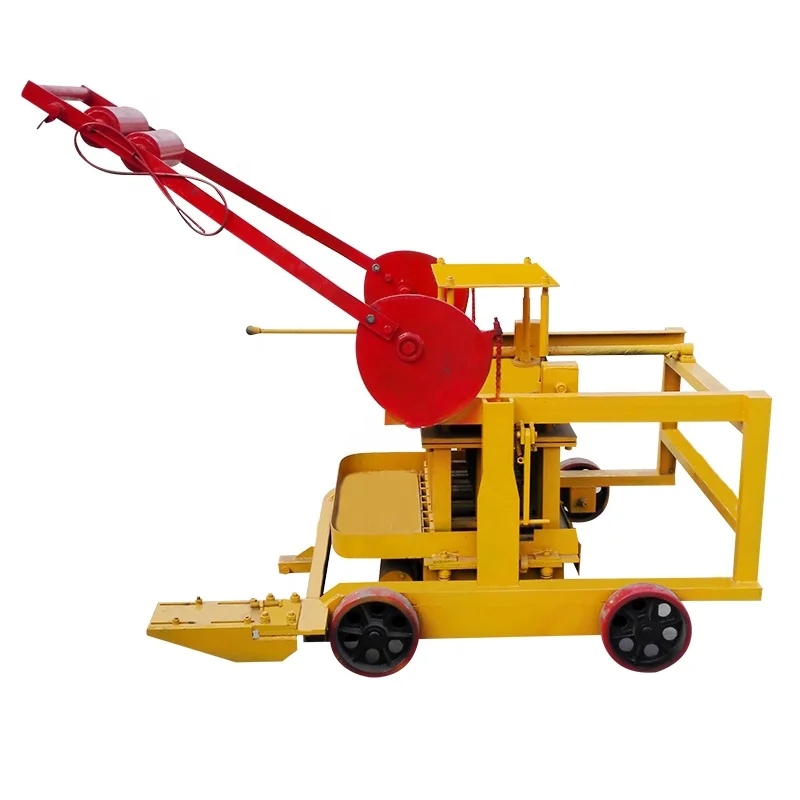
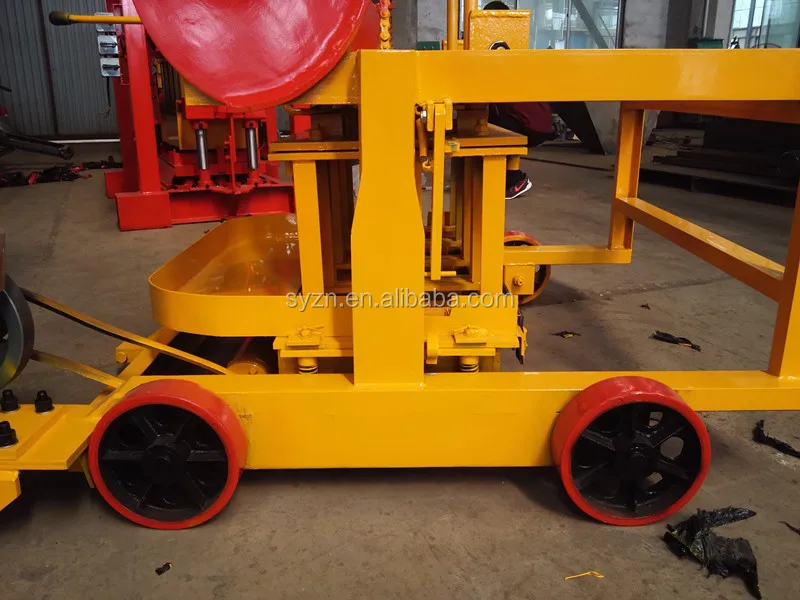
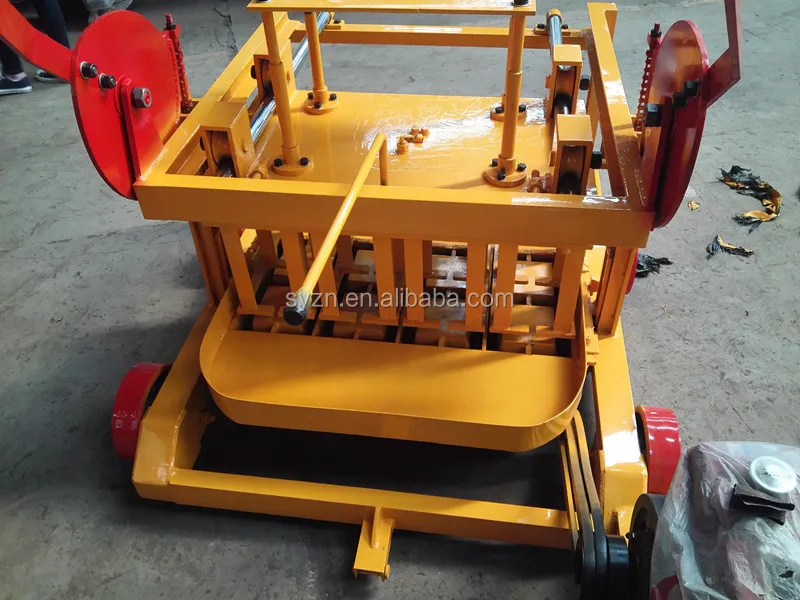
Description
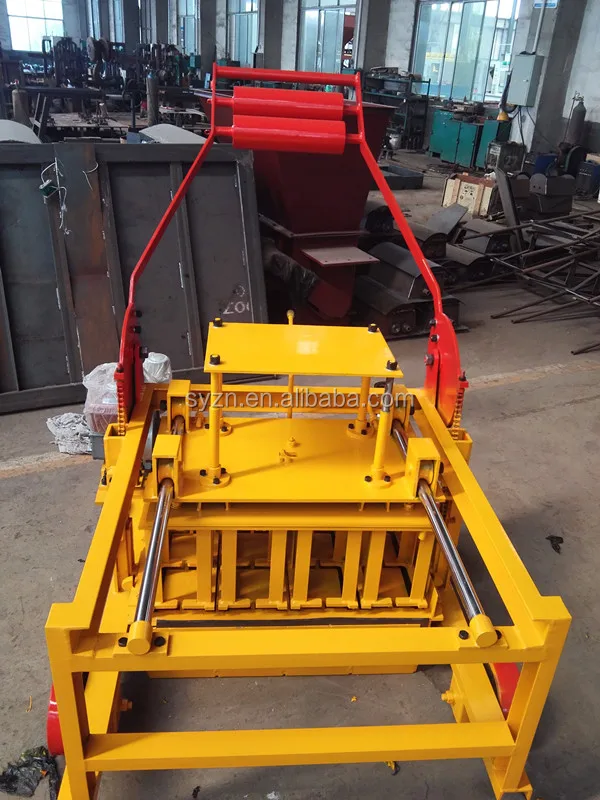
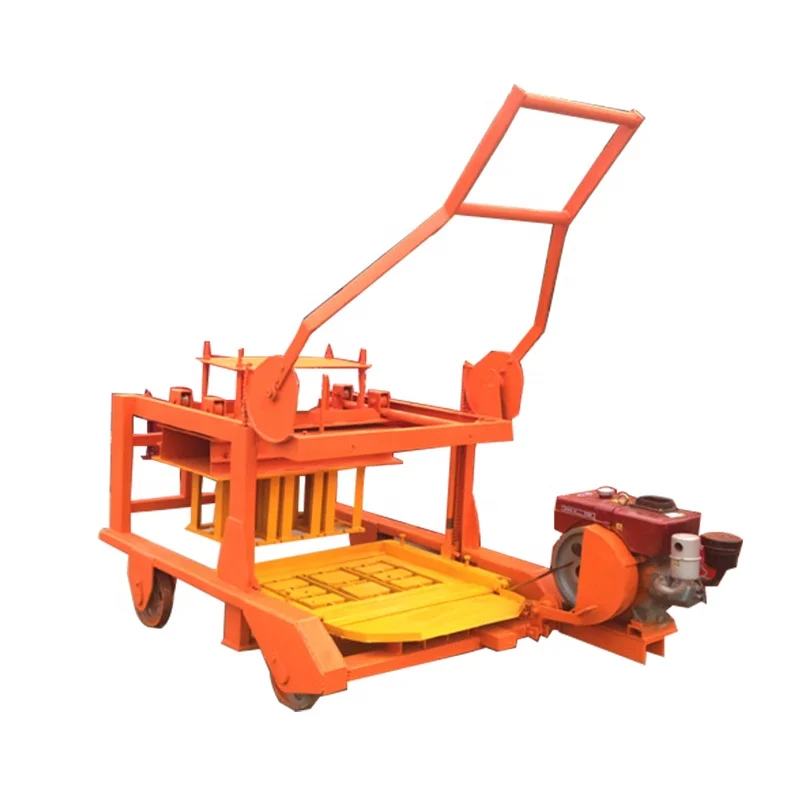
Stocked Configuration Match — the QMR 4-45 is held as a complete mobile unit with mould and power source matched to your site conditions before crating, not a catalogue number picked from a list and shipped blind.
Technical Specifications
| Parameter | Value |
|---|---|
| Model | QMR 4-45 |
| Product Type | Mobile Clay Interlocking Paving Brick Machine |
| Power Source Option | Diesel engine or electric motor |
| Hydraulic Pressure Supply | Diesel engine driven (diesel variant) |
| Pallet Requirement | None — egg-laying / mobile operation |
| Fixed Concrete Floor | Not required |
| Mould Change Method | Physical mould swap for different block formats |
| Output — 400×200×200 mm Hollow Brick | 320 pcs/h, 2,600 pcs/8hr (basis: 4 pcs/mould, 30–45 s molding cycle) |
| Output — 400×150×200 mm Hollow Brick | 400 pcs/h, 3,200 pcs/8hr (basis: 5 pcs/mould, 30–45 s molding cycle) |
| Output — 400×100×200 mm Hollow Brick | 560 pcs/h, 4,480 pcs/8hr (basis: 7 pcs/mould, 30–45 s molding cycle) |
| Molding Cycle | 30–45 s (basis not stated in source — varies by block format and mix) |
| Automation Level | Manual / semi-manual mobile operation |
| Suitable Site Condition | Existing cement working sites with insufficient or unreliable electricity |
Application Suitability
| Application | Material or Output |
|---|---|
| On-site block production for building contractors | Hollow brick in 400×200×200, 400×150×200, 400×100×200 mm formats |
| Remote or rural project sites without grid power | Diesel-powered egg-laying operation on compacted ground |
| Interlocking paving brick production | Mould change on the same machine chassis |
| First-plant entrepreneurs and small producers | Clay or concrete mix forming without fixed plant investment |
Why "Pieces per Hour" Means Nothing Without the Block Format
The QMR 4-45 mobile block machine in stock is rated by format, not by a single headline number.
I once watched a buyer in West Africa take delivery of a mobile press that was quoted at a single output figure. The problem was that the figure assumed the smallest solid block in the mould catalogue. When the buyer ran the 200 mm hollow blocks his market actually demanded, daily output dropped to less than half of what he had planned his labour and cement orders around. The QMR 4-45 capacity is stated per hollow brick format — 400×200×200, 400×150×200, and 400×100×200 mm — each with its own piece count and cycle, so you can match the machine to the block your project schedule requires. [NEED_CITE: block format impact on stated capacity in mobile block machine quotations]
Dispatch From Stock Without a Made-to-Order Lead Time
Project-deadline buyers do not have the luxury of a twelve-week production slot. The QMR 4-45 mobile block machine in stock is held as a complete unit — chassis, power source, and at least one standard hollow brick mould — ready for dismantling and container loading once your voltage or diesel engine specification is confirmed. Dispatch lead time and container loading plan are quoted before you commit, not after.
Container Loading and Arrival Timing You Can Plan Around
The machine is broken down into its major assemblies for container stowage. Packing photographs are taken before the doors close so you can verify what was loaded and prepare your receiving crew. [NEED_CITE: container loading standards for mobile block making equipment] Estimated arrival time at your destination port is provided at the quotation stage so your ground preparation and material stockpiling can run in parallel with the voyage.
How Power Source and Mould Format Intersect on Site
The diesel engine and electric motor variants share the same chassis and mould mounting pattern, but they behave differently once production starts. The diesel variant carries its own hydraulic pressure supply, which means output pressure is tied to engine RPM and fuel quality — I have seen a site in Kenya lose an entire day because the local diesel grade caused black smoke at startup and weak compaction until the injectors were cleaned. The electric variant depends entirely on your site voltage and frequency matching what was built at the factory. The three stocked hollow brick moulds — 400×200×200, 400×150×200, and 400×100×200 mm — determine your cycle time and daily output, and they are swapped by hand on the same frame so one machine covers the formats your project needs.
What Happens When Site Conditions Are Skipped Before Shipment
A mobile press that arrives with the wrong voltage configuration or an incompatible diesel specification sits idle while local electricians or mechanics improvise. Commissioning delays on remote sites often trace back to a single unconfirmed parameter — fuel grade, phase sequence, or plug type — that could have been resolved with a conversation before crating. [NEED_CITE: common commissioning failures on exported block machines due to unconfirmed site utilities] The cost is not the fix itself; it is the idle crew, the rented mixer running empty, and the contractor penalty clock ticking against your project deadline.
Why This Is the Right Source for a Deadline-Driven Purchase
Block machinery is a single focus here, which means the machine, mould, and power source are specified together against your actual site conditions rather than assembled from a catalogue and a separate engine supplier. Stocked QMR 4-45 units are configured before shipment, not after arrival. Dispatch lead time is quoted upfront alongside the machine specification. Packing photographs and customs documentation are provided so your clearance agent can work before the vessel docks. Mould and wear parts availability is confirmed at order so your first replacement set does not become a second emergency shipment.
Documentation & Verification
- Factory test record run on your specified hollow brick format before crating
- Mould drawing and format list confirming stocked dimensions
- Voltage or diesel engine specification sheet signed off before dispatch
- Packing photographs showing dismantled assemblies inside the container
- Customs documentation pack for destination port clearance
- Operation manual covering mould change and daily startup checks
Installation, Commissioning & Support
- Ground must be level compacted earth or existing concrete slab — no fixed foundation required for QMR 4-45 egg-laying operation
- Diesel variant requires confirmed fuel grade and engine oil specification before first startup
- Electric variant requires site voltage, frequency, and phase verified against the motor nameplate before connection
- Mould swap procedure covered during commissioning so your crew can change formats independently
- Wear parts list with reorder codes provided at delivery for hydraulic seals and mould liners
- Daily greasing points and engine service intervals reviewed with the operator on site
What to Include With Your Inquiry
Tell us the hollow brick format your project requires and the daily piece count your schedule demands. Confirm your site power situation — grid voltage and frequency if electric, or the locally available diesel grade if you need the engine variant. Share your container destination port so arrival timing can be estimated at quotation stage.
Frequently Asked Questions
Q: Which QMR 4-45 configurations and moulds are currently in stock and what is the dispatch lead time?
A: The QMR 4-45 is held in stock with standard hollow brick moulds in 400×200×200, 400×150×200, and 400×100×200 mm formats, available in both diesel and electric variants. Dispatch lead time depends on the configuration you confirm and the current stock position, and is quoted alongside the machine specification so you can plan your project schedule around a known date rather than an estimate.
Q: How is the machine dismantled and loaded into a container, and what is the estimated arrival time at destination port?
A: The QMR 4-45 is broken into major assemblies — chassis, power unit, and mould set — for container stowage. Packing photographs document the load before the doors close. Estimated arrival at your destination port is calculated from the dispatch date and shipping line schedule, and is provided at quotation stage so your ground crew and materials can be ready.
Q: What voltage, frequency or diesel engine specification must the buyer confirm before shipment to avoid commissioning delay?
A: For the electric variant, site voltage, frequency, and phase must be confirmed so the motor and control wiring match your supply. For the diesel variant, the locally available diesel grade and ambient operating altitude are needed to set engine tuning. Confirming these before crating avoids idle time and improvised fixes after arrival.
Q: Are standard moulds shipped with the machine, and how quickly can additional format moulds be supplied?
A: At least one standard hollow brick mould is shipped with the QMR 4-45, matched to the format you specified at inquiry. Additional or replacement moulds are produced against your drawings or our standard catalogue. Lead time for a follow-on mould order is quoted separately and can be timed to arrive before your first format change is needed on site.
Q: What on-site conditions must be ready before the machine arrives so production can start immediately?
A: The QMR 4-45 requires a level, compacted working area — no fixed concrete floor is needed. You should have your raw material stockpile, water supply, and curing area laid out before arrival. For the diesel variant, confirm fuel storage; for the electric variant, confirm the supply circuit and breaker rating match the motor specification provided at order.