
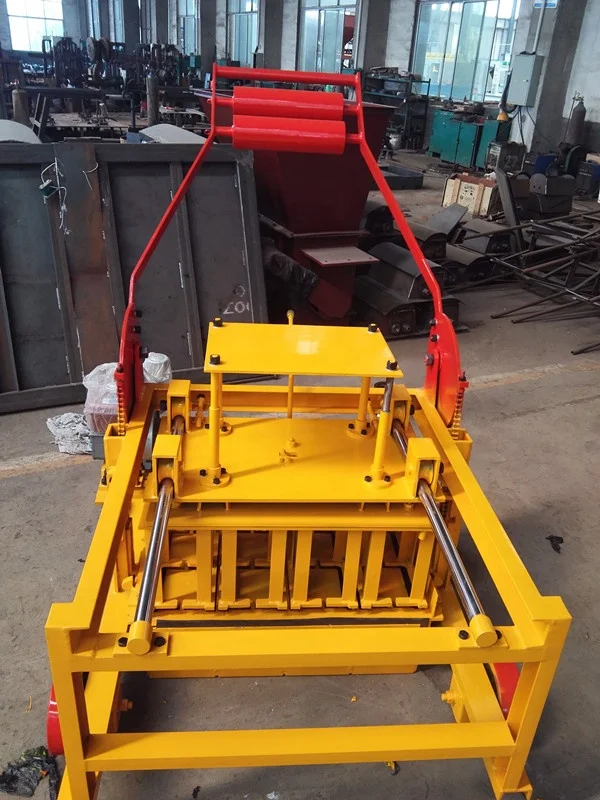
Description
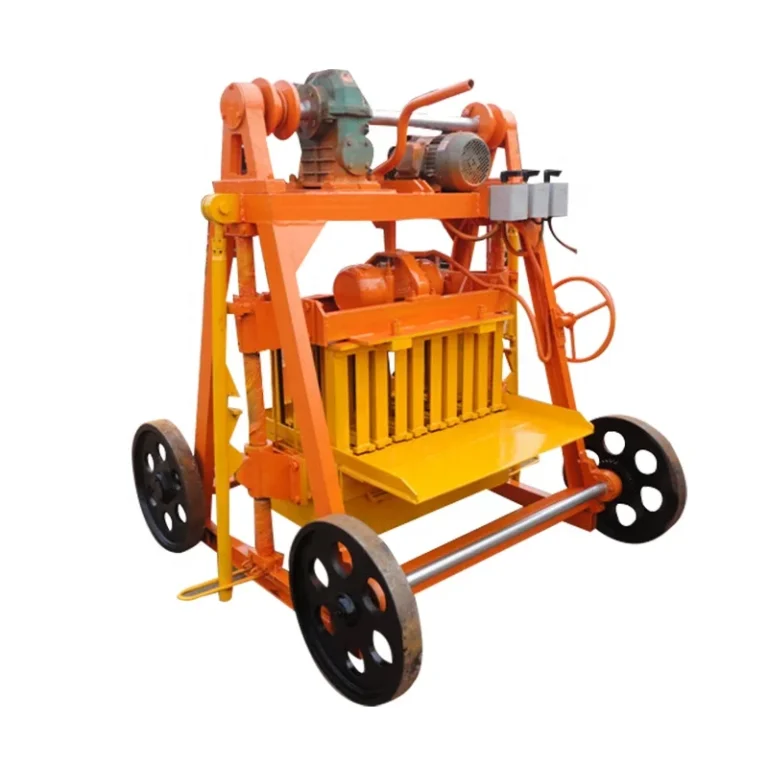
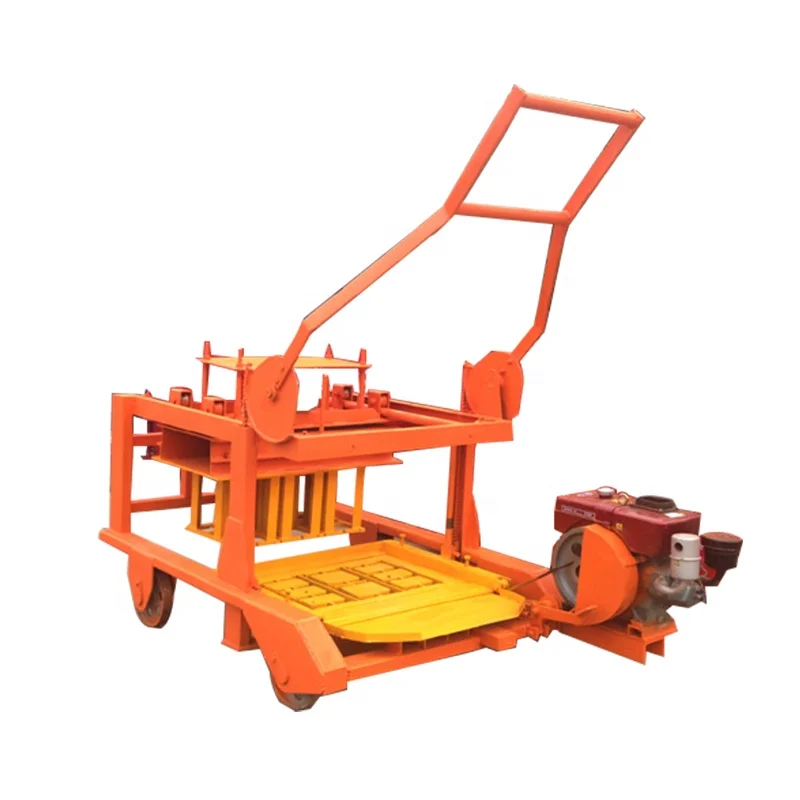
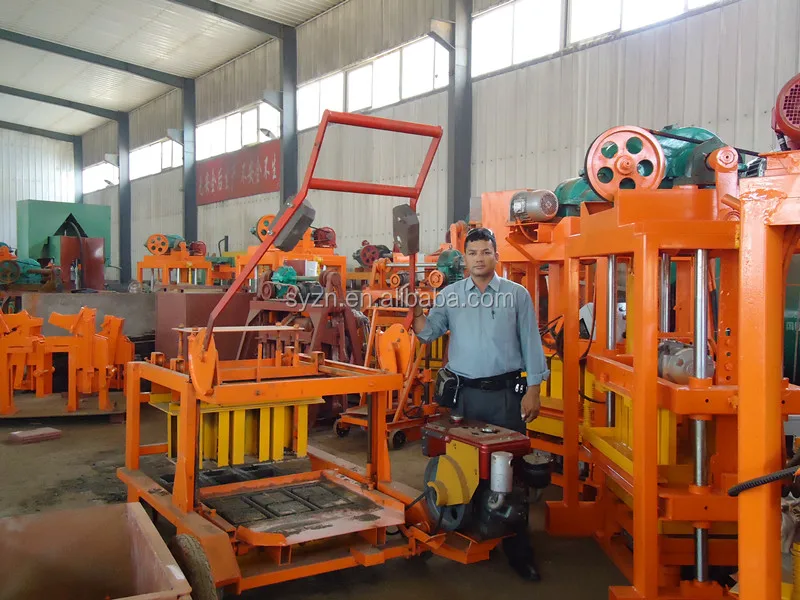
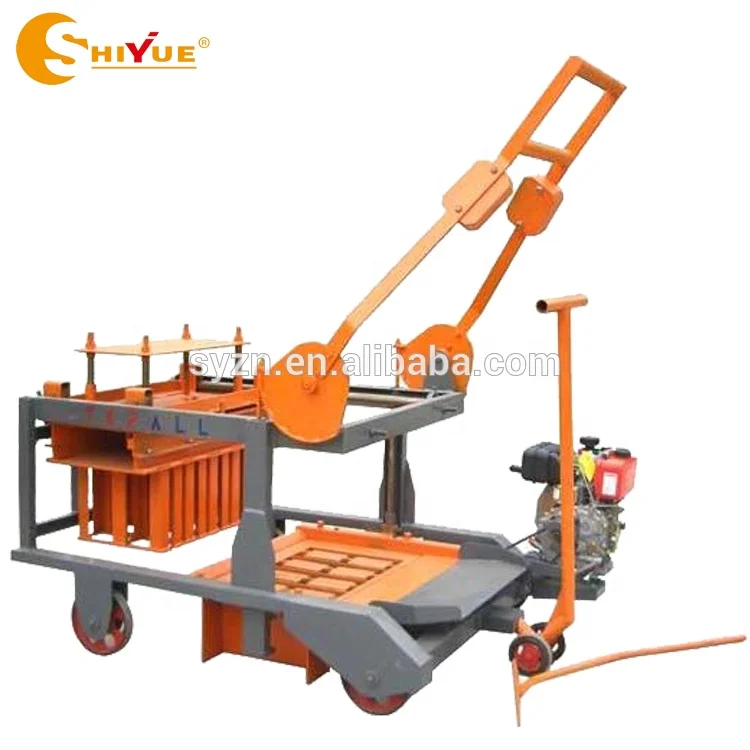
Stocked Block Machinery — QMR4-45 mobile egg-laying units held in warehouse, configured for diesel or electric drive, and dispatched within days of order confirmation rather than built to a production slot.
Technical Specifications
| Parameter | Value |
|---|---|
| Model | QMR4-45 |
| Product Type | Mobile Egg-Laying Block Making Machine |
| Overall Dimensions (L×W×H) | 1100 x 950 x 2100 mm |
| Net Weight | 810 kgs |
| Power Source | Diesel Engine / Petrol Engine / Electric Motor |
| Molding Cycle | 30-45 s |
| Output Capacity | 2560 pcs/day (basis not stated in source — confirm block format, material and wall thickness) |
| Pallet Requirement | No pallet required (egg-laying type) |
| Mould Compatibility | Paver brick, hollow block, concrete block, solid brick, fly ash brick |
| Mobility | Wheeled mobile frame |
| Basic Equipment Included | JZC350 Diesel Concrete Mixer or JQ350 Diesel Concrete Mixer with Electric Generating Unit; Trolley |
| Warranty | 1 Year |
| Control System | Manual operation (configuration to be confirmed) |
Application Suitability
| Application | Material or Output |
|---|---|
| On-site housing project block production | Crushed stone, sand, cement and water for hollow and solid blocks |
| Remote infrastructure construction | Diesel-powered hollow block and paver production without grid electricity |
| Small-scale paver manufacturing | Fly ash, sand and cement blends for interlocking paver bricks |
| First block plant with minimal capital | Concrete solid brick and standard hollow block on bare ground |
| Rural fencing and boundary wall projects | Solid brick and small-format concrete block laid directly on soil |
Why Stock Status Matters More Than Catalogue Output Figures
A mobile block machine in stock ships before your project deadline becomes a penalty clause.
When a construction contractor writes to us needing a block machine on-site within two weeks, the conversation never starts with cycle time. It starts with whether the unit is sitting in our warehouse or still on a production schedule. I have watched buyers lose deposit money on housing projects in Colombia because a machine quoted at a theoretical daily output was still six weeks from completion when the foundation crew was already waiting. With the QMR4-45, we confirm the stocked unit and its fitted mould before we discuss anything else [NEED_CITE: typical construction penalty clauses for delayed block supply in Latin American housing projects].
Dispatch Timeline From Warehouse to Your Project Gate
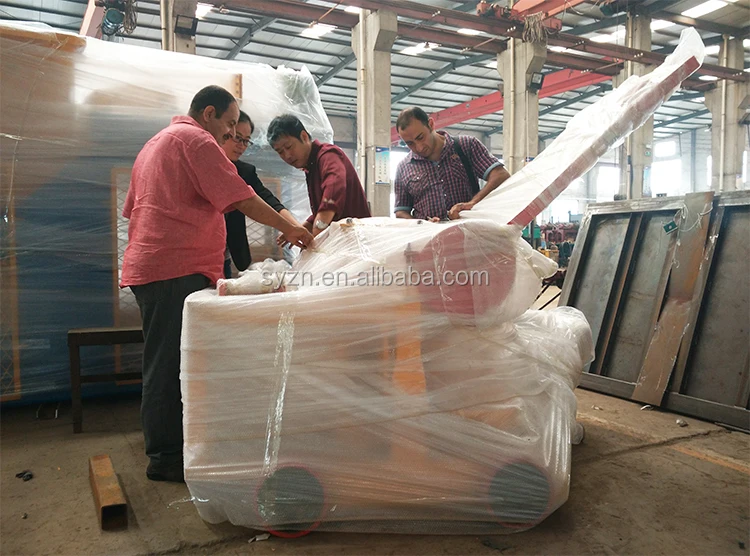
A mobile block machine in stock at our Linyi warehouse typically clears packing, container loading and customs documentation within a defined window after order confirmation. The QMR4-45’s compact frame — 1100 x 950 x 2100 mm and 810 kgs — means it fits a standard shipping container with room for the companion mixer, trolley and spare moulds. We photograph the loading sequence and share the container seal number before the vessel closes, so your logistics team can track transit from departure to arrival port without chasing us for updates.
Power Source Selection Before the Machine Leaves Our Dock
The QMR4-45 ships with diesel, petrol or electric drive, and this choice must be locked before dispatch — not discovered when the machine arrives at a site with no three-phase supply. I have seen electric-drive units sit idle for weeks on rural Peruvian job sites because the local grid could not deliver stable voltage, forcing a field retrofit to a diesel generator that should have been specified at order [NEED_CITE: voltage instability in off-grid construction sites across Andean regions]. When your project is off-grid or the local supply is unreliable, the diesel option removes that variable entirely and the machine runs on the same fuel your excavators already consume.
Reading the Specs That Actually Affect Your Daily Output
The 30-45 second molding cycle is the mechanical rhythm of the press, but the blocks you produce per shift depend on which format the mould is set for and how quickly your crew feeds the mixer and moves the machine forward. A hollow block with thicker walls takes longer to fill and vibrate than a slim paver brick, so the cycle time sits at the longer end of that range. The egg-laying design means the machine lays blocks directly on the ground and rolls forward on its wheeled frame — there is no pallet to buy, store, rotate or replace. This eliminates a cost line that fixed-plant buyers accept but that makes no sense for a contractor producing blocks on a temporary site. The included JZC350 or JQ350 mixer ensures the material arrives at the hopper at a pace the press can absorb, preventing the press from standing idle between batches.
What Happens When You Skip the Power and Format Check
Ordering a mobile egg-laying machine without confirming the local voltage, the block format your market actually buys, and whether the mould is in stock alongside the press creates a chain of delays that compounds at every stage. The machine arrives with a 380V motor but the site runs on 220V single-phase. The hollow block mould is fitted but the local hardware distributors only stock solid bricks. The output figure quoted assumed a paver format you never intend to produce [NEED_CITE: mismatch between quoted block format and actual market demand in emerging construction markets]. Each of these gaps adds weeks, and on a project with a completion date, weeks carry real financial consequences.
Why Buyers Source This Machine Through Our Stock Channel
We hold QMR4-45 units with standard moulds in our Linyi facility, so your order does not join a production queue behind larger automatic lines. Our focus is block machinery exclusively, which means the mixer, trolley, mould and press are specified as one matched set rather than sourced from three different workshops. Every stocked machine ships with a factory test record run on the block format you confirmed, not a generic bench test. We provide packing photographs, container loading plans and full customs documentation so your import broker has everything before the bill of lading arrives. Moulds for additional formats are held in the same warehouse, allowing you to add a solid brick or paver mould to the same container without extending lead time.
Documentation & Verification
- Factory test record showing block output on your confirmed format and mix before dispatch
- Packing photographs and container loading plan for your logistics and customs broker
- Voltage and frequency confirmation sheet matching your site’s electrical supply
- Mould drawing and format list for every mould included in the shipment
- Operation and maintenance manual in your operator’s language
Installation, Commissioning & Support
- Compact 1100 x 950 mm footprint requires only level, compacted ground — no concrete foundation
- Diesel option eliminates dedicated electrical circuit requirements at remote sites
- Machine arrives fully assembled on its wheeled frame, ready to produce after mixer setup
- Mould change procedure demonstrated on-site during commissioning visit
- Wear parts list and reorder schedule provided for rollers, springs and mould liners
- Mixer drive belt and trolley wheel inspection intervals documented in the manual
What We Need to Confirm Before Shipping
Send us the block format your site or market requires, the local power supply voltage and frequency if you are considering the electric drive option, and the aggregate source you plan to use. We will confirm which stocked mould matches your format, whether the diesel or electric configuration suits your site conditions, and provide a dispatch timeline with container loading details. If your aggregate has high clay content or unusual grading, let us know before we finalise the mix recommendation [NEED_CITE: effect of local aggregate clay content on block compressive strength in mobile production].
Frequently Asked Questions
Q: Which QMR4-45 mould formats are currently in stock, and how quickly can they ship?
A: Standard hollow block, solid brick and paver moulds are held alongside the QMR4-45 press in our Linyi warehouse. Once you confirm the format and power source, we schedule container loading and provide a dispatch date within days. Custom mould formats require a production run and carry a separate lead time that we quote at inquiry stage.
Q: How is the QMR4-45 loaded into a container, and what else fits inside?
A: The machine’s 1100 x 950 x 2100 mm frame and 810 kg weight allow it to load into a standard shipping container with the companion mixer, trolley and additional moulds. We photograph the loading sequence and share the container seal number so your freight forwarder can begin tracking from departure.
Q: Should I choose diesel or electric drive for my project site?
A: If your site has stable three-phase power, the electric option reduces fuel cost. For remote, off-grid or temporary project sites where voltage fluctuation is common, the diesel option removes electrical dependency entirely. We confirm your site conditions before finalising the configuration to avoid idle time after arrival.
Q: Are replacement moulds and wear parts available when I need them?
A: Standard moulds and common wear parts such as springs, rollers and mould liners are held in our warehouse. When your first replacement cycle approaches, we ship parts alongside your next mould order or independently, with the same dispatch speed as the original machine shipment.
Q: What exactly is included in the QMR4-45 shipment?
A: The QMR4-45 press with your confirmed mould, either a JZC350 diesel concrete mixer or a JQ350 diesel mixer with electric generating unit, a material trolley, and a basic tool kit. You source cement, aggregate and water locally. We provide the full packing list before dispatch so nothing is assumed.