

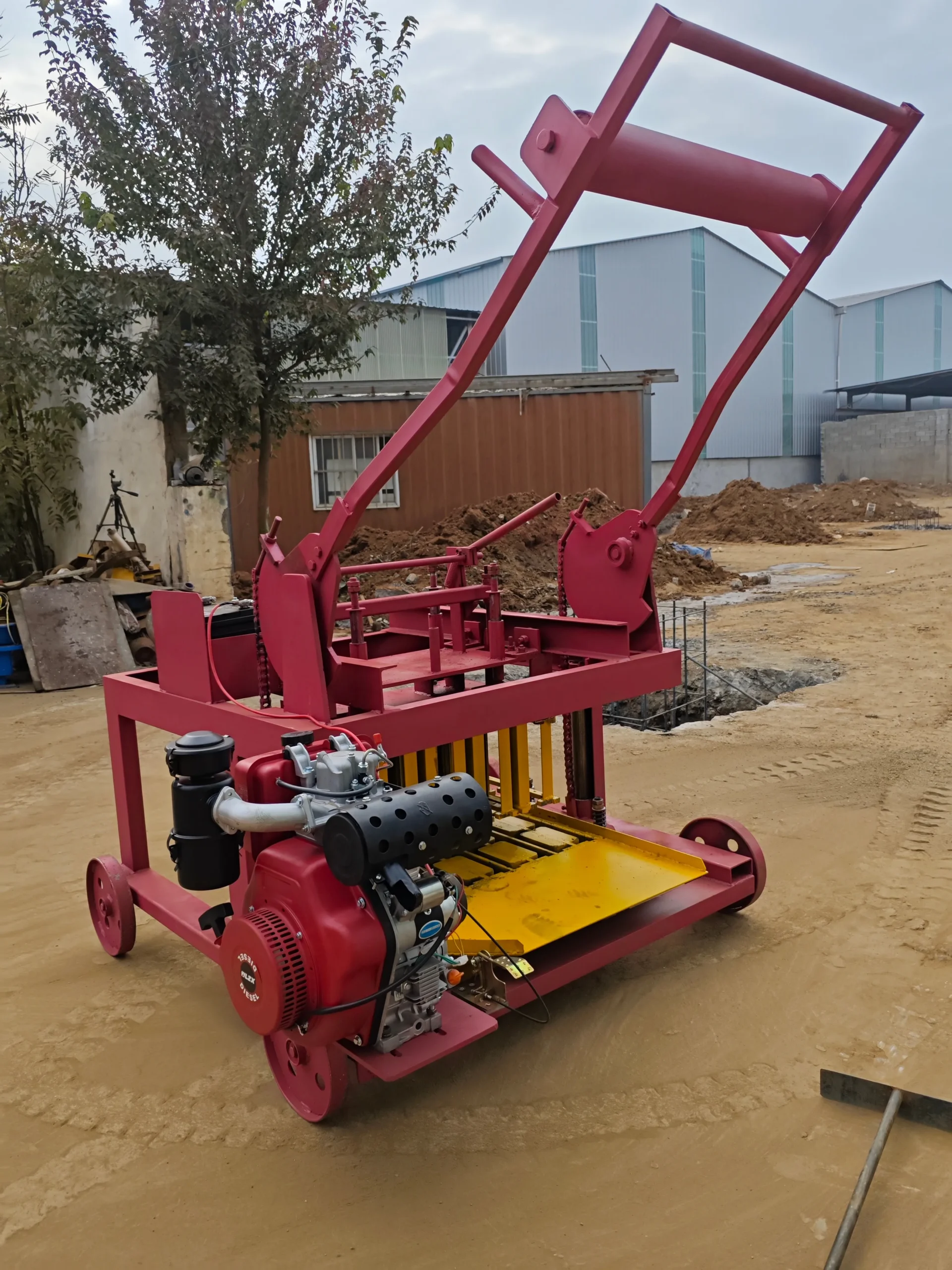
Description
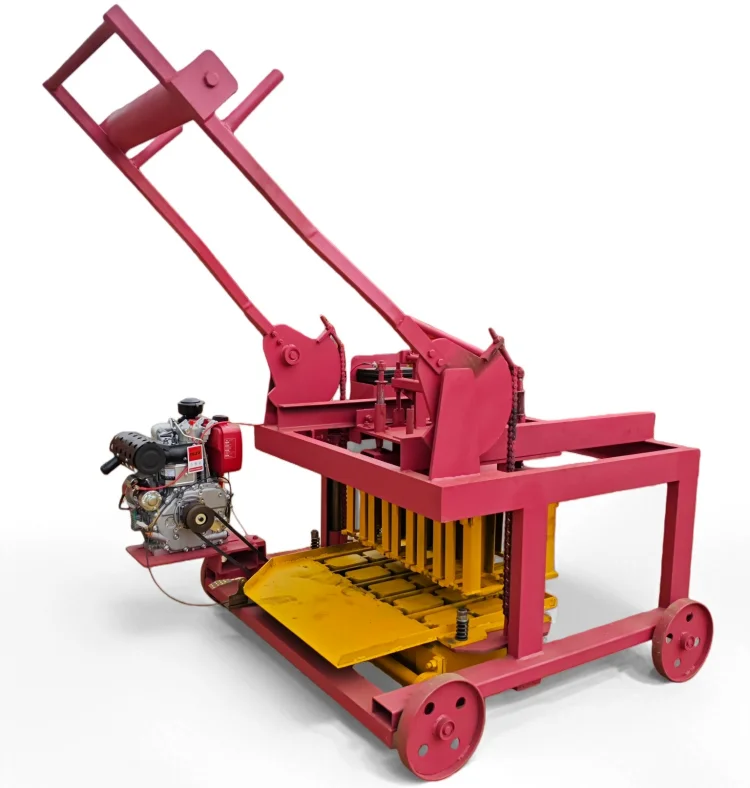
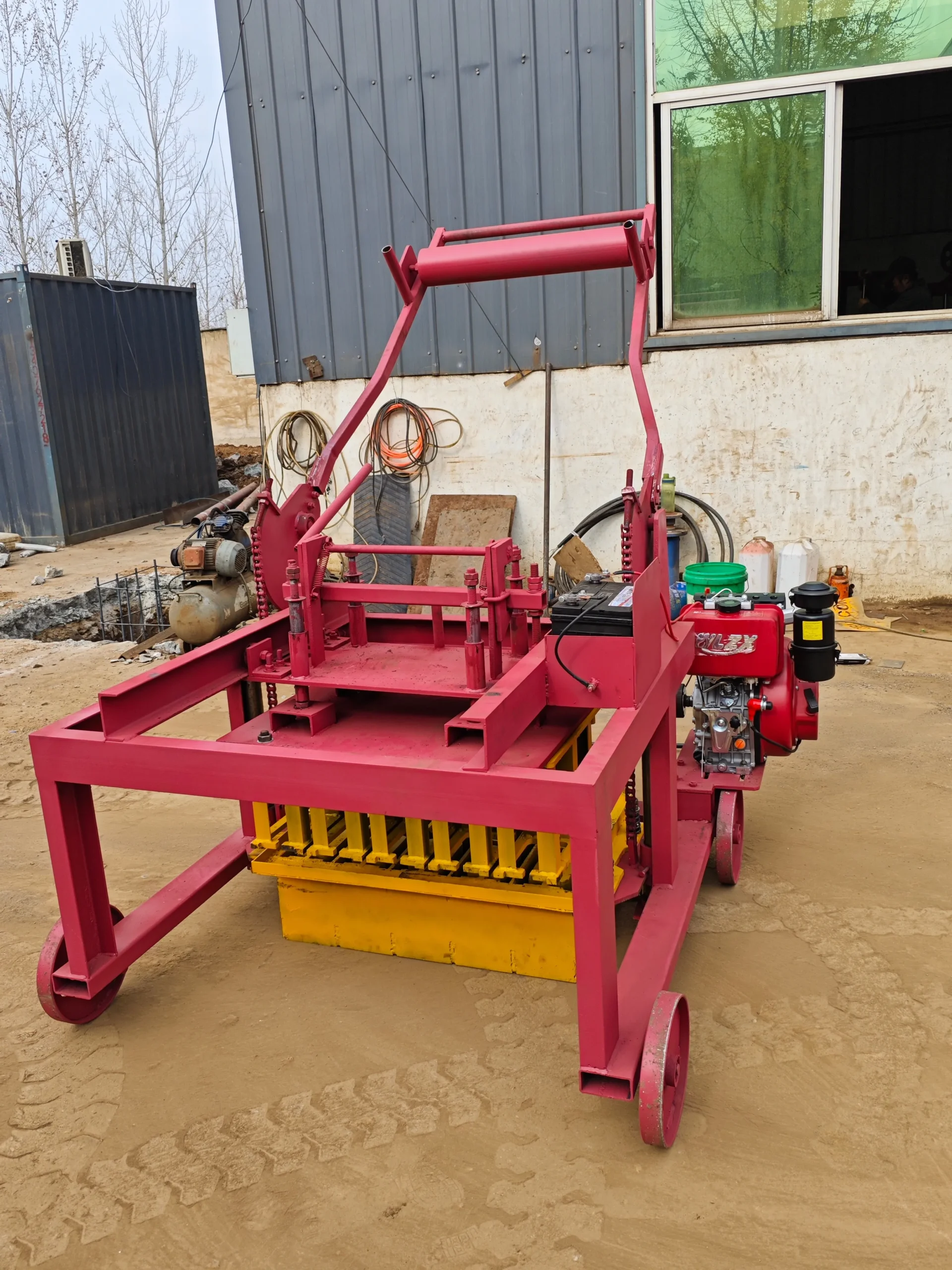
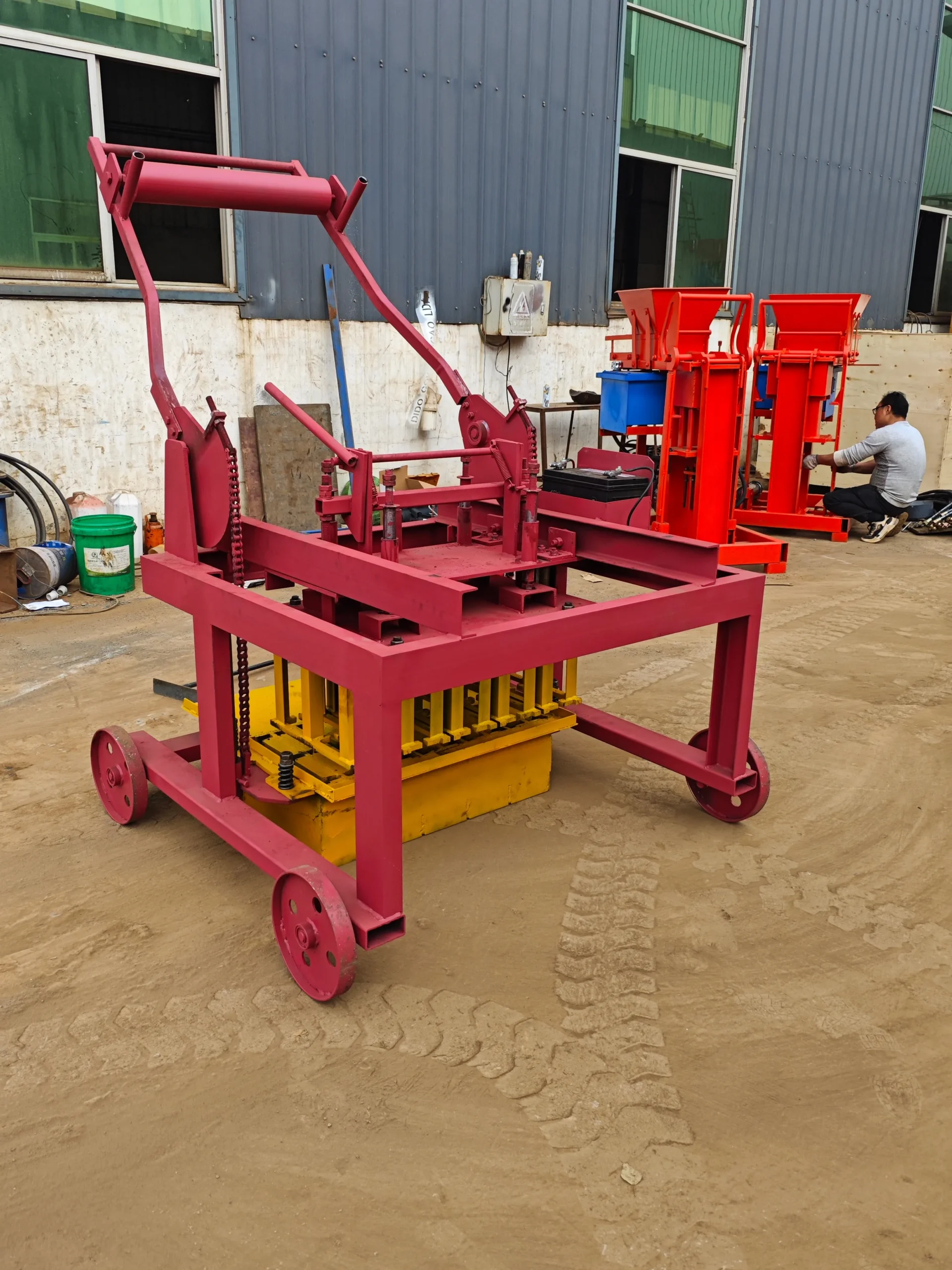
Ready-to-ship configuration — each QMR4-45 undergoes factory block runs before dispatch, so arrival timing stays tied to container schedules instead of production delays.
Technical Specifications
| Parameter | Value |
|---|---|
| Model | QMR4-45 |
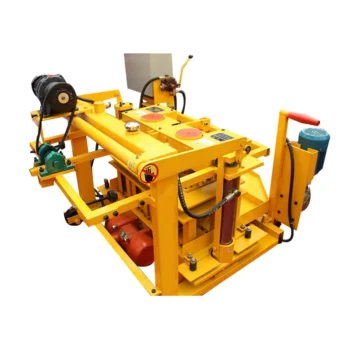
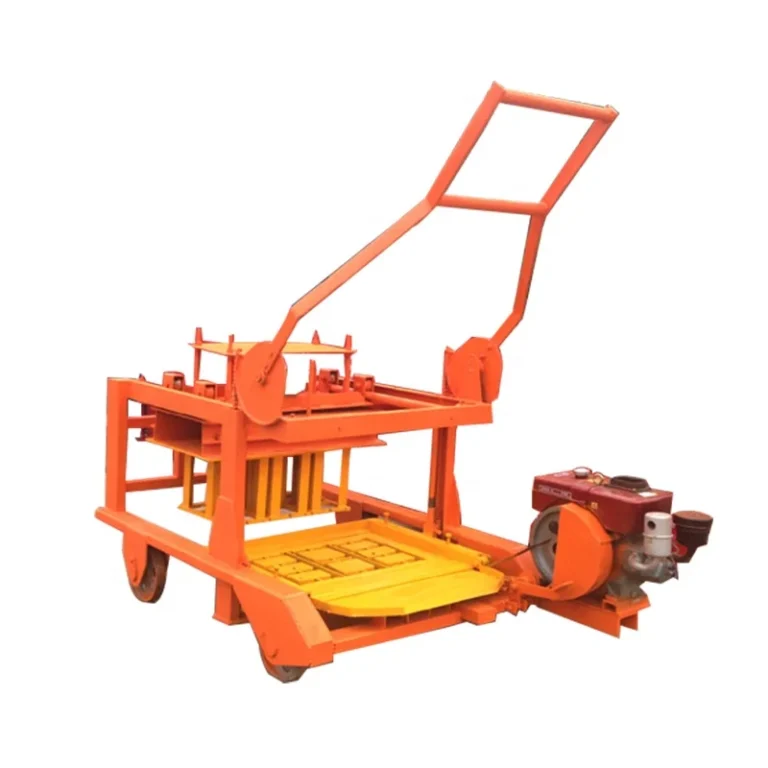
| Product Type | Mobile Egg Laying Concrete Block Machine |
| Overall Dimensions (L×W×H) | 2420×1320×1650 mm |
| Net Weight | 810 kg |
| Rated Power | 6 kW |
| Power Source | Diesel engine (6–8 HP) or electric motor |
| Voltage & Frequency | 220 V / 380 V / customizable to client local voltage (frequency to be confirmed) |
| Control System | Manual / mechanical |
| Pallet Size | No pallet required (egg-laying type) |
| Moulding Cycle | 40–45 s |
| Output Capacity | 3000 pcs/day based on 400×200×200 mm hollow block, 4 pcs/mould, 8-hour shift |
| Output Capacity (150 mm block) | 3500 pcs/day based on 400×150×200 mm hollow block, 5 pcs/mould, 8-hour shift |
| Output Capacity (120 mm block) | 4500 pcs/day based on 400×120×200 mm hollow block, 6 pcs/mould, 8-hour shift |
| Automation Level | Semi-manual, mobile egg-laying |
| Assembly State | Fully assembled, mobile unit |
| Warranty | 1 year for the whole machine |
Application Suitability
| Application | Material or Output |
|---|---|
| On-site hollow block production | Crushed stone, sand, cement and water mix laid on existing concrete floor |
| Remote construction sites | Diesel-powered operation where grid electricity is unstable or unavailable |
| Housing project block supply | 400×200×200 mm and 400×150×200 mm hollow blocks produced at the building site |
| Small-scale block plants | 400×120×200 mm hollow blocks for entrepreneurs starting first production |
Why the Voltage Question Must Come Before Dispatch
Locking in your local voltage and frequency before the machine leaves the factory is the single step that prevents a multi-week stall on site.
I have watched a mobile egg laying block machine in stock fast delivery sit idle on an African job site for three full weeks because the local supply was a voltage and frequency combination the motor was never wound for. The contractor had the machine, had the crew, had the deadline — but no transformer. Every project timeline we quote now includes a confirmed electrical spec before the container books. [NEED_CITE: voltage and frequency standards by export market]
Stocked Units and Real Dispatch Windows
When a project deadline compresses, buyers need a mobile egg laying block machine in stock fast delivery that is already built, factory-tested, and staged for container loading — not one waiting on a production slot. The QMR4-45 ships as a fully assembled mobile unit, meaning the frame, vibration motor, and hopper arrive ready to run once you roll it onto a level concrete surface.
Diesel or Electric — Matching the Power Source to the Site
The diesel engine option (6–8 HP) removes grid dependency entirely, which matters on rural housing developments and remote infrastructure camps where load-shedding is routine. For sites with stable supply, the electric motor runs on confirmed 220 V or 380 V, and the frequency must match the destination country before the stator leaves the winding shop. [NEED_CITE: CE machinery directive requirements for industrial equipment]
Reading the Cycle Time Against Your Block Format
The 40–45 second moulding cycle applies across formats, but the daily count changes with the cavity count. A 400×200×200 mm hollow block drops four pieces per cycle, yielding 3000 pieces over an 8-hour shift. Switch to a 400×120×200 mm mould with six cavities and the same cycle produces 4500 pieces. The difference is geometry, not machine speed — and it affects how you plan material feed and curing space.
When the Wrong Electrical Spec Reaches the Site
A motor wound for 380 V / 50 Hz will overheat and trip on a 60 Hz supply, and no amount of on-site rewiring fixes a stator that was built for the wrong frequency. The machine sits, the crew waits, and the project penalty clock starts. Confirming voltage and frequency at the order stage costs nothing; correcting it after arrival costs weeks. [NEED_CITE: effects of frequency mismatch on induction motor performance]
Why Buyers Source the QMR4-45 Through This Channel
Block machinery is the single product focus here, so the machine, mould, and handling requirements are specified together rather than pieced from separate suppliers. Dispatch lead times are quoted against actual stock, not production estimates. Mould design covers the hollow block formats your local market moves, and a diesel engine option means the machine works before the site has permanent power.
Documentation & Verification
- Factory test record showing block output on your specified hollow block format before shipment
- Machine specification sheet confirming voltage, frequency, and power source matched to your site
- Mould drawing and format list for every cavity included in the package
- Operation and maintenance manual covering diesel engine service intervals and vibration motor care
- Packing photographs documenting container loading condition of the 810 kg unit
Installation, Commissioning & Support
- Level concrete floor required — the 2420×1320 mm footprint needs no anchor bolts or foundation pad
- Diesel engine option eliminates the need for a dedicated electrical circuit at initial setup
- Machine ships fully assembled; no structural reassembly required after container unloading
- First block run with operator training on mould change, hopper feed rate, and cycle timing
- One-year warranty covering vibration motor, hydraulic components, and structural frame
What to Include in Your Inquiry
Tell us which hollow block dimensions your market moves, the daily output you need to sustain, and whether your site has reliable grid power or requires the diesel engine option. Confirm your local voltage and frequency so the motor matches on arrival.
Frequently Asked Questions
Q: Is this QMR4-45 actually in stock and what is the real dispatch lead time?
A: Stock status is confirmed at inquiry. Once your voltage and mould configuration are locked, the unit goes through a factory test run and moves to container staging. Dispatch timing is quoted in days against actual inventory, not a production slot estimate.
Q: How is the machine packed and what container type is needed?
A: The 2420×1320×1650 mm, 810 kg unit ships as a fully assembled mobile machine. We provide a container loading plan showing placement and securing points, and dismantling instructions if your destination requires partial disassembly for local transport.
Q: Can I choose between diesel and electric, and what voltage options are available?
A: Both the 6–8 HP diesel engine and electric motor are available. Electric units are wound to your confirmed voltage and frequency — 220 V, 380 V, or another spec. We verify this before the stator is built, not after the machine ships.
Q: What block formats are included versus ordered separately?
A: The stock package includes the mould specified in your order. Additional hollow block sizes (400×200×200, 400×150×200, 400×120×200 mm) are available as separate mould orders, each with its own cavity count and daily output figure.
Q: What documentation ships with the machine?
A: You receive a factory test record on your block format, the machine specification sheet, mould drawings, an operation manual covering both diesel and electric maintenance, and packing photographs for customs clearance at your port.