

Description
Dispatch-Ready Block Press — the QT 8-15 is held as a stocked model with standard moulds, so container loading and departure dates are confirmed at order rather than guessed after payment.
Technical Specifications
| Parameter | Value |
|---|---|
| Model | QT 8-15 |
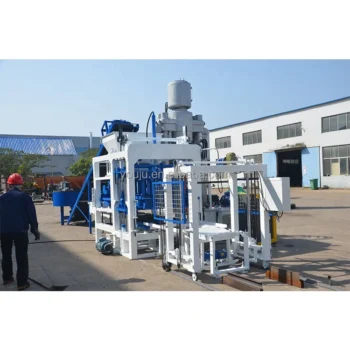
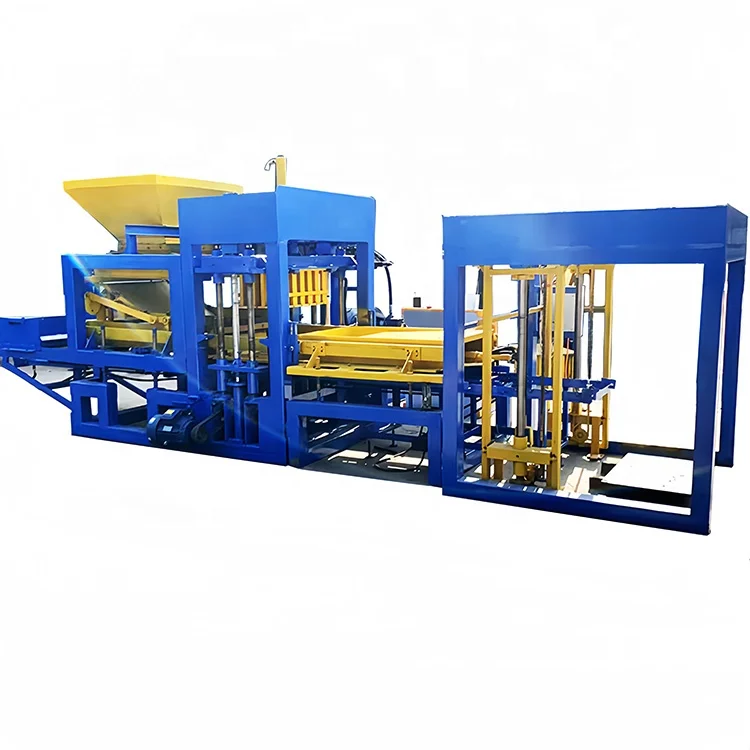
| Product Type | Fully Automatic Concrete Block Making Machine |
| Overall Dimensions (L×W×H) | 8300 x 1860 x 3000 mm |
| Rated Power | 37 kW |
| Vibration Form | Platform Vibration |
| Vibration Frequency | 2800–4500 RPM |
| Pallet Size | 950 x 900 mm |
| Molding Cycle | 15–25 s (basis not stated in source — confirm block format and material); 20–25 s with color layer |
| Brick Height Range | 50–200 mm |
| Control System | PLC with touch screen HMI |
| Hydraulic System | Independent integrated hydraulic station |
| Block Compressive Strength | Up to 15 MPa |
| Output Capacity | 1912 pcs/h based on 400×200×200 mm hollow block, 8 pcs/mould |
| Output Capacity | 2875 pcs/h based on 400×150×200 mm block, 12 pcs/mould |
| Output Capacity | 4320 pcs/h based on 240×115×90 mm block, 18 pcs/mould |
| Output Capacity | 9360 pcs/h based on 240×115×53 mm solid brick, 39 pcs/mould |
| Output Capacity | 3000 pcs/h based on 225×112.5×60 mm paver, 18 pcs/mould |
| Output Capacity | 4625 pcs/h based on 200×100×60 mm paver, 28 pcs/mould |
| Daily Output (8 h) | 15300 pcs/day based on 400×200×200 mm hollow block |
| Daily Output (8 h) | 74880 pcs/day based on 240×115×53 mm solid brick |
| Raw Materials | Fly ash, slag, gangue, industrial waste, river sand, gravel, cement |
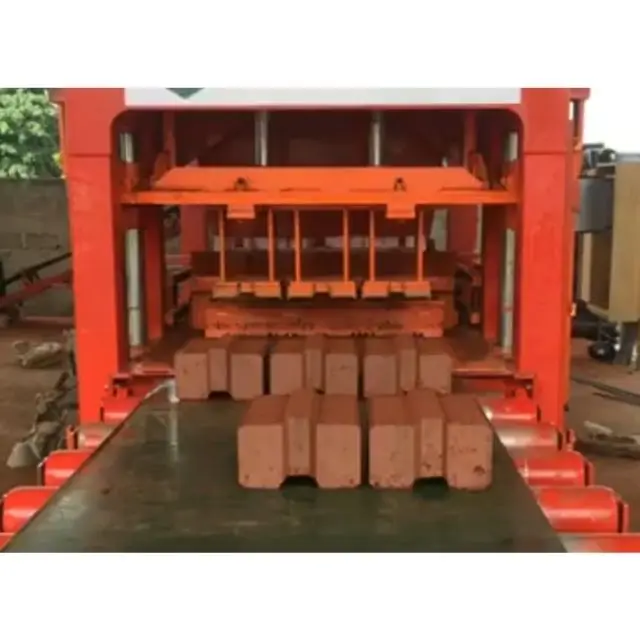
| Block Formats | Hollow block, porous block, solid block, paving block, curbstone, grass block, slope-protecting block, ring-tree block, colored paving block (optional color feeder) |
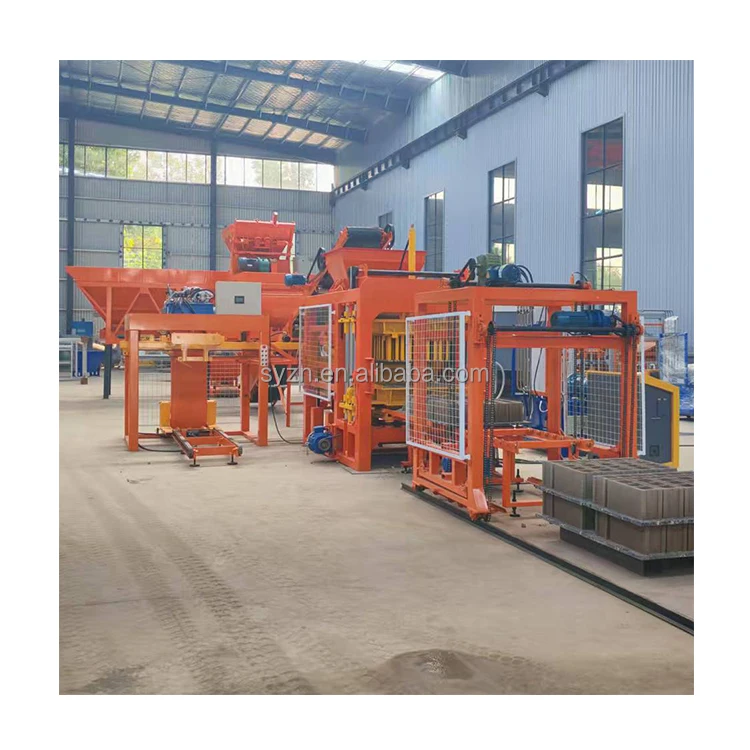
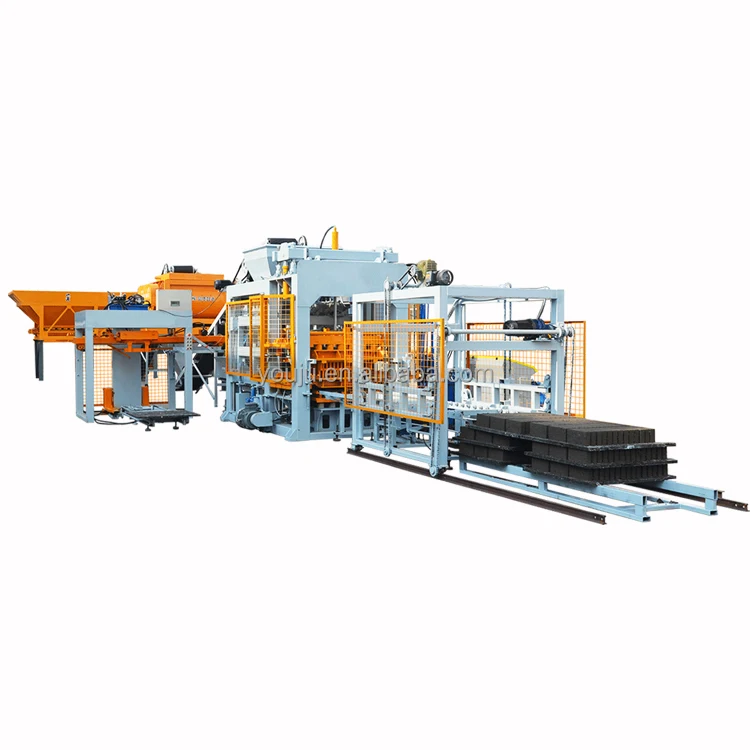
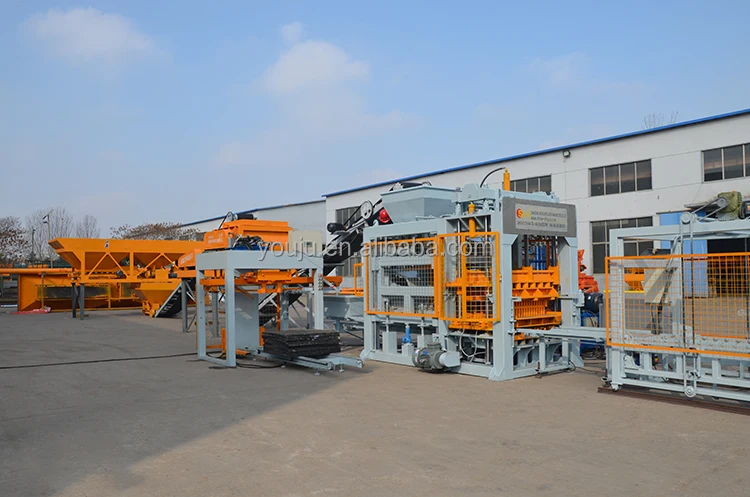
| Line Equipment | Cement silo, host block machine, mixer, batching machine, stacker, forklift, pallet feed machine, storage hopper, conveyor |
| Voltage & Frequency | Configurable to destination grid — confirm before production |
| PLC Display Language | Configurable — confirm before production |
Application Suitability
| Application | Material or Output |
|---|---|
| Hollow block production for building walls | Fly ash, slag, river sand, gravel blended with cement |
| Solid brick manufacturing for load-bearing structures | Crushed stone and cement mixes targeting 15 MPa |
| Paving block and curbstone for roads and walkways | River sand and gravel with optional color layer |
| Porous and grass block for landscaping | Permeable aggregate blends on 950×900 mm pallets |
| Slope-protecting and ring-tree blocks for civil works | Specialty moulds on the same host press |
Why the Voltage Question Must Come Before the Dispatch Date
Confirming voltage, frequency, and PLC language before a stocked machine ships prevents a multi-week standstill on your project site.
A few years back I handled a shipment to a West African block plant where the local grid ran at a different voltage and frequency than what the factory default assumed. The machine sat idle while a step-down transformer was sourced and installed locally, pushing the commissioning date back by weeks. That kind of delay erases any advantage you gained from choosing a stocked model with fast dispatch. The QT 8-15 block machine in stock fast delivery only matters if the electrical system matches your site from day one [NEED_CITE: voltage and frequency standards by export market].
Stock Availability and Dispatch Timeline
The QT 8-15 block machine in stock fast delivery model ships as a complete host press with its independent hydraulic station, PLC cabinet, and pallet feed mechanism already assembled and factory-tested. Standard moulds for hollow block and solid brick formats are packed alongside the main frame. Because the machine is held in ready-to-ship condition, the dispatch lead time narrows to the container booking and inland transport window rather than a full production cycle. Buyers working to a construction deadline can lock in a departure date at the point of order confirmation.
Container Loading and Machine Dismantling for Shipment
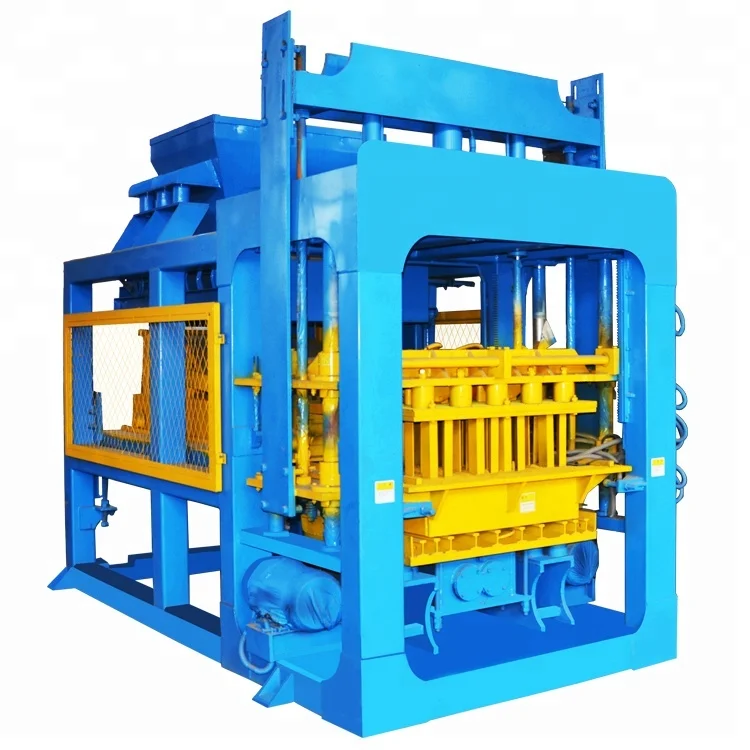
The 8300×1860×3000 mm frame is dismantled into major sub-assemblies — main press body, hydraulic station, control cabinet, and pallet feed unit — for container loading. Each sub-assembly is secured with timber bracing and steel strapping to prevent movement during ocean transit. The 950×900 mm pallets and standard moulds fill remaining cubic space in the same container, reducing the chance of a second shipment. Packing photographs are shared before the container is sealed so you can verify loading condition and part count [NEED_CITE: container loading best practices for heavy industrial machinery].
How Hydraulic Pressure and Vibration Force Shape Block Density
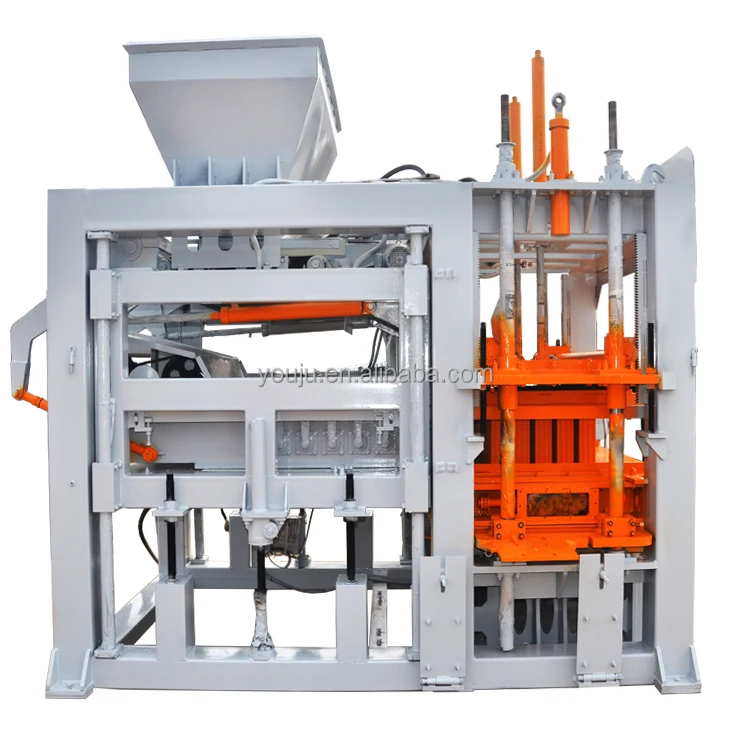
The QT 8-15 pairs an independent integrated hydraulic station with platform vibration at 2800–4500 RPM to compact the concrete mix from both above and below. Hydraulic pressure pushes the mould head down while the vibrating platform settles aggregate particles into a dense arrangement, together producing block compressive strength up to 15 MPa. The vibration frequency range lets the operator tune the cycle to different mix designs — coarser gravel demands higher amplitude and longer vibration, while fine fly ash blends consolidate faster. Because the hydraulic station is mounted separately from the main frame, it is isolated from press vibration and dust ingress, extending seal and valve life across thousands of daily cycles.
What Happens When Pallet and Curing Area Are an Afterthought
The 950×900 mm pallet size dictates how many blocks move through each molding cycle, but it also determines the curing rack dimensions and the forklift tine spacing at your plant. If the curing area was designed around a different pallet size, the freshly pressed blocks cannot be racked efficiently and output piles up on the floor, defeating the purpose of the automatic pallet feed system. Confirming pallet compatibility with your existing curing racks and material handling equipment before the QT 8-15 ships avoids a bottleneck that no amount of press speed can fix [NEED_CITE: pallet handling coordination in block production lines].
Why Buying a Stocked Model Here Reduces Arrival Risk
This machine is specified against the buyer’s actual mix design and target block format rather than shipped as a catalogue default. The mould selection covers hollow block, solid brick, paver, curbstone, and specialty formats, with custom mould drawings available when the local market demands sizes outside the standard range. Voltage, frequency, and PLC display language are confirmed against the destination grid before the machine leaves the factory, which is a lesson learned from earlier shipments where mismatched electrical specs caused avoidable delays. Factory test records and packing photographs are provided before the container is sealed, so you see the machine running and the load secured before it is out of reach.
Documentation & Verification
- Factory test record on your specified block format before dispatch
- Machine specification sheet with confirmed voltage and frequency
- Mould drawing and format list matching your ordered block sizes
- Packing photographs taken before container sealing
- Hydraulic and electrical schematic for on-site troubleshooting
- Operation and maintenance manual in confirmed PLC display language
Installation, Commissioning & Support
- Foundation must accommodate 8300×1860 mm footprint and dynamic vibration loads
- Dedicated 37 kW power circuit matching confirmed voltage and frequency
- Sub-assemblies reassembled on-site with hydraulic and electrical connections verified
- First-run cycle tuned to your local aggregate and target block compressive strength
- Operator training on PLC touch screen, mould change, and daily maintenance routines
- Wear parts and mould replacement list provided at handover
What to Include in Your Inquiry
Share your target block formats, the raw materials available locally, and the daily output you need so the stocked machine and mould package can be matched before departure. Confirm your site voltage, frequency, and the language your operators will use on the PLC screen. If you already have curing racks, forklifts, or pallets in place, send the dimensions so the 950×900 mm pallet system can be verified against your existing equipment.
Frequently Asked Questions
Q: Is the QT 8-15 currently in stock and what is the dispatch lead time?
A: The QT 8-15 is held as a stocked model with standard moulds. Once voltage, frequency, and PLC language are confirmed against your destination, the dispatch lead time covers inland transport to port and container booking. A departure estimate is provided at the quotation stage so you can plan your project timeline.
Q: How is the machine dismantled and loaded into containers for shipment?
A: The main press body, hydraulic station, control cabinet, and pallet feed unit are separated into sub-assemblies, secured with timber bracing, and loaded into standard shipping containers. Moulds and pallets fill remaining space in the same container. Packing photographs are taken before sealing.
Q: What is the estimated transit and arrival time to my port?
A: Ocean transit time depends on your destination port and current shipping schedules. Once the container is booked, a sailing date and estimated arrival are provided. Combining dispatch lead time with transit days gives you a projected on-site date for planning foundation work and utility connections.
Q: Which standard moulds ship with the stocked machine and can additional moulds be added?
A: Standard hollow block and solid brick moulds are included with the stocked QT 8-15. Additional moulds for pavers, curbstones, or specialty formats can be added to the same container before sealing, provided the format drawings are confirmed in advance.
Q: What on-site conditions must be ready before the machine arrives?
A: The foundation must support the 8300×1860 mm footprint and vibration loads. A dedicated power circuit matching the confirmed voltage and frequency is required. The curing area and forklift should be compatible with 950×900 mm pallets so blocks can be racked immediately after pressing.