


Description
Single Focus on Block Machinery — Every QT10-15 automatic cement block making machine in our stock list is specified against the buyer’s actual block format and local aggregate, not a generic catalogue default.
Technical Specifications
| Parameter | Value |
|---|---|
| Model | QT10-15 |
| Product Type | Automatic Cement Block Making Machine |
| Control System | PLC control cabinet |
| Hydraulic System | Independent integrated hydraulic station |
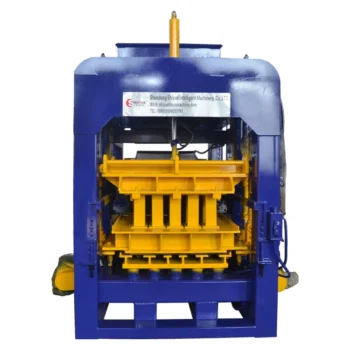
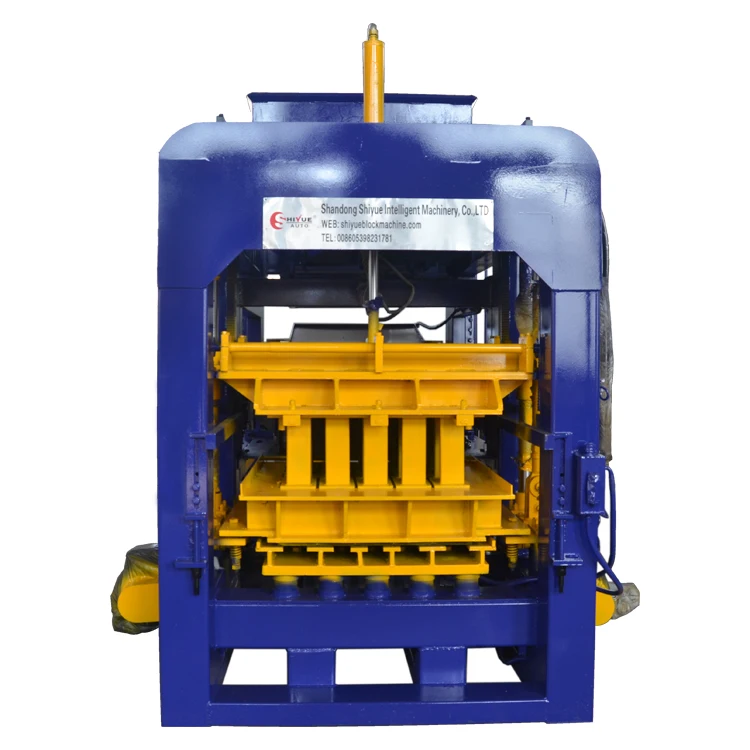
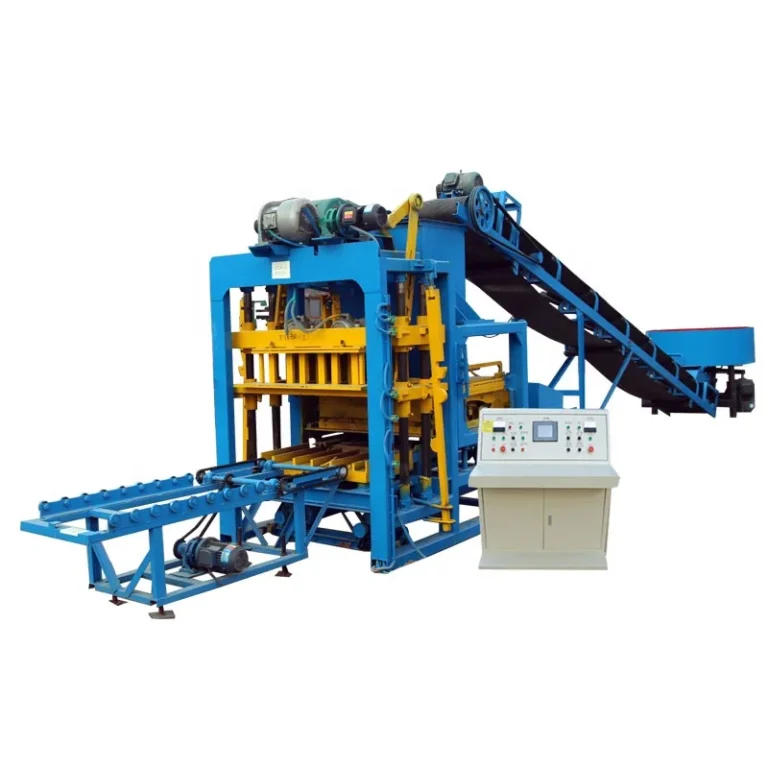
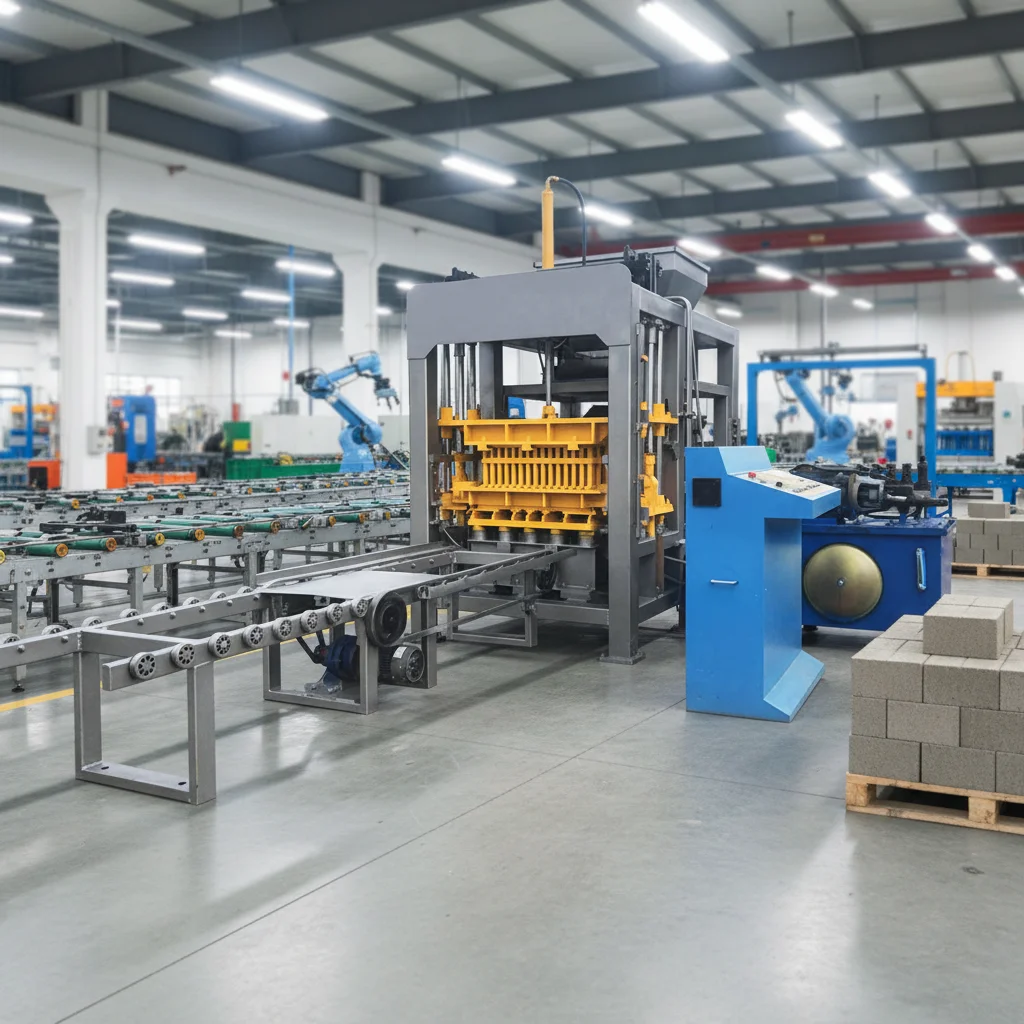
| Component List | Pallet feed machine, block making machine, storage hopper, conveyor, hydraulic unit, PLC control cabinet |
| Mould Change | Simple replacement of mould for multi-function production |
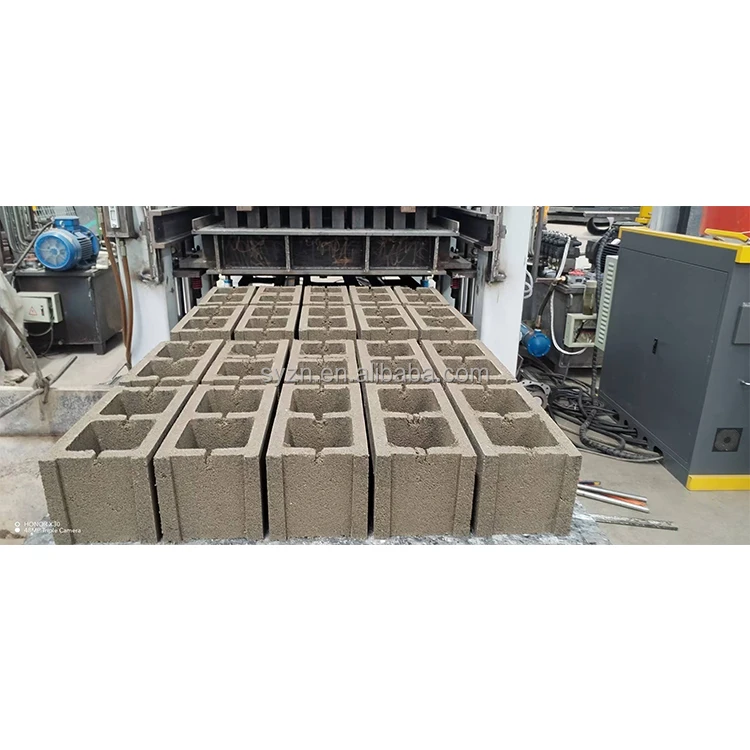
| Moulding Cycle (400×200×200mm hollow block) | 15–20s |
| Capacity (400×200×200mm hollow block) | 1800–2400 pcs/hour (basis: 10 pcs/mould) |
| Moulding Cycle (240×115×53mm standard brick) | 15–20s |
| Capacity (240×115×53mm standard brick) | 8928–11160 pcs/hour (basis: 62 pcs/mould) |
| Moulding Cycle (200×100×60mm paving block) | 20–25s |
| Capacity (200×100×60mm paving block) | 5184–6480 pcs/hour (basis: 27 pcs/mould) |
| Assembly State | Production line configuration (multiple stations) |
| Automation Level | Automatic |
| Standard | CE (documentation available) |
| Warranty | 1 year for the whole machine (excluding spare parts) |
| Voltage & Frequency | (basis not stated in source — confirm before dispatch) |
| Pallet Size | (basis not stated in source — confirm block format and material) |
| Rated Power | (basis not stated in source — confirm with supplier) |
| Overall Dimensions | (basis not stated in source — confirm with supplier) |
Application Suitability
| Application | Material or Output |
|---|---|
| Hollow block production | Crushed stone, river sand, cement and fly ash blends for load-bearing and non-load-bearing masonry |
| Standard solid brick manufacturing | Fine aggregate and cement mixes for structural and partition walls |
| Paving block production | High-density aggregate and cement blends for walkways, driveways and municipal paving |
| Interlocking brick production | Graded aggregate and cement for mortarless wall systems and retaining structures |
| Multi-cellular brick manufacturing | Lightweight aggregate blends for thermal and acoustic insulation blocks |
Why Dispatch Timing Decides the Real ROI
A QT10-15 block machine in stock only matters if the container arrives before your project milestone.
Buyers who focus on cycle times per hour often discover that a machine sitting in a port for six weeks destroys the productivity advantage they negotiated. I have watched contractors in West Africa pay demurrage fees that wiped out an entire quarter of block margin because the voltage specification was wrong on the proforma and the machine could not run through local inspection. When a housing project has a hard handover date, the gap between "factory tested" and "producing on your site" is where the schedule breaks down [NEED_CITE: port congestion and customs clearance timelines for heavy industrial equipment]. That is why confirming container loading plans and dispatch lead time matters more than debating a fraction of a second off the moulding cycle.
Stock Status and What Actually Fits in the Container
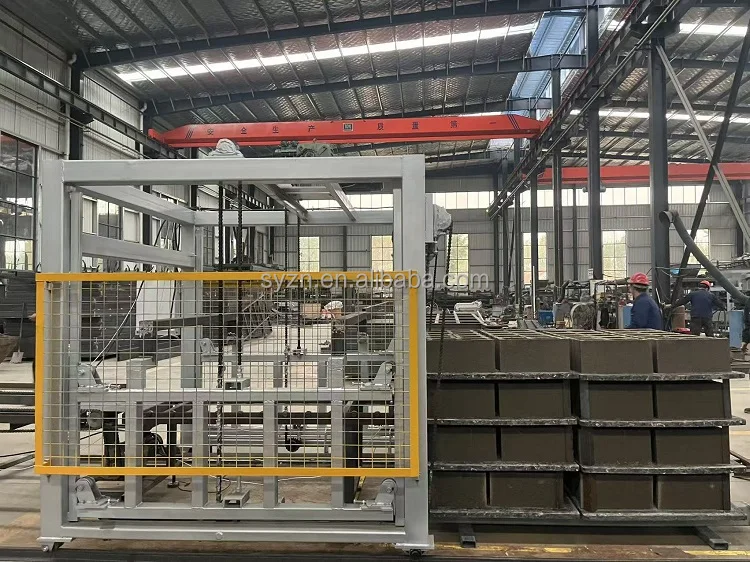
The QT10-15 block machine in stock is configured as a multi-station production line, which means pallet feed machine, block press, storage hopper, conveyor and PLC cabinet all need to be dismantled, crated and sequenced for container loading. When a buyer asks how fast we can ship, the honest answer depends on whether the pallet size and voltage are already locked in — standard configurations move faster because the factory test has already been run on that exact setup. Every station has to be labelled and photographed so your site crew can reassemble in the correct order without guessing.
Arrival Estimates That Hold Up After the Deposit
Quoting an arrival date is only useful when it accounts for the shipping route, port congestion at destination and the time your clearing agent needs to release the container [NEED_CITE: average maritime transit times from Qingdao to major African and Southeast Asian ports]. We confirm the estimated arrival window at order placement, not after the machine is already on the water. If your project schedule cannot absorb a two-week buffer, that conversation happens before the proforma is signed — not during loading.
What the Numbers on the Spec Sheet Actually Mean on Your Site
The independent integrated hydraulic station keeps hydraulic oil away from the vibration zone, which matters when the press runs continuous shifts and vibration dust would otherwise degrade valve seals over time. The PLC control cabinet manages the entire line sequence — pallet feed, material storage, conveyor timing and moulding cycle — so the operator is not manually coordinating each station. Moulding cycles of 15–20 seconds for hollow blocks and 20–25 seconds for paving blocks assume the mix design has already been matched to your local aggregate [NEED_CITE: effect of aggregate density and moisture content on concrete block vibration frequency]. A heavier volcanic aggregate, for example, demands different vibration force settings than the river sand we use for factory testing, and that adjustment must happen before the first production run, not after two months of underperforming output.
When the Quotation Leaves Out the Rest of the Line
A press running at full cycle speed means nothing if pallets have to be moved by hand and stacked blocks sit on the ground waiting for a forklift that is shared with three other tasks. Buyers who compare quotations on the press price alone often discover that pallet handling, automatic stacking and curing rack equipment were never included — so the "automatic" line they bought still needs four workers doing manual labour at the end of the conveyor. That mismatch shows up as a labour cost that was never budgeted and a daily output that never reaches the quoted figure.
What Changes When the Machine Is Built Around Your Format
Block machinery is our single focus, which means the QT10-15 automatic cement block making machine is not assembled from a catalogue of unrelated components. Mould design covers the formats your market actually sells, including custom drawings if your local standard differs from our defaults. Capacity calculations on the quotation state exactly which block format each figure assumes, so there is no surprise when you switch from hollow blocks to pavers mid-shift. Automation level is selectable — you can take delivery semi-automatic and upgrade pallet handling or stacking later without replacing the press. Factory testing runs on a mix design that mirrors your local aggregate, not a laboratory sample.
Documentation & Verification
- Line layout drawing with capacity calculation stated per block format
- Machine specification sheet with voltage, frequency and PLC language confirmed
- Factory test record run on your specified mould and mix design before dispatch
- Packing photographs showing crating and container loading sequence
- CE declaration documentation where applicable to your import market
- Wear parts and mould list with replacement intervals noted
Installation, Commissioning & Support
- Foundation plan specifying load points for the multi-station production line configuration
- Voltage and frequency confirmed on the proforma so the PLC cabinet matches local supply
- Dismantling and labelling protocol so each station reassembles in correct sequence on site
- Commissioning with vibration frequency adjustment matched to your local aggregate sample
- Operator training covering mould changeover and PLC sequence management
- Wear parts and hydraulic component list supplied with recommended reorder quantities
What We Need to Confirm Before the Container Loads
Send us the block format you actually sell — not the one in the brochure — along with your daily output target and the aggregate available at your site. We need your local voltage, frequency and the language your operators will read on the PLC display. If you have an existing pallet size or curing rack system, tell us the dimensions so the pallet feed machine and conveyor are matched to what is already on your floor.
Frequently Asked Questions
Q: Which QT10-15 configurations are currently in stock and ready to ship?
A: Standard configurations with common pallet sizes and mould formats are available for prompt dispatch. If your project requires a specific pallet dimension, voltage or PLC language, the machine is configured and factory tested before loading. We confirm the exact dispatch lead time at quotation stage based on your requirements and current stock status.
Q: What is the dispatch lead time and how is the machine dismantled for container loading?
A: Dispatch lead time depends on whether your configuration matches a stocked setup or requires mould and voltage adjustment. The multi-station line is dismantled into labelled sections — press, pallet feeder, hopper, conveyor and PLC cabinet — each crated and photographed before container loading so your site crew can reassemble efficiently.
Q: Does the quotation include pallets, stacking equipment and curing rack handling?
A: Every quotation itemises exactly what is in the container. Pallet handling, stacking and curing equipment are specified separately so you can see the cost of each station. If your budget or timeline does not include full automation now, the line can start semi-automatic and upgrade later.
Q: Can voltage, frequency and PLC language be confirmed before the machine leaves the factory?
A: Yes — these are confirmed on the proforma before production or dispatch. The PLC cabinet is set to your local voltage, frequency and operator language so commissioning is not delayed by electrical mismatches or unreadable displays when the container arrives at your site.
Q: What is the realistic daily output for the block format I actually produce?
A: Capacity depends on the specific block format, mould cavity count and your local aggregate. We state output per format on the quotation — for example, hollow blocks at 400×200×200mm yield a different hourly figure than 200×100×60mm paving blocks. Your realistic daily output is calculated after we test your mix design.