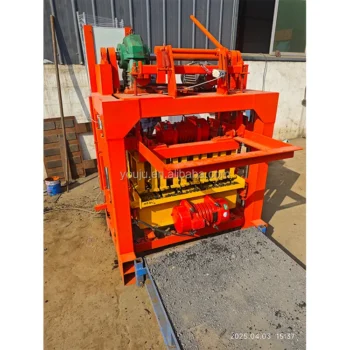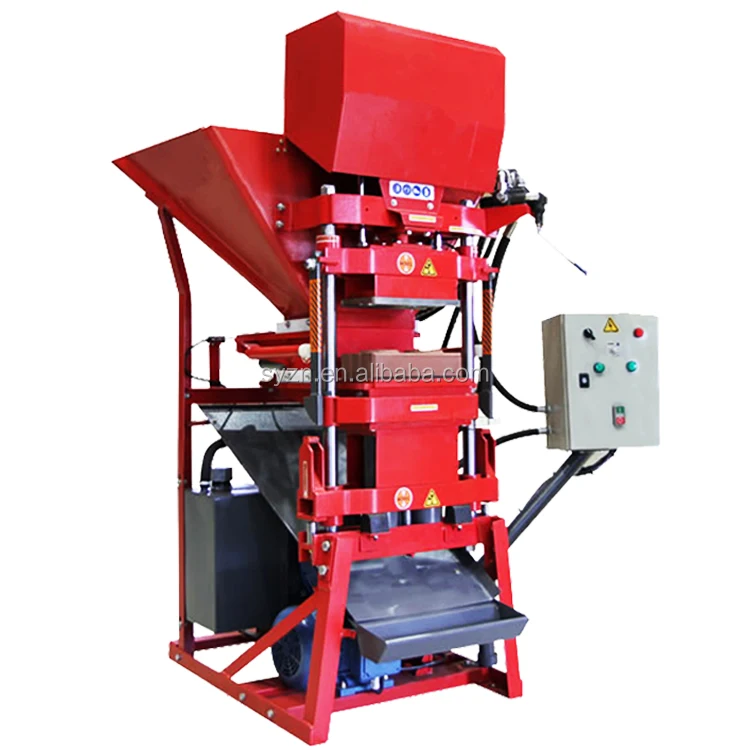
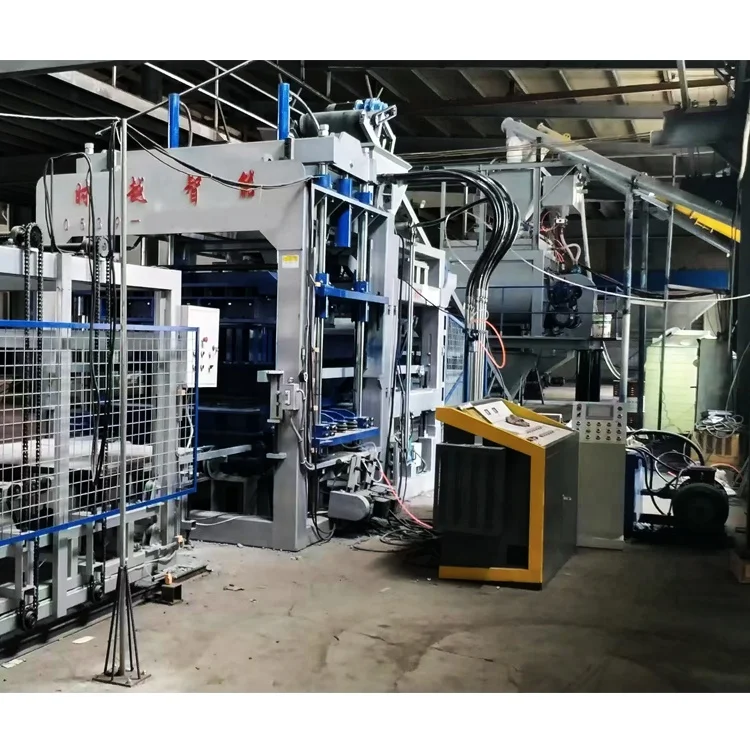
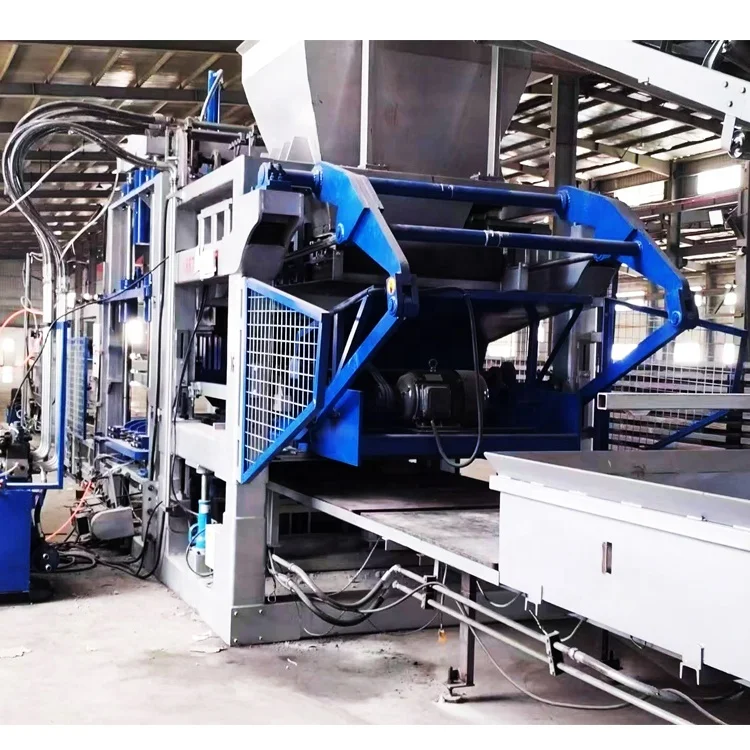
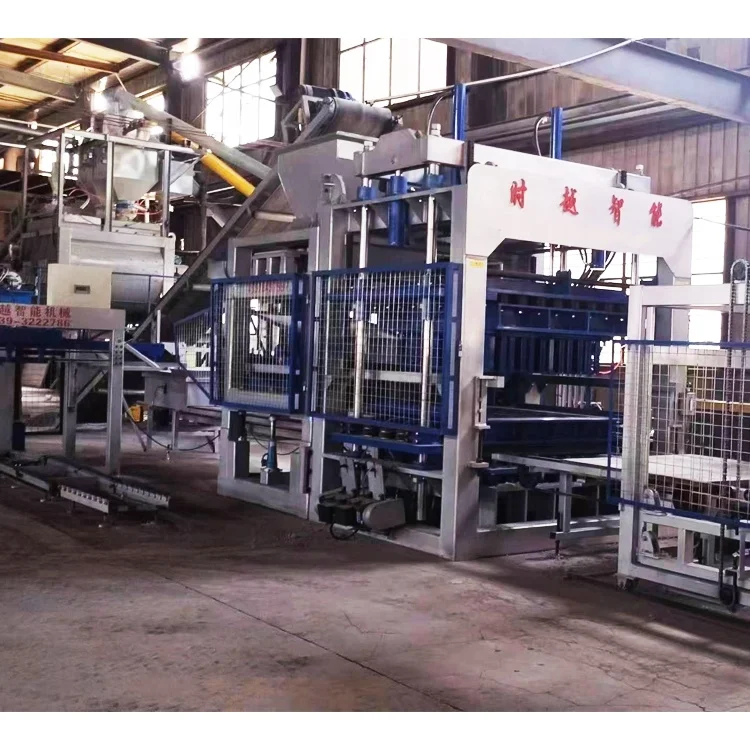
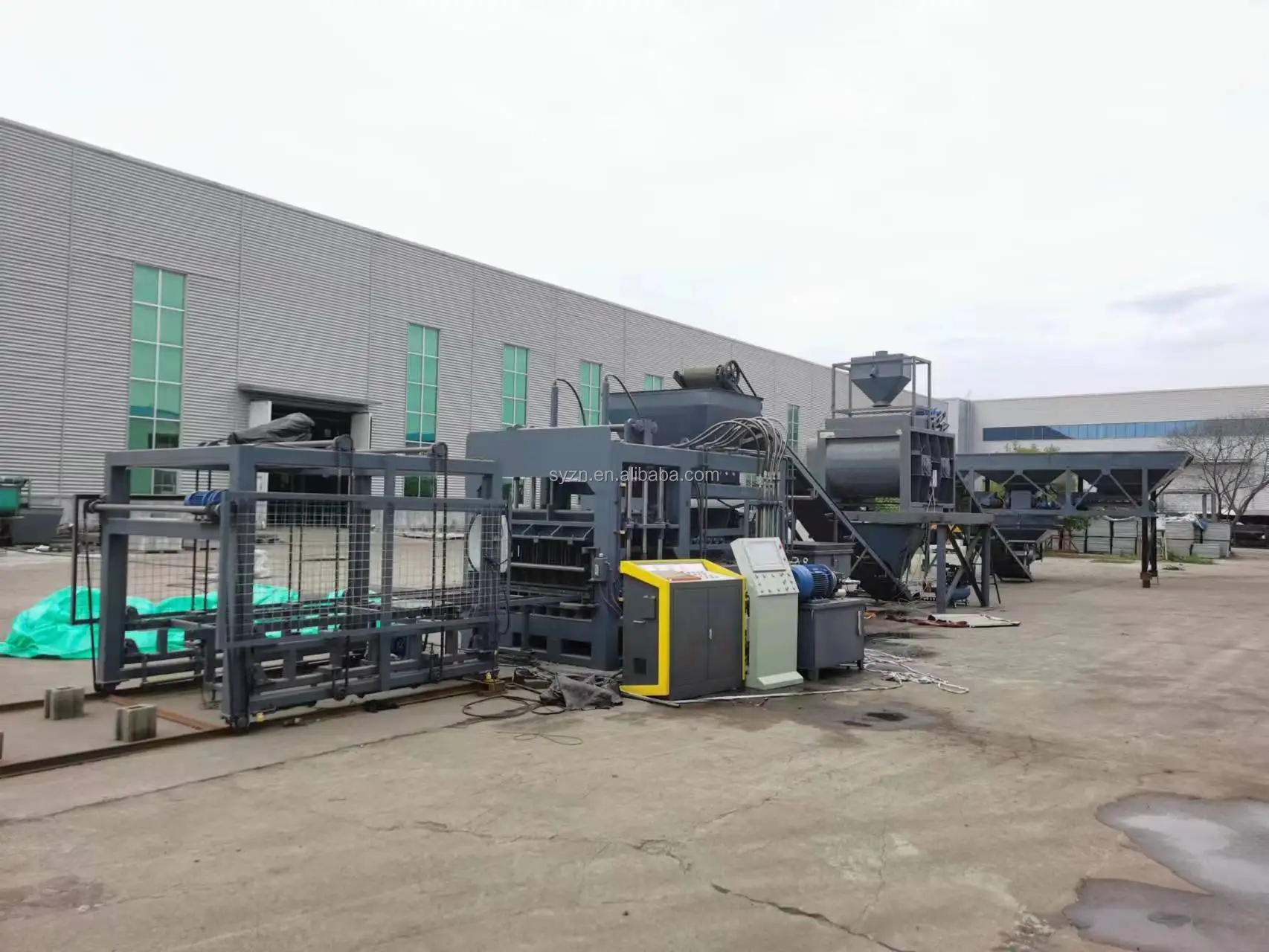
Description
Stocked Dispatch Window — QT15-15 availability status and container loading plan quoted with confirmed calendar dates, letting project-bound buyers plan arrival timing instead of guessing lead times.
Technical Specifications
| Parameter | Value |
|---|---|
| Model | QT15-15 |
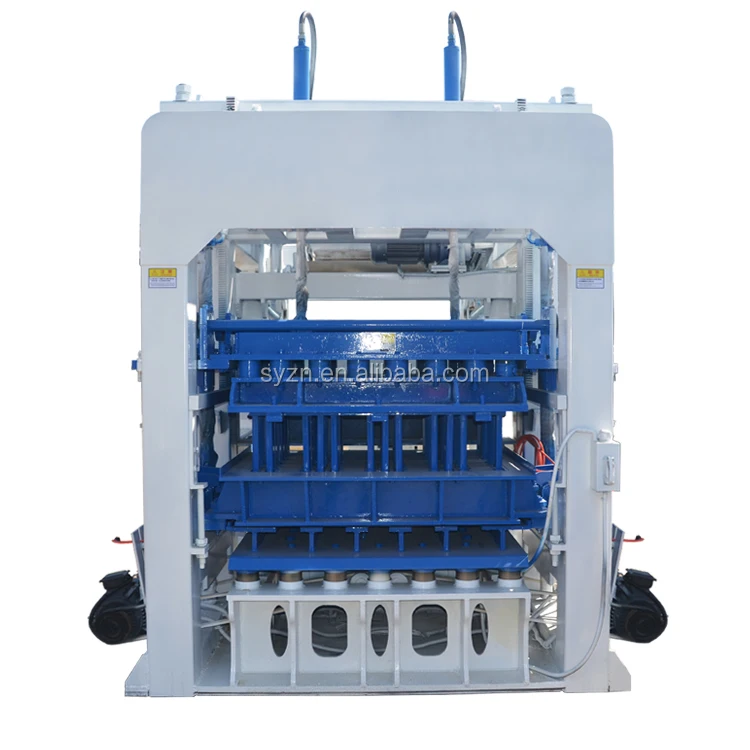
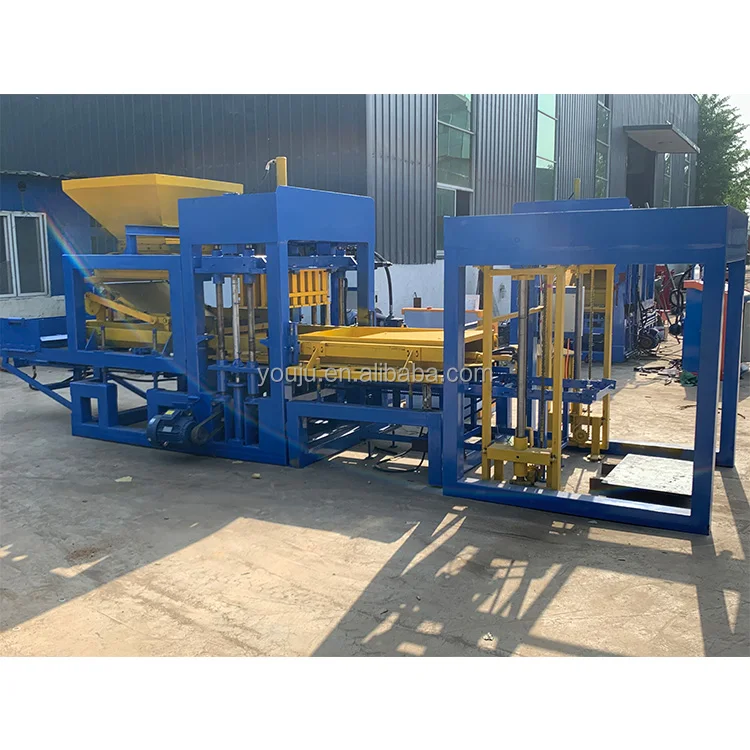
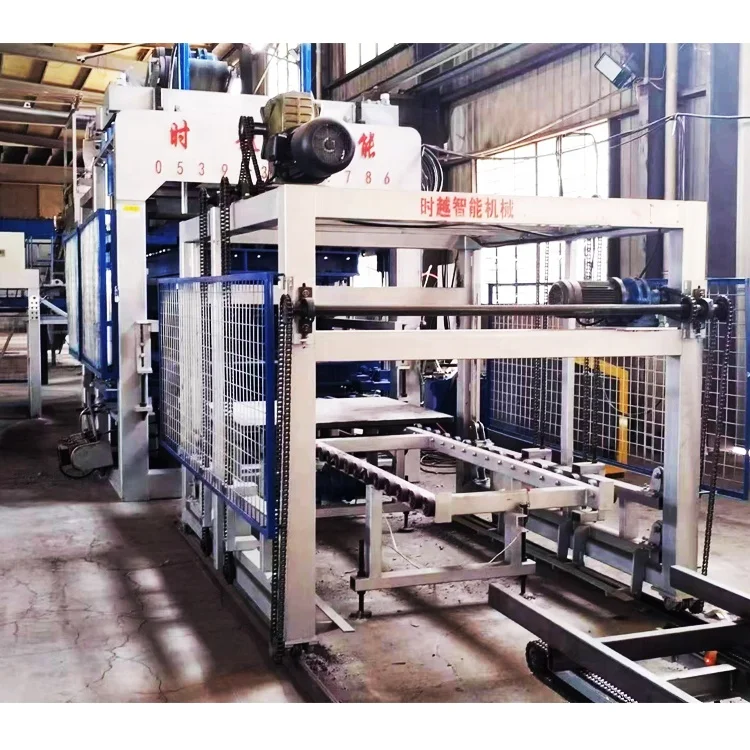
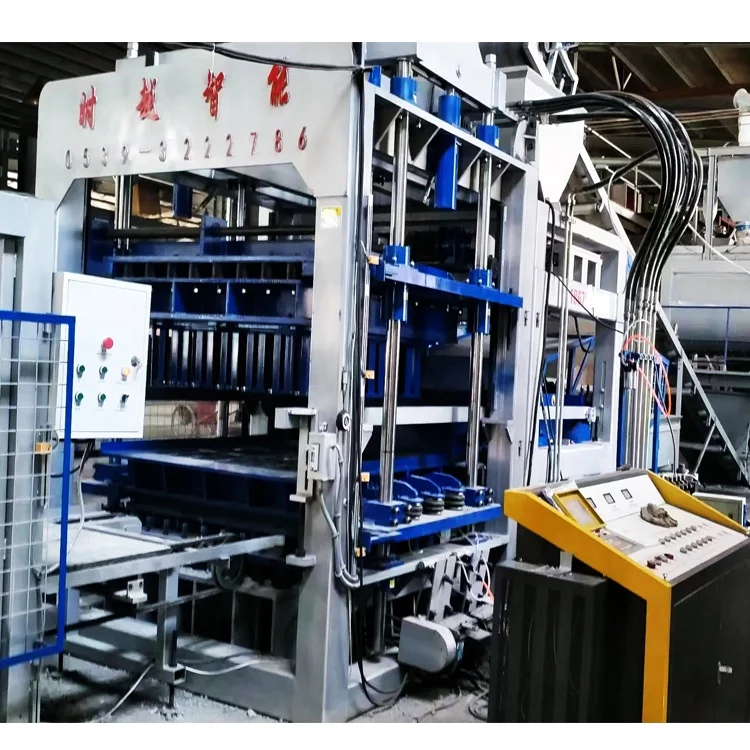
| Product Type | Stationary Concrete Block Making Machine |
| Overall Dimensions (L×W×H) | 9350×2520×2950 mm |
| Net Weight | 15 T |
| Rated Power | 45.7 kW |
| Voltage & Frequency | 380V or according to buyer needs (frequency to be confirmed) |
| Control System | PLC (brand and language options to be confirmed) |
| Hydraulic Pressure | 21 MPa |
| Pallet Size | 1350×850×40 mm |
| Vibration System | Four external vibration motors with reduced individual starting load |
| Feeding System | Material feeder cylinder with turning arm (European design) |
| Upper Mould Synchronization | Dual-side synchronous gear, four-point stabilization |
| Vibration Damping | Airbag system with adjustable air pressure per brick type |
| Output Capacity (400×200×200 mm hollow block) | 3600 pcs/h (15 pcs/mould) (basis not stated in source) |
| Output Capacity (400×150×200 mm block) | 4320 pcs/h (16 pcs/mould) (basis not stated in source) |
| Output Capacity (240×115×53 mm solid brick) | 14000 pcs/h (62 pcs/mould) (basis not stated in source) |
| Daily Output (400×200×200 mm hollow block) | 28800 pcs/day (basis not stated in source) |
| Daily Output (400×150×200 mm block) | 34560 pcs/day (basis not stated in source) |
| Daily Output (240×115×53 mm solid brick) | 112000 pcs/day (basis not stated in source) |
| Color Options | According to buyer request |
| Warranty | 1 year |
| Standards | ISO 9001:2008, CE |
Application Suitability
| Application | Material or Output |
|---|---|
| Hollow block production | 400×200×200 mm and 400×150×200 mm formats from crushed stone, sand, cement, and water |
| Solid brick production | 240×115×53 mm format from aggregate and cement mix |
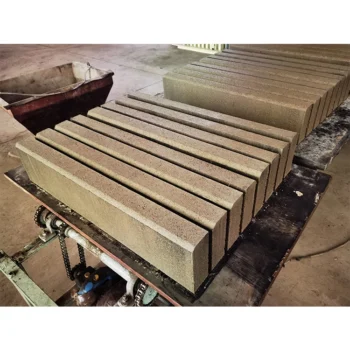
| Interlocking paver production | Available upon mould selection confirmation |
| Block and paver production plants | High-volume stationary installation for fixed-site manufacturing |
| Construction contractor on-site production | Large-format block supply for infrastructure and housing projects |
| Building material distributor inventory | Stock model with fast delivery for import and local resale markets |
What "3600 Pieces per Hour" Leaves Out About the QT15-15 Stationary Block Machine in Stock
Capacity figures mean nothing without the block format attached to them.
A hollow block measuring 400×200×200 mm yields 15 units per mould cycle, producing a stated 3600 pcs/h and 28800 pcs/day. Switch that same machine to a 400×150×200 mm format and the per-cycle count rises to 16, pushing the stated rate to 4320 pcs/h. Drop to solid bricks at 240×115×53 mm and you get 62 per mould, reaching 14000 pcs/h. Buyers who compare machines based on a single headline number end up discovering — after commissioning — that their actual target format produces a fraction of what was quoted [NEED_CITE: block machine capacity calculation by mould format]. Every capacity claim on this page ties directly to a named dimension and piece count.
Dispatch Readiness and Container Loading
Buyers working against a construction deadline need to know whether the QT15-15 stationary block machine in stock can ship within the project window. The overall dimensions of 9350×2520×2950 mm and the 15-tonne net weight dictate the container loading plan, including which sub-assemblies are dismantled for transport and how many open-top or standard containers are required. Dispatch lead time is confirmed in calendar days from payment, and a packing photograph set is provided before the container door closes. This removes the guesswork that turns a fast order into a delayed arrival.
Voltage and Control Language Confirmed Before Shipment
The 45.7 kW rated power and 380V default electrical specification must be matched against the buyer’s site supply — frequency included — before the machine enters production. I once watched a 15-tonne block press sit idle on a job site in West Africa for three full days because the PLC display arrived in Chinese, and no local operator could read the menus. Since that experience, every unit ships with a signed voltage, frequency, and PLC display language confirmation sheet [NEED_CITE: industrial equipment commissioning delay causes by export market]. The airbag vibration damping system requires pressure settings per brick type, which are also documented before dispatch.
Hydraulic Pressure, Vibration, and the Density Equation
The 21 MPa hydraulic pressure and four external vibration motors work together during each cycle: hydraulic force compacts the mix from above while vibration settles aggregate particles from below. If either force is mismatched to the buyer’s specific cement-to-aggregate ratio and local stone gradation, the resulting block density falls short of the target strength class. The dual-side synchronous gear and four-point stabilization keep the upper mould level during this process, preventing uneven wall thickness across the pallet. The European-design material feeder cylinder with turning arm ensures the mould cavity fills consistently cycle after cycle, which matters when switching between hollow and solid formats. The pallet size of 1350×850×40 mm must be checked against the buyer’s existing curing racks and forklift tines — a mismatch here means new handling equipment on arrival [NEED_CITE: pallet size compatibility with block plant curing systems].
The Cost of Skipping Pre-Shipment Verification
When voltage, frequency, and control language are left unconfirmed, the machine arrives and sits while an electrician rewires the cabinet and a technician waits for translated software. When pallet size is chosen without checking the curing area dimensions, the buyer orders new racks or struggles with forklift handling daily. When capacity is assumed from a single headline figure, the plant runs short on its first contract delivery and the buyer scrambles to add shifts or source external supply [NEED_CITE: common causes of block plant commissioning failure]. These are not theoretical risks — they repeat on every shipment where the specification dialogue is rushed.
Why This Supply Point Works for Deadline-Driven Buyers
The QT15-15 is configured as one matched system — press, mould, pallet, and handling — rather than assembled from separate supplier quotes. Stock or short-lead-time availability is stated upfront with a dispatch calendar, not buried in a production queue. The capacity calculation is documented per block format so buyers can verify daily output against their contract volumes. Voltage, frequency, and PLC language are locked in writing before the machine is built or released from stock. Moulds and hydraulic wear parts are listed and available at the point of shipment, so the first replacement order does not become a sourcing problem.
Documentation & Verification
- Factory test record confirming hydraulic pressure and vibration settings for your target block format
- Line layout with capacity calculation stating the exact mould dimension assumed per output figure
- Pallet specification sheet cross-referenced to your curing rack dimensions and forklift capacity
- Voltage, frequency, and PLC display language confirmation signed before dispatch
- Mould drawing and format list covering all supplied cavity configurations
- Packing photographs of dismantled assemblies before container loading
Installation, Commissioning & Support
- Foundation plan sized to the 9350×2520 mm footprint and 15-tonne operating weight
- Electrical supply verification for 45.7 kW at confirmed voltage and frequency with dedicated circuit
- Dismantled assembly sequence for on-site reassembly with marked connection points
- PLC menu language and vibration airbag pressure set per target brick type during commissioning
- Operator training covering mould change procedure and daily maintenance checkpoints
- Wear parts list and hydraulic seal inventory for first-year operation
What We Need to Confirm Your Delivery Window
To provide an accurate dispatch date and arrival estimate for the QT15-15 stationary block machine in stock, we need your target block format and daily volume, the confirmed voltage and frequency at your site, your preferred PLC display language, and the container destination port. If you have existing pallets or curing racks, share those dimensions so we can verify the 1350×850×40 mm pallet compatibility before loading.
Frequently Asked Questions
Q: Is the QT15-15 currently in stock or what is the production lead time?
A: Availability depends on current inventory and the configuration required. Standard models with common mould sets may be dispatched from stock within a short window, while specific voltage, frequency, or PLC language requirements may require a brief production adjustment. We confirm the exact dispatch date in calendar days against your confirmed site specifications.
Q: How many containers are needed and how is the machine dismantled for shipment?
A: The 9350×2520×2950 mm frame and 15-tonne weight require a specific dismantling and loading plan. The press frame, hydraulic unit, feeder assembly, and mould set are separated and secured for transport. We provide the container count and type along with packing photographs before the shipment leaves the factory.
Q: Can I get an arrival estimate at my destination port before placing the order?
A: Yes. Once the dispatch date and destination port are confirmed, we provide a transit time estimate based on the shipping route. This lets buyers working to a construction deadline align machine arrival with site readiness and commissioning schedules.
Q: What standard moulds are stocked and available for immediate dispatch with the machine?
A: Standard hollow block and solid brick moulds matching the stated output figures are typically available. Custom interlocking paver or kerbstone formats require mould lead time confirmation. We provide a complete mould format list with the quotation so you know exactly which cavities ship with the press.
Q: Are pallets included in the shipment and what is the packing method?
A: Pallets sized at 1350×850×40 mm can be included in the container loading plan, with the quantity confirmed before dispatch. All components are packed with timber bracing and steel strapping, and packing photographs are shared with the buyer before the container is sealed.