

Description
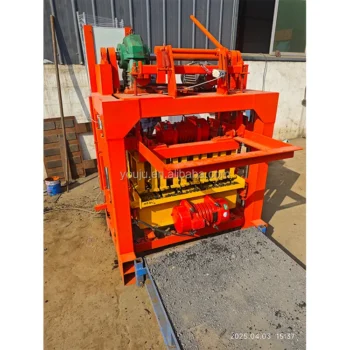
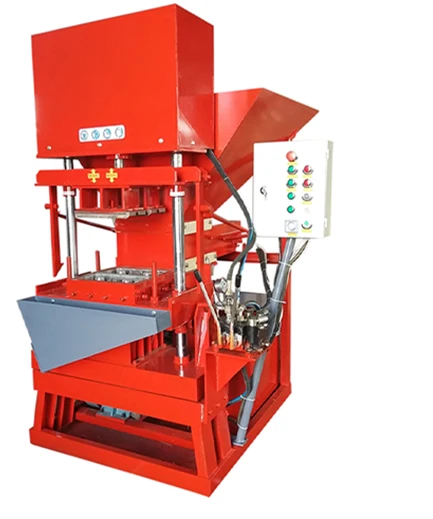
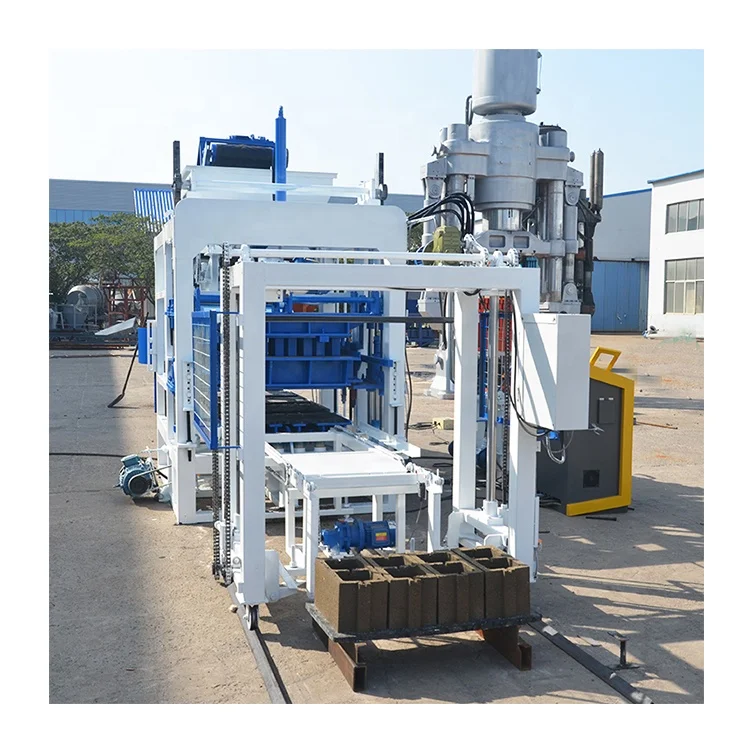
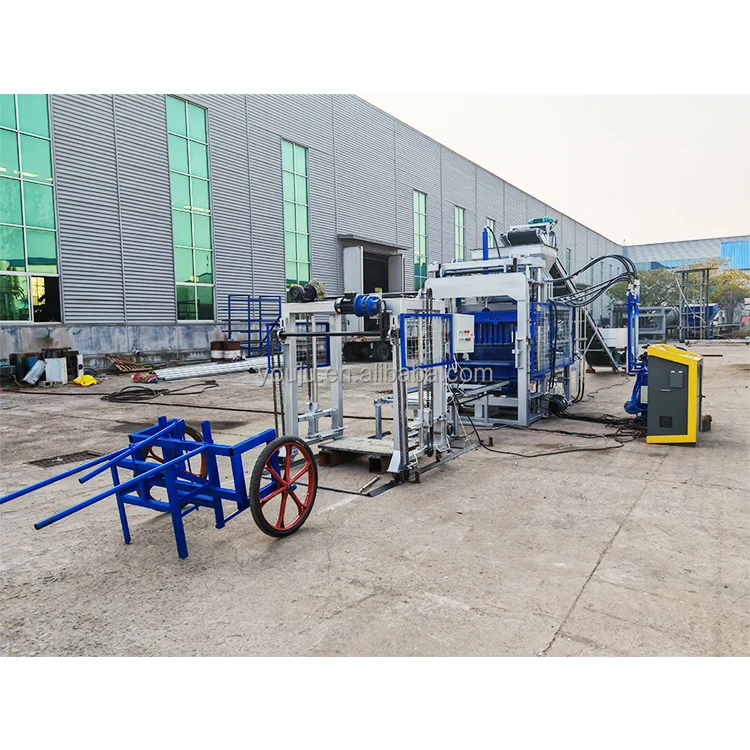
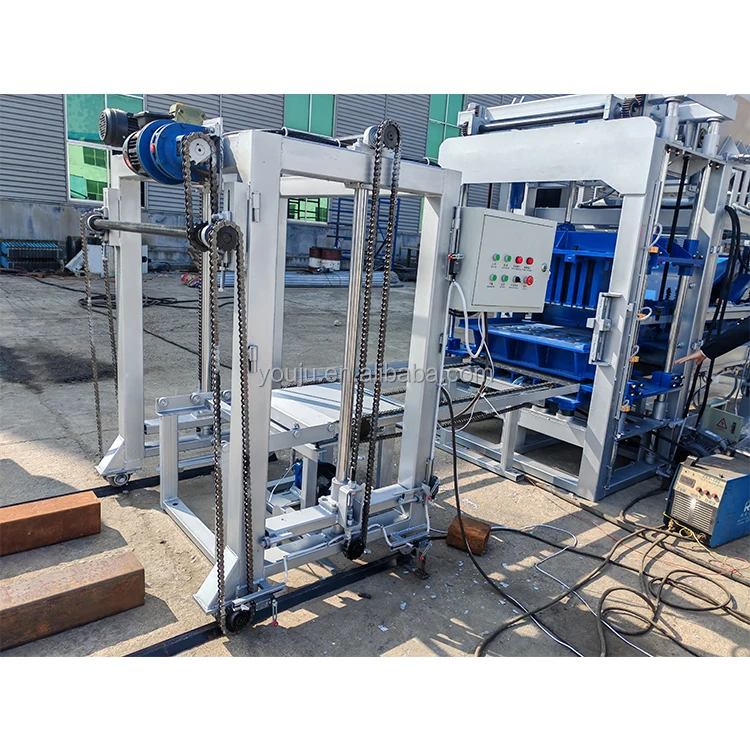
Stocked Configurations — QT4-15 block machine in stock with standard moulds and pallets, dispatch lead time confirmed at quotation rather than after weeks of silence.
Technical Specifications
| Parameter | Value |
|---|---|
| Model | QT4-15 |
| Product Type | Automatic Hydraulic Block Making Machine |
| Control System | PLC controlled with approach switch monitoring |
| Molding Cycle | 15-30s |
| Pallet Size | 900×500mm |
| Vibration Type | Platform vibration |
| Vibration Frequency | 50-70Hz |
| Product Height Range | 50-220mm |
| Overall Power | 24.5kW |
| Demolding Method | Hydraulic |
| Automation Level | Automatic (machinery, electric, hydraulic and vibrating systems integrated) |
| Raw Material Compatibility | Fly ash, slag, gangue, sand, crushed stone, cement, water and other industrial residues |
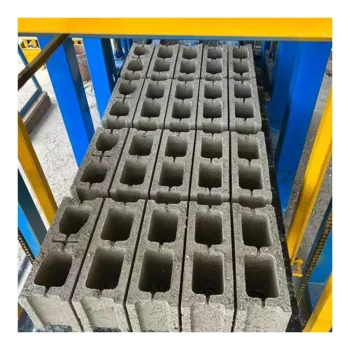
| Mould Format Options | Hollow block, paver brick, solid brick (changeable moulds) |
| Output Capacity — Hollow Block 400×200×200mm | 900-1200 pcs/h, 7200-9600 pcs/8hr (basis: 4 pcs/mould, 15-20s cycle) |
| Output Capacity — Hollow Block 400×150×200mm | 1080-1440 pcs/h, 8640-11520 pcs/8hr (basis: 5 pcs/mould, 15-20s cycle) |
| Output Capacity — Hollow Block 400×100×200mm | 1440-1920 pcs/h, 11520-15360 pcs/8hr (basis: 8 pcs/mould, 15-20s cycle) |
| Output Capacity — Paver 200×100×60mm | 2880-3840 pcs/h, 23040-30720 pcs/8hr (basis: 16 pcs/mould, 15-20s cycle) |
| Output Capacity — Solid Brick 240×115×53mm | 5930-6720 pcs/h, 47400-53700 pcs/8hr (basis: 28 pcs/mould, 15-20s cycle) |
| Hydraulic and Electrical Components | Original imported or China well-known brand (basis to be confirmed) |
| Voltage & Frequency | Configurable — confirm before commissioning |
| PLC Display Language | Configurable — confirm before commissioning |
| Block Compressive Strength | ≥15 MPa (basis to be confirmed) |
Application Suitability
| Application | Material or Output |
|---|---|
| Medium-scale hollow block plant | Fly ash, slag, sand and cement mixes for 400×200×200mm and 400×150×200mm hollow blocks |
| Paver brick production for municipal and housing projects | Crushed stone and cement for 200×100×60mm interlocking pavers |
| Solid brick manufacturing for local masonry markets | Sand, gangue and cement for 240×115×53mm standard bricks |
| On-site block production for housing developments | Locally sourced aggregates and industrial residues with 900×500mm pallets |
| First plant setup by entrepreneurs | Multi-format output using changeable moulds across hollow, solid and paver formats |
What "In Stock" Should Actually Mean for Your Project Deadline
A stocked QT4-15 block machine in stock should ship within days, not weeks of re-confirmation.
I have watched project contractors lose their first month of production because the machine they ordered was still "in production scheduling" long after the deposit cleared. The dispatch date was never written down. When the site crew arrived, the foundation was poured and the forklift was rented — but the press was nowhere near a container. [NEED_CITE: typical delays between deposit and actual dispatch for block machinery orders]
A buyer working against a construction deadline does not need a catalogue. They need to know which configurations are sitting on the floor today, which standard moulds go with them, and exactly how many days from contract signature to container gate-out. The QT4-15 block machine in stock is listed here with those details upfront so your procurement timeline matches your site mobilisation plan.
Dispatch Lead Time and Container Loading Plan
When we quote a QT4-15 block machine in stock, the lead time covers factory test, dismantling for shipment, and container loading — not just the date the machine leaves the assembly bay. The 24.5kW power package and hydraulic station are packed separately from the main frame to fit standard container dimensions, and the 900×500mm pallets are bundled flat to maximise floor space utilisation. You receive a packing photograph set before the container is sealed.
Voltage, Frequency and Language — Confirmed Before the Machine Leaves
A QT4-15 arriving at a West African port with a 380V/50Hz motor and Chinese-language PLC display is a machine that sits idle until an electrician and a translator show up. Voltage and frequency are configurable, and the PLC display language is set to your operator’s working language before dispatch. This confirmation happens at order stage, not after the machine is already crated. [NEED_CITE: voltage and frequency standards by export market]
Reading the Specs That Actually Matter on Site
The 50-70Hz platform vibration frequency paired with hydraulic demolding determines how densely the mix is compacted inside the mould box. A higher frequency within this range suits fine sand and fly ash mixes, producing a smoother block face. Coarser crushed stone benefits from the lower end of the range where amplitude does more of the work. The 15-30s molding cycle is the window where vibration and hydraulic pressure overlap — shorten it for simple solid bricks, extend it for tall hollow blocks where the core pins need full compaction before withdrawal.
The 900×500mm pallet size is not arbitrary. It defines the footprint of your curing racks, the turning radius of the forklift that moves them, and the square meters of covered curing area you need to budget. If your existing yard uses a different pallet dimension, the entire downstream handling layout must be rethought. [NEED_CITE: pallet size standards and curing area planning for block plants]
The Cost of Skipping the Spare Parts Conversation
The last thing a project site needs is a machine stopped because a vibration spring sheared on day twenty and the nearest replacement is three time zones away. I have seen QT4-15 class machines sit idle for two weeks while spring sets and press-head liner plates were air-freighted at emergency rates. Before any machine leaves the floor, I ask the same question: has the wear parts list been reviewed against your production schedule? Springs, liner plates, and hydraulic seals should ride in the same container as the press, not in a later shipment that may never arrive in time. [NEED_CITE: common wear parts replacement intervals for hydraulic block machines]
Why This Is the Right Place to Source Your QT4-15
Block machinery is the single focus here, which means the QT4-15 block machine in stock ships as a matched system — press, moulds, pallets and handling equipment specified together rather than sourced from separate suppliers and hoped to fit. The configuration is set against your local aggregate and target block format, not pulled from a catalogue default.
Standard moulds for hollow block, paver brick and solid brick formats are stocked alongside the machine, so the mould set that arrives matches the products your market actually buys. The automation level on this model is full PLC control with approach switch monitoring, and the system supports future line expansion if you start with manual pallet handling and add stacking later. Installation support, operator training, and mould and wear parts supply continue after the container is unloaded.
Documentation & Verification
- Line layout showing QT4-15 placement with capacity stated per block format
- Factory test record run on your specified hollow block and paver moulds
- Mould drawing and format list for every changeable mould in the shipment
- Voltage, frequency and PLC language confirmation sheet signed before dispatch
- Packing photographs taken at container loading with seal number recorded
Installation, Commissioning & Support
- Foundation plan sized for QT4-15 main frame and 24.5kW power draw
- Dedicated electrical circuit matching confirmed voltage and frequency
- Machine reassembled on site with hydraulic lines pressure-tested before first run
- PLC parameters set to your molding cycle and approach switch positions verified
- Operator training covering mould change procedure across hollow, solid and paver formats
- Wear parts kit including vibration springs and press-head liner plates supplied in container
What to Send with Your Inquiry
To lock in a dispatch date, we need your target block formats and daily output requirement so the correct mould set and pallet quantity are reserved. Share your site voltage, frequency and the language your operators read so the control cabinet is configured before crating. If you have existing curing racks or forklifts on site, send the pallet dimensions they accept — this determines whether the standard 900×500mm pallets fit your layout or need adjustment.
Frequently Asked Questions
Q: Which QT4-15 configurations are currently in stock and what moulds are included?
A: Standard stocked configurations include the QT4-15 with PLC control and platform vibration, paired with moulds for 400×200×200mm hollow block, 200×100×60mm paver and 240×115×53mm solid brick. Additional mould formats can be added at order stage if they are in stock. Confirm current availability at inquiry.
Q: How many days from order to container gate-out, and is it written in the contract?
A: Stocked QT4-15 units are typically dismantled, tested and container-loaded within a short window after order confirmation. The dispatch date is written into the proforma invoice so your shipping forwarder can book space. Lead time depends on current stock position at the time of inquiry.
Q: How is the QT4-15 packed for ocean freight and how many containers are needed?
A: The main frame, hydraulic station, and PLC cabinet are dismantled and packed separately. Pallets are bundled flat. Loading requires standard dry containers, with the exact count depending on pallet quantity and optional equipment included. Packing photographs are provided before the container is sealed.
Q: Can the voltage and PLC display language be matched to my market before shipping?
A: Yes. Voltage and frequency are confirmed at order stage to match your site supply. The PLC display language is set to your operator’s working language before the control cabinet is crated. This avoids costly re-wiring or reprogramming after the machine arrives on site.
Q: What happens after the container arrives — is installation support included?
A: Commissioning support covers reassembly, hydraulic pressure testing, PLC parameter setting and trial runs with your local mix. Operator training includes mould change across all supplied formats. Wear parts and mould support continue after commissioning is complete.