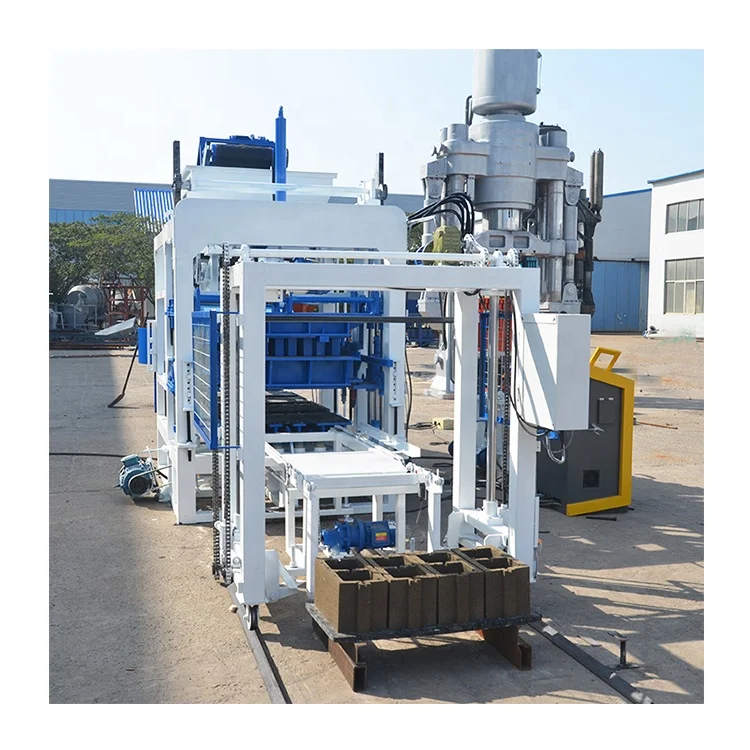
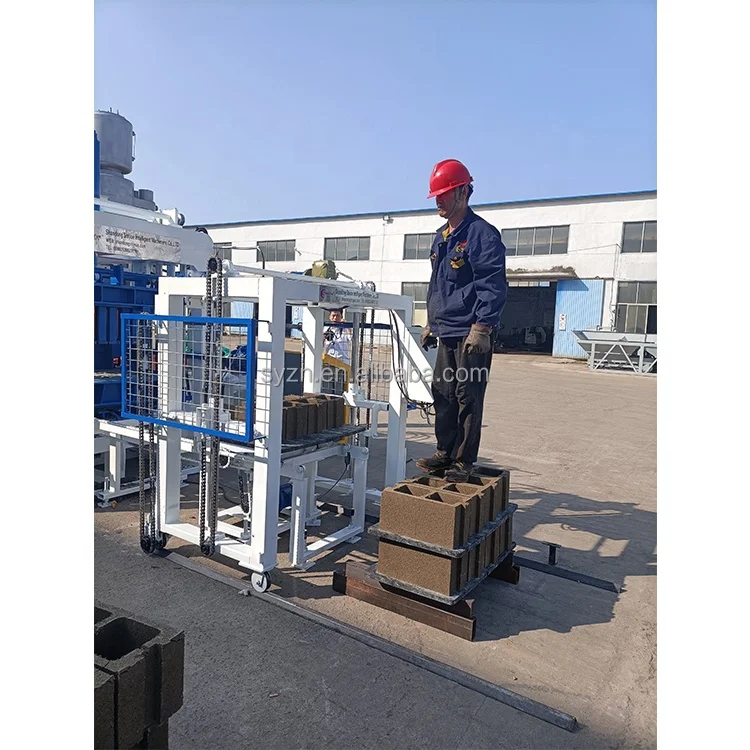
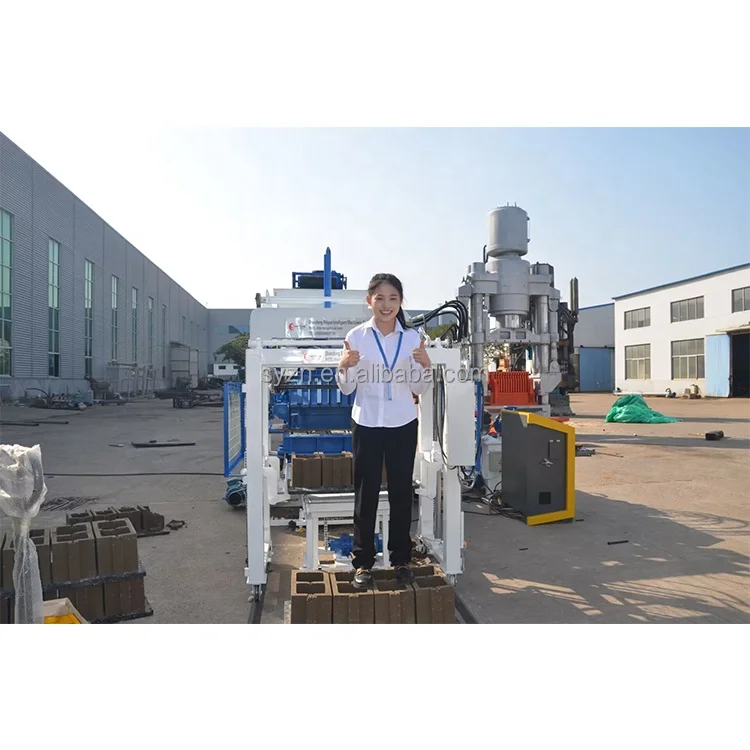
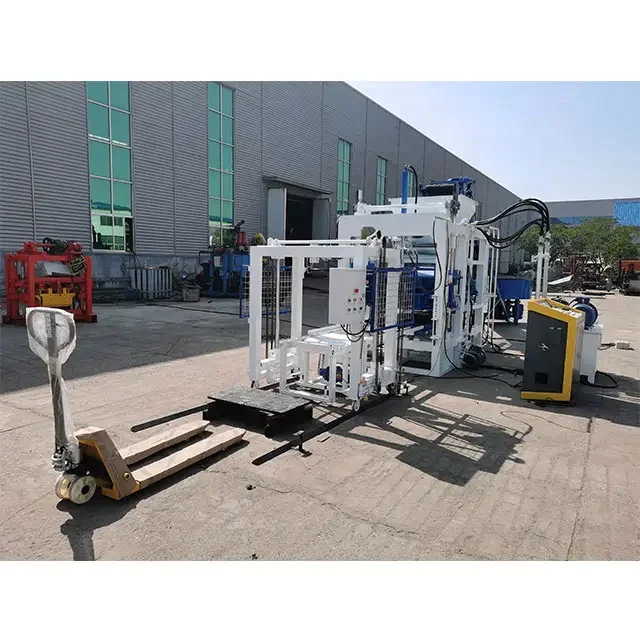
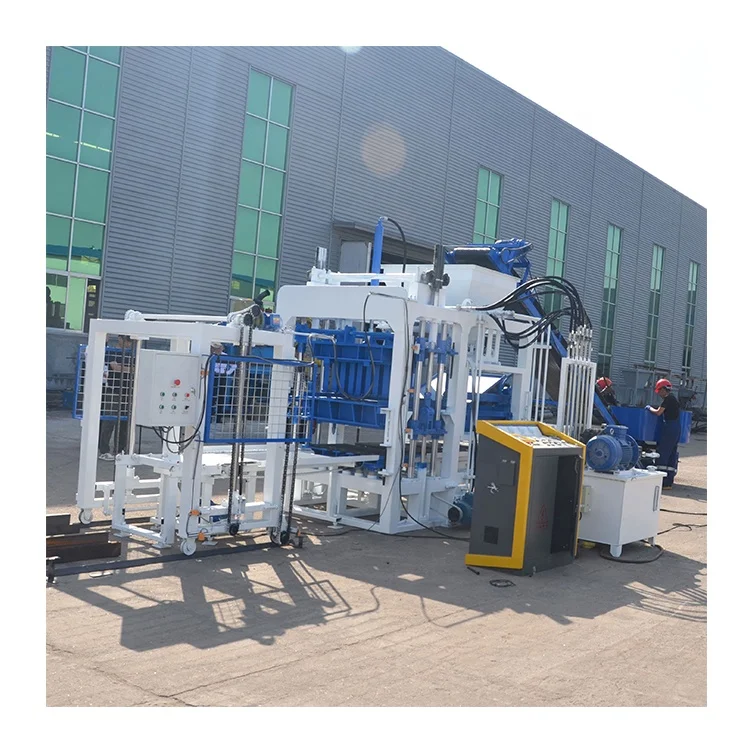
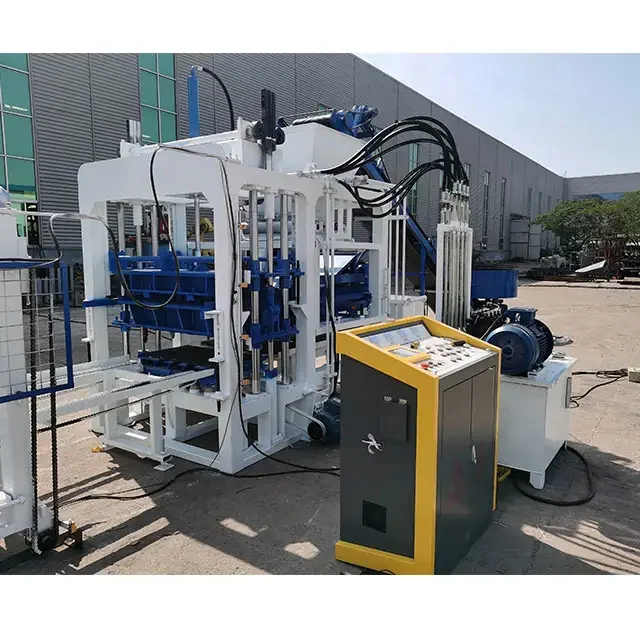
Description
Single-Focus Block Machinery — Every QT4-15A unit ships as one matched system where the press, pallet, mould and container loading plan are confirmed together, so arrival timing is quoted before you place the deposit.
Technical Specifications
| Parameter | Value |
|---|---|
| Product Type | Automatic Hydraulic Block Making Machine |
| Model | QT4-15A |
| Overall Dimensions (L×W×H) | 4100×1600×2600 mm |
| Rated Pressure | 16–21 MPa |
| Vibration Form | Platform Vibration |
| Vibration Frequency | 4200 r/min |
| Vibration Force | 55 kN |
| Pallet Size | 880×550 mm |
| Molding Cycle | 25–30 s (basis not stated in source — confirm block format and material) |
| Overall Power | 18.45 kW |
| Total Mass | 4 T |
| Demolding Method | Hydraulic |
| Factory Area Required | 300 m² |
| Automation Level | Fully automatic |
| Applied Products | Concrete blocks, hollow/solid blocks, pavers, interlocking blocks, curbstone, colored pavers |
| Raw Materials | Crushed stone, sand, cement, dust, fly ash, gravel, slag |
| Container Loading | 1×40HQ (basic equipment) |
| Warranty | 1 year (excluding spare parts) |
Application Suitability
| Application | Material or Output |
|---|---|
| Hollow block production for masonry walls | Crushed stone, sand, cement mixtures |
| Solid block manufacturing for load-bearing structures | Gravel, cement, fly ash blends |
| Interlocking paver production for driveways and walkways | Colored concrete with fine aggregate |
| Curbstone forming for road and pavement edges | High-strength concrete with coarse gravel |
| On-site block production for housing projects | Locally sourced sand, dust and cement |
Why "In Stock" Means Nothing Without a Dispatch Timeline
A QT4-15A block machine in stock only matters if the container is booked, the dismantling plan is drawn, and the arrival port estimate is written on the proforma.
I have stood on project sites in Jordan where the contractor counted backwards from a handover date, and the block machine was still sitting in a factory two thousand kilometres away because nobody confirmed the voltage before production started. The QT4-15A block machine in stock label on a website does not tell you whether the standard moulds you need are on the shelf or still on a tooling schedule [NEED_CITE: typical block machine mould lead times]. A real dispatch commitment names the container type, the loading window, and the documentation that must clear your port.
What Dispatch-Ready Actually Covers
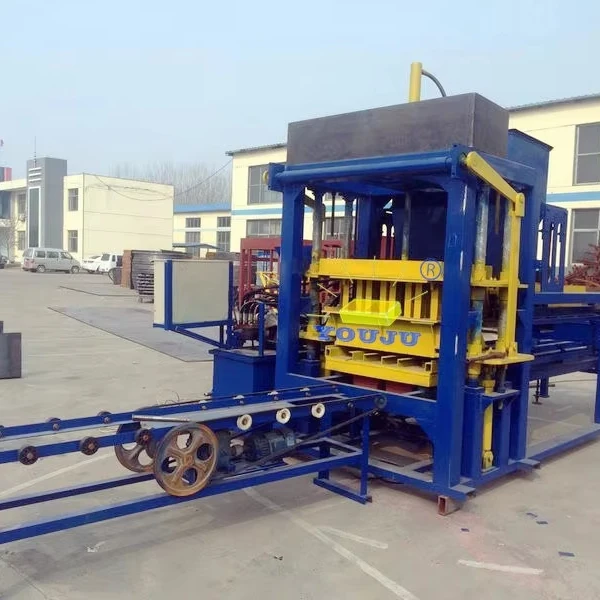
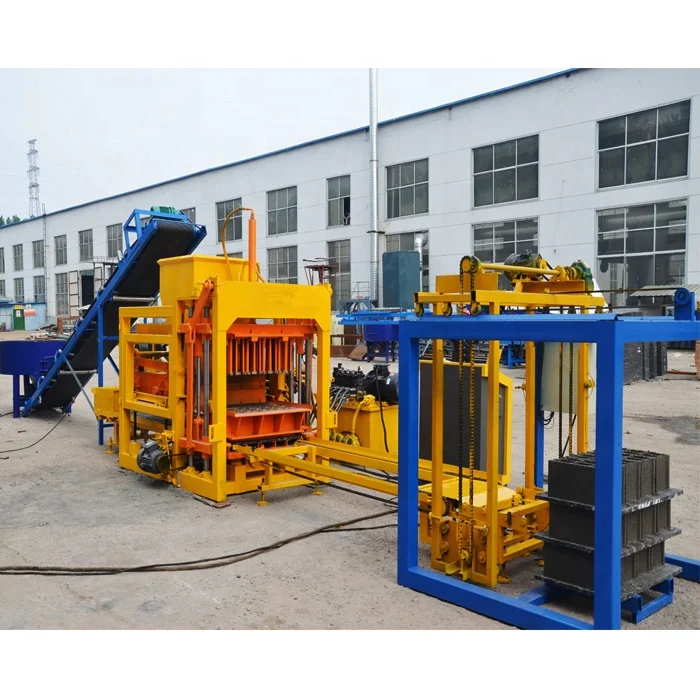
A stocked QT4-15A means the mainframe, hydraulic station, vibration platform and control cabinet are assembled and factory-tested. The standard mould set that ships with it has been run through a cycle test on the pallet size specified at 880×550 mm. Container loading into a single 40HQ is planned around the dismantled frame dimensions, not guessed from a packing list template.
Where Arrival Estimates Go Wrong
The gap between "ships next week" and "arrives at your port" hides customs documentation, certificate of origin processing, and the destination port’s free-storage window. When we quote arrival for the QT4-15A block machine in stock, we factor in the bill of lading draft, the HS code your broker needs, and whether your port requires a pre-shipment inspection certificate [NEED_CITE: pre-shipment inspection requirements for concrete machinery imports]. Missing any one of these pushes your container into demurrage before the machine ever reaches your site.
Reading the Numbers That Matter on Site
The rated pressure of 16–21 MPa and vibration force of 55 kN work together to compact the mix into the mould cavity. If your local aggregate is high in clay content, the pressure must push water and fines out while the vibration settles the coarse particles — too little pressure and the block crumbles at demolding, too much and the mould wear accelerates. The platform vibration at 4200 r/min is tuned for standard hollow blocks; denser paver formats may require frequency adjustment at the PLC, which is why the control system brand and language must be confirmed before the machine leaves the factory. The 880×550 mm pallet size determines how many blocks sit on each board, and that board must match the curing rack spacing and the forklift tine width you already have on site.
The Cost of Skipping the Stock Verification Checklist
I have seen buyers wire a deposit on a "stocked" machine only to discover the mould format they needed was not in the warehouse and required a separate production run. The hydraulic oil specification may not match your ambient temperature range, and the electrical frequency — 50 Hz or 60 Hz — is not interchangeable once the motor is wound [NEED_CITE: motor frequency compatibility for industrial machinery exports]. When the PLC display language does not match your operator’s reading ability, commissioning stretches from days into weeks, and the project deadline you bought the machine to meet slips past you.
Why Buyers Source This Machine Through This Channel
Block machinery is the single focus here, so the QT4-15A is not assembled from a press supplier, a separate pallet vendor and a third-party mould maker — every component is specified as one system. Machine configuration is set against your actual mix design and local aggregate, not a catalogue default that assumes materials you cannot source. Standard moulds and the formats your market actually sells are confirmed before dispatch, and custom mould drawings are reviewed against the 55 kN vibration rating. Automation level is selectable, so you can take delivery of the fully automatic configuration now and plan your next line around the same pallet format. Container loading is planned at order stage with the dismantling sequence documented, so your rigging team knows which bolt to undo first when the container doors open.
Documentation & Verification
- Machine specification sheet listing confirmed voltage, frequency and PLC display language
- Mould drawing and format list matched to your target block dimensions
- Pallet specification showing 880×550 mm board material and load rating
- Factory test record on your specified block format before container sealing
- Packing photographs documenting crating and container loading sequence
- Customs documentation package with HS code and certificate of origin support
Installation, Commissioning & Support
- 300 m² factory area required with level concrete foundation cured before arrival
- 18.45 kW total power draw requires dedicated circuit breaker sized to local code
- Machine dismantled into 40HQ container with reassembly sequence documented at dispatch
- Hydraulic system filled and bled during first commissioning visit on your aggregate
- PLC control language and display set to operator preference before training begins
- Wear parts list provided with mould and hydraulic seal reorder quantities noted
Before You Send the Inquiry
Tell us the block format you sell most — hollow, solid, paver or interlocking — and the daily output your project contract requires. Specify your local aggregate type, cement grade, and whether fly ash or stone dust is available in your area. Confirm your site voltage and frequency, the control panel language your operators read, and whether your existing forklift and curing racks match the 880×550 mm pallet. If you are working to a handover date, share that deadline so dispatch and shipping windows are calculated before quotation.
Frequently Asked Questions
Q: Which QT4-15A configurations and moulds are currently in stock?
A: The mainframe, hydraulic station and vibration platform are held in standard configuration. Hollow block and solid block moulds in common sizes are typically available from stock, while specialty formats such as interlocking pavers or curbstones may require a tooling run. We confirm exactly which moulds are on the shelf at the moment you inquire, not from a generic list.
Q: What is the dispatch lead time and estimated arrival at my port?
A: Dispatch from stock typically takes days for container booking and loading, not weeks. Arrival depends on your destination port, shipping lane, and customs clearance speed. We quote the sailing schedule and estimated arrival date on the proforma invoice so you can plan site preparation and foundation work against a known timeline.
Q: How is the machine dismantled and loaded into a 40HQ container?
A: The QT4-15A is dismantled into major assemblies — mainframe, hydraulic unit, vibration platform and control cabinet — to fit within a single 40HQ container. The loading plan is documented with photographs at each stage, and reassembly instructions accompany the shipment so your local rigging team can work from a known sequence.
Q: What voltage and frequency options ship from stock versus built-to-order?
A: Standard stock units are wound for common industrial voltage and frequency combinations. If your site runs on a non-standard supply, the motor and control transformer may need to be swapped before dispatch, which adds a short preparation window. We confirm your exact voltage and frequency requirement before the machine is sealed in the container.
Q: Can I add spare parts and extra moulds to the same container shipment?
A: Yes, remaining space inside the 40HQ can be allocated to spare hydraulic seals, vibration springs, additional moulds, or extra pallets. We calculate the container volume after the main machine is loaded and provide a packing list showing what fits, so you avoid a second shipment for consumables you will need within the first months of operation.