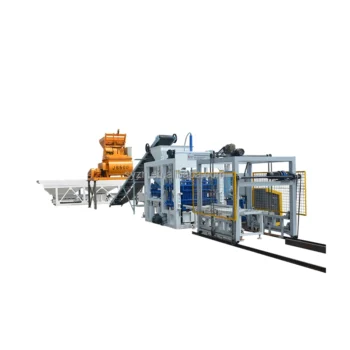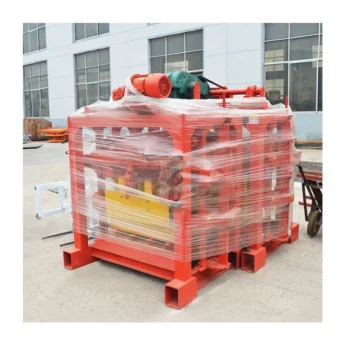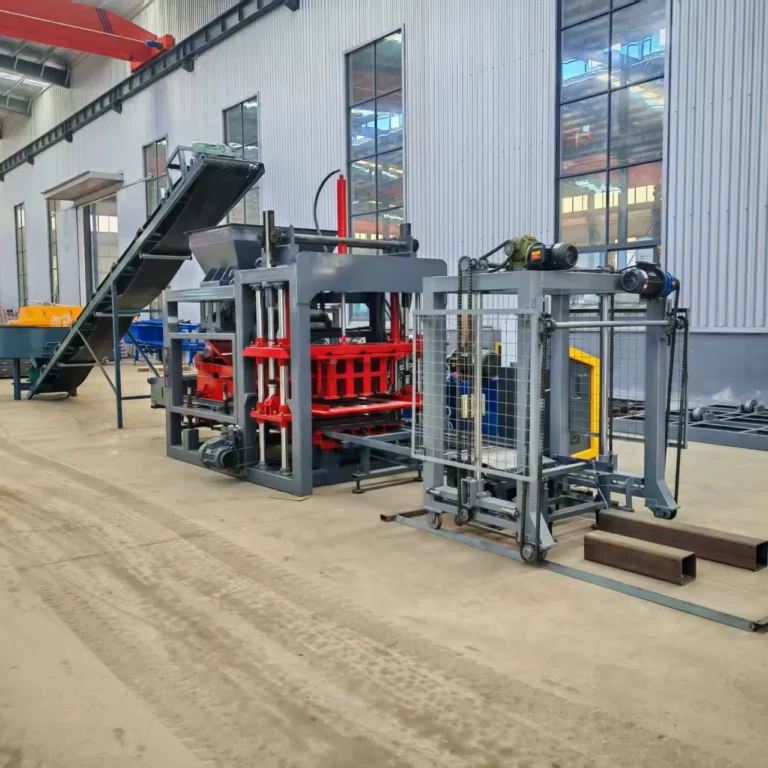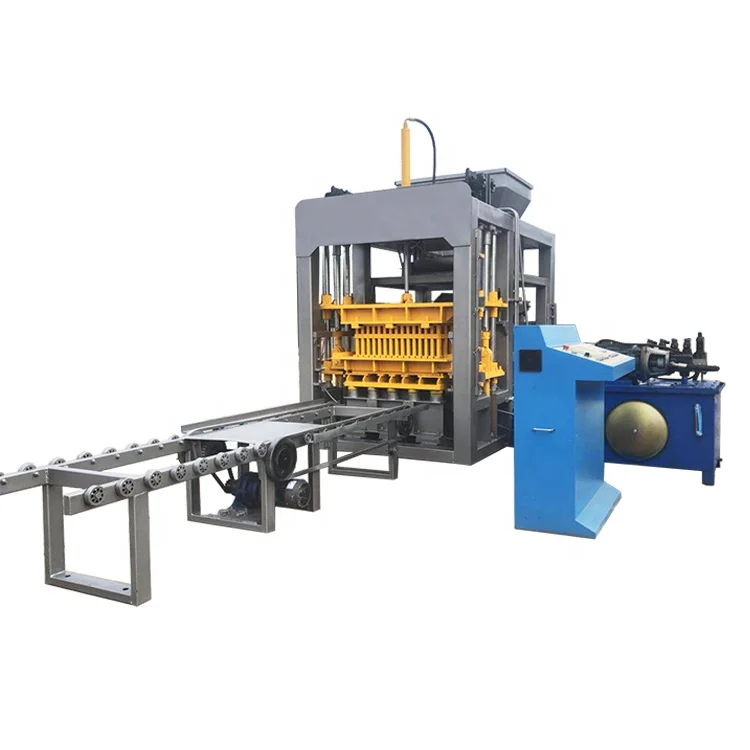


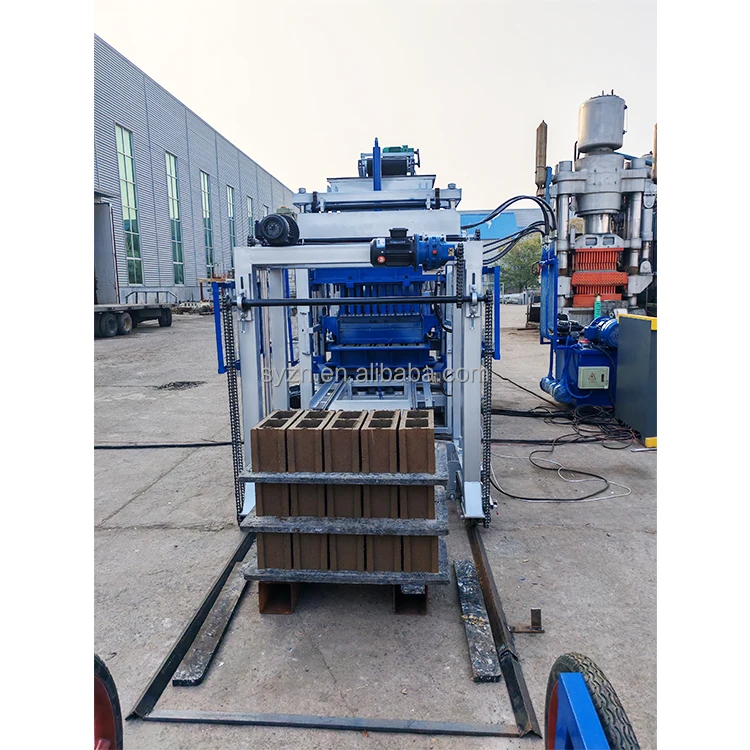

Description
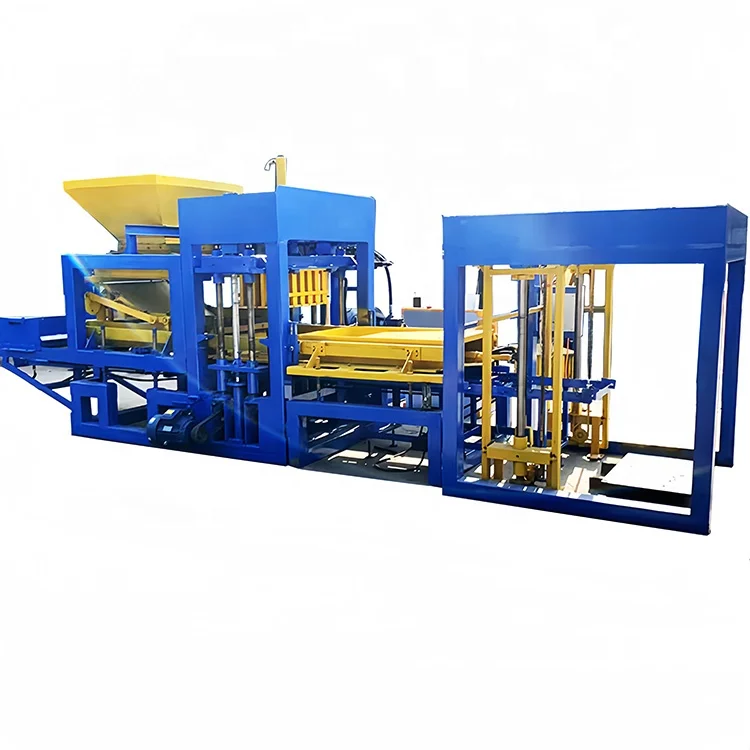
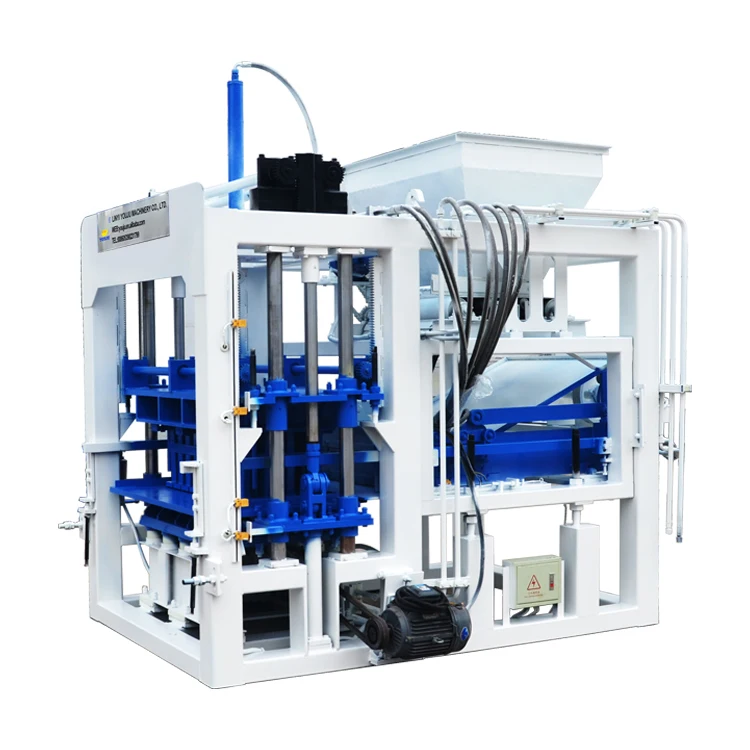
Dispatch-Ready Inventory — The QT4-15A block machine in stock is pre-assembled and container-planned so your project timeline dictates the shipping schedule, not factory queue delays.
Technical Specifications
| Parameter | Value |
|---|---|
| Model | QT4-15A |
| Product Type | Fully Automatic Concrete Block Making Machine |
| Overall Dimensions (L×W×H) | 4100 × 1600 × 2600 mm |
| Rated Pressure | 16–21 MPa |
| Main Vibration Form | Platform Vibration |
| Vibration Frequency | 4200 r/min |
| Vibration Force | 55 kN |
| Pallet Size | 880 × 550 mm |
| Molding Cycle | 25–30 s (basis not stated in source — confirm block format / material / thickness) |
| Overall Power | 18.45 kW |
| Total Mass | 4 T |
| Demolding Method | Hydraulic |
| Recommended Factory Area | 300 m² |
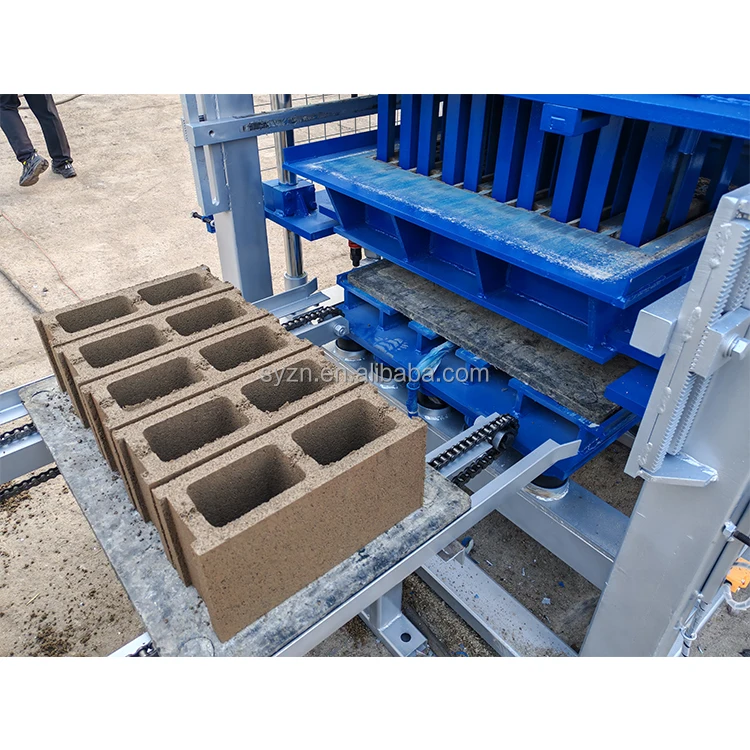
| Applied Products | Concrete blocks, hollow/solid blocks, pavers, interlocking blocks, curbstone, colored pavers |
| Raw Materials | Crushed stone, sand, cement, dust, fly ash, gravel, slag |
| Automation Level | Fully automatic |
| Warranty | 1 year (whole machine, excluding spare parts) |
| Container Loading | 1 × 40HQ (basic equipment) |
Application Suitability
| Application | Material or Output |
|---|---|
| Hollow Block Production | Crushed stone, sand, cement, fly ash for structural and partition walls |
| Solid Block Manufacturing | Gravel, sand, cement mixes for load-bearing masonry units |
| Paving Brick & Colored Pavers | Fine aggregate, cement, and pigment layers for walkways and driveways |
| Interlocking Block & Curbstone | Coarse aggregate and slag blends for retaining walls and road edges |
What the Molding Cycle Actually Means for Your Daily Output
A quoted 25–30 second cycle only translates to real daily output once the block format and material thickness are locked in.
Buyers often compare machines based on a cycle time figure without realizing it was measured on a thin solid paver, while their actual product is a 200mm tall hollow block requiring longer vibration and hydraulic hold. When I quote the QT4-15A block machine in stock, I always ask which specific block format the buyer needs before confirming daily capacity. Skipping that step means the machine arrives, the shift starts, and output falls short of the plan from day one [NEED_CITE:].
Inventory Status and Dispatch Commitment
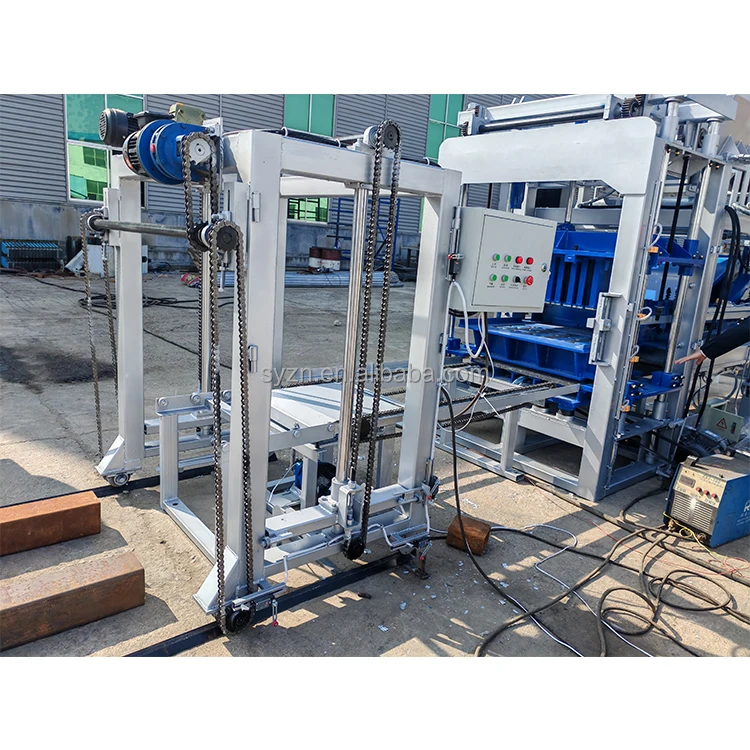
The QT4-15A block machine in stock is held as a complete basic line — press, hydraulic station, and control panel — rather than as a bare frame awaiting build-on demand. This means the dispatch lead time is measured in days for container booking, not weeks for manufacturing. Buyers working against a housing project deadline or a distributor restock window can anchor their site preparation schedule to a confirmed ship date before the balance payment clears.
Container Loading and Arrival Estimate
The 4 T total mass and 4100 × 1600 × 2600 mm footprint allow the entire basic equipment set to fit within a single 40HQ container. The machine is dismantled at defined split points — typically the hydraulic station and upper frame — so it loads flat without crating excess volume. Once the container is dispatched, the ocean transit estimate is quoted upfront based on the destination port, giving the buyer a realistic arrival window for customs clearance and foundation readiness [NEED_CITE:].
Vibration Force and Hydraulic Pressure in Actual Block Density
The 55 kN vibration force at 4200 r/min works in tandem with 16–21 MPa hydraulic pressure to compact the mix into a dense, consistent block. Platform vibration distributes energy across the full 880 × 550 mm pallet area, which is critical when producing hollow blocks where wall thickness is narrow and under-compaction leads to crumbling during demolding. The hydraulic demolding system then lifts the mould box cleanly, reducing edge damage on freshly formed pavers and interlocking units. Molding cycle timing between 25 and 30 seconds must be matched to the buyer’s specific aggregate gradation and cement content — a fly ash-heavy mix may need longer vibration to achieve target strength.
The Hidden Cost of Overlooking Pallet and Voltage Details
The 880 × 550 mm pallet size must match the buyer’s existing curing racks and forklift tine spacing. I have seen buyers receive machines where the pallets did not fit their curing area, forcing a costly rack rebuild before a single block was produced. Similarly, voltage and frequency left unconfirmed at order stage lead to transformer purchases on arrival or, worse, motor burnout during commissioning [NEED_CITE:]. These are not engineering failures — they are specification gaps that a stock machine dispatch should close before the container is sealed.
Why Buyers Source This Machine Here
Block machinery is our single focus, so the QT4-15A press, moulds, pallets, and handling equipment are specified as one matched system. Configuration is set against the buyer’s actual mix design and local aggregate, not a catalogue default. Automation level is selectable, so a buyer can start with the fully automatic setup and add stacking or cubing modules later. Mould design covers the formats the buyer’s market actually sells, and custom drawings are available for non-standard shapes. Installation and commissioning support includes operator training so the crew is producing saleable blocks before the technician leaves site.
Documentation & Verification
- Factory test record showing cycle times on your specified block format before dispatch
- Voltage, frequency, and PLC display language confirmation sheet signed before shipment
- Container loading plan with pallet and mould placement diagrams for your freight forwarder
- Packing photographs of all major assemblies provided within 24 hours of container sealing
- Operation and maintenance manual in your confirmed language with hydraulic and electrical schematics
- Customs documentation support including HS code, certificate of origin, and commercial invoice formatting
Installation, Commissioning & Support
- 300 m² recommended factory area allows raw material storage, curing racks, and press footprint in one layout
- 18.45 kW overall power requires a dedicated three-phase circuit with confirmed voltage before energizing
- Machine dismantles at hydraulic station and upper frame for 40HQ loading, reassembles on pre-poured foundation
- Hydraulic demolding system calibrated on-site to match local aggregate mix and block density targets
- Operator training covers mould change procedure, PLC navigation, and daily vibration platform inspection
- Wear parts list identifies hydraulic seals and vibration springs with reorder quantities for first-year spares
Before You Request a Quote
Send us your target block format with dimensions, the daily output you need to meet project commitments, and your site voltage and frequency. Include the raw materials you can source locally — whether that is crushed stone, fly ash, or slag — so the mould and vibration settings match your mix. If you already have curing racks or forklifts, share the pallet dimensions they accommodate so the QT4-15A ships with compatible pallets from day one.
Frequently Asked Questions
Q: Is the QT4-15A currently in stock, and what is the realistic dispatch lead time?
A: The QT4-15A block machine in stock is held as a complete basic line. Dispatch lead time depends on container booking availability at the time of inquiry, and we quote the realistic ship date before payment so your project schedule stays intact.
Q: How is the machine dismantled and loaded into a 40HQ container?
A: The press dismantles at defined split points — hydraulic station, upper frame, and control panel — to fit within a single 40HQ. Loading photographs are shared immediately after sealing so you know exactly how to reverse the process on arrival.
Q: What arrival estimate can I expect once the container is dispatched?
A: Ocean transit time is quoted based on your destination port at the order stage. We provide the estimated arrival date so your foundation work, electrical hookup, and raw material stockpile are ready before the container clears customs.
Q: Can I order standard moulds from stock along with the machine?
A: Standard moulds for hollow blocks, solid blocks, and pavers can ship in the same container if confirmed at order stage. This avoids a second shipment and lets you start producing multiple formats from the first production run.
Q: What happens if my site voltage differs from the machine as stocked?
A: Voltage and frequency must be confirmed before shipment. If your site runs a different standard, the motor and control panel are adjusted before the container is sealed so commissioning starts without a transformer delay [NEED_CITE:].