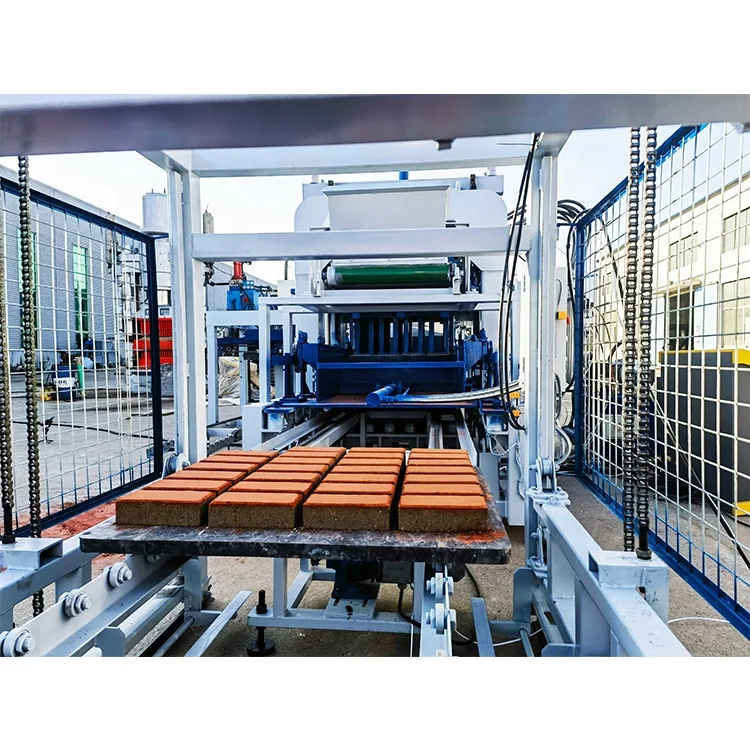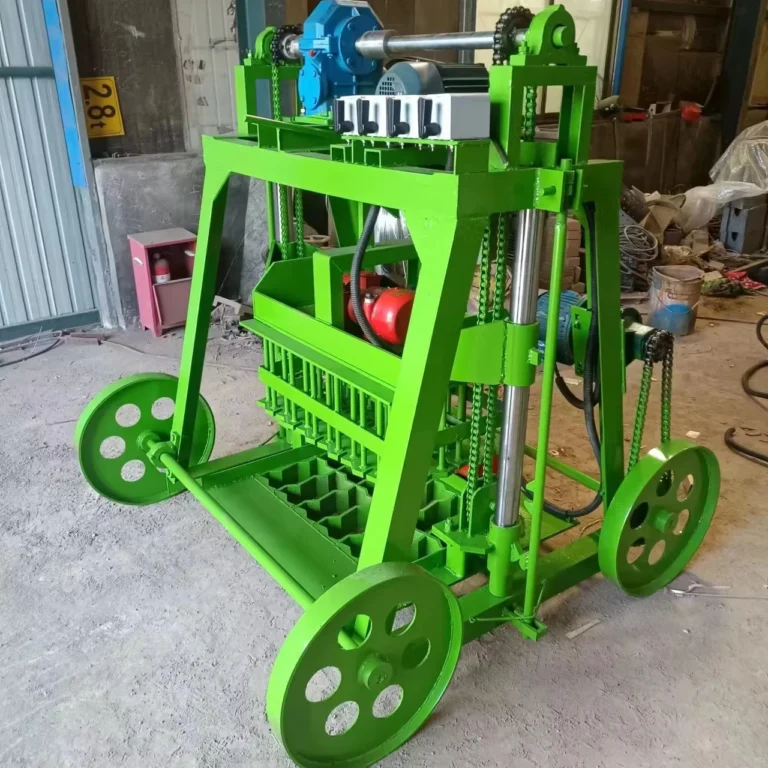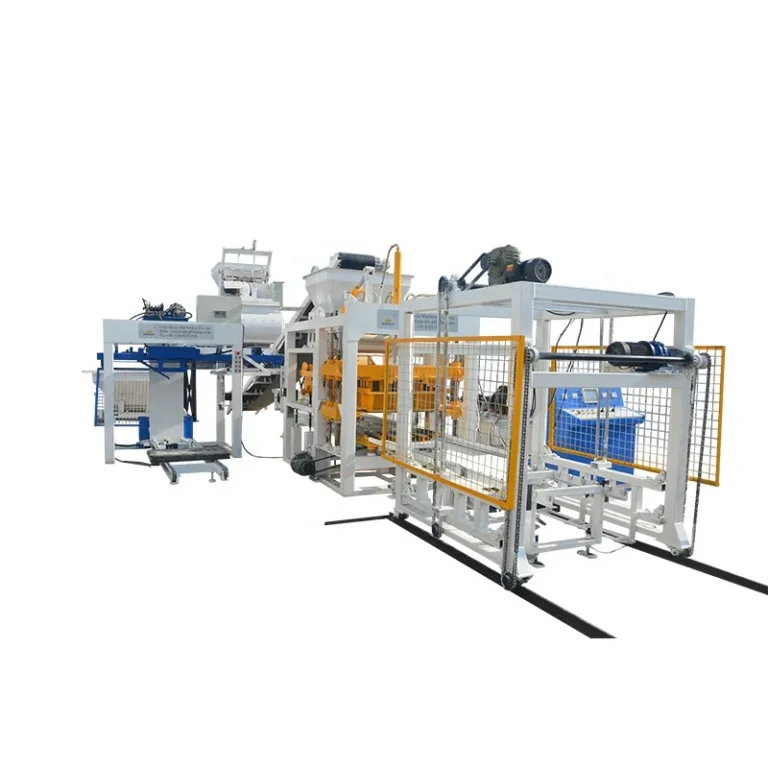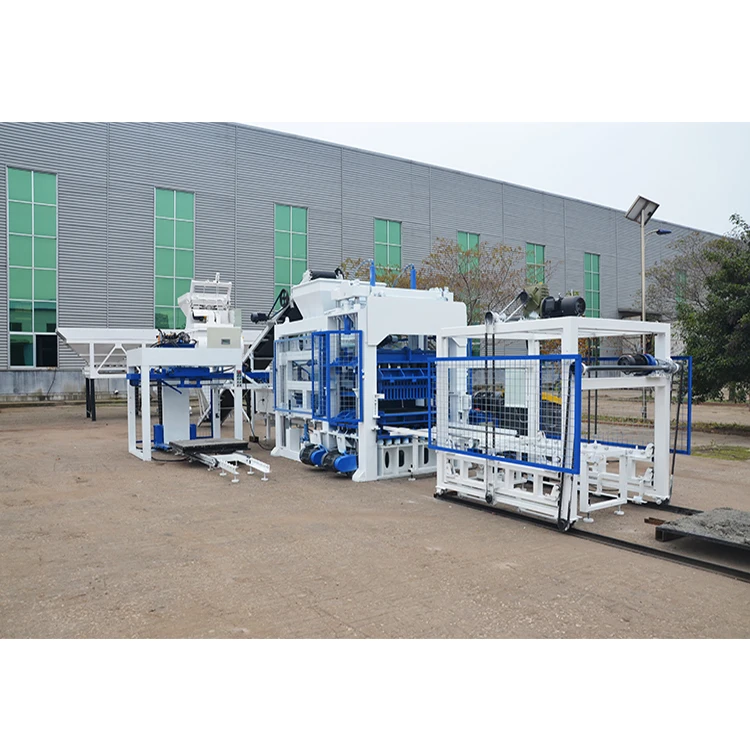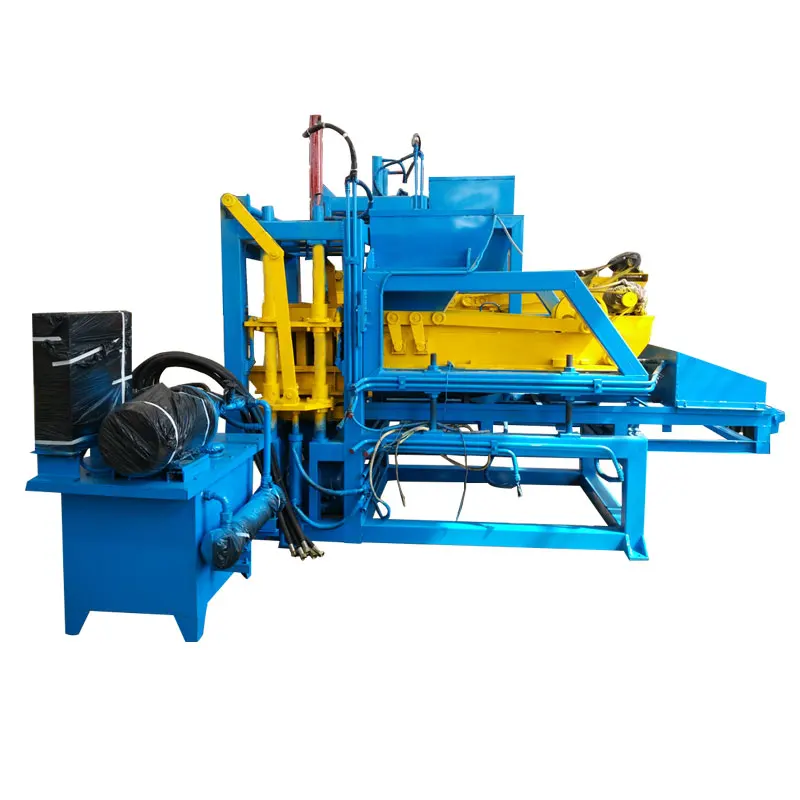


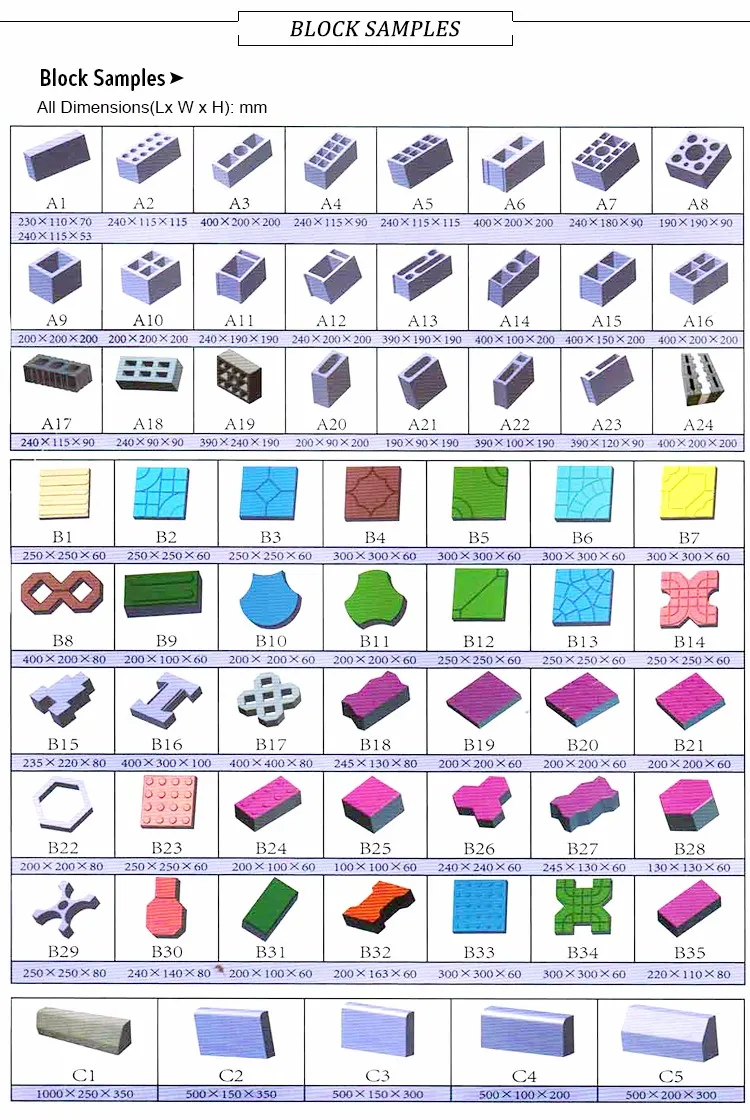

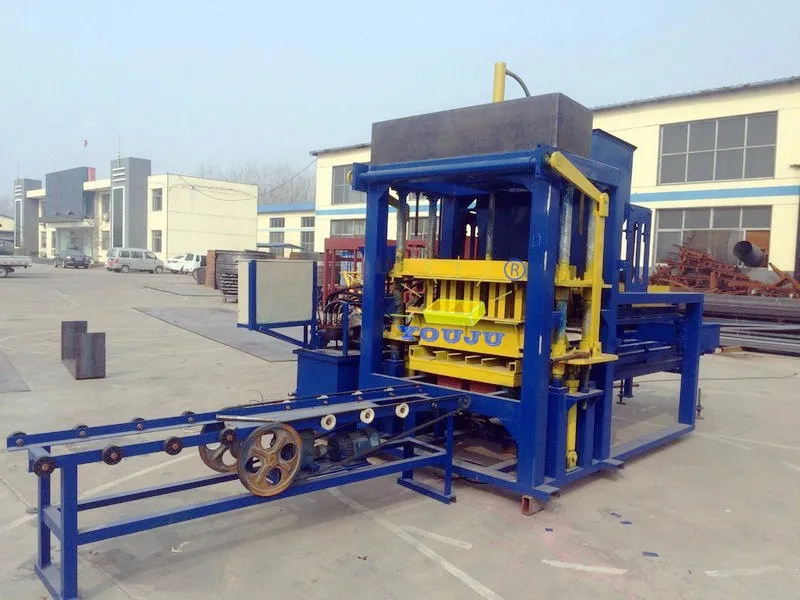
Description
Stocked Configuration — QT4-20 hydraulic block machines held in standard configuration, allowing dispatch within days rather than weeks when project deadlines leave no room for production delays.
Technical Specifications
| Parameter | Value |
|---|---|
| Model | QT4-20 |
| Product Type | Hydraulic Block Making Machine |
| Overall Dimensions (L×W×H) | 7100×1600×2610 mm |
| Total Mass | 5 T |
| Rated Pressure | 16–21 MPa |
| Vibration Force | 40 KN |
| Main Vibration Form | Platform Vibration |
| Vibration Frequency | 4600 r/min |
| Molding Cycle | 15–25 s |
| Pallet Size | 1020×570 mm |
| Molding Area Consumption | 400×800 mm |
| Overall Power | 27.5 kW |
| Demolding Method | Hydraulic |
| Factory Area Required | 500 m² |
| Control System | PLC (brand and language to be confirmed) |
| Voltage & Frequency | Configurable to target market (to be confirmed) |
| Output – Hollow Block 400×200×200 mm | 7200–9600 pcs/day (4 pcs/mold, 15–20 s cycle) |
| Output – Porous Brick 240×115×90 mm | 20200–26800 pcs/day (14 pcs/mold, 15–20 s cycle) |
| Output – Standard Brick 240×115×53 mm | 47400–53700 pcs/day (28 pcs/mold, 15–17 s cycle) |
| Warranty | One year |
Application Suitability
| Application | Material or Output |
|---|---|
| On-site contractor block production | Hollow blocks from crushed stone, sand, and cement for housing projects |
| Medium-volume block plant | Solid and hollow blocks from fly ash, slag, and gravel |
| Paving and kerb production | Pavers and interlocking bricks from fine aggregate blends |
| Regional distributor stock | Standard-format machines dispatched for resale or rental fleets |
Why "Ready to Ship" Matters More Than You Think
A stationary block machine in stock is only useful if it arrives configured for your site — not just physically available.
Buyers working against a project deadline often focus on whether the QT4-20 block machine fast delivery promise holds up. But I have watched machines sit idle at a port because the voltage was wrong for the local grid, or the PLC screen displayed instructions in a language the operators could not read. One African contractor had a fully automatic line delivered, powered it up, and stared at a Chinese-only control panel. The entire commissioning schedule collapsed while they waited for an updated program. [NEED_CITE: voltage and frequency standards by export market]
When a buyer asks me for a stationary block machine in stock, the first thing I confirm is not the shipping date — it is the voltage, the frequency, and the language the operators will see on the screen. Those details take half a day to lock down before production starts, but they can cost weeks if you discover the mismatch after the container arrives.
Dispatch Readiness That Goes Beyond the Crate
Having the QT4-20 physically built and tested on the factory floor means we skip the production queue entirely. The machine you see in the dispatch list is the machine that goes into the container — not a configuration yet to be assembled. Standard moulds for hollow block, porous brick, and standard brick formats ship with the press, and pallets sized at 1020×570 mm are bundled to match the curing racks most plants already have on site.
Loading Plans You Can Check Before the Ship Sails
The QT4-20 weighs in at 5 T total and measures 7100×1600×2610 mm, which shapes how it breaks down for container loading. We dismantle the frame, stack the hydraulic station separately, and secure the vibration platform flat. A loading photograph set goes to the buyer before the doors close, so you know exactly which crate holds the moulds, which holds the pallets, and where the PLC cabinet is positioned for first-out unloading. [NEED_CITE: container loading standards for heavy industrial machinery]
What the Specs Mean on the Production Floor
The 16–21 MPa rated pressure paired with 40 KN vibration force is what gives the QT4-20 its compaction density range. Platform vibration at 4600 r/min means the energy travels through the pallet into the mould cavity, compacting the mix from the bottom up — essential for hollow blocks where wall thickness is thin and uneven density causes breakage during curing. The 15–25 second moulding cycle is realistic for most concrete mixes, though a high-fly-ash blend may push toward the longer end of that window. Pallet size at 1020×570 mm was chosen to fit standard curing-rack slots, so you do not need to rebuild your drying area around a non-standard footprint. The 27.5 kW total power draw is manageable on most site transformers, but you will want a dedicated circuit to avoid voltage dips during the vibration phase.
When a "Bargain" Arrival Turns Expensive
I have seen buyers chase the lowest FOB price on a QT4-20 stationary block machine in stock and then discover the quotation excluded pallets, leaving fresh blocks stacked by hand until makeshift boards could be sourced locally. Others arrived to find moulds that did not match their market’s standard block dimensions, forcing a second order and a six-week wait for customs clearance on the replacements. [NEED_CITE: common disputes in international machinery procurement] The machine itself may be identical, but the cost of missing pallets, wrong moulds, or an incompatible control language quickly erases whatever was saved on the invoice.
Why Buyers Come Back for the Second Machine
Every QT4-20 leaves the floor as a matched system — press, moulds, pallets, and handling specified together, not sourced from three different suppliers and bolted together at the port. We confirm voltage and PLC language before the machine enters final assembly, not after it is crated. Mould designs are checked against the block formats your market actually sells, and custom drawings are reviewed if your standard differs from our catalogue. Factory test records ship inside the documentation pack, so your installer can verify performance against a documented baseline rather than starting from scratch. The one-year warranty covers the entire machine, and wear parts lists are itemized so you know what to reorder before the first replacement cycle arrives.
Documentation & Verification
- Line layout drawing with pallet flow and curing rack positions for 500 m² site
- Capacity calculation stating block format and cycle time assumption per product
- Factory test record on your specified mould before container sealing
- Voltage, frequency, and PLC language confirmation sheet signed before dispatch
- Packing photographs of every crate and pallet inside the container
- Customs documentation pack with HS codes and CE declaration where applicable
Installation, Commissioning & Support
- 500 m² minimum site area with level concrete base for 7100×1600 mm footprint
- Dedicated power circuit rated for 27.5 kW continuous draw with confirmed voltage and frequency
- Dismantled for loading; reassembly sequence documented with bolt torque values
- PLC language and parameter settings verified with operator on first production run
- Mould change procedure demonstrated using your ordered format set
- Wear parts list with reorder quantities for hydraulic seals and vibration mounts
What We Need From You to Lock the Shipment
Tell us which block format your market demands and the daily volume you need to hit. Share your site voltage, frequency, and the language your operators read on a control screen. If you already have curing racks or a forklift in place, send us the dimensions so we confirm the 1020×570 mm pallets and stacking height will match what you have on the ground.
Frequently Asked Questions
Q: Which QT4-20 configurations are stocked versus built to order?
A: Standard machines with hollow block, porous brick, and standard brick moulds are typically held ready. Custom mould formats, non-standard voltages, or specific PLC language requirements move the order into a short production cycle rather than immediate dispatch.
Q: How long from order confirmation to container loading?
A: Stocked units in standard configuration can move to packing and loading within a matter of days. Orders requiring voltage changes, custom moulds, or PLC language updates add a brief production window before crating begins.
Q: How is the QT4-20 loaded into a container?
A: The 5 T machine is dismantled into major assemblies — frame, hydraulic station, vibration platform, and mould set — each secured for ocean transit. A full photographic record is shared with the buyer before the container doors are sealed.
Q: What affects the arrival estimate at destination port?
A: Sailing schedule, port congestion, and customs clearance speed all influence timing. We quote the dispatch date and estimated transit duration upfront so you can plan site preparation and operator scheduling around a known window.
Q: When must voltage and PLC language be confirmed?
A: Before the machine enters final assembly. Once the PLC is programmed and the electrical cabinet is wired, changes require rework and delay shipment. We confirm these details at the quotation stage to avoid on-site surprises.