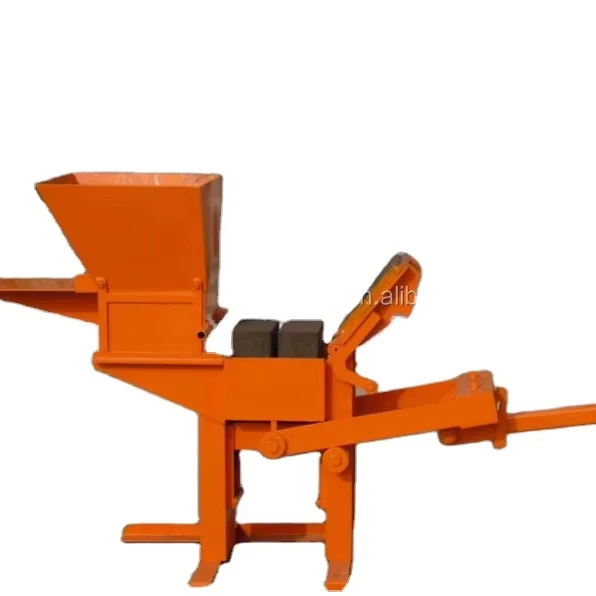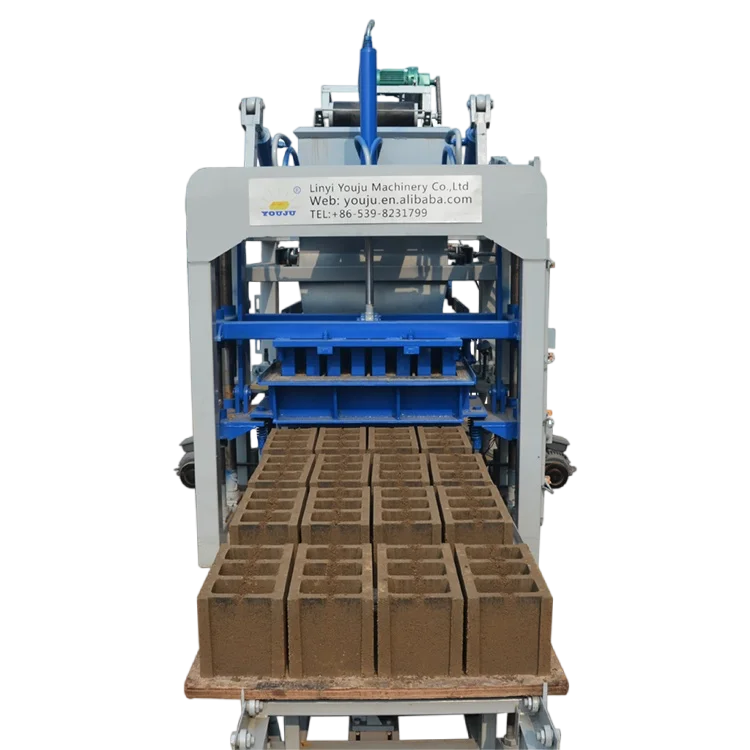


Description
Stocked Model Dispatch — QT415 block machine inventory ready for immediate container loading, with pallet and voltage matched to your port before the deposit clears.
Technical Specifications
| Parameter | Value |
|---|---|
| Model | QT415 |
| Product Type | Full Automatic Concrete Block Making Machine |
| Overall Dimensions (L×W×H) | 4100×1600×2600 mm |
| Rated Pressure | 16–21 MPa |
| Main Vibration Form | Platform Vibration |
| Vibration Frequency | 4200 r/min |
| Vibration Force | 55 kN |
| Pallet Size | 880×550 mm |
| Molding Cycle | 25–30 s (basis not stated in source — confirm block format / material / thickness) |
| Overall Power | 18.45 kW |
| Total Mass | 4 T |
| Demolding Method | Hydraulic |
| Factory Area Required | 300 m² |
| Automation Level | Full Automatic |
| Warranty | 1 year |
Application Suitability
| Application | Material or Output |
|---|---|
| Hollow block production for residential walls | Crushed stone, sand, cement, fly ash |
| Solid block manufacturing for load-bearing structures | Gravel, sand, cement, slag |
| Paving block laying for roads and walkways | Crushed stone, sand, cement, colored pigment |
| Interlocking brick for perimeter walls | Sand, dust, cement, fly ash |
| Curbstone forming for infrastructure projects | Gravel, crushed stone, cement |
What "In Stock" Actually Means for Your Project Timeline
A QT415 block machine in stock means the frame, hydraulic pack, and vibration table are assembled and tested — not sitting as parts in a warehouse.
Buyers chasing a project deadline often receive a quotation that reads "30 days after deposit," only to discover the actual dispatch slips week after week because the machine was never on the floor. When a contractor in East Africa committed to a housing phase start date, the delayed arrival of his block press pushed the entire masonry crew into idle weeks [NEED_CITE: typical port-to-site transit windows for East African destinations]. The QT415 block machine in stock designation we use means a completed unit has passed its factory run test and is awaiting only mould selection and voltage confirmation before container loading.
Container Loading and Dispatch Sequence
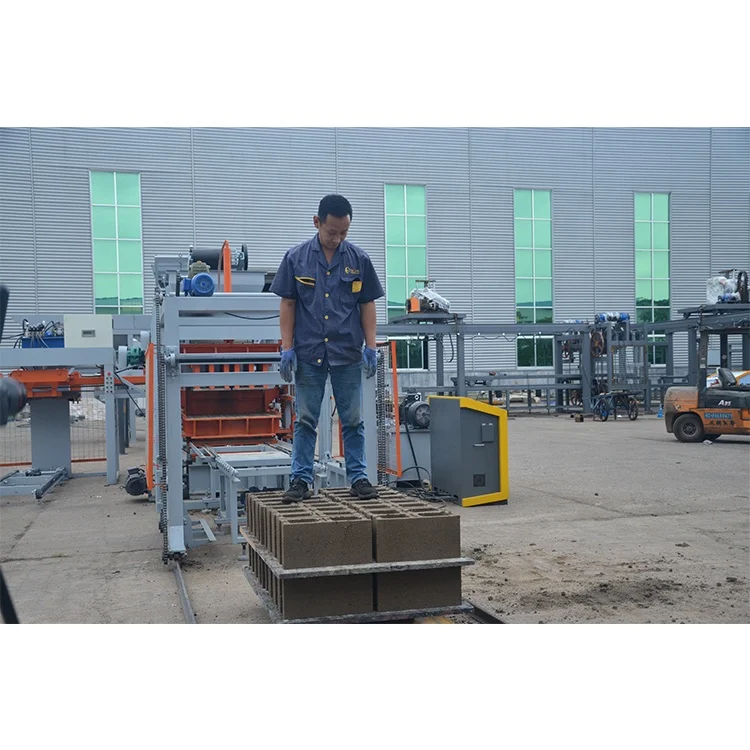
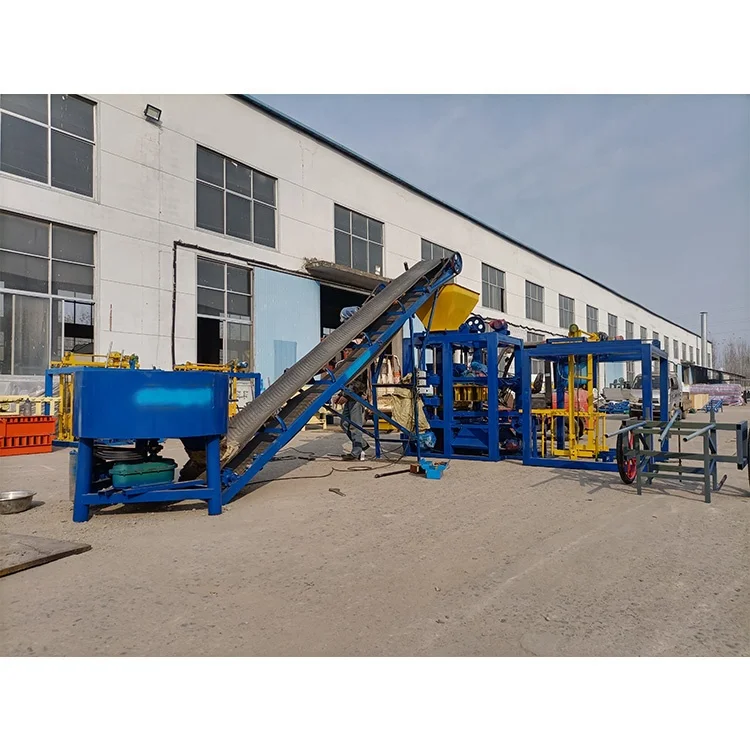
Once the target block format is confirmed, the matching mould is mounted on the vibration platform and a short production run validates the cycle timing. The QT415 block machine in stock is then dismantled into major assemblies — main frame, hydraulic station, control cabinet, and pallet feeder — to fit a 40HQ container. A loading photograph set documents every item against the packing list before the container doors close.
Arrival Estimate and Port Clearance
From dispatch to port of destination, transit windows vary by region, and customs documentation must match the bill of lading exactly [NEED_CITE: customs documentation requirements for construction machinery imports]. Buyers working to a fixed project timeline need the arrival estimate quoted upfront so the foundation slab and curing yard can be prepared in parallel with the ocean transit, avoiding idle days once the machine clears the port.
Reading the Molding Cycle and Factory Footprint
The QT415 carries a rated pressure range of 16–21 MPa combined with platform vibration at 55 kN, which together compress the mix into a dense block before hydraulic demolding lifts it clear. The 4200 r/min vibration frequency is tuned for standard concrete mixes using crushed stone and sand; if your local aggregate leans toward fly ash or fine dust, the vibration amplitude may need adjustment at commissioning. An 880×550 mm pallet defines the maximum block layout per cycle, so your curing racks and forklift tines must accept that dimension. The 300 m² factory area requirement includes space for the mixer, pallet return line, and a section of green-block curing — measure your yard before the container arrives.
When a Stocked Machine Arrives With the Wrong Voltage
A block machine standing idle on a freshly poured slab because the motor winding does not match the local grid is a preventable failure. Voltage and frequency must be confirmed in writing before the machine leaves the factory, not discovered during commissioning [NEED_CITE: voltage and frequency standards by export market]. The control cabinet language, PLC display text, and sensor calibration all follow the destination-country specification set at order stage, so selecting a stocked unit still requires that confirmation step.
Why Buyers Source This Model Here
Block machinery is the single production focus, so the QT415 press, its mould, pallet, and handling stations are specified as one matched system rather than assembled from separate suppliers. Configuration is set against the buyer’s actual mix design and local aggregate, not a catalogue default. Mould design covers the formats the local market sells, and standard moulds ship with the stocked unit. Automation level is selectable, allowing a buyer to start with basic pallet handling and add automatic stacking later. Installation support includes operator training on the specific mix and block format the plant will run.
Documentation & Verification
- Factory test record on your target block format before dispatch
- Voltage and control language confirmation sheet signed at order
- Container loading photographs matched to packing list
- Hydraulic and electrical schematic for your maintenance team
- Customs documentation support for destination port clearance
Installation, Commissioning & Support
- Foundation slab poured to 4100×1600 mm footprint before arrival
- Dedicated power circuit sized for 18.45 kW total connected load
- Main frame and hydraulic station reassembled on site with factory guidance
- Molding cycle tuned to your local aggregate during first production run
- Operator training on mould change and hydraulic demolding sequence
- Wear parts and mould inventory list provided at handover
Before You Send an Inquiry
Provide the block format your market sells daily, the aggregate available within hauling distance of your yard, and the voltage and frequency at your site. Confirm whether your curing area already has racking sized for 880×550 mm pallets or if new racks must be built. State your project start date so dispatch timing can be matched against container transit windows.
Frequently Asked Questions
Q: Is the QT415 currently in stock, and what is the dispatch lead time?
A: Stocked units have completed factory testing and await only mould and voltage confirmation. Dispatch lead time depends on container availability and loading schedule, which is quoted in writing before deposit. We confirm the exact calendar date at order confirmation so your project timeline stays on track.
Q: How is the machine loaded into a 40HQ container?
A: The main frame, hydraulic station, control cabinet, and pallet feeder are separated for loading. A packing photograph set documents every item before the doors close. Items not included in the container, such as raw material for first-run testing, are listed upfront so you can source them locally.
Q: What is the estimated arrival time after dispatch?
A: Transit from port of loading to destination varies by region and shipping line schedule. We provide an arrival estimate based on current sailing routes at order confirmation. This allows you to prepare the foundation slab and curing area while the container is on the water.
Q: Which standard moulds ship with the stocked QT415?
A: Stocked units typically carry one or two standard mould formats selected to match common regional demand. Additional moulds for interlocking bricks, curbstones, or pavers follow in subsequent shipments once the drawings are confirmed against your local market requirements.
Q: Are voltage and control language confirmed before shipment?
A: Yes, voltage, frequency, and PLC display language are confirmed in writing before the machine leaves the factory. This prevents commissioning delays where the control panel text or motor winding does not match the destination grid. We request your site electrical specification at inquiry stage.