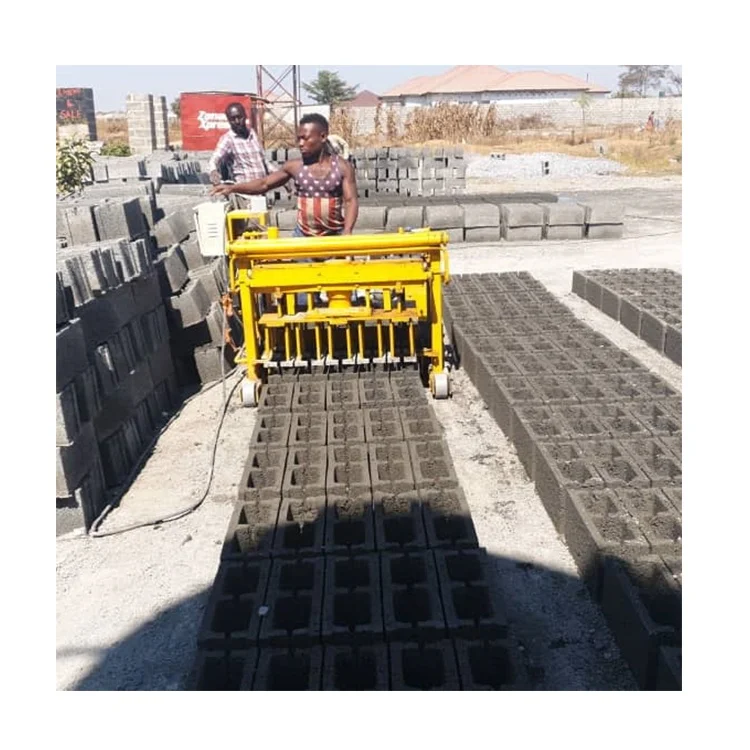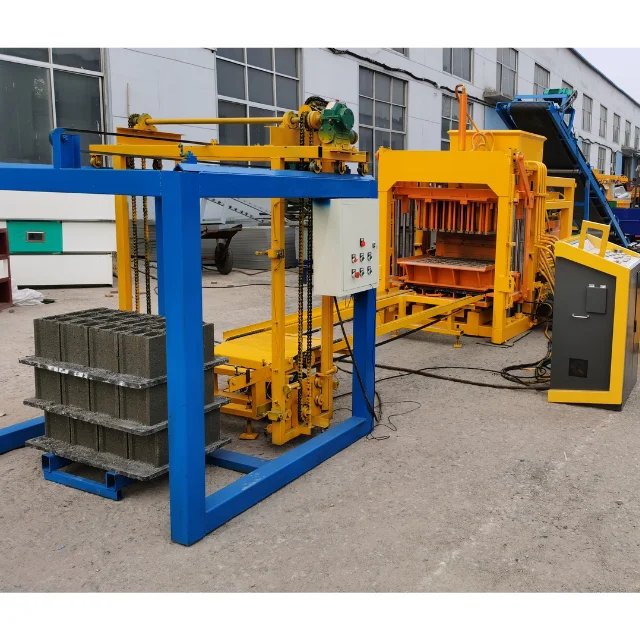
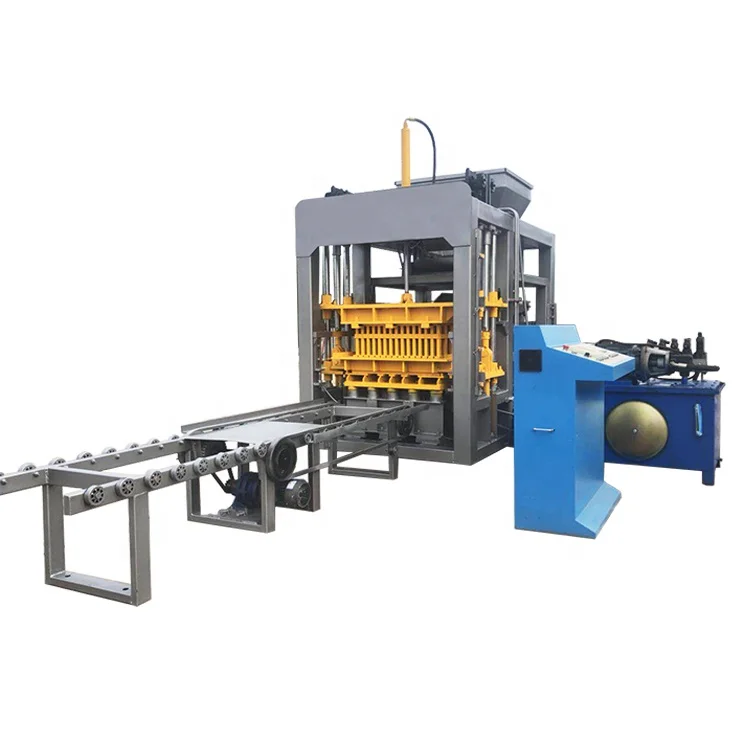
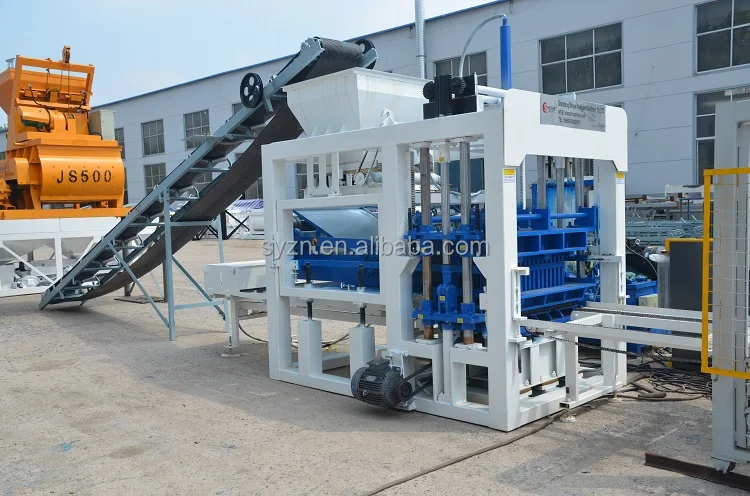


Description
Dispatch-Ready Availability — Stocked QT5-15 units with confirmed container loading plans so your project timeline holds firm from order to port arrival.
Technical Specifications
| Parameter | Value |
|---|---|
| Model | QT5-15 |
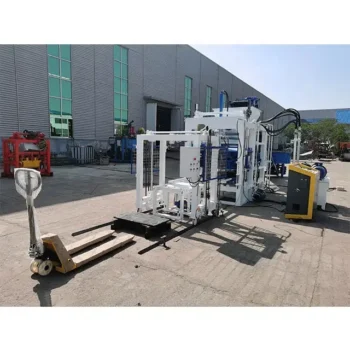
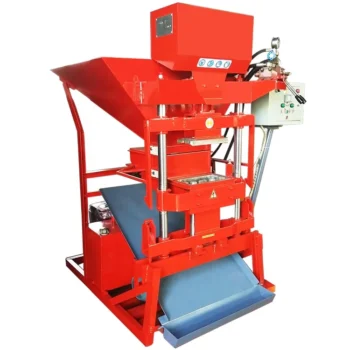
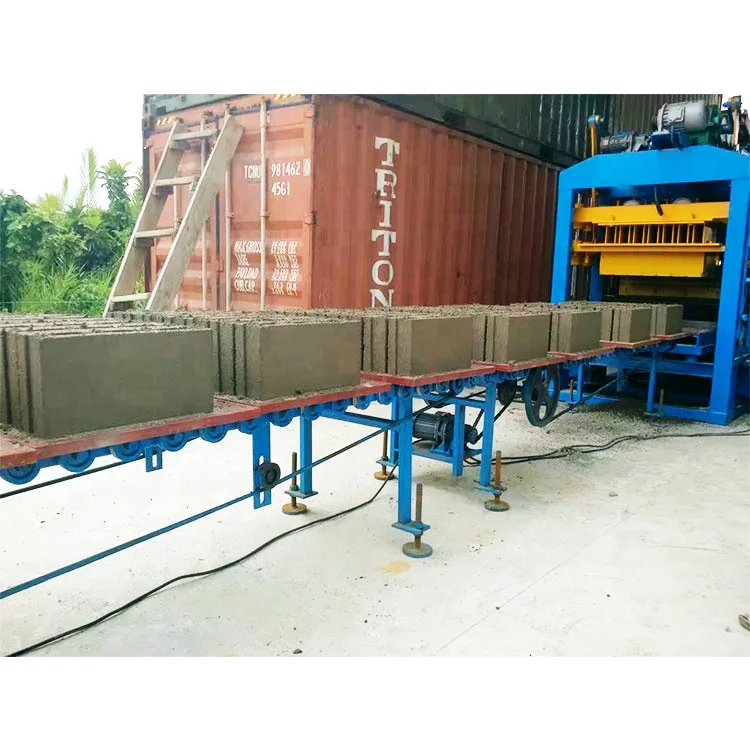
| Product Type | Automatic Hydraulic Block Making Machine |
| Rated Power | 26.5 kW |
| Voltage & Frequency | Configured to buyer’s local supply (basis to be confirmed) |
| Control System | PLC Controller |
| Overall Dimensions | 7400 × 1950 × 2800 mm |
| Net Weight | 6000 kg |
| Cycle Time | 15–20 seconds |
| Hydraulic Pressure | 16–21 MPa |
| Vibration Force | 45 kN |
| Main Vibration Form | Platform Vibration |
| Pallet Size | 1100 × 550 mm |
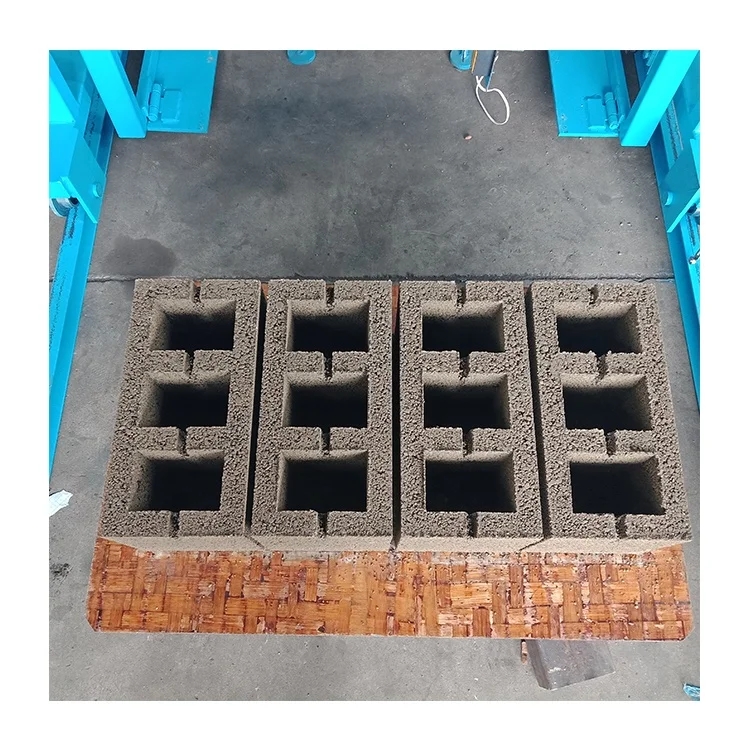
| Output Capacity (Hollow Block 400×200×200mm, 5 pcs/mould) | 7,200–9,600 pcs/day |
| Output Capacity (Porous Block 240×115×90mm, 16 pcs/mould) | 23,000–28,800 pcs/day |
| Output Capacity (Standard Block 240×115×53mm, 32 pcs/mould) | 61,440–70,400 pcs/day |
| Automation Level | Automatic (electric and hydraulic interlocking) |
| Applied Products | Hollow/solid blocks, pavers, interlocking blocks, curbstone |
| Raw Material | Crushed stone, sand, cement, fly ash, gravel, slag |
| Certification | CE (source value — verify against manufacturer catalog) |
Application Suitability
| Application | Material or Output |
|---|---|
| On-site hollow block production for housing projects | Crushed stone and cement with local sand aggregate |
| Porous block manufacturing for municipal paving | Fly ash blended with sand and cement |
| Standard solid block output for building material distributors | Gravel, slag, and industrial waste aggregates |
| Interlocking paver production for landscaping contractors | Colored concrete mix with fine sand |
| Curbstone forming for road infrastructure | Coarse aggregate with high cement content |
Why "In Stock" Only Matters When Loading Details Are Confirmed Upfront
A QT5-15 block machine in stock means little if the container loading plan and dismantling schedule have not been settled before you commit.
I have watched project contractors lose weeks because a machine labeled "available" still needed three days of disassembly work nobody scheduled, pushing the vessel booking past the deadline. The real value of a QT5-15 block machine in stock is knowing exactly when it leaves the yard, how it fits into the container, and what date it reaches your port [NEED_CITE: typical ocean freight transit windows by destination region].
What Dispatch-Ready Actually Covers
A stocked QT5-15 block machine in stock includes standard mould formats already matched to common block dimensions in your market. The machine, hydraulic station, and PLC cabinet are pre-assembled and factory-tested, so the only variables left are your voltage and control language preferences. Once those are locked, the unit moves to the loading bay on a known date rather than entering a production queue.
Container Loading and Dismantling Sequence
The QT5-15 mainframe, hydraulic unit, and pallet feeder separate into distinct sections for container loading. Each section is secured with bolted brackets rather than welded tabs, so reassembly at your site requires standard tools and a crane of adequate capacity. The loading plan specifies which section goes in first, how the mould crate is positioned, and where the pallet stack rides — eliminating guesswork when the container doors open at your yard [NEED_CITE: standard flat-rack and open-top container loading practices for heavy machinery].
Reading the Specs That Actually Affect Your Output
Hydraulic pressure at 16–21 MPa works together with the 45 kN platform vibration to compact the mix into dense blocks. Higher pressure alone does not guarantee strength; the vibration must distribute force evenly through the mould cavity, which is why the platform vibration form is specified rather than mould-only vibration. The 15–20 second cycle time applies across hollow, porous, and standard block formats, but actual daily throughput depends on pallet circulation speed and curing rack capacity downstream.
The 1100 × 550 mm pallet size must align with the curing racks and forklifts already on your site. A mismatch here means either replacing your rack inventory or accepting that pallets will not stack correctly during the curing period. Confirm this dimension before the machine ships, because modifying pallet size after production starts is not an option.
The Cost of Skipping the Voltage Conversation
Confirming voltage, frequency, and PLC display language after the QT5-15 arrives is a pattern I have seen repeatedly on Middle Eastern job sites. The machine powers up, the PLC screen shows text the operator cannot read, and the electrician discovers the local supply is a different frequency than the motor nameplate. Commissioning stalls for days while replacement contactors and a translated HMI file are sourced [NEED_CITE: electrical frequency compatibility requirements for industrial motors]. These delays are entirely avoidable when the voltage and language are confirmed during the order stage.
Why Buyers Working to Deadlines Source Here
Block machinery is the single focus, so the QT5-15 machine, mould, pallet, and handling equipment are specified as one matched system rather than assembled from separate suppliers. Standard moulds for hollow, porous, and standard block formats ship with stocked units, so you are not waiting for custom tooling to be machined. Dispatch lead time is quoted with the container loading plan, not after the deposit clears. Packing photographs and customs documentation are prepared before the container is sealed, smoothing the import process at your port. Factory test records on your specified block format accompany the shipment so you can verify performance against the quoted cycle time.
Documentation & Verification
- Factory test record run on your target block format before dispatch
- Container loading plan with section weights and securing details
- Voltage and PLC language confirmation sheet signed before production
- Packing photographs taken at each loading stage
- Customs documentation package matched to your port requirements
- CE declaration where applicable for your import market
Installation, Commissioning & Support
- Foundation plan based on the 7400 × 1950 mm footprint and 6000 kg operating weight
- Dedicated power circuit sized for 26.5 kW total draw at your confirmed voltage
- Reassembly sequence for the three main sections using standard hand tools
- First-run parameter setting on the PLC covering cycle time and vibration duration
- Operator training on mould change procedure and daily hydraulic checks
- Wear parts list covering platform springs, hydraulic seals, and mould liners
What to Share with Your Inquiry
Provide the block formats your market currently demands and the daily volume you need to sustain. Share your local aggregate type and any available sieve analysis so the mix can be evaluated against the machine’s vibration and pressure settings. Confirm your site voltage, frequency, and preferred PLC display language. Let us know whether your existing curing racks and forklifts match the 1100 × 550 mm pallet size or if alternative pallet dimensions need to be discussed before the QT5-15 ships.
Frequently Asked Questions
Q: Which QT5-15 models and moulds are currently in stock, and what is the dispatch lead time?
A: Stocked QT5-15 units ship with standard moulds for hollow, porous, and standard block formats. Dispatch lead time is quoted alongside the container loading plan before you place the order, so the departure date is known at commitment. Custom moulds follow a separate lead time and are not required to ship the base machine.
Q: How is the machine dismantled and loaded into a container, and what arrival estimate can I expect?
A: The QT5-15 separates into the mainframe, hydraulic station, and pallet feeder for container loading. Each section is bolt-secured, and a loading sequence document specifies positioning. Arrival estimates are provided based on your destination port and the confirmed vessel booking date.
Q: Will the voltage, frequency, and PLC language be confirmed before shipment?
A: Yes. Voltage, frequency, and PLC display language are confirmed in writing before the machine enters the loading bay. This prevents commissioning delays caused by motor incompatibility or an HMI the operator cannot read upon arrival at your site.
Q: What standard mould formats ship with a stocked QT5-15, and can custom moulds be added later?
A: Stocked units include moulds for the hollow, porous, and standard block dimensions listed in the specifications. Custom moulds to your drawings can be ordered separately and shipped in a subsequent container without holding up the base machine dispatch.
Q: How are packing, loading photographs, and customs documentation handled?
A: Packing photographs are taken at each loading stage and shared before the container is sealed. Customs documentation is prepared to match your destination port requirements, including the commercial invoice, packing list, and certificate of origin where needed for import clearance.