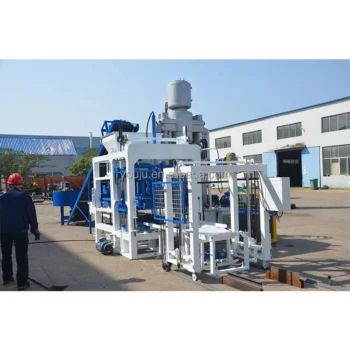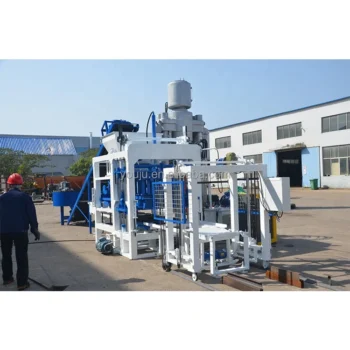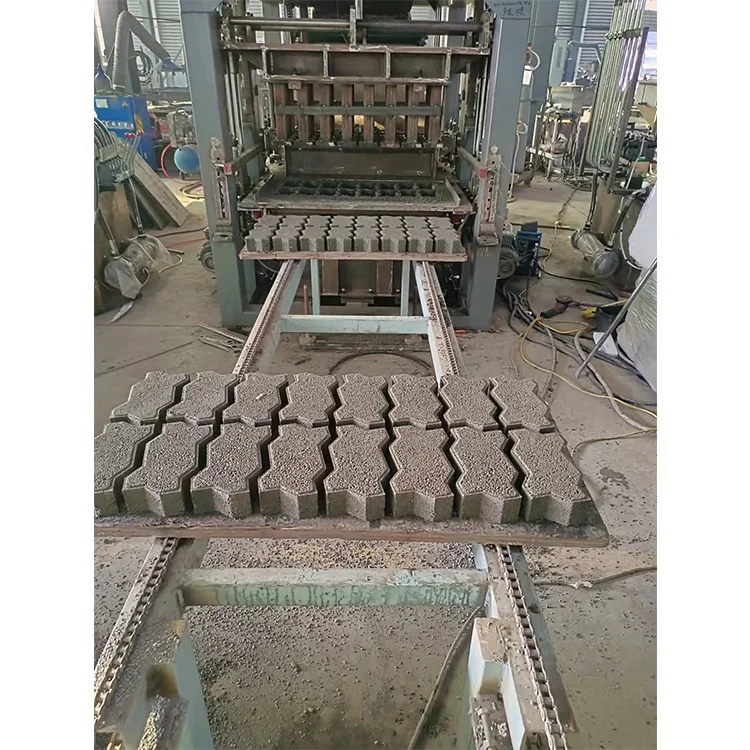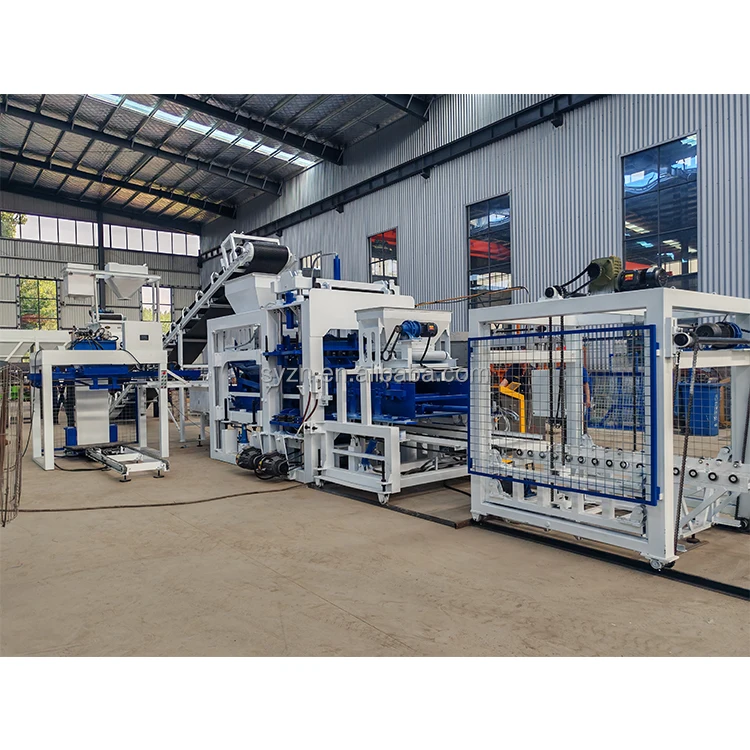


Description
Fast Dispatch Guarantee — QT5-15 automatic block machines ship within typical multi-week lead times with container loading plans quoted before you commit, keeping project deadlines intact.
Technical Specifications
| Parameter | Value |
|---|---|
| Model | QT5-15 |
| Product Type | Automatic Hydraulic Block Making Machine |
| Overall Dimensions (L×W×H) | 7400 × 1950 × 2800 mm |
| Total Mass | 5000 kg |
| Overall Power | 32 kW |
| Vibration Form | Platform Vibration |
| Vibration Frequency | 0–60 Hz |
| Vibration Force | 80 kN |
| Moulding Mode | Automatic loading, vibration moulding |
| Demolding Method | Hydraulic |
| Pallet Size | 1100 × 550 mm |
| Molding Cycle | 15–20 s (basis to be confirmed) |
| Control System | PLC (Programmable Logic Controller) |
| Output Capacity (Hollow Block 400×200×200mm) | 900–1200 pcs/h, 7200–9600 pcs/8hr |
| Output Capacity (Solid Brick 240×115×53mm) | 5760–7680 pcs/h, 46080–61440 pcs/8hr |
| Output Capacity (Rectangular Paver 200×100×60mm) | 3600–4500 pcs/h, 28800–36000 pcs/8hr |
| Recommended Factory Area | 1000 m² |
| Raw Material Compatibility | Fly ash (up to 70%), slag, gangue, sand, crushed stone, cement, water |
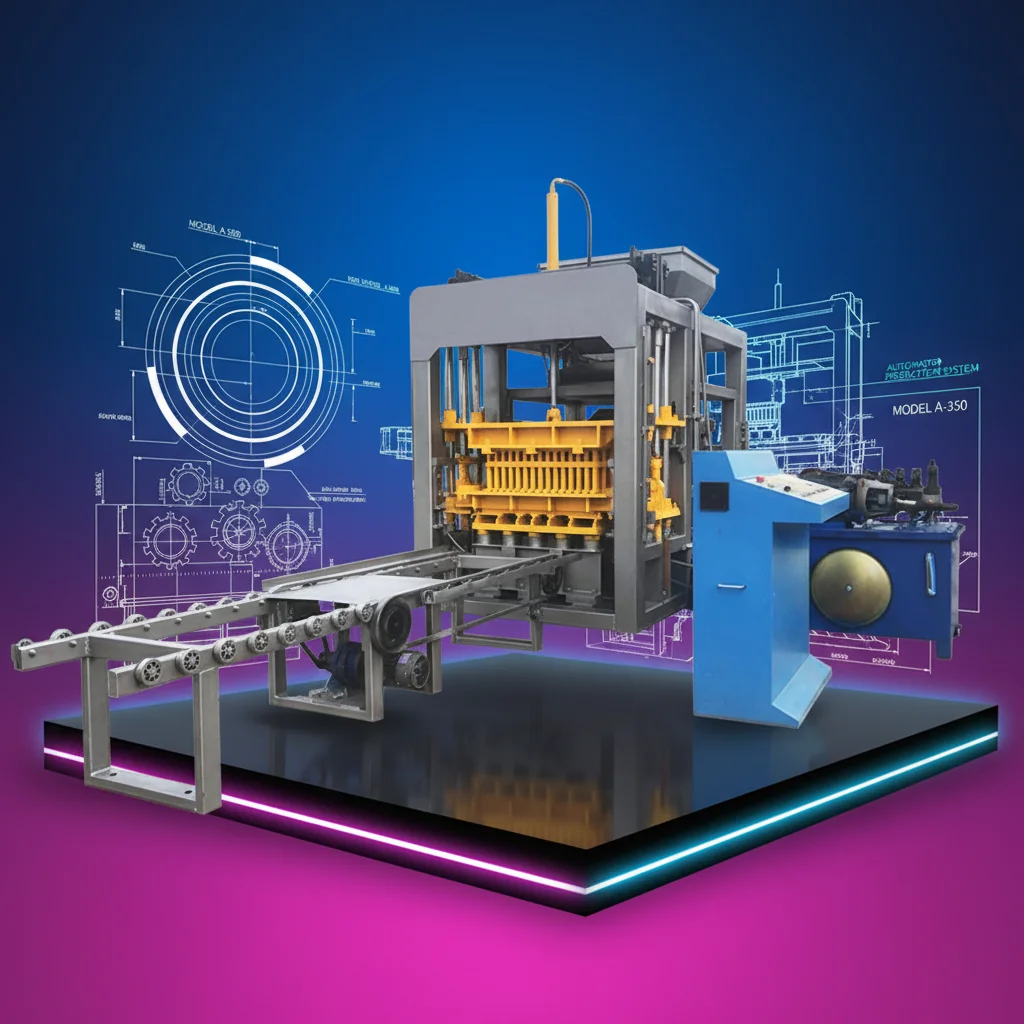
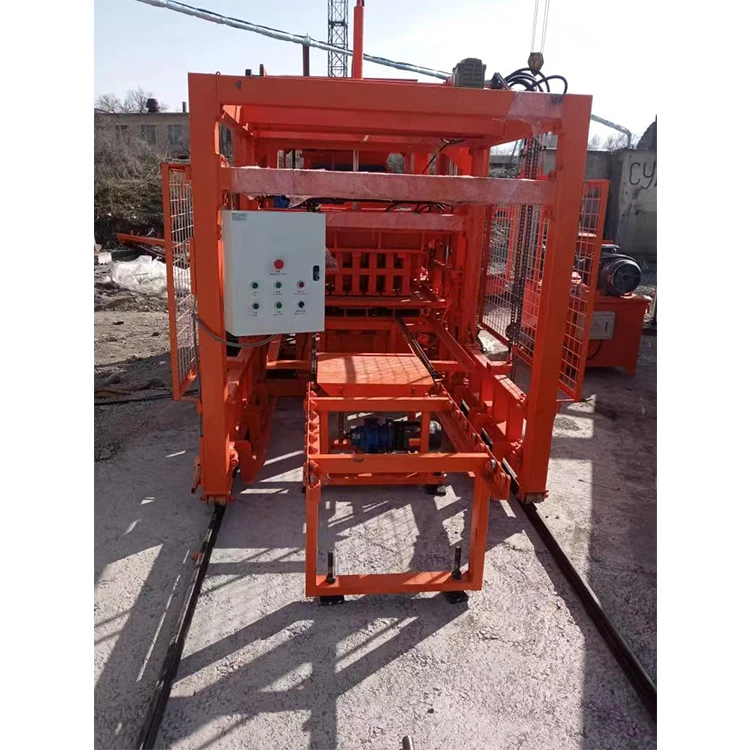
| Component List | Pallet feed machine, block making machine, storage hopper, conveyor, hydraulic unit, PLC control cabinet |
| Warranty | 1 year (whole machine, excluding spare parts) |
Application Suitability
| Application | Material or Output |
|---|---|
| Hollow block production for building walls | Crushed stone, sand, cement, fly ash blends |
| Solid brick production for masonry | Sand and cement mixtures with local aggregate |
| Paving block production for roads and walkways | High-strength concrete with coarse aggregate |
| Fly ash utilization in block manufacturing | Industrial residue blends up to 70% fly ash content |
Why Voltage Confirmation Must Happen Before Shipment
QT5-15 block machine in stock fast delivery means nothing if the machine arrives with mismatched electrical specifications that delay commissioning for weeks.
I’ve coordinated dozens of QT5-15 shipments, and the most frustrating delays happen when voltage and frequency aren’t confirmed early. One Middle East contractor received his machine on schedule, but the local grid ran at a different frequency than assumed. The PLC wouldn’t sync properly with the vibration cycle, and we spent days troubleshooting remotely before identifying the mismatch [NEED_CITE: voltage and frequency standards by export market]. The project deadline slipped while we arranged a transformer solution.
Dispatch Readiness and Container Loading
When you’re working against a construction start date, the QT5-15 block machine in stock fast delivery promise only matters if the supplier can show you exactly which configurations are ready to ship. Stocked units typically include standard pallet sizes and common mould formats, but custom tooling requires separate lead time. Container loading plans must account for the 7400 mm length and 5000 kg mass, often requiring dismantling of the pallet feed station and hydraulic unit for transport efficiency.
Arrival Estimates Quoted Upfront
Before you commit to an order, you should receive a realistic arrival estimate that factors in production queue, customs documentation preparation, and ocean transit time. The 32 kW power requirement means some destinations need advance notice for site electrical upgrades. I always push buyers to confirm their curing area dimensions against the 1100 × 550 mm pallet size early, because mismatched infrastructure causes more on-site delays than any shipping issue [NEED_CITE: port clearance documentation requirements for industrial machinery].
How Vibration Force and Hydraulic Pressure Determine Block Density
The 80 kN vibration force working across the 0–60 Hz frequency range must be matched to your specific mix design. Platform vibration transmits energy through the pallet into the mould cavity, compacting the material from the bottom up. When hydraulic demolding lifts the mould away, the block must hold its shape without slumping or cracking. If your local aggregate has larger particle sizes or higher moisture content than standard test materials, the vibration parameters need adjustment. I learned this the hard way when a Middle East client’s blocks kept failing density tests until we remotely recalibrated the pressure and frequency settings to match his coarse river sand. The PLC control system stores these parameters once optimized, ensuring batch-to-batch consistency across production runs.
The Hidden Cost of Incomplete Quotations
When pallet handling, stacking, and curing equipment aren’t included in the initial quotation, buyers discover hidden costs after the machine arrives. The QT5-15 component list shows a pallet feed machine, but manual stacking means your labor costs stay high and output piles up faster than workers can move it. I’ve seen plant owners scramble to source compatible pallets locally when the quoted package didn’t include enough for continuous operation. The 1000 m² recommended factory area assumes space for curing racks and forklift circulation, but without upfront planning, that space gets wasted [NEED_CITE: block plant layout planning for pallet circulation systems].
Why Source From This Supplier
Block machinery as a single focus means the QT5-15 ships as a matched system—machine, mould, pallet, and handling equipment specified together rather than assembled from separate vendors. Configuration gets set against your actual mix design and local aggregate, not a catalogue default that assumes materials you can’t source. Mould design covers the formats your market actually sells, including custom drawings when standard options don’t fit. Automation level remains selectable, so you can start with semi-automatic pallet handling and upgrade later without replacing the entire press. Installation support includes operator training on your specific block formats and maintenance schedules for the hydraulic and vibration systems.
Documentation & Verification
- Factory test record on your specified block format and mix design before dispatch
- Capacity calculation sheet stating which block dimensions each output figure assumes
- Pallet specification confirming material compatibility with your curing method and climate
- Voltage and PLC display language confirmation document before production begins
- Hydraulic and electrical schematic for local maintenance team reference
Installation, Commissioning & Support
- 1000 m² factory area with level concrete foundation for 7400 × 1950 mm footprint
- Dedicated 32 kW electrical circuit with confirmed voltage and frequency before arrival
- Multi-station assembly requiring on-site connection of pallet feed, conveyor, and hydraulic unit
- PLC parameter calibration for your local aggregate and target block format during commissioning
- Operator training covering mould change procedures and vibration frequency adjustment
- Wear parts list for hydraulic seals and vibration components with recommended replacement intervals
What We Need To Quote Your Project
Send us your target block format with dimensions, daily output requirement, and local raw material availability including aggregate type and particle size. Confirm your site electrical specifications including voltage, frequency, and available amperage for the 32 kW load. Let us know your preferred PLC display language and whether you need pallets, moulds, and handling equipment included in the shipment or will source locally.
Frequently Asked Questions
Q: Which QT5-15 configurations are currently stocked and what is the dispatch lead time?
A: Stocked configurations typically include standard hollow block and solid brick moulds with 1100 × 550 mm pallet systems. Dispatch lead time depends on current inventory and whether your order requires custom mould formats or specific voltage configurations. We quote exact availability and lead time before you commit, so you can plan around your project deadline.
Q: How is the machine dismantled for container loading, and what container type is required?
A: The 7400 mm length and 5000 kg mass require dismantling the pallet feed station, hydraulic unit, and sometimes the PLC cabinet for efficient container loading. We provide a detailed loading plan showing component placement and securing points. Container type depends on your destination port restrictions and whether you’re shipping supporting equipment alongside the press.
Q: What is the estimated arrival time from order to port of destination?
A: Arrival time factors in production queue if your configuration isn’t stocked, customs documentation preparation, ocean transit duration, and port clearance procedures at your destination. We quote an estimated arrival date before order confirmation so you can coordinate site preparation and electrical upgrades around a realistic timeline rather than optimistic assumptions.
Q: Are pallets, moulds and supporting handling equipment included in the shipped package or quoted separately?
A: The standard component list includes the pallet feed machine, block making machine, storage hopper, conveyor, hydraulic unit, and PLC control cabinet. Pallets, moulds, stacking systems, and curing rack handling are quoted based on your specific requirements. We clarify exactly what ships in the package before you commit so there are no surprises when the container arrives.