
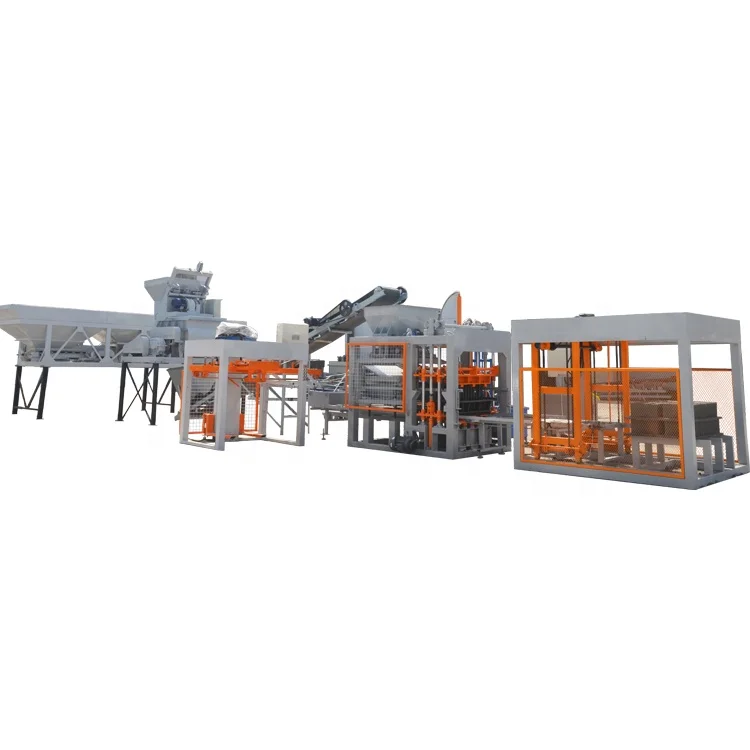
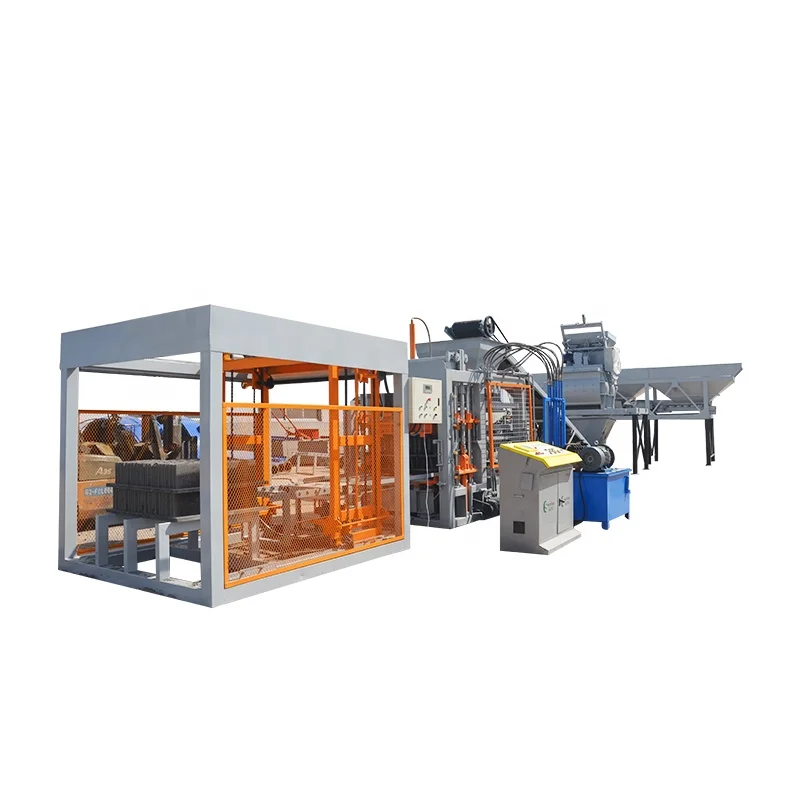
Description
Configuration matched to site reality — the QT5-15 is held in stock for fast dispatch, but electrical and control settings are confirmed against your local grid before it leaves the factory floor.
Technical Specifications
| Parameter | Value |
|---|---|
| Model | QT5-15 |
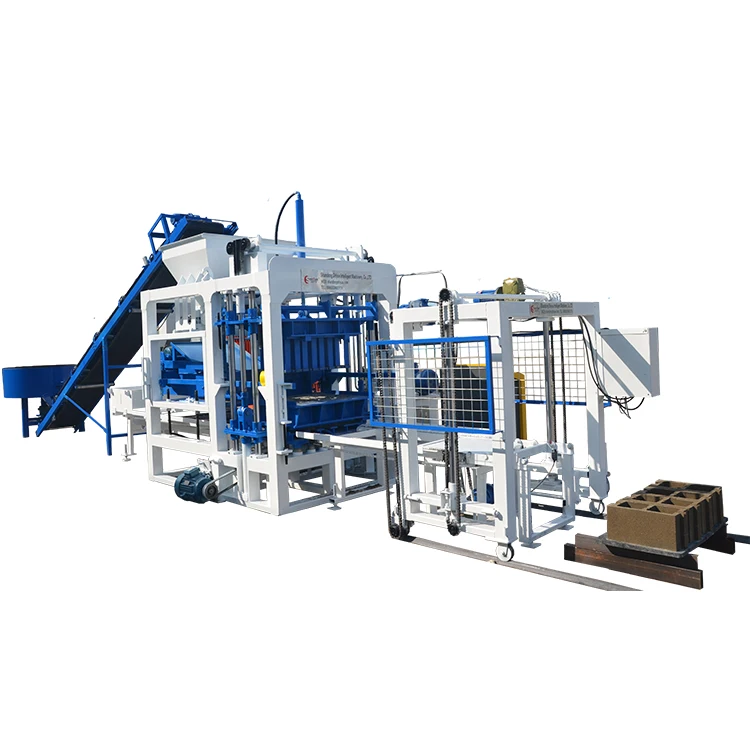
| Product Type | Fully Automatic Concrete Block Making Machine |
| Overall Dimensions (L×W×H) | 7400×1950×2800 mm |
| Rated Pressure | 21 MPa |
| Main Vibration Form | Platform Vibration |
| Vibration Frequency | 2800~4500 r/min |
| Pallet Size | 1100×550 mm |
| Molding Cycle | 15–25 s |
| Overall Power | 26.5 kW |
| Demolding Method | Hydraulic |
| Control System | PLC |
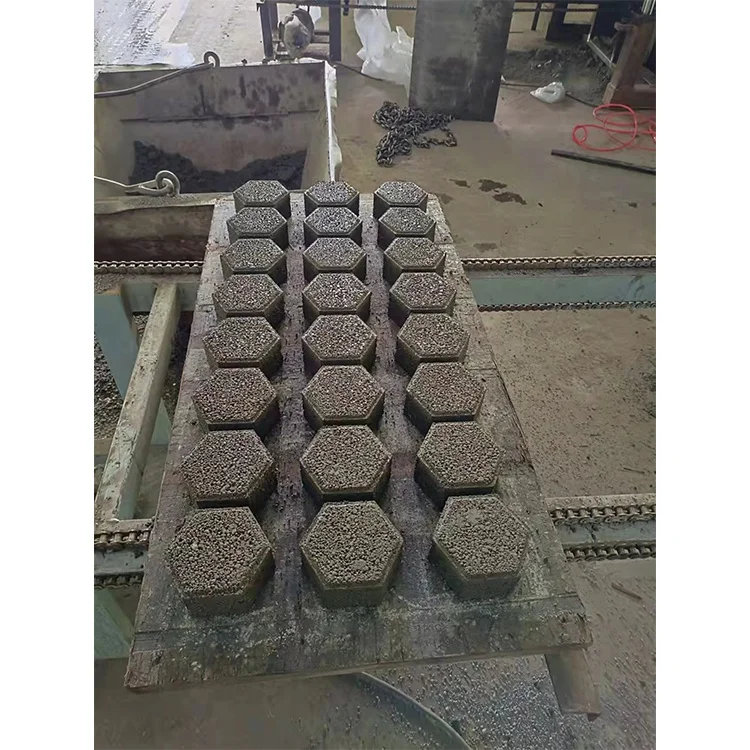
| Applied Products | Concrete blocks, hollow blocks, solid blocks, pavers, interlocking blocks, curbstone, colored pavers |
| Raw Material | Crushed stone, sand, cement, dust, fly ash, gravel, slag |
| Output Capacity (Hollow brick) | 1800 pcs/h (basis: 400×200×200 mm, 5 pcs/mold, 16–20 s cycle) |
| Output Capacity (Hollow block) | 1300 pcs/h (basis: 400×150×200 mm, 6 pcs/mold, 15–20 s cycle) |
| Output Capacity (S paver) | 3700 pcs/h (basis: 225×112.5×60 mm, 16 pcs/mold, 15–17 s cycle) |
| Automation Level | Fully Automatic |
Application Suitability
| Application | Material or Output |
|---|---|
| Stationary block plants | Hollow and solid blocks from crushed stone, sand, and cement |
| On-site contractor production | Pavers and interlocking blocks for housing developments |
| Building material manufacturers | Curbstone and colored pavers expanding an existing product range |
| First-plant entrepreneurs | Automatic PLC-controlled hollow block production with fly ash or gravel mixes |
Why the Voltage Question Should Come Before Dispatch Lead Time
A stocked machine that cannot start on arrival is not fast delivery — it is a stalled project.
Quoted lead times mean nothing if the QT5-15 block machine in stock arrives with a 50 Hz motor wired for a 60 Hz grid. I have seen a fully automatic line sit idle on a Middle Eastern site for weeks while a replacement control panel was air-freighted, because the local frequency was never confirmed before loading. Every fast delivery stationary block machine we dispatch has its electrical schematic checked against the buyer’s actual site parameters first [NEED_CITE: voltage and frequency standards by export market].
Stock Availability and What It Actually Means
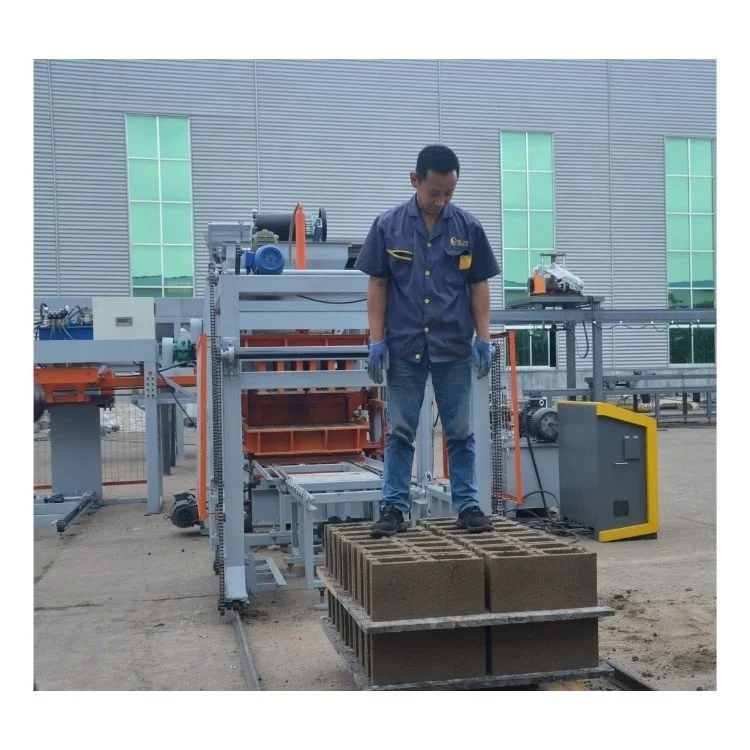
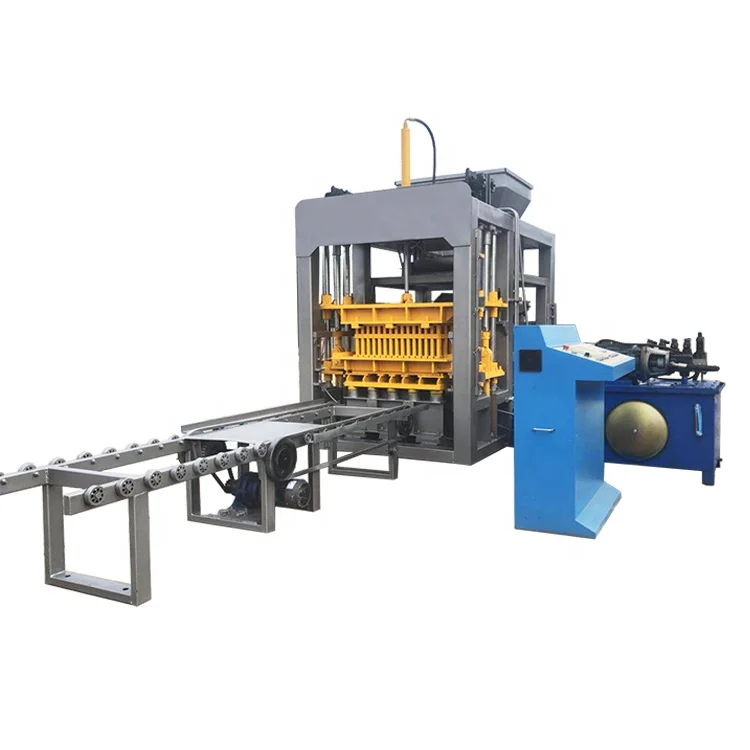
Having the QT5-15 block machine in stock means the main press frame, hydraulic station, and PLC cabinet are assembled and factory-tested. Standard moulds for common hollow block formats are typically on the shelf alongside the machine. This removes the production queue wait that custom-built units require, which matters when your construction deadline is measured in weeks rather than months.
Container Loading and Dismantling for Shipment
The QT5-15 is dismantled into major assemblies — main frame, hydraulic unit, mould, and pallet magazine — for container loading. A standard 40-foot high-cube container accommodates the press and a set of pallets. The dispatch lead time quoted upfront covers factory preparation and booking, and the arrival estimate accounts for the destination port [NEED_CITE: standard container loading practices for heavy industrial machinery].
What the Vibration and Pressure Numbers Mean for Block Density
Platform vibration at 2800–4500 r/min works together with 21 MPa rated hydraulic pressure to compact the concrete mix inside the mould cavity. Higher vibration frequency fluidizes the mix so it fills mould corners, while hydraulic pressure applied from above squeezes out air and locks aggregate particles together. The 1100×550 mm pallet must be stiff enough to transmit this vibration without absorbing energy, otherwise the bottom face of every block comes out soft. Molding cycle ranges from 15 to 25 seconds depending on the block format and the moisture content of your mix.
The Cost of Skipping Pre-Dispatch Electrical Verification
When voltage and frequency are assumed rather than confirmed, the consequences cascade. A motor rated for the wrong frequency runs at the incorrect speed, which shifts vibration force outside the designed range and produces blocks that crumble at the edges. The PLC may power on but display faults that the operator cannot read if the language was left at a factory default. Rectifying these issues on-site means sourcing components locally, which in remote project locations can halt the entire block line [NEED_CITE: impact of incorrect motor frequency on industrial equipment performance].
Why Procure a Stocked Machine Through This Channel
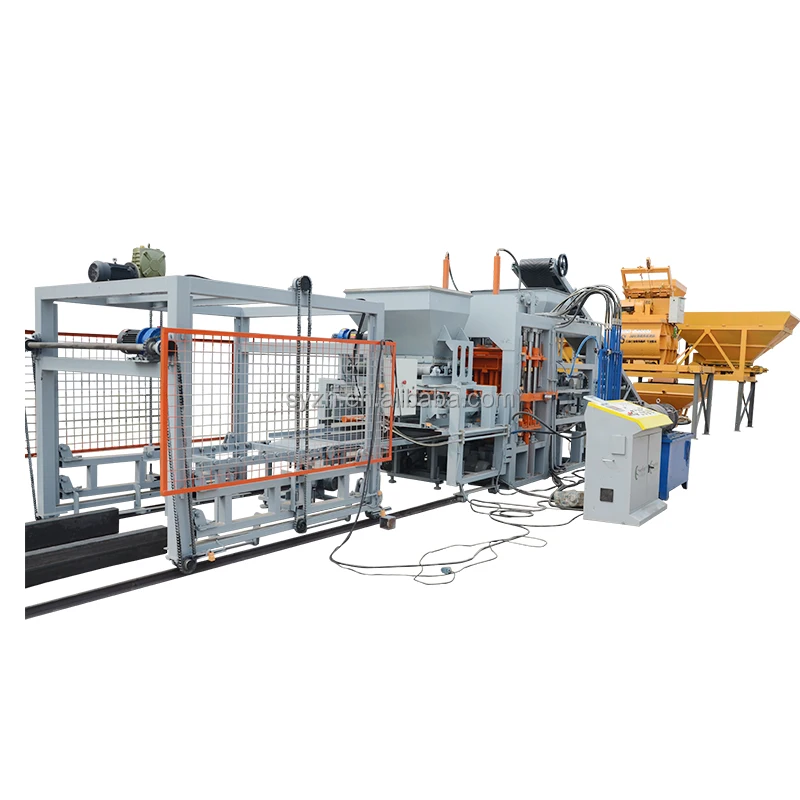
Block machinery is the single focus here, so the QT5-15 ships as a matched system — press, mould, pallet, and handling stations specified together rather than assembled from separate suppliers. Configuration is set against your local aggregate and target block format before dispatch, not left as a catalogue default. Standard moulds held in stock cover common hollow block and paver sizes, and custom mould drawings can be processed if your market requires a format outside the standard range. The automation level on the QT5-15 is fully automatic with PLC control, and the system supports a future upgrade path if you begin with semi-automatic pallet handling. Factory test records and packing photographs are provided before the container is sealed.
Documentation & Verification
- Factory test record showing cycle times on your specified block format before dispatch
- Machine specification sheet with pallet size and hydraulic pressure values confirmed
- Mould drawing and format list for every mould included in the shipment
- Voltage, frequency, and PLC display language confirmation document signed before production release
- Hydraulic and electrical schematic matching the as-built configuration
- Packing photographs documenting machine condition at container loading
Installation, Commissioning & Support
- Foundation must support the 7400×1950 mm footprint and dynamic vibration loads from platform vibration
- Power supply must match confirmed voltage and frequency with a dedicated circuit for the 26.5 kW total load
- Machine arrives dismantled; on-site reassembly covers frame, hydraulic station, and pallet magazine alignment
- First commissioning verifies molding cycle across each block format and adjusts vibration frequency accordingly
- Operator training covers PLC interface navigation, mould change procedure, and daily hydraulic inspection points
- Wear parts list and mould inventory provided so first replacement orders can be placed before stock runs low
What to Include in Your Inquiry
Tell us the block formats your market sells and the daily output you need to hit your project schedule. Share your local voltage, frequency, and the language your operators read so the QT5-15 block machine in stock is configured correctly before it ships. If you already have pallets and a curing area on-site, send us the pallet dimensions and forklift capacity so we confirm compatibility before dispatch.
Frequently Asked Questions
Q: Which QT5-15 units and moulds are currently in stock and what is the dispatch lead time?
A: The QT5-15 fully automatic press is held as a stocked model with standard hollow block and paver moulds available alongside it. Dispatch lead time is quoted upfront once your electrical and control requirements are confirmed. Container booking and factory preparation run in parallel to shorten the timeline from order to port departure.
Q: How is the machine dismantled and loaded into a container, and what is the arrival estimate?
A: The QT5-15 is broken down into main frame, hydraulic station, mould assembly, and pallet magazine for loading into a standard high-cube container. An arrival estimate is provided based on the destination port at the time of order. On-site reassembly and alignment are part of the commissioning process once the container arrives.
Q: Are voltage, frequency, and PLC language configurable before dispatch on a stocked unit?
A: Yes. Even on a fast delivery stationary block machine, the electrical configuration and PLC display language are confirmed against your site requirements before the machine leaves the factory. This step is non-negotiable in our dispatch process because arriving with incorrect electrical settings causes commissioning delays that outweigh any time saved by shipping from stock.
Q: What block formats can the stocked moulds produce, and what is the realistic daily output for each?
A: Stocked moulds typically cover the 400×200×200 mm hollow brick at 1800 pcs/h based on 5 pcs per mold and a 16–20 second cycle, the 400×150×200 mm hollow block at 1300 pcs/h, and the S paver at 3700 pcs/h. Daily output depends on your shift length, curing logistics, and pallet circulation speed, not just the press cycle alone.
Q: Is on-site installation and commissioning support available after a fast-delivery shipment arrives?
A: Installation and commissioning support is available for the QT5-15 regardless of whether it was built to order or shipped from stock. The process covers machine reassembly, electrical connection verification, mould installation, cycle time calibration across your block formats, and operator training on the PLC interface and daily maintenance routines.