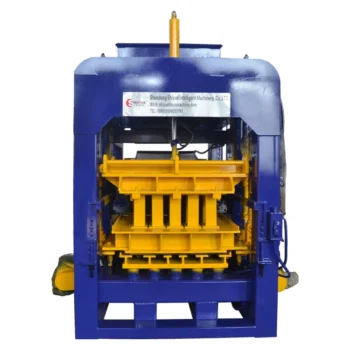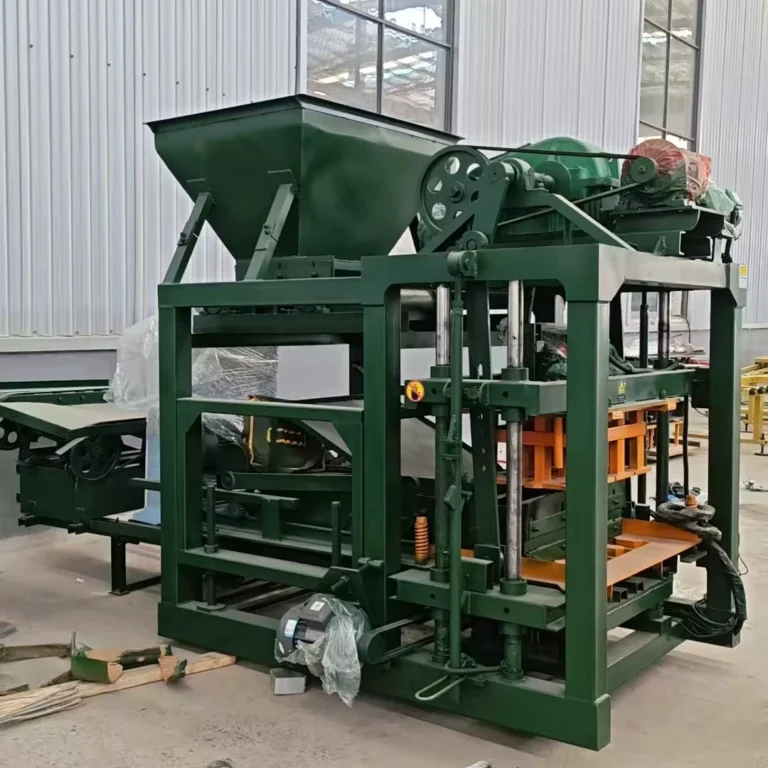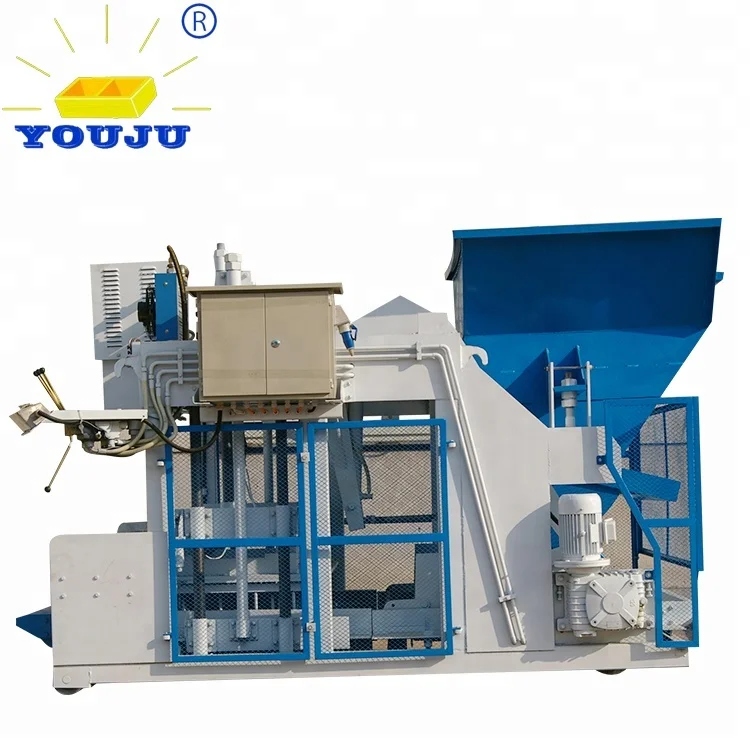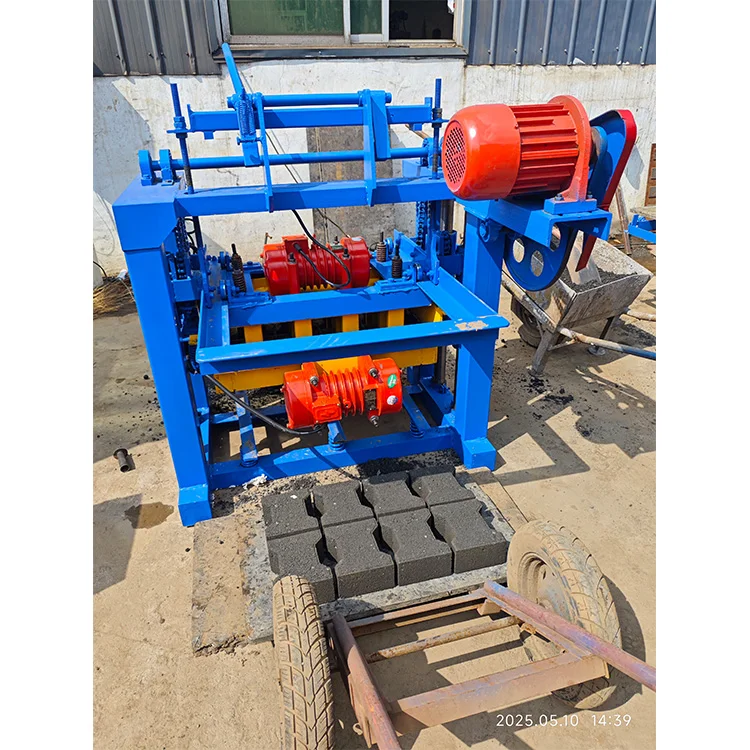


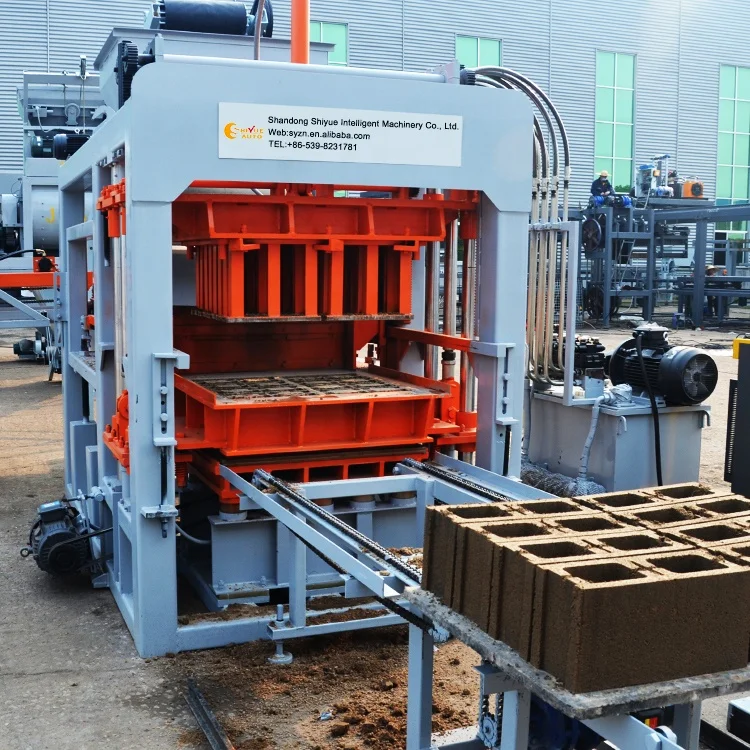
Description
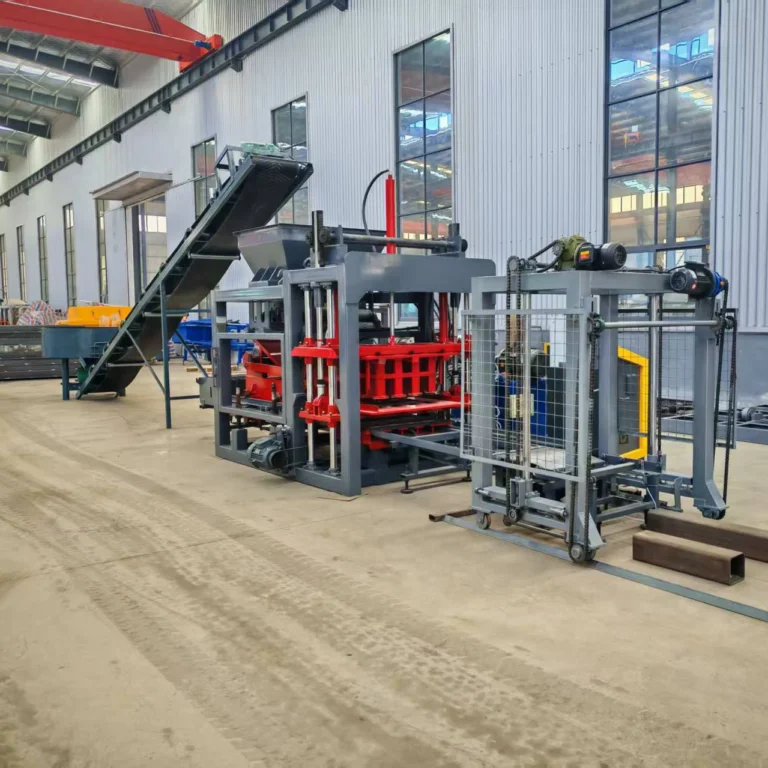
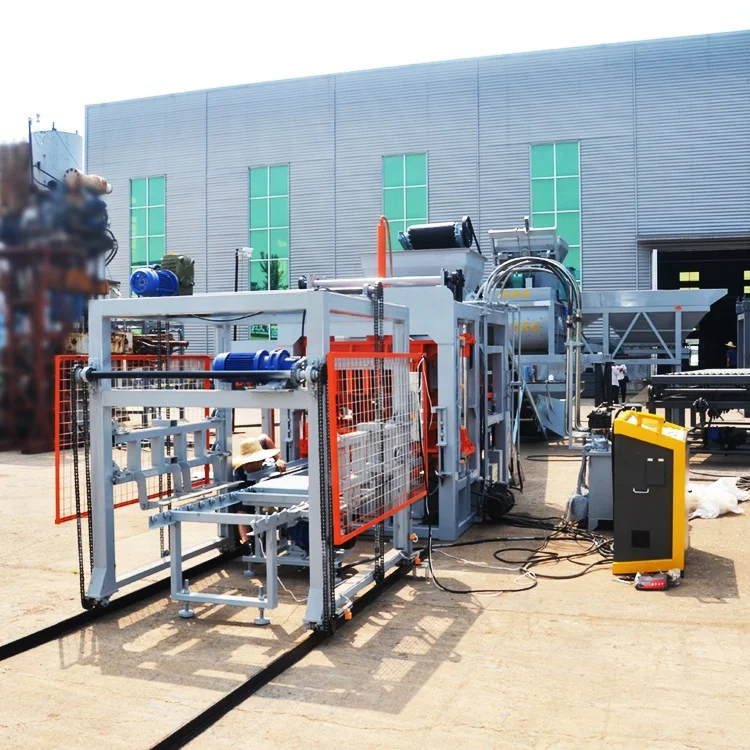
Dispatch-Ready Configuration — Every station from pallet feed to block sweeper ships together so your line runs on day one, not after weeks of chasing missing parts.
Technical Specifications
| Parameter | Value |
|---|---|
| Model | QT6-15 |
| Product Type | Automatic Concrete Block Making Machine |
| Overall Dimensions | 7400 × 1900 × 2660 mm |
| Molding Cycle | 15–25 s |
| Vibration Frequency | 4600 r/min |
| Vibration Force | 40–50 kN |
| Rated Power | 31.25 kW |
| Mixer Model | JQ350 |
| Pallet Size | 850 × 550 × 25 mm |
| Total Weight | 7 T |
| Control System | PLC control system |
| Output Capacity (Hollow 400×200×200 mm) | 1200–1680 pcs/hr |
| Output Capacity (Hollow 400×150×200 mm) | 1800–2400 pcs/hr |
| Output Capacity (Solid 240×115×53 mm) | 3240 pcs/hr |
| Daily Output, 8 hr (Hollow 400×200×200 mm) | 9600–13440 pcs |
| Daily Output, 8 hr (Hollow 400×150×200 mm) | 14400–19200 pcs |
| Daily Output, 8 hr (Solid 240×115×53 mm) | 16200–19440 pcs |
| Included Equipment | Block machine, hydraulic station, PLC, pallet feeder, brick conveyor, block sweeper |
| Free Accessories | Manual hydraulic trolley, spare parts and tools |
| Automation Level | Automatic |
| Standards | CE (where applicable) |
Application Suitability
| Application | Material or Output |
|---|---|
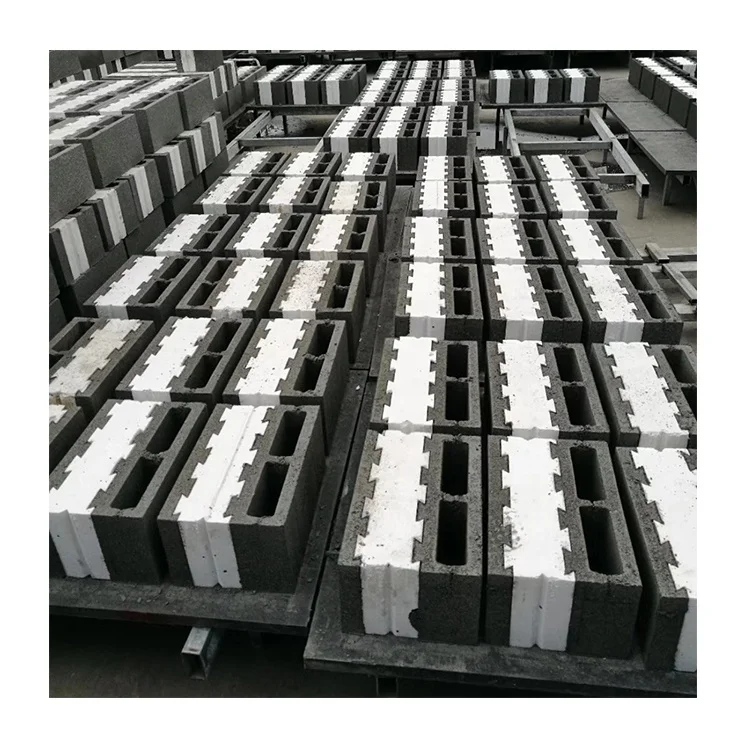
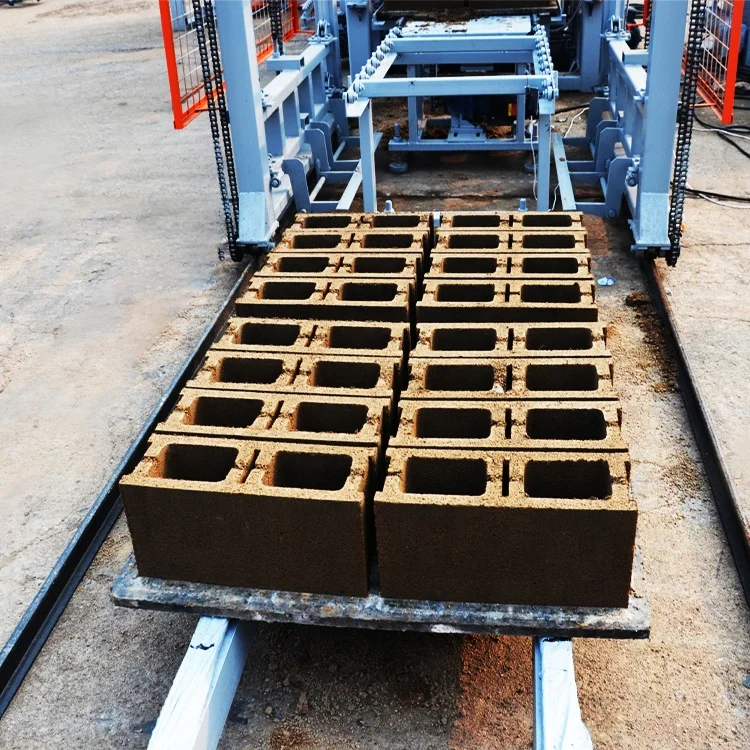
| Hollow block production for housing projects | Crushed stone, sand, cement, fly ash |
| Solid brick manufacturing for infrastructure | Local aggregate blends with cement binder |
| Paving block and curbstone output | Coarse aggregate with fine sand and cement |
| On-site production at construction zones | Available raw materials within project vicinity |
| Block plant replacement or expansion | Existing curing rack and forklift compatibility with 850×550 mm pallets |
What the Quoted Lead Time Actually Means for Your Project
A QT6-15 block machine in stock means the press, hydraulic station, and standard moulds are physically in the yard — not scheduled for a production slot six weeks out.
When a contractor has a housing deadline and the current press fails, a build-to-order timeline can stall the entire project. Buyers often receive a dispatch date only to discover the quoted scope left out pallet handling, forcing manual stacking until a second shipment arrives. [NEED_CITE: common block line missing stations after arrival] This QT6-15 block machine in stock ships as a matched set: pallet feeder, brick conveyor, and block sweeper all load into the same container.
Container Loading and Dispatch Timeline
The QT6-15 block machine in stock is stripped down for 20GP container loading with nude packing, and approximately 500 pallets fit alongside the main frame. Dispatch lead time is quoted from the day voltage, frequency, and PLC language are confirmed — not from the day the proforma invoice is signed. [NEED_CITE: standard export packing practices for hydraulic block machines]
Arrival Estimate Quoted Before You Commit
Buyers working to a fixed project date need to know when the container reaches their port, not just when it leaves ours. For this fast delivery QT6-15, we state the sailing window and estimated arrival at your destination port before the order is finalised, so your foundation crew and curing area are ready the same week the machine is unpacked.
Reading the Molding Cycle Against Your Block Format
The 15–25 second molding cycle applies across formats, but real hourly output depends entirely on the block you press. At 400×200×200 mm hollow blocks the QT6-15 produces 1200–1680 pieces per hour; at 400×150×200 mm that rises to 1800–2400. For solid bricks at 240×115×53 mm the figure reaches 3240 per hour. These are the numbers to plan your curing rack capacity around, not a single headline figure.
Choosing Pallet Size to Fit Your Existing Curing Area
The 850×550×25 mm pallet is a confirmed dimension, which means you can measure your curing racks and forklift tine spacing before the machine ships. A mismatch here leaves wet blocks sitting on the ground or forces a forklift upgrade you did not budget for. Vibration force at 40–50 kN combined with high-pressure hydraulics sets block density, but the pallet must carry that weight from press to rack without flexing. [NEED_CITE: pallet deflection and block cracking during curing]
What Happens When the Line Scope Has Gaps
A press that arrives without a pallet feeder means workers hand-place every pallet for the entire shift. Without a brick conveyor, fresh blocks are carried manually from the press to the curing zone, and breakage climbs. These gaps rarely show up on a quotation until the machine is bolted to the floor. [NEED_CITE: manual handling losses in small block plants]
Why Procurement from a Stock-Focused Supplier Differs
Block machinery is the single focus here, so the press, mould, pallet, and handling equipment are specified as one system rather than assembled from separate sources. Standard moulds for hollow, solid, paver, and curbstone formats ship from the same yard as the press. Packing photographs and a container loading plan are provided before dispatch. Voltage, frequency, and control language are locked in before the machine leaves the factory, preventing commissioning delays on arrival. Customs documentation and CE declaration support are included to clear your port without hold-ups.
Documentation & Verification
- Factory test record showing cycle time on your target block format before dispatch
- Container loading photographs and packing list with pallet count verified
- Voltage, frequency, and PLC display language confirmation sheet signed before shipment
- Hydraulic and electrical schematic matched to your confirmed power supply
- CE declaration provided where applicable for import clearance
Installation, Commissioning & Support
- Foundation plan matched to the 7400×1900 mm footprint and 7 T operating weight
- Power feed sized for 31.25 kW total draw with dedicated circuit breaker
- Reassembly from nude packing supervised on-site with hydraulic line pressure check
- PLC language set and molding cycle tuned to your local aggregate and mix
- Operator training on mould change procedure and daily hydraulic inspection points
- Wear parts list and first replacement schedule handed over at commissioning
What to Include in Your Inquiry
Tell us the block format your market sells most, the daily volume you need to hit, and your local aggregate type so we match the mould and confirm realistic output. Share your site voltage, frequency, and preferred PLC display language so the control panel is configured before loading.
Frequently Asked Questions
Q: Which models and moulds are currently stocked for quick dispatch?
A: The QT6-15 is held as a standard stocked model with common moulds for hollow blocks, solid bricks, pavers, and curbstones ready in the yard. Standard pallet quantities ship alongside the press in the same container, so your line is complete on arrival.
Q: How is the dispatch lead time calculated?
A: Lead time runs from the day voltage, frequency, and PLC language are confirmed against your site, not from invoice date. Once those are locked, the QT6-15 is prepared for container loading and a sailing window is booked.
Q: How is the machine packed and what ships in the container?
A: The QT6-15 is nude-packed into a 20GP container with approximately 500 pallets loaded alongside. Packing photographs and a loading plan are shared before the container is sealed so you know exactly what arrives.
Q: Are electrical settings confirmed before shipment?
A: Voltage, frequency, and PLC display language are confirmed with you and set at the factory before the machine ships. This prevents commissioning delays and avoids rewiring the control cabinet on your workshop floor.
Q: What shipping documentation comes with the machine?
A: You receive customs documentation support, a CE declaration where applicable, hydraulic and electrical schematics, and a factory test record. These documents are prepared to match your import requirements for smooth port clearance.