Description
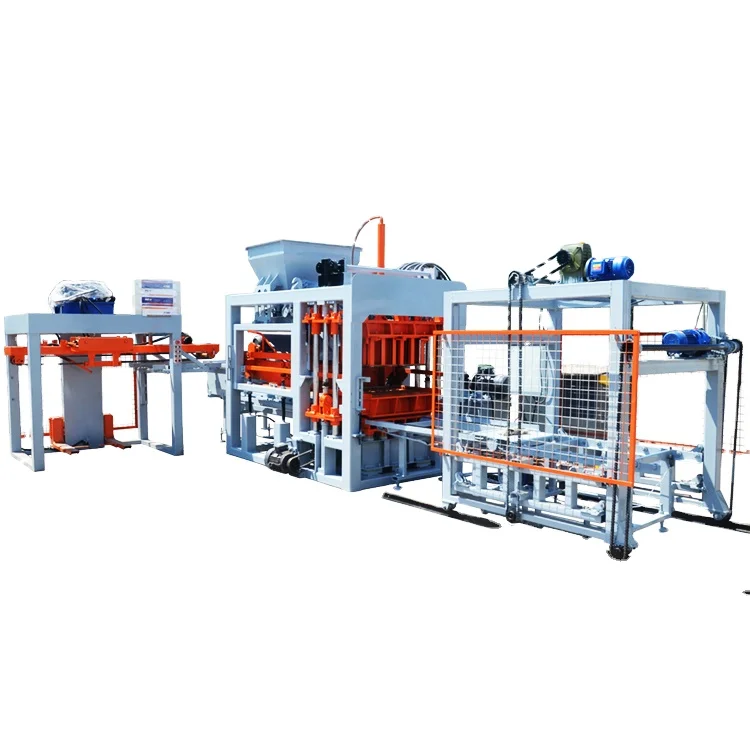
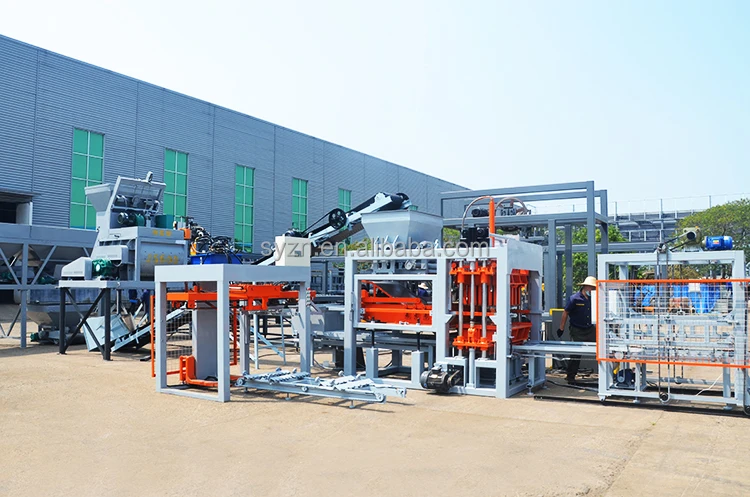
Stock readiness over catalogue promises — the QT6-15 is held as a complete matched system including press, pallets, and standard moulds so dispatch follows order confirmation rather than a production slot waiting for components.
Technical Specifications
| Parameter | Value |
|---|---|
| Model | QT6-15 |
| Product Type | Hydraulic Block Making Machine |
| Overall Dimensions (L×W×H) | 8200×1700×2950 mm |
| Total Mass | 7 T |
| Vibration Frequency | 0-60 Hz |
| Vibration Form | Platform Vibration |
| Vibration Force | 45 kN |
| Moulding Mode | Load automatically, vibration moulding |
| Demolding Method | Hydraulic |
| Pallet Size | 880×850 mm |
| Molding Cycle | 15-20 s (basis not stated in source — confirm block format / material / thickness) |
| Overall Power | 37 kW |
| Control System | PLC (Programmable Controller) with touch screen |
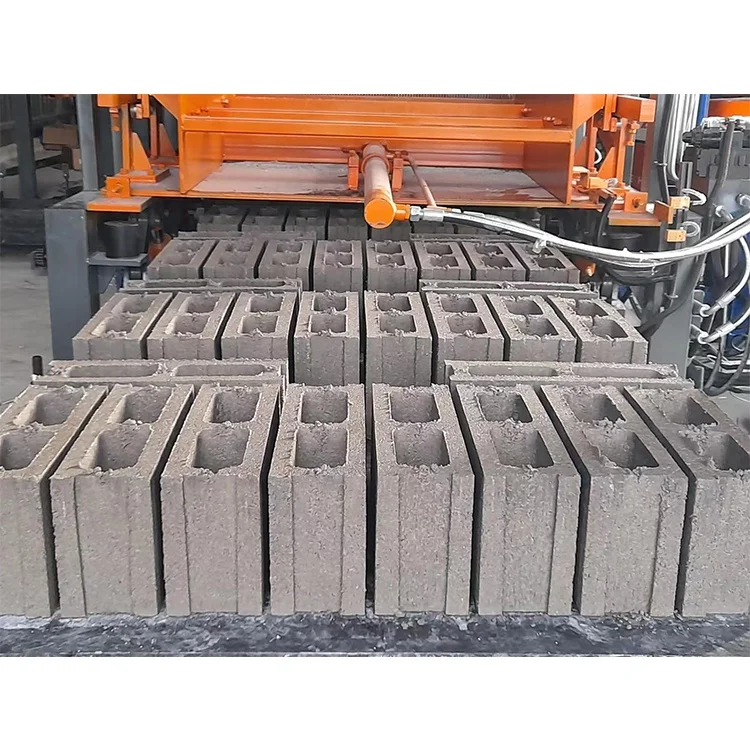
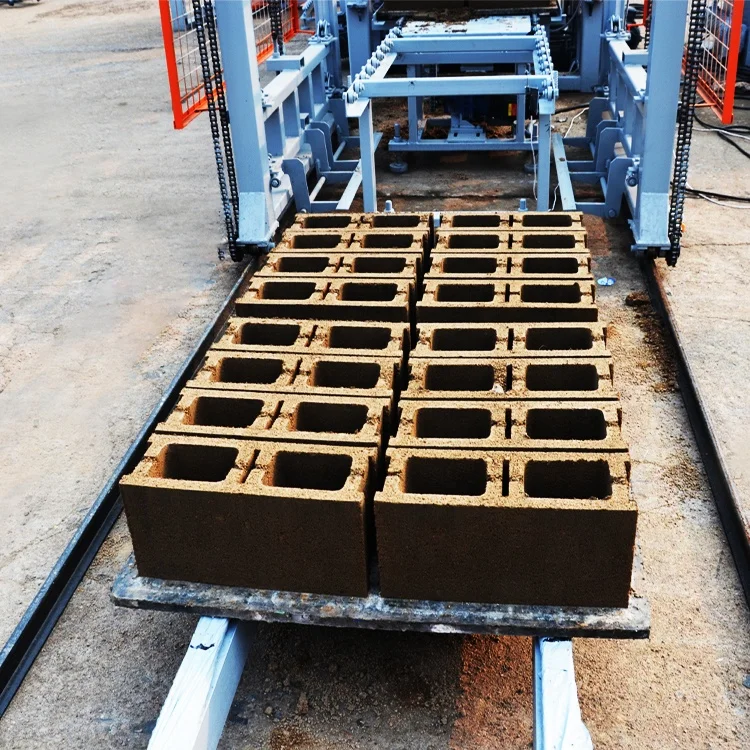
| Output Capacity (Hollow block 400×200×200 mm) | 1080-1440 pcs/h, 8640-11520 pcs/8hr |
| Output Capacity (Hollow block 400×150×200 mm) | 1440-1920 pcs/h, 11520-15360 pcs/8hr |
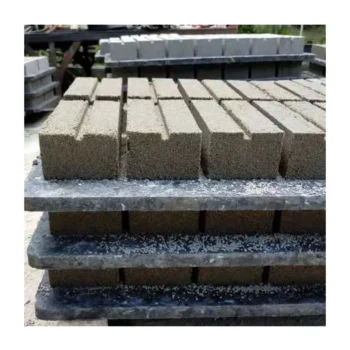
| Output Capacity (Solid brick 240×115×53 mm) | 5760-7680 pcs/h, 46080-61440 pcs/8hr |
| Output Capacity (Rectangular paver 200×100×60 mm) | 17280-23040 pcs/8hr (cycle 20-25 s) |
| Block Compressive Strength | More than 15 MPa |
| Factory Area Required | 1200 m² |
| Hydraulic System | Independent integrated type hydraulic station |
| Warranty | 1 year for whole machine (excluding spare parts) |
Application Suitability
| Application | Material or Output |
|---|---|
| Hollow block production for structural walls | Crushed stone, cement, waste ash, slag |
| Solid brick manufacturing for load-bearing masonry | Sand, gravel, fly ash blends |
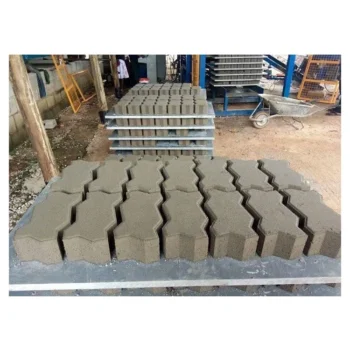
| Rectangular and zigzag paver production | Fine aggregate with cement binder for 60 mm thickness |
| On-site block making for housing projects | Local aggregates including quarry dust and recycled concrete |
| Building material distributor stock replenishment | Multiple block formats using standard mould inventory |
Why Dispatch Timing Matters More Than Quoted Cycle Times
A quoted cycle time only becomes real output once the QT6-15 block machine in stock is actually on your site, commissioned, and running your local aggregate. Buyers working to a fixed project start date know that a machine sitting in a factory for another production run is no different from one that hasn’t been ordered yet.
When a contractor commits to delivering hollow blocks for a housing phase, the gap between order confirmation and container loading is where schedules either hold or collapse. I have watched project timelines slip because the dispatch estimate was vague, and by the time the machine arrived, the crew was already standing idle. The QT6-15 block machine in stock addresses this directly — stocked units and standard moulds mean the clock starts ticking toward shipment immediately, not weeks later after a production queue clears [NEED_CITE: container shipping transit variables by destination port].
Stocked Configurations Versus Made-to-Order Lead Times
The distinction between a machine on the warehouse floor and one in a production schedule is the single most important question a buyer on a deadline should ask. The QT6-15 block machine in stock ships with standard hollow block and solid brick moulds already matched to its 880×850 mm pallet. When a specific paver or interlocking format is needed, the mould lead time must be confirmed separately so it does not hold up the press dispatch.
Container Loading and Machine Dismantling for Shipment
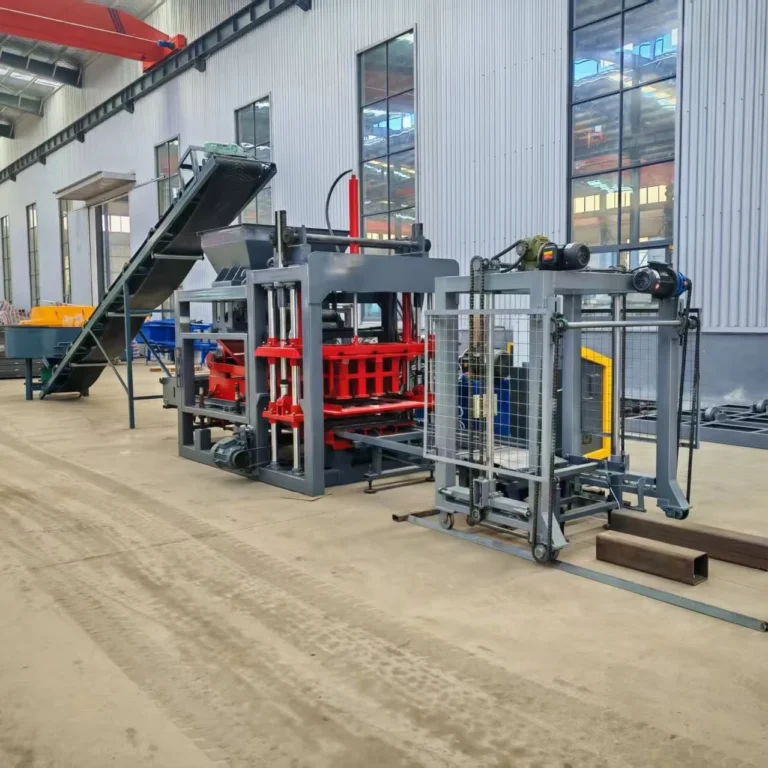
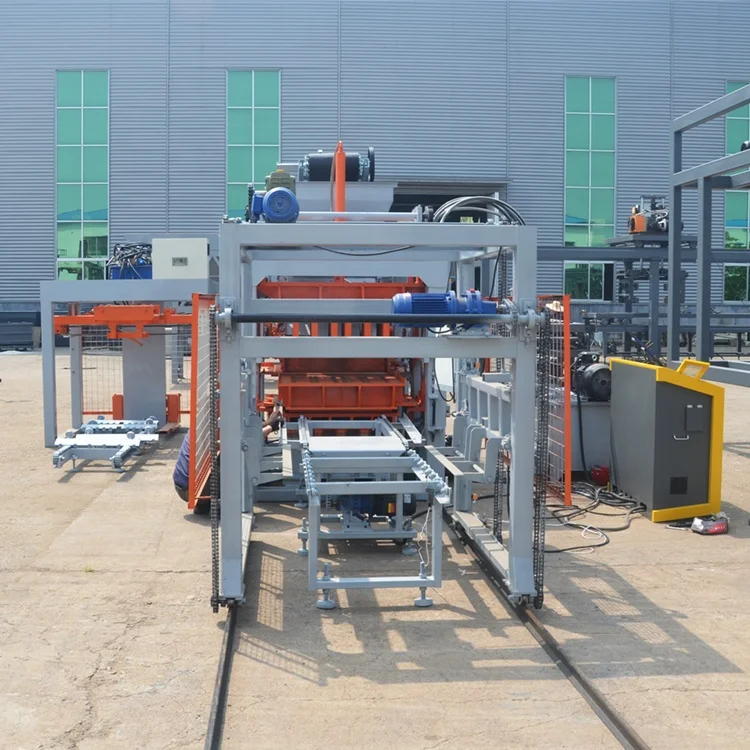
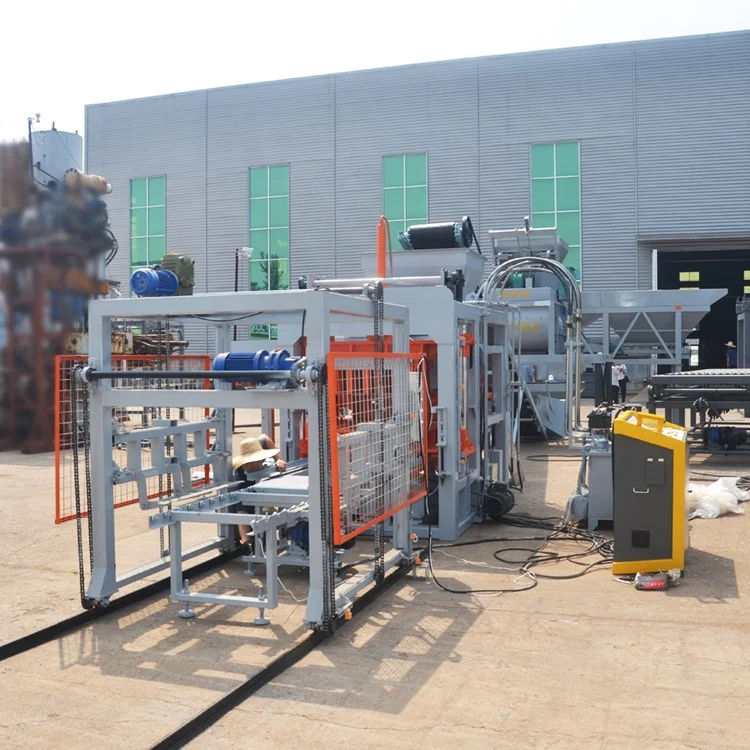
Loading a 7-tonne press into a container is not simply a matter of driving it through the doors. The QT6-15 is dismantled into major assemblies — main frame, hydraulic station, and pallet feeder — each secured against transit movement. Packing photographs are provided before sealing so the buyer can verify condition and prepare the receiving sequence at the destination port.
Arrival Estimates Quoted Before You Commit
Shipping transit time varies by route, port congestion, and customs processing at the destination. An arrival estimate is quoted upfront based on the buyer’s discharge port, giving the project planner a realistic date to work backward from. This avoids the situation where the machine is technically "dispatched" but the actual on-site date remains a guess [NEED_CITE: average ocean freight transit times by major trade lane].
Reading the Specs That Actually Govern Your Output
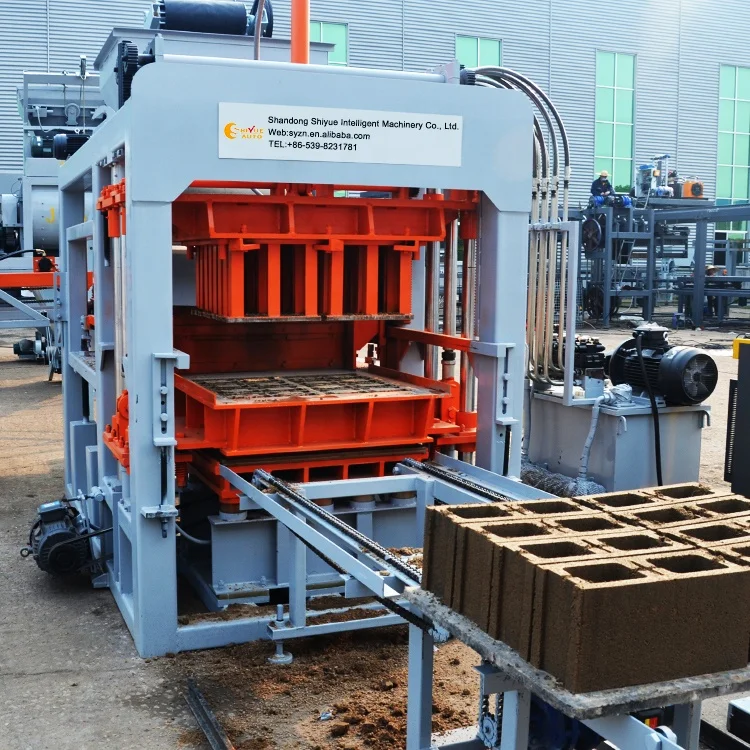
The 45 kN vibration force and 0-60 Hz frequency range on the QT6-15 work together with the independent integrated hydraulic station to compact the mix into the mould cavity. The platform vibration transmits energy through the pallet, meaning pallet flatness and material stiffness directly affect how evenly that force distributes across the block. The hydraulic demolding system then lifts the mould box without disturbing the green block — if the hydraulic pressure and vibration are mismatched to the aggregate gradation, the block either cracks on release or comes out under-compacted.
The 37 kW overall power draw requires a dedicated supply circuit with correct voltage and frequency, confirmed before production starts. The PLC touch screen controls cycle timing and fault diagnosis, but the language on that interface must match the operator who will be standing in front of it every shift.
The Cost of Skipping the Stock Verification Step
Ordering a machine without confirming its actual stock status introduces a variable that no project schedule can absorb. A buyer who assumes a QT6-15 is ready to ship, only to learn after payment that the hydraulic station is on a separate production lead, faces weeks of dead time. That delay compounds — the foundation is poured, the curing area is prepared, the pallets are purchased, and the crew is hired, all waiting for one machine to arrive [NEED_CITE: construction project cost overrun factors from equipment delays].
Why Buyers With Deadlines Source From Here
Block machinery is the single focus, so the QT6-15 is specified as a matched system with its pallets and moulds rather than assembled from separate suppliers after the fact. Dispatch lead times are quoted in calendar days from order confirmation to container sealing, not in vague production windows. Standard moulds ship with the machine from stock, and custom format moulds carry their own transparent timeline. Voltage, frequency, and PLC language are confirmed before the machine leaves the factory, preventing commissioning delays on arrival. Factory test records on the buyer’s target block format accompany the shipment.
Documentation & Verification
- Machine specification sheet listing all confirmed parameters for the QT6-15
- Factory test record on your target block format before container loading
- Pallet specification matching the 880×850 mm size and your curing rack setup
- Hydraulic and electrical schematic for your local maintenance team
- Packing photographs taken before container sealing for condition verification
- CE declaration documentation where applicable for your import market
Installation, Commissioning & Support
- Foundation must support 7 T total mass across the 8200×1700 mm footprint with level tolerance
- Dedicated power circuit for the 37 kW overall power at confirmed voltage and frequency
- Major assemblies dismantled for shipment and reassembled on your prepared site
- PLC touch screen language set to operator preference before commissioning begins
- First production run supervised with vibration frequency and hydraulic pressure tuned to your aggregate
- Mould change procedure demonstrated for the formats included in your initial order
What We Need To Quote Your Arrival Date
To provide a meaningful dispatch and arrival estimate for the QT6-15, share your destination port, the block formats you need from day one, and any existing pallet inventory you plan to use. If your curing area and forklift are already on site, send the pallet dimensions they accommodate so the 880×850 mm pallet is confirmed as compatible before the order proceeds.
Frequently Asked Questions
Q: Which QT6-15 configurations are currently in stock versus require production time?
A: Standard hollow block and solid brick configurations are typically held in stock with matched pallets and standard moulds. Paver formats and custom mould designs may require a separate production lead. Confirm your required block formats at inquiry stage so the stock status is checked against your specific needs before any commitment is made.
Q: What is the dispatch lead time from order to container loading?
A: Stocked units can be prepared for container loading within a short period after order confirmation and payment clearance. The exact dispatch date is stated in the quotation. Made-to-order configurations, particularly those requiring custom moulds, carry a longer lead time that is quoted separately and transparently.
Q: How is the machine dismantled for shipment and what container size is required?
A: The QT6-15 is dismantled into its main frame, hydraulic station, pallet feeder, and control cabinet for container loading. Each component is secured against transit movement. Packing photographs are taken and shared before the container is sealed. The required container size depends on whether supporting equipment is included in the same shipment.
Q: Can I receive an arrival estimate based on my destination port before placing the order?
A: Yes. Once your destination port is confirmed, an arrival estimate covering shipping transit time is provided as part of the quotation. This estimate is based on current routing and typical port processing times. It allows your project team to plan the site preparation and crew mobilization around a realistic delivery window.
Q: What standard moulds ship with the machine from stock, and what is the lead time for custom moulds?
A: Stocked machines typically ship with the mould matching the buyer’s primary block format, commonly a standard hollow block or solid brick. Custom moulds designed to buyer drawings carry their own production timeline, which is quoted at inquiry stage so it does not become a surprise delay after the press has already been dispatched.