


Description
Dispatch certainty — we confirm container loading dates before you pay, so the QT7-15 arrives before your project breaks ground instead of sitting in a factory waiting for a voltage decision.
Technical Specifications
| Parameter | Value |
|---|---|
| Model | QT7-15 |
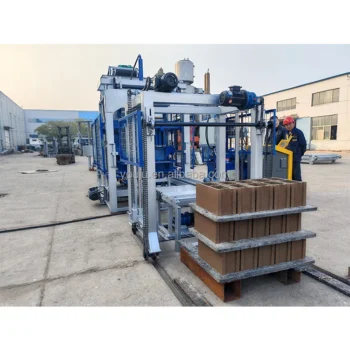
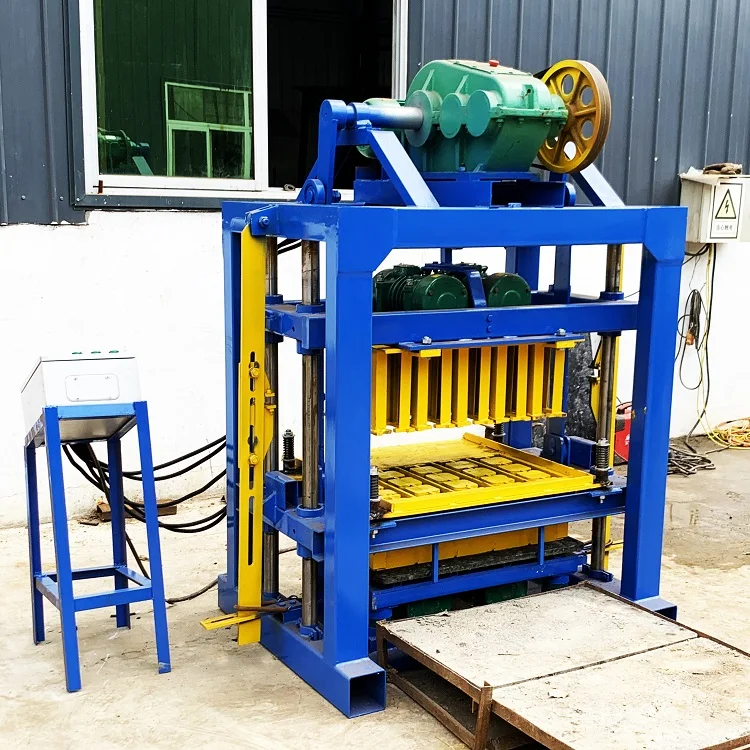
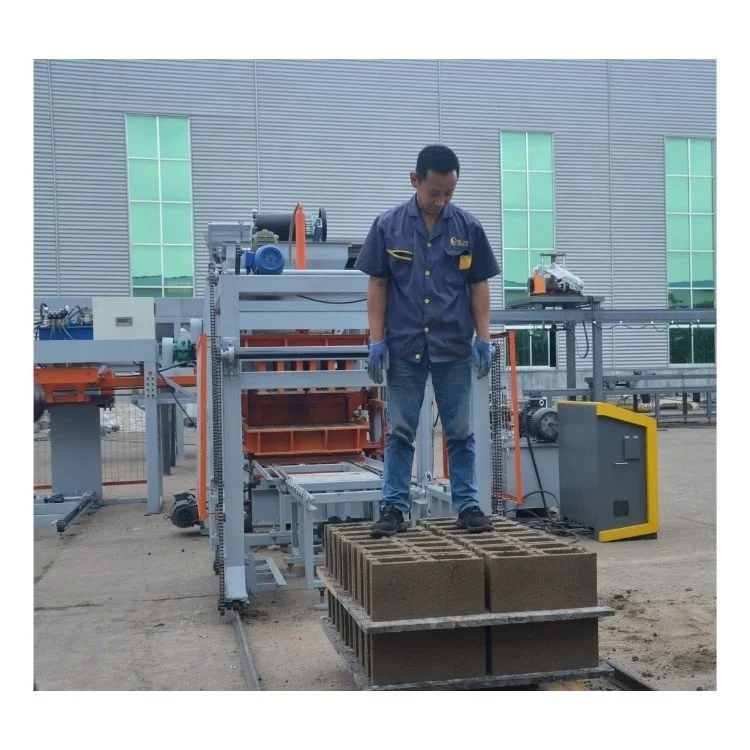
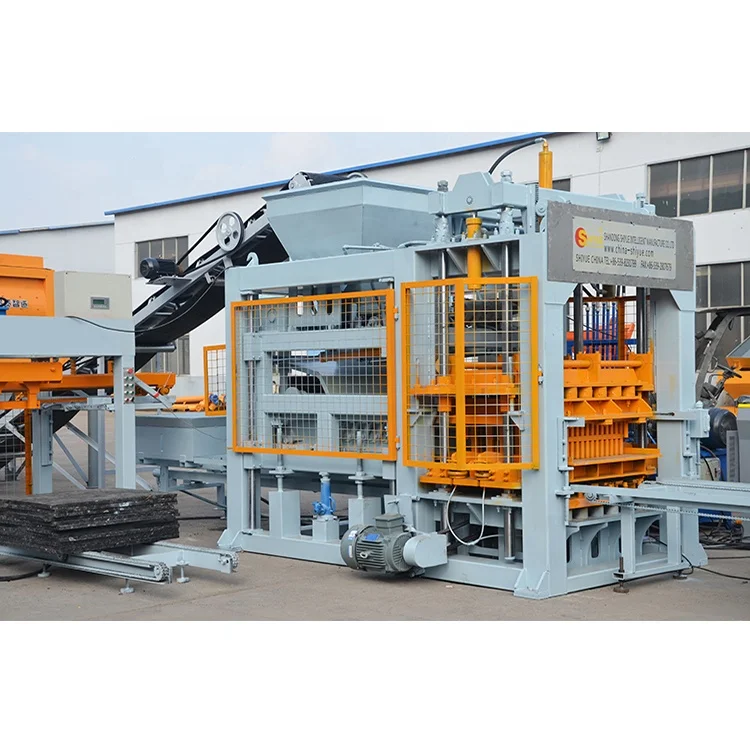
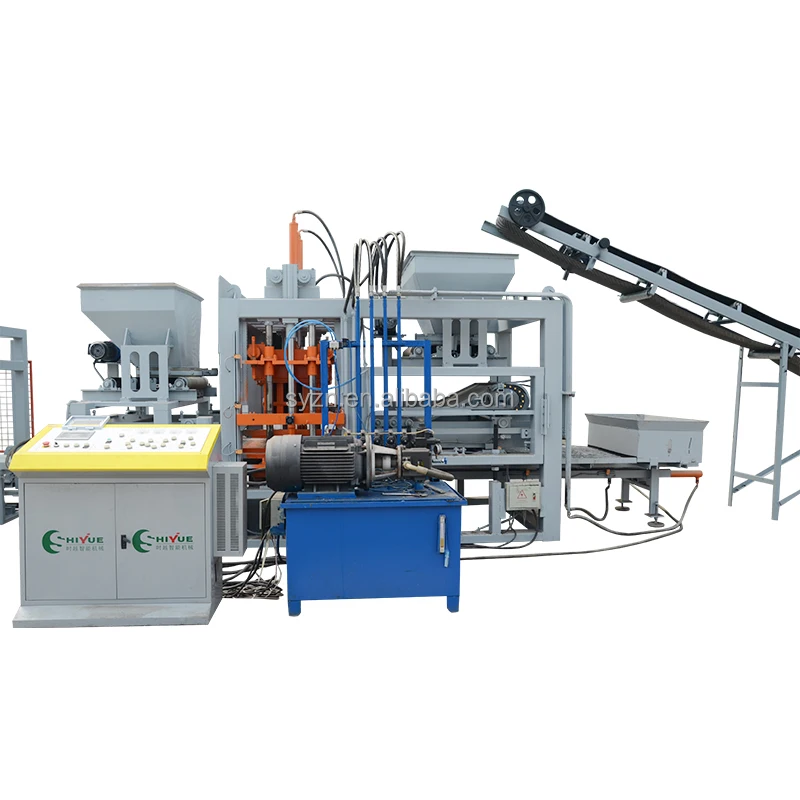
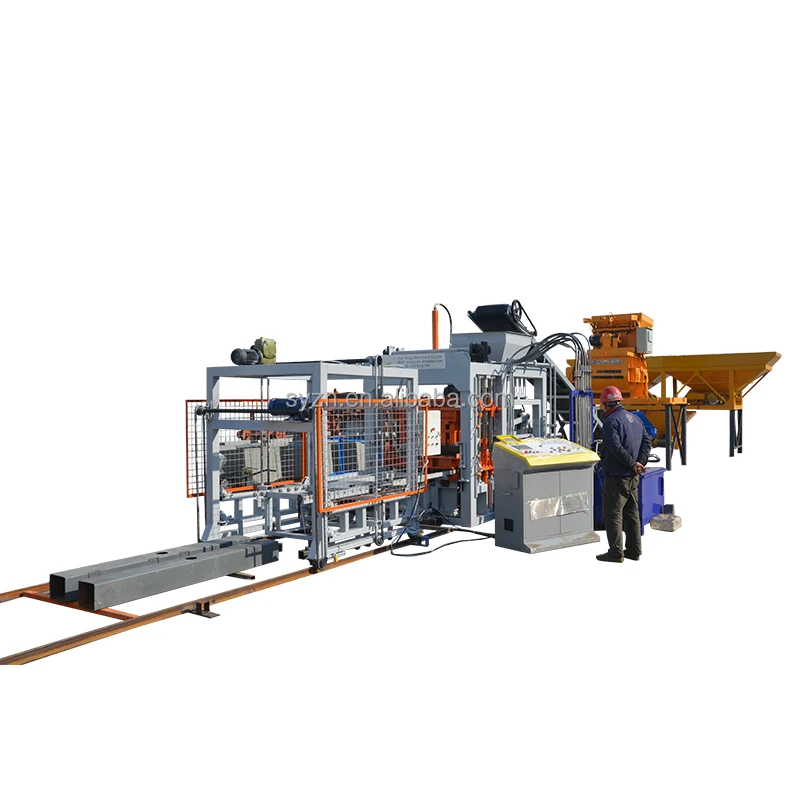
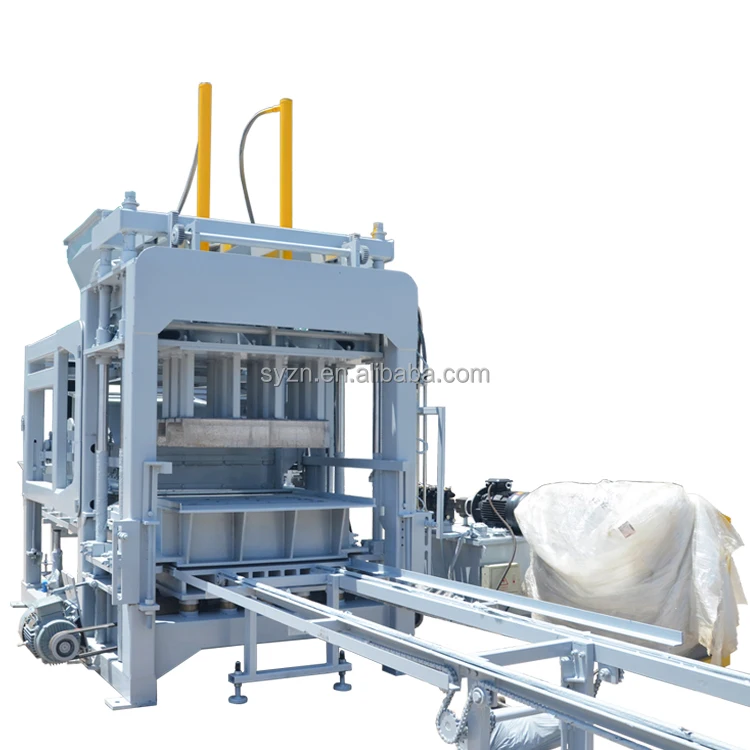
| Product Type | Automatic Hydraulic Concrete Block Making Machine |
| Dimension of Host Machine | 3200 × 2300 × 2750 mm |
| Weight of Host Machine | 6 Tons |
| Molding Area | 1150 × 700 mm |
| Pallet Size | 1150 × 700 × 25 mm |
| Host Machine Power | 45 kW |
| Vibration Force | 100 kN |
| Vibration Method | Hydraulic + Platform Vibration |
| Vibration Frequency | 2800–4500 Times/Minute |
| Molding Period (Cycle Time) | 15 Seconds |
| Voltage | 220/380/415/440V (Customized) |
| Control System | Original Siemens PLC with independently developed machine control program |
| Motor | Germany SIEMENS brand or CE standard brand |
| Travel Switch | France Schneider and Japan Omron |
| Mould Heat Treatment | Carburizing treatment, hardness 54–58 HRC, lifespan over 100,000 cycles |
| Welding | Carbon dioxide protection welding, CE standard materials |
| PLD1200 Batching Machine | 1200 L weigh-batching hopper, 4 × 2.5 m³ storage hopper, theoretical productivity 56 m³/h, ingredient precision ±2% |
| JS500 Mixer | Charging volume 800 L, discharging volume 500 L, production capacity 25 m³/h, mixing motor 18.5 kW |
| SY-4 Stacker | Power 3 kW, mobile pallet stack, weight 600 kg |
| Workshop Area | 200 m² |
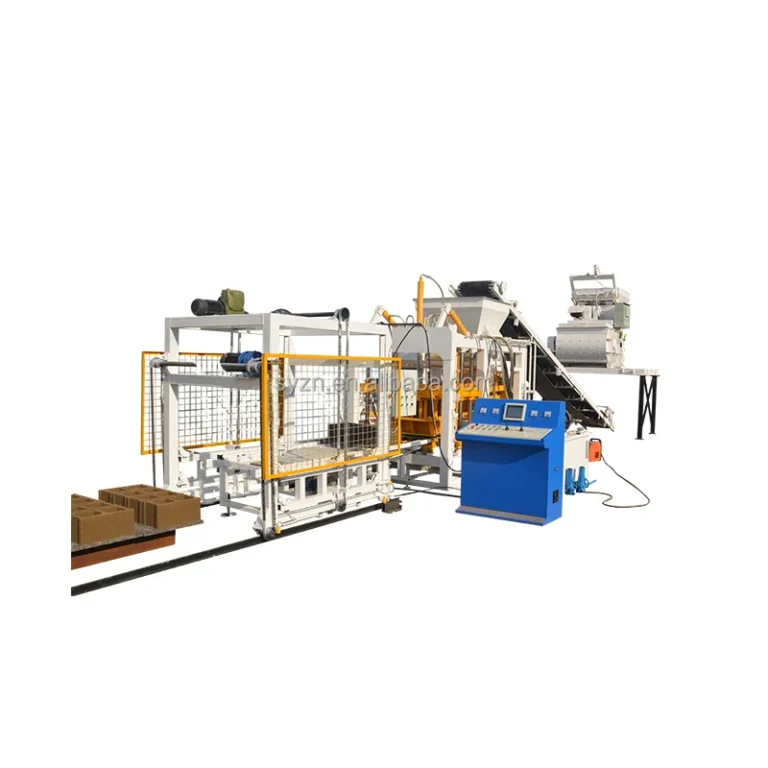
| Grouped Equipment | QT7-15 host machine, pallet feeder, brick receiver, hydraulic station, PLD1200 batching machine, JS500 mixer, conveyor belt, hydraulic trolley, SY-4 stacker |
| Color Paver Option | Color feeding system add-on available |
| Standards | CE |
Application Suitability
| Application | Material or Output |
|---|---|
| Hollow block production | Crushed stone, cement, sand — standard walling formats for housing and commercial builds |
| Solid block production | Dense aggregate mixes for load-bearing walls and foundation courses |
| Paving block production | Fine aggregate and cement for driveways, walkways, and municipal surfaces |
| Kerbstone production | Coarse aggregate with high cement content for road-edge and curb profiles |
| Interlocking brick production | Graded sand and cement for dry-stack retaining and decorative walls |
| Porous brick production | Permeable aggregate blends for stormwater management and landscape applications |
Why the Voltage Question Must Come Before the Container Booking
A QT7-15 block machine in stock means nothing if the motor winding does not match the grid at your job site.
I once watched a block plant sit idle for three weeks because the control cabinet was wired for 380V/50Hz while the local transformer supplied 440V/60Hz. The contractor had a housing deadline, and the electricians had to rewind every motor and replace the PLC power supply on-site. That delay cost more than the machine itself. When buyers search for a QT7-15 block machine in stock, they usually focus on how fast the line ships, but the voltage and frequency confirmation is what actually determines whether it runs on arrival [NEED_CITE: voltage and frequency standards by export market].
Lead Time Is Only Useful When It Ends at Your Gate
Dispatch speed matters, but what really counts is the gap between the day you sign and the day you press the start button. We quote the production and factory test schedule the same day we confirm stock, so you can overlay our timeline onto your construction Gantt chart. A stocked QT7-15 block machine in stock typically shortens that gap, but only if the electrical specifications and control panel language are locked before the container is sealed.
Dismantling and Loading Decided Upfront [NEED_CITE: container loading practices for heavy industrial machinery]
The QT7-15 host machine weighs 6 tons and stands 2750 mm tall, which means it cannot go into a standard container as a single assembled unit. Before you pay, we provide a dismantling diagram showing which sub-assemblies — hydraulic station, pallet feeder, SY-4 stacker — come off and how they are secured with steel wire and strap fixing. Nude packing with plastic film wrapping keeps the load plan transparent so your freight forwarder can book the right container type without a second round of measurements.
What the Vibration and Pressure Numbers Actually Mean on Site
The 100 kN vibration force combined with hydraulic pressure is what determines whether your blocks leave the press dense enough to survive handling and curing. A higher vibration frequency range of 2800–4500 times per minute lets the operator tune the shake to the aggregate size — coarser crushed stone needs a different frequency than fine sand for pavers. The 1150 × 700 mm molding area sets the pallet footprint, and that pallet size must match the curing racks and forklift tines you already have on site, otherwise blocks stack unevenly or get damaged during transport to the yard. Mould heat treatment at 54–58 HRC with carburizing means the cavity surfaces resist abrasive wear from cement and aggregate, keeping dimensional accuracy across production runs.
The Real Cost of Skipping the Pre-Shipment Checklist
Buyers who skip voltage confirmation, control language selection, or pallet size alignment before dispatch usually discover the mismatch the week the container opens. Rewinding a 45 kW motor on-site is a multi-day job that stalls the entire crew. A PLC display in the wrong language means the operator cannot read fault codes, so every alarm becomes a phone call instead of a quick reset. And if the pallet size does not fit your existing curing racks, you are either buying new racks or hand-stacking blocks on the floor — both of which erase any schedule advantage you gained by ordering a fast-delivery machine [NEED_CITE: common commissioning delays in exported concrete machinery].
Why Buyers Working to a Deadline Source Here
Every QT7-15 configuration we list is confirmed against real stock before we quote, so you are not waiting on a production slot that does not exist. The grouped equipment package — batching machine, mixer, stacker, hydraulic trolley — ships together from one dispatch point, eliminating the coordination risk of sourcing the press from one factory and the line peripherals from another. Voltage and control panel language are confirmed in writing before the machine enters final assembly, preventing the three-week idle period I described earlier. Container loading plans with dismantling details arrive with the quotation, not after payment, so your freight forwarder can book confidently. Factory test records are generated on your specified block format and shared before the crate is closed.
Documentation & Verification
- Factory test record run on your target block format before dispatch
- Voltage and control language confirmation sheet signed before final assembly
- Machine specification sheet with grouped equipment list matched to your quotation
- Hydraulic and electrical schematic for on-site troubleshooting
- Mould drawing and format list for each cavity profile ordered
- Packing photographs showing dismantling arrangement and strap fixing
Installation, Commissioning & Support
- The 200 m² workshop area requirement must be confirmed against your slab dimensions before the QT7-15 arrives
- A dedicated power circuit matching the confirmed voltage and 45 kW host machine load is required at the press location
- The QT7-15 ships dismantled; on-site reassembly of the hydraulic station, pallet feeder, and stacker is part of commissioning
- First-run parameter setting covers vibration frequency tuning and cycle time adjustment for your local aggregate
- Operator training includes PLC fault code reading in the confirmed control panel language
- Mould wear parts list with 54–58 HRC hardness specification provided for local reorder planning
Before You Request a Quote
Send your destination port and local voltage and frequency so we can check which QT7-15 configurations are ready to load. Include your target block formats and the curing rack or forklift specifications you already have on site so we match the pallet size before locking the dispatch date.
Frequently Asked Questions
Q: Which QT7-15 configurations are currently in stock versus made-to-order?
A: Standard voltage configurations with common mould sets are typically held in stock and can be confirmed at inquiry. Custom voltage, non-standard pallet sizes, or specialized mould profiles require a production run, and we state the build time before you commit.
Q: What is the dispatch lead time from order confirmation to container loading?
A: Stocked units move to container loading once voltage and control language are confirmed and the factory test is complete. Made-to-order configurations add a production window that we quote at the inquiry stage so your project schedule stays intact.
Q: How is the machine dismantled and packed for container shipment?
A: The host machine, hydraulic station, pallet feeder, and SY-4 stacker are separated into sub-assemblies that fit standard container dimensions. Steel wire and strap fixing with plastic film wrapping secures each component, and a dismantling diagram is provided before loading.
Q: What is the estimated arrival time to my destination port?
A: Sea freight transit depends on the port pair and current sailing schedules. We provide an arrival estimate based on your destination at quotation stage so you can align site preparation and crew mobilization to a realistic timeline.
Q: Can voltage and control language be confirmed before production to avoid delays on arrival?
A: Yes. We require written confirmation of voltage, frequency, and PLC display language before the machine enters final assembly. This step is built into our process specifically to prevent on-site rewinding and control panel rework after arrival.