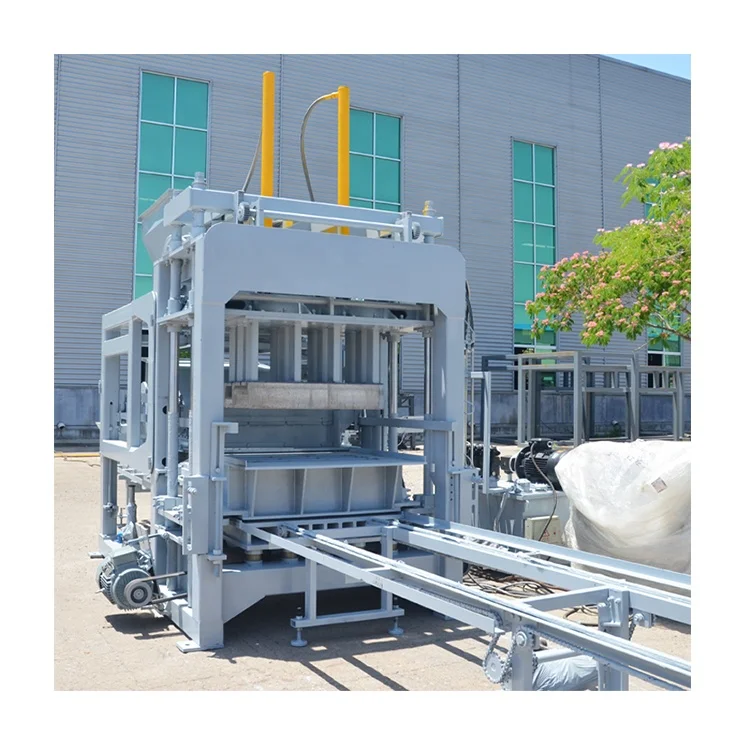
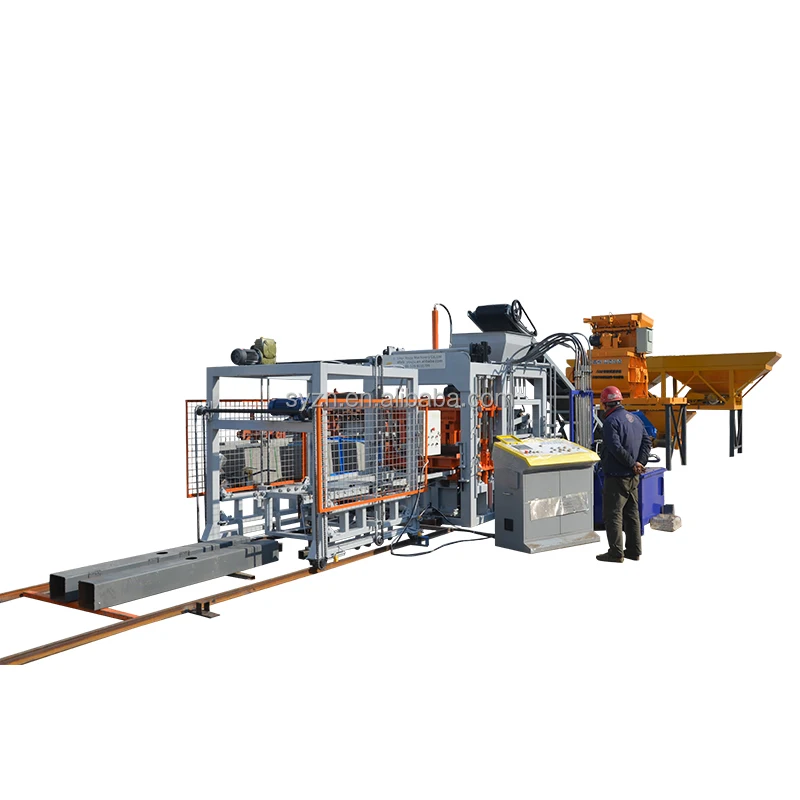
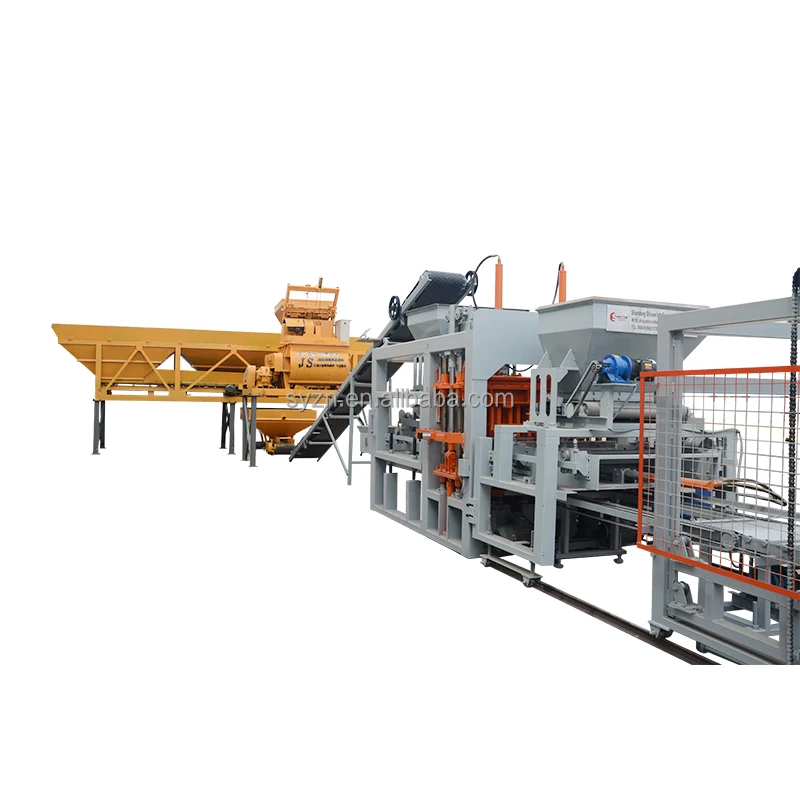
Description
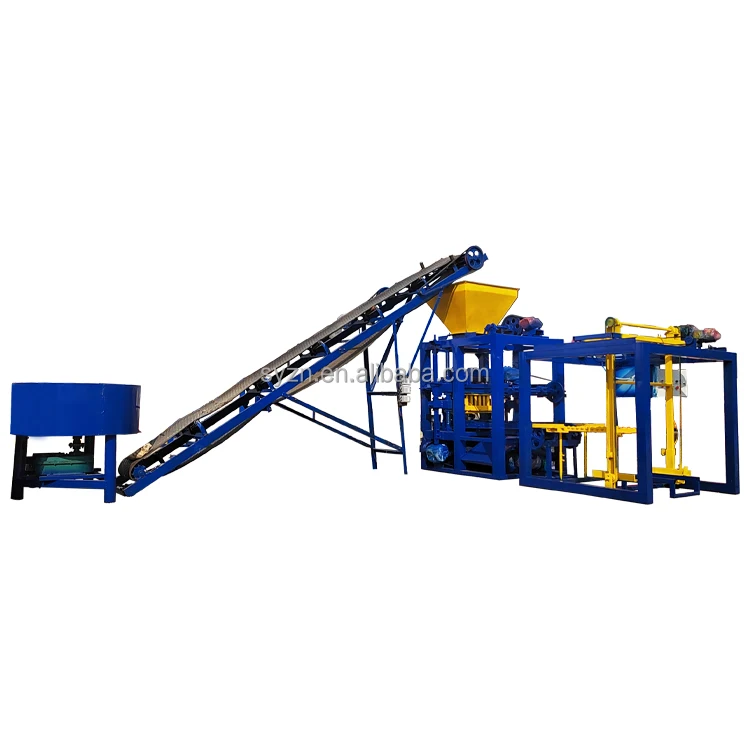
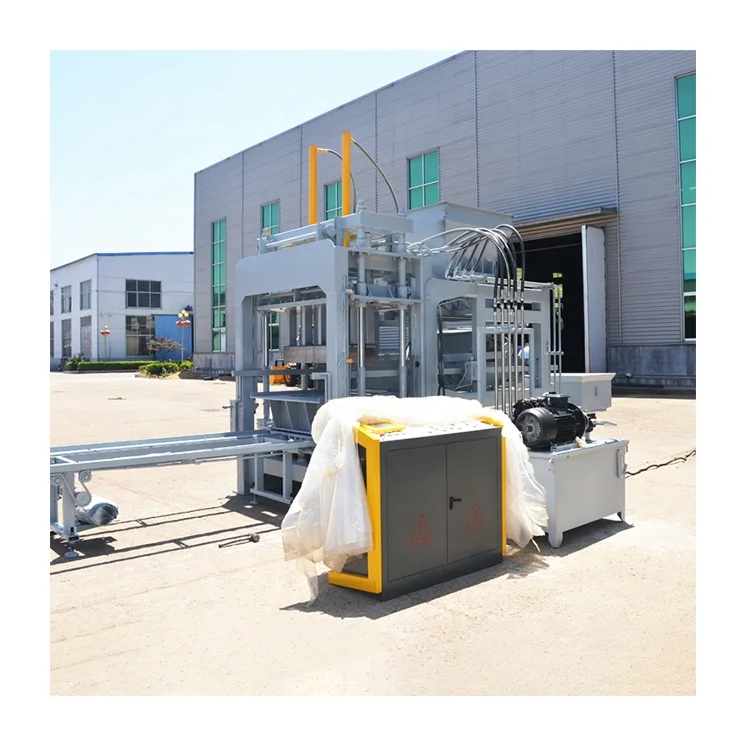
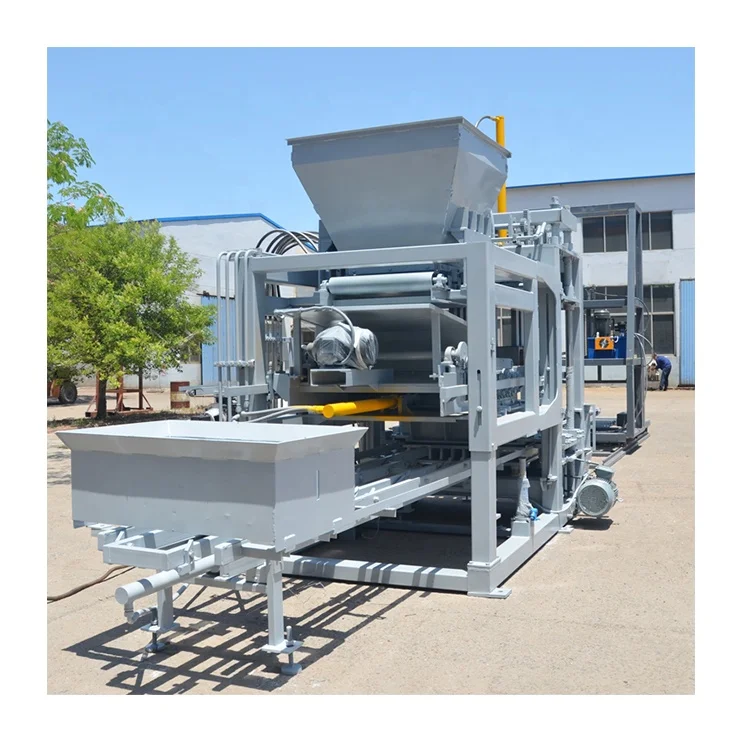
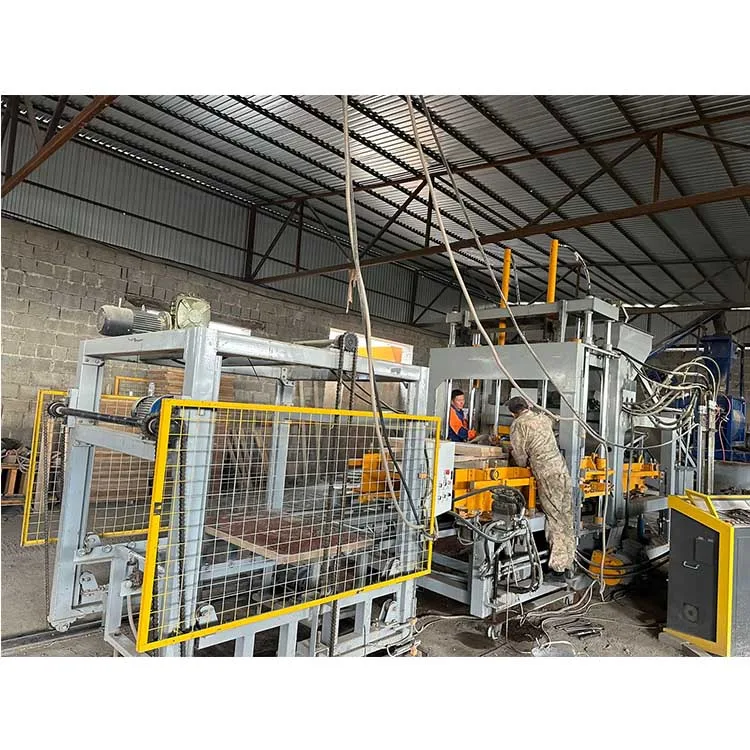
Stock and delivery focus — the QT7-15 automatic block machine is kept in ready-to-ship condition so project timelines are not delayed by production queues, with dispatch plans confirmed before the order is placed.
Technical Specifications
| Parameter | Value |
|---|---|
| Model | QT7-15 |
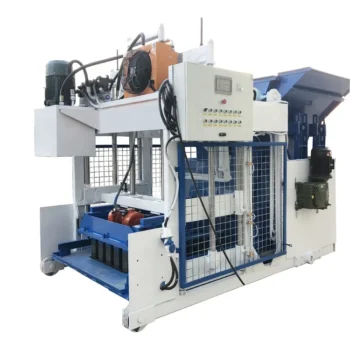
| Product Type | Automatic Hydraulic Concrete Block Making Machine |
| Pallet Size | 1150 × 700 mm |
| Molding Cycle | 15–20 s (basis not stated in source — confirm block format / material / thickness) |
| Overall Power | 45 kW |
| Vibration Force | 100 kN |
| Vibration Frequency | 0–60 Hz |
| Vibration Form | Platform Vibration |
| Demolding Method | Hydraulic |
| Total Mass | 8 T |
| Control System | PLC with touch screen interface |
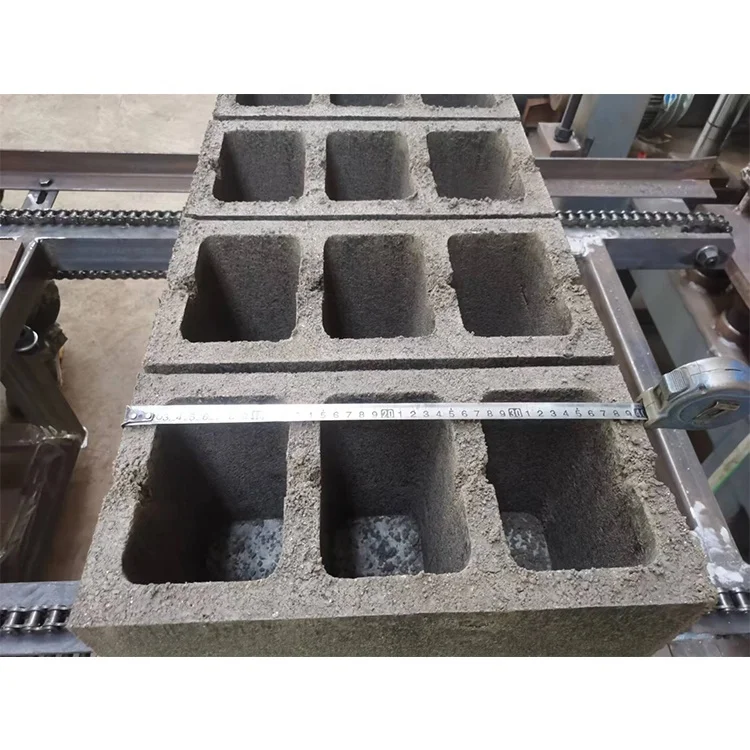
| Output – Hollow Block 400×200×200 mm | 1,260–1,680 pcs/h; 10,080–13,440 pcs/8 hr (7 pcs/mould, 15–20 s cycle) |
| Output – Hollow Block 400×150×200 mm | 1,440–1,920 pcs/h; 11,520–15,360 pcs/8 hr (8 pcs/mould, 15–20 s cycle) |
| Output – Rectangular Paver 200×100×60 mm | 3,888–4,860 pcs/h; 31,104–38,880 pcs/8 hr (27 pcs/mould, 20–25 s cycle) |
| Automation Level | Automatic with remote fault diagnosis capability |
| Warranty | 1 year for whole machine (excluding spare parts) |
Application Suitability
| Application | Material or Output |
|---|---|
| Hollow block production | Crushed stone, sand, cement, and fly ash blends for 400×200×200 mm and 400×150×200 mm formats |
| Rectangular paving brick production | Fine aggregate and cement mixes for 200×100×60 mm pavers |
| Multi-format concrete block manufacturing | Mould change across hollow block and paver formats on one pallet size |
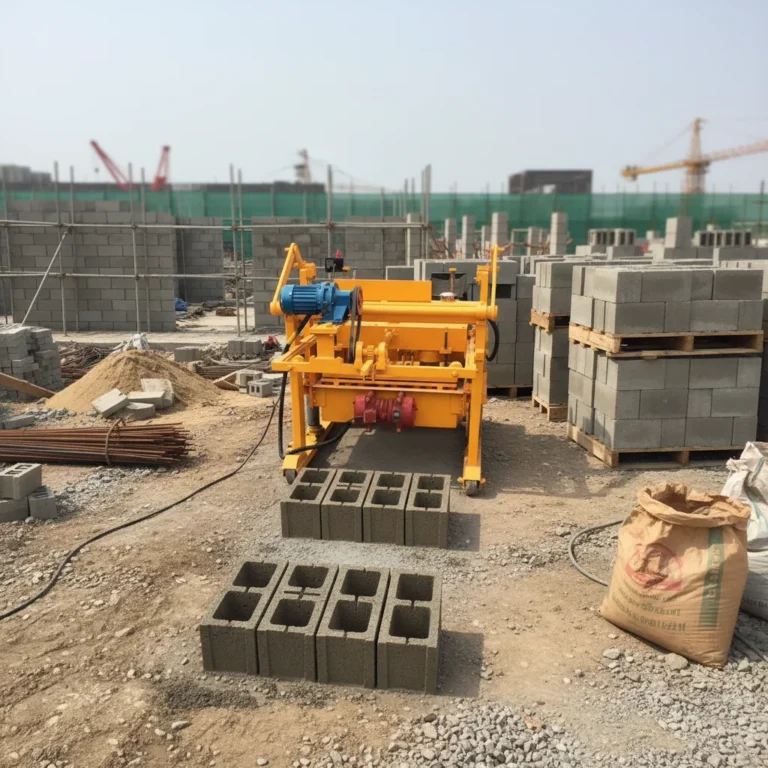
| On-site contractor production | Block output at construction sites or temporary yards where project deadlines demand fast equipment arrival |
| Building material distribution | Import-ready machines stocked for distributors serving regional block and paver markets |
What "In Stock" Actually Means for Your Project Deadline
A stocked QT7-15 block machine in stock shortens the gap between order confirmation and container loading, removing production-queue uncertainty from your schedule.
Many buyers have experienced the frustration of being told a machine is ready, only to learn weeks later that "ready" meant a partially assembled frame waiting on hydraulic valves. On a job site in Ecuador, I watched an entire block line sit idle because a single hydraulic seal failed and no spares were on hand locally. When you are working against a construction deadline, the difference between a machine in a warehouse and a machine on a ship is measured in lost production days and idle crews [NEED_CITE: typical lead time variability in block machine procurement].
Dispatch Readiness and Container Planning
The QT7-15 block machine in stock status means the main press frame, hydraulic station, and PLC cabinet are assembled and factory-tested before crating. Container loading plans are drafted around the machine’s 8 T total mass and 1150 × 700 mm pallet footprint, so buyers receive a clear packing list showing which components go into which container before the vessel is booked.
Arrival Estimates You Can Build a Schedule Around
Once the QT7-15 block machine in stock is loaded, transit time depends on the destination port, but the pre-departure phase — from factory test to customs documentation — is compressed because no component is waiting on a separate supplier. Buyers receive a realistic arrival window, not an optimistic guess, so site preparation, foundation work, and electrical rough-in can be timed to match the machine’s actual landing date.
Reading the Capacity Numbers Before They Reach Your Site
Platform vibration at 100 kN force with adjustable frequency from 0 to 60 Hz is the core forming mechanism, and it directly determines how densely the concrete mix is compacted into each mould cavity. The 45 kW overall power rating drives both the hydraulic demolding system and the vibration motors simultaneously, meaning the machine does not need to pause vibration to release a formed block. Pallet size at 1150 × 700 mm governs which block formats fit per cycle, and the output figures above are tied to specific mould cavity counts — 7 cavities for the 400×200×200 mm hollow block, 8 for the 400×150×200 mm variant, and 27 for the 200×100×60 mm rectangular paver. Changing between these formats requires a mould swap on the same pallet size, so the curing area and forklift specifications at your yard do not need to change [NEED_CITE: relationship between pallet size and curing yard logistics].
The Hidden Cost of Skipping Pre-Shipment Verification
Voltage, frequency, and PLC display language are details that seem minor until the machine arrives at a port where the local grid does not match the factory default. I have seen commissioning delayed by weeks because a touch screen displayed menus in a language the local operators could not read, and the electrician had to rewire a control cabinet rated for the wrong frequency. These are not defects — they are unconfirmed specifications that turn into expensive on-site corrections [NEED_CITE: voltage and frequency standards by export market].
Why Buyers Source This Model Here
Every QT7-15 leaving the facility is tested against the buyer’s stated block format and mix design, not run through a generic cycle. Dispatch lead time and container loading plans are quoted in writing before the purchase order is signed, so there is no ambiguity about when the machine ships. Voltage, frequency, and PLC language are confirmed in the pre-production checklist, eliminating commissioning delays at the destination port. Packing photographs and full customs documentation are provided so import clearance proceeds without requests for additional paperwork. A spare parts list matched to the machine’s hydraulic and vibration components is included so the first replacement cycle does not halt production.
Documentation & Verification
- Capacity calculation sheet stating block format, mould cavity count, and cycle time for each output figure
- Voltage and frequency confirmation document signed before production begins
- PLC display language verified in writing with screen capture before dispatch
- Factory test record run on buyer’s specified block format with photographic evidence
- Packing list with container loading plan and gross weight per crate
- Customs documentation package prepared for destination country import requirements
Installation, Commissioning & Support
- Foundation plan sized for the QT7-15’s 8 T mass and vibration load before machine arrival
- Electrical supply matching the confirmed voltage and 45 kW overall power requirement with dedicated circuit
- Dismantled state and reassembly sequence documented so local crews can begin work immediately
- First production run supervised with parameter settings recorded for each confirmed block format
- Operator training on PLC touch screen controls and remote fault diagnosis interface
- Hydraulic seal and vibration motor spare parts list provided for the first maintenance cycle
What We Need to Quote Your Shipment Accurately
To prepare a dispatch schedule and arrival estimate for the QT7-15, share the target block formats you plan to produce, your daily output requirement per format, and the voltage and frequency standard at your site. If you already have a curing yard and forklift in place, let us know the pallet dimensions they accommodate so we can confirm the 1150 × 700 mm pallet fits your existing logistics.
Frequently Asked Questions
Q: What is the dispatch lead time for the QT7-15, and is it currently in stock?
A: The QT7-15 is maintained in stocked condition so the main press, hydraulic station, and PLC cabinet do not need to enter a production queue after order confirmation. Final pre-shipment testing and crating add a short preparation period. Exact dispatch timing depends on current inventory position and is confirmed in writing when you submit your target block format and site specifications.
Q: How is the machine dismantled and loaded into containers for shipment?
A: The QT7-15 is partially dismantled to fit standard shipping containers, with the main frame, hydraulic power unit, and control cabinet packed separately. A container loading plan showing component placement and securing points is provided before the container is sealed, so the receiving team knows the unloading sequence.
Q: What arrival estimate can I expect from order to port delivery?
A: Transit time depends on the destination port and shipping line schedules. Because the QT7-15 is stocked rather than built to order, the pre-departure phase is shorter than a custom production cycle. A realistic arrival window is quoted based on the confirmed vessel booking date, not an estimated production completion date.
Q: Which block formats are covered by the standard moulds shipped with the machine?
A: Standard moulds cover 400×200×200 mm hollow blocks, 400×150×200 mm hollow blocks, and 200×100×60 mm rectangular pavers. All three formats run on the same 1150 × 700 mm pallet. Additional mould designs can be included in the same shipment if ordered before crating.
Q: Are voltage and PLC language confirmed before the machine leaves the factory?
A: Yes. Voltage, frequency, and PLC display language are confirmed in writing during the pre-production checklist stage. The touch screen is verified to display in the agreed language, and the electrical system is set to match the destination grid before the factory test is conducted.