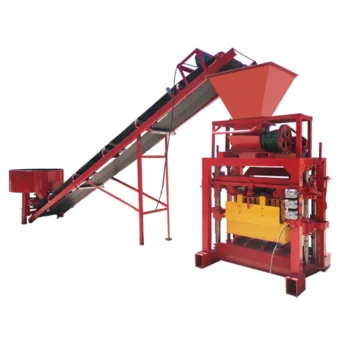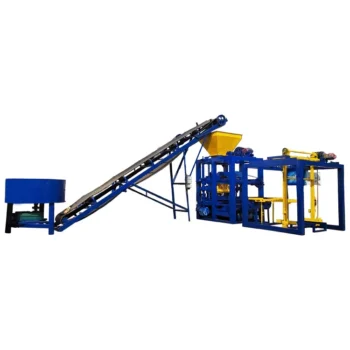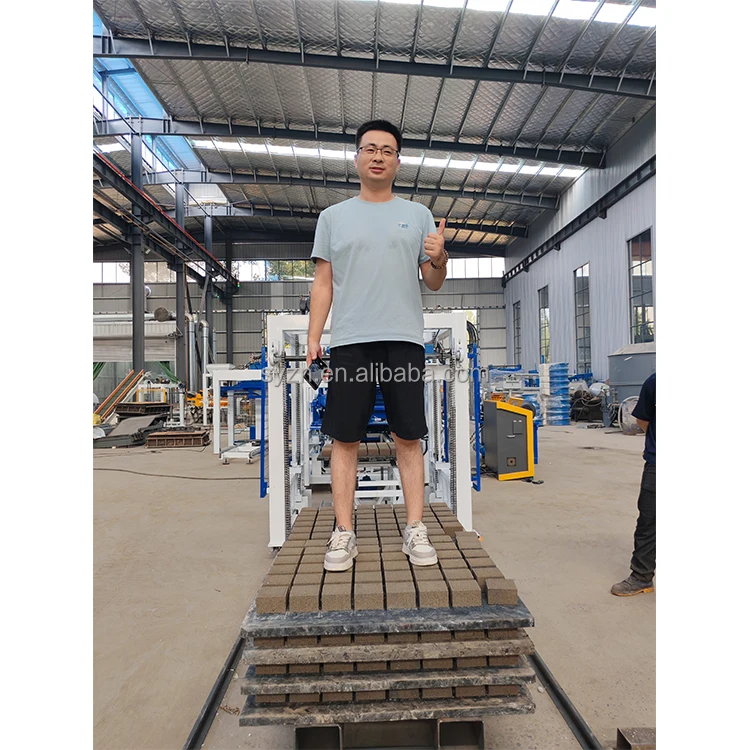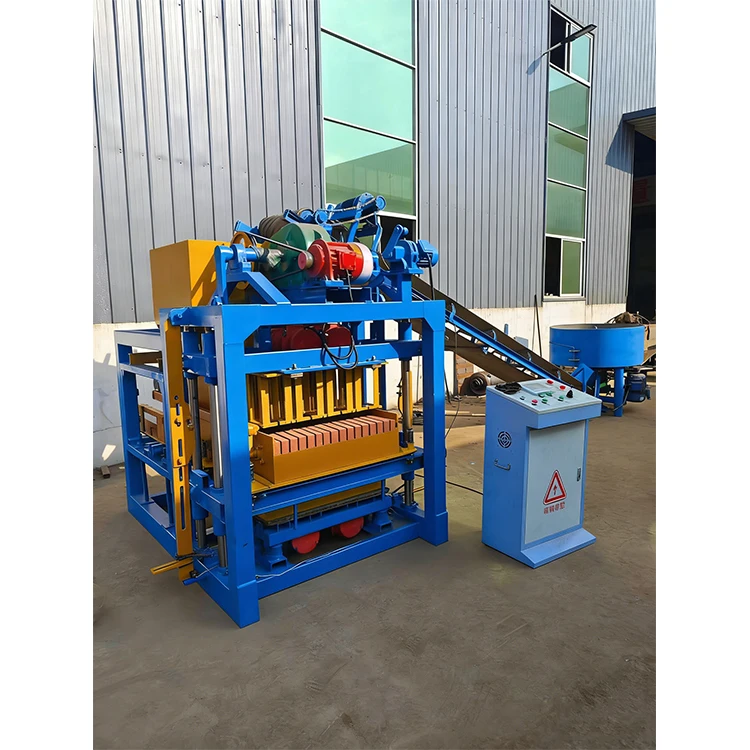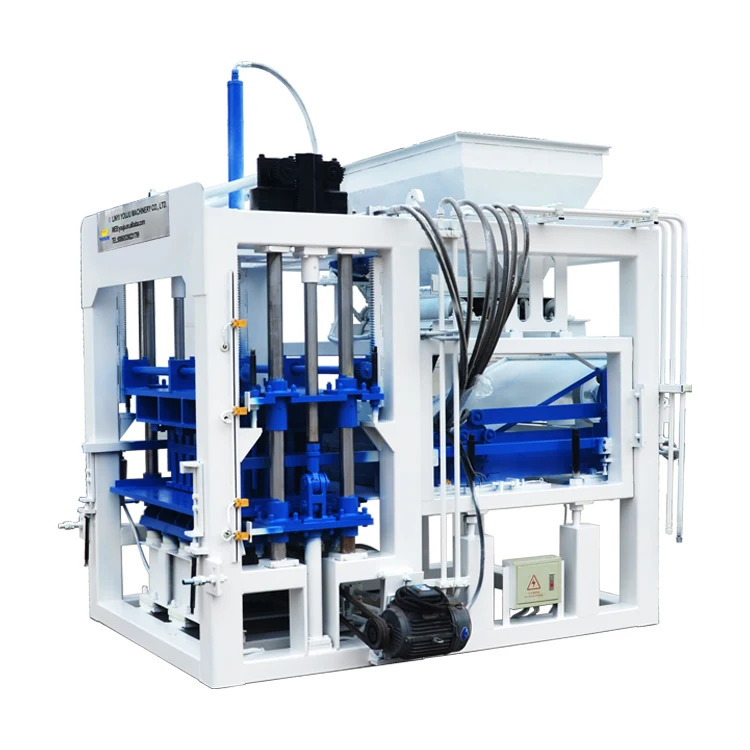


Description
Hydraulic demolding precision — every QT8-15 unit ships with confirmed voltage, frequency, and control language before loading, so commissioning starts the day power arrives on site.
Technical Specifications
| Parameter | Value |
|---|---|
| Product Type | Hydraulic Paving Block Making Machine |
| Model | QT8-15 |
| Overall Dimensions | 8300 × 1860 × 3000 mm |
| Total Mass | 8 T |
| Rated Pressure | 21 MPa |
| Vibration Force | 45 kN |
| Main Vibration Form | Platform Vibration |
| Vibration Frequency | 2800–4500 r/min |
| Molding Cycle | 15–20 s |
| Pallet Size | 950 × 900 mm |
| Overall Power | 55.5 kW |
| Demolding Method | Hydraulic |
| Factory Area Required | 300 m² |
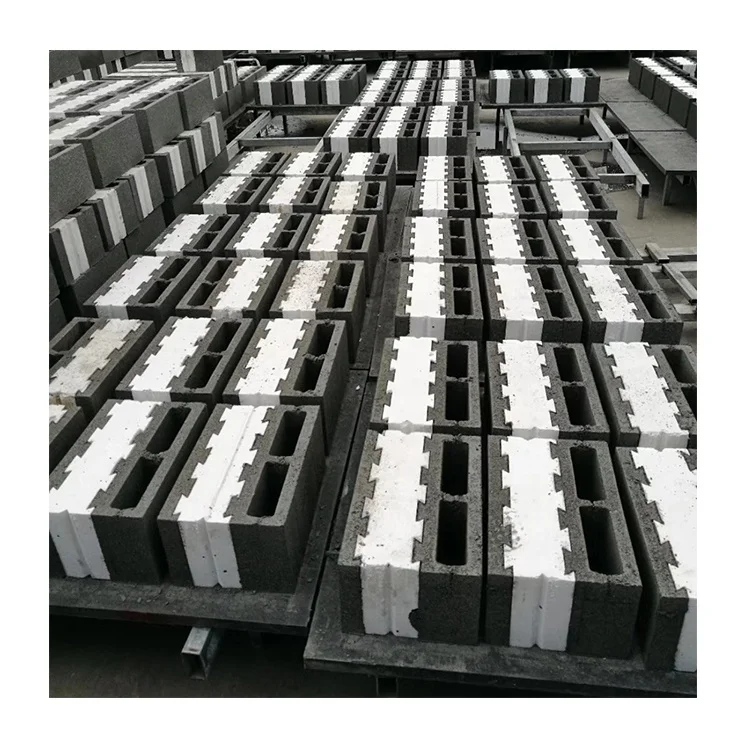
| Applied Products | Concrete hollow blocks, solid blocks, pavers, interlocking blocks, kerbstones, colored pavers |
| Raw Materials | Crushed stone, sand, cement, fly ash, gravel, slag |
| Container Loading | 1 × 40HQ (basic equipment set) |
| Output Capacity | basis to be confirmed by block format and thickness |
| Warranty | 1 year |
Application Suitability
| Application | Material or Output |
|---|---|
| Hollow block production for wall construction | Crushed stone, sand, cement, fly ash blends |
| Solid block manufacturing for load-bearing structures | Gravel, sand, cement mixes |
| Paving block and colored paver runs | Fine aggregate with pigment additives |
| Interlocking brick and kerbstone forming | Slag, dust, cement combinations |
| On-site block production for housing projects | Locally sourced aggregate and cement |
What "Fast Delivery" Actually Requires Before the Container Ships
A stocked QT8-15 block machine in stock leaves the yard quickly only when voltage, frequency, and pallet compatibility are locked down first.
I watched a fully loaded container sit at a West African port while the buyer waited weeks for a step-down transformer because the supply voltage had not been confirmed against the local grid. The machine was ready; the site was not. That gap between "dispatched" and "running" is where project deadlines quietly slip. [NEED_CITE: voltage and frequency standards by export market]
Stock Availability and Dispatch Timing
Buyers working against a construction deadline need more than a promise of quick shipment. They need a confirmed dispatch date tied to a specific machine serial number, a documented container loading plan, and an honest arrival estimate based on the destination port. When a buyer searches for a QT8-15 block machine in stock, the relevant question is whether the unit is assembled, factory-tested, and ready to be dismantled for loading, or still in the production queue.
Pallets, Tooling, and What the Quotation Covers
A common surprise at unpacking is discovering that pallets, moulds beyond the standard set, and curing rack hardware were never included in the original quotation. The QT8-15 uses 950 × 900 mm pallets, and the material choice — bamboo, PVC, or steel — affects both pallet lifespan and the curing environment. Confirming the pallet quantity and material before the order is placed prevents a situation where blocks come off the machine but have nowhere to cure. [NEED_CITE: pallet material options for concrete block curing]
Pressure, Vibration, and Block Density
The QT8-15 delivers 21 MPa of hydraulic pressure paired with 45 kN of vibration force through platform vibration. These two forces work together: hydraulic pressure compresses the mix from above while platform vibration settles aggregate into voids from below. The 2800–4500 r/min vibration frequency range allows adjustment for different mix designs — a stiffer mix with more coarse aggregate benefits from higher frequency, while a wetter fly ash blend needs lower vibration to prevent segregation. Molding cycles fall between 15 and 20 seconds depending on block height and complexity.
When the Wrong Pallet Size Reaches the Curing Yard
A pallet dimension chosen without checking the buyer’s existing forklift tine spacing and curing rack slots creates a bottleneck that has nothing to do with the press itself. Blocks stack unevenly, forklifts cannot slot the pallets, and the curing yard sits half-empty while the machine keeps producing. This mismatch is discovered after the machine arrives, not during the quotation stage. [NEED_CITE: pallet handling compatibility with curing infrastructure]
Why Buyers Source the QT8-15 Here
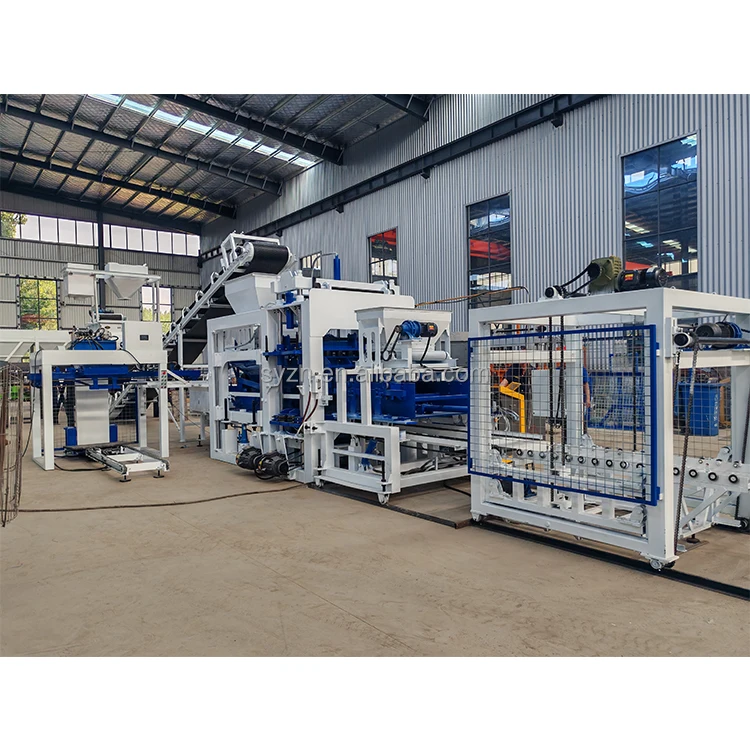
This company focuses exclusively on block making machinery, so the press, moulds, pallets, and handling equipment are specified as one matched system rather than assembled from unrelated suppliers. The QT8-15 is configured against the buyer’s actual mix design and local aggregate, not pulled from a catalogue default. Stocked models and standard moulds are available for prompt dispatch, with container loading plans and machine dismantling methods documented before shipment. Every unit undergoes a factory test with photographs before crating, and voltage, frequency, and control language are confirmed line by line against the destination site requirements. Shipping documentation and customs paperwork are prepared in-house to clear export procedures without delay.
Documentation & Verification
- Factory test record on your specific block format before dispatch
- Container loading plan with dismantling sequence photographs
- Voltage, frequency, and PLC language confirmation sheet signed before production
- Pallet specification document stating material, dimensions, and quantity supplied
- Hydraulic and electrical schematic matching your as-built configuration
- CE declaration documentation where applicable for your import market
Installation, Commissioning & Support
- Foundation plan matching the 8300 × 1860 mm footprint and 8 T operating mass
- Electrical supply verification for the 55.5 kW total load before machine energization
- Dismantled reassembly sequence with alignment checks on the vibration platform
- First-run parameter setting for vibration frequency and hydraulic pressure to match your mix
- Operator training covering mould change procedure and daily maintenance points
- Wear parts list with reorder part numbers for hydraulic seals and vibration components
Before You Request a Quote
To provide an accurate dispatch timeline, share your target block format with dimensions, your daily output requirement, and the raw materials available locally. Confirm your site voltage and frequency, the PLC display language your operators need, and the pallet size that fits your existing curing racks and forklifts. If you have a project start date, state it upfront so the shipping schedule can be planned backward from that deadline.
Frequently Asked Questions
Q: What is the dispatch lead time for the QT8-15, and is it currently in stock?
A: Stocked units of the QT8-15 block machine in stock can be prepared for container loading within a short window after order confirmation. The exact dispatch date depends on the mould set and pallet quantity required. We confirm the specific machine serial number and provide a loading schedule before you commit.
Q: How is the machine dismantled and loaded into a 40HQ container?
A: The QT8-15 is partially dismantled — typically the hydraulic station, hopper, and control cabinet are separated from the main frame — to fit within a single 40HQ container. A dismantling and reassembly sequence is documented with photographs so your team can reverse the process on arrival.
Q: What is the estimated arrival time from dispatch to destination port?
A: Ocean transit time varies by destination port and shipping line schedule. Once the container is dispatched, arrival typically ranges across several weeks. We provide an estimated arrival date based on the booked vessel and route at the time of order confirmation.
Q: Are pallets included in the quotation, and what material and quantity are supplied?
A: Pallets for the 950 × 900 mm pallet size are quoted separately or as part of a package depending on your request. Material options include bamboo, PVC, or steel. The quantity supplied should cover your curing cycle length plus a working reserve to keep production continuous.