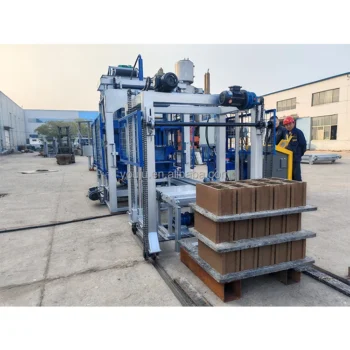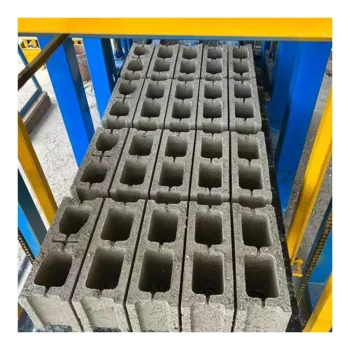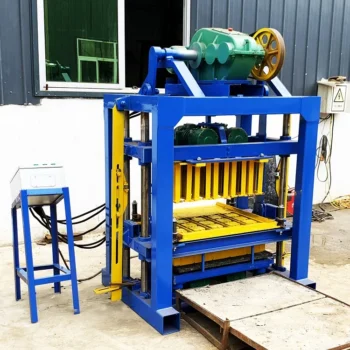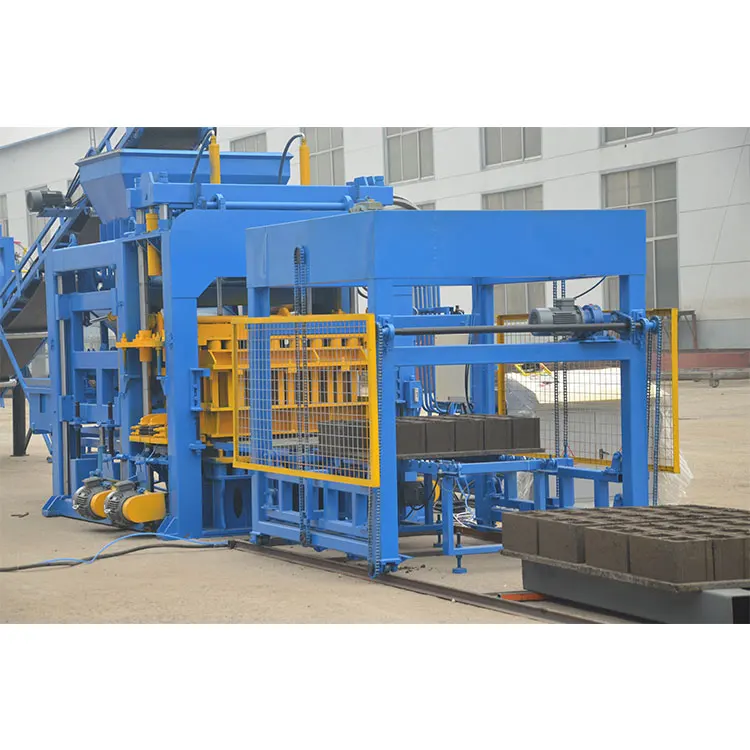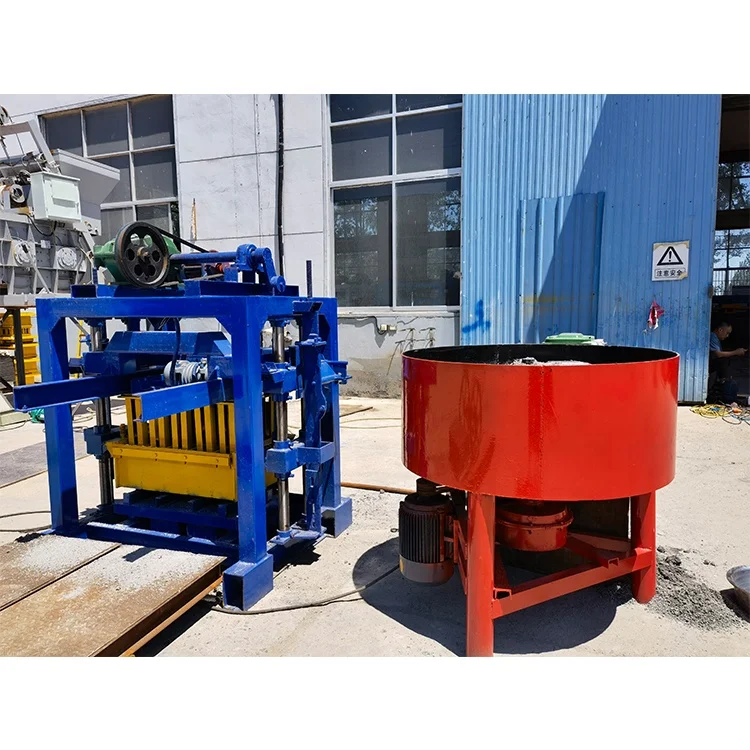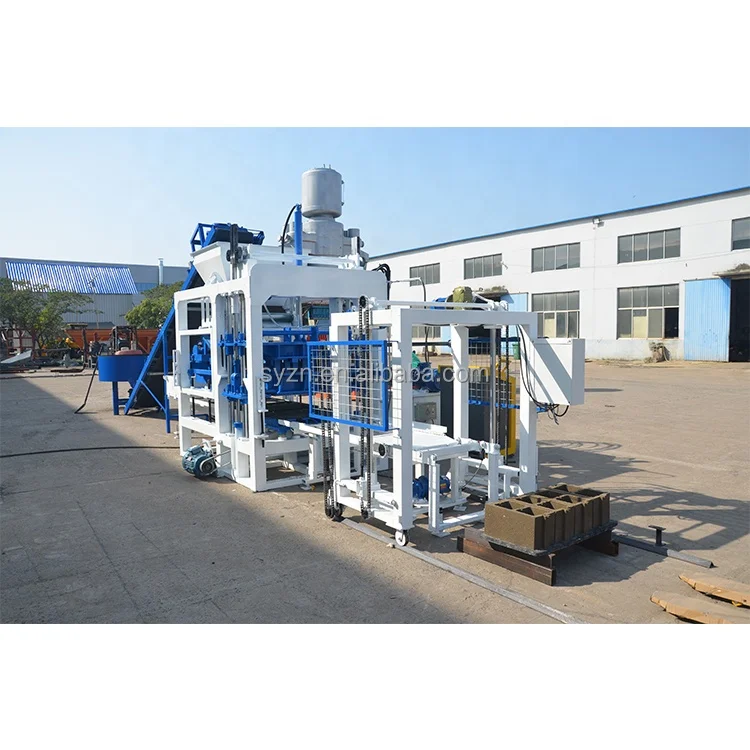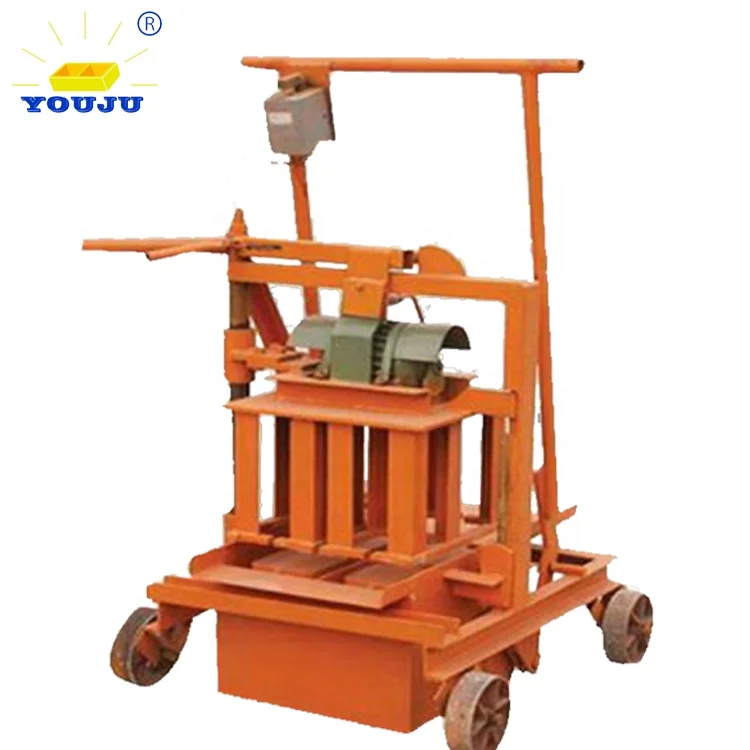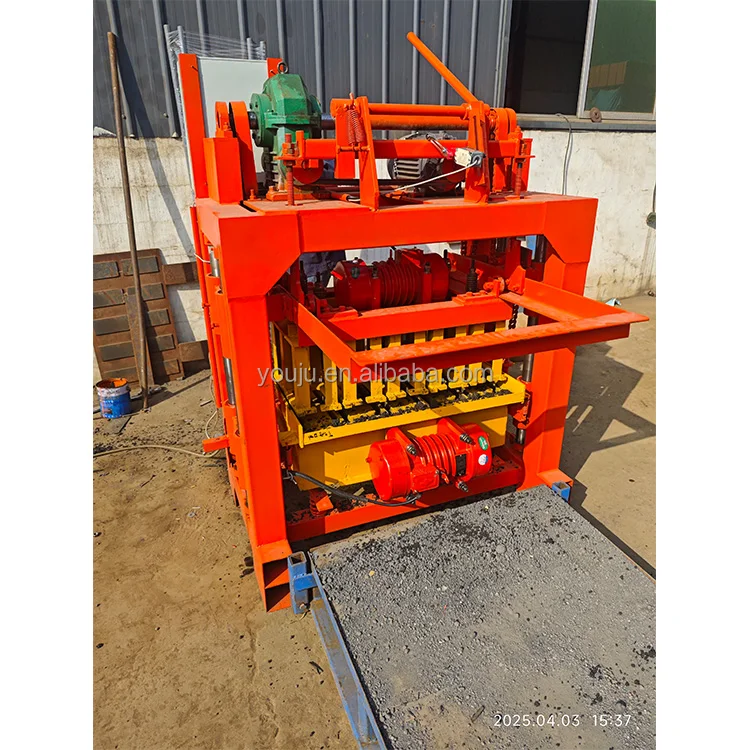
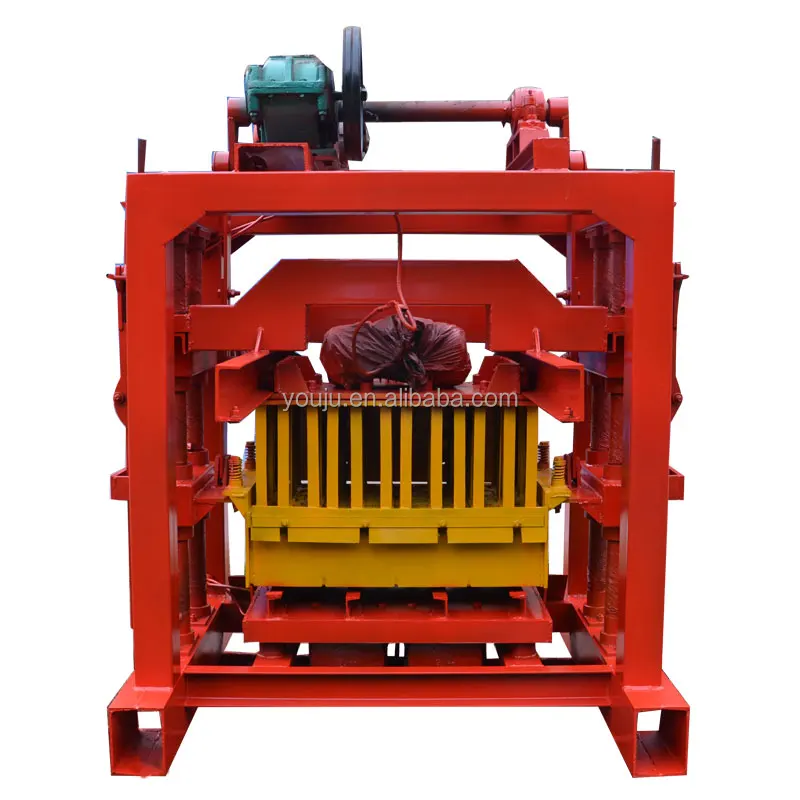
Description
Stocked for Dispatch — QTJ4-40 units are held in inventory or assembled within days, so your project start date is not pushed back by manufacturing queues.
Technical Specifications
| Parameter | Value |
|---|---|
| Model | QTJ4-40 |
| Product Type | Manual Hydraulic Block Making Machine |
| Capacity (400×200×200mm hollow block, 4 pcs/mould) | 360 pcs/h, 2880 pcs/8h shift |
| Capacity (400×150×200mm hollow block, 5 pcs/mould) | 500 pcs/h, 4000 pcs/8h shift |
| Capacity (225×112.5×60mm interlocking paver, 9 pcs/mould) | 900 pcs/h, 7200 pcs/8h shift |
| Main Vibration Form | Platform Vibration |
| Vibration Frequency | 2800 r/min |
| Pallet Size | 850×450 mm |
| Overall Dimensions (L×W×H) | 1350×1460×1800 mm |
| Machine Weight | Approx. 1 T |
| Recommended Mix Ratio | Cement 8–10%, Sand 30–40%, Stone 50–60% |
| Worker Requirement | 1–3 people |
| Automation Level | Semi-automatic (manual pallet handling, top die push/pull, automatic scraper) |
| Raw Materials | Concrete, cement, fly ash, crushed stone, sand, dust, gravel, slag |
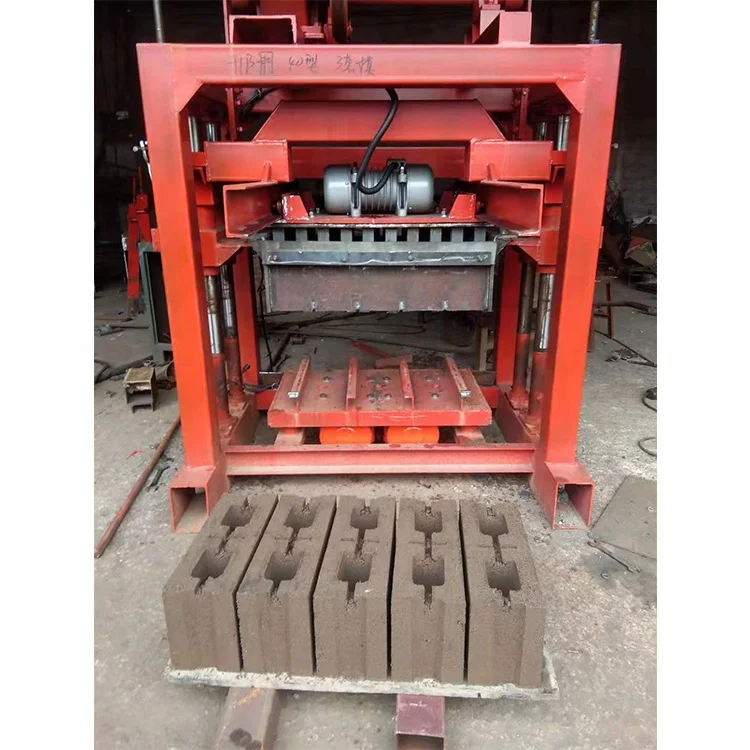
| Applied Products | Hollow/solid blocks, pavers, interlocking blocks, curbstone, colored pavers |
| Standards | CE |
Application Suitability
| Application | Material or Output |
|---|---|
| Small-scale hollow block production | Crushed stone and cement with fly ash blending |
| On-site construction block supply | Sand and gravel sourced from local pits |
| Interlocking paver manufacturing | Fine aggregate with color oxide additives |
| Curbstone and solid block runs | Coarse aggregate with standard cement binder |
| Start-up plant first production | Locally available sand, stone dust, and slag |
Why "In Stock" Matters More Than Cycle Time
A QTJ4-40 block machine in stock means your foundation walls are being built while competitors are still waiting for their press to clear customs. Many buyers focus on cycle time or mould count, but the single biggest delay in a small block project is the gap between payment and machine arrival.
When I visit project sites in the Yangtze River Delta, the story repeats itself: a contractor commits to a housing deadline, orders a machine with an eight-week build lead, and then watches the rainy season swallow two of those weeks. The crew sits idle, formwork rots, and the penalty clause in the construction contract starts ticking. With a fast delivery small block machine, that entire risk window collapses. The machine is crated, containerized, and moving toward your port before the wet weather even arrives [NEED_CITE: typical ocean freight transit times by region].
Dispatch Readiness and Container Loading
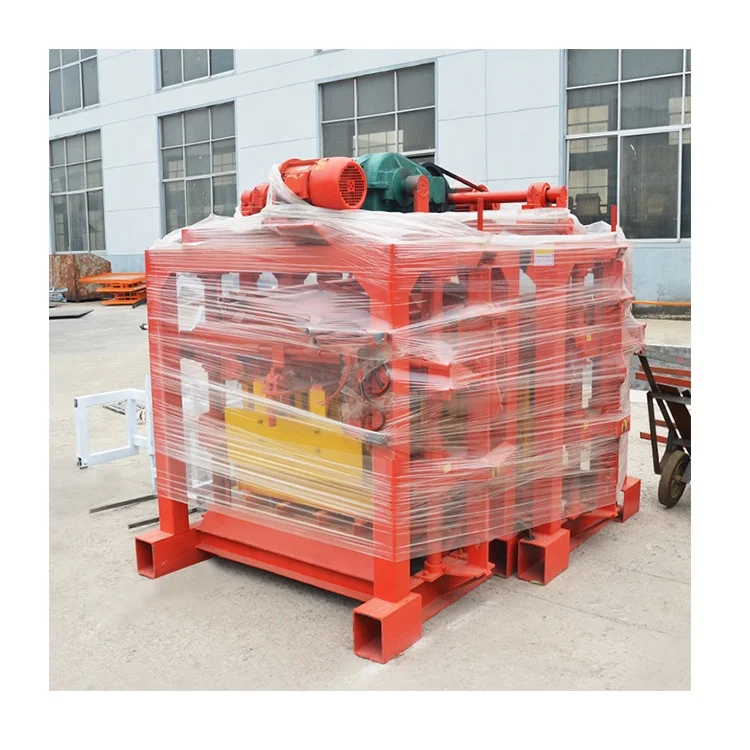
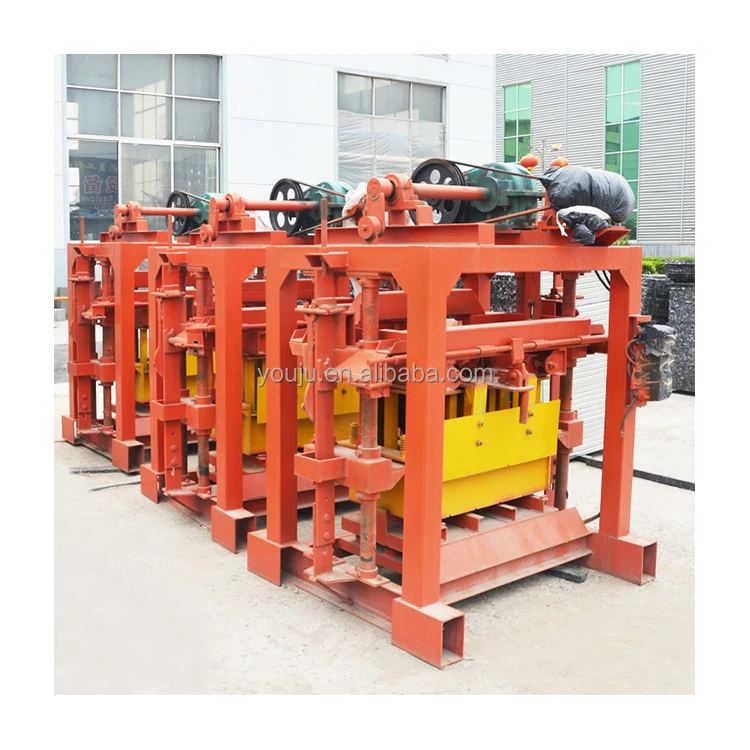
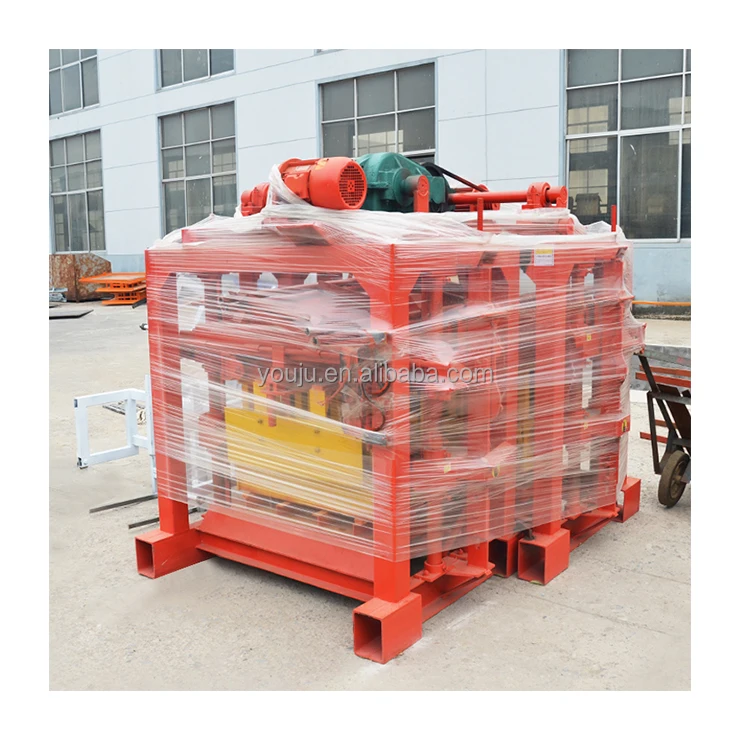
The QTJ4-40 block machine in stock ships with its vibration platform, mould frame, and scraper assembly pre-matched and factory-tested. Because the overall footprint stays within 1350×1460×1800 mm, a standard 20-foot container can hold the press, a set of standard moulds, and a stack of pallets in a single consolidated load. This eliminates split shipments and the coordination headaches that come with them.
Before dispatch, each unit undergoes a run-off with the block format you specified. You receive loading photographs showing exactly how the machine is secured inside the container, so there are no surprises when you open the doors at destination.
Arrival Timing and Customs Handoff
The second advantage of buying a stocked unit is that arrival estimates are calculated against real sailing schedules, not theoretical production timelines. Once the QTJ4-40 block machine in stock is loaded, you receive a container number and a projected arrival window at your named port [NEED_CITE: shipping line schedule reliability metrics]. Customs documentation — packing list, commercial invoice, and CE declaration — is prepared in parallel with loading, so your broker can pre-lodge the entry before the vessel docks.
What the Specs Actually Mean on the Shop Floor
Platform vibration at 2800 r/min drives compaction from below, forcing aggregate particles into a dense matrix. On a small machine like this, vibration frequency matters more than raw force because the mould cavity is compact enough that high-frequency shaking reaches every corner. The 850×450 mm pallet size is a standard format widely available from local timber or bamboo suppliers, which means you will not be waiting six weeks for a custom pallet shipment when your first batch wears out.
The recommended mix ratio of 8–10% cement, 30–40% sand, and 50–60% stone is a starting point. In my experience, buyers who test their local aggregate grading against this ratio before the machine arrives avoid the most common first-week problem: blocks that crumble at the edges because the sand fraction is too fine or the stone dust content is too high. The semi-automatic layout keeps things simple — one operator feeds pallets, another pulls the top die — which reduces commissioning complexity when your team has never run a block press before.
The Real Cost of Ordering a Machine That Is Not Ready
Choosing a press based on catalogue output figures alone is a common mistake, but ordering one that will not ship for weeks is a worse one. When a project contractor commits to a construction deadline, every day of machine delay compresses the curing time available before blocks must be laid. Short-cured blocks fail compressive strength tests, and failed tests mean rejected loads, rework, and strained relationships with the site engineer [NEED_CITE: concrete block curing time and compressive strength development].
For entrepreneurs launching a first plant, a delayed machine also delays revenue. Fixed costs — yard rent, labour, raw material stockpiles — keep burning while the press is still on the production floor. The financial pressure tempts some buyers into skipping proper mix trials once the machine finally arrives, which then creates block quality problems that take months to diagnose and correct.
What Sets This Purchase Apart
Configuration is matched to your stated block format and local aggregate, not pulled from a default catalogue page. The QTJ4-40 ships as a coordinated system: press, mould, and pallet specified together so nothing arrives mismatched.
Stock availability means the factory test uses your chosen mould, not whichever one happens to be on the test bench. Container loading plans are confirmed before you pay the balance, giving you a clear shipment date rather than a vague production estimate.
Customs documentation is prepared per your import market requirements, reducing the chance that your broker flags a missing certificate at the port. Operator training covers pallet handling rhythm, mix consistency checks, and mould change procedure specific to this machine.
Documentation & Verification
- Factory test record showing cycle output on your specified block format before dispatch
- Container loading photographs confirming securing method and pallet count inside
- CE declaration matched to the machine serial number on your unit
- Packing list and commercial invoice formatted for your destination customs authority
- Operation manual with pallet handling and mould change steps for the QTJ4-40 layout
Installation, Commissioning & Support
- Level the 1350×1460 mm base on a cured concrete pad before bolting the vibration platform down
- Confirm local voltage and frequency match the motor nameplate before first energization
- Run the 850×450 mm pallets through the feed guides to verify smooth travel before production
- Adjust the automatic scraper stroke to match your mix consistency and mould cavity depth
- Train operators on the manual pallet handling rhythm to keep cycle time steady
- Stock spare vibration springs and scraper blades as first-order consumables
Before You Request a Quote
Send your target block format and dimensions, the daily output you need to meet your project schedule, and the port nearest to your yard. Include your local voltage and frequency so the motor can be confirmed before crating. If you already have pallets or a forklift on site, share those details so the pallet size and stacking workflow can be checked against what you own.
Frequently Asked Questions
Q: Is the QTJ4-40 currently in stock or built to order, and what is the dispatch lead time?
A: QTJ4-40 units are held in stock or assembled within a short window from standard components. Once your mould and pallet configuration is confirmed, crating and container loading follow quickly. Exact dispatch timing depends on the mould set you select — standard hollow block moulds ship immediately, while custom format moulds add a brief fabrication period.
Q: How is the machine dismantled and loaded into a container for shipment?
A: The vibration platform, mould frame, and scraper assembly are separated into manageable sub-assemblies that fit inside a standard 20-foot container alongside moulds and pallets. Each unit is secured with timber bracing and steel straps. Loading photographs are sent to you before the container is sealed.
Q: What arrival estimate can I expect at my destination port after dispatch?
A: Once the container is booked, you receive a vessel name, container number, and estimated arrival date based on the shipping line schedule for your route. Transit time varies by destination, but the estimate is provided upfront at the inquiry stage so you can plan site preparation accordingly.
Q: Which standard moulds ship with the machine from stock?
A: Standard hollow block moulds in common dimensions such as 400×200×200 mm and 400×150×200 mm are typically available for immediate dispatch. Interlocking paver and curbstone moulds may require a short fabrication lead. Confirm your required format at inquiry to receive an accurate stock status.
Q: What customs documentation is provided to clear import smoothly on arrival?
A: You receive a packing list, commercial invoice, and CE declaration matched to your machine serial number. Documents are prepared in English and formatted to meet standard import requirements. Your customs broker can pre-lodge the entry with these documents before the vessel reaches your port.