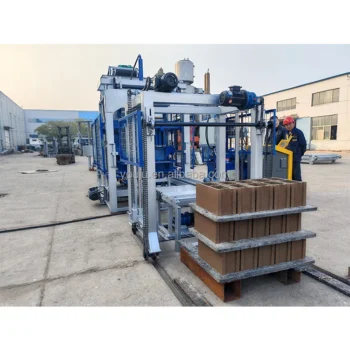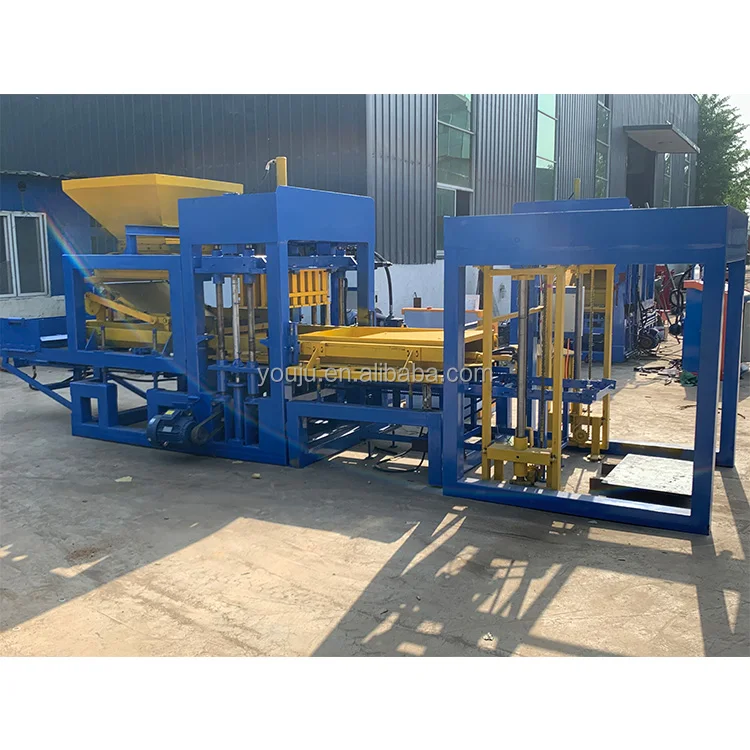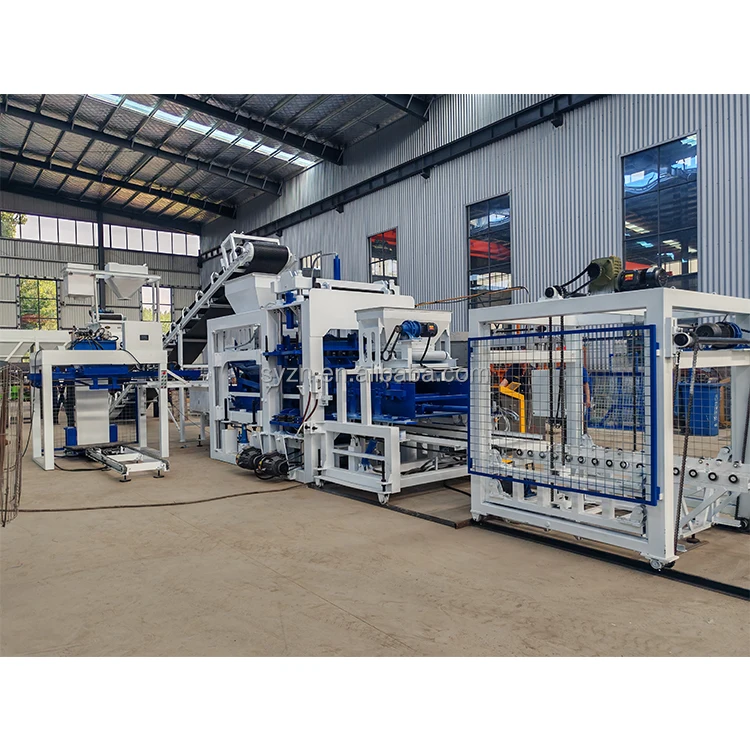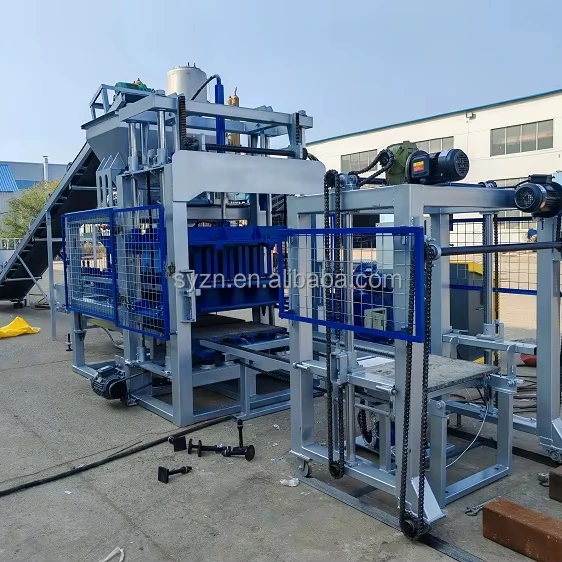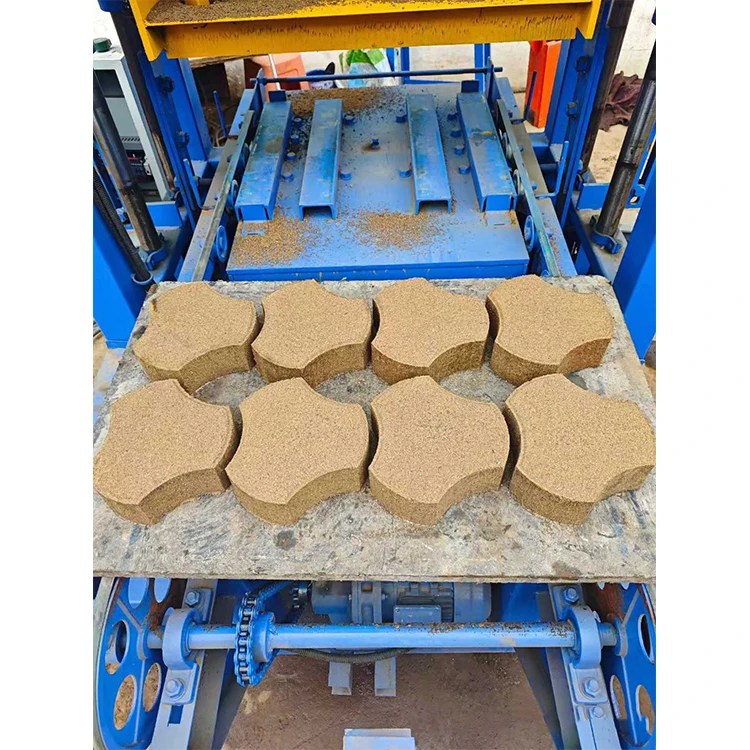
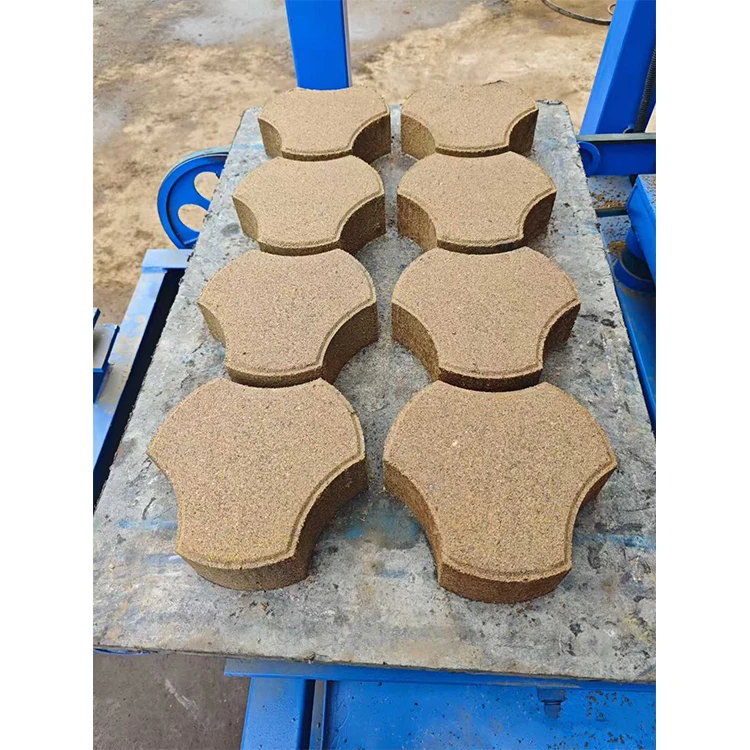
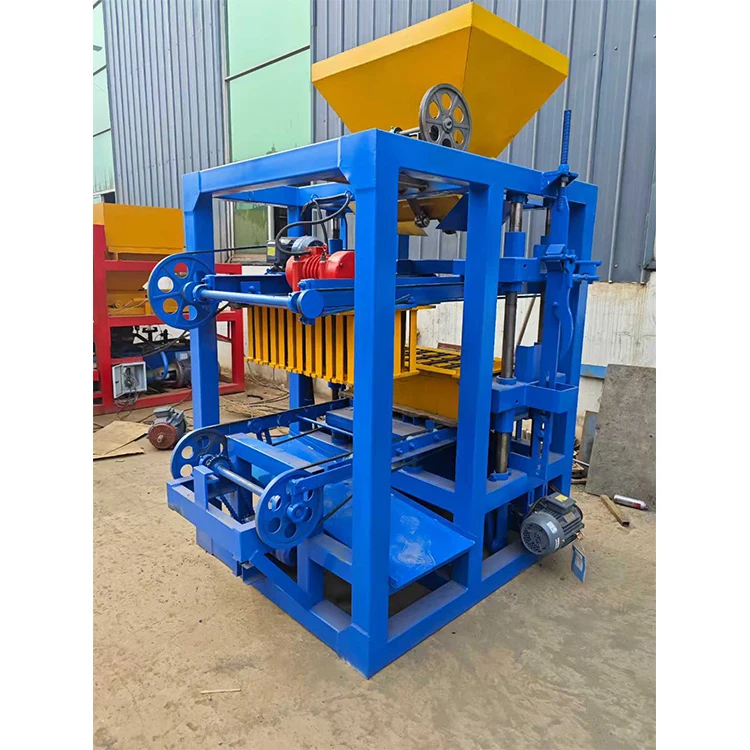
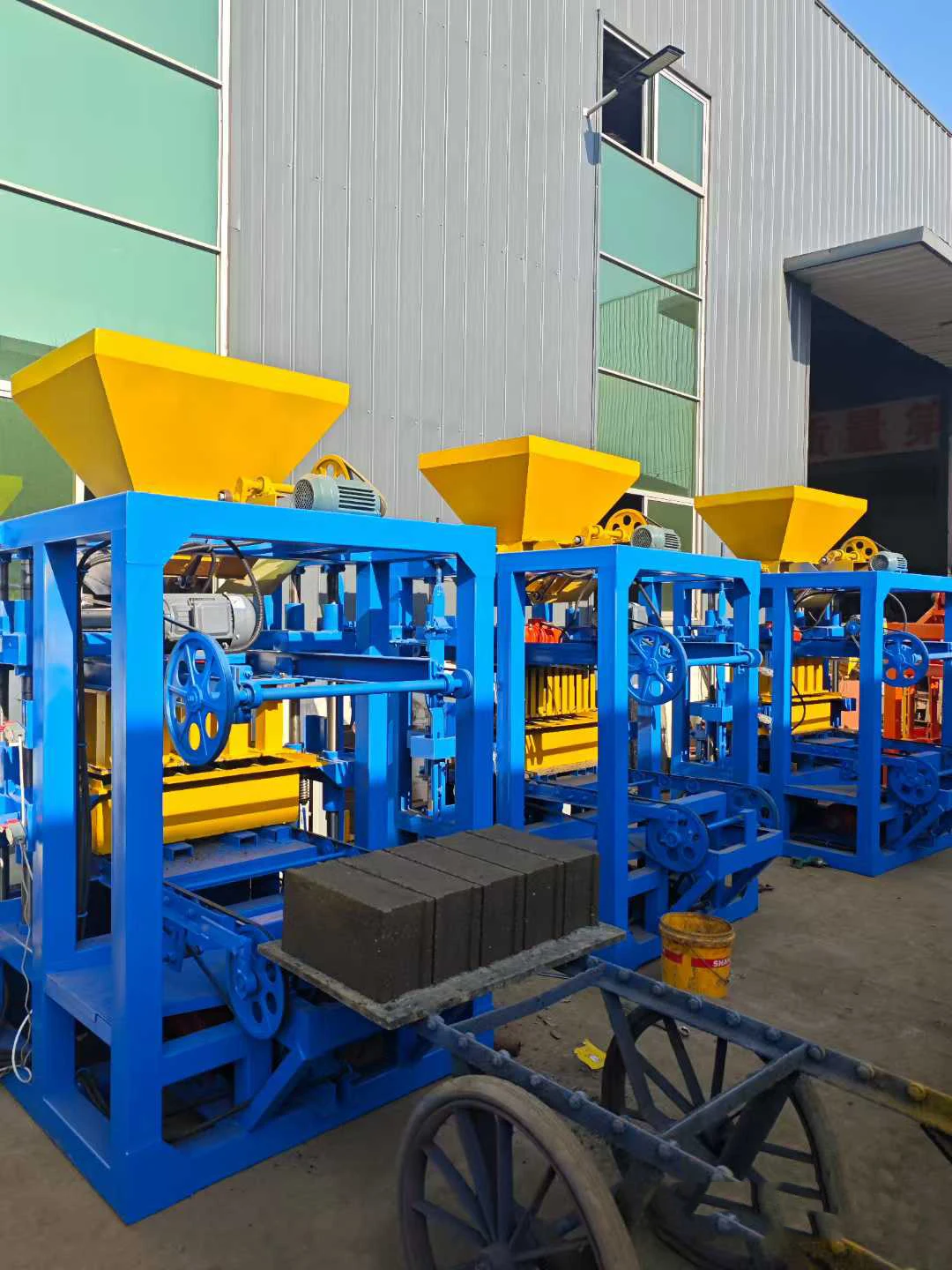
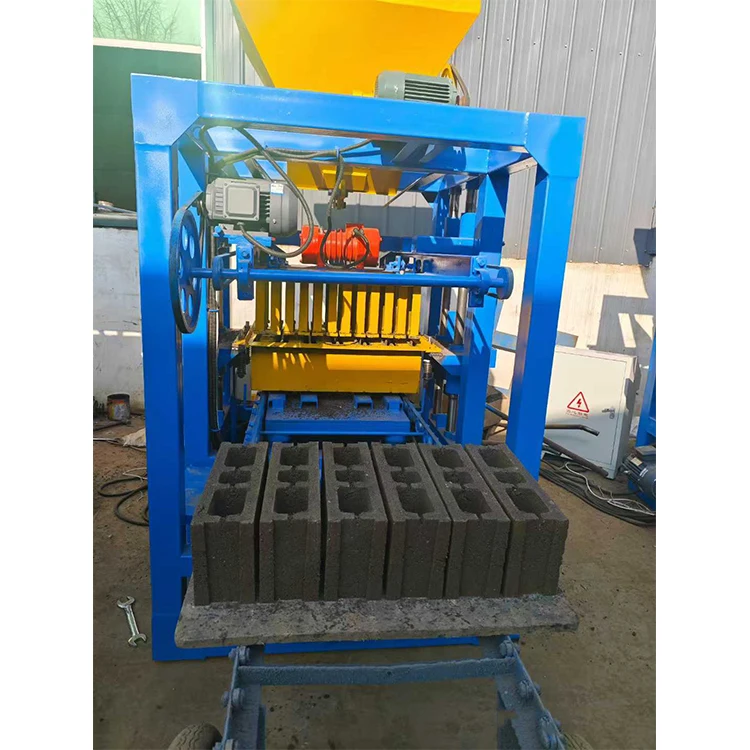
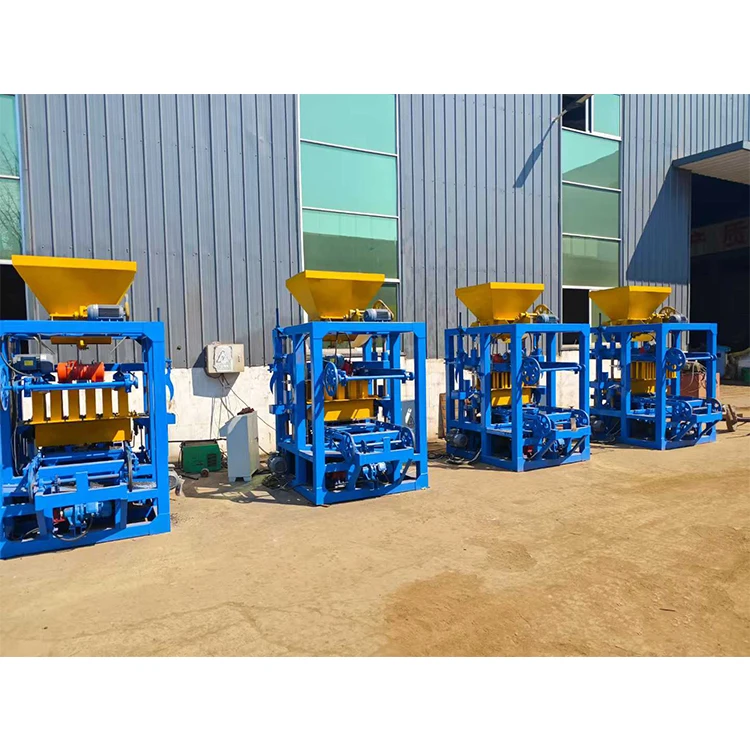
Description
Dispatch-Ready Configuration — Every stocked QTJ4-24 block machine is verified against your site voltage, frequency, and pallet handling setup before it leaves the factory floor.
Technical Specifications
| Parameter | Value |
|---|---|
| Model | QTJ4-24 |
| Product Type | Automatic Hydraulic Block Making Machine |
| Overall Dimensions | 3600×1700×2560 mm |
| Pallet Size | 850×450 mm |
| Molding Cycle | 24–26 s (basis not stated in source) |
| Overall Power | 11.95 kW |
| Vibration Force | 45 kN |
| Total Mass | 2 T |
| Molding Method | Mechanical with hydraulic assist |
| Vibrator Configuration | 2×3 kW lower + 2×1.5 kW upper vibrators |
| Reducer Type | 350-type for mold lifting |
| Material Distribution | Full-automatic spiral feeder |
| Control System | PLC controlled |
| Voltage & Frequency | Configurable — confirm before dispatch |
| PLC Display Language | Configurable — confirm before dispatch |
| Compatible Formats | Hollow block, interlocking brick, paving block, solid brick |
| Raw Materials | Cement, sand, stone aggregates |
| Warranty | 1 year (excluding spare parts) |
Application Suitability
| Application | Material or Output |
|---|---|
| Hollow block production | Cement, sand, and crushed stone aggregate blends |
| Interlocking brick manufacturing | Standard concrete mixes for dry-cast forming |
| Paving block production | High-density aggregate mixes for surface durability |
| Solid brick forming | Cement and fine sand blends for load-bearing units |
| On-site contractor block making | Locally sourced aggregates for project-specific output |
Why Voltage Confirmation Must Happen Before the QTJ4-24 Block Machine Ships
A mismatched voltage spec turns a fast-delivery machine into a three-week paperweight on your job site.
I have watched a fully crated block machine sit idle at a Peruvian project site because the local grid ran 380V/60Hz while the motor was wound for 50Hz. The contractor paid for an emergency transformer retrofit while the construction crew stood around. When buyers rush to secure a QTJ4-24 block machine in stock for a tight deadline, the electrical parameters are often the last item on the checklist — and the first cause of on-site failure [NEED_CITE: voltage and frequency standards by export market]. The motor, PLC, and vibrators each respond differently to frequency variance, and a 10Hz discrepancy changes vibrator amplitude and cycle behavior in ways that are not obvious until the first test run.
Stocked Units Do Not Mean Unverified Units
A QTJ4-24 block machine in stock can ship within days, but availability alone does not protect your schedule. The PLC display language, motor winding specification, and control panel labeling must match the operators and electricians who will receive it. We hold stocked units at a configuration baseline and adjust voltage, frequency, and interface language once the buyer confirms site conditions. This step adds minimal time before dispatch and eliminates weeks of delay at the destination.
Container Loading and Dismantling for Transit
The QTJ4-24 block machine breaks down into components that fit standard 20-foot container dimensions. The main frame, mold assembly, hydraulic station, and pallet feeder are secured separately to prevent transit damage. Buyers working against a project deadline need a clear loading plan before they commit — knowing which components ship loose, how the mold is crated, and whether a forklift at the destination port can handle the heaviest single piece [NEED_CITE: standard container loading practices for block machinery]. We provide packing photographs and a dismantling diagram so your logistics team can plan the receiving side before the vessel departs.
Reading the Specs That Actually Matter on Site
The 45 kN vibration force works in tandem with mechanical pressure to compact the concrete mix inside the mold cavity. Higher vibration alone does not guarantee block density — it must be matched to the aggregate particle size and cement ratio your local supplier delivers. The 850×450 mm pallet size dictates how many blocks form per cycle, but it also determines whether your existing curing racks and forklift can handle the loaded pallets without modification. The full-automatic spiral feeder distributes material evenly across the mold box, which matters when you switch between hollow block and paving block formats where fill uniformity affects surface finish. The 350-type reducer on the mold lifting mechanism is sized for repeated mold changes throughout a shift, reducing wear on the gear train compared to lighter reducer classes.
What Happens When Pallet and Curing Specs Are Ignored
Buyers who confirm the press but skip the pallet specification often discover at commissioning that their curing area cannot accommodate the loaded pallets, or that their forklift tines are too short for the pallet depth. The blocks then pile up at the machine outlet, forcing manual handling that was never part of the production plan. This bottleneck is not a machine fault — it is a configuration gap that could have been resolved with a single dimension check before dispatch [NEED_CITE: pallet handling and curing area planning for block plants]. The result is a line that technically runs but never reaches its planned daily rhythm.
Why Buyers Source the QTJ4-24 Here
Block machinery is our single product focus, so the press, mold, pallet, and handling equipment are specified as one matched system. Configuration is set against your actual mix design and local aggregate, not a catalogue default. Molds for the formats your market sells — hollow, interlocking, paving, solid — are designed and supplied from the same source. Stocked units carry transparent dispatch lead times with container loading plans quoted upfront. Installation support includes operator training so your crew runs the QTJ4-24 block machine correctly from the first shift.
Documentation & Verification
- Factory test record on your specified block format before dispatch
- Machine specification sheet with confirmed voltage and frequency
- Pallet specification matched to your curing area dimensions
- Packing photographs showing crate condition before container loading
- Customs documentation support for destination port clearance
- Operation and maintenance manual in confirmed PLC display language
Installation, Commissioning & Support
- Foundation must support 2 T total mass with level tolerance across the 3600 mm frame length
- Dedicated electrical circuit required for 11.95 kW total power draw at confirmed voltage
- Main frame and mold assembly arrive separately and require on-site alignment
- First-run parameter setting covers vibration timing and spiral feeder calibration
- Operator training addresses mold change procedure using the 350-type reducer
- Wear parts list provided for vibrator motors and reducer seals
What We Need to Ship Your Machine
Tell us your target block format, the local aggregate and cement type available at your site, and your existing pallet or curing rack dimensions. Confirm your site voltage, frequency, and the language your operators need on the PLC display. If you have a project start date, share it so we align dispatch against your receiving schedule.
Frequently Asked Questions
Q: What is the dispatch lead time for stocked QTJ4-24 units?
A: Stocked QTJ4-24 block machines are available for immediate preparation once voltage, frequency, and PLC language are confirmed. Final dispatch timing depends on container availability and any pre-shipment adjustments. We provide a clear departure estimate at the quotation stage so your project schedule stays intact.
Q: Can voltage, frequency, and control language be confirmed before shipment?
A: Yes. Every QTJ4-24 block machine ships only after the buyer confirms site electrical parameters and preferred PLC display language. This step prevents the on-site delays caused by incompatible motor windings or unreadable control interfaces. We document the confirmed configuration in the specification sheet before crating.
Q: How is the machine dismantled and loaded for container shipment?
A: The QTJ4-24 is broken into main frame, mold assembly, hydraulic station, and pallet feeder for container loading. Each component is secured and crated to prevent transit damage. We provide packing photographs and a loading diagram so your port team can plan unloading and reassembly efficiently.
Q: What pallet size does the QTJ4-24 require, and is it compatible with my curing setup?
A: The QTJ4-24 uses 850×450 mm pallets. Before dispatch, we verify that this pallet size matches your existing curing racks and forklift capacity. If your current setup uses a different pallet dimension, we discuss compatibility options so the block line runs without manual handling bottlenecks at the curing stage.
Q: What documentation supports customs clearance and on-site commissioning?
A: Each shipment includes a factory test record, machine specification sheet, pallet specification, operation manual in the confirmed language, and customs documentation. CE declaration is available where applicable. These documents are prepared before dispatch so clearance and commissioning proceed without paperwork delays.