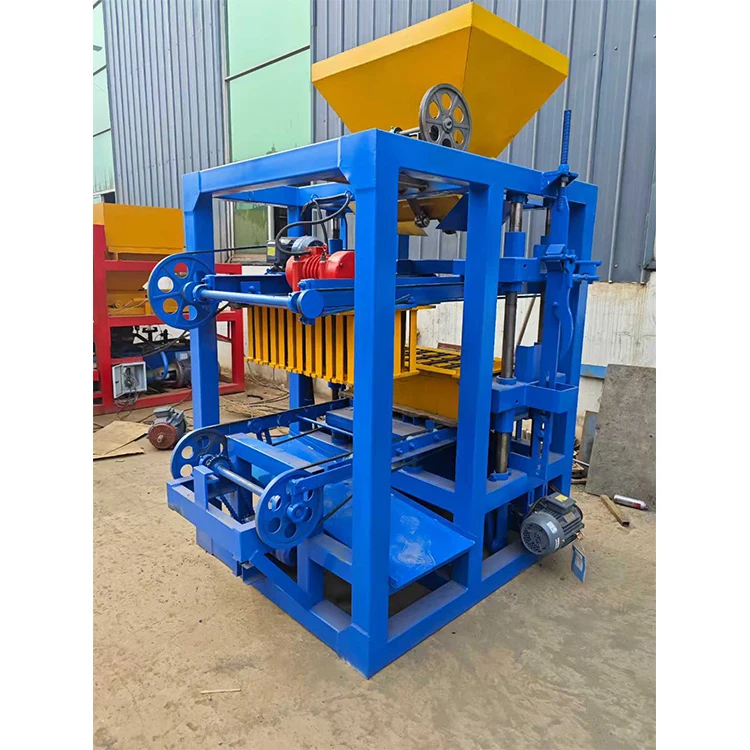
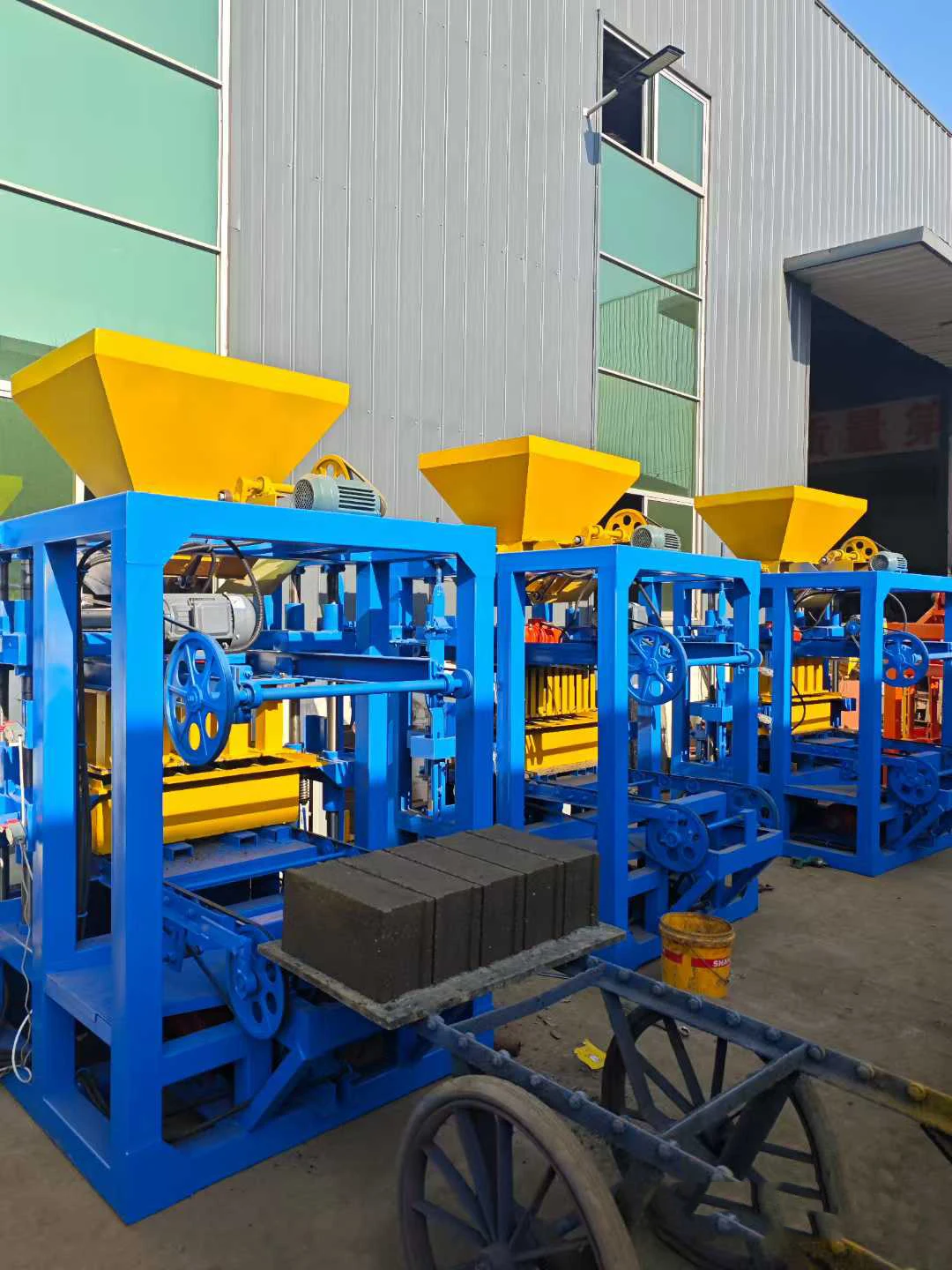
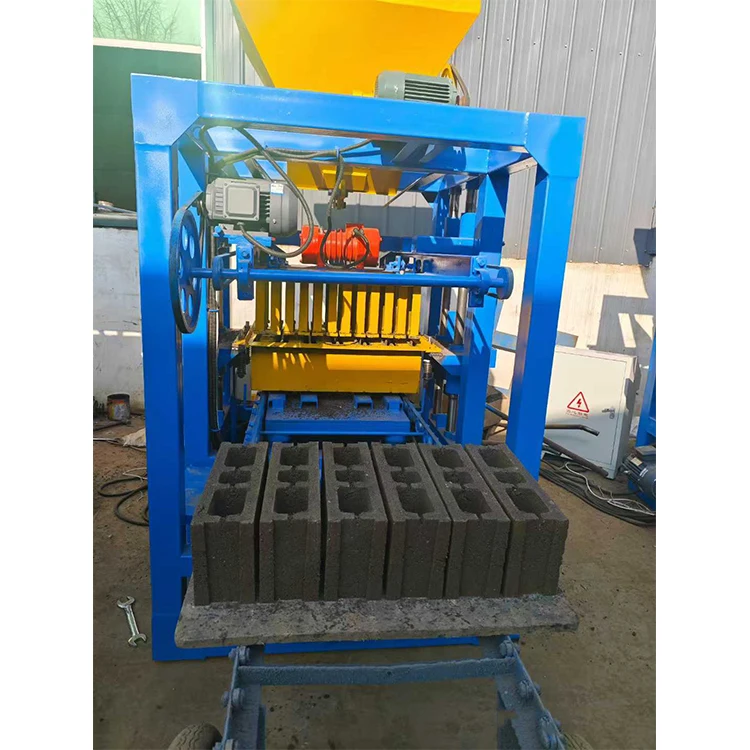
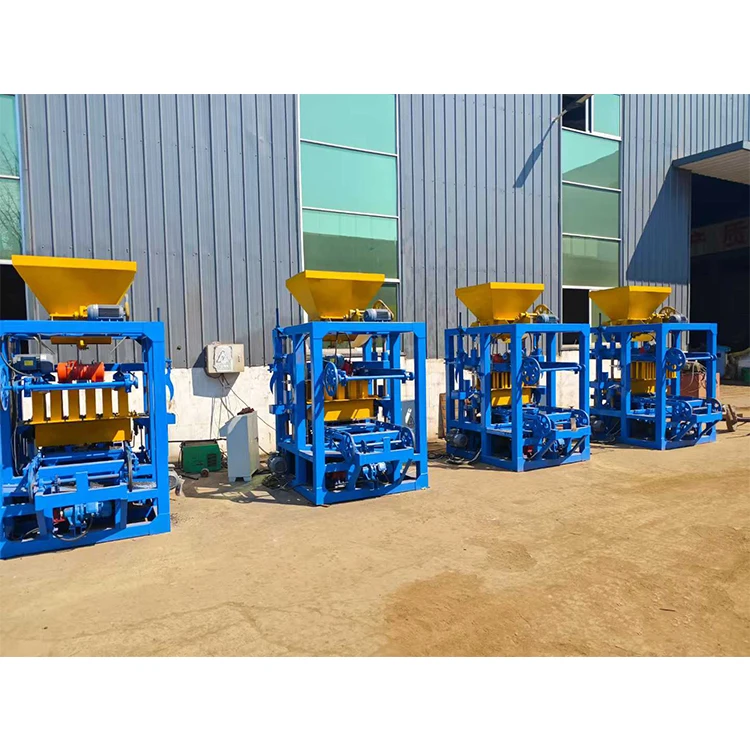
Description
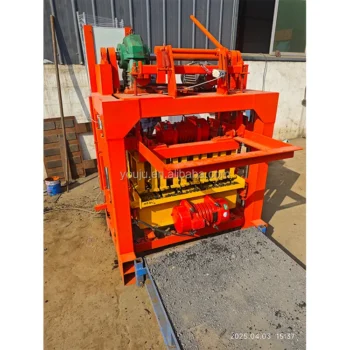
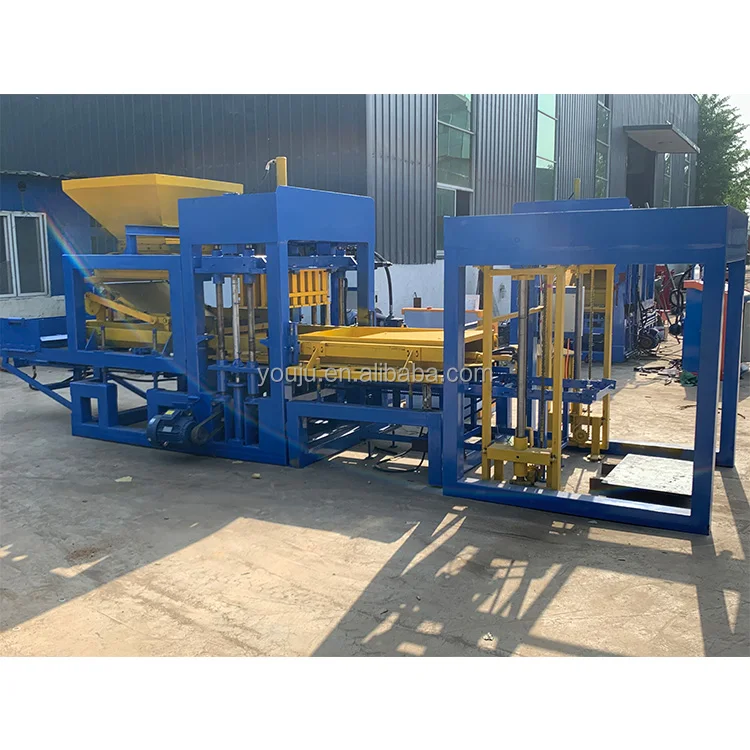
Stocked Configuration Matched — Every QTJ4-24 we load into a container has been tested against the buyer’s actual mix before dispatch, so what arrives on site produces from day one.
Technical Specifications
| Parameter | Value |
|---|---|
| Model | QTJ4-24 |
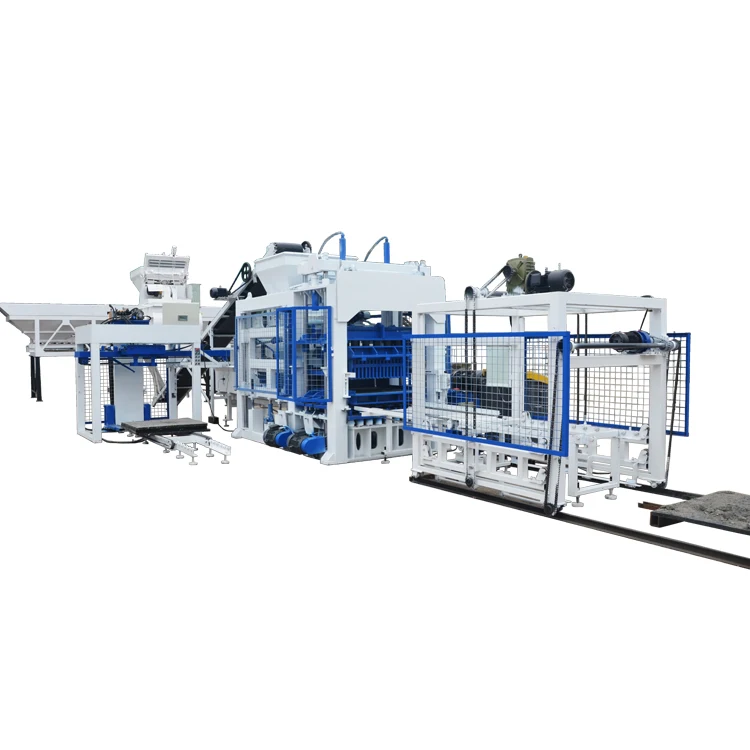
| Product Type | Stationary Block Making Machine |
| Overall Dimensions (L×W×H) | 3600×1700×2560 mm |
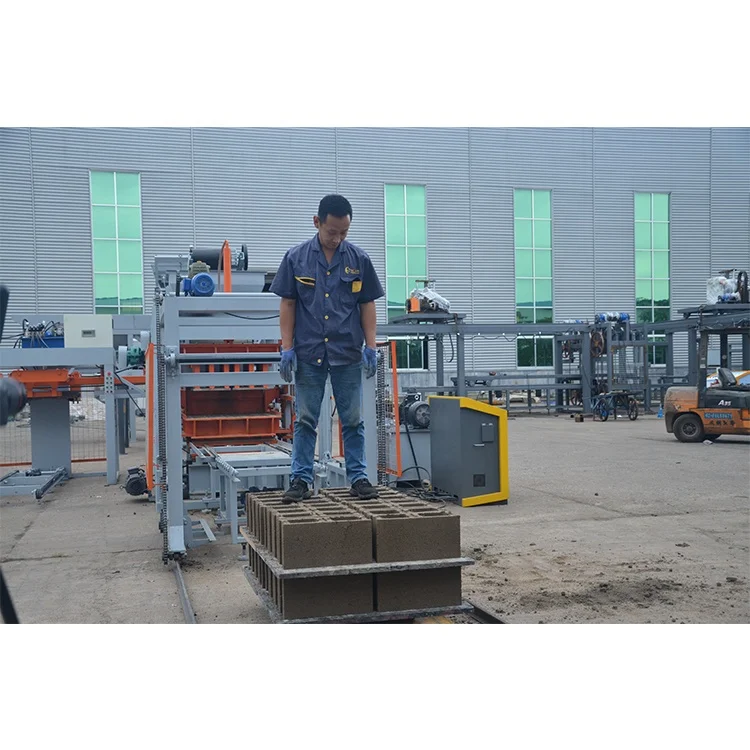
| Pallet Size | 850×450 mm |
| Molding Cycle | 24–26 s (basis to be confirmed per block format) |
| Rated Power | 11.95 kW |
| Vibration Force | 45 kN |
| Net Weight | 2 T |
| Molding Method | Mechanical vibration |
| Vibration Configuration | 2×3 kW lower vibrators + 2×1.5 kW upper vibrators |
| Material Distribution | Full-automatic spiral |
| Mold Lifting Reducer | 350-type |
| Raw Materials | Cement, sand, stone |
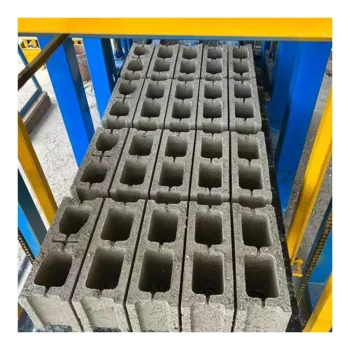
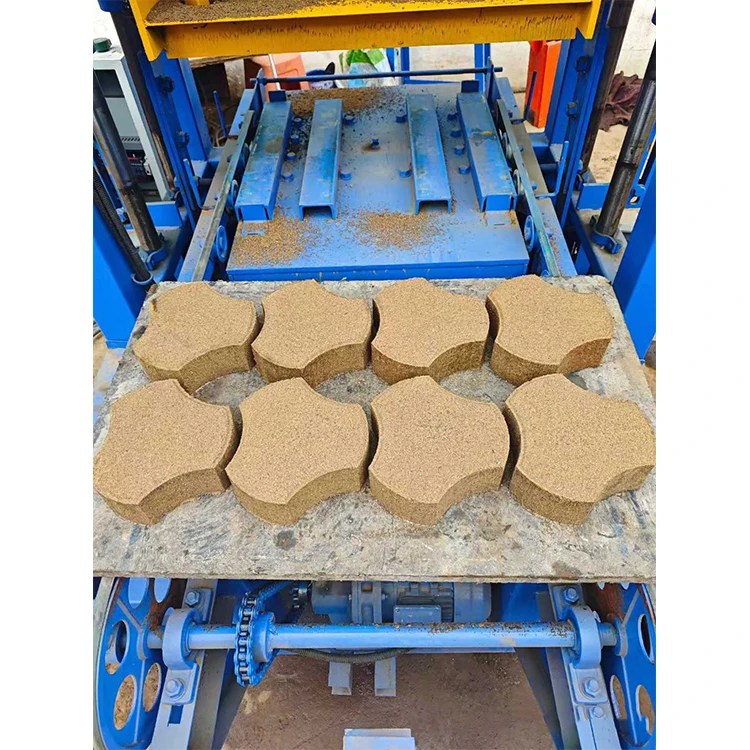
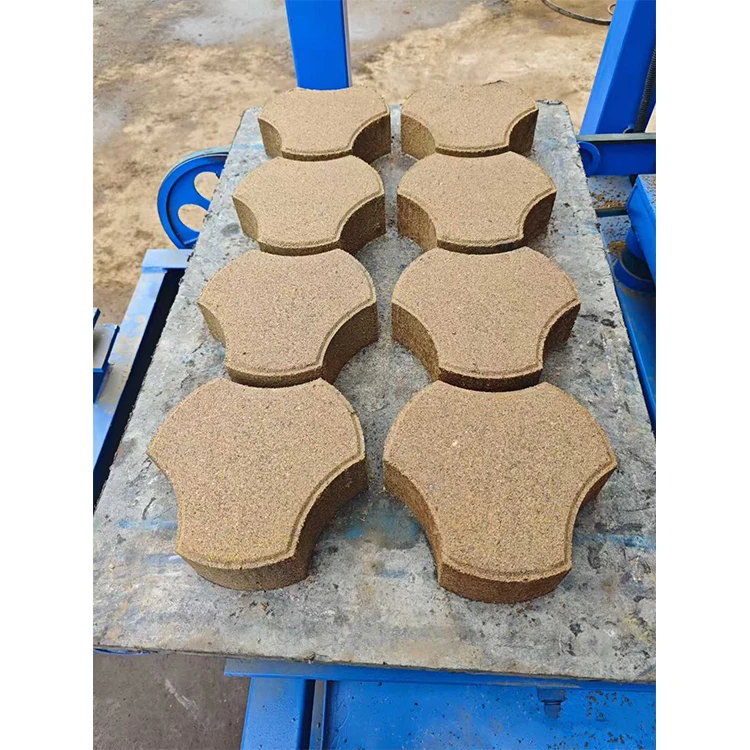
| Mould Formats | Hollow block, interlocking brick, paving block |
| Control System | PLC |
| Voltage & Frequency | Configurable per destination market |
| Automation Level | Semi-automatic |
| Warranty | 1 year (excluding spare parts) |
Application Suitability
| Application | Material or Output |
|---|---|
| Hollow block production for residential walls | Cement, crushed stone, sand with standard curing |
| Interlocking brick for boundary walls and landscaping | Cement-sand mix with finer aggregate gradation |
| Paving block for walkways and light-duty yards | High-cement-ratio mix with coarse stone aggregate |
| On-site block production for construction contractors | Local sand, stone, and cement sourced near project site |
| First-plant entrepreneurs producing for local markets | Standard cement-aggregate blends matched to regional demand |
Why the Dispatch Date Matters More Than the Cycle Time
A stocked stationary block machine in stock means the shipping clock starts immediately, not weeks after payment.
When you are building a block plant around a project deadline, the gap between order and arrival determines whether your crew stands idle or starts producing. I have watched contractors pay penalty clauses because a machine sat in production for weeks when the site was already cleared and ready. The QTJ4-24 is maintained as a stocked model so that container loading and dispatch happen on a compressed timeline. We confirm the shipping window at inquiry stage, not after the deposit clears. [NEED_CITE: typical container transit times by destination region]
Dispatch Lead Time and Container Planning
The primary reason a buyer searches for a stationary block machine in stock is speed. We quote the dispatch lead time alongside the machine configuration so that your site preparation schedule and the shipping arrival align. The QTJ4-24 is dismantled into components that fit within a standard container footprint, and we plan the loading sequence so that the heaviest assemblies sit low and the moulds are accessible on arrival. Your logistics team receives the packing arrangement before the container is sealed.
Arrival Timing Quoted Before You Commit
Once the destination port is confirmed, we provide an estimated arrival window that accounts for sea transit and port handling. This estimate is given at the inquiry stage so that your contractor or project manager can plan the foundation work and curing area setup around a known delivery date. Delays in block machine arrival have cascading effects on every downstream trade waiting on masonry units. [NEED_CITE: port congestion and inland transport variables affecting arrival estimates]
Vibration and Molding Parameters on This Machine
The QTJ4-24 uses a dual-level mechanical vibration system: two 3 kW lower vibrators and two 1.5 kW upper vibrators delivering 45 kN of total vibration force. In mechanical vibration block making, the lower vibrators compact the mix upward while the upper vibrators settle the surface, producing a denser block with fewer voids. The 850×450 mm pallet size determines how many block cavities fit per cycle, and this pallet must match the curing racks and forklift tines the buyer already has on site. The 24–26 second molding cycle applies to a standard hollow block format; thicker paving blocks and interlocking bricks will run longer cycles, which is why we confirm capacity per format rather than quoting a single number. The full-automatic spiral material distribution ensures each mould cavity receives a consistent charge of mix before vibration begins, reducing density variation across the pallet.
What Happens When the Pallet Size Does Not Match
A pallet dimension that conflicts with existing curing racks means blocks are handled twice before they even reach the drying area. Forklifts with tines wider than the pallet footprint chip edges on freshly molded units. I have seen block plants where the curing yard had to be rebuilt because the pallet size was never checked against the rack spacing. The 850×450 mm pallet on the QTJ4-24 is a standard dimension, but confirming it against your current infrastructure avoids costly site modifications after the machine lands. [NEED_CITE: pallet handling and curing area compatibility in block plants]
Why Buyers Source the QTJ4-24 Here
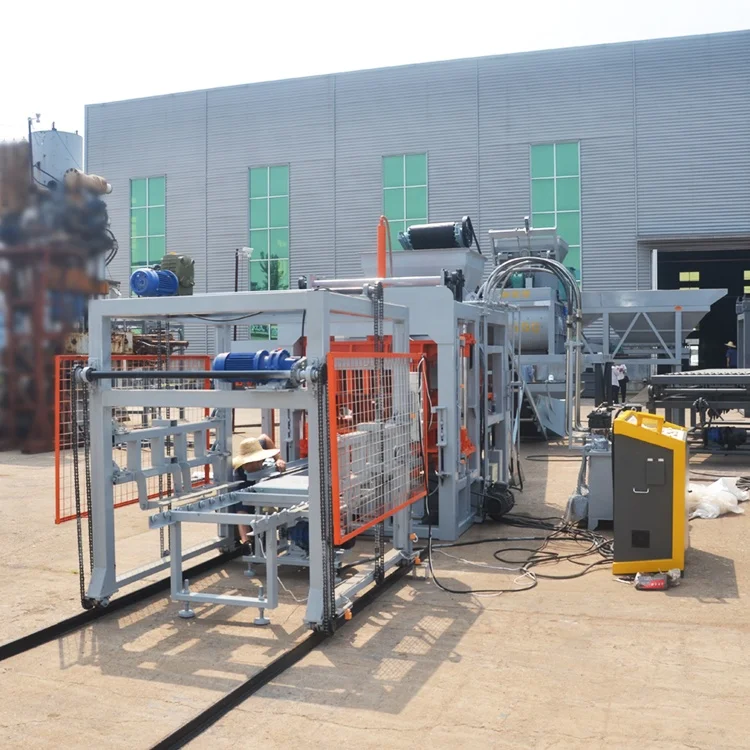
We treat the machine, mould, pallet, and handling equipment as one system rather than assembling from separate suppliers, so every component on the QTJ4-24 works with the others without field modifications. Stock availability means the machine you see in the specification sheet is the one that ships, not a unit that enters a production queue. Container loading plans and machine dismantling arrangements are confirmed before payment, removing surprises at the loading bay. Voltage, frequency, and PLC display language are locked in at the order stage so that the electrical connection and operator interface are correct when the machine is powered up on site. The factory test record covers the QTJ4-24 running with your specified mould format before it leaves the workshop.
Documentation & Verification
- Factory test record showing QTJ4-24 cycle times on your selected hollow block or paving block mould
- Pallet specification sheet confirming 850×450 mm dimensions and material grade
- Voltage and frequency confirmation document matched to your site electrical supply
- Container loading plan with dismantling arrangement for the 3600×1700×2560 mm frame
- Mould drawing and format list for each cavity configuration ordered
- Operation manual with PLC display language matching your operator preference
Installation, Commissioning & Support
- Foundation pad leveled to accommodate 3600×1700 mm footprint with anchor bolt provision
- Dedicated electrical circuit sized for 11.95 kW total draw at confirmed voltage and frequency
- Frame reassembly from container-dismantled state with alignment check on vibration table
- First-run parameter setting for 24–26 s cycle adjusted to your specific block format and mix
- PLC language set to operator preference before commissioning begins
- Mould change procedure walkthrough on each format included in your order
- Vibration motor inspection schedule based on 45 kN continuous operating load
Before You Request a Quote
Send us the block formats your market demands, the destination port, and your site’s voltage and frequency so we can confirm stock availability and lock the shipping schedule. If you already have curing racks and forklifts on site, share the pallet dimensions they accept so we verify compatibility with the 850×450 mm pallet before the container is booked.
Frequently Asked Questions
Q: Is the QTJ4-24 currently in stock and what is the dispatch lead time?
The QTJ4-24 is maintained as a stocked model. Dispatch lead time is confirmed at inquiry based on the mould configuration and voltage setup required. We quote the shipping window alongside the machine proposal so your project schedule can be planned around a known departure date rather than an open-ended production queue.
Q: How is the machine packed and loaded into a container for shipment?
The QTJ4-24 is dismantled into its main frame, vibration assembly, and mould set for container loading. A loading plan is shared with the buyer before the container is sealed, showing component placement and securing method. This ensures safe transit and straightforward reassembly when the container arrives at destination.
Q: What is the estimated arrival time to my destination port?
Arrival estimates are quoted once the destination port is confirmed, factoring in sea transit duration and typical port handling times. We provide this estimate at the inquiry stage so that site preparation and curing area construction can be scheduled around a realistic delivery window.
Q: Which voltage and frequency configurations are available from stock?
Voltage and frequency are configured to match the buyer’s local electrical supply and confirmed before dispatch. Standard industrial voltages across export markets are supported. Confirming this at order stage prevents commissioning delays that arise when a machine arrives with the wrong motor or transformer specification.
Q: What spare parts and moulds ship together with the machine?
Each QTJ4-24 ships with the mould formats specified in the order, along with a wear parts list covering high-wear vibration and mechanical components. The exact spare parts package is documented in the shipment packing list so the buyer knows what consumables are on hand for the first months of production.