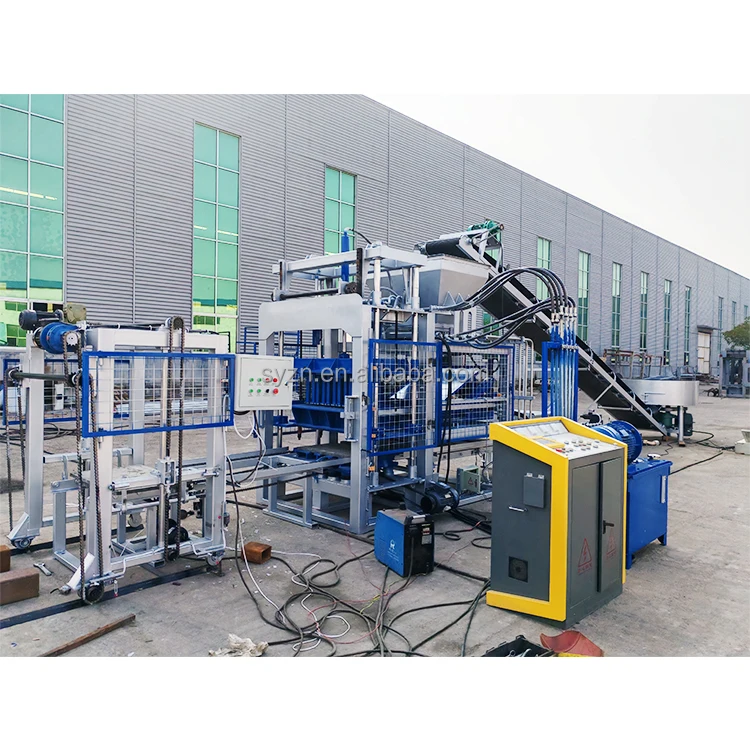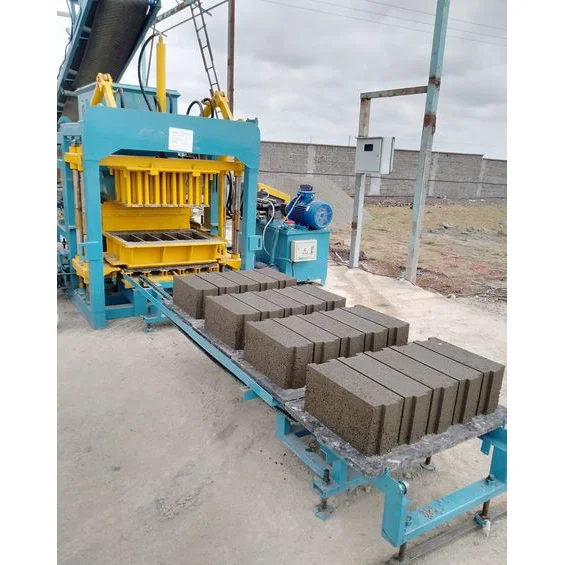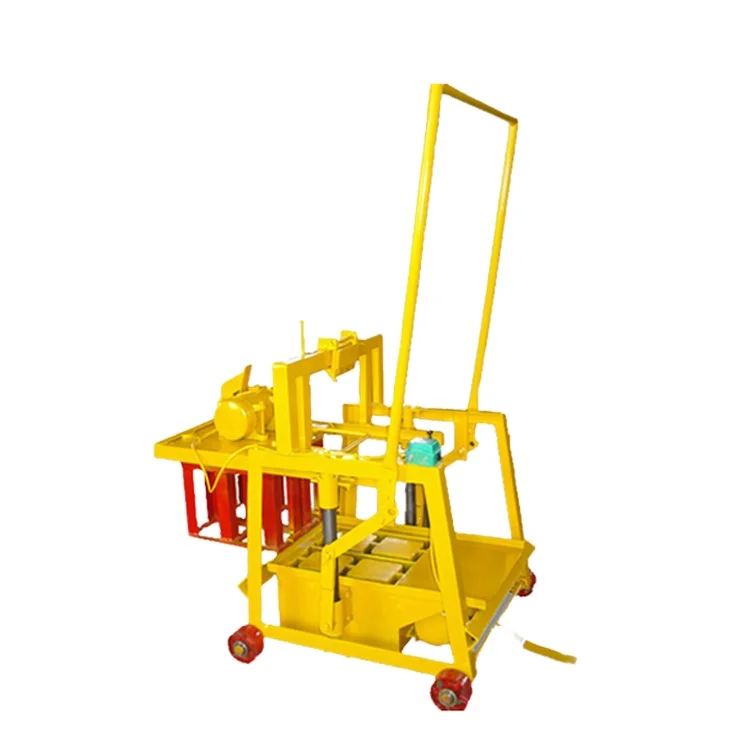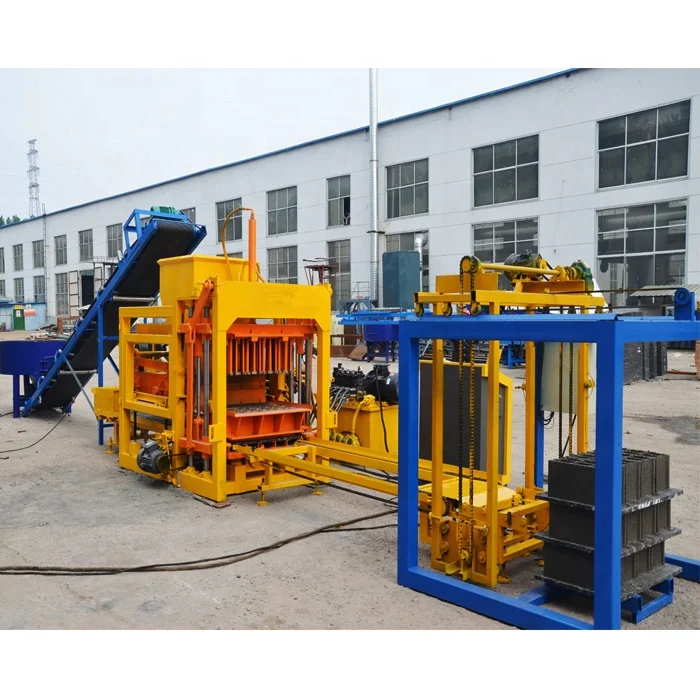

Description
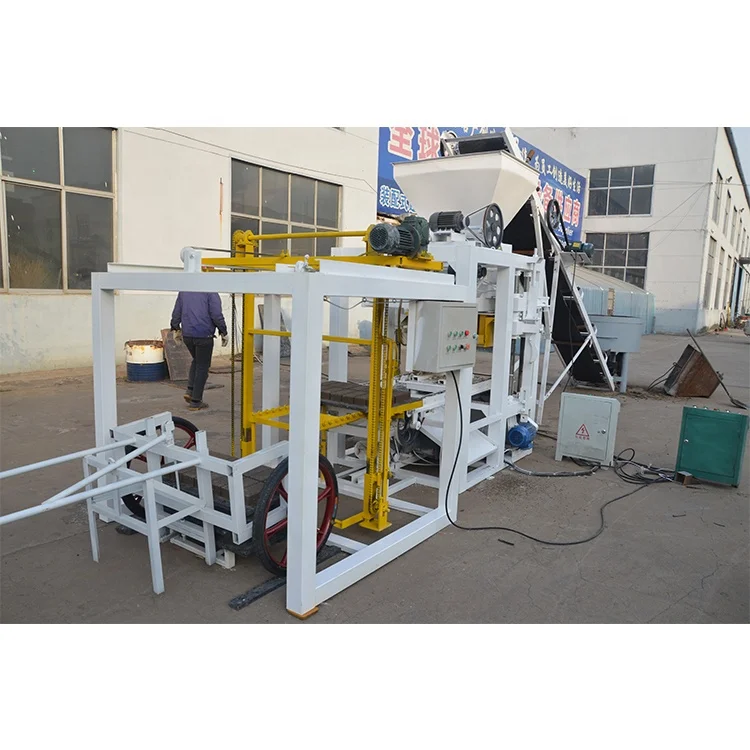
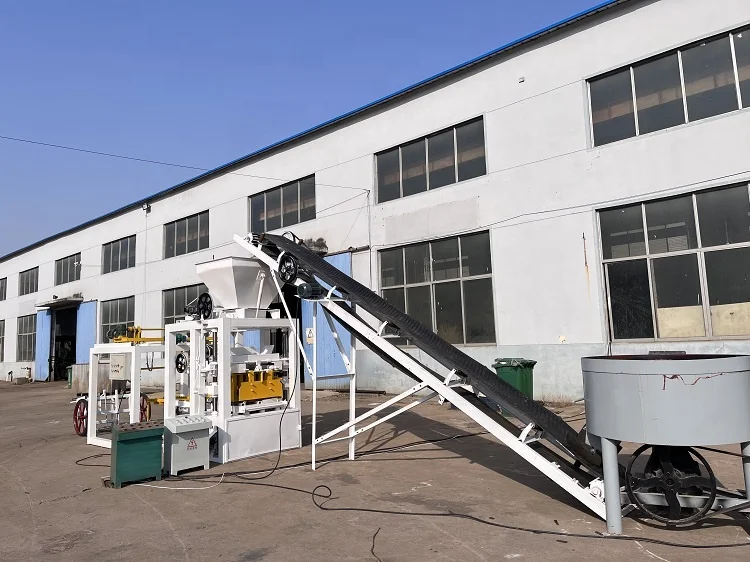
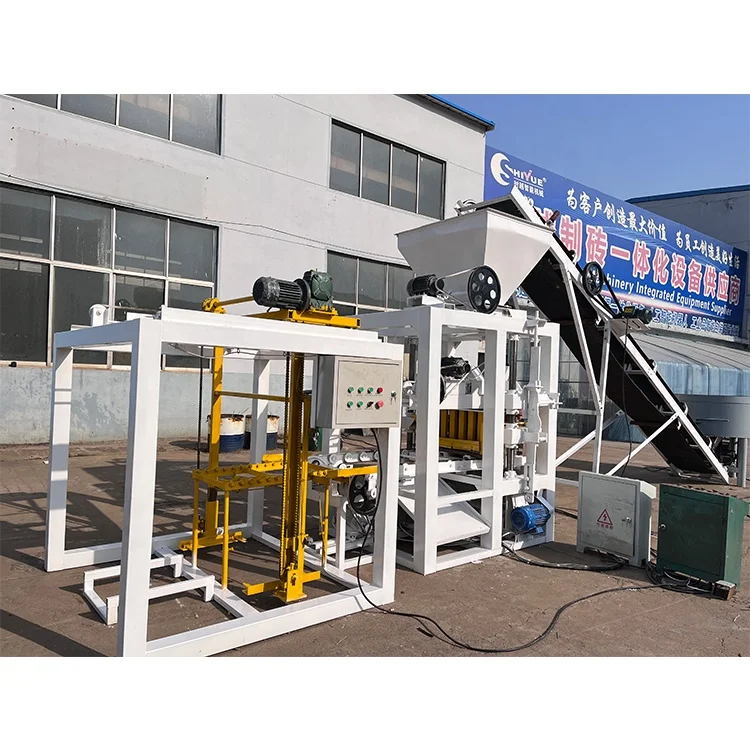
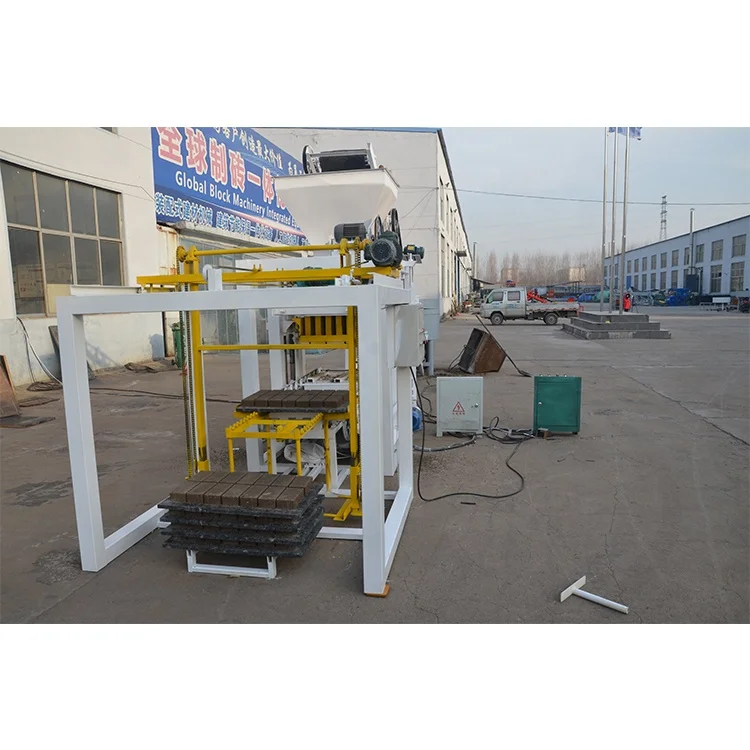
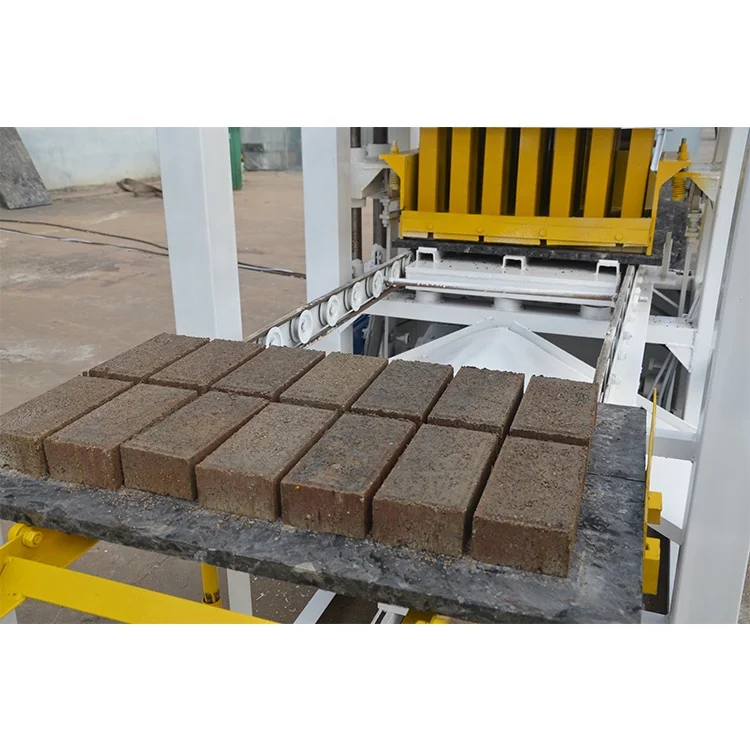
Stocked machine configuration — the QTJ4-24 ships as a complete press and pallet system, dispatched with voltage and control language already matched to your site before loading.
Technical Specifications
| Parameter | Value |
|---|---|
| Model | QTJ4-24 |
| Product Type | Stationary Concrete Block Making Machine |
| Molding Method | Mechanical vibration with pressure |
| Overall Power | 11.95 kW |
| Vibration Force | 45 kN |
| Vibration Configuration | 2×3 kW lower vibrators + 2×1.5 kW upper vibrators |
| Overall Dimensions | 3600×1700×2560 mm |
| Pallet Size | 850×450 mm |
| Molding Cycle | 24–26 s (basis not stated in source — confirm block format / material / thickness) |
| Total Mass | 2 T |
| Material Distribution | Full-automatic spiral material distribution |
| Mold Lifting Reducer | 350-type |
| Raw Materials | Cement, sand, stone |
| Voltage & Frequency | Configurable per destination site (to be confirmed before dispatch) |
| Control System | Available with PLC or relay logic (to be confirmed before order) |
| Automation Level | Semi-automatic with mechanical molding |
| Warranty | 1 year for the whole machine (excluding spare parts) |
Application Suitability
| Application | Material or Output |
|---|---|
| Hollow block production for residential wall construction | Cement, sand, and crushed stone aggregate |
| Solid block manufacturing for load-bearing structures | Dense concrete mix with local coarse aggregate |
| Interlocking brick runs for paving and landscaping | Cement-sand blend with fine aggregate |
| Small-scale paver production for municipal footpaths | Pigmented concrete mix on standard 850×450 mm pallets |
Dispatch Timing vs. Machine Spec: Why the Clock Starts at Inquiry, Not at Payment
A stocked stationary block machine in stock fast delivery only matters if the electrical and control configuration matches your site the day it arrives.
I spent years watching machines sit on dock floors because nobody confirmed the local voltage before production. One African project received a fully wired control cabinet built for 380V/50Hz, but the site ran 415V/60Hz. The motors could not start. A variable-frequency retrofit took nearly a month to source and install. Since that project, every dispatch we handle locks voltage, frequency, and panel language in writing before the first bolt is tightened [NEED_CITE: voltage and frequency standards by export market]. When you search for a stationary block machine in stock fast delivery, the real lead time includes those confirmation steps — not just the days from payment to container loading.
What "In Stock" Actually Means for the QTJ4-24
Stock availability for a stationary block machine in stock fast delivery is not a generic label — it refers to the core press assembly, vibration box, and mold-lifting reducer being pre-assembled and factory-tested. For the QTJ4-24, the mechanical frame, spiral material distribution unit, and dual-layer vibrator set are completed ahead of buyer-specific configuration. This means the longest manufacturing steps are already behind us when your order is confirmed. The remaining work — wiring the control cabinet to your voltage, programming the panel language, and matching the pallet specification to your curing racks — happens in a final assembly window that is measured in days, not weeks.
Container Loading and Machine Dismantling Arrangements
The QTJ4-24 has an overall mass of 2 T and dimensions of 3600×1700×2560 mm, which requires a clear loading plan before dispatch. The upper vibration assembly and material hopper are dismantled to reduce shipping height, then re-bolted on site using the same fastener positions. Pallets are bundled separately to avoid surface damage during transit. We photograph every crate and fastener bag before sealing the container so that your team can match each component to the assembly manual on arrival [NEED_CITE: CE machinery directive requirements for industrial equipment]. This dismantling protocol is standard for every stationary block machine in stock fast delivery we ship.
How Vibration Force, Reducer Rating, and Pallet Size Interact on the Shop Floor
The 45 kN total vibration force is delivered through four vibrators — two 3 kW units beneath the mold table and two 1.5 kW units on the upper pressure head. This split ensures the concrete settles into the mold cavity from the bottom while the top head compacts the surface, producing a block with uniform density across its height. The 350-type reducer handles the lifting load each time the mold box rises to release the freshly pressed blocks. A reducer rated too low would wear prematurely under repeated cycles, but the 350-type is sized for the QTJ4-24’s mass and cycle frequency. Pallet size at 850×450 mm dictates how many blocks fit per cycle and how those pallets stack in your curing area — if your existing forklifts and curing racks are designed for a different pallet dimension, blocks will have to be re-handled manually, adding labor and breakage risk.
What Happens When Electrical Details Are Skipped at the Quotation Stage
Skipping voltage confirmation might feel like a minor administrative step, but the consequences are entirely physical. A motor wound for the wrong frequency runs at the wrong speed, which changes the vibration force and directly affects block density. Blocks pressed under low vibration crumble during curing; blocks pressed under excess vibration segregate the aggregate, leaving weak spots. The control panel language matters equally — operators who cannot read the fault codes on the display will call for service on issues they could resolve themselves. Every one of these problems is preventable with a single confirmation document before the machine enters final assembly [NEED_CITE: voltage and frequency standards by export market].
Why Buyers Source This Model Through Our Dispatch Workflow
Block machinery is our only product line, so the press, mold, pallet, and handling equipment are specified as one matched set rather than assembled from separate vendors. We set the QTJ4-24 configuration against your actual mix design and target block format, not a catalogue default. Mold supply covers the formats your local market sells, and custom drawings are supported. Automation level is selectable — a buyer can start with the semi-automatic QTJ4-24 today and add pallet feeding or stacking automation later without replacing the press. Dispatch timing is realistic because the base machine is pre-built; what remains is buyer-specific electrical and control work, which is the fastest part of the assembly sequence.
Documentation & Verification
- Line layout with capacity calculation stating the block format assumed for the QTJ4-24
- Machine specification sheet covering vibration force, pallet size, and reducer type
- Voltage and control language confirmation document signed before final assembly
- Factory test record on your target block format and mix before dispatch
- Packing photographs of dismantled components and fastener kits before container sealing
- Customs documentation package matched to destination port requirements
Installation, Commissioning & Support
- Foundation pad must be level and cured to support the QTJ4-24’s 2 T mass plus dynamic vibration load
- Power supply circuit must match confirmed voltage and frequency with dedicated breaker rated above 11.95 kW draw
- Upper vibration module re-bolted and aligned to factory jig positions during on-site reassembly
- First production run supervised to set vibration duration and pressure against your local aggregate mix
- Operator training covers mold change procedure, spiral feeder adjustment, and fault code recognition
- Wear parts list with reorder codes for vibrator mounts, reducer seals, and mold liners
What We Need from Your Side Before Quoting Dispatch Timing
Send us the block formats your market actually sells, the daily output you need for each format, and the voltage and frequency at your site. If you already have curing racks, forklifts, or pallets on the floor, share those dimensions so the 850×450 mm pallet spec can be verified or adjusted. Tell us the control panel language your operators read so the display is configured before the machine enters the container.
Frequently Asked Questions
Q: Is the QTJ4-24 currently in stock or built to order?
A: The base mechanical assembly — frame, vibration box, spiral feeder, and 350-type reducer — is pre-built and held in our workshop. Buyer-specific items including the control cabinet wiring, panel language, and pallet specification are completed in a final assembly window after your voltage and format details are confirmed. This structure is what enables a stationary block machine in stock fast delivery timeline.
Q: What is the dispatch lead time and estimated arrival at destination port?
A: Once electrical and control details are confirmed in writing, the final assembly and factory test take a defined number of working days. Container loading and customs clearance follow. Ocean transit time depends on the destination port and current shipping schedules, so we provide an arrival estimate after the booking is confirmed with the carrier.
Q: How is the machine dismantled and loaded into the container for shipment?
A: The upper vibration assembly and material hopper are removed to reduce the overall height for container clearance. All fasteners are bagged and labeled. Pallets are bundled separately to protect their surfaces. Every package is photographed before the container doors close, and those images are shared with your receiving team for verification on arrival.
Q: Which voltage and frequency configurations are available for immediate dispatch?
A: The QTJ4-24 control cabinet can be wired for the voltage and frequency standard at your destination site. Common industrial configurations are supported, but the exact match must be confirmed before final assembly begins. This confirmation is a required step in our dispatch process and the reason we ask for electrical details at the inquiry stage rather than at shipment.