Description
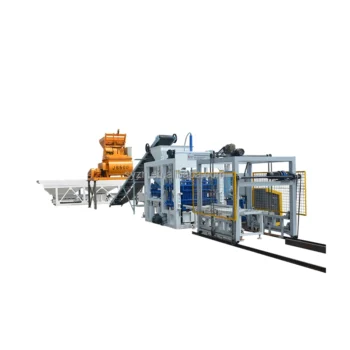
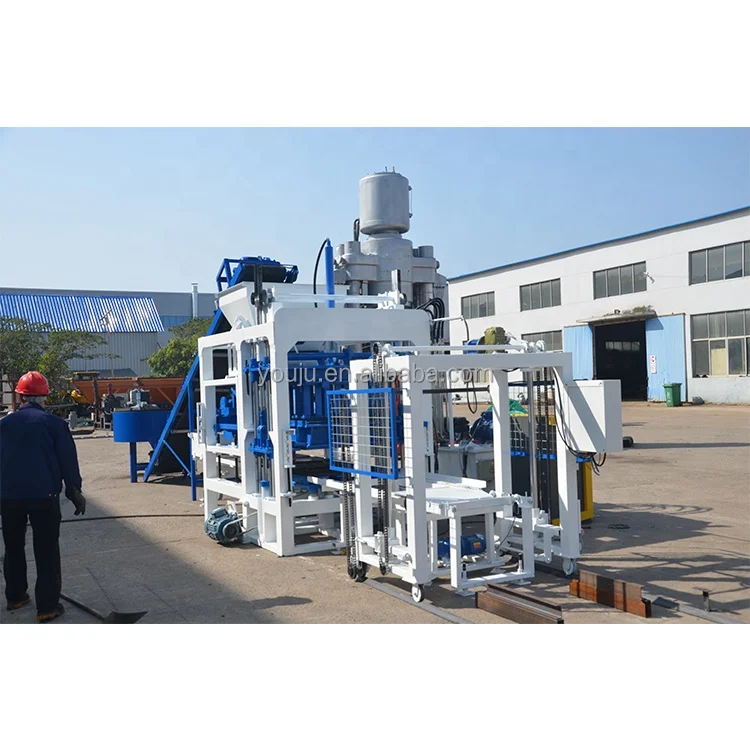
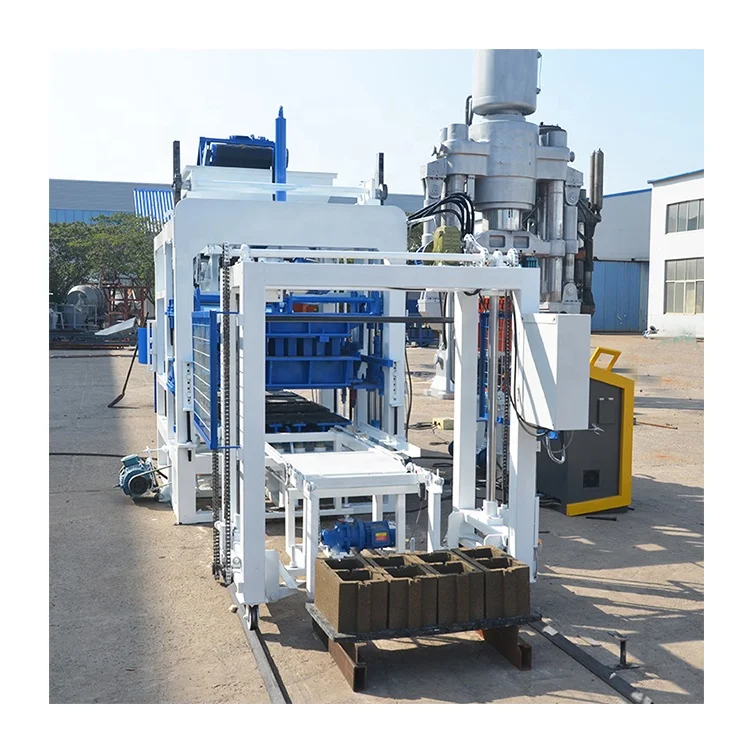
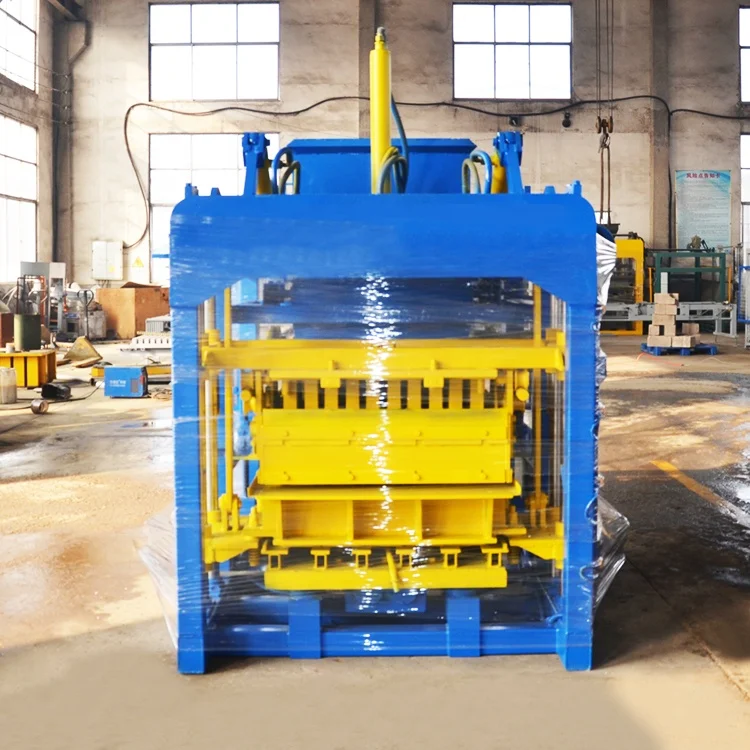
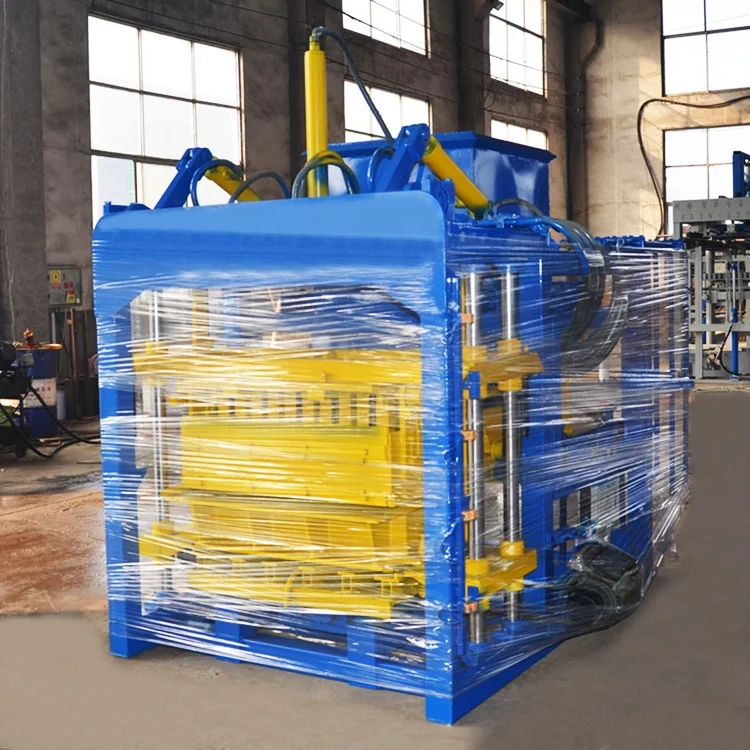
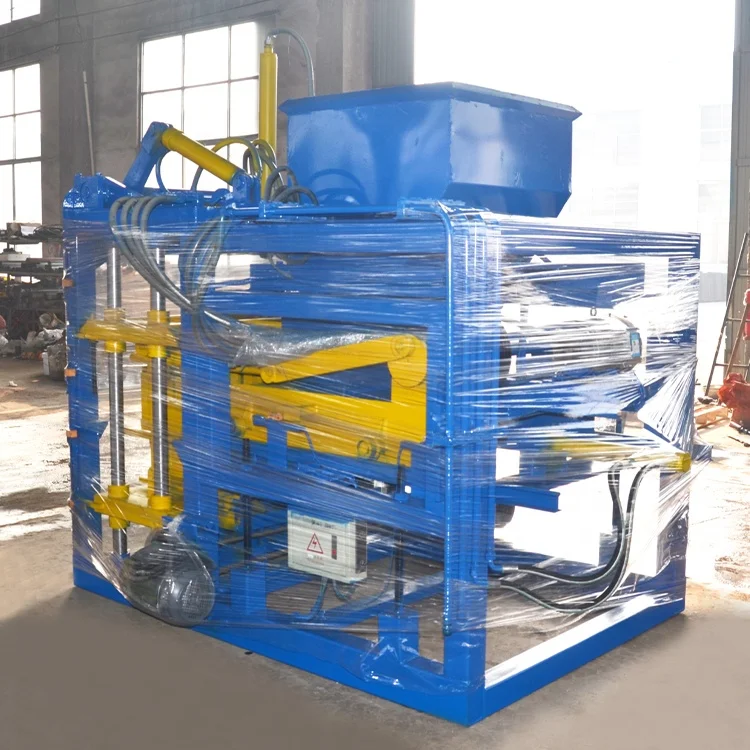
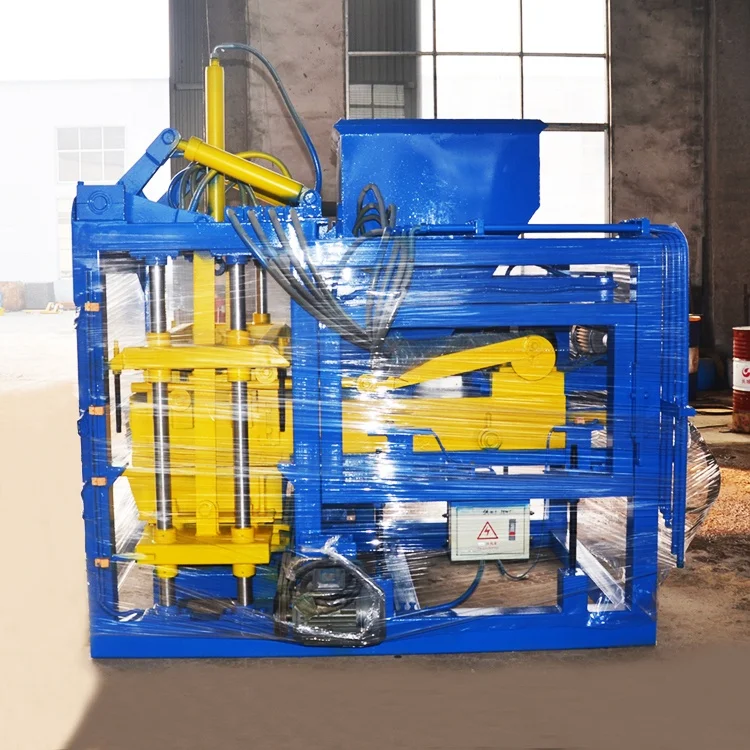
Stock readiness verified — every QTJ4-25 block making machine leaving our yard has voltage, frequency, and control language confirmed in writing before it is loaded into the container.
Technical Specifications
| Parameter | Value |
|---|---|
| Model | QTJ4-25 |
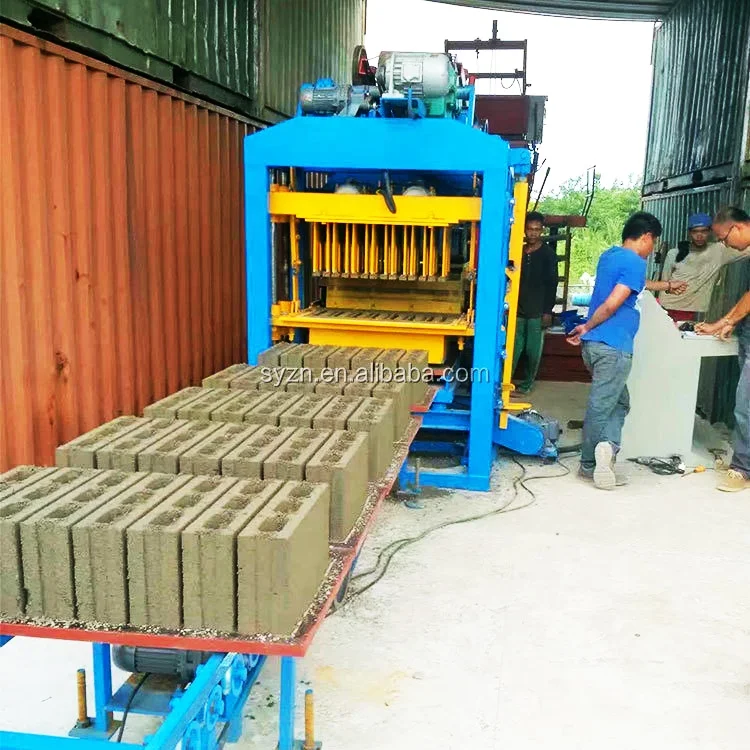
| Product Type | Semi-Automatic Concrete Block Making Machine |
| Overall Dimensions (L×W×H) | 6400×1500×2700 mm |
| Molding Cycle | 25 s |
| Vibration Frequency | 2800–5100 r/min |
| Exciting Power (Vibration Force) | 60 kN |
| Total Power | 17.9 kW |
| Mixer Model | JQ350 |
| Pallet Size | 850×550×20 mm |
| Net Weight | 2500 kg |
| Automation Level | Semi-automatic |
| Hydraulic System | Equipped with hydraulic station |
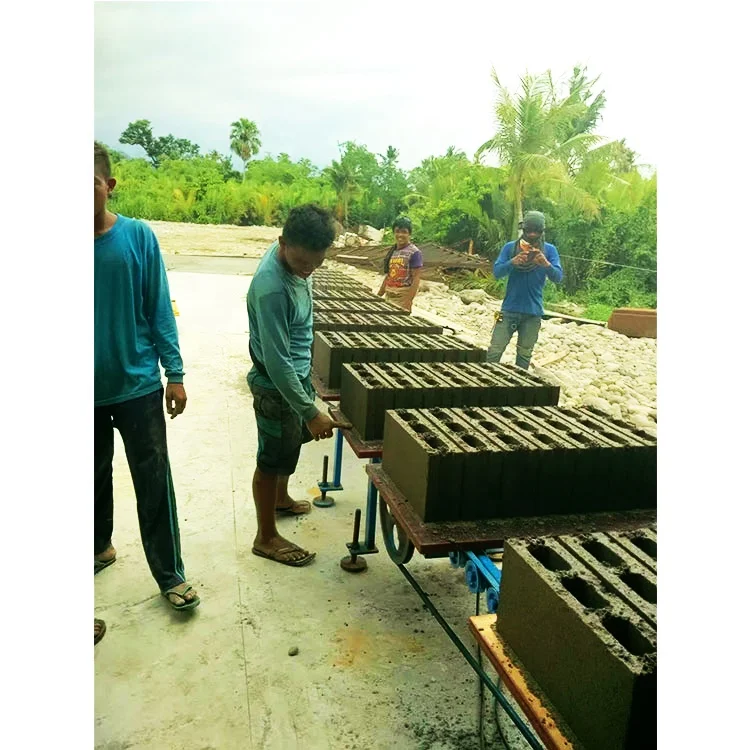
| Applied Products | Concrete hollow blocks (8 inch, 6 inch), solid bricks |
| Output Capacity (390×190×190 mm hollow block) | 4 pcs/mould, 480 pcs/h, 3800 pcs/8hr |
| Output Capacity (400×150×200 mm hollow block) | 5 pcs/mould, 600 pcs/h, 4800 pcs/8hr |
| Output Capacity (240×115×53 mm solid brick) | 18 pcs/mould, 2100 pcs/h, 17000 pcs/8hr |
| Raw Materials | Crushed stones, sand, cement, dust, fly ash |
| Voltage & Frequency | Configurable to destination (basis to be confirmed) |
| Control System Language | Configurable to destination (basis to be confirmed) |
Application Suitability
| Application | Material or Output |
|---|---|
| On-site hollow block production for housing projects | Crushed stone, sand, cement mixes producing 390×190×190 mm and 400×150×200 mm blocks |
| Small to medium block plant operation | Fly ash, sand, and cement blends for 8-inch and 6-inch hollow blocks |
| Solid brick manufacturing for local masonry markets | Sand, cement, and dust producing 240×115×53 mm bricks |
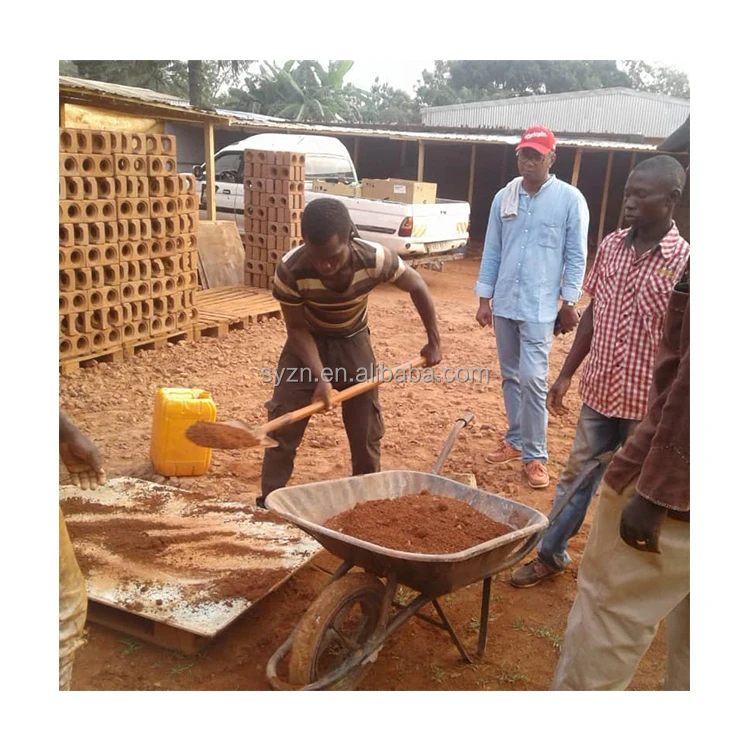
| Entrepreneur-led first block plant launch | Locally sourced aggregates with semi-automatic cycle operation |
Why Voltage Confirmation Must Happen Before the Container Is Sealed
Every QTJ4-25 block making machine in stock ships only after the buyer’s local voltage, frequency, and control panel language are written into the dispatch checklist.
I have watched a container arrive at a port in West Africa and sit there for three weeks because the control cabinet was wired for 380V/50Hz while the site had 440V/60Hz. The contractor had to source a step-down transformer locally, and the whole housing project schedule slipped. That delay had nothing to do with the press itself — it came from a skipped confirmation step during ordering [NEED_CITE: voltage and frequency standards by export market]. A QTJ4-25 block making machine in stock is useless if it cannot be powered on the day it is unpacked.
Dispatch Timing That Matches Your Project Calendar
When a construction contractor needs hollow blocks on-site before ground-breaking, waiting eight weeks for a factory build is not an option. The QTJ4-25 block making machine in stock is dismantled into a loading configuration that fits a standard 20GP container, and the dispatch lead time is quoted in writing before payment. The machine, mixer, and pallet set leave the yard as a matched unit so nothing is back-ordered after arrival.
Pallet and Container Loading Details Upfront
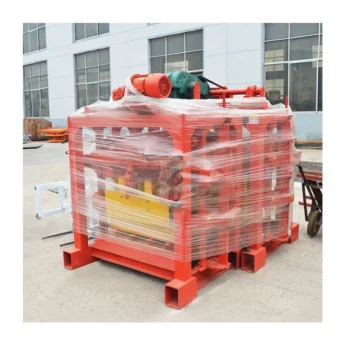
Container loading is not an afterthought. The QTJ4-25 is broken down so the main frame, hydraulic station, and JQ350 mixer each have a secured position inside the 20GP. Pallet size 850×550×20 mm is chosen so the curing racks and forklifts at the destination can handle them without modification. Packing photographs are sent to the buyer before the container doors close [NEED_CITE: container loading standards for heavy industrial machinery].
How 60 kN Vibration and Hydraulic Pressure Shape Every Block
The vibration system runs between 2800 and 5100 r/min, and the hydraulic station holds constant pressure throughout the 25-second molding cycle. Together they compact the mix — whether crushed stone or fly ash — into a dense block with consistent wall thickness. The 60 kN exciting force is matched to the semi-automatic format, meaning the operator feeds the pallet manually but the pressing stage is fully controlled by the hydraulic circuit. Changing from a 390×190×190 mm hollow block mould to a 240×115×53 mm solid brick mould shifts the output profile, and the vibration frequency should be adjusted to suit the new format’s mass and aggregate gradation.
What Happens When Pallet Size Is Chosen Without Checking Your Curing Yard
I once coordinated a shipment where the buyer already had a fleet of forklifts fitted for 900×600 mm pallets. The standard pallets shipped with the machine were 850×550 mm, and the forks could not slide underneath without scraping the block edges. The contractor had to order a separate set of narrower forks, and two weeks of production were spent hand-carrying pallets off the line [NEED_CITE: pallet handling compatibility in block production]. Always cross-check pallet dimensions against existing curing racks and material-handling equipment before confirming the order.
Why Buyers Choose This Source for Stock Dispatch
Block machinery is the single production focus here, so the press, mould, pallet, and handling items are specified as one system rather than sourced from separate vendors. Every stocked QTJ4-25 is matched with moulds for the formats that sell in the buyer’s region. The automation level is semi-automatic, allowing a first-time plant owner to start with manual pallet handling and later add stacking equipment without replacing the press. Factory test records are generated on the buyer’s target block format before the machine is crated. Installation guidance covers the 17.9 kW total power requirement so the site electrician can prepare the dedicated circuit before the container arrives.
Documentation & Verification
- Factory test record on the buyer’s specified hollow block or solid brick format before dispatch
- Machine specification sheet listing confirmed voltage, frequency, and control language
- Pallet specification sheet matching the 850×550×20 mm size shipped with the machine
- Mould drawing and format list for every mould included in the stock package
- Packing photographs sent before container doors are sealed
- Hydraulic and electrical schematic for the on-site maintenance team
Installation, Commissioning & Support
- A level concrete pad sized for the 6400×1500 mm footprint is required before the machine arrives
- A dedicated power circuit matching the confirmed voltage must supply the 17.9 kW total load
- The hydraulic station is shipped pre-filled and tested; connections are re-joined on site
- First-run commissioning includes cycle timing verification on the buyer’s chosen block format
- Operator training covers mould change procedure and vibration frequency adjustment
- Wear parts list identifies hydraulic seals and vibration motor bearings for first reorder
What We Need From You Before Dispatch
To release a QTJ4-25 from stock, share the block formats you plan to produce first and the daily output you need. Confirm the local voltage and frequency at the installation site along with the preferred control panel language. If you already have pallets, forklifts, or curing racks on site, send the dimensions so the shipped pallets will match your existing handling setup.
Frequently Asked Questions
Q: Which QTJ4-25 units and moulds are currently in stock and ready to ship?
A: Standard QTJ4-25 machines are held in stock along with common hollow block and solid brick moulds. Before payment, request a written confirmation listing the exact model, the moulds included, and the dispatch date. Inventory moves quickly, so early confirmation locks your unit.
Q: How is the container loading handled and what is the dispatch lead time?
A: The machine is dismantled into a loading plan that fits a 20GP container, with the main frame, mixer, and hydraulic station each secured. Dispatch lead time is quoted in writing and depends on current stock position and destination port scheduling.
Q: How do I confirm voltage and frequency for my country before shipment?
A: Provide your site voltage, frequency in Hz, and the control panel language you need. These details are written into the order contract and verified during the factory test. The machine does not leave the yard until this confirmation is signed off.
Q: What is the estimated arrival time from dispatch to my port?
A: Sea transit time depends on the destination port and current shipping lane schedules. Once the container is booked, the freight forwarder provides an estimated arrival date. We share the booking confirmation and container number so you can track the shipment directly.
Q: Are pallets included and how many ship with the machine?
A: Pallets sized 850×550×20 mm ship with the QTJ4-25 as part of the standard stock package. The exact quantity depends on the configuration selected. Confirm pallet material and count during the ordering stage so they match your curing area capacity.