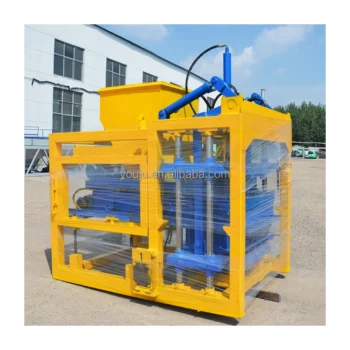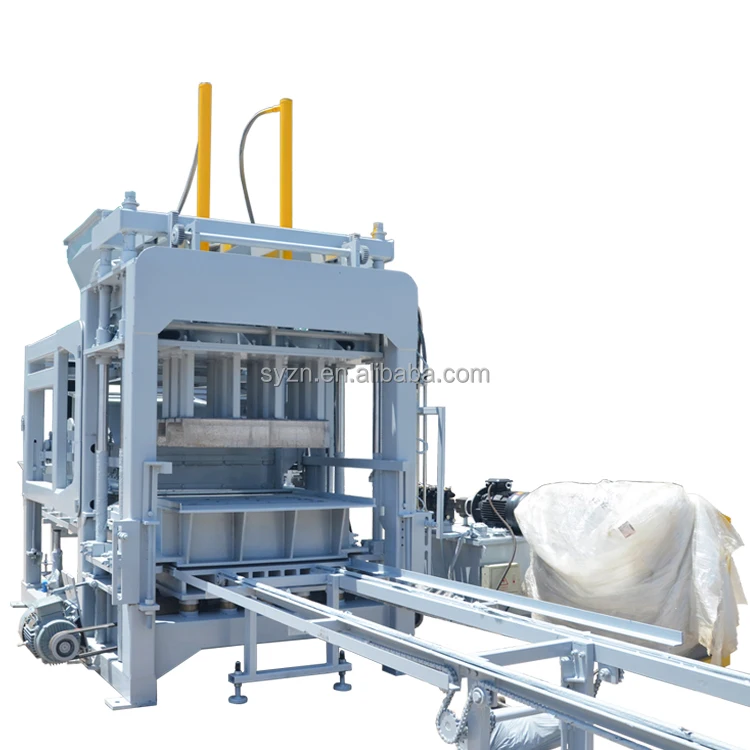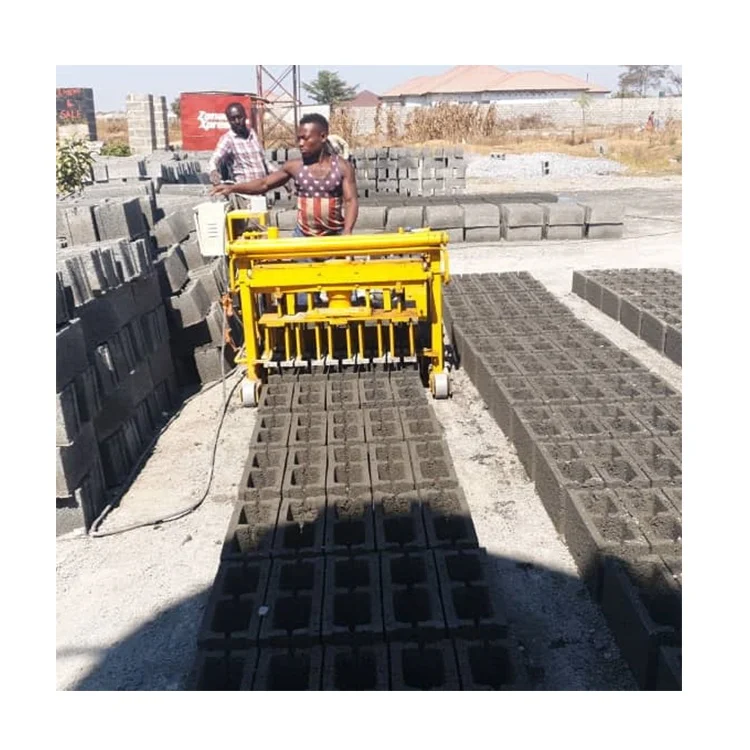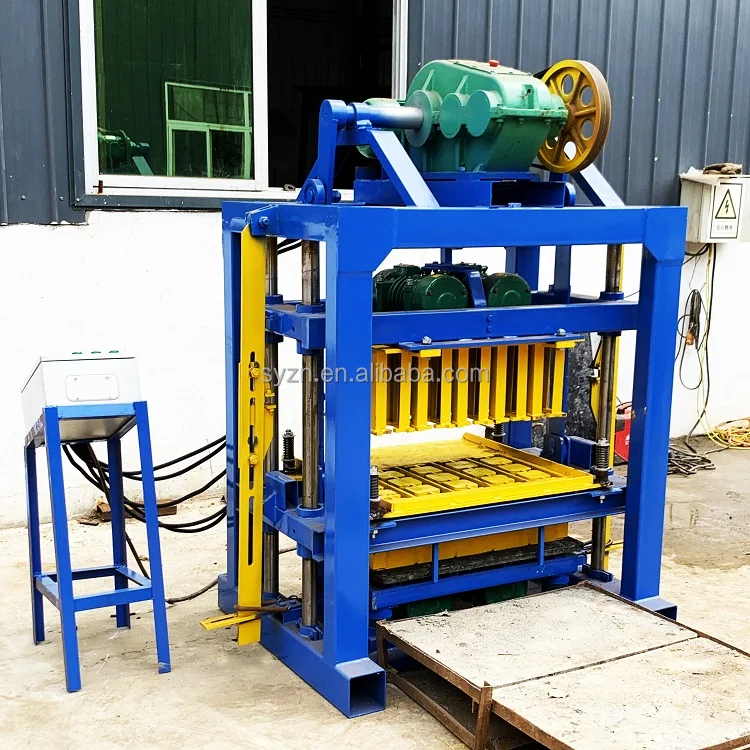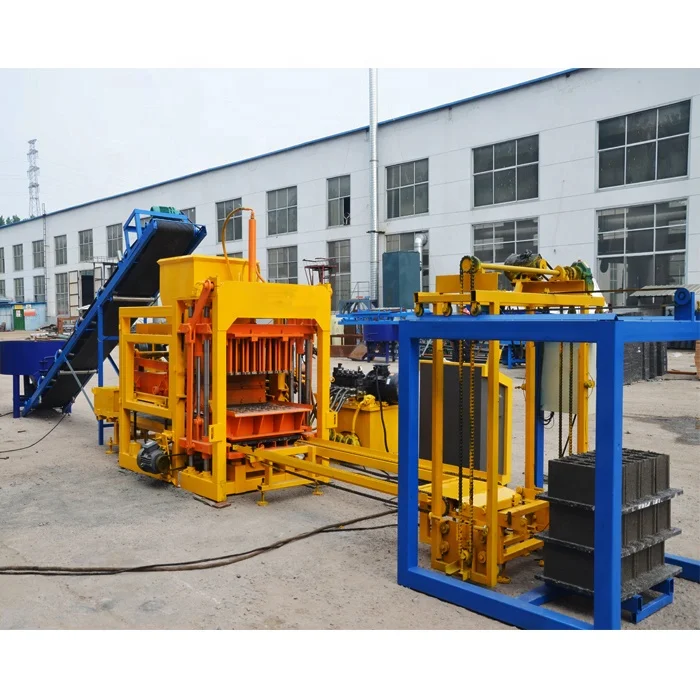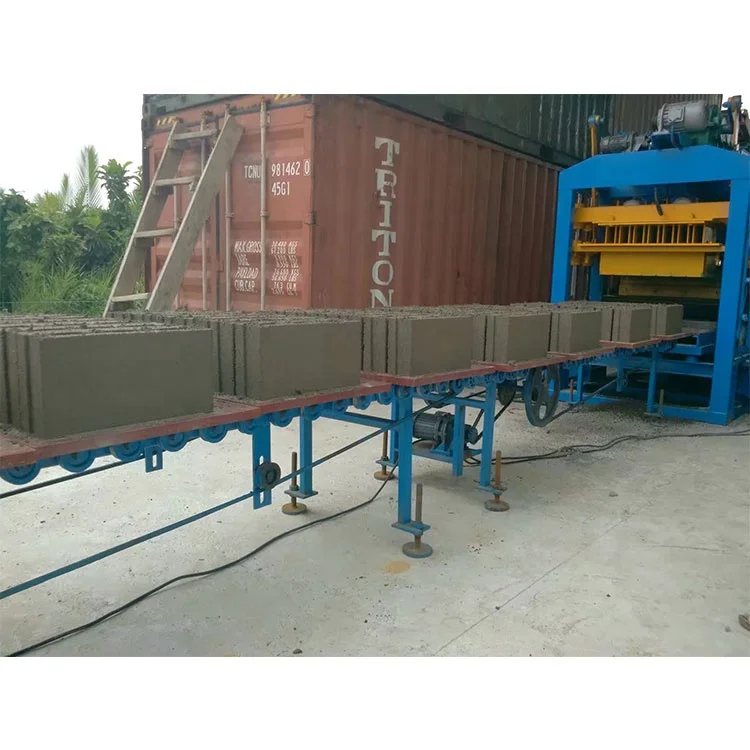
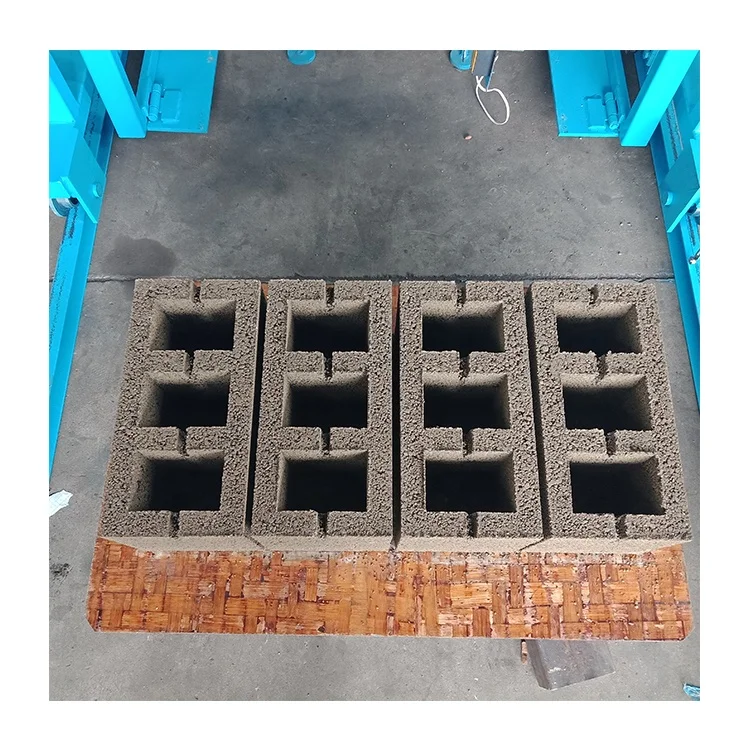
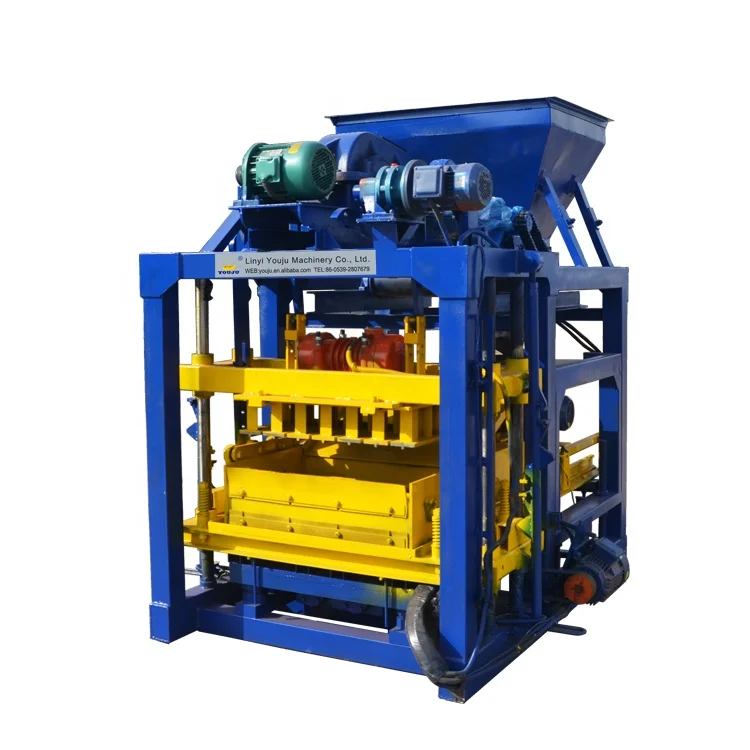
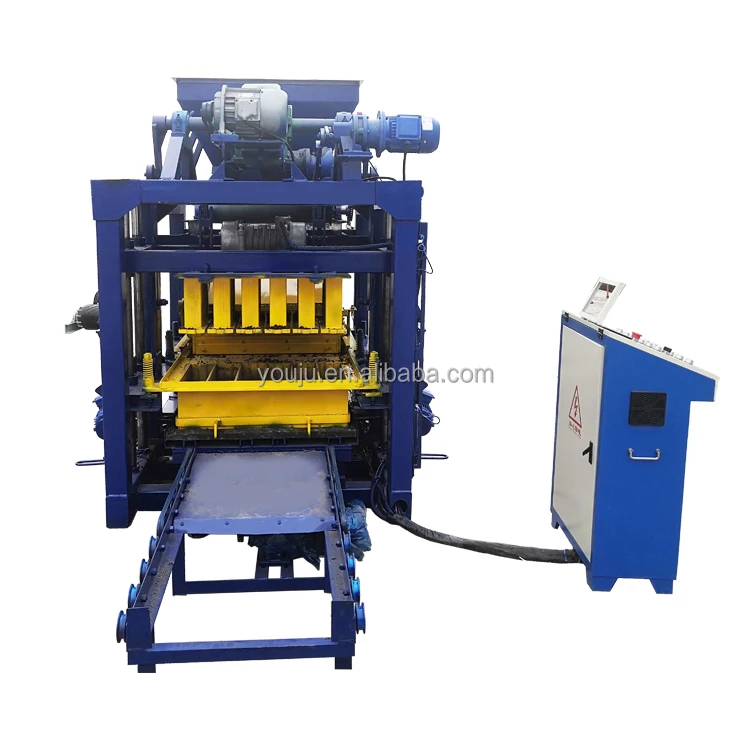
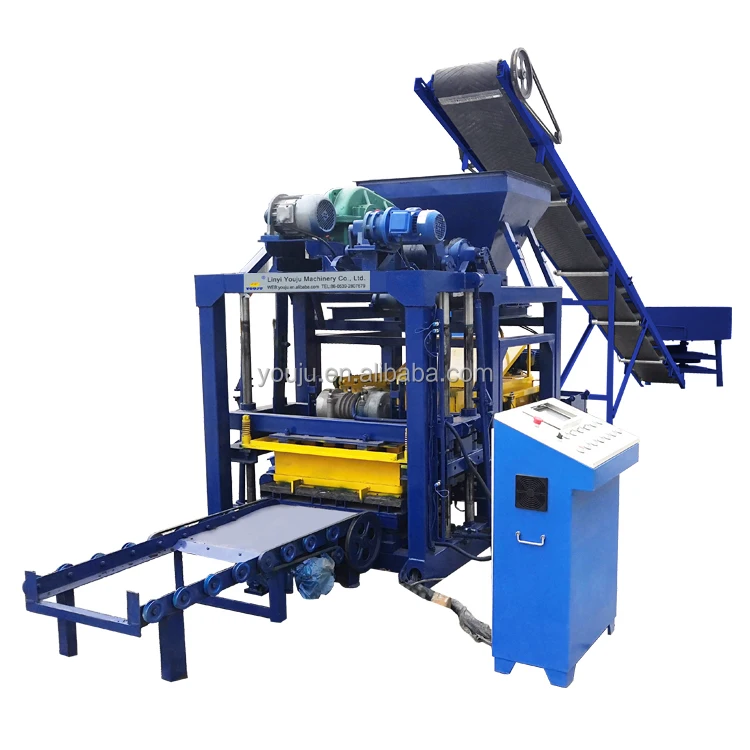
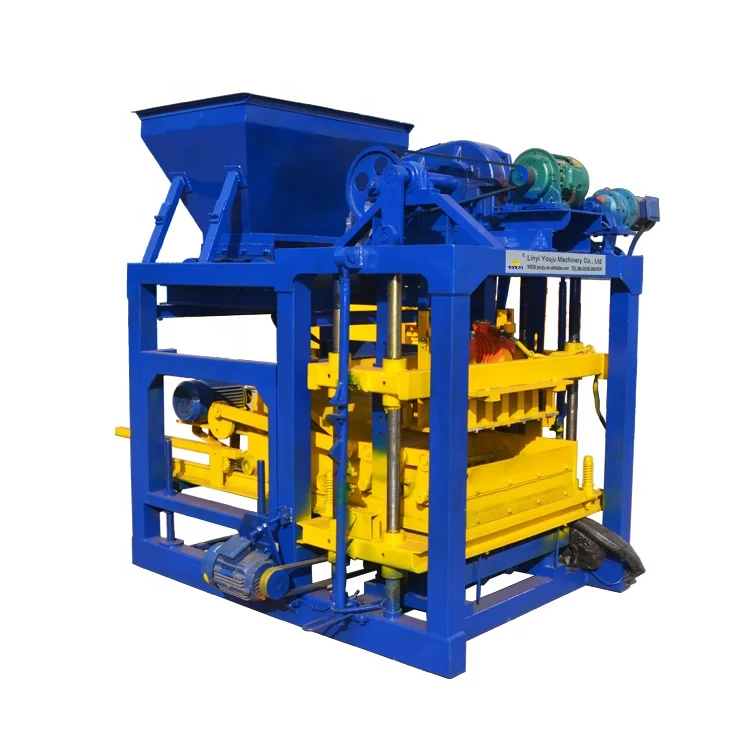
Description
Stock Availability Focus — The QTJ4-25 semi-automatic block machine is held as a stocked model so dispatch lead times stay predictable for buyers working against a project deadline.
Technical Specifications
| Parameter | Value |
|---|---|
| Product Type | Semi-Automatic Concrete Block Making Machine |
| Model | QTJ4-25 |
| Overall Dimensions (L×W×H) | 3000×1800×2680 mm |
| Total Mass | 3.5 T |
| Total Power | 16.58 kW |
| Vibration Force | 60 kN |
| Vibration Form | Platform vibration |
| Vibration Frequency | 2800–4500 r/min |
| Pallet Size | 850×480 mm |
| Molding Cycle | 25 s |
| Demolding Method | Mechanical |
| Guide Column | Four guide columns, overlong guide design |
| Frame Material | National standard manganese steel, chrome-plated |
| Recommended Factory Area | 300 m² |
| Output Capacity (Hollow Block) | 580 pcs/h (basis: 400×200×200 mm, 4 pcs/mould) |
| Daily Output (Hollow Block) | 4640 pcs/day (basis: 400×200×200 mm, 8-hour shift) |
| Daily Output (Solid Brick) | 26400 pcs/day (basis: 240×115×53 mm, 8-hour shift) |
| Voltage & Frequency | To be confirmed for target market |
| Control System | To be confirmed (PLC or relay) |
Application Suitability
| Application | Material or Output |
|---|---|
| Hollow block production for masonry walls | Crushed stone, sand, cement, fly ash, gravel, slag |
| Solid brick manufacturing for load-bearing structures | Cement-bound aggregate mixes with local sand |
| Paving and interlocking block production | Colored concrete with fine aggregate gradation |
| On-site block production for building contractors | Site-sourced crushed stone and cement blends |
| Curbstone and kerb production | Dense concrete mixes with coarse aggregate |
What "In Stock" Really Means When You Need a QTJ4-25 Block Machine in Stock Fast Delivery
Confirming current stock status and dispatch timing is the single most important step before placing an order against a construction deadline.
I once watched a contractor in East Africa lose three weeks of production because the machine he ordered was listed as available but still needed a production run. The project handover date did not shift. A QTJ4-25 block machine in stock fast delivery promise only matters if the machine is physically built, tested, and ready to load into a container — not sitting as a pile of parts waiting for assembly [NEED_CITE: typical lead times for block machine orders listed as in stock]. When the machine is genuinely ready, the gap between order confirmation and container loading shrinks to verification and paperwork rather than manufacturing.
How Stocked Inventory Changes Your Project Timeline
A buyer with a housing project deadline cannot absorb an eight-week build cycle on top of ocean freight. When a QTJ4-25 block machine in stock fast delivery is confirmed, the planning horizon compresses. The buyer knows the machine dimensions — 3000×1800×2680 mm at 3.5 tonnes — and can arrange container loading, shipping, and site preparation on a defined schedule rather than an estimate. The pallet size of 850×480 mm is also fixed and known, so the curing area layout at the destination site can be drawn up while the machine is still in transit.
Verifying Dispatch Readiness Before You Commit
Stock status is not a single checkbox. It means the frame is welded and chrome-plated, the four guide columns are fitted, the vibration motor is wired and tested, and the mould for your chosen block format is on the shelf. A buyer ordering a QTJ4-25 block machine in stock fast delivery should ask for factory test records and packing photographs before the deposit is wired. These documents prove the machine ran through a production cycle under load, not just that it exists somewhere in a warehouse [NEED_CITE: factory test documentation standards for block making equipment].
Matching the Vibration Platform to Your Aggregate Source
The 60 kN vibration force delivered through platform vibration at 2800–4500 r/min is designed for a range of concrete mixes. However, the actual density and block strength depend on whether the local aggregate gradation matches the vibration profile. A mix with too much fine material will over-consolidate; a mix with coarse gravel may not settle fully in a 25-second cycle. This is why the raw material sample matters even for a stocked machine — the machine is ready, but the mix design still needs to fit.
Reading the Capacity Numbers Without Getting Misled
The QTJ4-25 carries rated output figures that change dramatically depending on the block format loaded into the mould. At 400×200×200 mm hollow blocks with four cavities per mould, the cycle delivers 580 pieces per hour, translating to roughly 4,640 pieces across an 8-hour shift. Switch the mould to 240×115×53 mm solid bricks — 21 pieces per cycle — and the same machine reaches 26,400 pieces per day on paper. The mechanical demolding system and manual pallet handling mean the real daily output also depends on how fast operators feed empty pallets and remove filled ones. The vibration frequency range of 2800–4500 r/min allows adjustment for different mix stiffness, but the operator must dial that in during the first shift. The 16.58 kW total power draw is modest, which keeps electrical infrastructure requirements manageable for a 300 m² starter plant [NEED_CITE: electrical supply requirements for small-scale block plants in developing markets].
The Cost of Skipping the Voltage Check
I learned this the hard way with a shipment to Morocco — a machine dispatched without final confirmation of the destination voltage. The local grid ran at a different standard, and the entire production line sat idle for over twenty days while a transformer was sourced. Every QTJ4-25 block machine in stock fast delivery order now goes through a mandatory voltage and frequency check matched to the buyer’s country before it leaves the floor. The cost is not just the transformer; it is the crew standing around, the curing racks empty, and the project manager answering calls from the client every morning. This is a five-minute conversation that prevents a three-week shutdown [NEED_CITE: voltage and frequency standards by export market].
Why Buyers Choose This Source for Stocked Machines
Shandong Shiyue Intelligent Machinery Co., Ltd focuses exclusively on block making machinery, which means the QTJ4-25 is not one item in a catalogue of unrelated equipment — the machine, mould, pallet, and handling accessories are specified as a matched set. Moulds are designed to produce the block formats that sell in the buyer’s local market, and custom drawings are available when standard formats do not fit. Pallet dimensions are checked against the buyer’s existing curing area and forklift before dispatch. The automation level is honest about what it includes — mechanical demolding and manual pallet handling — so there are no surprises when the container opens. Installation support and operator training are part of the handover, not an optional extra.
Documentation & Verification
- Factory test record showing cycle time and block density on your specified format
- Voltage and frequency confirmation sheet matched to destination grid
- Pallet specification with dimensions and material grade for curing compatibility
- Packing photographs taken before container loading at the factory
- Operation and maintenance manual with wear parts and mould replacement list
- Hydraulic and electrical schematic for local service technicians
Installation, Commissioning & Support
- Level concrete floor required across 300 m² minimum, with drainage for curing runoff
- Dedicated power circuit matching confirmed voltage and frequency for 16.58 kW total draw
- Machine ships assembled with removable components; reassembly on four guide columns at site
- First-run commissioning includes vibration frequency tuning to your local aggregate mix
- Operator training covers mould change procedure and mechanical demolding adjustment
- Wear parts list and mould inventory provided for first replacement cycle planning
What We Need From You to Move Forward
To give you an accurate dispatch date and container plan, send us your target block format with dimensions, the local voltage and frequency at your site, and the pallet size your existing curing racks accept. If you already have a forklift, share its fork width and load rating so we confirm the 850×480 mm pallets will work on arrival. Let us know your raw material sources — crushed stone type, sand gradation, cement grade — so the vibration settings can be preset before the machine ships.
Frequently Asked Questions
Q: Is the QTJ4-25 currently in stock, and how soon can it ship?
A: Stock status is confirmed per order. Once voltage, frequency, mould format, and pallet specification are verified, the machine can move from factory test to container loading. The exact dispatch window depends on the current inventory cycle and documentation preparation, not on a manufacturing build time. We provide packing photographs and test records before the container is sealed.
Q: Will the 850×480 mm pallet fit my existing curing area and forklift?
A: This is one of the first things to verify. Measure your curing rack slot width and depth, then check your forklift fork spacing and load capacity against the loaded pallet weight. If dimensions do not align, we discuss alternative pallet sizes or curing rack adjustments before the machine ships, avoiding a situation where blocks have nowhere to cure on arrival.
Q: Has the voltage and frequency been matched to my country’s grid standard?
A: This is confirmed during the order process and documented before dispatch. I once saw a machine sit idle for weeks because the voltage was assumed rather than checked. Every shipment now carries a written voltage and frequency confirmation matched to the destination market, so the electrical connection is the first thing completed, not the last problem discovered.
Q: How long does a mould change take, and will it reduce my daily output?
A: The QTJ4-25 uses mechanical demolding with four guide columns, which keeps the changeover straightforward. The actual time depends on the operator’s familiarity with the procedure. For a plant running one format most days and switching occasionally, the downtime is manageable within a standard shift. For frequent format changes, we discuss the workflow during operator training.
Q: What documents arrive with the machine for customs and setup?
A: Each shipment includes packing photographs, factory test records, an operation and maintenance manual, a wear parts and mould list, hydraulic and electrical schematics, and customs documentation support. The voltage confirmation sheet and pallet specification are also included so local electricians and site planners have the reference data they need without requesting it after arrival.