

Description
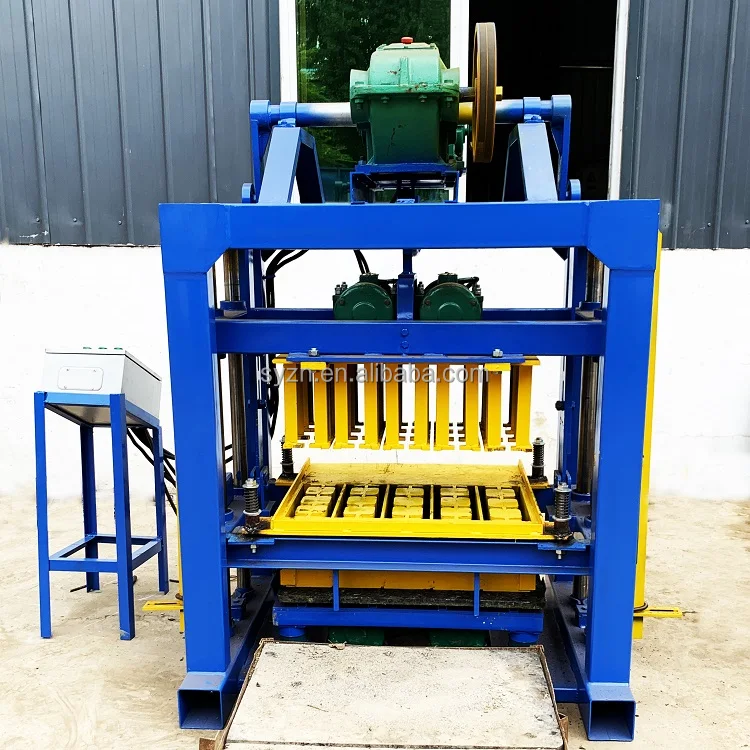
Standardized Dispatch Logic — the QTJ4-25 stays in the dispatch queue as a complete host-and-mixer set so buyers facing project deadlines can lock a confirmed loading date before the vessel booking closes.
Technical Specifications
| Parameter | Value |
|---|---|
| Model | QTJ4-25 |
| Product Type | Stationary Concrete Block Making Machine |
| Rated Power | 17.9 kW |
| Overall Dimensions (L×W×H) | 6400×1500×2700 mm |
| Net Weight | 2500 kg |
| Molding Cycle | 25 s |
| Vibration Force | 60 kN |
| Vibration Frequency | 2800 r/min |
| Pallet Size | 850×550×20 mm |
| Output Capacity | 960 pcs/h, 7680 pcs/day (based on 400×200×200 mm hollow block, 4 pcs/mould) |
| Mould Format | Hollow, solid, paver, curbstone (4/5/6/8 inch) |
| Automation Level | Semi-automatic |
| Control System | To be confirmed per buyer market |
| Voltage & Frequency | To be confirmed per buyer market |
| Configuration Included | Host machine 1 set, block mould 1 set, JQ350 mixer |
| Pallet Material | Fiberglass optional / wooden pallet acceptable |
Application Suitability
| Application | Material or Output |
|---|---|
| Hollow block production for masonry walls | Crushed stone, sand, cement, water |
| Solid block production for load-bearing structures | Dense aggregate blended with Portland cement |
| Paving block production for walkways and yards | Fine aggregate with pigment and cement binder |
| Kerbstone production for road edges | Coarse aggregate with high cement ratio |
| On-site block production for housing projects | Locally sourced sand and gravel with cement |
Why the Loading Date Matters More Than the Cycle Time
A stationary block machine fast delivery schedule protects the critical path of your project.
When a contractor is working against a construction milestone, the difference between a machine that leaves the factory in a standard dispatch window and one that sits in a prolonged production queue can determine whether the block plant starts producing before the wet season arrives. I have watched project teams lose weeks because the supplier quoted an attractive molding cycle but never confirmed whether the exact voltage configuration was already assembled and tested. The QTJ4-25 is held as a standardized configuration, meaning the host machine, JQ350 mixer, and a matched mould set move through the loading sequence without waiting for custom fabrication. Buyers who need a stationary block machine in stock benefit from this approach because the factory test record is generated on a known setup, not on a unit still waiting for its control panel to arrive from a third party [NEED_CITE: typical dispatch and testing sequence for standardized block machines].
Dispatch Sequence and What It Means for Your Timeline
When a buyer confirms a stationary block machine fast delivery order for the QTJ4-25, the dispatch team pulls the host machine, the JQ350 mixer, and the selected mould set from the standardized holding area. The 2500 kg net weight and 6400×1500×2700 mm overall dimensions fit within standard container loading plans, and the machine is dismantled at defined break points so that reassembly on site follows a documented sequence. This matters because a buyer working to a project deadline cannot absorb surprises at the port of arrival.
Container Loading and Arrival Planning
The QTJ4-25 configuration, including the host machine, one block mould set, and the JQ350 mixer, is loaded as a matched set so that nothing arrives in a separate shipment weeks later. Pallets — whether fiberglass or wooden — are bundled according to the curing area the buyer has prepared. A stationary block machine in stock approach means the packing photographs are taken against a known bill of materials, and the customs documentation is prepared from confirmed specifications rather than estimated values. Buyers receive the container loading plan before the vessel booking closes, giving them a realistic arrival estimate to share with their site team [NEED_CITE: container loading standards for semi-automatic block machine sets].
Reading the Specification Sheet Against Your Site Conditions
The 60 kN vibration force and 2800 r/min vibration frequency on the QTJ4-25 are set to compact standard concrete mixes into the 850×550×20 mm pallet area. When the local aggregate is volcanic ash or a lightweight material, the effective compaction behavior changes, and the buyer should flag this before the machine leaves the factory. The 25 s molding cycle delivers the stated output of 960 pcs/h based on a 400×200×200 mm hollow block at 4 pcs per mould; switching to a smaller solid block format changes the pieces-per-mould count and therefore the daily total. The 17.9 kW rated power must be matched to the site’s available supply, and the voltage and frequency need to be locked in the contract stage so the motor winding and control components are correct for the destination market.
What Happens When Voltage Is Left Until the Last Minute
A machine configured for one voltage standard and shipped to a market running a different frequency will not start on the day it is installed. The motor runs hot, the vibration frequency drops, and the molding cycle stretches beyond the quoted 25 s. I have seen site teams wait for a replacement motor to arrive by air freight while their curing area sits empty and their construction deadline slips. Confirming voltage, frequency, and control language before the QTJ4-25 enters the loading sequence removes this failure point entirely [NEED_CITE: voltage and frequency standards by export market].
Why Buyers Choose This Dispatch Model
The QTJ4-25 is specified as one matched system — host machine, mould, JQ350 mixer, and pallets — rather than assembled from separate suppliers, so the dispatch date applies to the complete set. The configuration is checked against the buyer’s target block format before loading, so the mould on the machine is the one the buyer’s market actually sells. Voltage and control language are confirmed at the contract stage, not assumed from a catalogue default. The factory test is run on the exact configuration being shipped, and the test record travels with the machine. Installation support covers reassembly from the documented break points, so the site team is not guessing how the sections bolt back together.
Documentation & Verification
- Factory test record run on the buyer’s confirmed block format before dispatch
- Machine specification sheet with voltage, frequency, and control language locked to destination market
- Packing photographs showing dismantling points and container loading arrangement
- Mould drawing and format list matching the ordered mould set
- Operation and maintenance manual covering the QTJ4-25 host and JQ350 mixer
Installation, Commissioning & Support
- Foundation pad sized to the 6400×1500 mm footprint with anchor bolt template provided
- Dedicated power circuit rated for the 17.9 kW total draw at the confirmed voltage and frequency
- Machine reassembled from documented dismantling break points with alignment check on the vibration table
- First production run supervised to verify the 25 s molding cycle against the buyer’s actual mix design
- Operator training on mould change procedure across hollow, solid, paver, and kerbstone formats
- Wear parts list provided with the initial shipment to cover the first replacement interval
Before You Request a Quote
Send the block format your market sells most, the daily output you need to hit your project milestone, and the voltage and frequency at your site. If your local aggregate is anything other than standard crushed stone and sand, include a brief description or a sample photo so the vibration parameters can be checked against your material before the stationary block machine fast delivery window is reserved.
Frequently Asked Questions
Q: Is the QTJ4-25 available for immediate dispatch, and how long does loading take?
A: The QTJ4-25 is held as a standardized configuration with the host machine, JQ350 mixer, and one mould set ready for the dispatch sequence. Once the buyer confirms voltage, frequency, and control language, the factory test is completed and container loading follows within the standard window. Exact dates are confirmed at the order stage based on current queue position.
Q: Does the machine ship fully assembled or dismantled for the container?
A: The QTJ4-25 is dismantled at defined break points to fit the container loading plan. The 2500 kg host machine and the JQ350 mixer are secured separately, and reassembly on site follows documented procedures. Packing photographs show the loading arrangement before the container is sealed.
Q: What is included in the standard shipment?
A: Each QTJ4-25 shipment includes the host machine, one block mould set matching the buyer’s chosen format, and a JQ350 mixer. Pallets — fiberglass or wooden — are included based on the agreed specification. Additional mould sets for other block formats can be added to the same container.
Q: Can the voltage be adjusted if my site runs a different standard?
A: Voltage and frequency are confirmed before the machine enters the dispatch sequence, and the motor and control components are set to match the destination market. This confirmation happens at the contract stage so that the machine starts correctly on the day of installation.
Q: Are spare parts included with the first shipment?
A: A wear parts list is provided with the QTJ4-25 documentation, and the recommended first-order spares can be packed in the same container. This ensures replacement parts are on site before the first maintenance interval arrives.