


Description
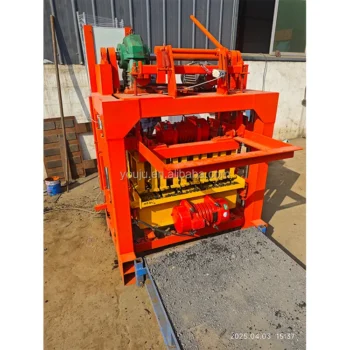
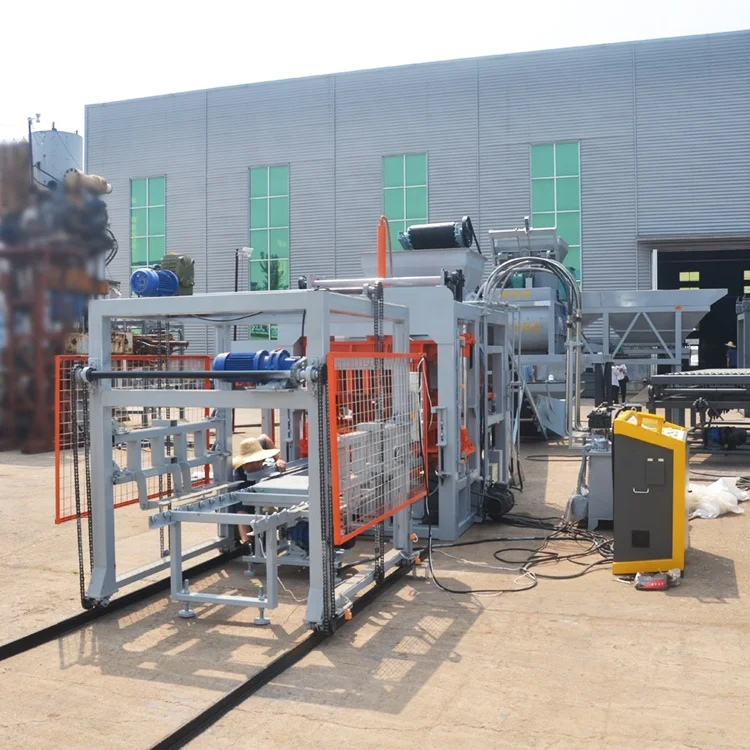
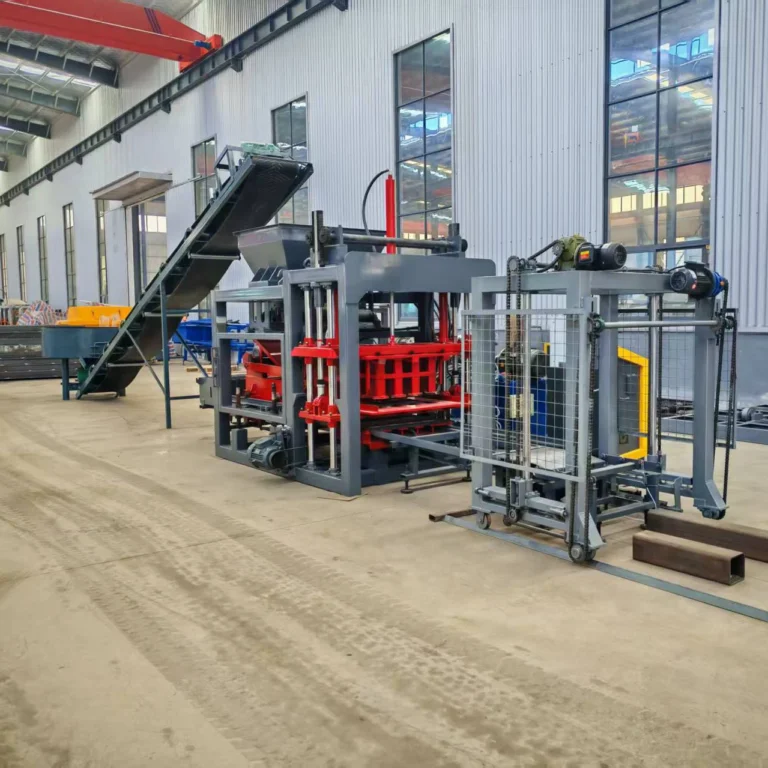
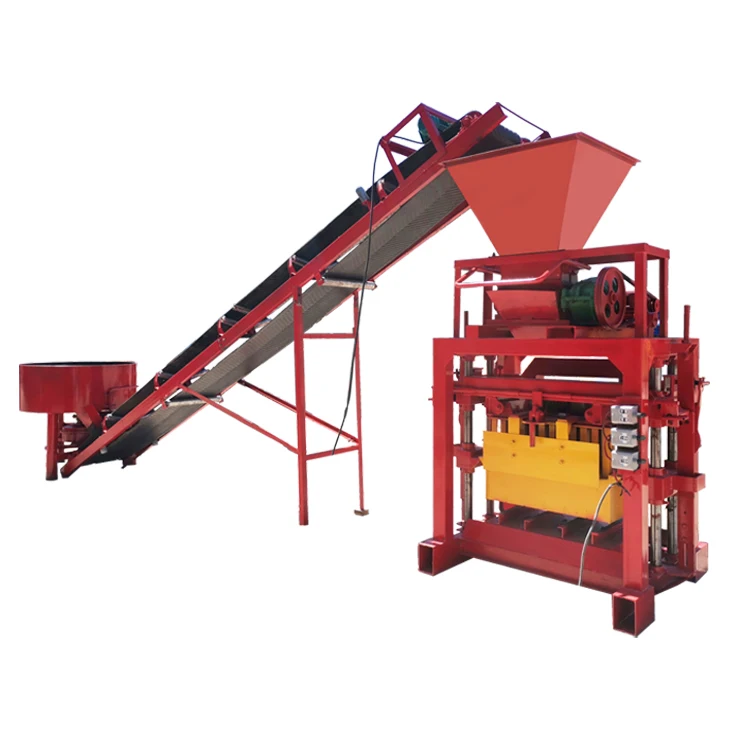
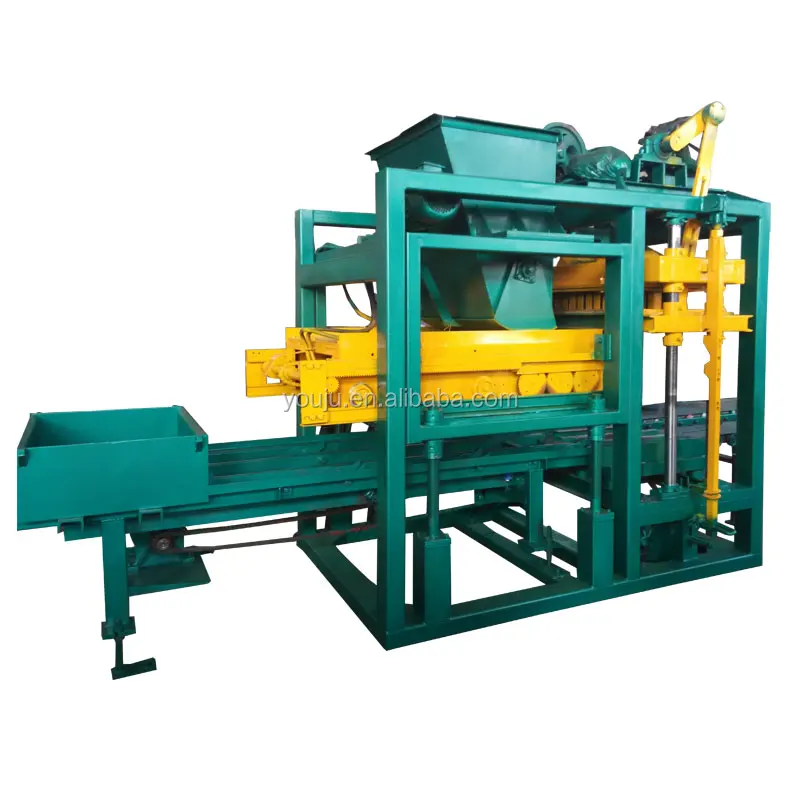
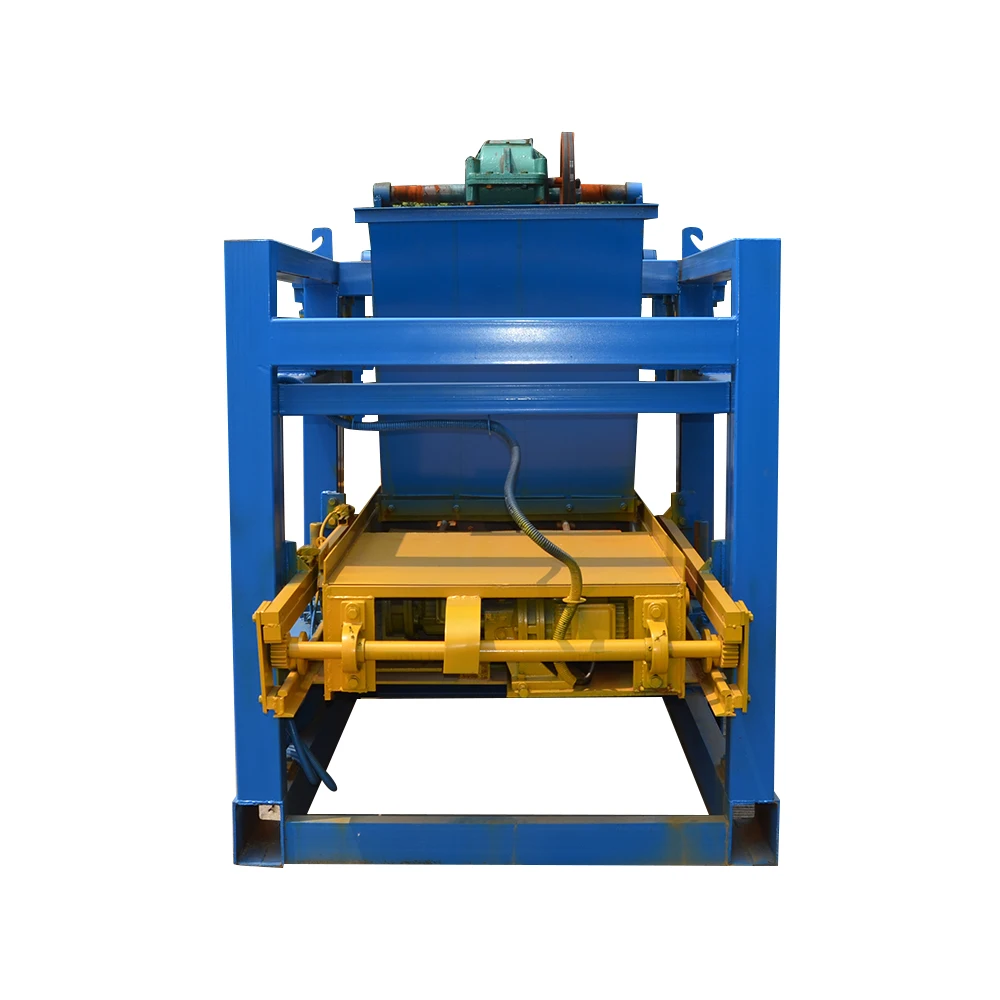
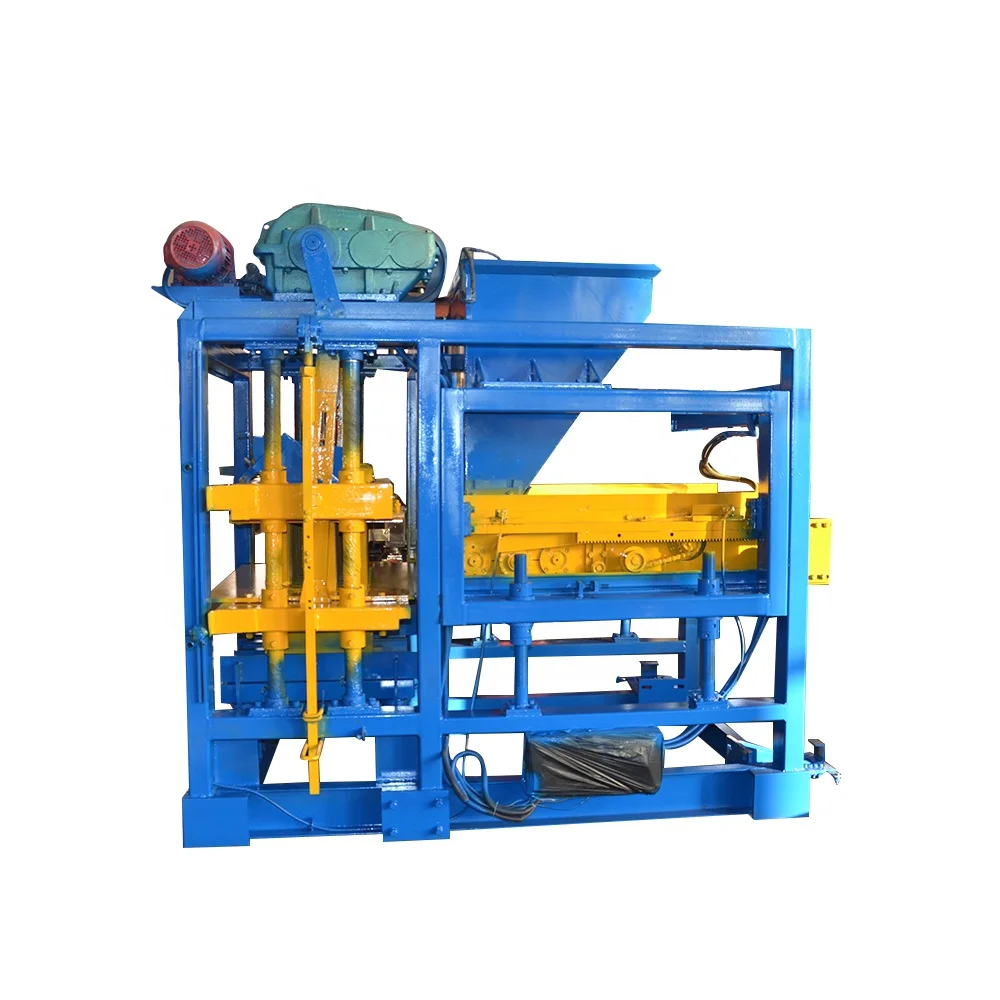
Matched System — the QTJ4-25 ships as a complete set with mixer, mould and pallets specified together so nothing holds up your first production day.
Technical Specifications
| Parameter | Value |
|---|---|
| Model | QTJ4-25 |
| Product Type | Semi-Automatic Concrete Block Making Machine |
| Rated Power | 17.9 kW |
| Overall Dimensions (L×W×H) | 6400 × 1500 × 2700 mm |
| Total Mass | 2500 kg |
| Molding Cycle | 25 s |
| Vibration Frequency | 2800 r/min |
| Exciting Force | 60 kN |
| Pallet Size | 850 × 550 × 20 mm |
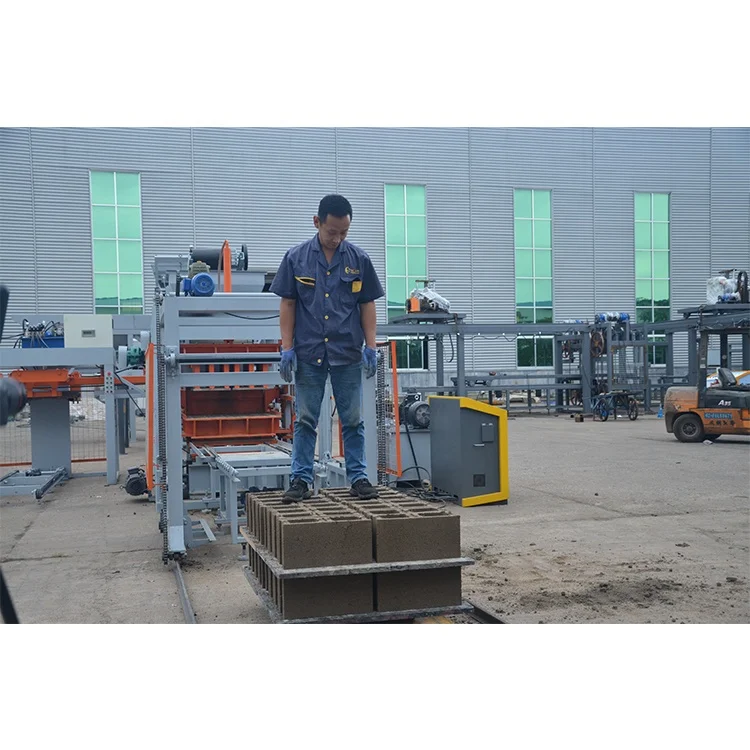
| Output Capacity | 960 pcs/h, 7680 pcs/day (based on 400×200×200mm hollow block, 4 pcs/mould) |
| Mould Format Compatibility | Hollow, solid, paver, curbstone (multiple standard sizes) |
| Automation Level | Semi-automatic |
| Configuration Included | Host machine 1 set, block mould 1 set, JQ350 mixer |
| Stacking Method | Manual (pallet + trolley) |
| Hydraulic Station | Equipped |
Application Suitability
| Application | Material or Output |
|---|---|
| Hollow block production for housing projects | Crushed stone, sand, cement, water |
| Solid block manufacturing for load-bearing walls | Coarse aggregate, cement blend |
| Paving block production for walkways and yards | Fine aggregate, pigment, cement |
| Curbstone forming for road and site edging | High-density concrete mix |
| On-site block production for contractors | Locally sourced aggregate and cement |
Why the Dispatch Date Matters More Than the Cycle Time
A quoted cycle of 25 seconds means little when the machine itself takes eight weeks to build while your foundation crew sits idle. The QTJ4-25 block machine in stock fast delivery changes the conversation from "when will it be built" to "when will it arrive."
Contractors chasing a housing handover date and distributors filling a gap in their rental fleet both face the same pressure: every week of equipment lead time is a week of lost revenue. I have watched project managers pay premium freight charges just to recover a fraction of the delay caused by a standard production slot. When a machine is already built, tested, and sitting on the shop floor, the timeline compresses from months to a container sailing [NEED_CITE: typical ocean freight transit windows by trade lane]. That is the difference the QTJ4-25 block machine in stock fast delivery makes when your deadline is fixed and non-negotiable.
What "In Stock" Actually Means for Your Timeline
Stocking the QTJ4-25 block machine in stock fast delivery is not just about the press sitting in a warehouse. It means the JQ350 mixer, the standard mould set, and the pallets are all allocated to the same shipment. I have seen orders delayed because the host machine was ready but the matching pallets were on a separate production run three weeks behind. When every component is racked together, the container gets loaded in one session and the bill of lading stays clean.
How Container Loading Is Planned Before You Commit
Before you wire a deposit, you should know exactly how the QTJ4-25 breaks down for loading. The host frame, the hydraulic station, and the mixer each have a designated position in the container to prevent transit damage. Total mass of 2500 kg and overall dimensions of 6400 × 1500 × 2700 mm keep the machine within standard container limits, meaning no open-top surcharge and no roll-on/roll-off complications [NEED_CITE: standard container loading limits for industrial machinery]. Dismantling photographs and a loading plan are provided so you can verify packing integrity before the doors are sealed.
Reading the Specification Sheet Against Your Site Reality
The vibration frequency of 2800 r/min and exciting force of 60 kN determine how densely the concrete is compacted in the mould. If your local aggregate runs larger than the standard test sand, those numbers must be evaluated against your actual mix — otherwise the block comes out of the mould with weak corners. The pallet size of 850 × 550 × 20 mm is equally important: it has to match the curing racks you already have or plan to build, and it must be compatible with the forklift tines on your site. A mismatch here means buying new racks or handling pallets by hand, neither of which was in your budget.
The rated power of 17.9 kW tells your electrician what dedicated circuit to pull, but only if the voltage and frequency are confirmed for your grid before the machine leaves the factory. I once saw a machine sit idle for a week because the motor was wound for 380V/50Hz and the site had 440V/60Hz — a simple question asked late [NEED_CITE: voltage and frequency standards by export market].
The Cost of Skipping the Stock Conversation
When buyers focus only on price and ignore availability, the hidden costs stack up fast. Demurrage charges at the port accumulate while you wait for a machine that was never built when you ordered it. Your crew stands around on payroll with no blocks to lay. The contractor who lined up a stocking supplier avoids all of this — the machine is already past the factory gate while competitors are still reviewing shop drawings [NEED_CITE: demurrage and port storage fee structures].
Why Sourcing This Model Through a Stocking Channel Works
Block machinery is our single focus, which means the QTJ4-25 is specified as one system — press, mould, pallet, and mixer — rather than cobbled together from separate vendors. Machines are configured against your actual mix design and local aggregate, not pulled from a catalogue default. Standard moulds for the formats your market buys are kept on the shelf alongside the presses, so your first container carries everything needed for day-one production. Automation level is selectable, allowing you to start semi-automatic and add automatic stacking later without replacing the press. Dispatch lead time, container loading plan, and arrival estimate are all confirmed at inquiry, not discovered after the order is placed.
Documentation & Verification
- Factory test record on your specified block format before dispatch
- Packing photographs showing dismantling and container loading sequence
- Machine specification sheet with confirmed voltage and frequency
- Mould drawing and format list matching your order configuration
- Operation and maintenance manual in your operator language
- Customs documentation support for destination port clearance
Installation, Commissioning & Support
- Foundation pad must accommodate 6400 × 1500 mm footprint with level tolerance for the vibration table
- Dedicated 17.9 kW circuit with confirmed voltage and frequency before the machine is energized
- Host machine arrives dismantled; reassembly covers hydraulic station, vibration table, and mould frame
- First run includes vibration parameter adjustment matched to your local aggregate and mix design
- Operator training covers mould change procedure, pallet feeding sequence, and daily lubrication points
- Wear parts list and mould inventory provided so first replacements are on hand before production starts
What to Prepare Before Requesting a Dispatch Quote
Tell us the block format you sell most — hollow, solid, paver, or curbstone — and the daily volume your site needs to sustain. Confirm your local aggregate type and maximum particle size so the vibration settings can be matched before the machine ships. Share your site voltage and frequency, and whether your forklift and curing racks are already on hand, so the pallet size and electrical configuration are locked before loading day.
Frequently Asked Questions
Q: Is the QTJ4-25 currently in stock, and what is the dispatch lead time?
A: Stock status and exact dispatch timing for the QTJ4-25 vary by configuration and current inventory. Standard models with common mould sets are typically available for faster dispatch than custom-format configurations. Confirm the specific setup you need at inquiry to receive a firm lead time and container booking estimate.
Q: How is the machine dismantled and loaded into a container for shipment?
A: The QTJ4-25 is broken down into its main assemblies — host frame, hydraulic station, mixer, mould, and pallets — each secured in a designated position within the container. Dismantling photographs and a loading plan are shared before the container doors are sealed so you can verify packing integrity.
Q: What arrival estimate can I expect from order to port of destination?
A: Arrival timing depends on the sailing schedule from the port of loading to your destination port and any transshipment involved. Once the container is booked, a vessel departure and estimated arrival date are provided so you can coordinate customs clearance and site readiness.
Q: Are standard moulds and pallets shipped together with the machine or ordered separately?
A: The standard configuration includes one mould set and the JQ350 mixer alongside the host machine. Pallets and additional mould formats can be included in the same container to avoid a second shipment. Confirm the full list at inquiry so everything loads together.
Q: What customs documentation is provided to support clearance at my port?
A: Documentation includes the commercial invoice, packing list, bill of lading, and machine specification sheet. Where applicable, a CE declaration is supplied. Confirm any country-specific import requirements at inquiry so the paperwork is complete before the vessel arrives.