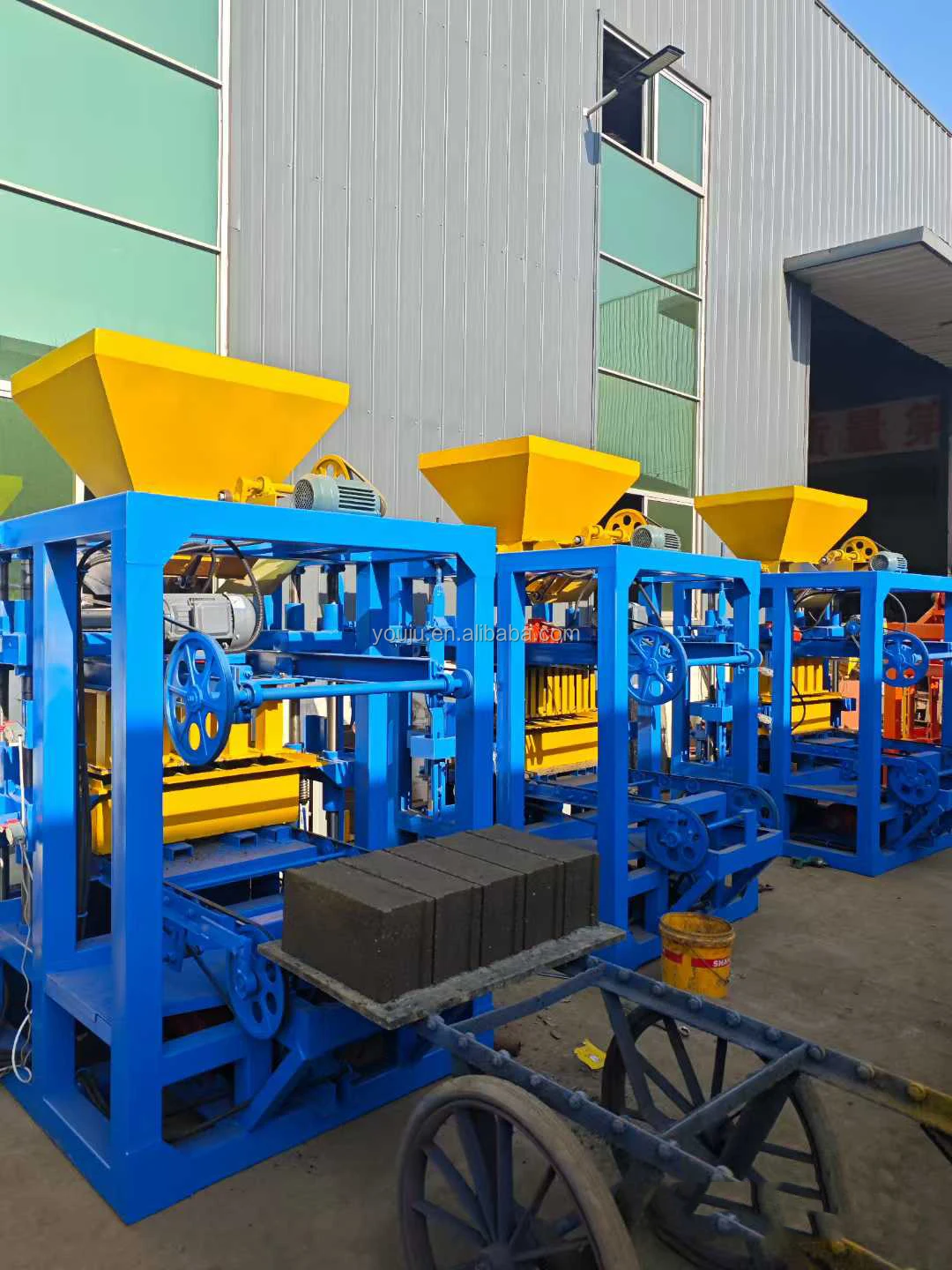
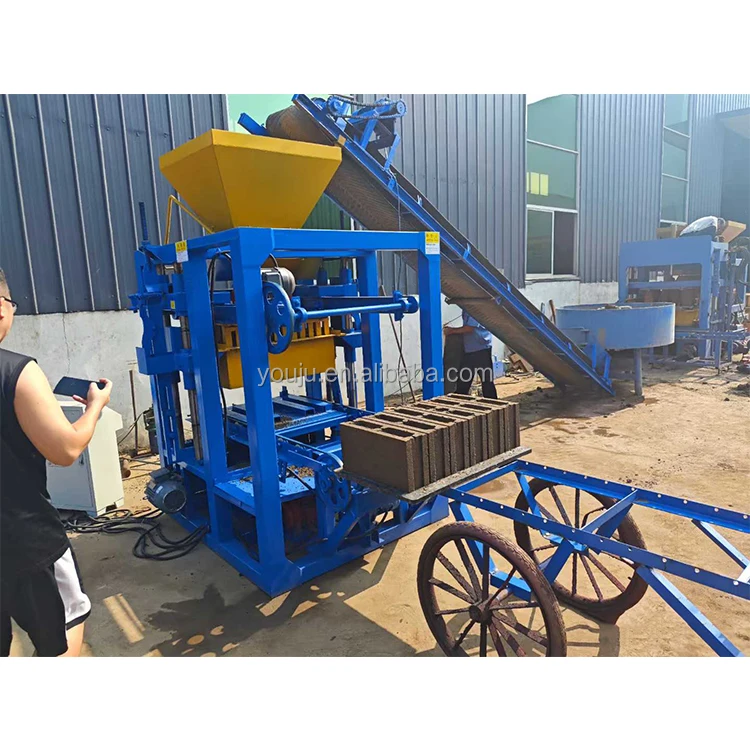
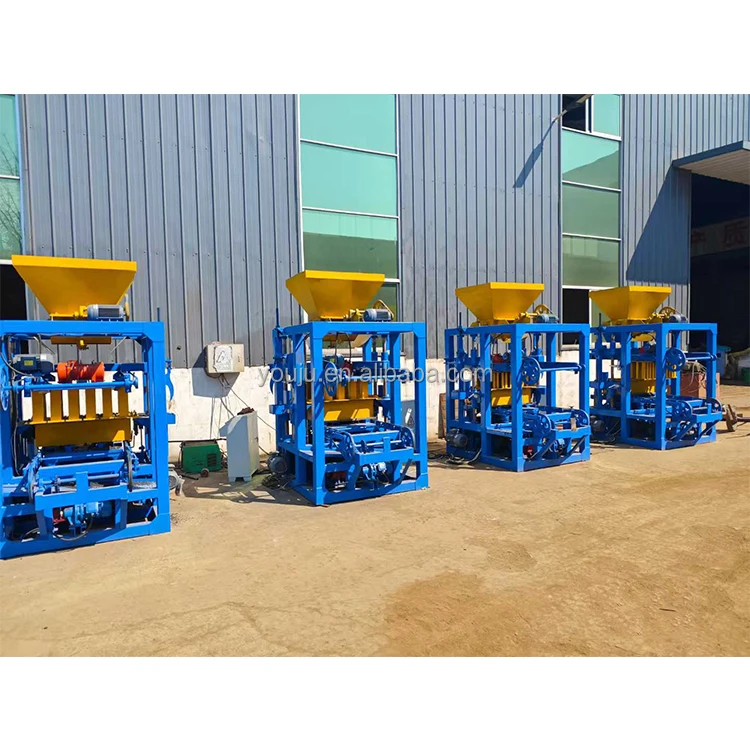
Description
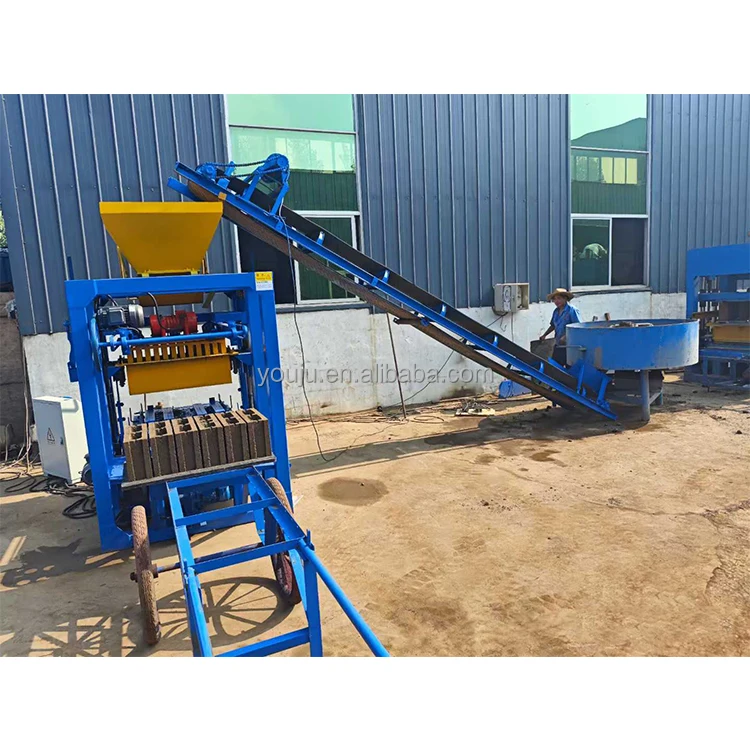
Matched system supply — the Qtj4-26 ships with mixer, conveyor and trolley specified against your block format and local voltage, so nothing is left to source separately after arrival.
Technical Specifications
| Parameter | Value |
|---|---|
| Model | Qtj4-26 |
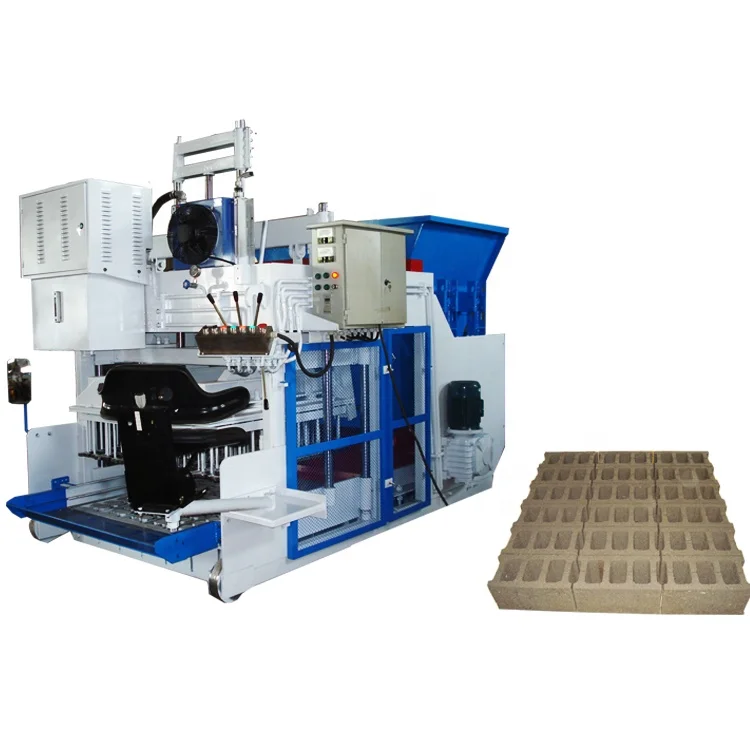
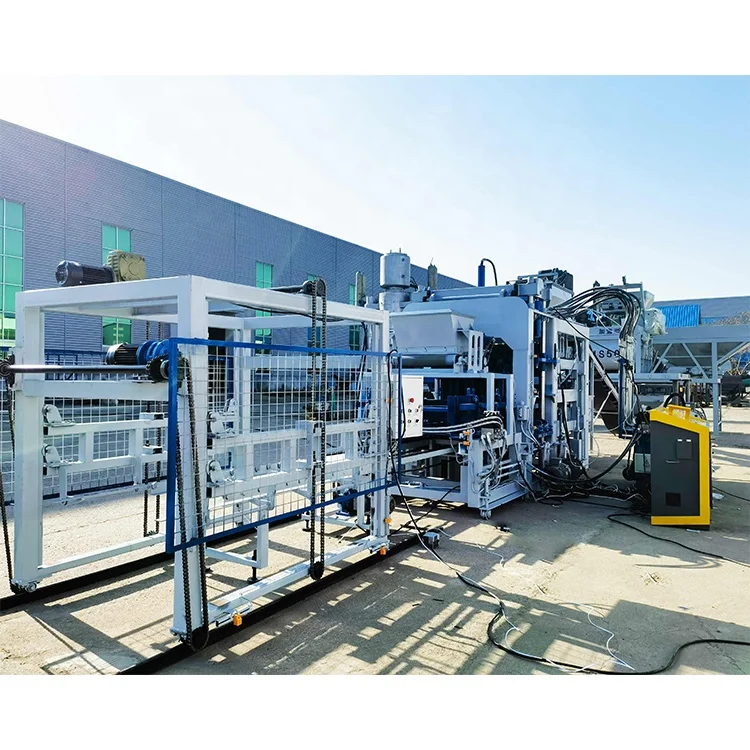
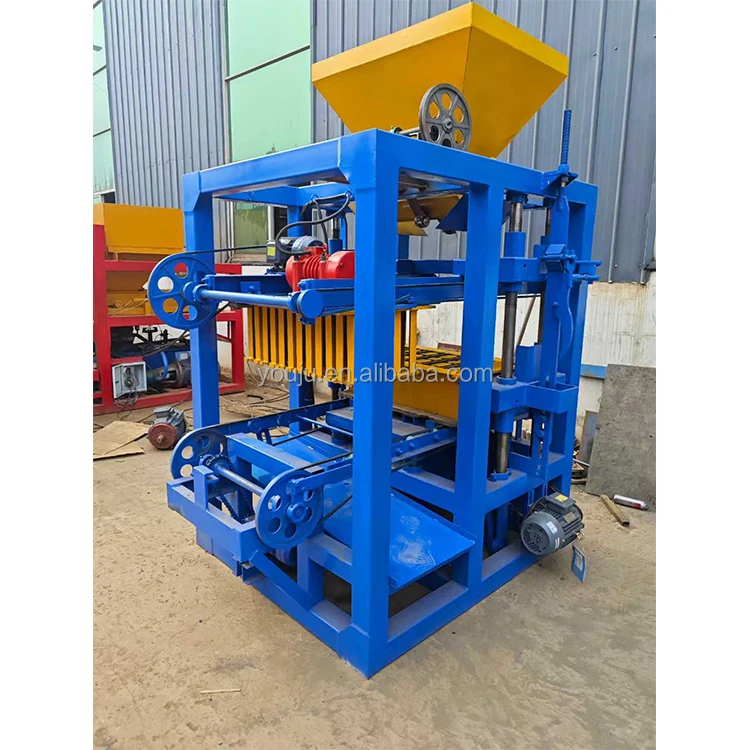
| Product Type | Stationary Concrete Block Making Machine |
| Molding Type | Platform Vibration |
| Pallet Size | 850mm × 450mm |
| Overall Dimensions (Working State) | 3600mm × 1700mm × 2560mm |
| Net Weight | 1750 kg |
| Overall Power | 14.25 kW |
| Vibration System | Lower platform vibration (2 × 3 kW high-speed motors); Upper vibration (1.5 kW attached device) |
| Machine Frame | Dragon gate style, super steel construction, four vertical wear-resisting shafts |
| Elevating System | Cone-shape motor, JZQ250 speed reducer, V-shape triangle belt drive |
| Delivery Device | Cycloidal pin wheel speed reducer, chains, self-conveying frame |
| Automation Level | Semi-automatic |
| Supporting Equipment Included | JQ350 pan mixer, 6m belt conveyor |
| Complimentary Equipment | Trolley for manual transfer to curing yard |
| Optional Equipment | Auto stacker (3–6 layers per pallet height) |
| Mould Format Examples | 390×190×190mm (4 pcs/mold); 240×115×53mm (21 pcs/mold) |
| Voltage & Frequency | Configurable (basis to be confirmed) |
| Output Capacity | Basis to be confirmed per block format and mix design |
Application Suitability
| Application | Material or Output |
|---|---|
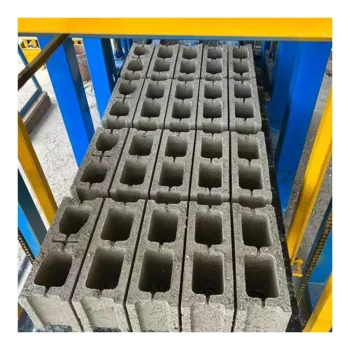
| Small-to-medium hollow block production | Crushed stone, sand, cement blends for 390×190×190mm masonry units |
| Standard solid brick manufacturing | Local aggregate and cement mixes for 240×115×53mm wall bricks |
| On-site contractor block production | Basic stationary line setups for building project deadlines |
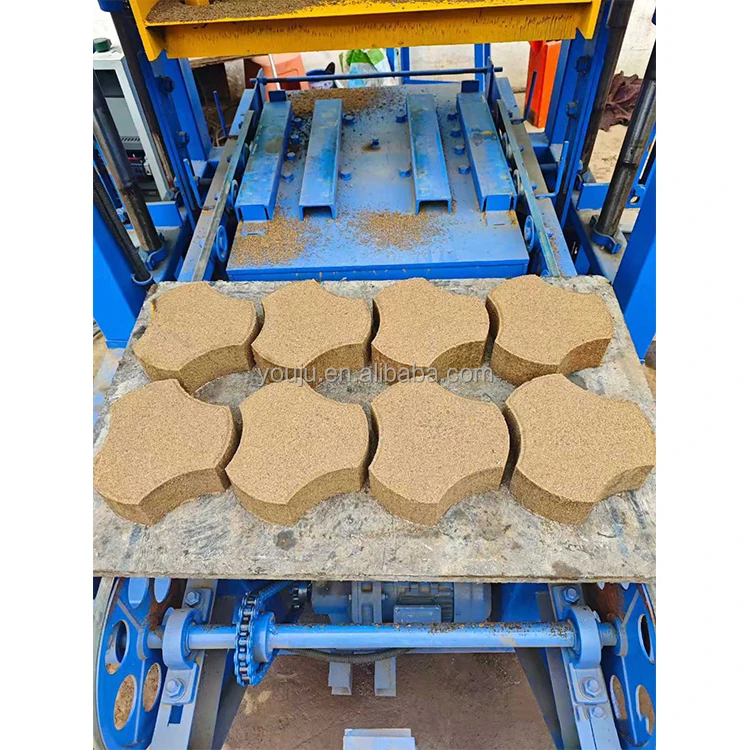
| Workshop-scale paver and solid unit runs | Semi-dry concrete mixes fed via pan mixer and belt conveyor |
What "Fast Delivery" Actually Requires Before Dispatch
A stationary block machine fast delivery promise means nothing if the machine arrives with the wrong voltage or a control panel the operator cannot read. We confirm electrical and language specifications before the machine leaves the factory floor, not after it clears customs.
I learned this the hard way shipping a semi-automatic hollow block unit to a Middle East project site. The voltage standard was never confirmed with the on-site electrician. The machine sat idle for three weeks while transformers were sourced locally, and the contractor’s build schedule slipped accordingly. Every Qtj4-26 we dispatch now goes through a voltage and frequency checklist matched to the destination market before we book the container [NEED_CITE: voltage and frequency standards by export market].
Stock Readiness Versus Built-to-Order Clarity
Buyers chasing a stationary block machine fast delivery need to know exactly which configurations sit ready in the yard versus which require a production run. The Qtj4-26 in its standard semi-automatic form — with JQ350 pan mixer, 6m belt conveyor, and manual transfer trolley — is the configuration most commonly held for dispatch. Standard mould formats such as 390×190×190mm hollow blocks and 240×115×53mm solid bricks typically accompany these stocked units. Non-standard moulds or the optional auto stacker add lead time that we state at quotation stage.
Container Loading and Dismantling for Shipment
The Qtj4-26 weighs 1750 kg in its working state and measures 3600mm long, which means container loading requires planned dismantling. The upper vibration assembly, elevating system, and delivery device are broken down so the main frame fits within standard container dimensions alongside the mixer, conveyor, pallets, and trolley. We provide packing photographs before the container is sealed, and the loading plan accounts for weight distribution so nothing shifts at sea [NEED_CITE: container loading standards for heavy industrial machinery].
Reading the Specifications That Affect Your Site
The 850mm × 450mm pallet size is the first dimension to cross-check against your existing curing yard and forklift capacity. If your yard is built for a different pallet footprint, the mismatch will slow every transfer from press to curing rack. The four vertical wear-resisting shafts on the dragon gate frame handle mould positioning during vibration; this keeps block dimensions consistent across a production run. The combined lower platform vibration from two 3kW motors and the 1.5kW upper vibration unit work together to compact the concrete mix — the vibration force must match your local aggregate gradation and cement ratio, or block strength will vary. Overall power draw of 14.25 kW determines the dedicated circuit your electrician must prepare before the machine arrives.
The Cost of Skipping Pre-Shipment Confirmation
When voltage, frequency, and control language are left unverified, the consequences appear only after the container is opened. A motor wound for the wrong frequency burns out within hours. A control panel in an unfamiliar language forces the operator to guess at cycle settings, and incorrect cycle times produce weak blocks that crack during curing. These are not warranty issues — they are specification gaps that could have been closed before dispatch [NEED_CITE: CE machinery directive requirements for industrial equipment]. The delay on site always costs more than the time spent confirming details at the order stage.
Why Buyers Source This Machine Here
Block machinery is our single focus, which means the Qtj4-26 press, moulds, pallets, and trolley are specified as one matched system rather than assembled from separate suppliers. Dispatch lead times and container loading plans are confirmed at quotation stage, not left vague until production finishes. Every machine is configured against the buyer’s actual block format and local raw material, not pulled from a default catalogue line. Installation support includes operator training on the specific mould formats the buyer will run. Stock availability and arrival estimates are quoted upfront so project schedules can be planned with real dates.
Documentation & Verification
- Machine specification sheet stating pallet size, overall power, and vibration motor ratings
- Mould drawing and format list matching your ordered block dimensions
- Voltage, frequency, and control language confirmation record signed before dispatch
- Factory test record on your target block format before container loading
- Packing photographs documenting dismantling and load plan before sealing
Installation, Commissioning & Support
- Foundation pad sized to 3600mm × 1700mm footprint with level tolerance specified
- Dedicated circuit rated for 14.25 kW total draw with voltage confirmed pre-shipment
- Upper vibration assembly and elevating system reassembled on site after container unload
- Vibration force and cycle time adjusted to your local aggregate and cement ratio
- Operator training on mould change procedure and daily wear-resisting shaft inspection
- Wear parts list covering vibration motor bearings and shaft bushings included at dispatch
Before You Send the Inquiry
To get a firm dispatch date on the Qtj4-26, tell us which block formats your market demands and the daily volume you need to hit. Confirm your site voltage and frequency so we match the motors before production. Let us know what material handling equipment you already have so the pallet size and trolley configuration fit your existing setup.
Frequently Asked Questions
Q: Which Qtj4-26 configurations and mould formats are currently in stock versus built-to-order?
A: The standard semi-automatic Qtj4-26 with JQ350 pan mixer, 6m belt conveyor, and manual trolley is the configuration most commonly held for dispatch. Standard moulds for 390×190×190mm hollow blocks and 240×115×53mm solid bricks typically accompany stocked units. Custom mould designs and the optional auto stacker require additional lead time, which we state clearly at the quotation stage.
Q: How is the machine dismantled for container loading, and what is the typical dispatch lead time?
A: The upper vibration assembly, elevating system, and delivery device are broken down so the main frame fits within standard container dimensions. The mixer, conveyor, pallets, and trolley load alongside. Dispatch lead times depend on whether your chosen configuration is stocked or built-to-order, and we quote the exact timeline at the order stage rather than giving vague estimates.
Q: Are voltage, frequency, and control panel language confirmed before shipment?
A: Yes. Every Qtj4-26 goes through a voltage and frequency checklist matched to the destination market before production is finalized. Control panel language is confirmed at the same stage. This prevents commissioning delays after arrival, something I have seen cause multi-week project standstalls when overlooked.
Q: Can standard pallets and trolleys ship in the same container as the machine?
A: Yes. The container loading plan accounts for the dismantled Qtj4-26 frame alongside the 850mm × 450mm pallets, manual transfer trolley, JQ350 mixer, and 6m belt conveyor. Weight distribution is calculated so nothing shifts during transit, and packing photographs are provided before the container is sealed.