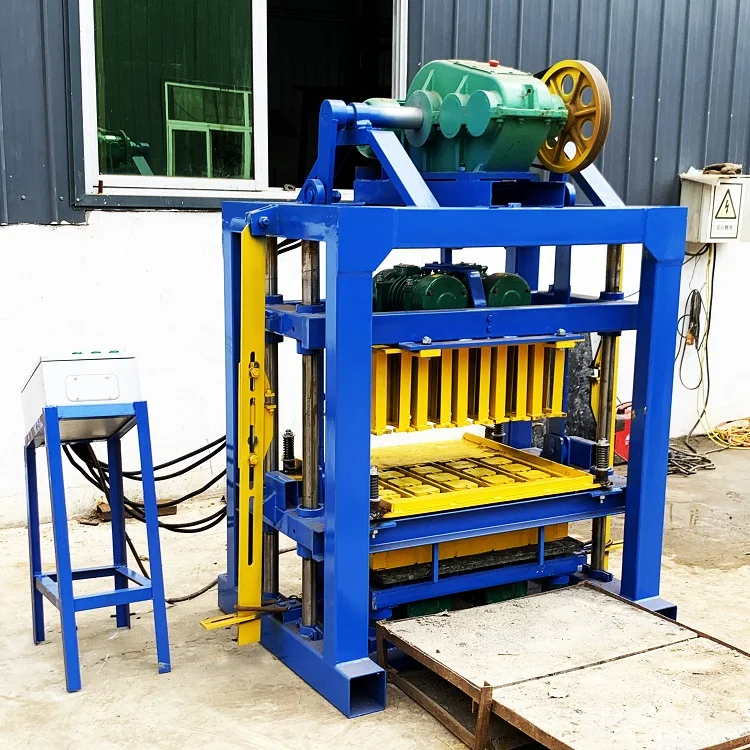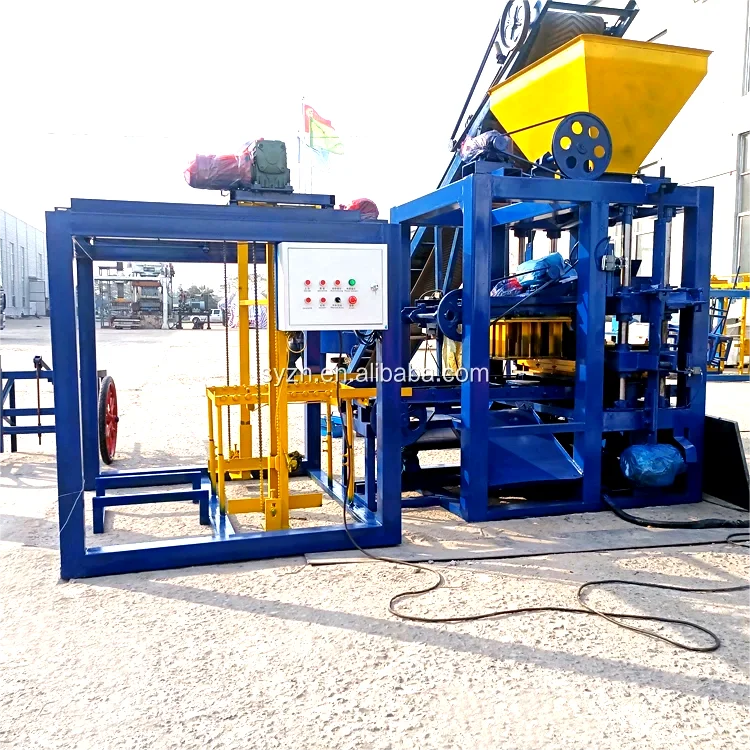



Description
Stocked Dispatch Readiness — QTJ4-26 units sit on the floor with pallet dimensions and weight already confirmed, so you know whether it fits your forklift and curing yard before the invoice is signed.
Technical Specifications
| Parameter | Value |
|---|---|
| Model | QTJ4-26 |
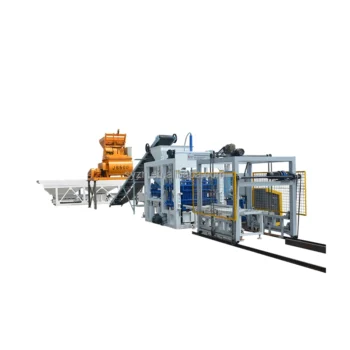
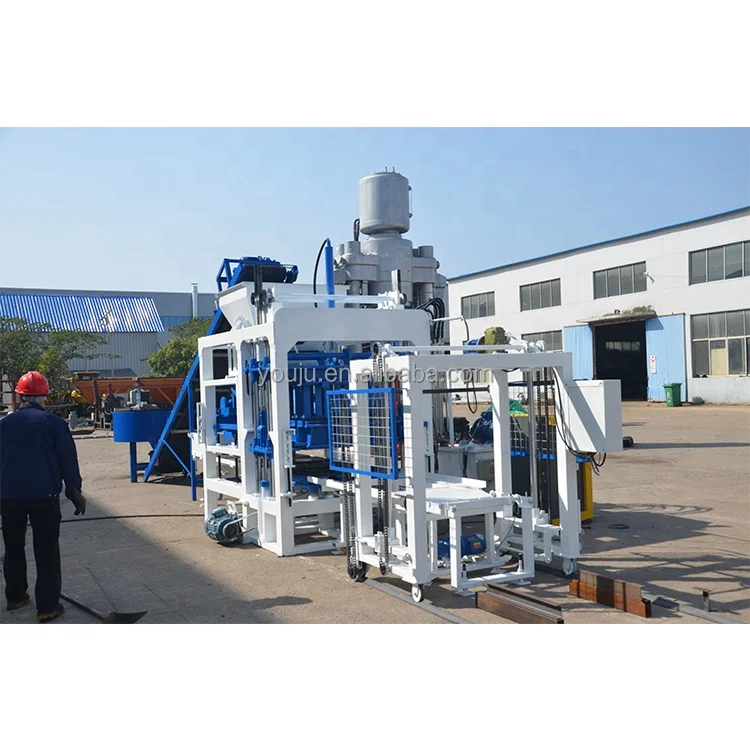
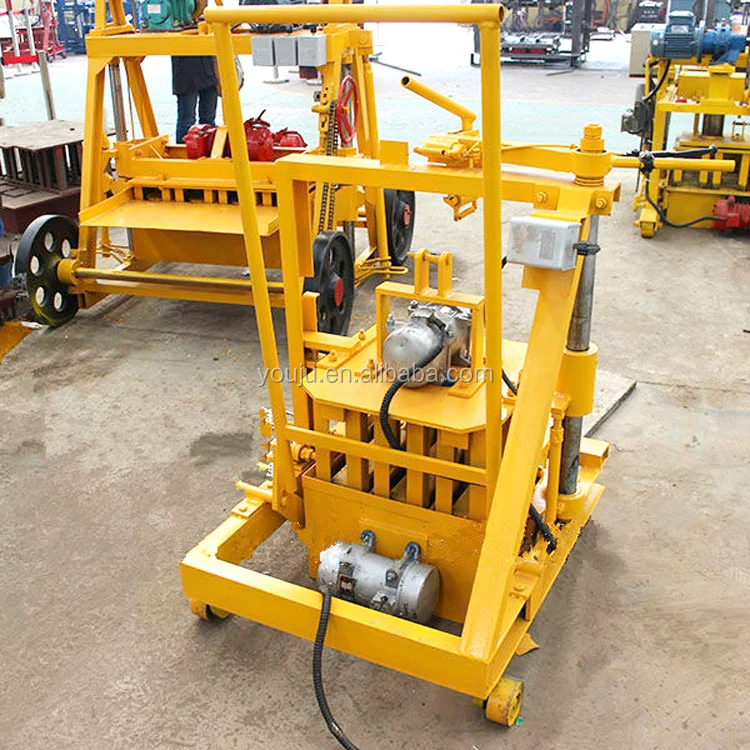
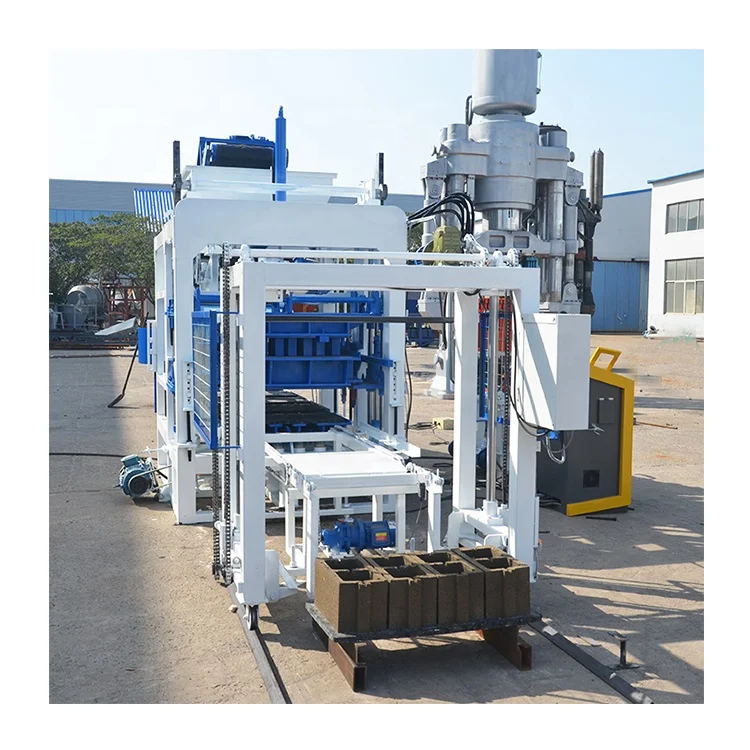
| Product Type | Semi-Automatic Concrete Block Making Machine |
| Overall Dimensions (L×W×H) | 2060×1730×2580 mm |
| Net Weight | 1800 kg |
| Molding Cycle | 26 s |
| Vibration Frequency | 4200 r/min |
| Vibration Force (Exciting Power) | 35.5 kN |
| Rated Power | 11.95 kW |
| Mixer Model | JQ350 |
| Pallet Size | 850×450×20 mm |
| Guide System | Four guide pillars |
| Mould Movement | Automatic |
| Stacking Method | Manual pallet handling |
| Applied Products | Hollow block (8 inch, 6 inch), solid brick |
| Raw Materials | Crushed stones, sand, cement, dust, fly ash |
| Output Capacity | 480 pcs/h based on 390×190×190 mm hollow block (4 pcs/mould) |
| Output Capacity | 600 pcs/h based on 400×150×200 mm hollow block (5 pcs/mould) |
| Output Capacity | 2100 pcs/h based on 240×115×53 mm solid brick (18 pcs/mould) |
| Output per 8-hour Shift | 3800 pcs based on 390×190×190 mm hollow block |
| Output per 8-hour Shift | 4800 pcs based on 400×150×200 mm hollow block |
| Output per 8-hour Shift | 17000 pcs based on 240×115×53 mm solid brick |
| Voltage & Frequency | (basis to be confirmed) |
| Control System | (basis to be confirmed) |
| Hydraulic Pressure | (basis to be confirmed) |
Application Suitability
| Application | Material or Output |
|---|---|
| Small-scale hollow block plant | 390×190×190 mm and 400×150×200 mm hollow blocks from crushed stone, sand, and cement |
| On-site solid brick production | 240×115×53 mm solid bricks using locally sourced sand and fly ash |
| First plant for entrepreneurs | Semi-automatic hollow and solid block formats with manual pallet handling |
| Contractor site block making | 6 inch and 8 inch hollow blocks from site-available aggregate and cement |
What "480 Blocks per Hour" Actually Means on Your Job Site
The number only holds if you are running exactly 390×190×190 mm hollow blocks with four cavities per mould.
Buyers often see a single hourly figure and plan their entire delivery schedule around it. Then the machine arrives, the mould gets swapped for solid brick, and the real output shifts completely. [NEED_CITE: capacity claims in block machinery quotations and actual site performance] With the QTJ4-26, the 26-second molding cycle produces different quantities depending on the block format sitting in the press. I have watched project timelines slip because the site manager planned for one output tier and got another. The semi-automatic block machine fast delivery promise means nothing if the daily count on the curing rack does not match what the foreman expected. Always ask which block format the capacity figure assumes before you confirm the shipping date.
Dispatch Timing and Container Loading Reality
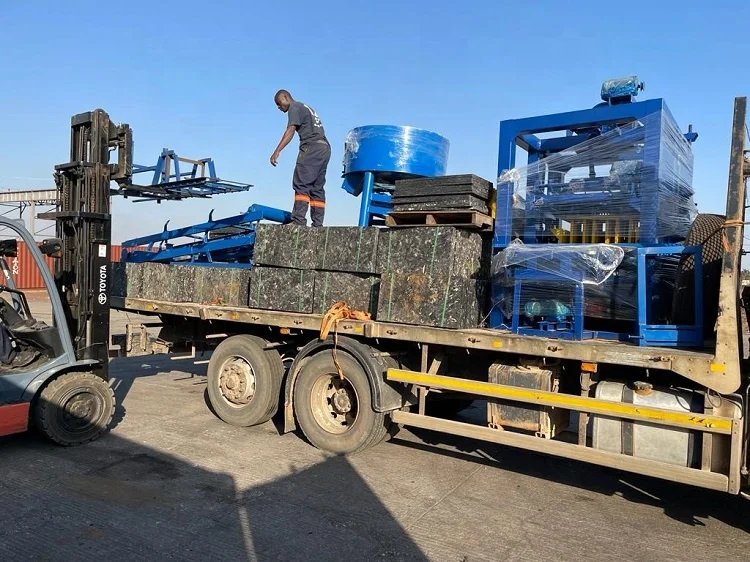
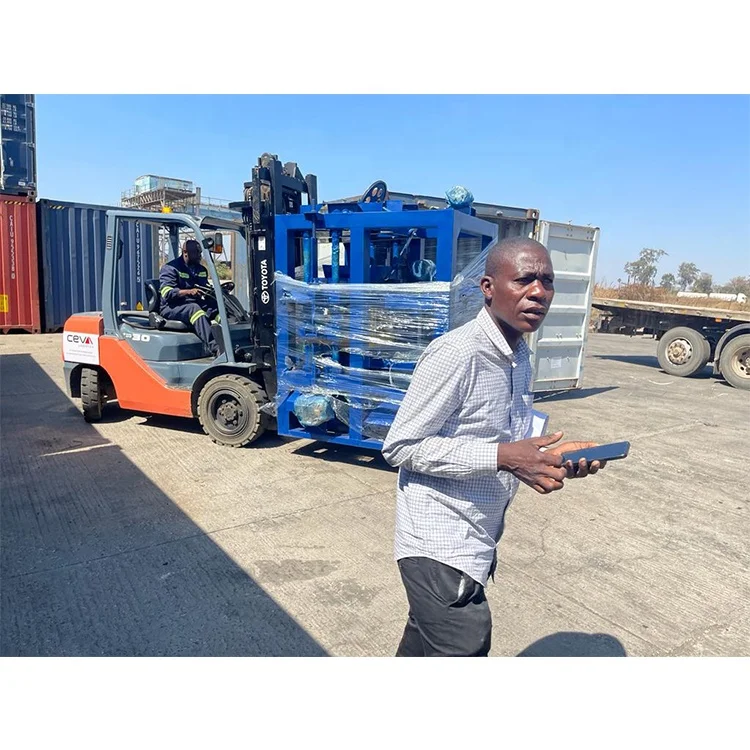
The QTJ4-26 block machine in stock status means the main frame, guide pillars, and vibration assembly are assembled and tested before you pay. At 1800 kg net weight and 2060×1730×2580 mm overall dimensions, the machine fits inside a 20GP container with nude packing once dismantled for loading. The critical detail is how the pallets ride alongside — approximately 500 pcs of 850×450×20 mm pallets can share the same container, which matters because those pallets are consumables and you will burn through them before a second shipment can arrive.
Arrival Estimate and Port-Side Planning
A semi-automatic block machine fast delivery schedule only works if someone has calculated the transit days from Linyi to your destination port before you wire the deposit. The 11.95 kW rated power means your site electrician needs to confirm whether the local grid supports the motor start-up surge, and that conversation must happen before the machine leaves the factory floor. [NEED_CITE: voltage and frequency standards by export market] I once saw a buyer receive a machine that could not run because the frequency was wrong for their country, and the rewind took weeks. The dispatch lead time quoted upfront should include confirmation of voltage, frequency, and control language.
Vibration, Pressure, and Why Block Density Matters
The 35.5 kN vibration force operating at 4200 r/min works with the four guide pillar system to compact the mix inside the mould cavity. Higher vibration frequency means finer aggregate particles settle more tightly, which directly affects whether the finished block holds together during manual pallet handling and stacking. The automatic mould movement reduces the physical effort during each 26-second cycle, but the operator still moves pallets by hand. The JQ350 mixer must deliver a consistent mix to the hopper, because any variation in water content or aggregate grading will show up as uneven block strength across a single batch.
When the Pallet Size Does Not Match Your Curing Yard
The 850×450×20 mm pallet dimension dictates how many wet blocks you can cure at once and whether your existing forklift can stack them. [NEED_CITE: pallet compatibility with curing rack systems in block production] A buyer who ordered a machine with oversized pallets once found that his curing racks could not accept them, and the entire stacking workflow had to be redesigned on-site. Manual pallet handling means your crew is physically moving loaded pallets from the machine to the curing area every cycle, so pallet weight and forklift tine spacing become daily operational constraints.
Why Dispatch Speed Matters for This Machine Class
Stocked inventory and tested assembly mean the QTJ4-26 block machine in stock is not a catalogue promise but a machine with a factory test record already written. Mould design matches the block formats your market actually buys, with the option for custom drawings if your local demand runs to interlocking or porous brick. Container loading plans include pallet count, mould packing method, and dismantling photographs so you know exactly what is inside before the container door opens. Dispatch lead time is stated in writing before payment, not buried in a general production schedule.
Documentation & Verification
- Factory test record on your specified block format before dispatch
- Voltage and frequency confirmation sheet matched to your country grid standard
- Container loading photographs showing machine dismantling and pallet securing
- Hydraulic and electrical schematic for on-site troubleshooting during commissioning
- Packing list with mould count, pallet quantity, and spare parts included
Installation, Commissioning & Support
- Foundation pad sized to 2060×1730 mm footprint with allowance for pallet staging area
- Dedicated power circuit rated for 11.95 kW plus JQ350 mixer draw with confirmed voltage
- Machine arrives dismantled for 20GP container; reassembly of guide pillars and mould on-site
- Manual pallet handling workflow demonstrated during operator training session
- Mould change procedure shown for switching between 390×190×190 mm and 240×115×53 mm formats
- Wear parts list covering vibration components and guide pillar bushings provided at handover
Before You Request a Dispatch Date
Tell us which block format you intend to produce first, whether hollow block or solid brick, and confirm the daily output target tied to that format. Share your local aggregate source so we can verify the mix suits the 35.5 kN vibration force, and provide your site voltage and frequency so the motor is wound correctly before the semi-automatic block machine fast delivery schedule locks in.
Frequently Asked Questions
Q: Is the QTJ4-26 actually in stock, and what is the real dispatch lead time?
A: The QTJ4-26 block machine in stock units are assembled and tested on the factory floor. Dispatch lead time is confirmed in writing before payment, covering the days from receipt of funds to container loading. The timeline includes final voltage verification and packing photographs so you can track each stage.
Q: How many pallets and moulds fit in one 20GP container with the machine?
A: Approximately 500 pcs of 850×450×20 mm pallets can be loaded alongside the dismantled QTJ4-26 in a 20GP container. The mould is packed separately with reinforcement to prevent damage during transit. The exact count depends on how many spare moulds and pallet batches you add to the same shipment.
Q: Can voltage and frequency be confirmed before the machine ships?
A: Yes, voltage and frequency must match your destination country grid standard, and this is confirmed before dispatch. The 11.95 kW rated power requires a dedicated circuit, and incorrect frequency will damage the motor. We verify the electrical configuration and provide a confirmation sheet as part of the shipment documentation.
Q: What arrival timeline should I expect from dispatch to my port?
A: Transit time depends on the shipping route from the departure port to your destination. We provide an arrival estimate at the quotation stage based on current vessel schedules. This estimate accounts for the semi-automatic block machine fast delivery commitment and lets your site team plan the foundation and electrical work before the container arrives.
Q: Are moulds and wear parts included or ordered separately?
A: The standard mould for your chosen block format ships with the QTJ4-26. Additional moulds for other formats can be added to the same container. Wear parts covering vibration components and guide bushings are listed separately so you can order spares alongside the machine and avoid downtime when the first replacement is due.