

QT4-15 to QT12-15 Concrete Block Machine Wholesale Supplier
The model number on the spec sheet is not a promise of output; it is a theoretical ceiling that local conditions will almost always lower.
Selecting the right concrete block machine wholesale supplier requires matching the hydraulic system’s cycle time and mold changeover speed to your specific raw material characteristics and labor shift patterns, rather than simply choosing the highest capacity model available. A mismatched machine leads to chronic underperformance, regardless of the manufacturer’s rated specifications.
I still remember the humidity in a Dubai warehouse during a commissioning visit. The air was thick, and the sand stockpile had absorbed moisture overnight. The client had insisted on a high-output QT12-15 line, convinced that bigger numbers meant faster project completion. Yet, as the mixer loaded, the wet aggregate clumped, slowing the feed cycle. The PLC kept waiting for the mold to fill completely before pressing, extending each cycle by several seconds. Over an eight-hour shift, those seconds accumulated into hundreds of missing blocks. The machine was not broken; it was mismatched. This is why I now scrutinize the entire production ecosystem before recommending a unit from any concrete block machine wholesale supplier.
Understanding this gap between rated capacity and actual daily output is the first step in sourcing. Let us break down why these discrepancies happen and how to choose the right partner.
Why Do Many QT12-15 Machines Fail to Hit Rated Capacity in MENA?
Local aggregate size and moisture content significantly impact actual cycle time, often reducing effective output to less than eighty percent of the rated value.
In many regions across the Middle East and North Africa, the available sand and aggregate do not match the ideal laboratory conditions used for factory testing. Factory demos typically use washed, uniform gravel with controlled moisture levels. In contrast, site materials often vary in particle size distribution and water content. When fine sand contains high moisture, it bridges in the hopper, causing intermittent flow. The machine’s sensors detect an incomplete mold fill and delay the pressing cycle to ensure block density. This safety feature, while necessary for quality, kills throughput.
Furthermore, the hydraulic pressure stability required for large-format blocks like those produced by a QT12-15 is sensitive to temperature fluctuations. In hot climates, hydraulic oil viscosity changes, affecting the speed of the mold box movement. If the cooling system is undersized for the ambient temperature, the system may throttle back to prevent overheating, further slowing production. [NEED_CITE: impact of ambient temperature on hydraulic system efficiency in construction machinery]
A buyer once shared data from a Riyadh precast plant upgrade. They switched from a semi-automatic line to a fully automatic PLC-controlled QT10-15. While the theoretical capacity doubled, the actual downtime due to material handling bottlenecks increased initially. It took three months of adjusting the aggregate screening process and modifying the mixer discharge gate timing to stabilize the output. The lesson was clear: the machine is only as fast as its slowest input component.
When evaluating a concrete block machine wholesale supplier, ask for performance data based on local-like materials, not just standard test reports. Request a video demonstration where the supplier uses sand with similar moisture and gradation to what you have on-site. This simple step reveals whether the feeding system can handle your specific raw materials without frequent jamming or cycle delays.
QT4-15 vs. QT12-15: Which Model Fits Your Trading Business?
Match machine output to order volume and labor availability; avoid over-investing in automation for small batches or under-investing for large tenders.
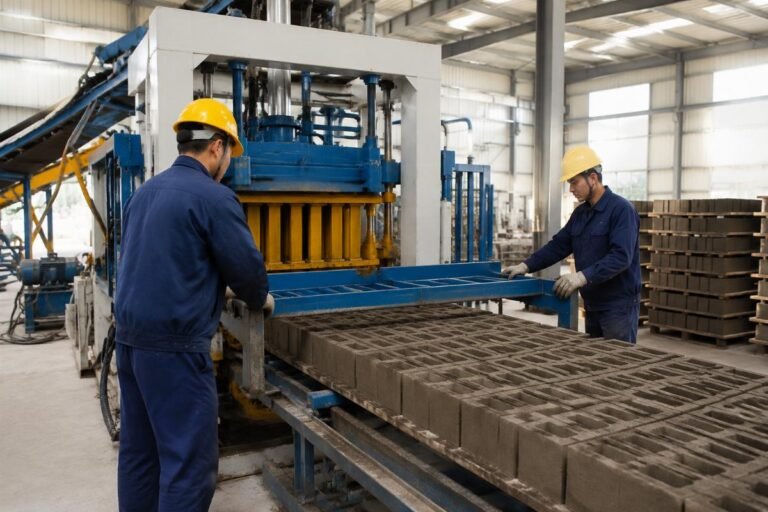
Trading companies often face the dilemma of recommending a machine that is "good enough" versus one that is "future-proof." The QT4-15 is a robust entry-level model, suitable for startups or projects with moderate daily requirements. It typically operates with a simpler control system and may require more manual intervention for pallet handling. In contrast, the QT12-15 is designed for high-volume industrial production, featuring advanced PLC automation, faster cycle times, and integrated palletizing capabilities.
The key difference lies not just in the number of blocks per hour, but in the operational complexity. A QT12-15 requires a stable power supply, skilled operators for PLC troubleshooting, and a consistent flow of raw materials. If your client’s project involves scattered, small-batch orders for rural housing, a QT12-15 may sit idle for long periods, leading to higher maintenance costs per unit produced. Conversely, using a QT4-15 for a major government infrastructure tender could result in missed deadlines due to insufficient daily output.
| Feature | QT4-15 Series | QT12-15 Series |
|---|---|---|
| Target Production Scale | Small to Medium | Large Industrial |
| Automation Level | Semi-Automatic to Basic PLC | Full PLC Automation |
| Mold Changeover Time | Moderate | Fast (Hydraulic Assist) |
| Labor Requirement | Higher (Manual Pallet Handling) | Lower (Automated Stacking) |
| Power Stability Need | Standard | High (Sensitive Hydraulics) |
| Best For | Startups, Rural Projects | Precast Plants, Government Tenders |
[NEED_CITE: comparative analysis of semi-automatic vs fully automatic block machine operational costs]
Consider a scenario in Lagos where an investor was deciding between these two models. The initial cost difference was significant. However, when factoring in the labor cost for manual pallet removal and the potential revenue from meeting a large municipal contract, the QT10-15 (a mid-range option) offered a better balance. The QT4-15 would have required hiring additional shifts of workers, eroding the margin. The QT12-15 was too complex for their initial team’s skill level. Choosing the right model from a concrete block machine wholesale supplier means analyzing the total cost of ownership, including labor, energy, and maintenance, not just the FOB price.
Always verify the mold changeover time. In trading businesses, flexibility is key. If your client needs to switch from hollow blocks to pavers frequently, a machine with quick-release mold systems saves hours of downtime. Ask the supplier to demonstrate this process. A slow changeover can bottleneck production just as much as a slow cycling speed.
Key Verification Steps When Auditing a Wholesale Supplier
Demand live video tests with local-like materials, not just factory showroom demos, to verify true output capabilities.
Many suppliers showcase their machines running perfectly in clean, controlled factory environments. These demos are useful for seeing the machine’s build quality but misleading for predicting field performance. To truly audit a concrete block machine wholesale supplier, you must push for transparency regarding real-world conditions.
First, request a live video call during a production run. Ask the operator to show the raw material stockpile and the mixing process. Look for consistency in the mix. If the material looks too dry or too wet, ask how the machine adjusts. A competent supplier will explain their moisture compensation features or recommend specific mixer types.
Second, check the validity of CE and SGS certifications. These are not just badges; they represent compliance with international safety and quality standards. For government tenders, these documents are often mandatory. Verify the certificate numbers directly with the issuing bodies if possible. [NEED_CITE: importance of CE certification for construction equipment in international tenders]
Third, inquire about the hydraulic components’ brand and origin. High-quality valves and pumps ensure longevity and stable pressure. Cheap components may fail under continuous heavy load, leading to expensive repairs and downtime. A reliable concrete block machine wholesale supplier will be transparent about their supply chain for critical parts.
Finally, ask for references from clients in similar climatic and economic regions. A supplier with experience in Africa or the Middle East will understand the challenges of dust, heat, and voltage fluctuations. They may offer specific modifications, such as enhanced air filtration for electrical cabinets or oversized radiators for hydraulic systems. These details separate a generic vendor from a true partner.
Beyond the Machine: What Makes a Supplier "Turnkey Ready"?
Installation, training, and spare parts logistics are critical for trader reputation and long-term client profitability.
Selling a machine is only the beginning of the relationship. For trading companies, the real value lies in ensuring the end-user can operate the plant efficiently from day one. A turnkey-ready concrete block machine wholesale supplier provides more than just hardware; they offer a complete solution that includes installation guidance, operator training, and a reliable spare parts supply chain.
Installation errors are a common cause of early failures. Misaligned molds or improperly leveled frames can lead to uneven block dimensions and excessive wear. Ensure the supplier provides detailed installation manuals and, ideally, remote video support during the setup phase. Some suppliers even send engineers for on-site commissioning, which is invaluable for complex PLC lines.
Training is equally important. Operators need to understand not just how to start the machine, but how to troubleshoot common issues like sensor faults or hydraulic leaks. A supplier that offers comprehensive training materials, including videos and multilingual manuals, empowers your clients to maintain high uptime. [NEED_CITE: impact of operator training on machinery downtime and maintenance costs]
Spare parts availability defines the total cost of ownership. Wear parts like mold liners, vibration motors, and seals need regular replacement. If a critical part takes weeks to arrive, the entire plant stops. Evaluate the supplier’s spare parts inventory and shipping options. Do they keep stock of common wear items? Can they ship via express courier for urgent needs? A concrete block machine wholesale supplier with a robust logistics network ensures that your clients’ operations remain uninterrupted.
Look for suppliers who offer remote diagnostic assistance. Modern PLC systems can transmit error codes and operational data. A supplier who can analyze this data remotely can often resolve issues quickly without sending an engineer overseas. This capability reduces downtime and builds trust with your clients.
Conclusion
Choosing the right machine is about aligning technical specifications with local realities, not just chasing the highest model number.
Success in sourcing concrete block machinery depends on verifying actual performance with local materials, understanding the total cost of ownership, and partnering with a supplier who offers comprehensive support beyond the sale. By focusing on these practical aspects, traders and investors can avoid common pitfalls and ensure their projects meet both quality and quantity targets. A reliable concrete block machine wholesale supplier acts as a strategic partner, helping you navigate the complexities of international equipment procurement.
Leave a Reply