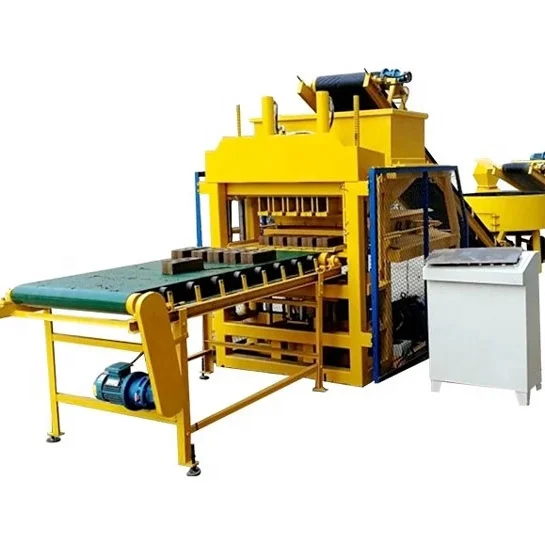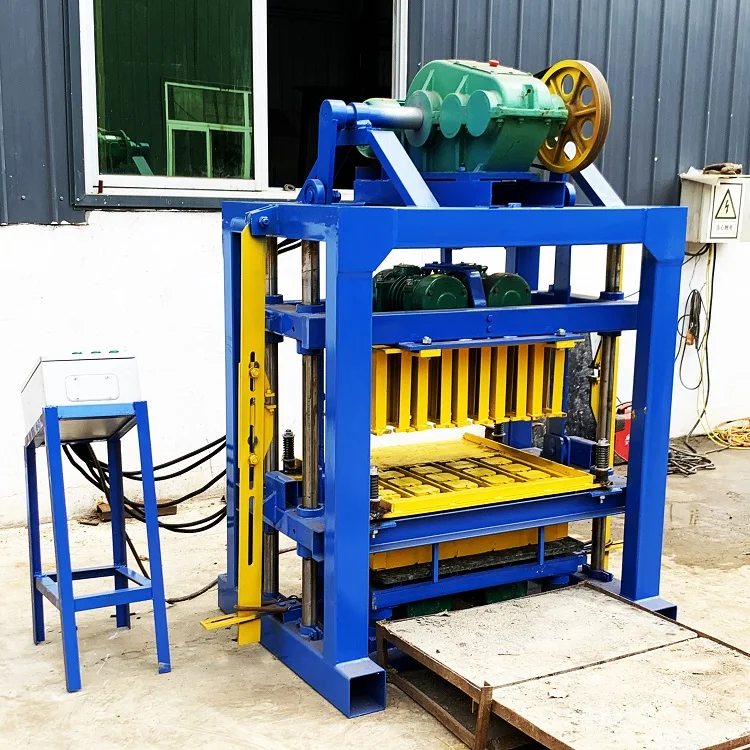
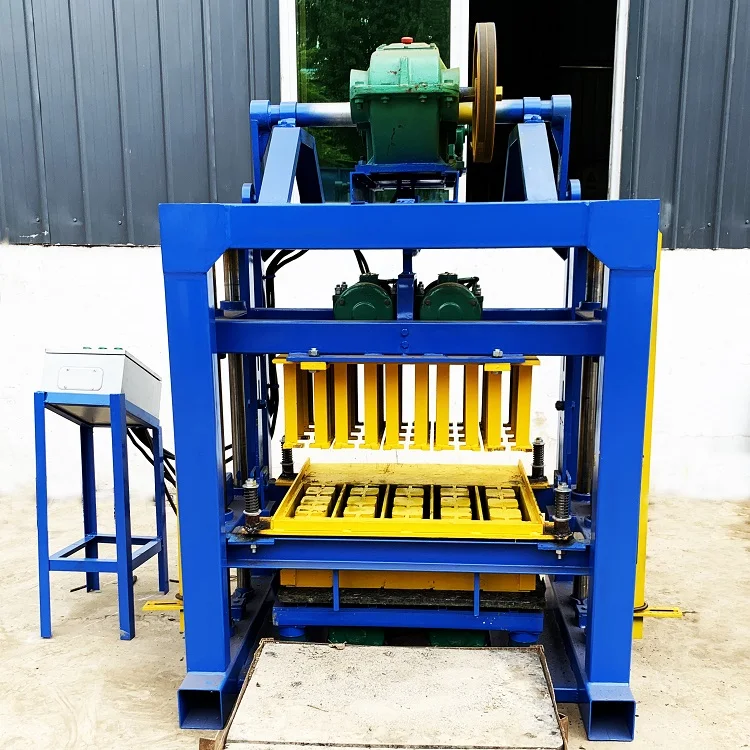
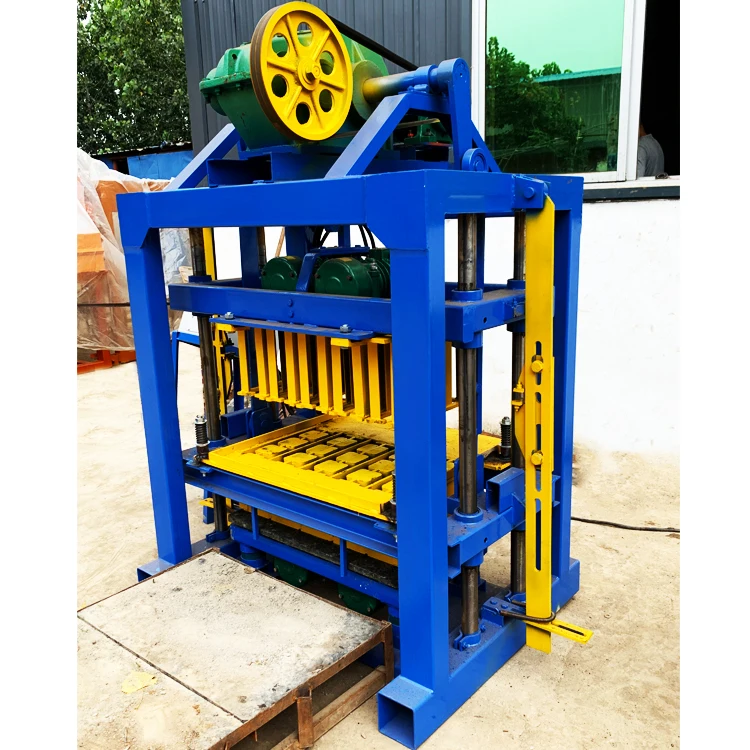

Description
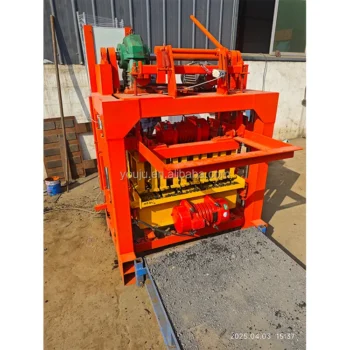
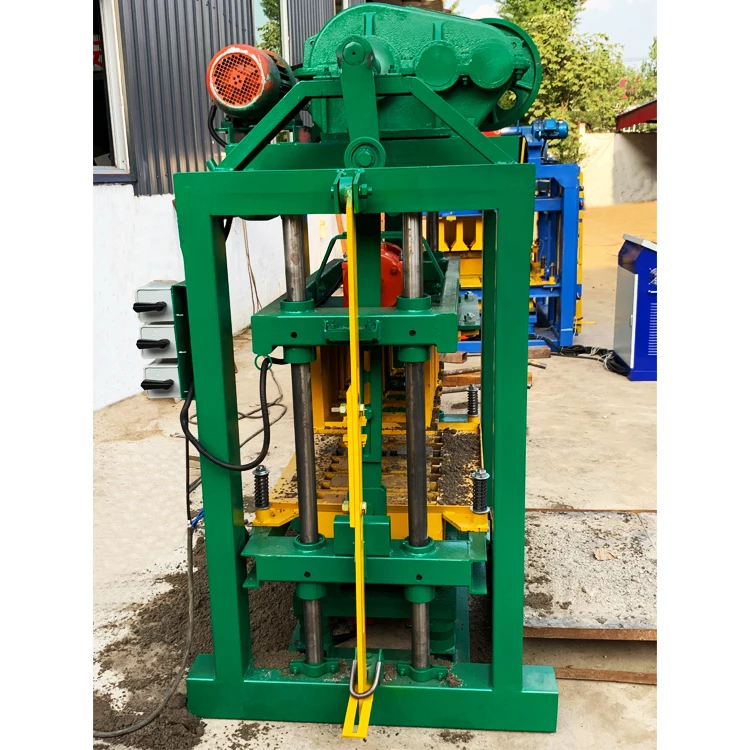
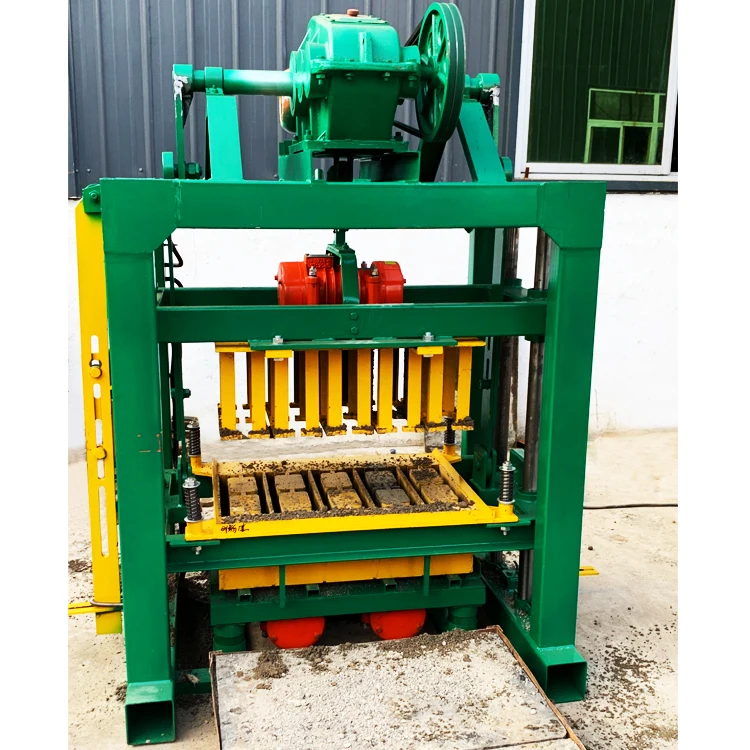
Ready-to-Ship Configuration — the QTJ4-40 block machine in stock ships as a matched system with mould, pallet and power source confirmed before dispatch, not assembled from separate quotes.
Technical Specifications
| Parameter | Value |
|---|---|
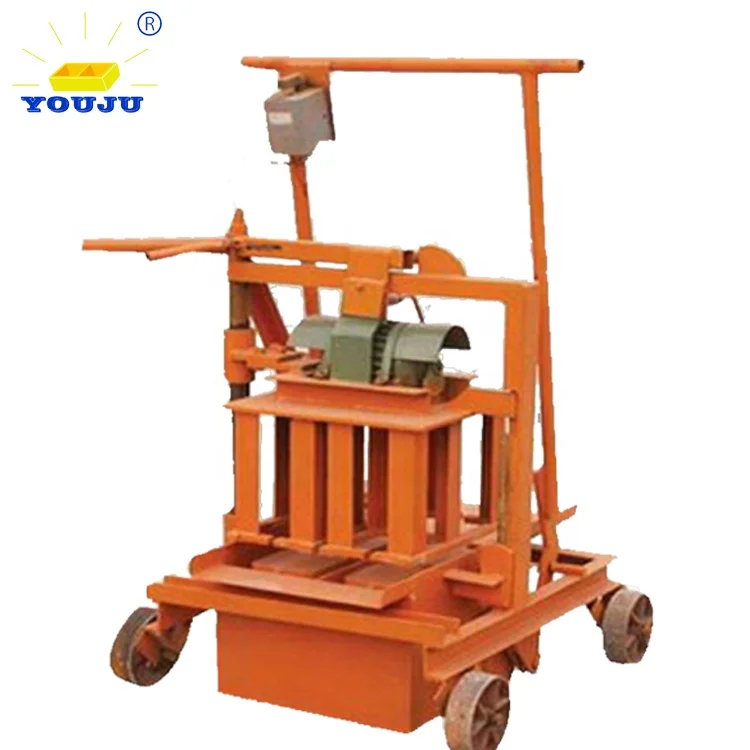
| Product Type | Manual Movable Block Making Machine |
| Model | QTJ4-40 |
| Vibration System | Platform vibration at 2800 r/min |
| Pallet Size | 850 × 450 mm |
| Overall Dimensions | 1350 × 1460 × 1800 mm |
| Machine Weight | 1 T |
| Power Source | Engine or motor (dual option) |
| Control System | Manual operation with top die push/pull and automatic scraper |
| Mobility | Egg-laying type, movable on-site |
| Automation Level | Manual / semi-manual |
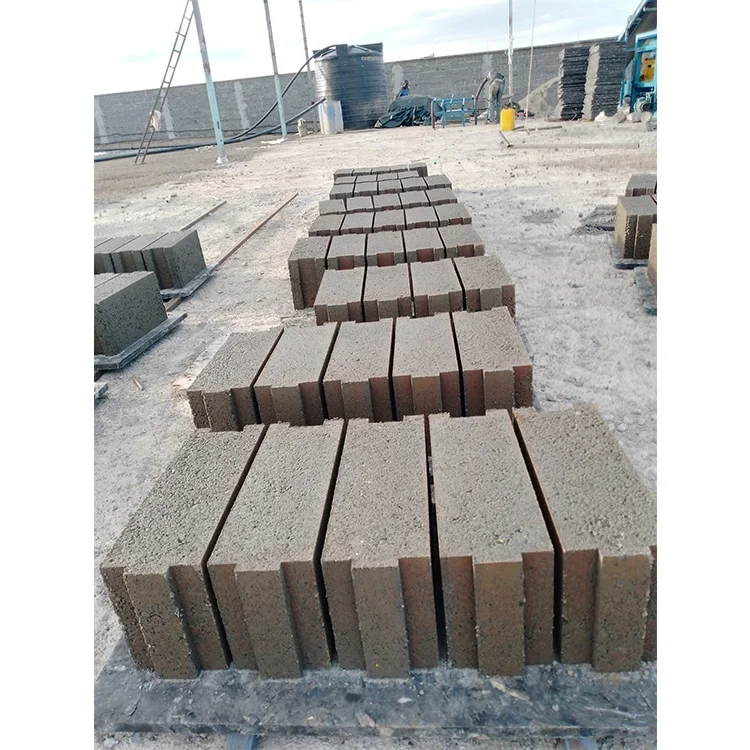
| Capacity | 2880 pcs/8 hours based on 400×200×200 mm hollow block, 4 pcs/mould |
| Capacity | 4000 pcs/8 hours based on 400×150×200 mm hollow block, 5 pcs/mould |
| Capacity | 7200 pcs/8 hours based on 225×112.5×60 mm interlocking paver, 9 pcs/mould |
| Raw Materials | Concrete, cement, fly ash, crushed stone, sand, dust, gravel, slag |
| Recommended Mix Ratio | Cement 8–10%, sand 30–40%, stone 50–60% (approx. 1:4:5) |
| Worker Required | 1–3 people |
| Factory Area | 200 m² |
| Standards | CE |
Application Suitability
| Application | Material or Output |
|---|---|
| On-site hollow block production for housing projects | Crushed stone, sand and cement with fly ash partial replacement |
| Interlocking paver laying for driveways and walkways | Colored concrete mixes with fine aggregate |
| Solid block runs for boundary walls and foundations | Dense concrete with gravel-dominant mix |
| Curbstone production for road and drainage edges | High-cement-ratio mixes for structural load |
| Small-plant startup by first-time entrepreneurs | Locally sourced sand and stone at the 1:4:5 ratio |
What "Capacity Quoted Without the Block Format" Actually Costs You
A machine rated at 7,200 pieces per day means nothing if the mould on the press produces 2,880.
Buyers comparing quotations often line up the highest number each supplier prints. On a QTJ4-40 block machine in stock, that 7,200 figure only holds when you are running small interlocking pavers with nine cavities per mould. Switch to a standard 400×200×200 mm hollow block with four cavities and the same eight-hour shift drops to 2,880 pieces — roughly one-third [NEED_CITE: cycle time variance across block formats in manual egg-laying machines]. I have watched a Colombian contractor miss a phase-one deadline because the proforma invoice quoted peak paver output while his contract required hollow blocks for structural walls. The mismatch only surfaced when the first batch cured and the site foreman counted the stack. Always ask the supplier to restate capacity per the exact block format you intend to produce before the container is booked.
Stocked Units Versus Production-Run Lead Times
When a project deadline is measured in weeks rather than months, waiting for a factory to slot your press into the next production run can push site mobilisation past the penalty window. The QTJ4-40 block machine in stock bypasses that queue. Machines already built and tested in the workshop can be crated, photographed and walked onto a container floor within a typical short lead time once the power source and mould set are confirmed. For contractors flying into a new site with a limited crew, the difference between a press that arrives ready to run and one that sits in a fabrication backlog is measured in cured blocks on the ground.
Container Loading and Dismantling for Transit
A one-ton press with a 1350 × 1460 × 1800 mm frame fits inside a standard 20-foot container, but only if the hopper, scraper arm and vibration platform are partially dismantled and braced against the bulkhead. Loose moulds, pallets and the power unit — whether diesel engine or electric motor — are strapped to the floor rails to prevent shift during sea freight [NEED_CITE: container bracing requirements for heavy industrial machinery in transit]. Buyers ordering the QTJ4-40 block machine in stock receive packing photographs showing bolt locations, foam blocking and the container seal number before the doors close, so the receiving team can plan the unlift sequence before the truck reaches the site.
How Vibration, Mix Ratio and Block Density Interact
The platform vibration at 2,800 r/min is only half of the density equation. The other half is the mix sitting in the mould box. A ratio of one part cement to four parts sand to five parts stone, with water added to reach a firm but workable consistency, lets the vibration pack aggregate tightly without washing fines to the surface. Push the cement below eight percent and the block may release from the mould but crack during curing. Push stone content above sixty percent and the mix becomes too dry for the scraper to level evenly across the 850 × 450 mm pallet. On egg-laying machines where blocks cure directly on the ground, the first thirty minutes after release determine structural integrity — the mix must hold its shape without slumping, and that balance depends on local aggregate gradation as much as on the vibration frequency itself.
The Hidden Cost of Skipping Voltage Confirmation
A diesel-engine option removes grid dependency, but many buyers still default to the electric motor without checking site supply. When the motor arrives wired for a voltage or frequency the site transformer cannot deliver, commissioning stalls until a replacement winding or variable-frequency drive is sourced locally [NEED_CITE: motor rewinding lead times in remote construction sites]. On small movable machines this delay is especially costly because the whole business case rests on starting production the week the container opens. Confirming voltage, phase and hertz with the supplier before the machine leaves the factory floor costs a few emails and prevents a multi-week standstill on the project site.
Why Buyers Source This Press Through This Channel
Block machinery is the single focus here, so the QTJ4-40 arrives as a matched system — press, mould, pallet and power source specified together rather than assembled from separate invoices. Dispatch lead time is confirmed before payment, not discovered after. Moulds for the block formats the buyer’s market actually sells are selected from stock or put into custom production with clear timelines. Capacity is restated per format, so the number on the quotation matches what the operator counts at the end of a shift. For buyers working to a project deadline, speed and simplicity of ordering is the entire point — no configuration rabbit holes, no surprise missing pallets at the container door.
Documentation & Verification
- Factory test record on your selected block format before dispatch
- Capacity calculation sheet stating the block size and cavity count assumed
- Mould drawing and format list matching the quotation line items
- Voltage, frequency and power source written confirmation before crating
- Packing photographs with container loading plan and seal number
- Operation manual with maintenance intervals for platform vibration bearings
Installation, Commissioning & Support
- Flat concrete pad of 200 m² with drainage slope for ground-laid block curing
- Power supply matching confirmed voltage and phase, with dedicated breaker for the electric motor variant
- Hopper and scraper arm bolted back in place using the dismantling diagram provided
- First mould run supervised remotely to set vibration duration against local aggregate moisture
- Spare vibration bearings and scraper blades included in the dispatch crate
- Mould change demonstrated on-site using the quick-release bolts on the 850 × 450 mm platform
Preparing Your Inquiry
Share the block format you intend to produce, the daily volume your project demands and whether grid power is available on-site. If your local sand or stone has unusual grading, a brief description of the aggregate helps confirm the mix ratio before the machine ships.
Frequently Asked Questions
Q: What is the dispatch lead time for the QTJ4-40, and is it currently stocked?
A: Stocked units of the QTJ4-40 block machine in stock are available for immediate crating once the mould set and power source — engine or motor — are confirmed. Lead time for standard moulds is short; custom formats add production days that are stated at quotation stage. Container booking follows packing photo approval.
Q: How does the QTJ4-40 ship — full container or LCL, and what are the packing arrangements?
A: The one-ton press with its 1350 × 1460 × 1800 mm footprint fits a 20-foot container with room for moulds and pallets. Partial dismantling of the hopper and scraper arm is required. Bracing, foam blocking and floor-strap points are photographed before the container doors close.
Q: Which block formats are available from stock moulds, and which require custom lead time?
A: Standard hollow block, solid block and interlocking paver moulds matching the 850 × 450 mm pallet ship from stock. Curbstone, kerb and non-standard paver shapes may require custom tooling with a stated production window confirmed at the quotation stage.
Q: Can I run the QTJ4-40 on a diesel engine if my site has no grid power?
A: Yes. The dual-option power source lets you specify a diesel engine instead of an electric motor. Confirm engine displacement and fuel type at inquiry so the correct unit is crated with the machine before dispatch.
Q: What pallet size does the QTJ4-40 use, and are pallets included in the dispatch?
A: The QTJ4-40 uses 850 × 450 mm pallets. As an egg-laying machine it lays blocks directly on the ground, so pallets are not consumed in the curing cycle. Pallet inclusion and quantity are confirmed as a line item on the quotation.