

Description
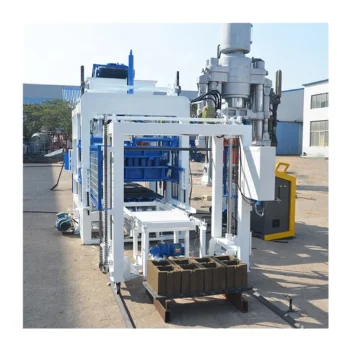
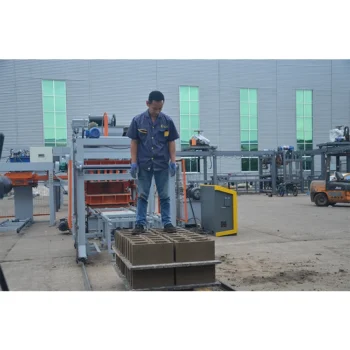
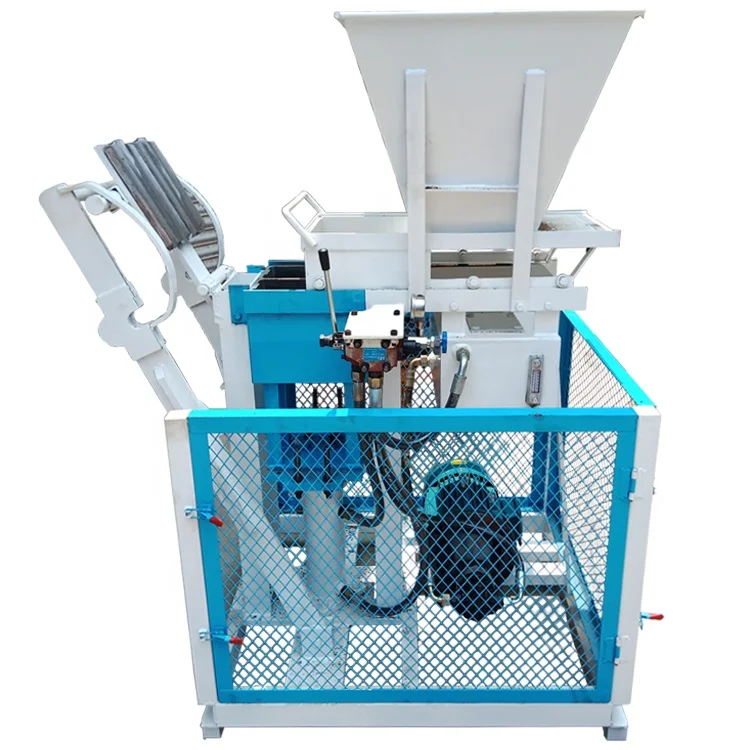
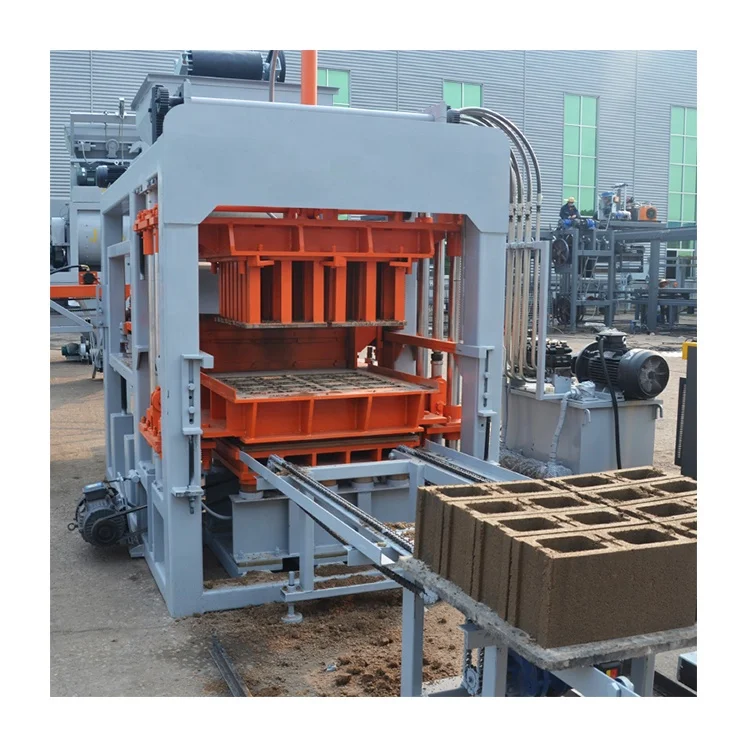
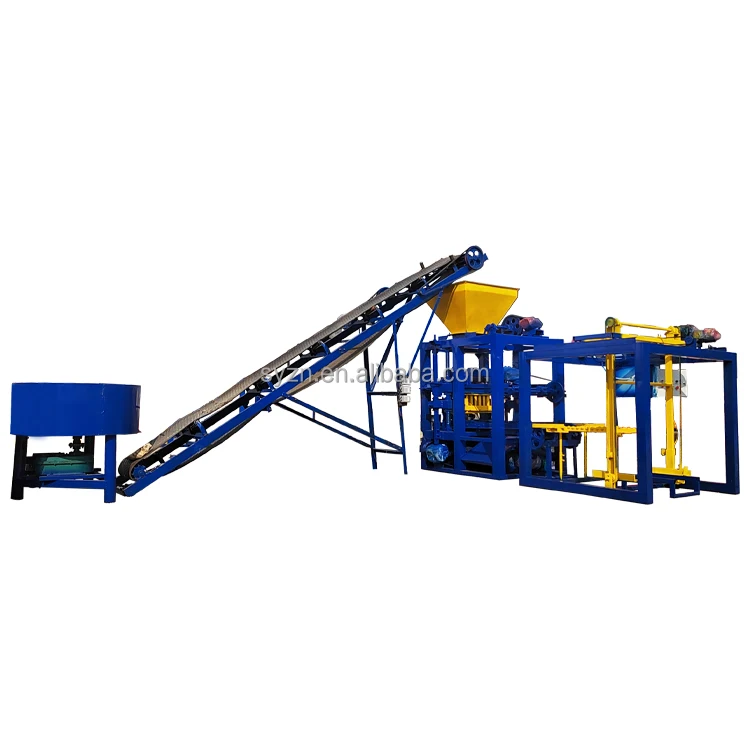
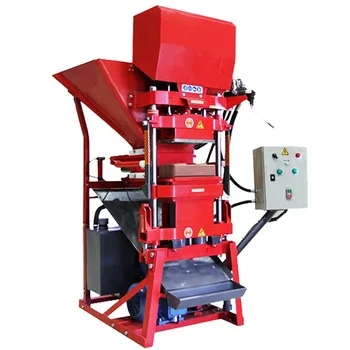
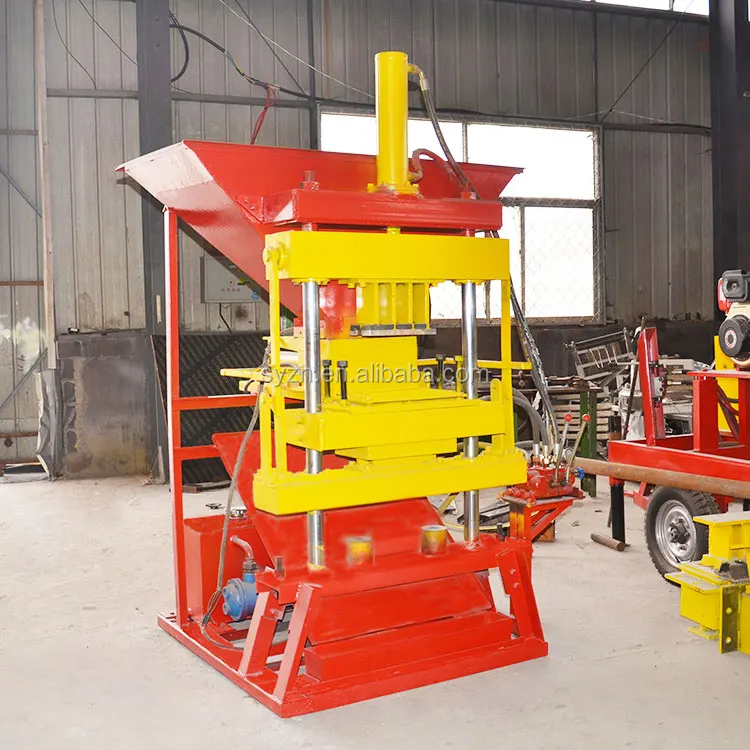
Stocked and configured — Eco7000 units sit fully assembled in the yard, tested against the buyer’s clay source and target interlocking brick format before the container is booked.
Technical Specifications
| Parameter | Value |
|---|---|
| Model | Eco7000 |
| Product Type | Hydraulic Interlocking Clay Brick Machine |
| Overall Dimensions (L×W×H) | 1660×1400×2380 mm |
| Net Weight | 1300 kg |
| Rated Power | 7.5 kW (electric) / 12 HP (diesel) |
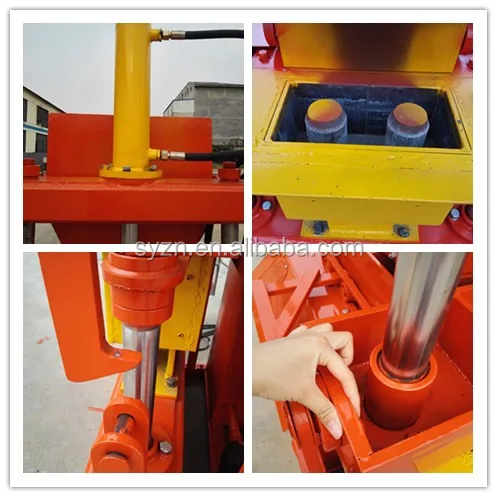
| Hydraulic Pressure | 16–21 MPa |
| Cycle Time | 10–15 s |
| Output Capacity | 4000–6000 pcs/day (8 h) (basis not stated in source — confirm block format / material / thickness) |
| Productivity (300×150×100 mm interlocking block) | 2 pcs/mould, 720 pcs/h, 5760 pcs/day (8 h) |
| Productivity (250×125×60 mm interlocking block) | 2 pcs/mould, 720 pcs/h, 5760 pcs/day (8 h) |
| Pallet Requirement | No pallets required |
| Automation Level | Semi-automatic or automatic (configurable) |
| Voltage & Frequency | 380 V, 3-phase, 50 Hz (customizable to local voltage) |
| Raw Material | Clay + Cement (6–8 % cement, 80–90 % clay, 3 % water) or Full Clay (97 % clay, 3 % water) |
| Assembly State | Fully assembled, nude packing in container |
| Warranty | 1 year (excluding wearing parts) |
Application Suitability
| Application | Material or Output |
|---|---|
| On-site housing project production | Clay + cement interlocking bricks (300×150×100 mm), no curing racks needed |
| First brick plant for entrepreneurs | 250×125×60 mm interlocking pavers from locally sourced clay |
| Contractor stockpiling for infrastructure | Full clay bricks for retaining walls and paving, diesel-powered for off-grid sites |
| Distributor expanding product range | Multiple interlocking formats on a single press with mould swap |
What "Ready to Ship" Actually Means for Your Project Timeline
Stocked means the Eco7000 hydraulic interlocking clay brick machine in stock fast delivery is not a promise — it is a machine sitting on the yard floor, not a slot in a production queue.
I have watched project deadlines slip because a buyer was told their block press was "almost finished" for weeks, only to learn the hydraulics had not even been bench-tested. When a contractor in West Africa needed an interlocking brick line before the rainy season, a delayed shipment cost them an entire building phase. With the Eco7000, the unit is assembled and wet-tested before your balance payment clears, so the container is booked against a known dispatch date, not an estimate [NEED_CITE: typical dispatch timelines for stocked industrial equipment].
Dispatch Certainty Over Catalogue Promises
A stocked hydraulic interlocking clay brick machine in stock fast delivery removes the single biggest variable from your procurement timeline: production lead time. The Eco7000 arrives at the port as a fully assembled unit — no field reassembly of the mainframe, no hydraulic line bleeding on a dusty job site. You open the container, position the press, connect power, and begin mould trials. For contractors working against wet-season windows or housing project milestones, that difference decides whether bricks are curing while foundations are still being poured.
Container Loading and Arrival Estimation
The 1660×1400×2380 mm footprint and 1300 kg weight mean the Eco7000 fits a standard 20 ft container with room for a spare mould set and a first-year wear parts kit alongside [NEED_CITE: standard container internal dimensions and payload limits]. We confirm the container booking and sailing schedule before dispatch, then provide the bill of lading and estimated arrival date so your site team can plan the crane, the foundation pad, and the electrical connection in parallel. No guessing when the machine lands.
How Hydraulic Pressure Shapes Your Interlocking Brick
The 16–21 MPa hydraulic range directly determines the compressive strength of your finished interlocking brick. At the lower end, a clay-cement mix produces a brick suitable for single-storey infill walls; at the upper end, the same mix yields a denser unit rated for load-bearing applications. Cycle time sits between 10 and 15 seconds depending on brick thickness and mix moisture — a 250×125×60 mm paver cycles faster than a 300×150×100 mm structural brick because the thinner profile requires less compression dwell. Pallet-free operation eliminates an entire cost layer: no pallet inventory, no pallet return conveyors, no curing-rack forklift traffic.
When a Cheap Voltage Shortcut Stops the Whole Line
I have seen machines arrive at port with a 380 V motor bolted in, while the buyer’s site runs on 415 V or 220 V three-phase. The result is a commissioning delay of several days while a local electrician sources a transformer or a replacement motor — and that is the cheap scenario. The expensive scenario is a motor winding failure two weeks into production, blamed on "power quality" when the real cause was a voltage mismatch the seller never asked about [NEED_CITE: voltage and frequency standards by export market]. Before any Eco7000 leaves the yard, we confirm your site voltage, frequency, and plug standard in writing.
Why Stocked Inventory Changes How You Plan
Sourcing from stocked inventory means your procurement conversation starts with "when can it arrive" instead of "when can you start building it." For an entrepreneur launching a first interlocking brick plant, that shifts the entire business plan forward — raw material sourcing, labour hiring, and customer commitments all run against a known machine arrival date rather than a factory completion estimate. For a distributor adding clay interlocking bricks to an existing range on short notice, stocked availability means a product launch tied to market demand, not to a supplier’s production calendar. The Eco7000 hydraulic interlocking clay brick machine in stock fast delivery is built around that reality.
Documentation & Verification
- Factory test record run on your specified clay-cement ratio and target brick dimension before dispatch
- Voltage, frequency, and control language confirmed in writing prior to container loading
- Packing photographs showing machine securing and mould placement inside the container
- Customs documentation package including bill of lading, packing list, and certificate of origin
- Operation and maintenance manual covering mould change, hydraulic bleed, and daily grease points
Installation, Commissioning & Support
- 1660×1400 mm footprint requires a level concrete pad with anchor bolt provisions; no special foundation engineering needed for this 1300 kg unit
- 7.5 kW electric motor demands a dedicated three-phase circuit; confirm breaker rating and cable gauge before arrival
- Machine ships fully assembled — position, connect power or diesel fuel, and begin mould trials on day one
- On-site installation and operator training covers approximately one week; buyer covers engineer travel and accommodation
- First-year wear parts kit shipped alongside the press to prevent unplanned downtime waiting for seals or hydraulic hoses
What We Need From You to Confirm Dispatch
To lock your dispatch date, share your target interlocking brick format, the clay source and cement availability near your site, and your local three-phase voltage and frequency. If you are running diesel due to unreliable grid supply, let us know so the 12 HP engine is fitted and bench-tested before loading. We will return a written dispatch schedule with container type, sailing date, and estimated port arrival.
Frequently Asked Questions
Q: Which Eco7000 configurations and moulds are currently stocked for immediate dispatch?
A: We maintain assembled Eco7000 units in both electric and diesel configurations, with standard 300×150×100 mm and 250×125×60 mm interlocking brick moulds on the shelf. Custom mould formats require a short fabrication window. Confirm your target brick size early so we can verify stock or quote the mould lead time alongside the machine dispatch date.
Q: What is the dispatch lead time after balance payment, and how do you estimate arrival?
A: Once balance payment clears and voltage confirmation is received, a stocked Eco7000 is container-loaded within one week. We book the container against a confirmed sailing schedule and provide the bill of lading with an estimated port arrival date. Transit time depends on destination port and shipping line routing.
Q: How is the Eco7000 packed for container or LCL shipment?
A: The machine ships fully assembled in nude packing, secured inside a 20 ft container with steel wire and timber bracing. Spare moulds and wear parts kits load alongside. For LCL orders, a wooden crate is built to protect the hydraulic cylinder and control panel during shared-container transit.
Q: Can the motor voltage be matched to my country’s grid before dispatch?
A: Yes. Voltage and frequency are confirmed in writing before the machine leaves the yard. We swap the motor or reconfigure the winding to match your local three-phase supply — whether 220 V, 380 V, or 415 V at 50 or 60 Hz — so the machine powers up correctly on arrival without a transformer delay.
Q: What does the on-site installation and training week cover?
A: Our engineer supervises positioning, power connection, first mould trial, and hydraulic pressure adjustment to your local clay mix. Operator training covers daily start-up, mould change procedure, cycle timing adjustment, and routine maintenance points. The buyer provides accommodation, per-diem, and travel for the engineer during the approximately one-week visit.