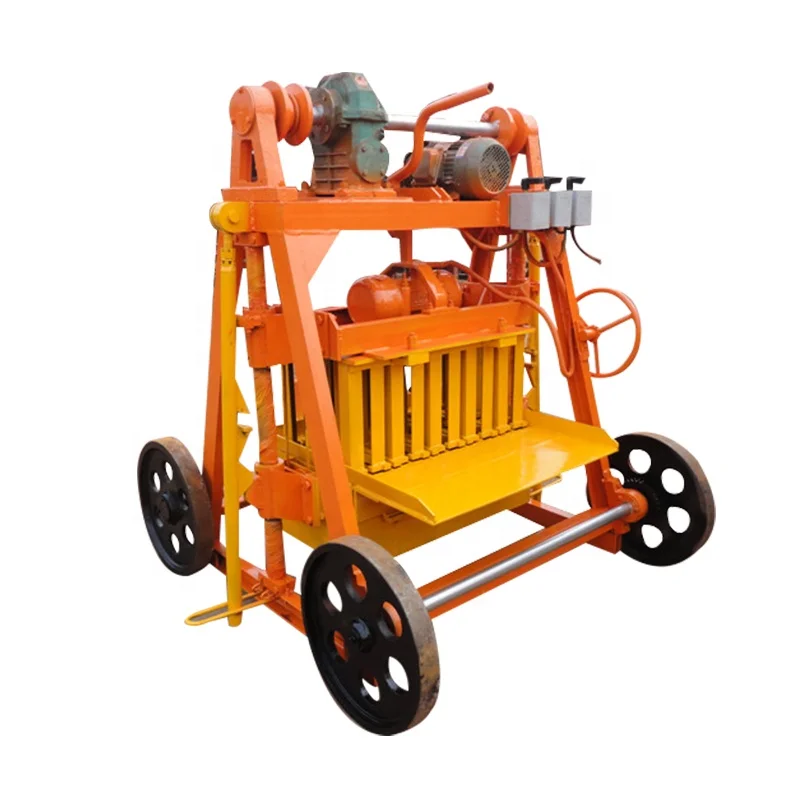
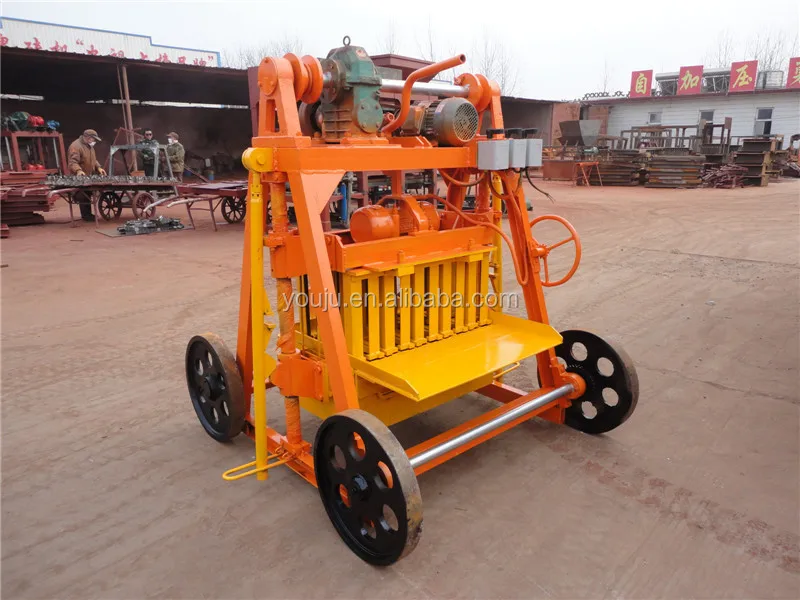

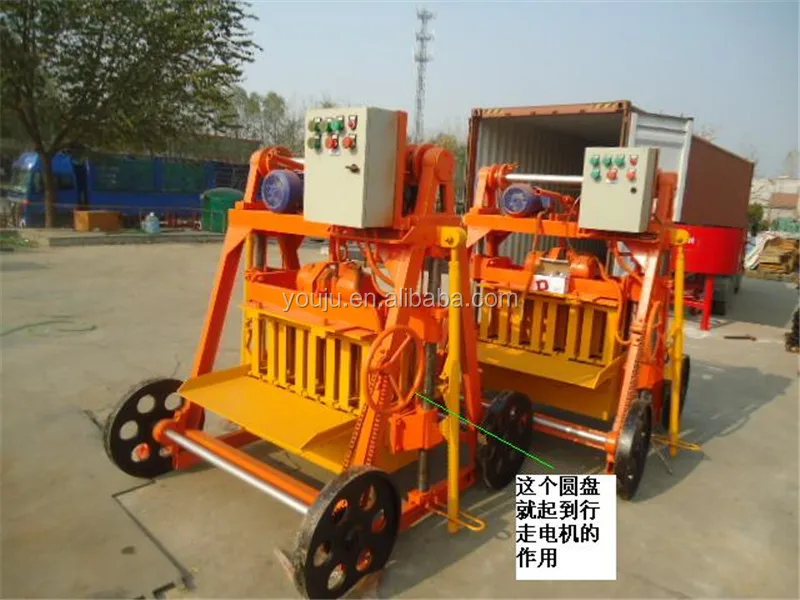
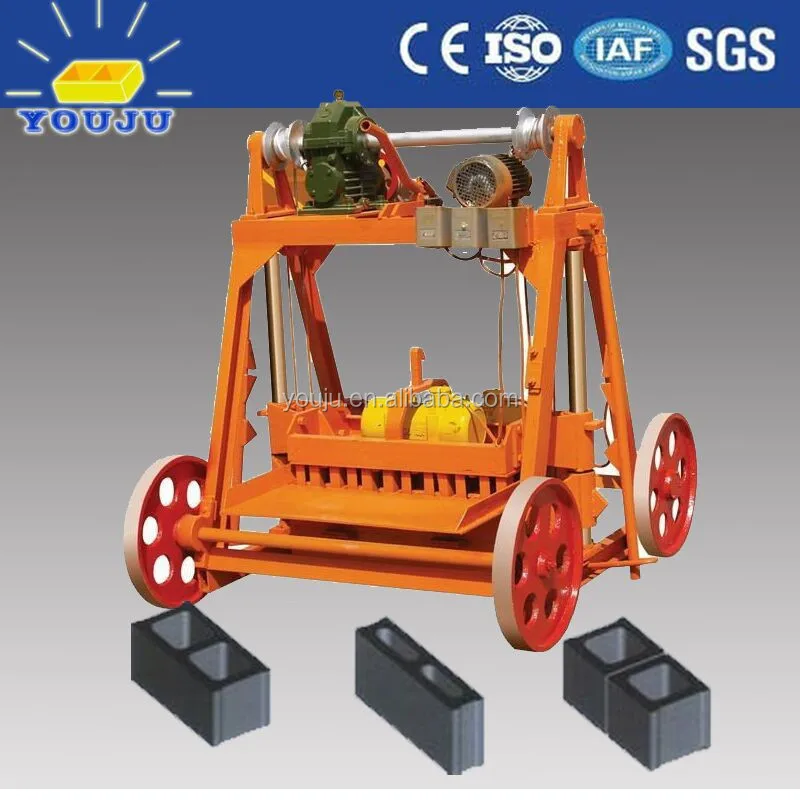
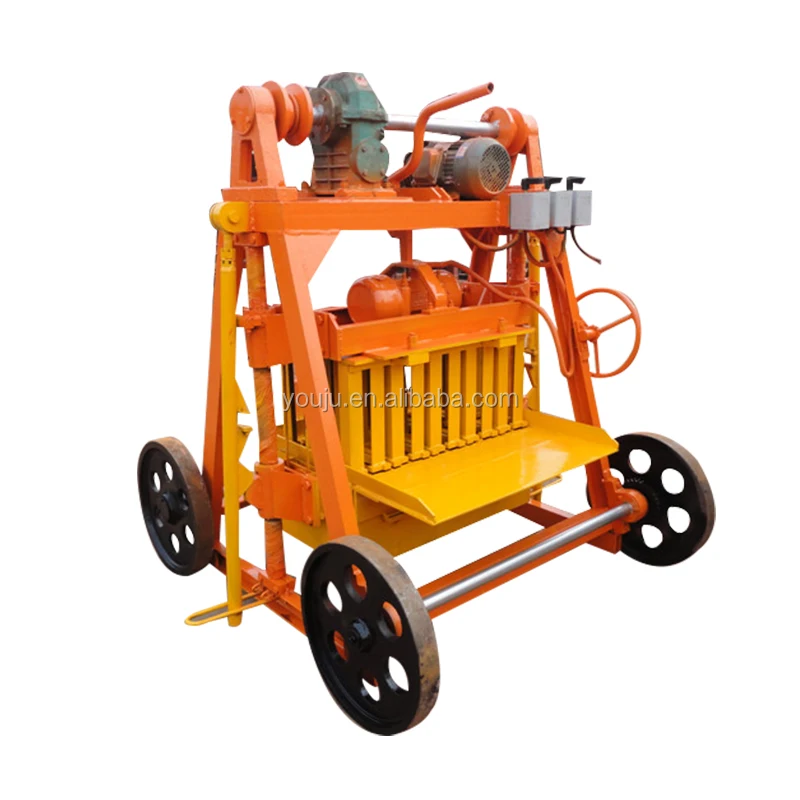
Description
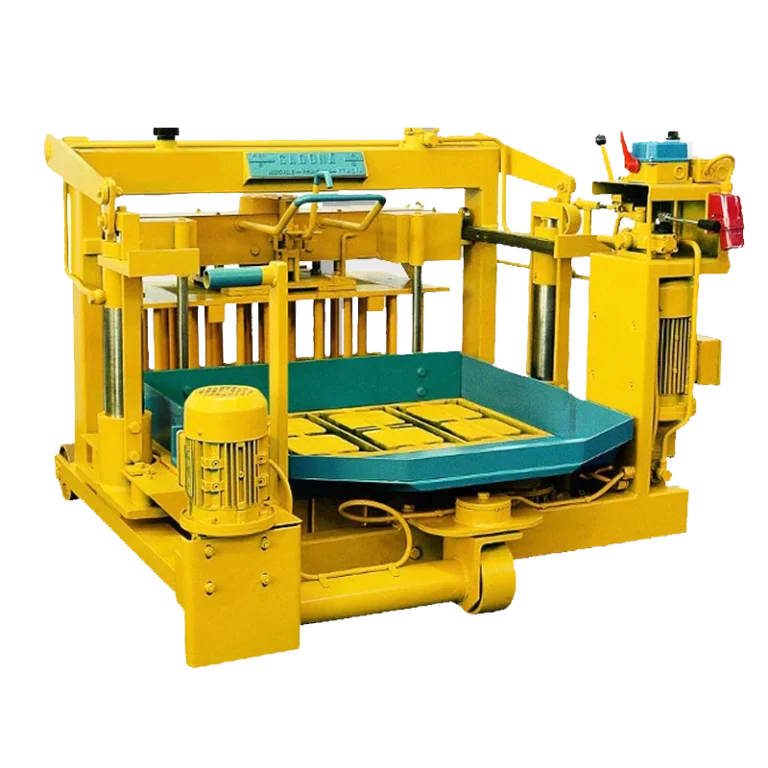
Rapid site deployment — The QMJ4-45 mobile egg laying block machine in stock is configured for immediate dispatch, allowing you to bypass manufacturing lead times and start on-site hollow block production within days of arrival.
Technical Specifications
| Parameter | Value |
|---|---|
| Model | QMJ4-45 |
| Product Type | Mobile Egg Laying Block Making Machine |
| Molding Capacity | 4 pcs/mold |
| Vibration Frequency | 2400 r/m |
| Daily Productivity | 2600-4000 pcs/day (basis not stated in source — confirm block format / material / thickness) |
| Productivity (400×200×200mm Hollow Block) | 3000 pcs/day (8 hours) |
| Productivity (400×150×200mm Hollow Block) | 3500 pcs/day (8 hours) |
| Productivity (400×120×200mm Hollow Block) | 4500 pcs/day (8 hours) |
| Vibration Method | Mold vibration |
| Demold & Turning Method | Manual |
| Total Power | 6 kW |
| Power Resource | Diesel / Petrol engine |
| Molding Cycle | 40-45 s |
| Automation Level | Manual / Egg-laying (mobile) |
| Pallet Requirement | None |
Application Suitability
| Application | Material or Output |
|---|---|
| On-site hollow block production | Cement, sand, crushed stone, fly ash |
| Small-scale cement brick manufacturing | Local aggregate and standard cement mixes |
| Remote construction site block making | Diesel-powered operation independent of grid constraints |
| Housing project block supply | Direct ground-laying without fixed plant infrastructure |
What "Immediate Availability" Actually Means for Your Project Timeline
Stock availability eliminates the standard multi-week production wait and lets your crew begin block laying within days of customs clearance.
When a housing development or road project has a hard deadline, waiting for a machine to be manufactured, tested, and painted is time your schedule does not have. A mobile egg laying block machine in stock changes the timeline from months to weeks. The real constraint becomes shipping duration, not factory scheduling. I have seen contractors miss foundation milestones because equipment was still in a production queue [NEED_CITE: typical manufacturing lead times for block machines]. With a stocked unit, the machine is factory-tested and crated before your deposit clears.
Dispatch Readiness Without Production Delays
The QMJ4-45 is maintained in ready-to-ship condition at our Linyi facility, meaning the machine has already passed its factory run test, hydraulic checks, and vibration calibration. When you place an order, the dispatch clock starts at crating rather than at the beginning of assembly. This mobile egg laying block machine in stock approach suits buyers whose project start dates have already slipped or who are responding to urgent tender requirements where equipment availability is a scoring criterion.
Dismantling and Container Loading for Fast Transit
Before shipment, the QMJ4-45 is partially dismantled to fit standard container dimensions — the hopper, vibration motor housing, and handle assembly are separated and secured within the same crate. Container loading plans are confirmed at the quotation stage so you know exactly which vessel and port pairing gets the fastest transit to your destination. The machine arrives with a packing photograph set so your receiving team can verify condition before the container doors open [NEED_CITE: container loading practices for mobile block machines].
Diesel Power Independence at Remote Sites
One of the most practical advantages of the QMJ4-45 in a site-deployment context is the diesel or petrol engine option. Remote housing projects, road-side kerbstone production, and rural infrastructure work often take place far from stable three-phase grid connections. A diesel-powered egg-laying machine eliminates the need for a generator rental or a costly temporary power installation. The 6 kW total power requirement is easily met by standard small industrial diesel engines that are serviceable in most regional markets.
Why Vibration Frequency and Mold Design Matter More Than You Think
The QMJ4-45 operates at a vibration frequency of 2400 r/m through a mold vibration system, which means the vibration energy is transmitted directly into the mold cavity rather than through a table or frame. This twice-vibration design — where both the mold core and the mold box contribute to compaction — produces denser blocks with more consistent wall thickness compared to single-source vibration. At a 40-45 second molding cycle, the machine produces 4 hollow blocks per mold. However, the actual block strength you achieve depends on matching this vibration frequency to your specific aggregate gradation and cement ratio. I once spent weeks in West Africa adjusting mold amplitude because the local volcanic aggregate required a different resonance point than the factory default setting. The same principle applies here: your mix design determines whether the QMJ4-45 produces blocks that pass compression testing on the first run or need iterative adjustment [NEED_CITE: relationship between vibration frequency and aggregate type in block making].
The Hidden Cost of Overlooking Pallet Logistics
The QMJ4-45 is an egg-laying machine, which means it deposits blocks directly on the ground and walks forward — no pallets required. This sounds simple, but the implications for your operation are significant. Pallet-based machines require you to purchase, store, rotate, and eventually replace thousands of curing pallets, each one representing ongoing cost and logistical overhead. For a first-time block producer or a contractor adding temporary on-site production, eliminating pallets removes an entire procurement and handling chain. The trade-off is that your ground surface must be flat, clean, and able to support freshly molded blocks during the initial curing window. If your site is uneven or muddy, ground preparation becomes a prerequisite that must be planned before the machine arrives [NEED_CITE: ground preparation requirements for egg-laying block machines].
Why Sourcing from a Block Machinery Specialist Matters
Our facility in Linyi focuses exclusively on block machines, molds, pallets, and handling equipment — not a broad machinery catalog where block presses are one line among many. This single-focus approach means the QMJ4-45 you receive has its mold, vibration settings, and engine matched as a system rather than assembled from unrelated suppliers. We confirm voltage, frequency, and control language before production begins, even on stocked units, so commissioning does not stall over a mismatched electrical specification. Each shipment includes a complete mold format list and wear parts schedule so you know which replacement components to order before your first mold change. Stock does not mean generic — it means pre-tested and ready for your confirmation of final configuration details.
Documentation & Verification
- Factory test record showing vibration calibration and cycle timing before crating
- Mold drawing and format list for all hollow block sizes included in shipment
- Diesel engine specification sheet with service intervals and spare parts list
- Voltage and power resource confirmation matched to your site conditions
- Packing photographs documenting machine condition at container loading
Installation, Commissioning & Support
- Minimal ground leveling required; flat concrete surface at least 20 meters long for continuous laying
- Diesel engine startup and break-in procedure conducted during factory test before shipment
- Machine arrives partially dismantled; hopper and handle reassembly takes under one shift with basic tools
- Mold vibration frequency pre-set at factory; fine-tuning on local aggregate done during first production day
- Manual demold and turning operation requires two operators; training covers cycle rhythm and mold release technique
- Wear parts list provided at shipment covering vibration springs, mold liners, and engine consumables
What We Need to Confirm Your Dispatch Window
To give you an accurate arrival estimate, we need your destination port, preferred block format from our available mold stock, and confirmation of whether the diesel or petrol engine option suits your site. Share your project start date and we will map the dispatch and shipping timeline backward from it.
Frequently Asked Questions
Q: Is the QMJ4-45 currently in stock and what is the dispatch lead time?
A: The QMJ4-45 is maintained in ready-to-ship condition. Dispatch lead time depends on container booking availability from Linyi to your destination port. Once your configuration is confirmed — including mold format and engine type — crating and container loading can begin within days. We provide an arrival estimate quoted upfront based on current shipping schedules.
Q: Which block formats are available with the machine from stock?
A: Standard stocked molds include 400×200×200mm, 400×150×200mm, and 400×120×200mm hollow blocks. Daily productivity ranges from 3000 to 4500 pieces per 8-hour shift depending on which format you select. Additional mold formats may require a short production window. We confirm the exact mold list included in your quotation before you commit.
Q: Can the diesel engine be started and tested before shipment?
A: Yes. Every QMJ4-45 with a diesel or petrol engine undergoes a factory run test that includes engine startup, vibration calibration, and at least one full molding cycle. The test record is included in your documentation package. If you want a video of the test run on your specific mold, we can arrange that before crating.
Q: How is the machine dismantled for container loading?
A: The hopper assembly, vibration motor housing, and operating handles are separated from the main frame to fit standard container dimensions. All components are secured within the same crate. A packing photograph set documents the loading arrangement so your receiving team can verify completeness on arrival.
Q: What is the arrival estimate once shipped?
A: Arrival depends on your destination port and current vessel schedules. From Linyi, transit times vary by region. We quote the arrival estimate at the quotation stage based on the fastest available container booking, so you can plan your project timeline around a confirmed date rather than a guess.