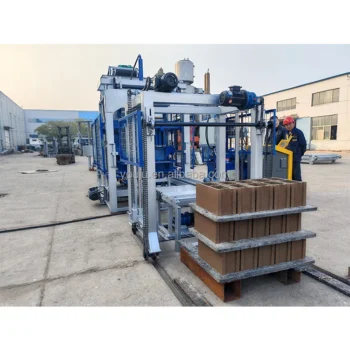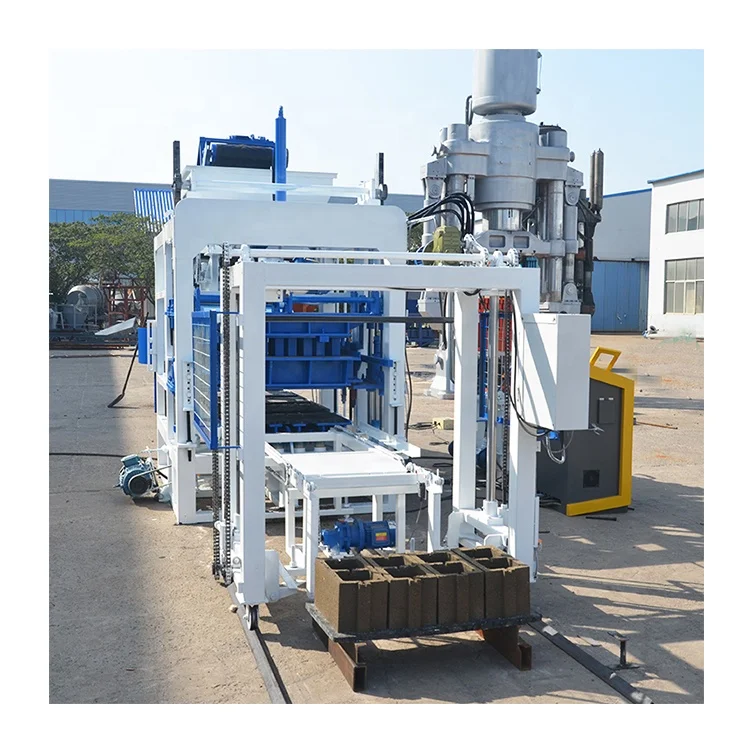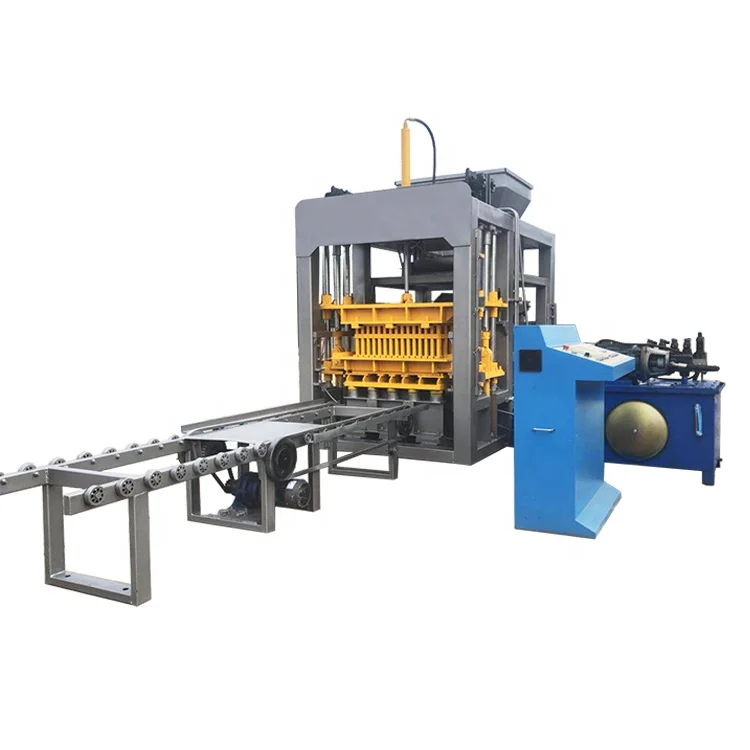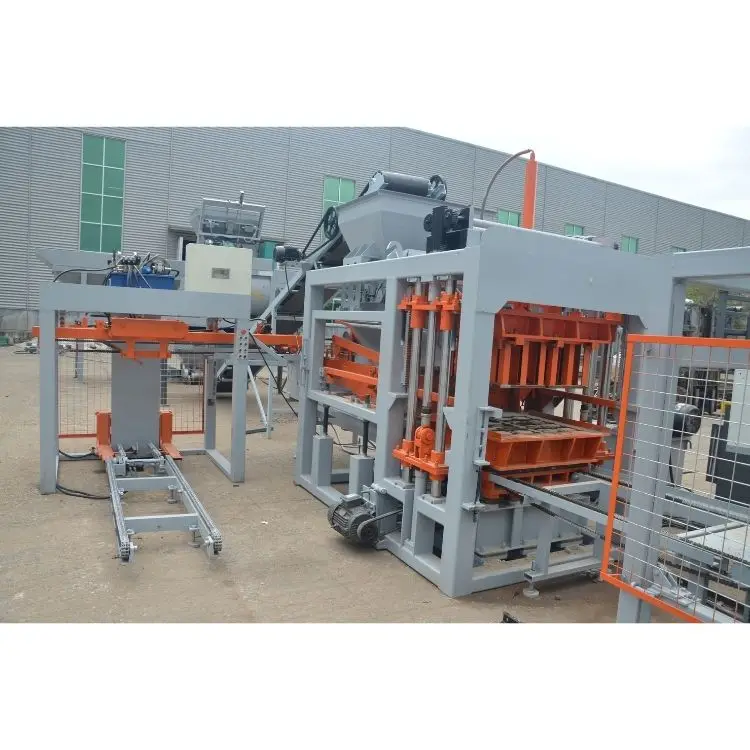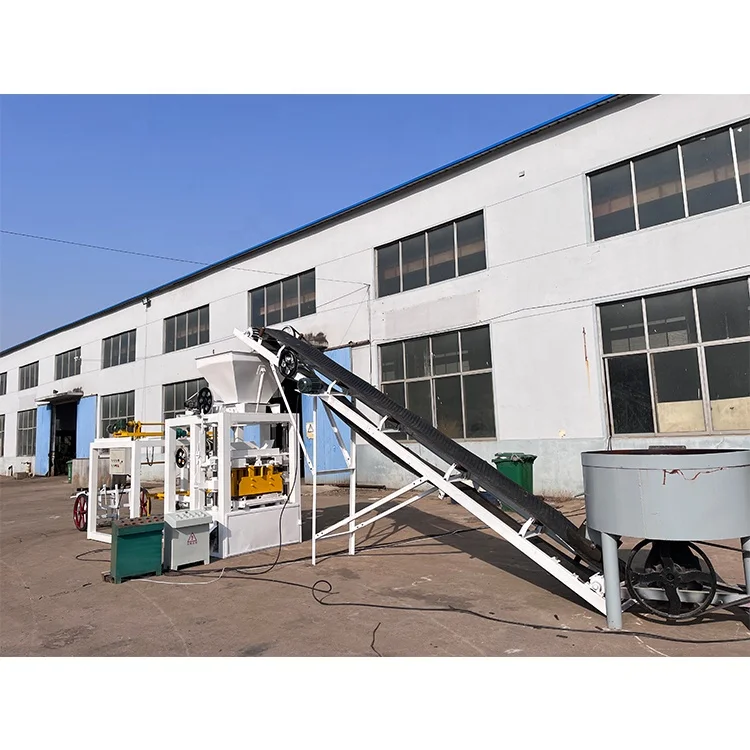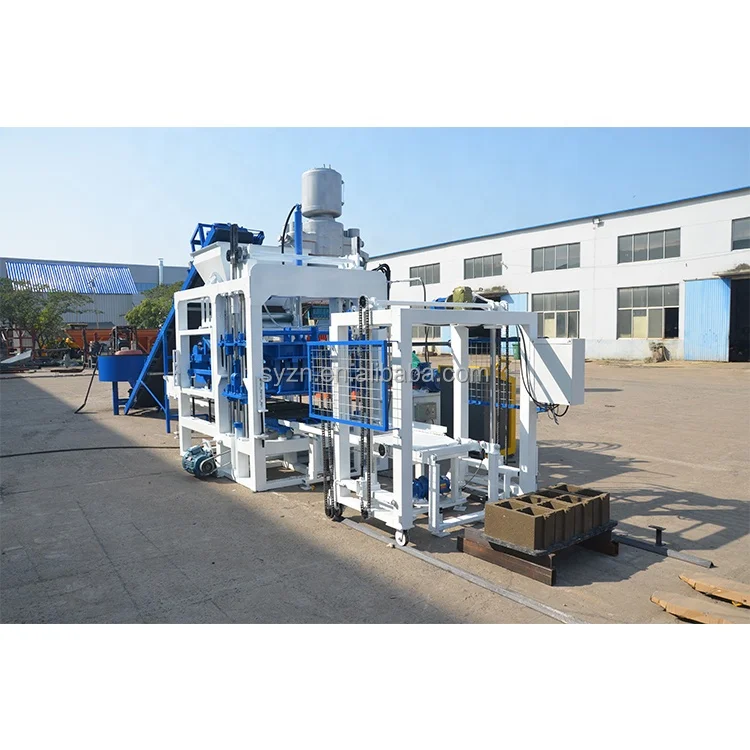

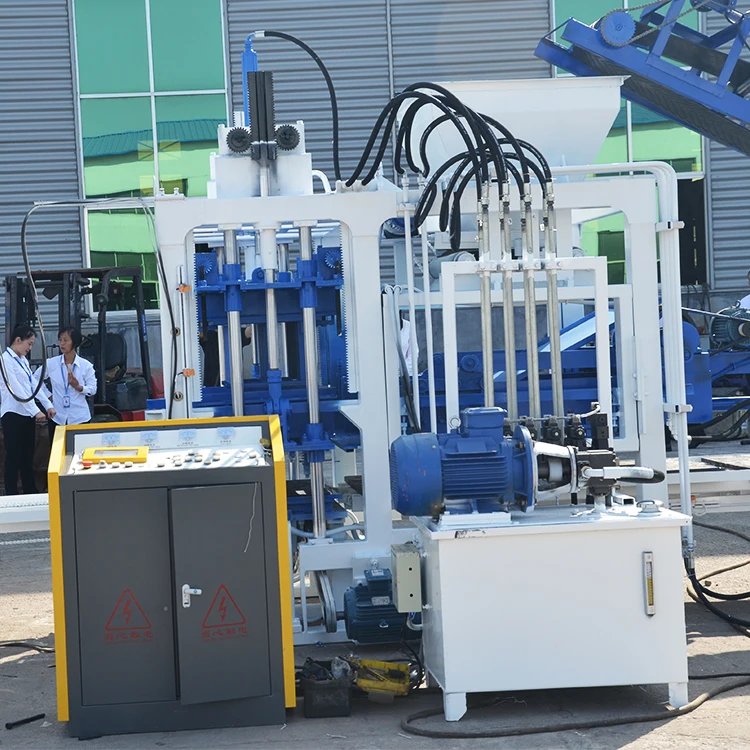
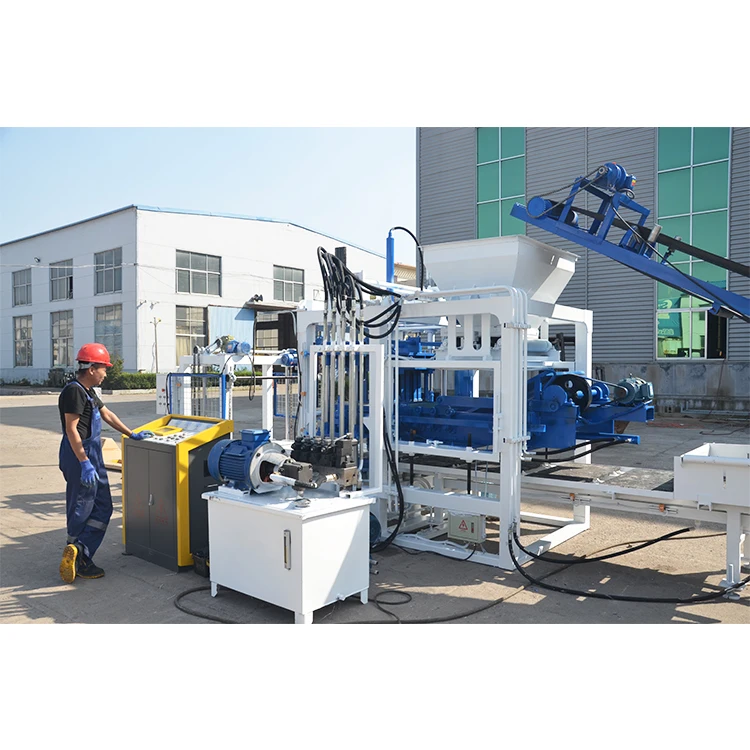
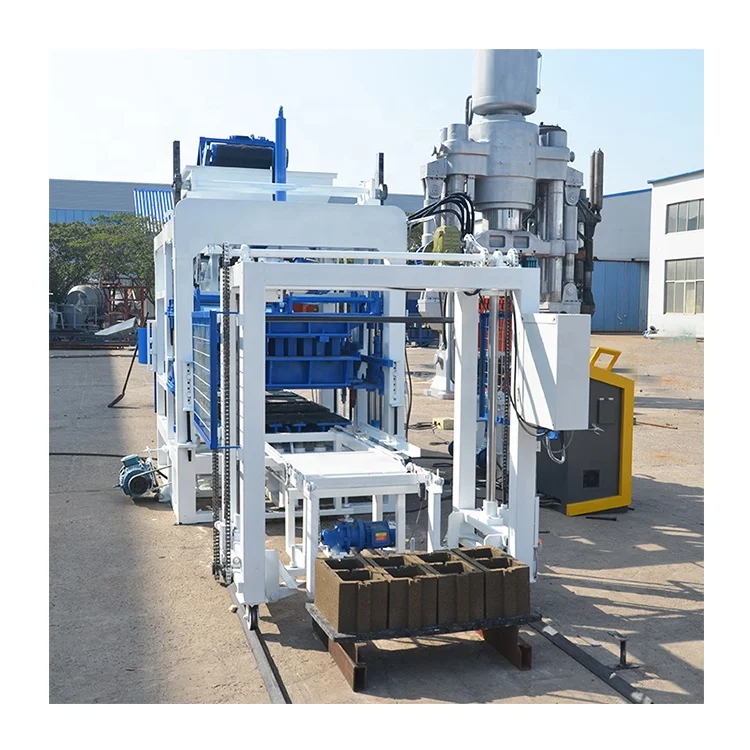
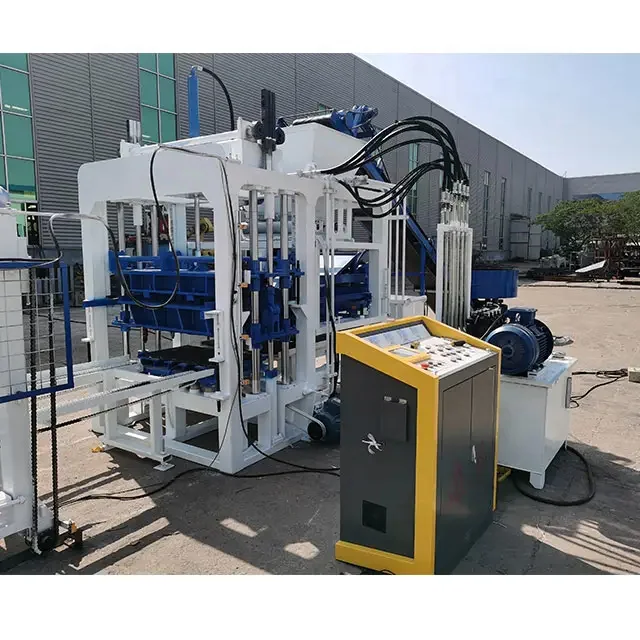
Description
Stocked and Ready to Sail — QT4-18 units, mixers, stackers and standard moulds held in inventory so your container can be booked while competitors are still waiting on a build slot.
Technical Specifications
| Parameter | Value |
|---|---|
| Product Type | Hydraulic Concrete Block Making Machine |
| Model | QT4-18 |
| Overall Dimensions (L×W×H) | 3900×1600×2300 mm |
| Total Weight | 3 T |
| Rated Power | 24 kW |
| Vibration Force | 40–50 kN |
| Molding Cycle | 15–25 s |
| Pallet Size | 850×550×25 mm |
| Mixer Model | JQ350 |
| Automation Level | Semi-automatic with automatic stacker |
| Mould Format Range | Hollow block, solid brick, paver, curbstone |
| Output Capacity | 1200–1680 pcs/hr based on 400×200×200 mm hollow block, 4 pcs/mould |
| Output Capacity | 1800–2400 pcs/hr based on 400×150×200 mm hollow block |
| Output Capacity | 3240 pcs/hr based on 240×115×53 mm solid brick |
| Daily Output | 9600–13440 pcs/8 hr based on 400×200×200 mm hollow block |
| Daily Output | 14400–19200 pcs/8 hr based on 400×150×200 mm hollow block |
| Raw Materials | Crushed stone, sand, cement, fly ash, dust |
| Voltage & Frequency | Configurable to buyer site requirement (basis to be confirmed) |
| Control System | To be confirmed (PLC or MCC) |
| CE Certification | To be confirmed per destination market |
Application Suitability
| Application | Material or Output |
|---|---|
| Hollow block production for masonry walls | 8", 6", 5", 4" formats from crushed stone, sand and cement |
| Solid brick production | 240×115×53 mm format from local aggregate and cement |
| Paving block and curbstone production | Interlocking and kerb formats with fine aggregate face mix |
| On-site contractor block making | Housing project output from site-available sand and stone |
| Small to medium block plant startups | Semi-automatic line for entrepreneurs entering the market |
What "In Stock" Should Actually Mean for Your QT4-18 Block Machine Order
Stock means the host machine, mixer, stacker and at least one mould set are physically available — not that a build slot opened up next month.
I have watched buyers pay deposits on machines described as "available" only to discover the mixer was on a six-week lead and the moulds had not been cast. A genuine QT4-18 block machine in stock should let you confirm container booking within days, not weeks. The gap between quoted availability and real dispatch is where project deadlines quietly collapse [NEED_CITE: typical block machine component lead times in Shandong manufacturing cluster].
Dispatch Timing You Can Put on a Gantt Chart
When a buyer tells me their housing project breaks ground in five weeks, the first question is not which machine fits — it is whether the QT4-18 block machine in stock can physically clear customs at their port before the first pour. We confirm which configurations are warehouse-ready, which standard moulds are on the shelf, and which items still need assembly, then quote the sail date before any payment changes hands.
Container Loading Without Surprises
The QT4-18 breaks down into host machine, JQ350 mixer, conveyor, stacker and pallet stack. Each sub-assembly has a loading sequence that either fits a 40-foot high-cube container cleanly or forces an expensive second shipment. We provide the dismantling and loading plan in writing so the freight forwarder can book with confidence [NEED_CITE: container loading standards for heavy industrial machinery export].
Voltage and Language Locked Before the Crate Closes
A machine wired for 380V/50Hz landing in a 440V/60Hz market will idle on the dock until a transformer arrives. We confirm voltage, frequency and PLC display language during the order stage — not during commissioning — because re-wiring a hydraulic station on a dusty site costs more than a week of lost production.
Pallet Size and Curing Area Compatibility
The 850×550×25 mm pallet is standard for this tier, but your curing yard and forklift may not be. If your existing racks were built around a different pallet dimension, every wet block coming off the stacker will need manual re-stacking before it reaches the yard. We ask for your curing layout before dispatch, not after.
Reading the Specs That Actually Matter on Site
The 40–50 kN vibration force paired with the hydraulic station determines whether your hollow block holds its shape after demoulding or slumps at the web. Desert sand with a high fines content needs more vibration energy to compact, while crushed basalt demands higher hydraulic pressure to lock the aggregate matrix. The 15–25 second molding cycle gives the operator room to adjust for mix variations without stalling the line. The 24 kW rated power is modest enough to run from a site generator, which matters when the grid connection is still six months away.
The Hidden Cost of Skipping the Stock Verification
Buyers who accept "available" without a written component list often find the automatic stacker is on backorder or the quoted pallet count covers only two days of production. Hand-stacking 13,000 blocks a day with a two-person crew is not semi-automatic operation — it is manual labour with a hydraulic press in the middle [NEED_CITE: labour requirements for semi-automatic block production lines]. Confirming the exact inventory snapshot before payment protects your crew plan and your project timeline.
Why Source This Machine Here
Single-focus inventory means the QT4-18 block machine in stock ships with a mixer, conveyor and stacker specified as a matched set, not assembled from three different suppliers on the day of loading. Dispatch lead time is quoted in writing against the actual warehouse snapshot, not a production calendar. Standard moulds for hollow, solid, paver and curbstone formats are held alongside the host machines. Container loading plans and packing photographs are provided before the container doors close. Customs documentation is prepared to match the destination port’s requirements, not a generic template.
Documentation & Verification
- Factory test record running your target block format before crating
- Machine specification sheet with confirmed voltage and frequency for your site
- Mould drawing and format list matching the cavity count shipped
- Pallet specification with dimensions and material grade confirmed
- Packing photographs taken before container doors seal
- Hydraulic and electrical schematic in the language of your maintenance team
Installation, Commissioning & Support
- Foundation pad sized to the 3900×1600 mm footprint with vibration isolation provisions
- Dedicated 24 kW power circuit with confirmed voltage and frequency before connection
- Host machine, mixer and stacker reassembled on site with alignment checked against factory test record
- First-run parameter tuning for your local aggregate and cement source
- Operator training covering mould change, pallet feed and hydraulic station maintenance
- Wear parts list with reorder intervals for your target daily output
What We Need from You to Quote a Sail Date
Send the block format your market actually buys, the daily output you need on an eight-hour shift, and the raw materials available within hauling distance of your site. Confirm your site voltage, frequency and the language your operators read. If you already have a curing yard and forklift, share the pallet dimensions they were built around so we can verify compatibility before the QT4-18 leaves the warehouse.
Frequently Asked Questions
Q: Which QT4-18 configurations are currently in stock and what is the dispatch lead time?
A: Stocked units include the host machine with hydraulic station, JQ350 mixer, conveyor and automatic stacker. Standard hollow block and solid brick moulds are typically shelf-ready. Once your voltage, frequency and control language are confirmed, the dispatch window is quoted in writing against the current warehouse snapshot — not a generic estimate.
Q: How is the QT4-18 packed and loaded into a container for shipment?
A: The line breaks down into the host press, mixer, conveyor, stacker and pallet stack, each secured with steel bracing inside a 40-foot high-cube container. A loading plan with dismantling sequence is provided before booking so your freight forwarder can confirm the sail date without surprises at the yard.
Q: What standard moulds ship with the machine and which are made-to-order?
A: Standard stock covers hollow block, solid brick, paver and curbstone formats commonly sold across Middle East and African markets. Specialized interlocking profiles or custom buyer-drawn formats are cast to order and quoted with their own lead time alongside the machine dispatch date.
Q: Can voltage and control language be confirmed before dispatch?
A: Yes. Voltage, frequency and PLC display language are locked during the order stage so the electrical cabinet arrives configured for your site. Changing these after the machine is crated means on-site rewiring and reprogramming, which delays commissioning and costs more than confirming upfront.
Q: What is the estimated arrival time from order to port for common destinations?
A: Sea transit from Shandong to Middle East and East African ports typically runs in the range of several weeks depending on the shipping line and transshipment points. We quote the estimated arrival window at order confirmation so you can align your foundation work and crew mobilisation to a realistic timeline.