

Description
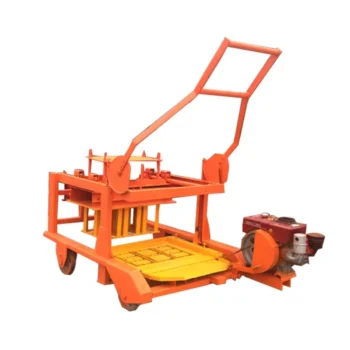
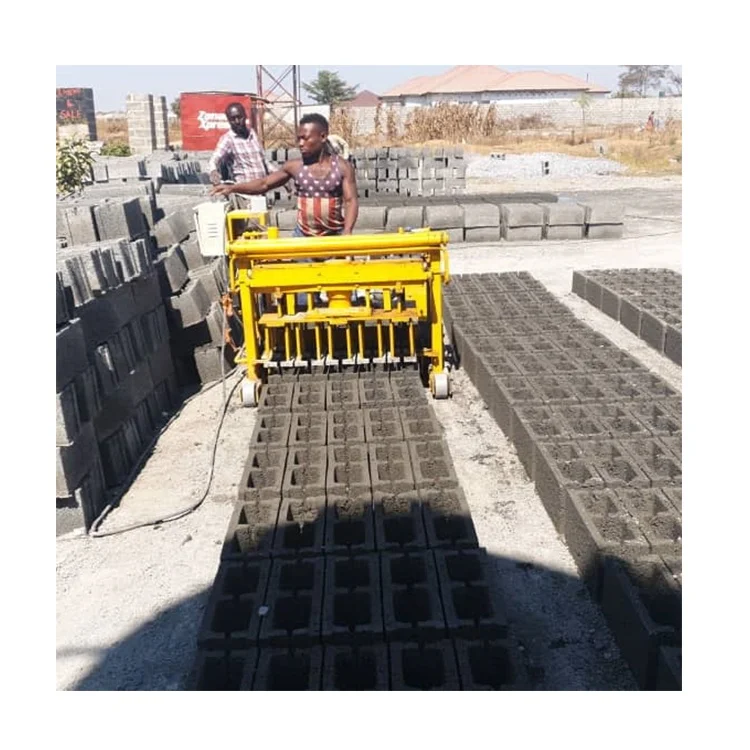
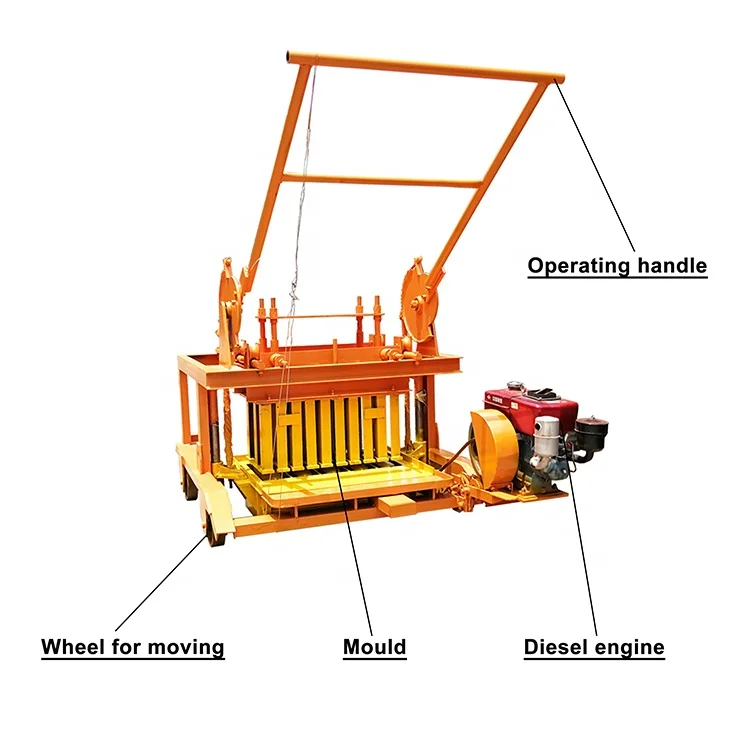
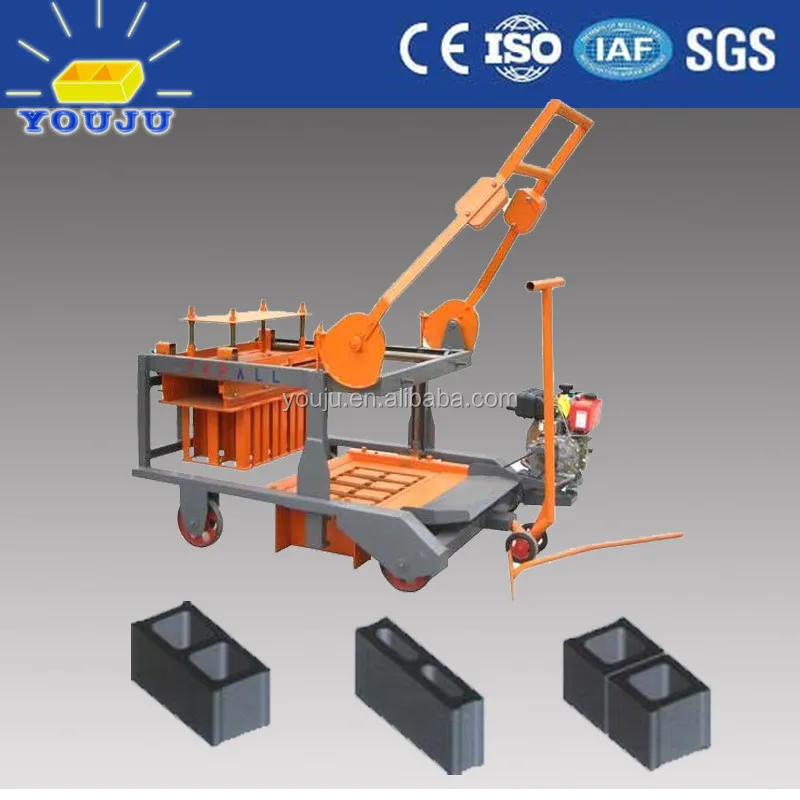
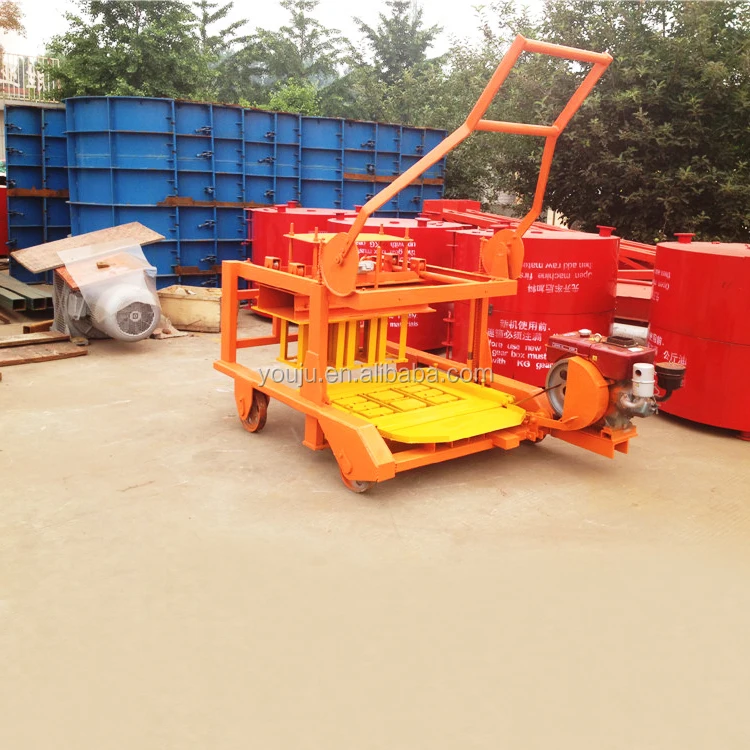
Stock-Ready Mobile Press — QMR4-45 diesel egg laying block machine held in yard inventory with standard hollow and solid moulds, dispatched within days rather than built against a project clock.
Technical Specifications
| Parameter | Value |
|---|---|
| Model | QMR4-45 |
| Product Type | Mobile Diesel Concrete Block Making Machine (Egg Laying Type) |
| Dimension | 2420 × 1320 × 1650 mm |
| Weight | 810 kg |
| Moulding Cycle | 40–45 s |
| Pallet Size | No pallet required |
| Power | 6 kW (electric) or 6–8 HP (diesel engine) |
| Voltage | 220 V / 380 V / configurable to local supply |
| Automation Level | Semi-automatic / Manual operation |
| Assembly State | Integrated mobile unit |
| Application Formats | Hollow block, solid block, paving brick (via mould change) |
| Warranty | One year for the complete machine |
| Productivity | 3000 pcs/day based on 400×200×200 mm hollow block |
| Productivity | 3500 pcs/day based on 400×150×200 mm hollow block |
| Productivity | 4500 pcs/day based on 400×120×200 mm hollow block |
Application Suitability
| Application | Material or Output |
|---|---|
| On-site hollow block production | Crushed stone, sand, cement and water mix laid directly on compacted ground |
| Remote housing project block supply | Diesel-powered operation where grid electricity is unavailable or unreliable |
| Small-scale solid block manufacturing | Cement and local aggregate for load-bearing wall units |
| Paving brick runs for site pathways | Interlocking or rectangular paver formats via mould swap on the same chassis |
Why "3000 Blocks a Day" Means Nothing Without the Format Attached
Every capacity figure on this page is tied to a specific block dimension — no standalone daily totals are quoted.
I once shipped a QMR4-45 mobile block machine in stock to a buyer who saw the headline output number and planned his crew schedule around it. What he did not factor in was that the quoted figure assumed the largest hollow block format in the mould catalogue. When his market demanded the thinner partition block, his masons were waiting for fresh stock because the cycle count per block changed while the cycle time stayed constant. That mismatch stalled a housing phase by two full weeks [NEED_CITE: block format assumptions in capacity quoting]. This is why every dispatch conversation now starts with the buyer’s actual selling format, not a brochure number.
Dispatch Timeline from Yard to Port
The QMR4-45 is an integrated mobile unit that does not require dismantling into sub-assemblies before loading. The 810 kg weight and 2420 mm length allow a standard 20-foot container to carry one complete machine with its diesel engine, mould set and operator toolkit secured on the container floor. Once payment confirmation clears, the machine moves from yard to port staging within a typical multi-week lead time. Buyers working against a construction start date receive a dispatch window at quotation stage, not after production begins.
Arrival Estimation Before You Commit
Destination port transit time is quoted alongside the machine price so the buyer can map arrival against a project mobilisation schedule. The mobile block machine in stock status means no production queue stands between the order and the loading bay. Container booking is arranged once the destination port and voltage confirmation are locked in, and the arrival estimate is updated if the shipping line revises its sailing schedule [NEED_CITE: container transit variability by lane].
Reading the Specs That Actually Matter on Site
The 40–45 second moulding cycle is a fixed mechanical rhythm — the vibration table compacts the mix, the mould lifts, and the machine advances on its wheels to the next laying position. That cycle time does not change whether the mould cavity produces one large hollow block or two smaller ones, which is why daily output shifts with format selection. The 6–8 HP diesel engine removes grid dependency entirely, making this machine viable for greenfield sites where power installation has not yet been completed. No pallets are consumed during production; the freshly formed block sits directly on the compacted ground surface, eliminating a recurring consumable cost and the logistics of pallet return from the curing area. The 220 V / 380 V electric motor option serves sites that already have a generator or temporary grid connection in place.
What Happens When the Raw Material Is Wrong
A buyer once sent the QMR4-45 into a region where the only available aggregate was lightweight volcanic ash. The machine arrived on schedule and started producing, but the low-density ash required a longer vibration period to achieve acceptable block strength. The 40–45 second cycle had to be extended manually, and daily output dropped noticeably against the quoted figure tied to standard crushed stone. Masons on site were left waiting for blocks because the feed material had never been tested before dispatch [NEED_CITE: aggregate density impact on vibration compaction time]. A raw material sample review before the machine leaves the yard would have flagged the mismatch and adjusted expectations before the container sailed.
What This Supply Point Actually Delivers
The QMR4-45 is held as a stocked model rather than built to order, which is the reason dispatch dates can be confirmed at the quotation stage. Standard hollow and solid moulds ship with the machine, so the first production run happens on arrival day rather than waiting for a secondary shipment. Voltage and control language are confirmed before the machine is crated, preventing a commissioning delay once it reaches the site. The one-year warranty covers the full machine including the diesel engine, not just the press frame. Packing photographs are shared with the buyer before the container is sealed, providing a visual record for insurance and customs purposes.
Documentation & Verification
- Factory test record showing moulding cycle on the buyer’s specified block format before dispatch
- Voltage and frequency confirmation sheet matching the destination country grid standard
- Machine specification document listing all included moulds and their block dimensions
- Packing photographs documenting crating condition before the container door closes
- Operation manual covering diesel engine start-up and mould change procedure
Installation, Commissioning & Support
- Level compacted ground area of at least 3 × 2 m required for the machine’s 2420 × 1320 mm footprint to operate and advance
- Diesel engine arrives with initial oil fill; buyer supplies fuel from day one on site
- Mould change between hollow and solid format uses hand tools included in the shipped kit
- First production run supervised via remote video call to confirm cycle timing on local aggregate
- Vibration table bearings greased per the maintenance schedule in the operation manual
What We Need From You to Confirm Dispatch
To lock in a sailing date, share the block format your market currently sells and the daily volume your crew can handle. Confirm the destination port and whether the site will run on diesel or electric power. If your local aggregate is anything other than standard crushed stone and sand, send a sample description so the cycle time expectation is set before the machine is loaded.
Frequently Asked Questions
Q: Is the QMR4-45 currently in stock or built after order confirmation?
A: The QMR4-45 is held in yard stock with standard hollow and solid moulds already fitted. Once voltage and destination port are confirmed, the machine moves to container loading within the quoted dispatch window. No production queue is involved for this model.
Q: What is the estimated arrival time to my destination port?
A: Transit time depends on the shipping lane from the port of loading to your destination. A sailing schedule estimate is provided at quotation stage and updated once the container is booked. The stock status of the machine means the departure date is not delayed by a build cycle.
Q: How is the machine prepared for container loading?
A: The QMR4-45 ships as an integrated mobile unit on its own wheels. At 810 kg and 2420 mm in length, it fits inside a standard 20-foot container without dismantling into sub-assemblies. The diesel engine, mould set and toolkit are secured alongside it on the container floor.
Q: Can voltage and engine type be confirmed before the machine ships?
A: Yes. The electric motor is available in 220 V or 380 V and can be configured to match local supply. The diesel engine option is a 6–8 HP unit for off-grid sites. Both options are confirmed during the order process so the correct configuration is loaded before dispatch.
Q: What paperwork ships with the machine for customs clearance?
A: The shipment includes a commercial invoice, packing list, machine specification sheet and a factory test record. A CE declaration is provided where applicable. All documents reference the QMR4-45 model and the included mould list for straightforward customs processing at the destination port.