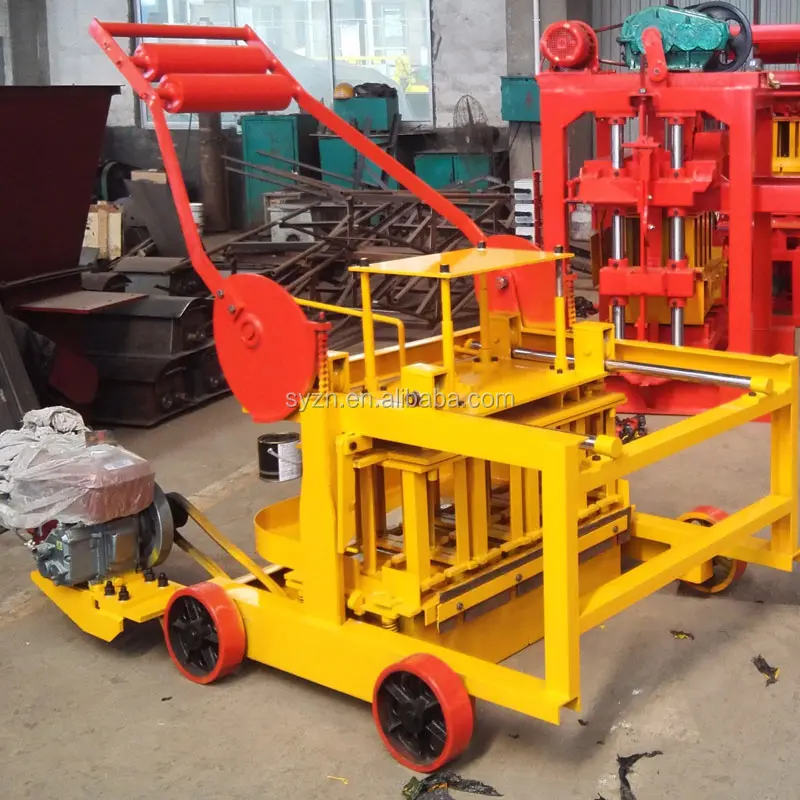


Description
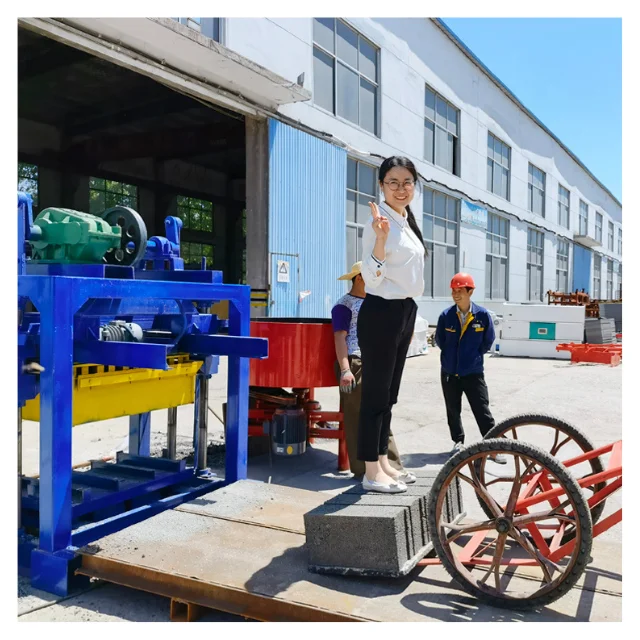
Stocked mobile press — QMR4-45 units sit ready in our Linyi yard, voltage confirmed per destination before the crate is closed, so dispatch waits on the buyer’s schedule, not our assembly line.
Technical Specifications
| Parameter | Value |
|---|---|
| Model | QMR4-45 |
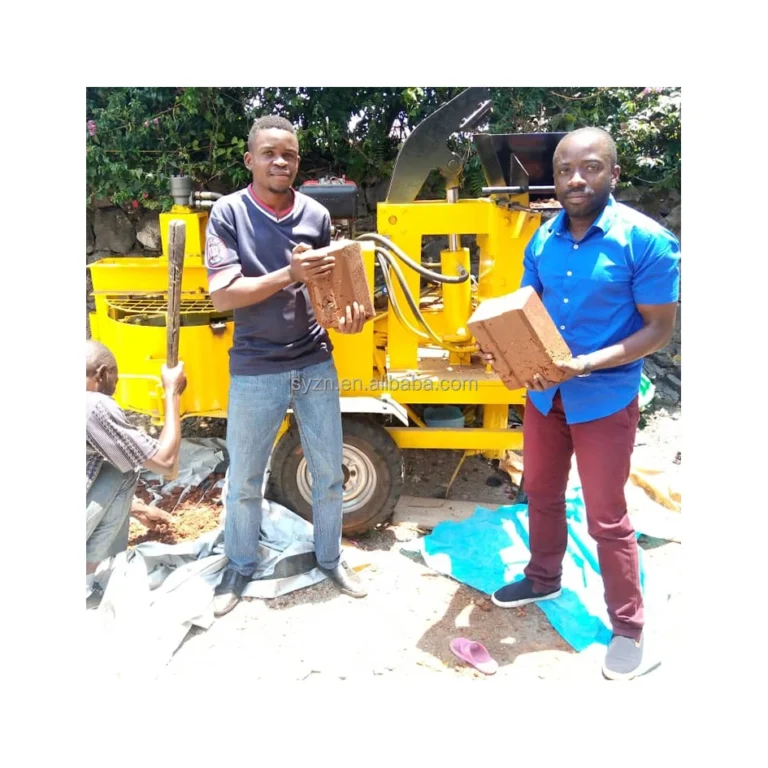
| Product Type | Mobile Block Making Machine |
| Overall Dimensions (L×W×H) | 1100 × 950 × 2100 mm |
| Net Weight | 810 kg |
| Power Source | Diesel engine / Petrol engine / Electric motor |
| Molding Cycle | 30–45 s |
| Output Capacity | 2,560 pcs/day (basis not stated in source — confirm block format, material and thickness) |
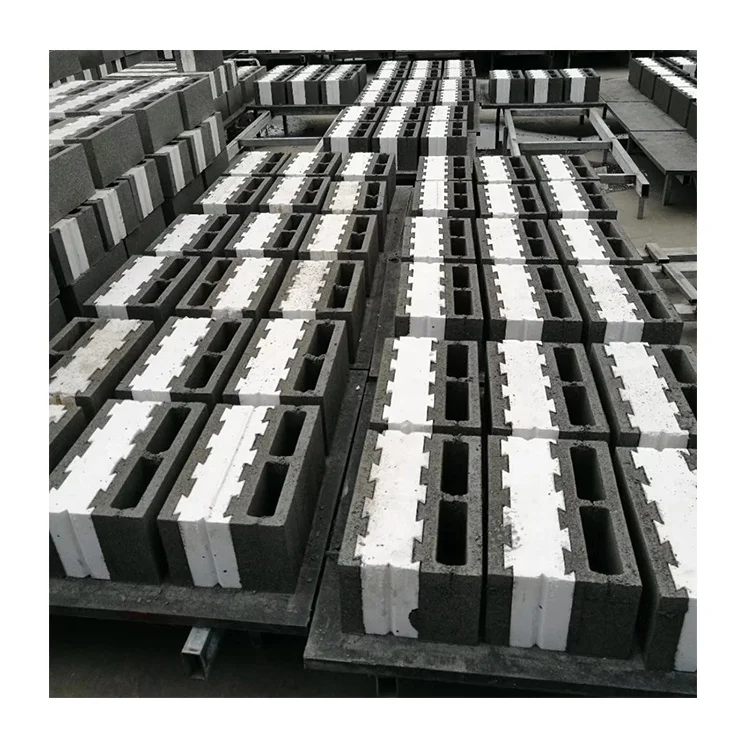
| Mould Format Options | Paver brick, hollow block, concrete block, solid brick, fly ash brick |
| Pallet Requirement | None — pallet-free egg-laying operation |
| Mobility | Mobile, relocated on site by small crane or forklift |
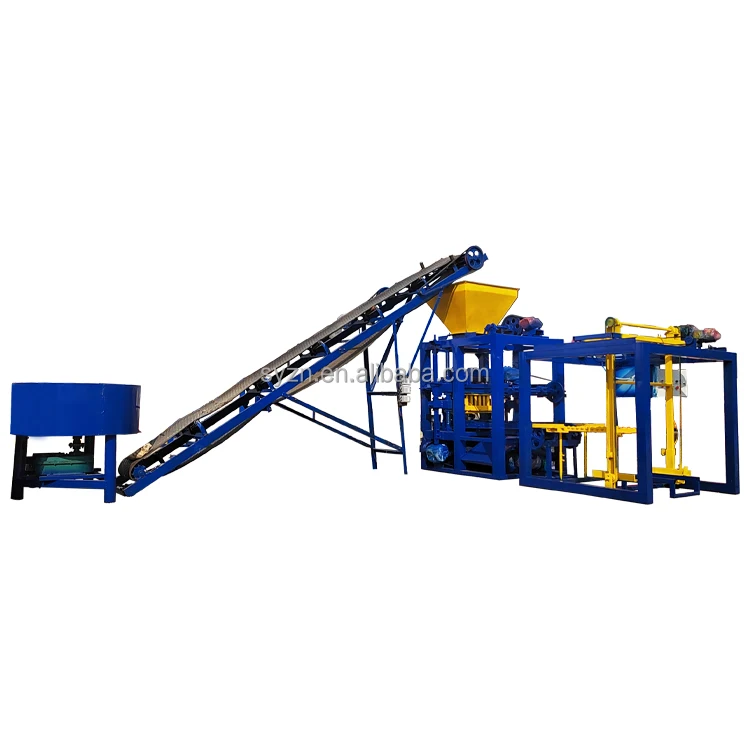
| Basic Equipment Included | JZC350 diesel concrete mixer or JQ350 diesel mixer with electric generating unit; trolley |
| Automation Level | Semi-automatic with manual trolley handling |
| Warranty | 1 year |
Application Suitability
| Application | Material or Output |
|---|---|
| On-site hollow block production | Crushed stone, sand and cement for housing project walls |
| Solid brick manufacturing | Fly ash and cement blends for load-bearing masonry |
| Paver brick runs | Fine aggregate and cement for walkway and driveway surfaces |
| Remote infrastructure blocks | Locally sourced sand and gravel without grid power access |
| First plant start-ups | Low-volume runs where fixed-plant investment is not justified |
Why the Voltage Question Must Come Before the Container Booking
Confirming voltage and frequency before production prevents a three-week standstill on site.
A mobile block machine that ships with a 380 V motor to a 440 V job site becomes dead weight. I have watched crews stand around an unpacked press while a replacement motor crossed two borders [NEED_CITE: voltage and frequency standards by export market]. With the QMR4-45 Mobile Block Making Machine in stock, the power source — diesel, petrol, or electric — is locked in during the quotation stage, not assumed. For electric variants, the motor nameplate must match the destination grid before the machine enters the container, because rewiring on a remote construction site is neither fast nor cheap.
Stock on the Ground, Not on a Brochure
When a project deadline is slipping, the first question is not about cycle time — it is about when the machine leaves the factory yard. QMR4-45 units designated as stocked have completed assembly and factory testing, meaning the lead time is measured in days for container booking rather than weeks for production scheduling. A Mobile Block Making Machine in stock also means standard moulds for hollow, solid, and paver formats are matched and ready, avoiding the delay of a separate mould run.
Container Loading Without Surprises
At 810 kg and 1100 × 950 × 2100 mm, the QMR4-45 fits inside a standard 20-foot container with room for the accompanying diesel mixer, trolley, and spare moulds. The machine is dismantled at defined bolt points so that reassembly on site requires basic hand tools rather than specialized rigging. An arrival estimate is provided at quotation stage, based on the destination port, so the buyer can align foundation work and raw material procurement with the vessel schedule [NEED_CITE: typical ocean freight transit times from Qingdao to major ports].
What the Molding Cycle and Pallet-Free Design Mean on Site
The 30–45 second molding cycle allows continuous production across hollow, solid, paver, and fly ash brick formats throughout a working shift. Pallet-free egg-laying operation removes the need for a pallet inventory, curing rack system, and pallet return loop — three cost and logistics layers that a small site operation cannot justify. Freshly pressed blocks cure directly on the ground, so the operator simply moves the machine forward along the production line after each cycle. The semi-automatic configuration with manual trolley handling keeps the initial investment low while still delivering mechanized vibration and pressing.
The Real Cost of Skipping the Dispatch Checklist
A machine that arrives with the wrong voltage, missing customs paperwork, or incompatible moulds costs far more than the shipping delay itself. Crews sit idle, concrete deliveries are rescheduled, and contractor penalties accumulate [NEED_CITE: construction delay claim categories under FIDIC contracts]. When a Mobile Block Making Machine in stock ships without a verified voltage confirmation sheet or without packing photographs shared with the buyer beforehand, the unboxing becomes a troubleshooting session instead of a commissioning day. Every QMR4-45 leaves with a documented factory test record, packing photos, and a confirmed electrical specification so that the first day on site is a production day.
What You Get from a Single-Focus Block Machinery Supplier
Block machines, moulds, pallets, and handling equipment are our only product line, which means the QMR4-45 is specified as a matched system rather than assembled from unrelated vendors. Configuration is set against your actual mix design and target block format, not a catalogue default. Moulds ship in the formats your market sells, with custom drawings available for non-standard dimensions. Voltage, frequency, and control language are confirmed in writing before production begins. Factory testing runs the machine through actual molding cycles, not just a powered-on bench check.
Documentation & Verification
- Factory test record showing molding cycle on your specified block format before dispatch
- Machine specification sheet with confirmed voltage, frequency, and power source
- Mould drawing and format list matching the quotation configuration
- Packing photographs shared before container sealing for customs reference
- Customs documentation support including HS code and origin certificate
- Operation and maintenance manual in the confirmed language
Installation, Commissioning & Support
- Ground-bearing check for the 810 kg machine footprint before first cycle
- Power source verification: diesel fuel grade or electric supply matching confirmed voltage
- Dismantling and reassembly guidance at defined bolt points using standard tools
- First-day commissioning with molding cycle adjustment to local mix and aggregate
- Operator training covering mould change, vibration setting, and daily greasing points
- Wear parts and mould list shipped with machine so first replacements are on site
Before You Request a Quote
Share your target block format and dimensions, the daily output you need, and whether diesel or electric power fits your site conditions. If electric, confirm the local voltage, frequency, and phase so the motor is wound correctly before dispatch. Let us know the destination port so we can include container loading details and an arrival estimate in the quotation.
Frequently Asked Questions
Q: Is the QMR4-45 currently in stock and what is the dispatch lead time?
A: Stocked QMR4-45 units have completed assembly and factory testing. Once voltage, power source, and mould configuration are confirmed in writing, the machine is prepared for container loading. Dispatch lead time depends on the destination port booking schedule and is stated in the quotation so you can plan site preparation accordingly.
Q: Which block formats come with the standard moulds?
A: Standard mould options cover paver brick, hollow block, concrete block, solid brick, and fly ash brick formats. Additional moulds for other dimensions can ship in the same container if ordered before dispatch. Each mould is tested during the factory run so format compatibility is verified before the machine is crated.
Q: How is the machine loaded into a container and what is the arrival estimate?
A: The QMR4-45 is dismantled at defined bolt points to fit inside a standard 20-foot container alongside the diesel mixer, trolley, and spare moulds. Reassembly on site requires basic hand tools. An estimated arrival date based on the destination port is provided with the quotation so logistics and site work can be coordinated.
Q: Should I choose diesel or electric power for my site?
A: Diesel is preferred when grid power is unavailable or unreliable at the production site, and it removes the need for voltage and frequency confirmation. Electric suits sites with stable three-phase supply and lower fuel cost. Both options deliver the same 30–45 second molding cycle, so the choice depends entirely on site infrastructure.
Q: What spare parts should I order with the machine?
A: A wear parts and mould list is included with every quotation so you can order first-replacement items alongside the machine. Common items include vibration springs, hydraulic seals, and mould wear liners. Shipping them in the same container avoids production stops while waiting for international parcel delivery after commissioning.