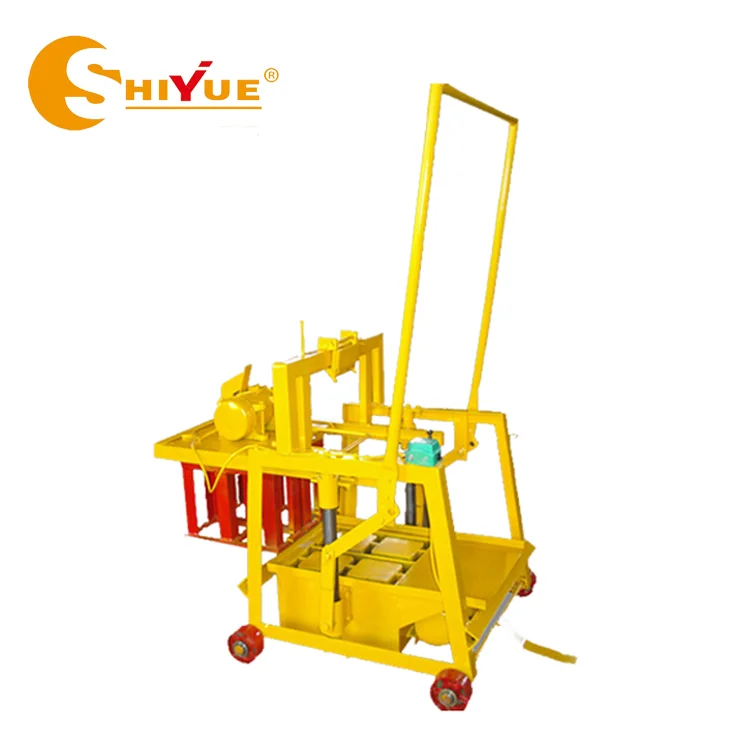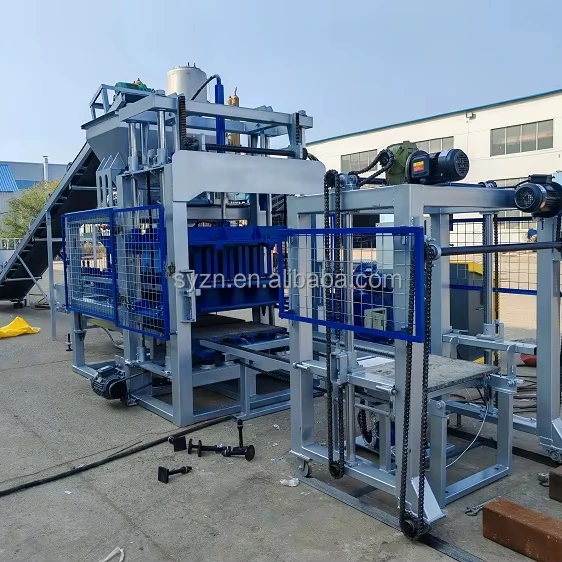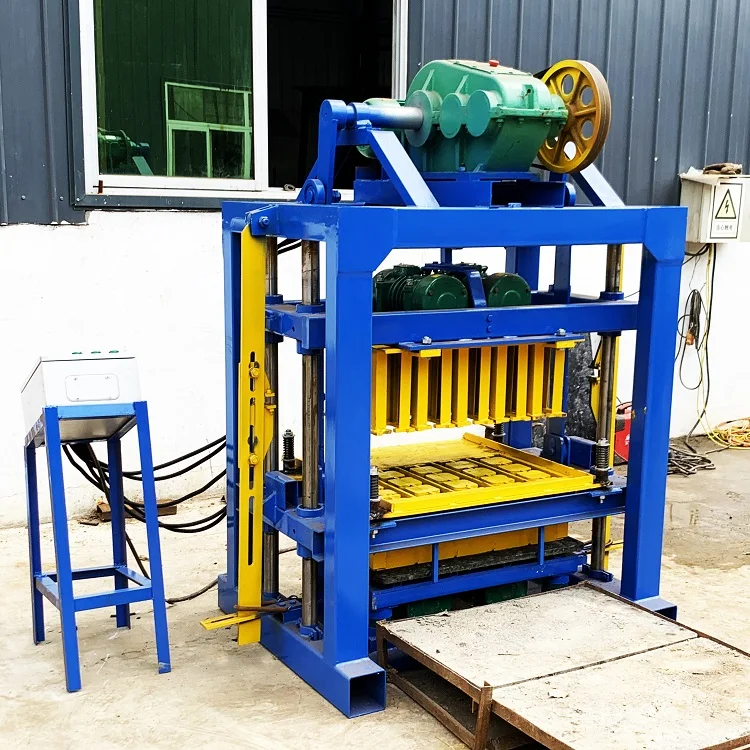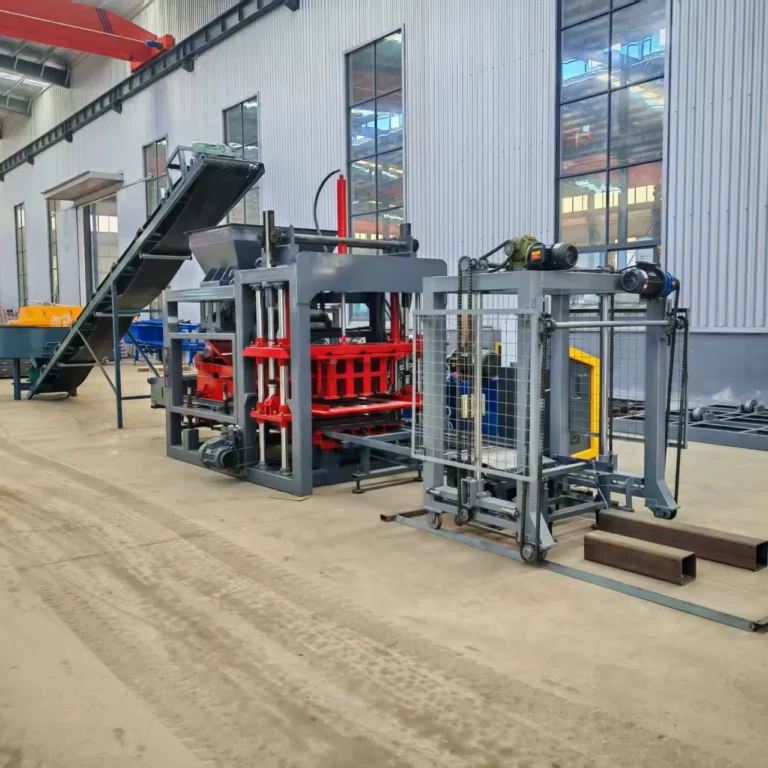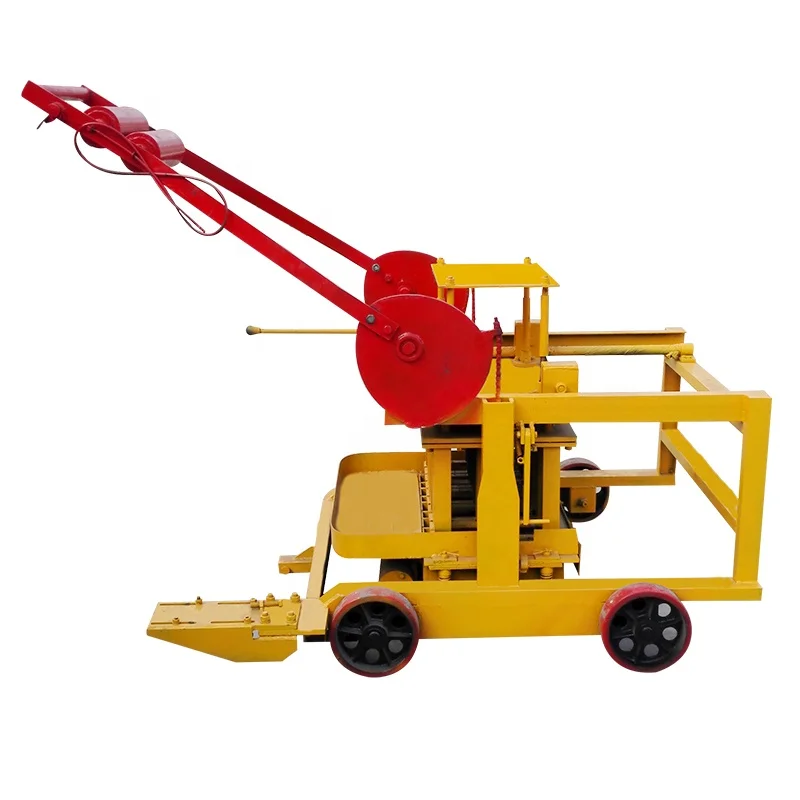
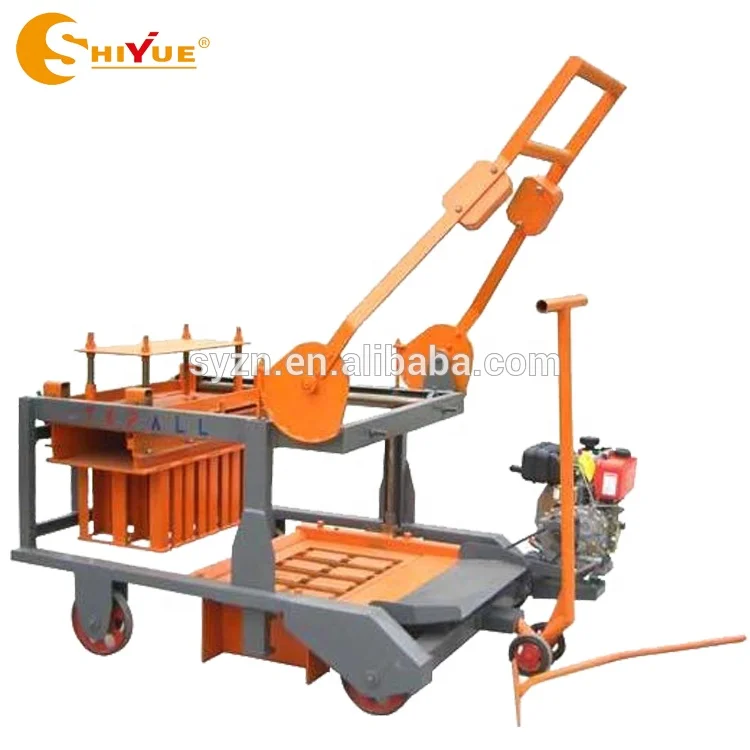

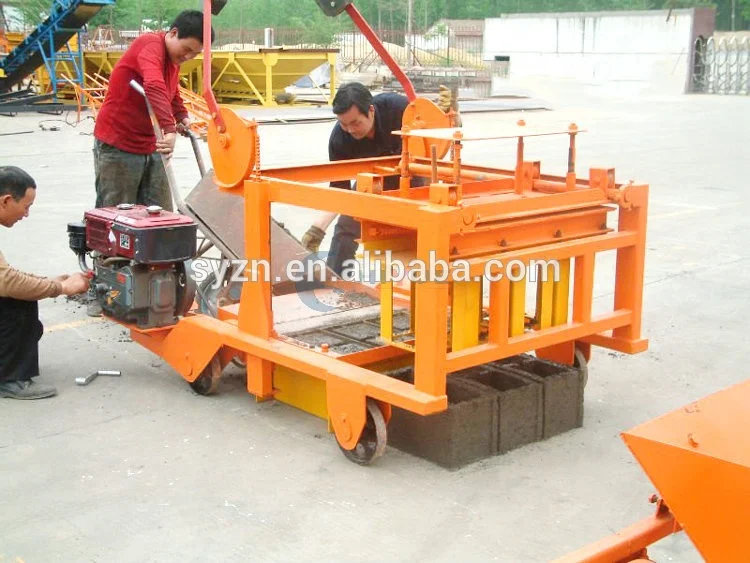
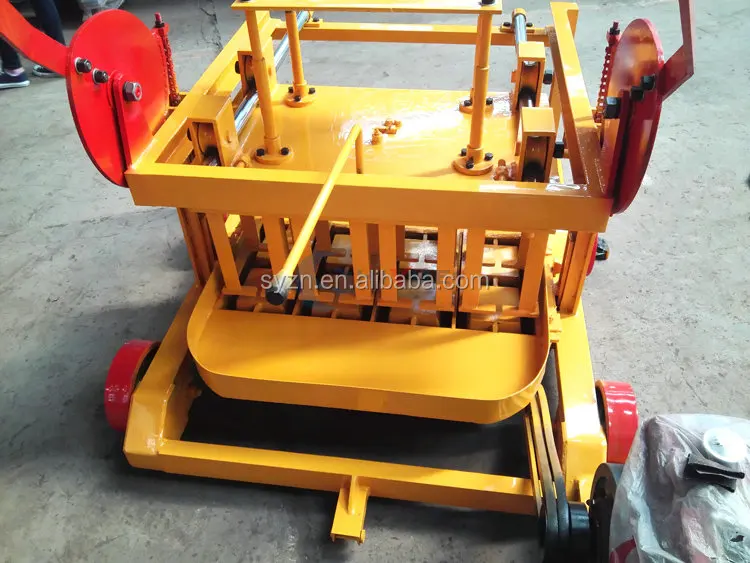
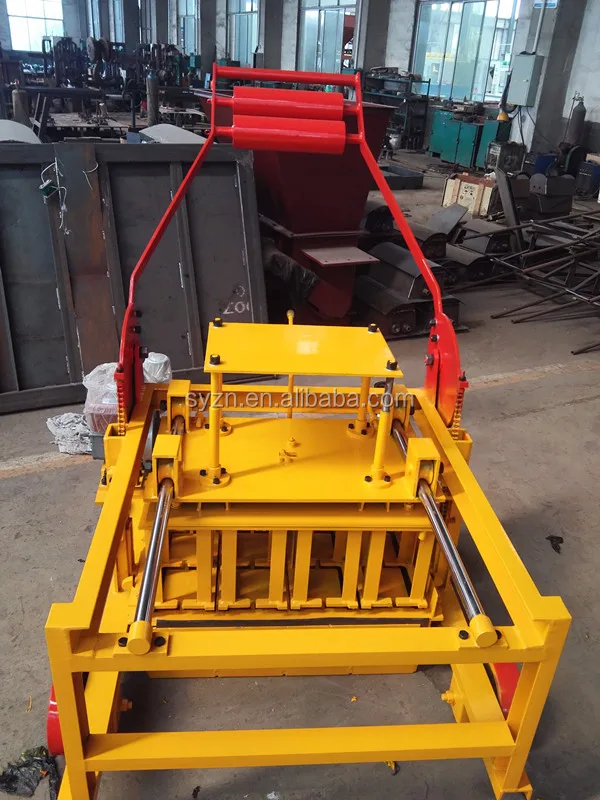
Description
Stocked for immediate dispatch — the QMR4-45 mobile block machine in stock eliminates multi-week production waits, letting contractors start on-site block output the moment the crate is opened.
Technical Specifications
| Parameter | Value |
|---|---|
| Model | QMR4-45 |
| Product Type | Mobile Egg-laying Block Making Machine |
| Overall Dimensions (L×W×H) | 1100 × 950 × 2100 mm |
| Net Weight | 810 kg |
| Molding Cycle | 30–45 s |
| Power Source | Diesel / Petrol Engine / Electric |
| Output Capacity | 2,560 pcs/day (basis not stated in source — confirm block format and material) |
| Pallet Requirement | None (egg-laying operation) |
| Supported Block Formats | Paver brick, hollow block, solid brick, fly ash brick |
| Basic Equipment Included | JZC350 or JQ350 diesel mixer, trolley |
| Warranty | 1 Year |
Application Suitability
| Application | Material or Output |
|---|---|
| On-site construction block supply | Hollow and solid concrete blocks from locally sourced crushed stone and cement |
| Housing project production | Interlocking and solid bricks using river sand or fly ash blends |
| Remote project sites without grid power | Diesel-powered paver and block runs using gravel aggregates |
| Small entrepreneur block yards | Manual mould change between solid brick and paver formats |
Why "2,560 Pieces per Day" Should Never Be Taken at Face Value
The stated output assumes a specific block format, thickness, and mix that may not match your project.
When buyers see a capacity number on a spec sheet, they plan logistics and labour around it. But a hollow block mould and a thin paver mould run very different cycles, and the aggregate density changes how many pieces a shift actually yields. I once watched a contractor in West Africa base his entire crew schedule on a quoted daily figure, only to find the number assumed a lightweight solid brick his site could not sell [NEED_CITE: capacity calculation standards for block making equipment]. The mobile block machine in stock you are evaluating must have its capacity confirmed against the exact block format and local raw material you intend to run before the purchase order is signed.
Diesel or Electric — Matching Power to the Site Reality
The QMR4-45 is available with a diesel engine, petrol engine, or electric motor, and the choice shapes daily workflow more than any other configuration decision. On remote housing developments where grid connections are weeks away, the diesel option lets production start the day the machine arrives. For urban sites with stable three-phase supply, the electric motor cuts fuel cost and noise. Confirming the voltage and frequency with the supplier before dispatch prevents the machine from sitting idle while a transformer is sourced locally.
No-Pallet Egg-Laying Design and What It Removes
Because this mobile block machine in stock lays blocks directly onto the ground, buyers avoid the capital outlay and storage space that pallet-based systems demand. There are no pallets to stack, no curing racks to build, and no forklift loop to staff. The trade-off is that the ground surface must be level and firm enough to accept freshly pressed blocks without settling unevenly. Contractors who prepare a compacted sand bed before the machine arrives consistently report cleaner block bases and fewer rejects during the first week of production.
Mould Cycle, Vibration, and the Density Question
The 30–45 second molding cycle governs how quickly the machine completes a press, but the actual block strength comes from the vibration force transmitted through the mould. On an egg-laying machine of this class, vibration is mechanical rather than hydraulic, so the mix moisture content becomes the variable the operator controls most carefully. Too dry and the block cracks on demoulding; too wet and it slumps before the next cycle [NEED_CITE: effect of moisture content on block green strength]. Matching the vibration duration to the local aggregate gradation is the step that separates a block that passes a drop test from one that does not.
The Hidden Cost of Skipping the Mix-Design Conversation
Ordering a machine configured for a limestone aggregate when your site only has volcanic scoria or coral sand leads to blocks that crumble under their own weight during curing. I have seen this happen when the buyer did not send a sample and the factory defaulted to a standard Chinese mix ratio. By the time the first container arrived, the contractor had already promised delivery dates to a housing client. The fix required new mould clearances, a revised water-to-cement ratio, and three wasted production days [NEED_CITE: aggregate compatibility in concrete block production]. Sending a kilogram of local aggregate before the machine leaves the factory is a small step that prevents a costly on-site failure.
Why Source This Machine From a Dedicated Block Machinery Supplier
Our single focus on block machinery means the QMR4-45 is quoted with its mixer, trolley, and moulds as a matched set rather than separate line items from different factories. Configuration is set against the buyer’s target block format and local aggregate, not a catalogue default. Mould drawings are confirmed against the block dimensions the buyer’s market actually sells, including custom formats when required. Stocked units are photographed with serial numbers before dispatch, and packing photographs are shared so the buyer can verify container loading. Wear parts lists and hydraulic seal kits ship inside the crate, so the first replacement cycle does not halt production.
Documentation & Verification
- Factory test record run on buyer’s specified block format before dispatch
- Mould drawing confirming block dimensions and cavity count
- Voltage, frequency, and power source confirmation sheet signed prior to shipment
- Packing photographs showing machine secured for container loading
- Wear parts list matching shipped mould and vibration components
- Operation manual with illustrated troubleshooting section
Installation, Commissioning & Support
- Level a compacted sand bed at least 20 m long to match the 1100 mm machine travel path
- Verify diesel fuel grade matches the JZC350 mixer engine specification before first start
- Confirm electric motor voltage and phase with site supply before energizing the 810 kg unit
- Calibrate mould change procedure on-site to keep format swaps within a single shift window
- Train operators on mix moisture control to maintain consistent 30–45 s molding cycles
- Stock initial vibration motor mounts and mould wear plates from the included spare list
Before You Request a Quote
To match the right power source and mould set to your project, share the block format and dimensions your market requires, the local aggregate type available on site, and whether grid electricity reaches your production area. If you are comparing this mobile block machine in stock against a pallet-based system, let us know your available curing space so the egg-laying layout can be planned accordingly.
Frequently Asked Questions
Q: How is the 2,560 pcs/day capacity calculated and for which block format?
A: That figure is a factory reference and does not state which block size, wall thickness, or aggregate density was assumed. Before ordering, provide your target block dimensions so a revised cycle count can be calculated for your specific mould and local material.
Q: Which power source should I choose — diesel, petrol, or electric?
A: Diesel suits remote sites without grid access, petrol fits lighter intermittent use, and electric works best where stable three-phase power is available. Share your site’s electricity situation and we confirm the correct motor and voltage before dispatch.
Q: What is the dispatch lead time and container loading arrangement?
A: Stocked QMR4-45 units are available for immediate container loading. Packing photographs and a loading plan are sent before the container is sealed so you can verify securement and accessory placement.
Q: Are moulds and wear parts available when the first replacement is due?
A: Yes. A wear parts list ships with the machine, and replacement moulds and vibration components are kept in production stock so reorders can be fulfilled without delaying your next block run.
Q: Does the machine arrive assembled and what on-site setup is required?
A: The machine ships with the main frame assembled. On arrival, the mixer, trolley, and power unit are connected, the mould is mounted, and a test run confirms block dimensions and cycle timing on your site surface.