Description
Stocked QT12-15 configurations — dispatch lead time confirmed against actual production status, not a catalogue promise.
Technical Specifications
| Parameter | Value |
|---|---|
| Model | QT12-15 |
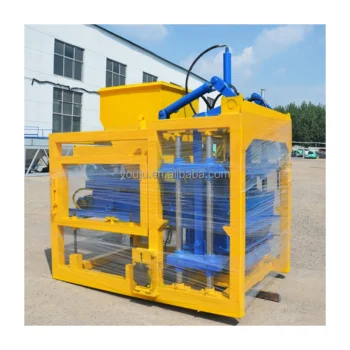
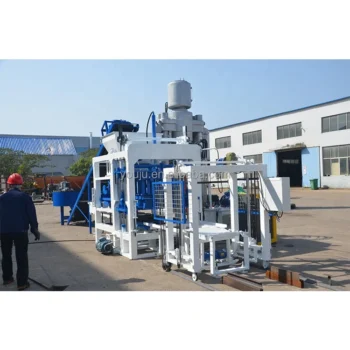
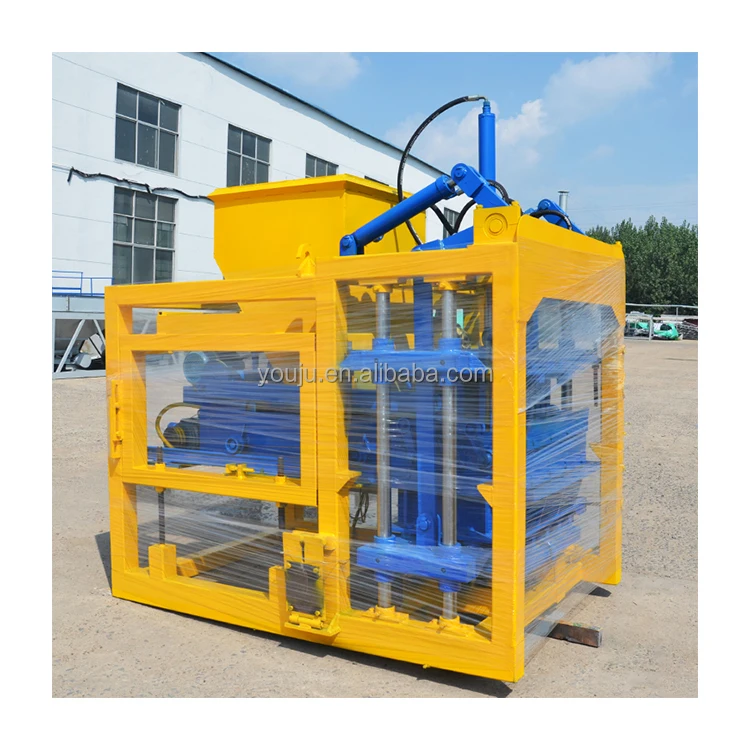
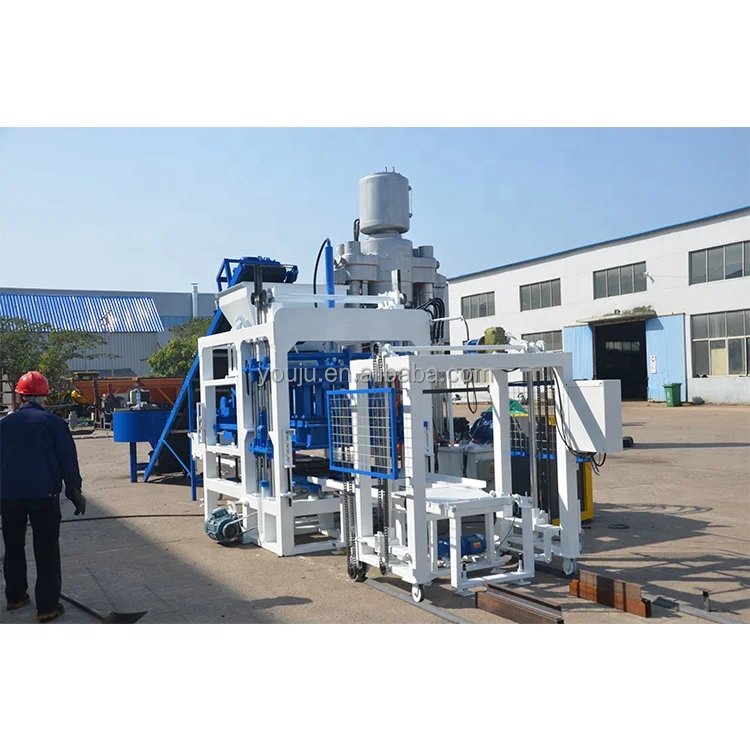
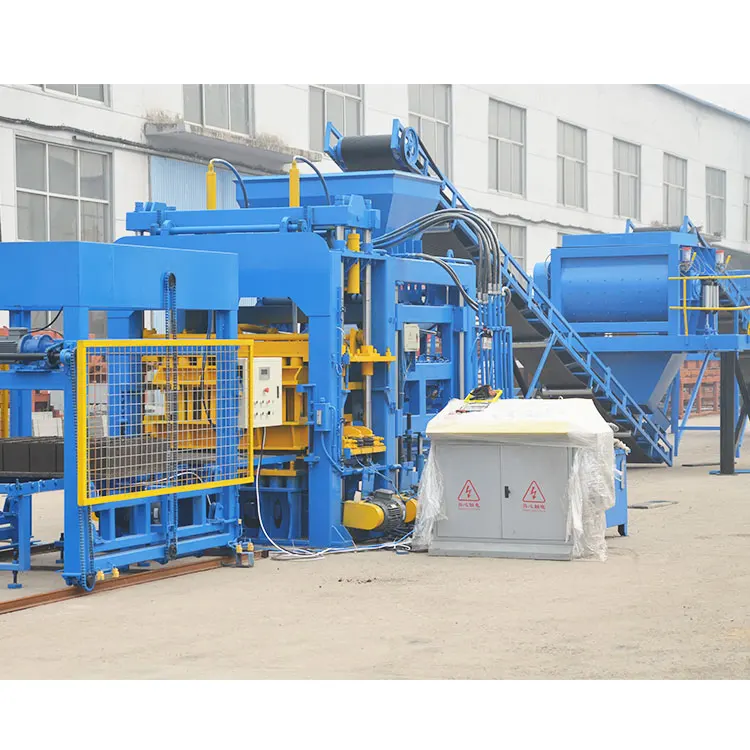
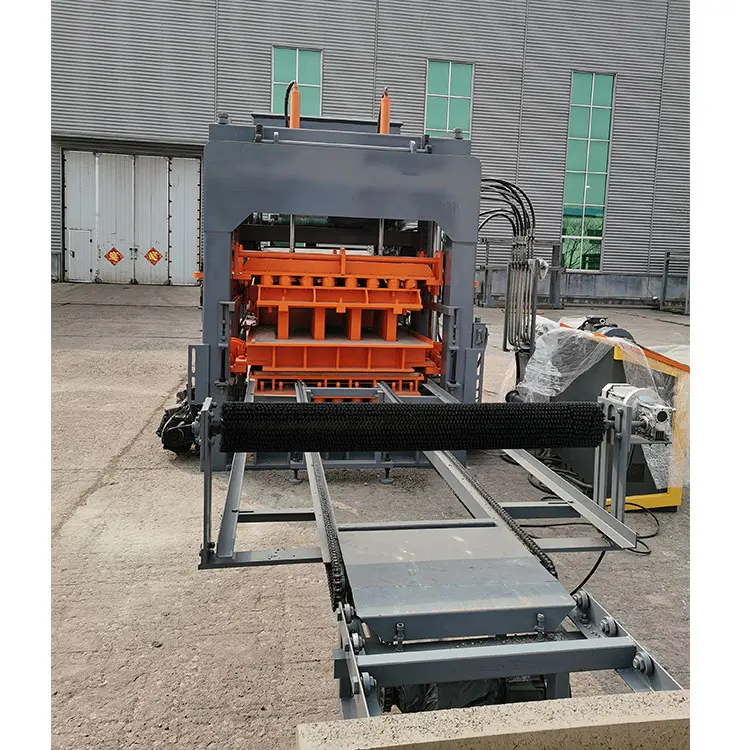
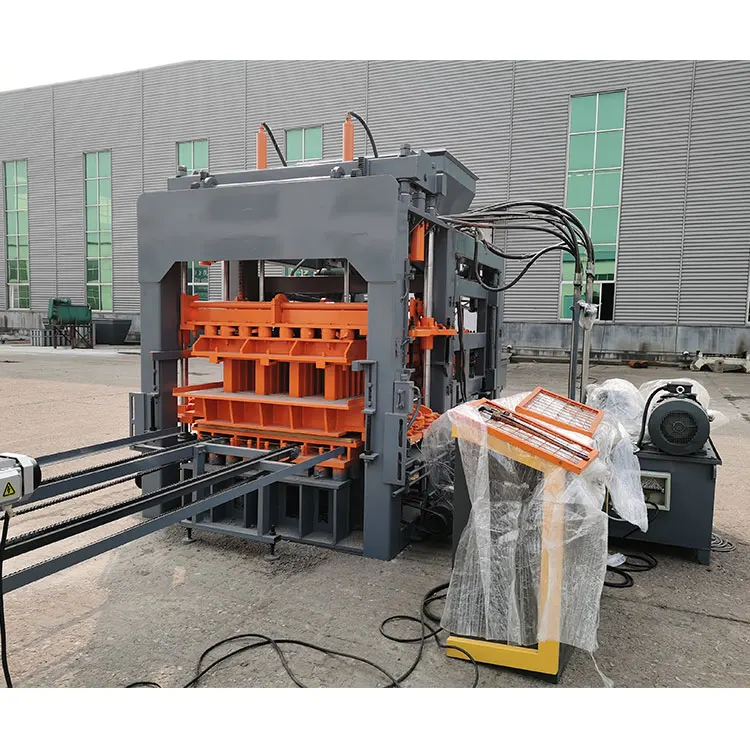
| Product Type | Automatic Hydraulic Concrete Block Making Machine |
| Overall Dimensions (L×W×H) | 9350 x 2520 x 2950 mm |
| Rated Hydraulic Pressure | 21 MPa |
| Main Vibration Form | Platform Vibration |
| Vibration Frequency | 2800-4500 r/min |
| Vibration Acceleration | 15-20 g |
| Exciting Force | 120 kN |
| Brick Height Range | 50-200 mm |
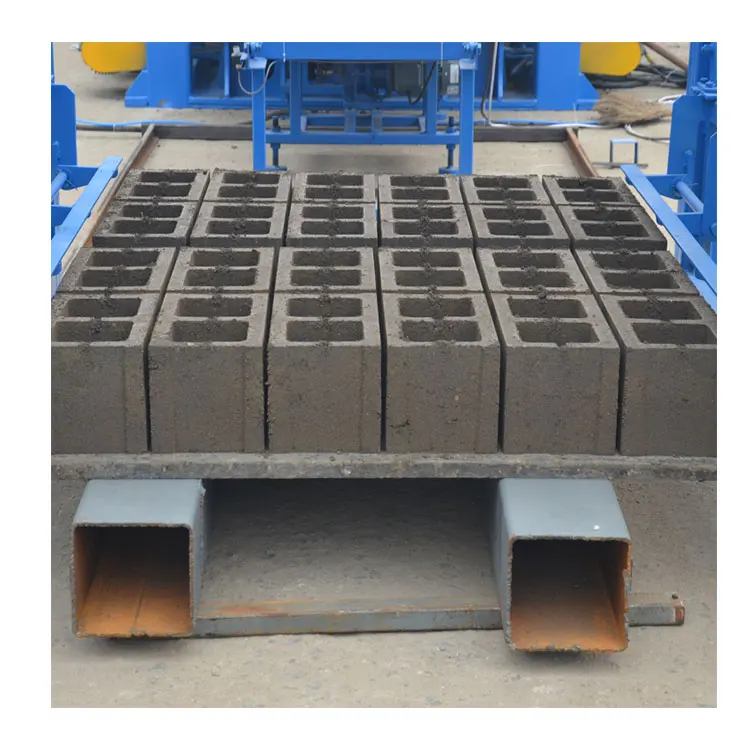
| Pallet Size | 1350 x 850 mm |
| Molding Cycle | 15-25 s |
| Storage Hopper Volume | 0.4 m³ |
| Feeding Device Volume | 0.31 m³ |
| Total Installed Power | 50.7 kW |
| Total Machine Weight | 12000 kg |
| Control System | PLC controlled (mechanical-hydraulic synthesis) |
| Frame Structure | Gantry frame, super steel, shock resistant |
| Material Feeding | Net wave swing type, independent foundation |
| Mould Construction | Cartridge type welding, manganese steel (carburized and quenched) |
| Automation Level | Automatic |
| Suggested Line Configuration | PL1200 batching, JS500/JS750 mixer, 8m conveyor, stacker |
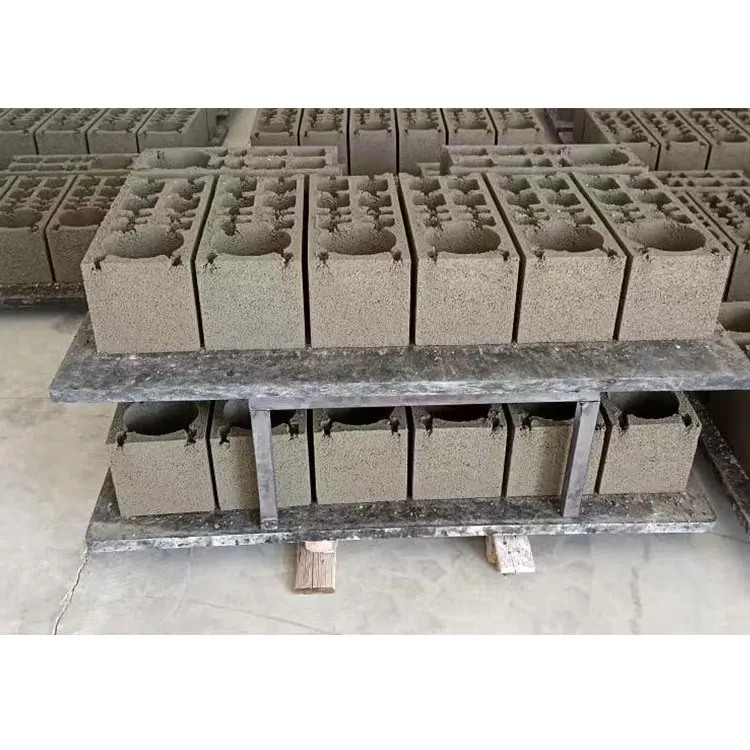
| Output — Hollow Block 390×190×190 mm | 13700-17200 pcs/8h shift (basis: 12 pcs/mould, 20-25 s cycle) |
| Output — Porous Block 240×115×90 mm | 40300-50400 pcs/8h shift (basis: 35 pcs/mould, 20-25 s cycle) |
| Output — Standard Block 240×115×53 mm | 105000-119000 pcs/8h shift (basis: 62 pcs/mould, 15-17 s cycle) |
Application Suitability
| Application | Material or Output |
|---|---|
| Commercial hollow block production | Crushed stone, river sand, cement blends for load-bearing and partition walls |
| Porous and perforated brick manufacturing | Lightweight aggregate and fly ash blends for thermal insulation formats |
| Standard solid brick runs | Dense aggregate mixes for foundation and structural applications |
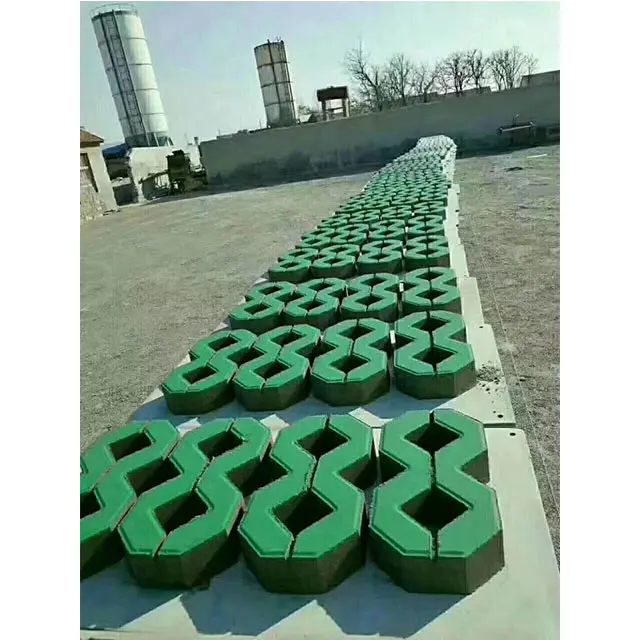
| Paving block and kerbstone casting | High-strength surface mixes for municipal and road projects |
| Interlocking brick production | Interlocking profile moulds for retaining walls and landscaping |
| On-site contractor block production | Locally sourced sand and gravel for project-specific masonry |
Why Lead Time Matters More Than the Headline Output
An automatic block machine in stock fast delivery is only useful if the configuration matches your site voltage and pallet infrastructure.
When a project deadline is fixed, every week spent clarifying electrical standards or waiting for a custom mould pushes back commissioning. I have seen buyers lose a full month because the PLC language defaulted to Chinese and the site electrician could not navigate the menus. The delay is never in the shipping — it is in the details left unresolved before the container door closes [NEED_CITE: common commissioning delays in exported concrete equipment].
What "Ready to Ship" Actually Means on the QT12-15
A machine listed as available still requires voltage confirmation, PLC language selection, and mould format allocation before it can be crated. When we quote an automatic block machine in stock fast delivery window, that timeline includes the pre-dispatch checks — factory test on your chosen block format, electrical panel inspection against your site frequency, and hydraulic line pressure verification. The dispatch date we give you is the date the container is sealed, not the date production finishes.
Container Loading and Dismantling Points
The QT12-15 gantry frame ships partially dismantled to fit standard container dimensions. The vibration platform, hydraulic manifold, and PLC cabinet are separated and lashed independently. Each dismantling point is documented with reassembly markers so your site team can trace bolt locations without referring back to the manual in the first hours on the slab [NEED_CITE: machinery packing standards for ocean freight]. Arrival condition depends directly on the lashing scheme, and we share packing photographs before the container leaves the yard.
Matching Vibration Force to Your Mix Design
The 120 kN exciting force and 15-20 g acceleration range are rated values, but block density depends on whether that force is matched to your local aggregate. High-clay sand absorbs vibration differently than clean crushed granite. The platform vibration system on the QT12-15 allows frequency adjustment between 2800 and 4500 r/min, which gives your operator a tuning range once production starts — but only if the initial mould and cycle time were set against a realistic sample of your raw material. This is why the inquiry stage asks for a material description before a quotation is issued.
The Cost of Skipping the Voltage Conversation
Buyers who confirm the machine model but leave voltage and frequency unaddressed often discover at commissioning that the motor winding does not match the local supply. A 50.7 kW total power draw means the site transformer must be sized correctly, and the PLC electronics must match the control circuit frequency. Correcting this after arrival involves rewinding motors or replacing drive components — a delay measured in weeks, not days [NEED_CITE: electrical compatibility requirements for industrial exports].
Why Buyers Source From This Point
Stock visibility on the QT12-15 means we tell you which configurations are built and which are in the production queue, rather than quoting a generic lead time. Pallet size 1350×850 mm is confirmed against your curing rack spacing and forklift fork width before loading. Mould selection starts with the format your market actually sells, not the format that looks best on a capacity table. Factory test records are run on your specific block type, and wear parts for the first replacement cycle ship with the machine or are confirmed available. Documentation — from hydraulic schematics to customs paperwork — is prepared alongside production, not assembled after the balance payment clears.
Documentation & Verification
- Factory test record on your specific block format and target strength before dispatch
- Hydraulic and electrical schematic matching the as-built QT12-15 configuration
- Voltage, frequency, and PLC display language confirmation sheet signed pre-shipment
- Mould drawing and format list covering every block profile included in the order
- Packing photographs showing dismantling points, lashing, and container loading sequence
- CE declaration documentation prepared where applicable to the destination market
Installation, Commissioning & Support
- Foundation slab must accommodate the 9350 x 2520 mm footprint and 12000 kg static weight
- Dedicated 50.7 kW power circuit with correct voltage and frequency confirmed before energizing
- Gantry frame reassembly from container-dismantled state with marked bolt positions
- PLC parameter setup including molding cycle timing, vibration frequency, and feeding sequence
- Operator training on mould cartridge change and platform vibration adjustment within the 50-200 mm height range
- First-replacement hydraulic seals and wear parts list supplied at handover
What We Need to Quote Your Delivery Date
Share the block format your plant will run first, your site voltage and supply frequency, and the pallet dimensions your curing area is designed around. If you have an existing mixer or batching plant, let us know the model so the 8-meter conveyor interface is specified correctly. With these details, we can confirm which QT12-15 configuration fits your timeline and lock the dispatch window.
Frequently Asked Questions
Q: Which QT12-15 configurations are currently stocked, and what is the dispatch lead time?
A: Availability shifts with production scheduling. We confirm which units are complete, which are in final assembly, and which mould formats are allocated as stock. Dispatch lead time is quoted against a specific configuration once your voltage, frequency, and PLC language are locked — not as a generic estimate.
Q: How is the QT12-15 dismantled for container loading?
A: The gantry frame, vibration platform, hydraulic manifold, and PLC cabinet are separated for container loading. Each joint is marked for reassembly. Packing photographs are shared before the container is sealed so your site team knows the arrival condition and dismantling sequence.
Q: Is the voltage and PLC language confirmed before or after the order?
A: Both are confirmed before the machine enters final testing. A 50.7 kW machine with PLC control requires the supply frequency and display language locked in advance. Correcting these after arrival causes commissioning delays that push back your first production shift.
Q: What moulds ship as standard stock with the QT12-15?
A: Standard stock covers common hollow, porous, and solid block profiles. Specialized formats like interlocking or custom paving profiles may require a separate mould lead time. We confirm which of your target formats are in stock and which need production scheduling before you commit.
Q: What is the realistic timeline from order to on-site commissioning?
A: The timeline includes pre-dispatch factory testing on your block format, container loading, sea transit, customs clearance, and on-site reassembly. Sea transit alone depends on the destination port. We quote the dispatch date and provide a transit estimate so you can plan the slab and electrical work on your end.