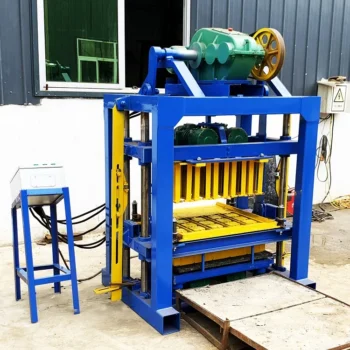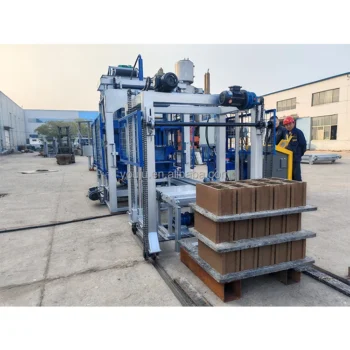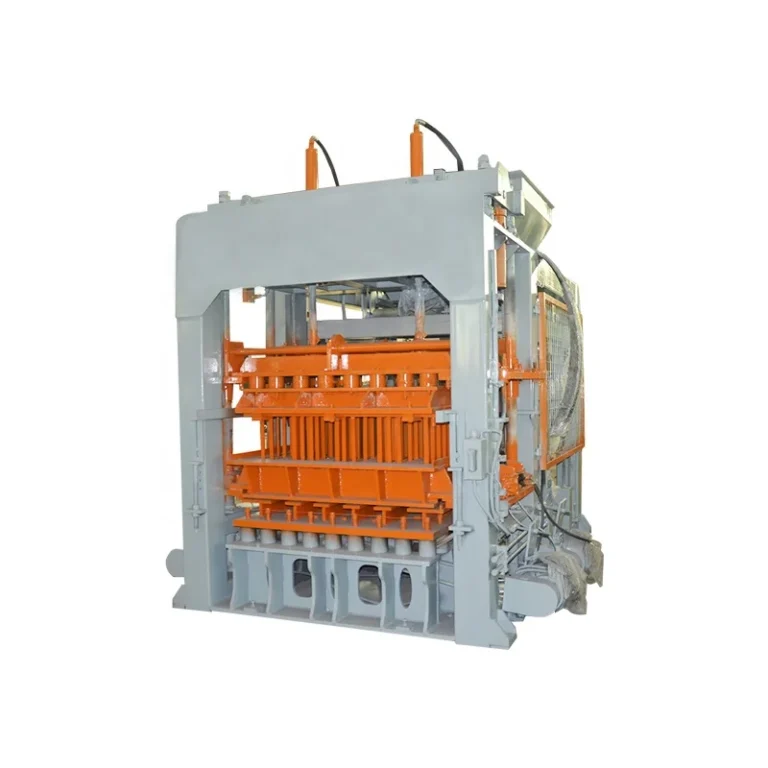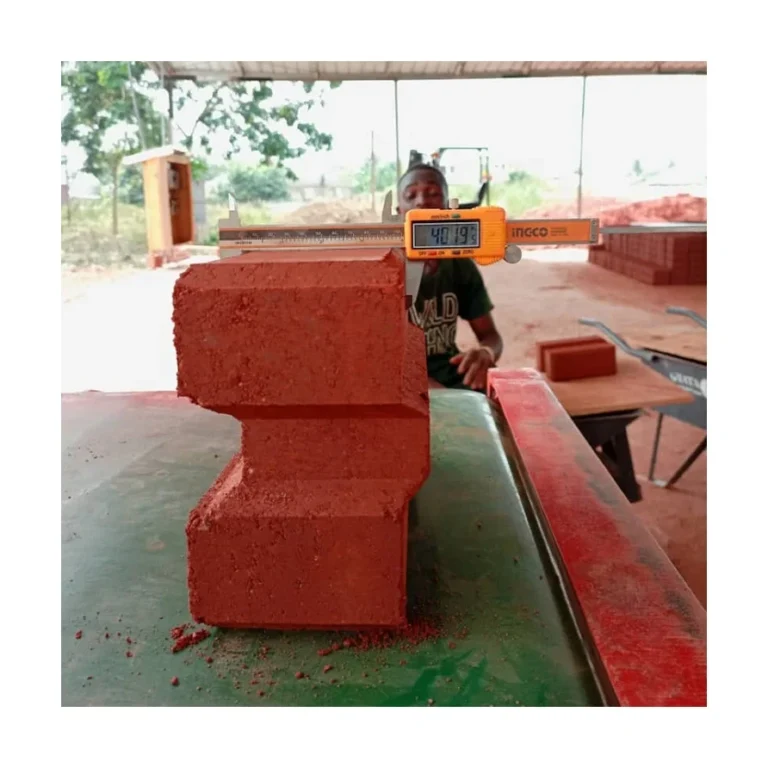

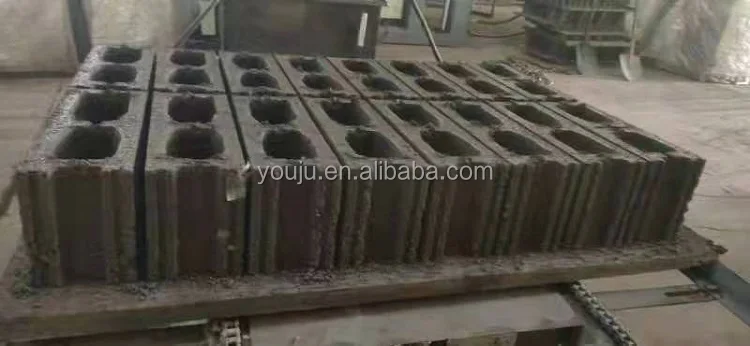


Description
Stocked for Prompt Dispatch — QT12-15 machines and standard mould sets staged for container loading so buyers with fixed project deadlines avoid typical multi-week production waits.
Technical Specifications
| Parameter | Value |
|---|---|
| Model | QT12-15 |
| Product Type | Automatic Concrete Block Making Machine |
| Overall Dimensions (L×W×H) | 7500×2500×3020 mm |
| Total Mass | 12 T |
| Vibration Frequency | 0-60 Hz |
| Main Vibration Form | Platform Vibration |
| Vibration Force | 100 KN |
| Moulding Mode | Load automatically, vibration moulding |
| Demolding Method | Hydraulic |
| Pallet Size | 1220×900 mm |
| Molding Cycle | 15-20 s |
| Control System | PLC with human-machine interface |
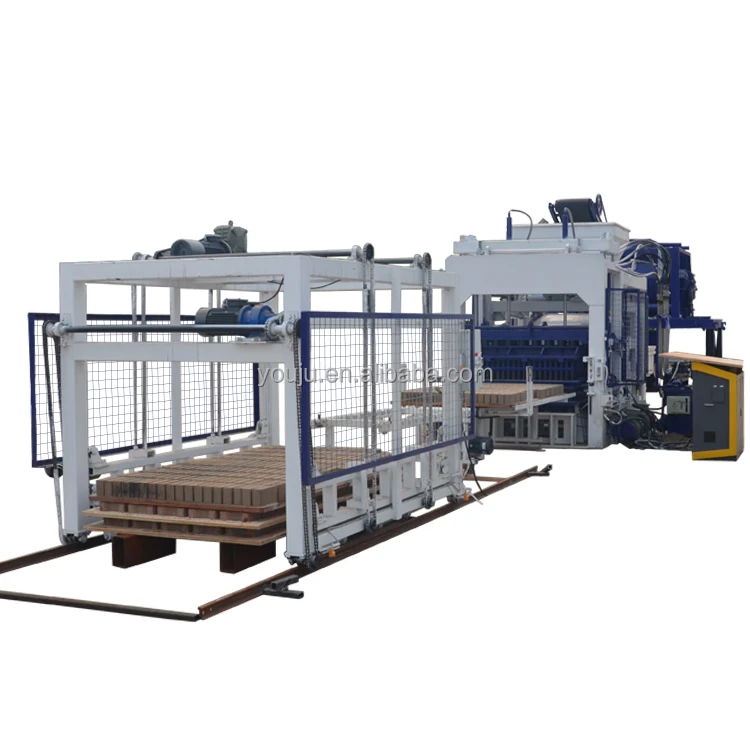
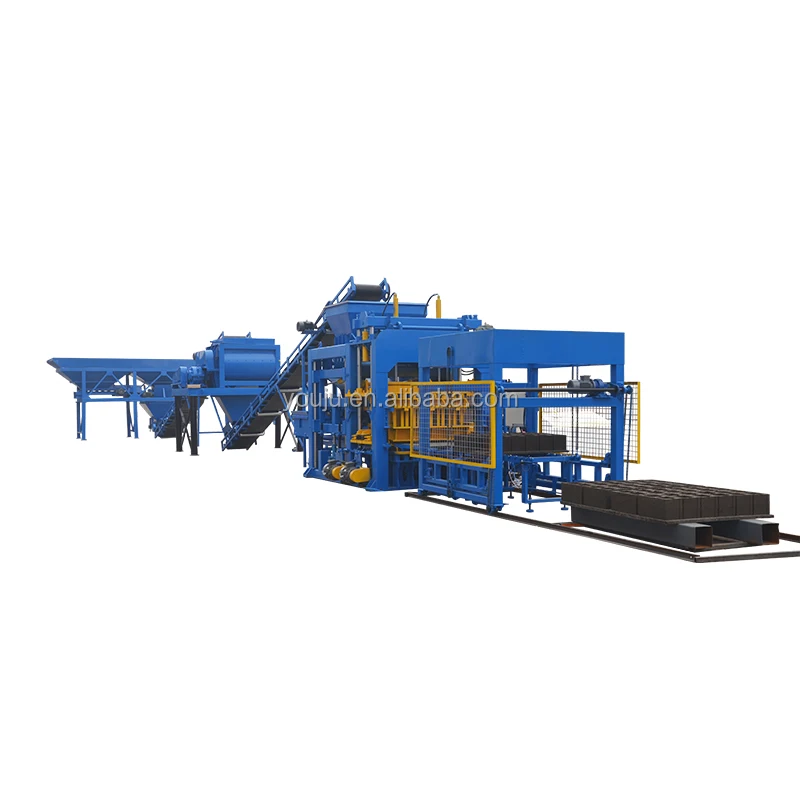
| Automation Level | Fully automatic (automatic feeding, stacking) |
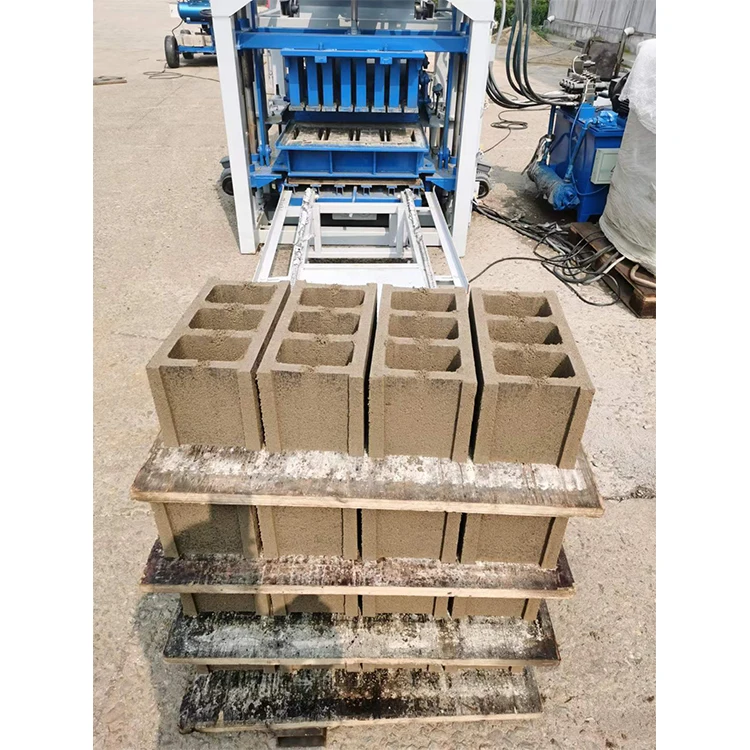
| Productivity — Hollow Bricks (400×200×200 mm) | 12 pcs/mould, 1728-2160 pcs/h (basis: 20-25 s cycle) |
| Productivity — Porous Bricks (240×115×90 mm) | 27 pcs/mould, 4860-6480 pcs/h (basis: 15-20 s cycle) |
| Productivity — Standard Bricks (240×115×53 mm) | 62 pcs/mould, 12700-14400 pcs/h (basis: 15-17 s cycle) |
| General Water Consumption | 12 T/Day |
| Applied Products | Concrete blocks, hollow/solid blocks, pavers, interlocking blocks, curbstone, colored pavers |
Application Suitability
| Application | Material or Output |
|---|---|
| High-capacity block plant operations | Hollow and solid blocks from crushed stone, sand, and cement |
| Paver and kerbstone production | Interlocking blocks and colored pavers from graded aggregates |
| On-site contractor block supply | Standard bricks from locally sourced fly ash, gravel, and slag |
| Housing project block manufacturing | Porous bricks utilizing dust and industrial by-products |
What "In Stock" Actually Means for Your Project Timeline
A QT12-15 block machine in stock fast delivery is only meaningful when the moulds, pallets, and documentation ship together.
Buyers working against construction season deadlines have little room for partial shipments. When the press body arrives but the hydraulic hoses or PLC panel are back-ordered, the machine sits idle while the project clock runs. Dispatch readiness must cover the entire configured line, not just the main frame.
[NEED_CITE: typical delays caused by incomplete machinery shipments at destination ports]
Container Loading and Machine Dismantling
The QT12-15 block machine in stock fast delivery ships after systematic dismantling for container loading. The 7500×2500×3020 mm frame breaks down into modules that fit standard flat-rack or open-top containers, with hydraulic station and PLC cabinet packed separately to prevent transit damage. Loading plans are confirmed before dispatch so buyers know exactly which container type and quantity to book.
Mould Stock Versus Custom Lead Times
Standard hollow block and solid brick moulds ship from the same stock pool as the QT12-15 press. When buyers need interlocking paver or kerbstone formats outside the stocked range, custom mould fabrication follows a separate timeline that must be quoted upfront. Confirming which formats ride on the initial shipment versus which follow in a second dispatch prevents misaligned expectations at the job site.
Arrival Estimate by Destination Port
Dispatch lead time is only half the equation. Ocean transit from Chinese ports to West Africa, Southeast Asia, or South America adds weeks that shift with vessel schedules and port congestion. We quote an arrival estimate based on the buyer’s named destination port at the inquiry stage, updated once the booking confirmation is in hand. [NEED_CITE: variable ocean freight transit times from major Chinese export ports]
Vibration and Hydraulic Force Matched to Your Aggregate
Platform vibration at 0-60 Hz paired with 100 KN vibration force determines how thoroughly the mix compacts inside the mould cavity. Higher frequency suits finer materials like fly ash blends, while coarser crushed stone demands sustained force to eliminate voids. The hydraulic demolding system releases formed blocks without corner damage, which matters when block strength consistency is the acceptance criterion at your project site.
Pallet Size and Curing Area Coordination
The 1220×900 mm pallet dimension was chosen to match standard curing rack spacing and forklift tine width common at block plants. Buyers who already operate curing yards need to verify that incoming pallets slide onto existing racks without modification. Mismatched pallet sizes force either new rack investment or manual restacking, both of which erode the throughput advantage a QT12-15 block machine in stock fast delivery is meant to deliver.
PLC Language and Voltage Before the Crate Closes
The PLC human-machine interface must display in a language the local operators read, and the electrical system must match site voltage and frequency. Confirming these details before dispatch avoids the scenario where a machine arrives, gets unwired, and then waits weeks for a replacement control board or transformer. We lock voltage, frequency, and display language at the order confirmation stage, not at the packing stage.
The Cost of Skipping the Pre-Dispatch Checklist
When buyers rush to meet a deadline and skip confirming pallet material, mould format list, or electrical specifications, the machine may physically arrive on time but remain non-operational. A missing transformer or wrong-frequency motor turns a fast-delivery advantage into a commissioning delay that costs more than the original lead time would have. Every pre-dispatch confirmation exists because someone, somewhere, paid the price for omitting it. [NEED_CITE: common commissioning failures due to unconfirmed electrical specifications]
Why Source the QT12-15 Through This Channel
Block machinery is the single focus here, meaning the press, moulds, pallets, and handling equipment are specified as one matched system. Stock status covers complete line configurations rather than bare machines, so buyers receive a production-ready setup. Dispatch documentation includes packing photographs taken before the container doors close, giving buyers cargo insurance evidence and customs clearance support. Factory test records accompany each unit, verifying cycle times and block dimensions against the quoted formats. Standard moulds ship from inventory, and custom formats are quoted with realistic fabrication windows so the overall project schedule stays intact.
Documentation & Verification
- Factory test record showing cycle time on your specified block format before dispatch
- Packing photographs of dismantled modules and mould sets taken before container loading
- Voltage, frequency, and PLC display language confirmation sheet signed off at order stage
- Mould drawing and format list matching the exact block dimensions your market requires
- Hydraulic and electrical schematic package for local maintenance teams
Installation, Commissioning & Support
- Foundation must accommodate 7500×2500 mm footprint with level tolerance for platform vibration alignment
- Dedicated power circuit sized for 53 kW total draw plus startup surge capacity
- Dismantled modules reassembled on-site with hydraulic and electrical connections verified before first run
- Mould change procedure demonstrated for each stocked format during commissioning visit
- Operator training covers PLC interface navigation, cycle parameter adjustment, and daily maintenance checks
- Wear parts list and hydraulic seal kit identified for first replacement order
What We Need to Confirm Your Dispatch Window
To quote a realistic arrival date, share your destination port, the block formats your market moves, and the local aggregate type you plan to run. Site voltage and frequency, plus the preferred PLC display language, let us close the electrical specification before production. If you already have curing racks and forklifts on site, send the pallet dimensions they accept so we match or adapt accordingly.
Frequently Asked Questions
Q: Is the QT12-15 currently in stock or built to order, and what is the dispatch lead time?
A: Standard configurations of the QT12-15 are held in stock for prompt dispatch. Lead time from order confirmation to container loading typically spans several working days for stocked units, while custom mould additions extend the timeline. We quote the exact dispatch window at inquiry based on current inventory status and your format requirements.
Q: Which mould formats ship from stock, and what is the lead time for custom moulds?
A: Hollow block, solid block, and standard brick moulds matching common dimensions ship from stock alongside the press. Interlocking paver and kerbstone formats outside the stocked range require custom fabrication, quoted with a separate lead time. We confirm which formats ride on the initial shipment so you can plan production start accordingly.
Q: How is the machine dismantled and loaded into containers for shipment?
A: The main frame separates into modules that fit standard flat-rack or open-top containers. The hydraulic station and PLC cabinet are crated independently. A loading plan specifying container type and quantity is provided before booking, and packing photographs document the cargo before doors close.
Q: What arrival estimate can be quoted based on destination port?
A: We provide an arrival estimate combining dispatch lead time with ocean transit to your named port. Transit duration varies by destination and current vessel schedules. The estimate is updated once the shipping booking is confirmed so your project planning reflects the latest available sailing.
Q: Are voltage and control language confirmed before shipment to match the buyer’s site?
A: Yes. Voltage, frequency, and PLC display language are locked at order confirmation, not at packing. This prevents commissioning delays caused by mismatched electrical supply or unreadable interface text. The confirmation sheet is included in the documentation package that ships with the machine.