Description
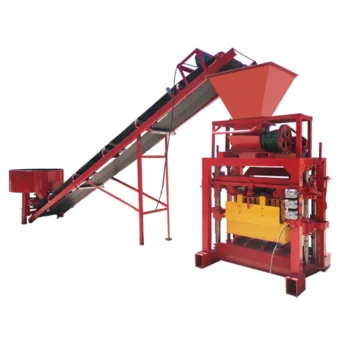
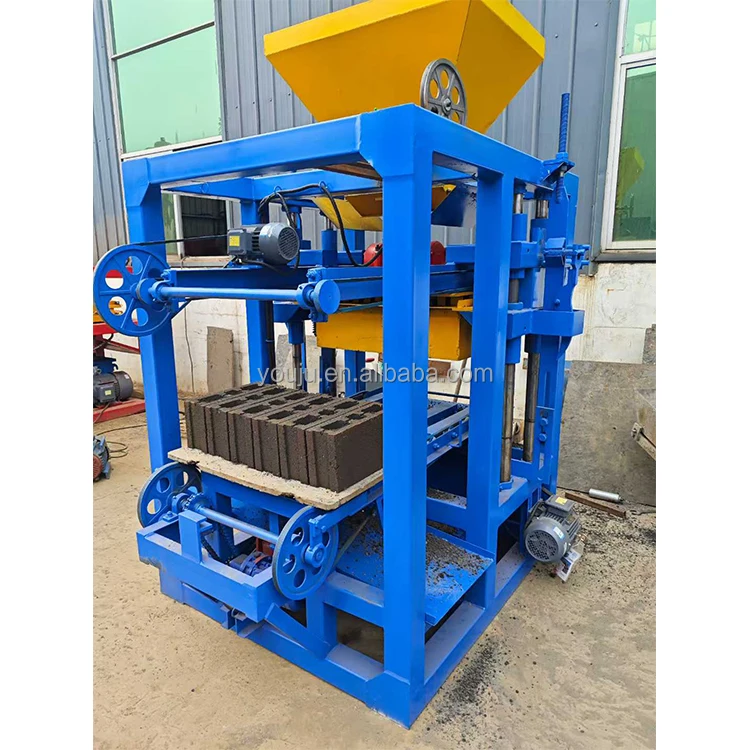
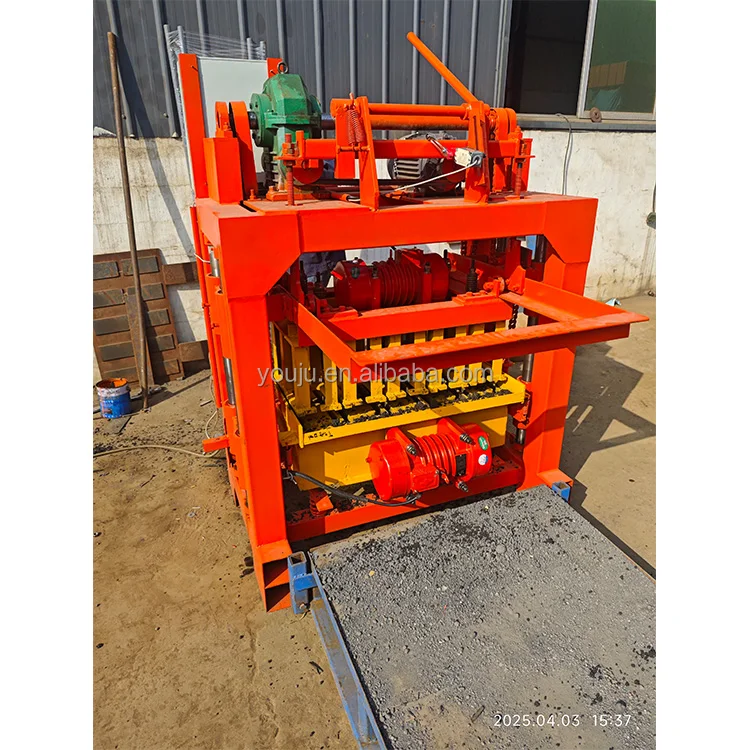
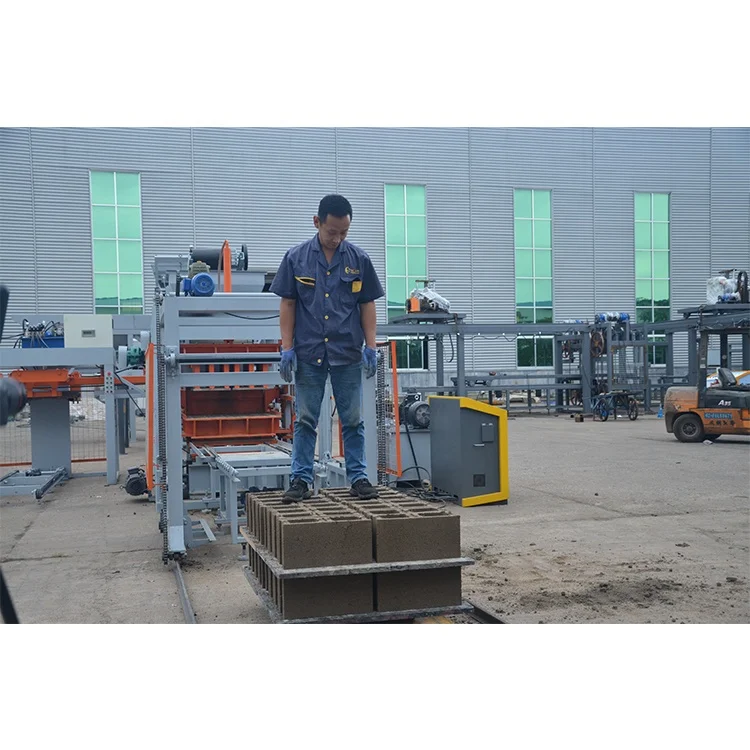
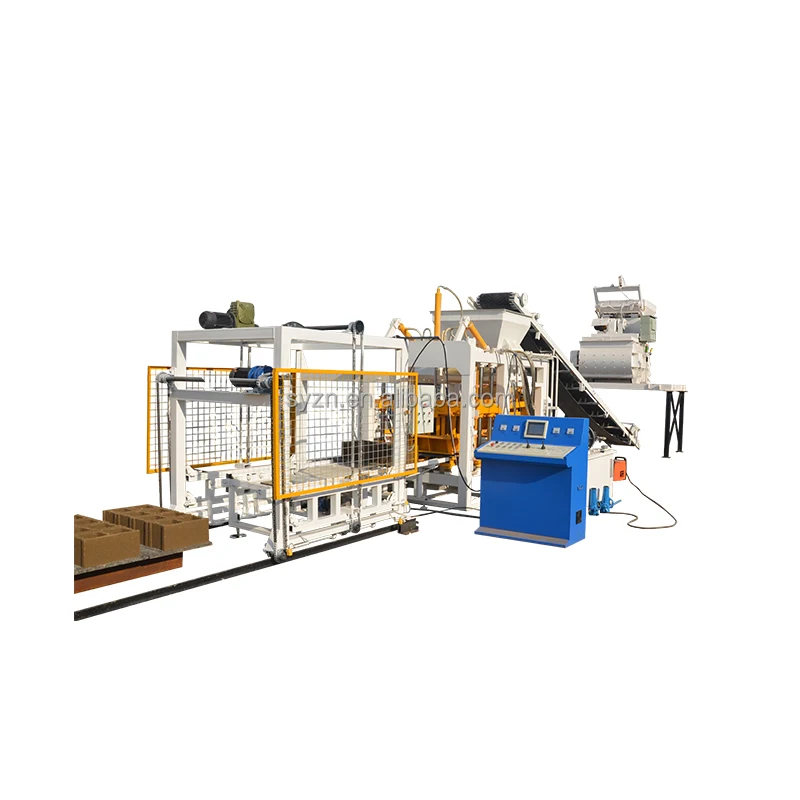
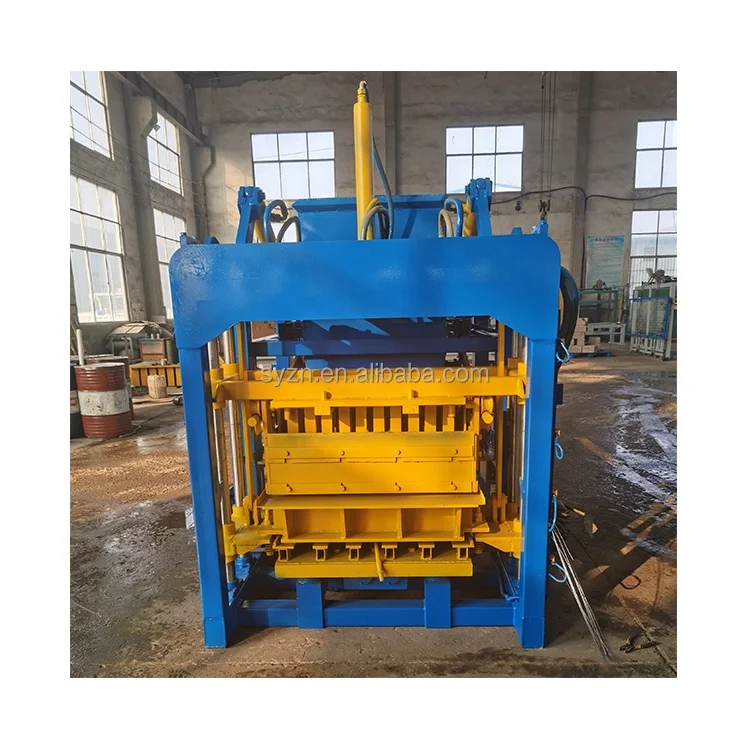
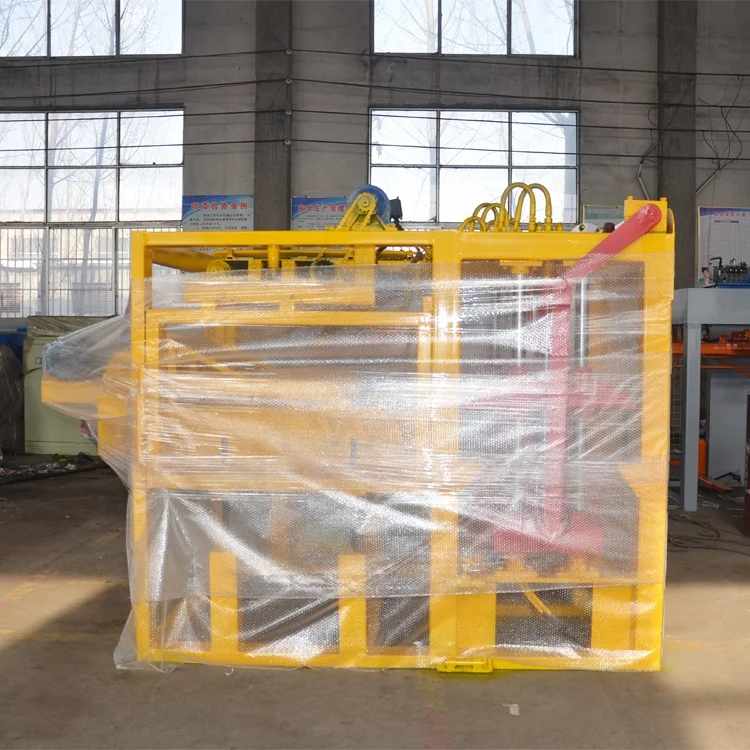
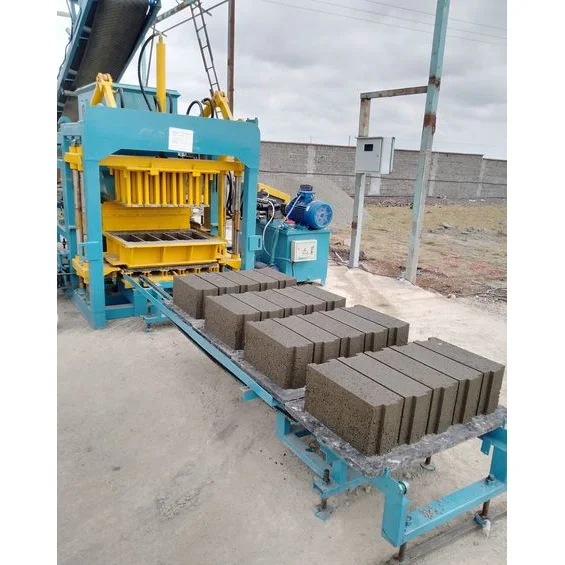
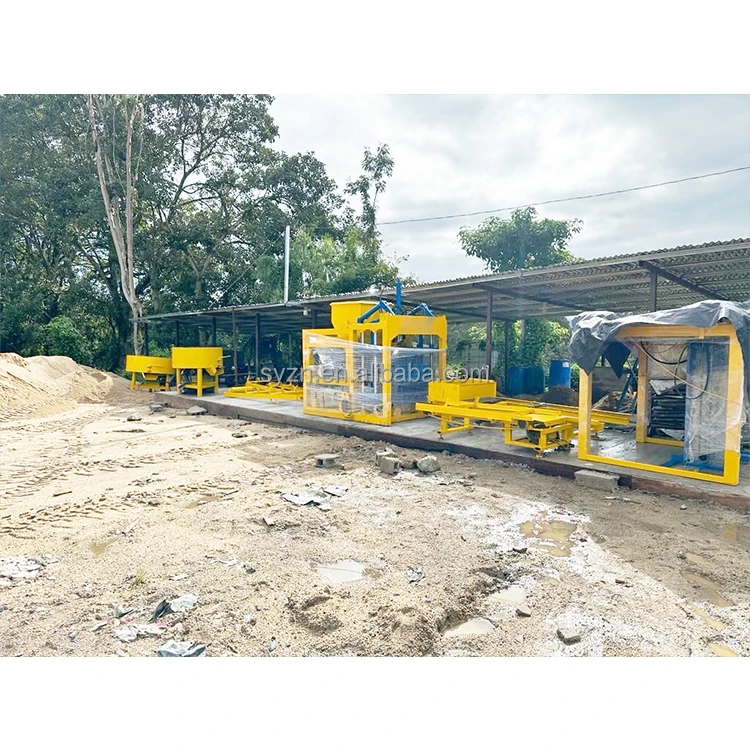
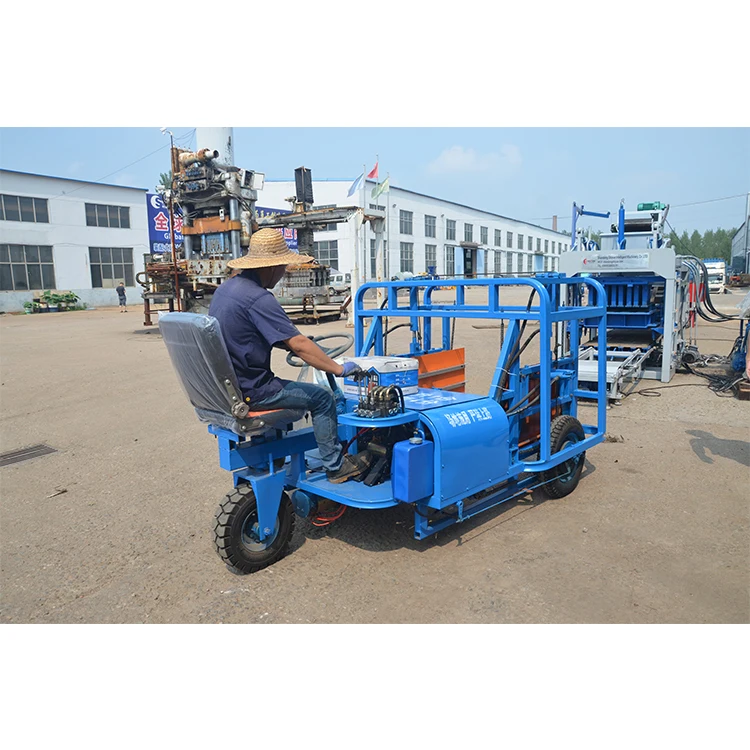
Dispatch-ready configuration — the QT4-15A ships with pallet feeder, brick conveyor and block sweeper already matched to the press, so buyers facing a project deadline receive a complete line rather than a bare machine.
Technical Specifications
| Parameter | Value |
|---|---|
| Model | QT4-15A |
| Product Type | Fully Automatic Hydraulic Block Making Machine |
| Overall Dimensions (L×W×H) | 7100×1600×2610 mm |
| Molding Cycle | 15–25 s |
| Vibration Frequency | 4600 r/min |
| Exciting Power (Vibration Force) | 40–50 kN |
| Total Power | 18.45 kW |
| Mixer Model | JQ350 |
| Pallet Size | 850×550×25 mm |
| Total Weight | 3 T |
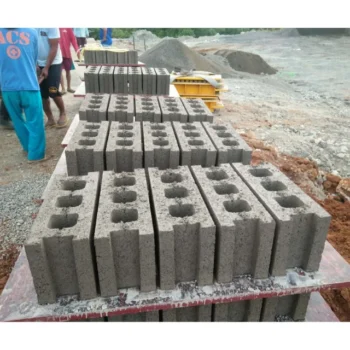
| Applied Products | Paver, solid block, hollow block, curbstone |
| Raw Materials | Crushed stones, sand, cement, dust, fly ash |
| Control System | PLC control system |
| Automation Level | Fully automatic (hydraulic station, pallet feeder, brick conveyor, block sweeper) |
| Output Capacity | 408 pcs/h (basis: 400×200×200 mm hollow block, 4 pcs/mould) |
| Output Capacity | 510 pcs/h (basis: 400×150×200 mm hollow block, 5 pcs/mould) |
| Output Capacity | 2100 pcs/h (basis: 240×115×53 mm solid brick, 18 pcs/mould) |
| Voltage & Frequency | Configurable to target market standard (basis to be confirmed before dispatch) |
Application Suitability
| Application | Material or Output |
|---|---|
| Hollow block production for residential and commercial walls | Crushed stone, sand, cement, fly ash |
| Solid brick manufacturing for load-bearing structures | Sand, cement, stone dust |
| Paver production for walkways and parking areas | Crushed stones, cement, pigments |
| Curbstone forming for road and infrastructure projects | Coarse aggregate, cement, sand |
What "In Stock" Actually Means for Your Project Timeline
A stocked QT4-15A block machine in stock shortens the gap between order and first block — but only if electrical parameters and language settings are confirmed before the crate is sealed.
When a buyer needs the QT4-15A block machine in stock for a fast-tracked construction site, the conversation usually starts with lead time. Yet I have watched machines sit idle on arrival because the site electrician expected a different voltage or the operator could not read the PLC screen. Dispatch speed matters less than dispatch accuracy [NEED_CITE: voltage and frequency standards by export market]. That is why every stocked unit leaves the yard only after the buyer’s local power supply and control language are locked in writing.
Container Loading Plan Quoted Before You Commit
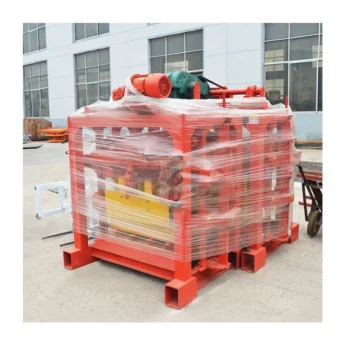
Buyers working against a project deadline need to know how the machine fits inside the container before they sign. The QT4-15A is dismantled into press frame, hydraulic station, pallet feeder and conveyor sections for loading. A standard 20GP container holds the main machine along with approximately 500 production pallets. Packing photographs are taken after loading so the buyer sees exactly what will arrive at the port, eliminating surprises at customs clearance.
Arrival Estimate You Can Build a Schedule Around
Once the QT4-15A block machine in stock clears the factory gate, transit time depends on the destination port and shipping line rotation. Rather than quoting vague windows, the dispatch date and estimated arrival are stated at order confirmation so the buyer can schedule foundation curing, electrical rough-in and raw material delivery around a known date [NEED_CITE: typical ocean freight transit variables by region]. This level of scheduling detail keeps the construction contractor and the block plant owner on the same timeline.
Reading the Specs That Determine Daily Output
The QT4-15A delivers a vibration frequency of 4600 r/min with an exciting force of 40–50 kN. In block production, vibration frequency and hydraulic pressure work together: the frequency determines how quickly the mix settles into the mould cavity, while hydraulic pressure compacts it to target density. If local aggregate is angular or the mix is lean, the higher end of the vibration range helps achieve consistent block strength. The 850×550×25 mm pallet size dictates how many blocks cure per rack layer, so buyers must verify that their curing area and forklift can handle this pallet dimension before the machine ships. The PLC control system manages the 15–25 second molding cycle, and buyers should confirm the display language matches the operator crew to avoid commissioning delays.
When Fast Dispatch Turns Into a Costly Delay
A machine that arrives quickly but cannot run is worse than a machine that arrives late. If the voltage and frequency are not confirmed before shipment, the buyer faces transformer rental, rewinding, or panel replacement on site — all of which cost more than a few extra days of factory preparation [NEED_CITE: CE machinery directive requirements for industrial equipment]. Similarly, if the PLC display language does not match the operator, the crew reverts to manual mode and the fully automatic advantages — pallet feeding, brick conveying, block sweeping — go unused. These are the hidden costs of skipping a five-minute pre-dispatch checklist.
Why Source a Stocked Machine Through This Channel
The QT4-15A is configured around the buyer’s actual mix design and local aggregate rather than a catalogue default, even when the unit is already built. Block machinery is a single focus here, so the press, mould, pallet and handling equipment are specified as one matched system. Moulds for the formats the buyer’s market actually sells — including custom drawings — ship with the machine or follow in a second crate. The automation level can start at the included fully automatic package and be upgraded later as production scales. Installation guidance covers foundation, power connection and first-cycle tuning so the machine produces sellable blocks on the first day, not the fifth.
Documentation & Verification
- Factory test record running the buyer’s target block format before dispatch
- Machine specification sheet confirming voltage, frequency and PLC language
- Mould drawing and format list for every mould shipped
- Container loading photographs showing dismantling scheme and securing method
- Packing list with pallet count and handling equipment inventory
Installation, Commissioning & Support
- Foundation slab sized to the 7100×1600 mm footprint with anchor bolt template provided
- Dedicated circuit matching the confirmed voltage and 18.45 kW total power draw
- Press frame and hydraulic station reassembled on site following the dismantling photographs
- PLC parameters set to local language and molding cycle tuned to the buyer’s mix
- Operator training covering mould change, pallet loading and daily greasing points
- Wear parts list and mould maintenance schedule handed over at commissioning
What to Share Before Requesting a Dispatch Quote
To move from inquiry to confirmed shipping date, provide the target block format and required daily output, the raw materials available locally, and the site’s voltage, frequency and preferred PLC display language. If the curing area and forklift are already in place, share the pallet dimensions currently in use so compatibility with the 850×550×25 mm pallet can be verified before the QT4-15A block machine in stock leaves the yard.
Frequently Asked Questions
Q: Which QT4-15A configurations and moulds are currently in stock and what is the dispatch lead time?
A: Standard QT4-15A units with hollow block and solid brick moulds are typically held in stock for immediate container loading. Dispatch lead time depends on mould customization and destination port scheduling. Buyers should confirm required block formats so the matching moulds are either pulled from stock or queued for production before the machine ships.
Q: How is the machine packed for container shipment and what arrives at the port?
A: The QT4-15A is dismantled into press frame, hydraulic station, pallet feeder and conveyor sections to fit a 20GP container alongside approximately 500 production pallets. Packing photographs are taken after loading and shared with the buyer, so the receiving team knows exactly which crates to expect and how to sequence reassembly.
Q: Voltage, frequency, and PLC language — what must be confirmed before the machine ships?
A: The buyer must provide the exact site voltage, frequency and preferred PLC display language in writing before dispatch. Shipping a QT4-15A block machine in stock without this confirmation risks transformer rental or panel rewinding on arrival, which delays commissioning far longer than a pre-shipment verification would have taken.
Q: What is included in the standard package versus what must be ordered separately?
A: The standard QT4-15A package includes the hydraulic station, pallet feeder, brick conveyor and block sweeper. Production pallets and curing racks are quoted separately so the buyer can match quantities to their curing area. Additional moulds beyond the standard set can be added to the same container if ordered before dispatch.
Q: How are spare parts and replacement moulds shipped if the first order is urgent?
A: Spare wear parts and hydraulic seals can be packed inside the main container at no extra freight cost. Replacement moulds ordered after the initial shipment are dispatched via the fastest available container space or air freight depending on urgency and the buyer’s project deadline.