


Description
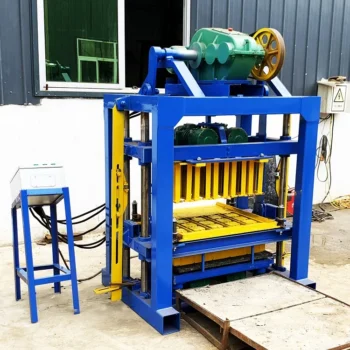
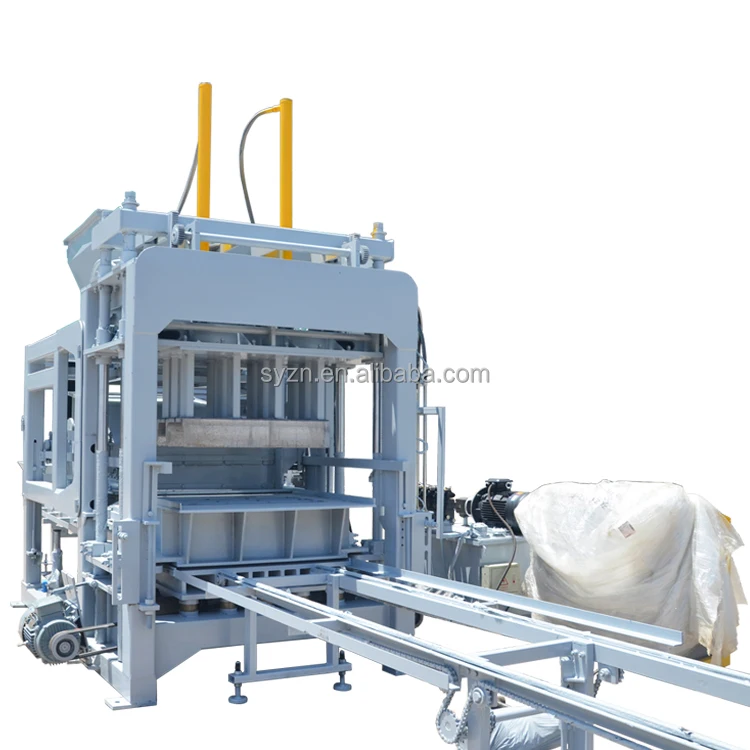
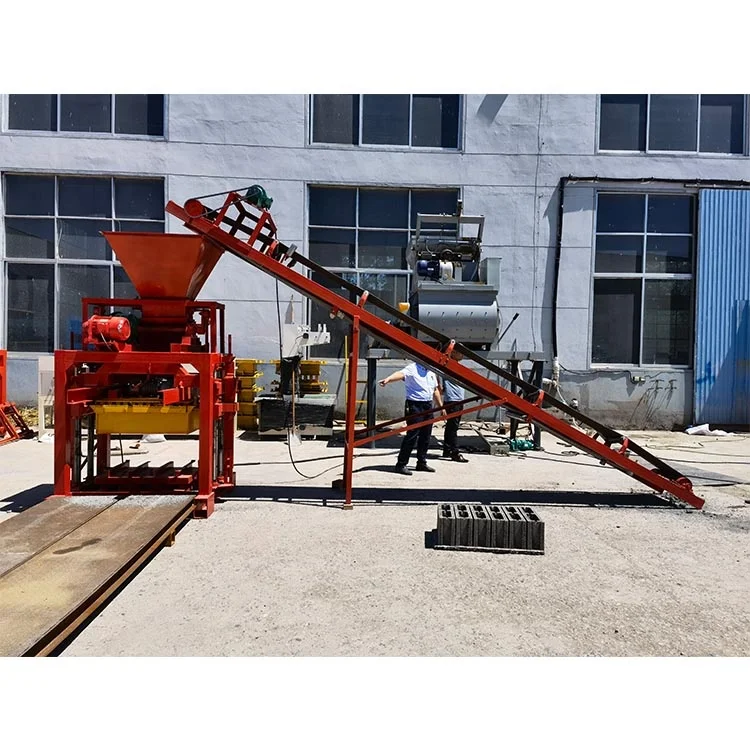
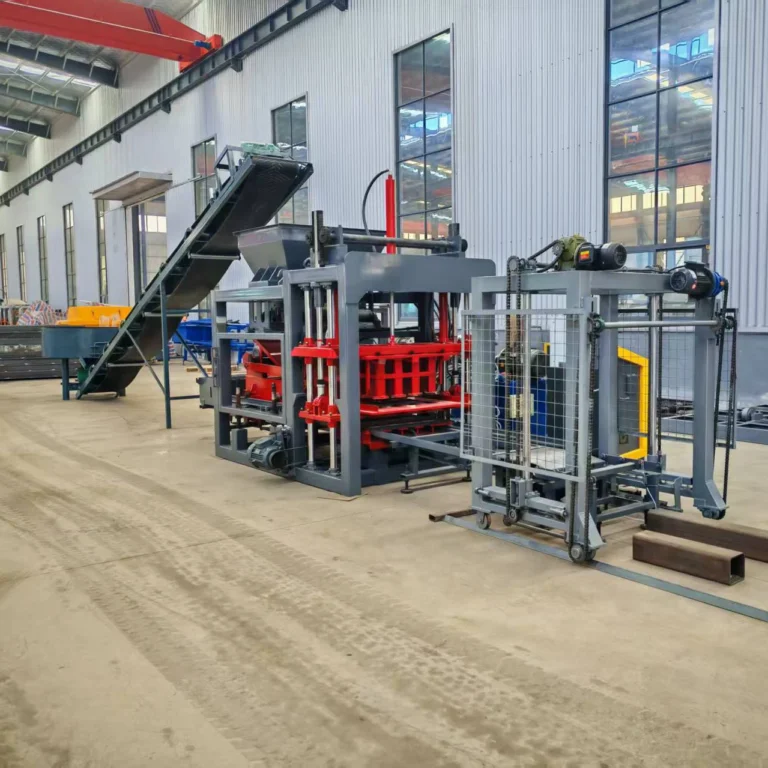
Immediate availability verified — The QT4-15 stationary block machine is currently on the warehouse floor in standard configuration, with dispatch timing quoted against your project schedule rather than a generic production backlog estimate.
Technical Specifications
| Parameter | Value |
|---|---|
| Model | QT4-15 |
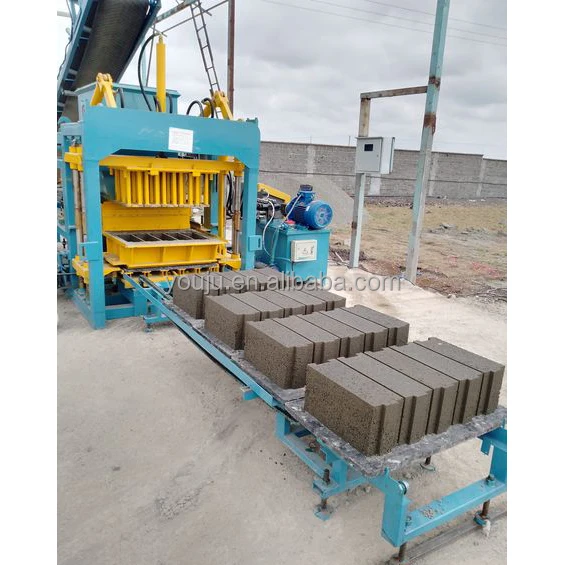
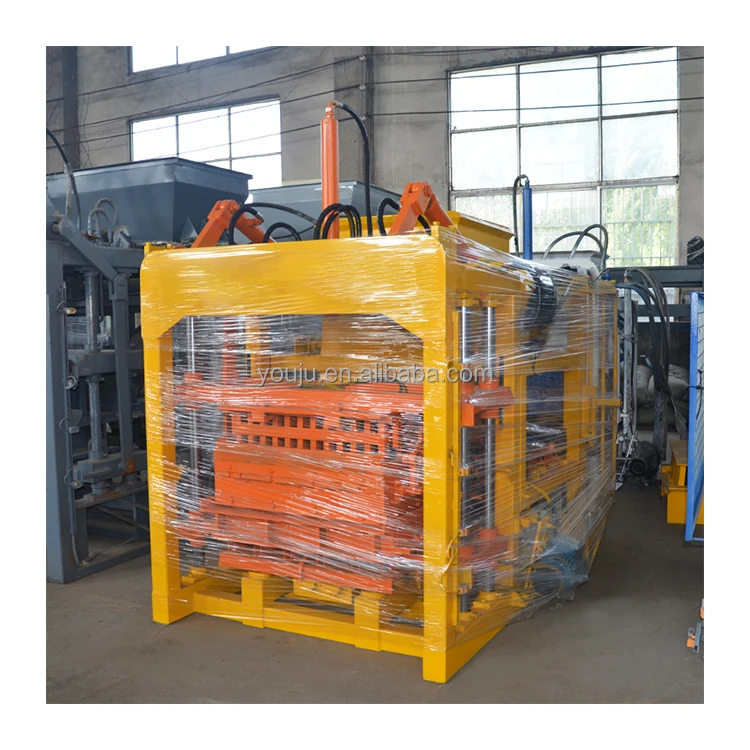
| Product Type | Stationary Hydraulic Concrete Block Making Machine |
| Host Machine Power | 27.5 kW |
| Vibration Force | 40 kN |
| Moulding Cycle | 15 s (basis not stated in source — confirm block format / material / thickness) |
| Pallet Size | 1020 × 570 mm |
| Overall Dimensions (L×W×H) | 7100 × 1600 × 2610 mm |
| Net Weight | 5 T |
| Mixer Model | JS500 |
| Voltage | 380 V (frequency not stated in source — confirm target market standard) |
| General Water Consumption | 4 T per day |
| Workers Required | 3–4 |
| Workshop Area | 150 m² |
| Motor Brand | Siemens |
| Control System | Computer controlled directional vibration with photoelectric material control (PLC brand/model not stated in source) |
| Vibration Method | Table and mould vibrating together, low-frequency feeding, high-frequency vibrating |
| Hopper | Swing-type cutting device for uniform material distribution |
| Theoretical Productivity | Stated in source image only, numerical value not extractable (basis not stated in source) |
| Standards | CE (referenced in company documentation profile, verify per shipment) |
Application Suitability
| Application | Material or Output |
|---|---|
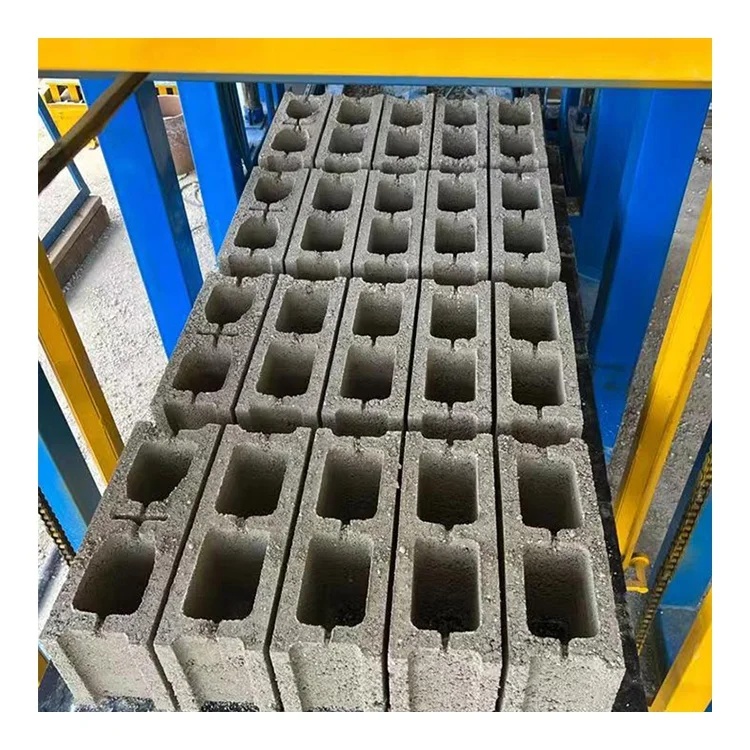
| Hollow block production | Crushed stone, sand, cement, fly ash blends for structural walling units |
| Solid / standard brick production | Dense aggregate mixes for load-bearing masonry and partition walls |
| Paving brick / interlocking brick production | Fine aggregate and pigment mixes for pedestrian and light-traffic surfaces |
| Multi-cellular brick production | Lightweight aggregate or foam-blended mixes for insulation blocks |
| Small to medium scale block plants | Contractor on-site production and regional building material supply |
When "In Production" Means Your Project Misses the Deadline
A fixed project date does not wait for a factory production slot to open up.
When contractors commit to a build phase, every week the QT4-15 stationary block machine in stock sits in a production queue is a week subtracted from your curing time and your margin. I have watched site managers burn through contingency budgets because a machine promised in four weeks actually shipped in eight, and the blocks were still too green to lay when the scaffolding went up. The difference between a machine on the floor and a machine on the order sheet is the difference between meeting a pour schedule and explaining delays to a client [NEED_CITE: typical construction penalty clauses for missed milestones].
What Sitting on the Warehouse Floor Actually Means
The units listed as available have completed factory assembly, hydraulic line pressure testing, and a dry-run cycle with standard moulds installed. Choosing a QT4-15 stationary block machine in stock eliminates the typical multi-week build cycle, moving you straight to the pre-shipment verification stage where voltage, control language, and pallet configuration are confirmed against your site conditions.
Dispatch Timing You Can Put on a Gantt Chart
Once the container loading plan is agreed and the machine is dismantled for ocean freight, the dispatch window is measured in days rather than production weeks. The arrival estimate is calculated from factory gate to your destination port using current sailing schedules, not a best-case guess [NEED_CITE: container shipping transit time variables]. This is the information your project planner needs before the balance payment is released.
Reading the Numbers That Actually Matter on Site
The 27.5 kW host machine power and 40 kN vibration force place this press in the mid-range tier, suitable for the 150 m² workshop footprint that contractors typically have available on a project site. The 1020 × 570 mm pallet size must be checked against your existing curing racks and forklift capacity before the machine leaves the factory — a mismatch here means blocks stacked by hand while you source new racking. The JS500 mixer paired with the swing-type hopper ensures consistent material distribution across hollow, solid, and paving formats, which is where the 15-second cycle time (basis to be confirmed per block format) is either achieved or lost. The Siemens motor and computer-controlled directional vibration system with photoelectric material control reduce the operator dependency that typically causes density variation between morning and afternoon shifts.
The Cost Nobody Quotations Until It Is Too Late
Ordering a block press without confirming which moulds are in stock alongside the machine is how a three-week lead time becomes a seven-week lead time. The mould production run frequently exceeds the machine build time, and the machine sits in your workshop while you wait for the hollow block die that was never ordered with the press. Voltage is another silent delay — a machine wired for 380 V / 50 Hz arriving at a site with a different supply standard requires a transformer or a rewind before it can be commissioned [NEED_CITE: voltage and frequency standards by export market].
Why This Is Where You Source the Machine
Block machinery is the single production focus here, so the press, mould, pallet, and handling equipment are specified as one matched system rather than assembled from separate suppliers who will blame each other when the cycle time does not match the stacking speed. The QT4-15 configuration is set against your actual mix design and local aggregate, not a catalogue default that assumes materials you cannot source. Standard moulds for the formats your market sells are stocked alongside the machine, and custom mould drawings can be processed in parallel with the dispatch preparation. The automation level is selectable, so you can take delivery of a semi-automatic configuration now and add automatic stacking and cubing as your production volume grows.
Documentation & Verification
- Factory test record on your specified block format before the machine leaves the floor
- Container loading plan and dismantling photographs provided before balance payment
- Voltage and control language confirmation sheet signed against your site supply standard
- Hydraulic and electrical schematic matching the as-built configuration of your unit
- Operation and maintenance manual in your specified control language
- CE declaration documentation where applicable to your import market
Installation, Commissioning & Support
- Foundation plan for the 7100 × 1600 mm footprint and 5 T operating weight
- Dedicated 27.5 kW circuit requirement at confirmed voltage and frequency
- Dismantling state for container loading and reassembly sequence on arrival
- First-run parameter setting with your local aggregate and mix proportions
- Operator training covering mould change, hopper adjustment, and vibration timing
- Wear parts list with recommended first-order spares based on your production volume
What to Include in Your Inquiry
To get a dispatch date rather than a catalogue quote, send the block format you need to produce, your available workshop dimensions and ceiling height, and the voltage and frequency standard at your site. If you have existing curing racks or forklifts, include the pallet dimensions they accommodate so the 1020 × 570 mm pallet configuration can be confirmed or adjusted before loading.
Frequently Asked Questions
Q: Which QT4-15 configurations and moulds are currently in stock versus built-to-order?
A: Standard host machines and common hollow and solid block moulds are typically held on the warehouse floor. Specialty paving or interlocking moulds may require a production run that can exceed the machine dispatch timeline. Request a stock list with your specific format requirements to confirm what ships with the press and what follows separately.
Q: What is the container loading plan and how is the machine dismantled for shipment?
A: The QT4-15 is dismantled into major assemblies — host frame, vibration table, hopper, and hydraulic station — for container loading. Bracing and blocking photographs are provided before the container is sealed. The dismantling state is designed so that reassembly on site requires standard lifting equipment and does not require specialist alignment tools.
Q: Can the voltage and control language be changed if the machine is already in stock?
A: Voltage conversion and PLC language changes are possible on stocked units but add time to the dispatch window. These modifications must be confirmed before the machine is crated. A unit already wired for your target market standard ships faster than one requiring rewinding or transformer addition.
Q: How is the arrival estimate calculated from factory to destination port?
A: The arrival estimate combines the confirmed dispatch date with current container shipping transit times to your destination port. Variables include port congestion, transshipment schedules, and customs clearance speed at origin. The estimate is updated at the point of booking confirmation against live sailing schedules.
Q: What is the realistic daily output stated per block format?
A: Daily output varies by block format, mix design, and pallet cycle time. A single productivity figure without a stated block format and material basis is not a reliable planning number. Request the capacity calculation for your specific hollow, solid, or paving format with your local aggregate proportions to get a figure you can put on a production schedule.