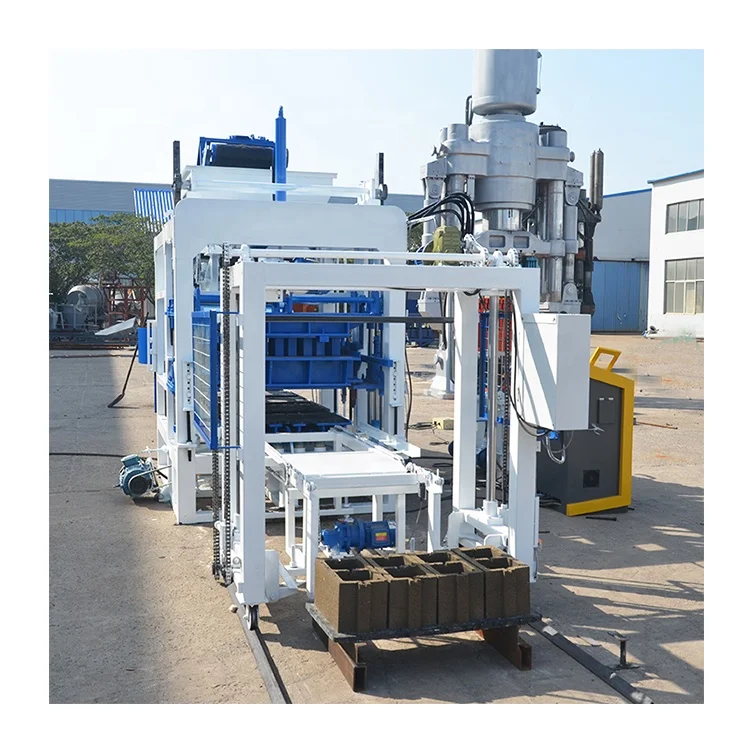


Description
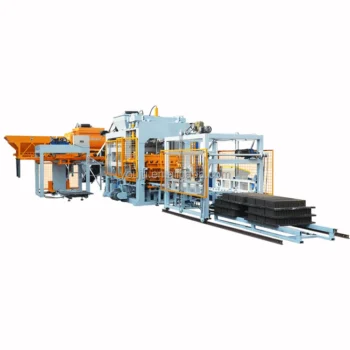
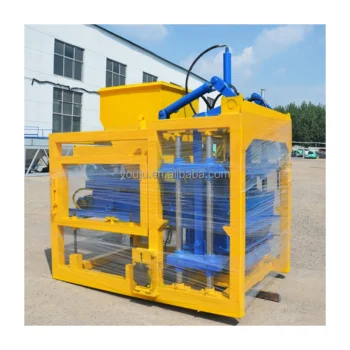
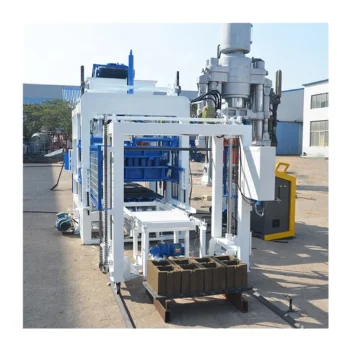
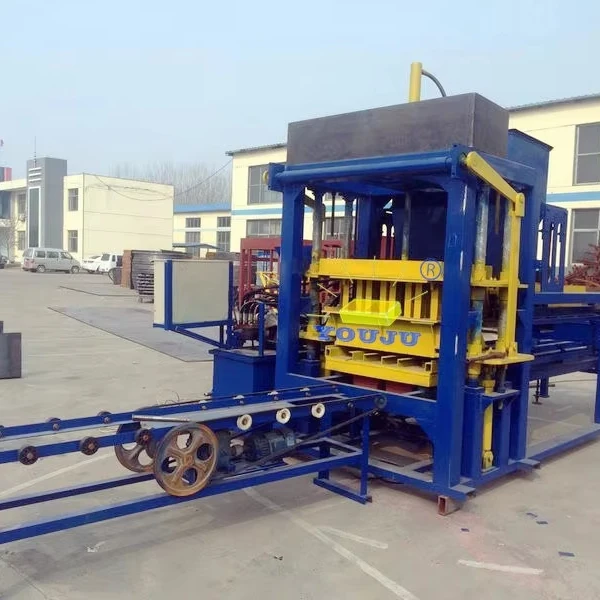
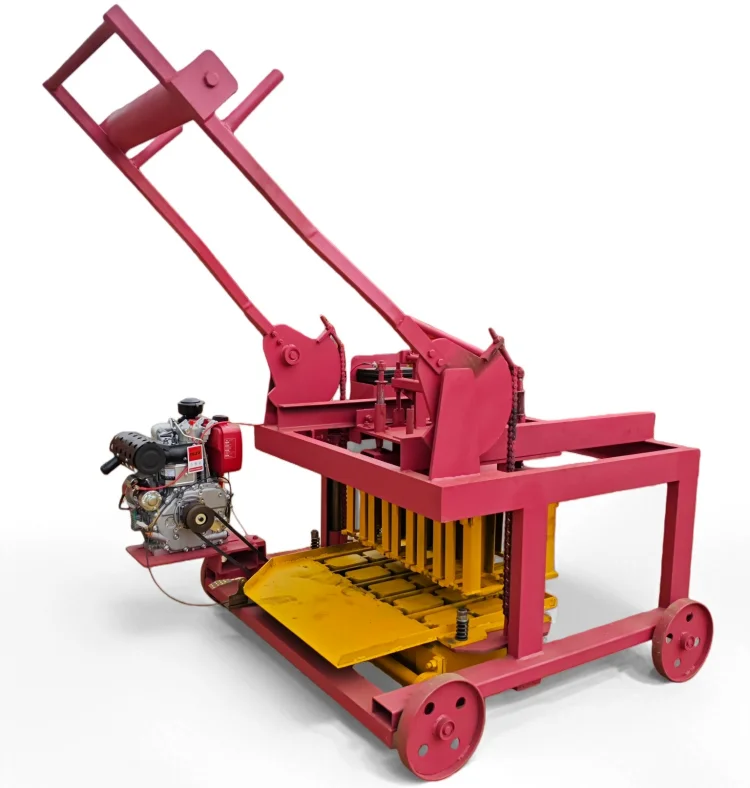
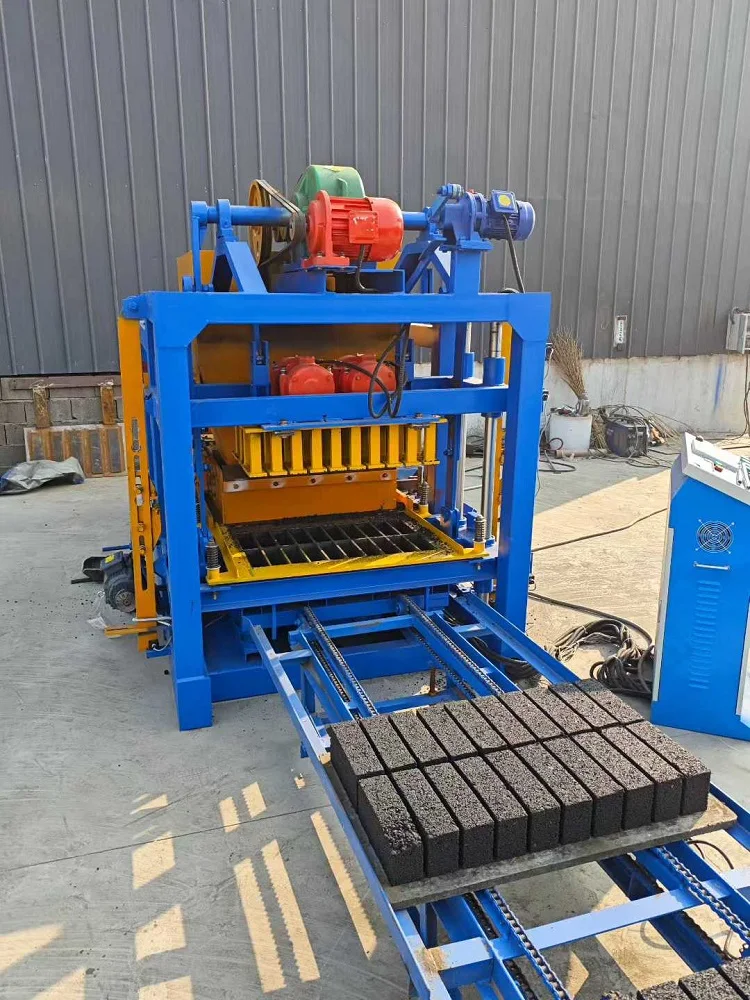
Single-Focus Block Machinery Design — the QT4-16 block machine in stock is configured as a matched system of press, mould, pallet, and handling rather than assembled from disconnected suppliers.
Technical Specifications
| Parameter | Value |
|---|---|
| Model | QT4-16 |
| Product Type | Automatic Hydraulic Concrete Block Making Machine |
| Overall Dimensions (L×W×H) | 7400 × 1950 × 2800 mm |
| Total Mass | 5 T |
| Rated Pressure | 21 MPa |
| Vibration Force | 40 kN |
| Vibration Frequency | 2800–4500 r/min |
| Main Vibration Form | Platform Vibration |
| Pallet Size | 900 × 550 mm |
| Molding Cycle | 15–20 s (basis not stated in source — confirm block format) |
| Demolding Method | Hydraulic |
| Control System | PLC intelligent control with man-machine interface, fault diagnosis, remote control |
| Machine Frame Material | Manganese steel (China national standard) |
| Factory Area Required | 600 m² |
Application Suitability
| Application | Material or Output |
|---|---|
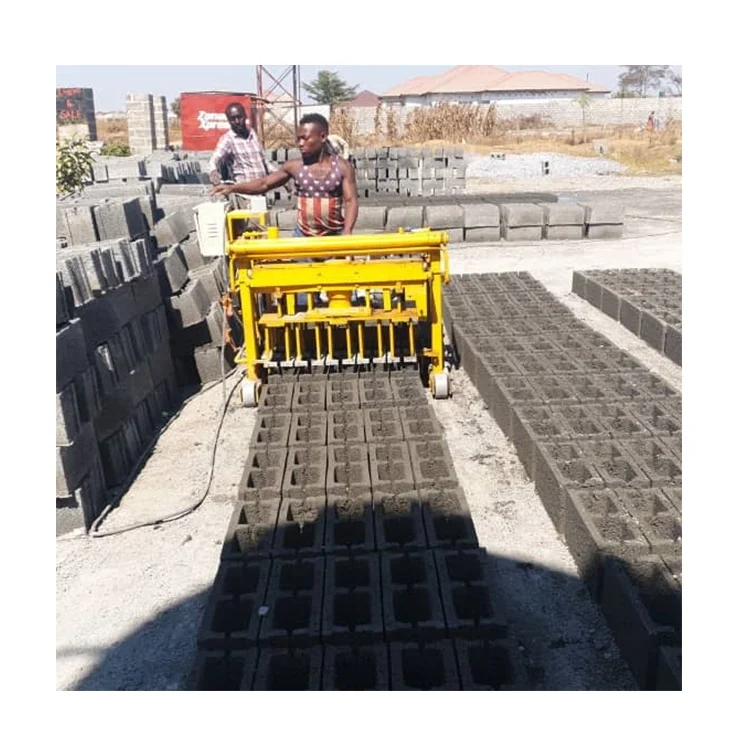
| Hollow block production for residential walls | Crushed stone, sand, cement, fly ash |
| Solid block manufacturing for load-bearing structures | Gravel, sand, cement blends |
| Paving block and colored paver runs | Fine aggregate with pigment additives |
| Interlocking brick for retaining walls | Local sand and crushed stone mixes |
| Kerbstone production for road projects | Coarse aggregate with high cement ratio |
Why the Voltage Question Should Come Before the Price
Buyers chasing a QT4-16 block machine in stock often lock in the model and lead time first, then discover on arrival that the local grid does not match the motor rating. Confirming voltage and frequency before production begins eliminates the single largest cause of commissioning delay.
I once watched a control cabinet trip its main breaker the moment a West African contractor energized a freshly arrived block press. The plant had 415V / 50Hz supply; the motor had been wound for 380V. A replacement variable-frequency drive had to be air-freighted, and the project sat idle for weeks. That failure had nothing to do with the machine itself — it was a paperwork gap [NEED_CITE: voltage and frequency standards by export market]. When a buyer is working against a construction deadline, the fastest dispatch means nothing if the machine cannot be powered on the first day.
Dispatch Lead Time and Container Loading Clarity
The overall dimensions of 7400 × 1950 × 2800 mm and the 5-tonne total mass of the QT4-16 block machine in stock allow the loading plan to be locked down at the order stage. The press frame, hydraulic station, and control cabinet are dismantled into labeled sub-assemblies that fit within a standard open-top or flat-rack container. Buyers receive packing photographs before the container doors close, so there is no guesswork about what is on board when the bill of lading arrives.
Arrival Estimate Quoted at Order, Not After Production
Stocked QT4-16 units are assigned a dispatch window the moment the proforma is signed, not after the factory test. Container transit estimates are calculated from the port of loading to the buyer’s destination port, giving project managers a date they can place on a Gantt chart. This matters when the block press is on the critical path of a housing development or a contractor’s mobilization schedule [NEED_CITE: typical construction project mobilization timelines for block plants].
Reading the Specs That Actually Matter on Site
The 21 MPa rated hydraulic pressure and 40 kN vibration force together determine how densely the concrete mix is compacted inside the mould cavity. Higher pressure alone will not compensate for insufficient vibration if the local aggregate is angular and interlocking; conversely, strong vibration without adequate hydraulic hold lets the block sag before demolding. The platform vibration at 2800–4500 r/min is adjustable so that the operator can match the frequency to the aggregate grading available near the plant.
The 900 × 550 mm pallet size is a dimension that must align with the curing racks and forklifts already on site. A mismatch here means either buying new handling equipment or watching output pile up on the floor because the pallets do not fit the existing rack slots. The PLC control with fault diagnosis and remote control function allows an off-site technician to read alarm codes in the buyer’s preferred language, cutting the time between a fault and a corrective action.
The Hidden Cost of Skipping Configuration Confirmation
A machine configured for a mix the buyer cannot source locally forces a material change that may be more expensive than the press itself. When the pallet size is chosen without checking the curing area dimensions, blocks cure in the open air, losing moisture too fast and cracking before they reach design strength. Commissioning delays caused by unconfirmed PLC display language or wrong voltage compound week after week, and the contractor starts paying penalty clauses on the building contract [NEED_CITE: common causes of industrial equipment commissioning delays in export markets]. None of these failures are mechanical — they are all specification gaps that a pre-shipment checklist would have caught.
Why Buyers Source This Machine Through Our Stock Channel
Every QT4-16 block machine in stock is documented with a factory test record that names the exact block format used during the run, so capacity claims are tied to a real mould rather than a theoretical cycle count. Mould drawings and format lists are supplied before shipment so the buyer can cross-check against local market demand. Pallet specifications match the machine’s pallet feeder, and voltage and control language are confirmed against a photograph of the buyer’s配电 room nameplate. Packing photographs and customs documentation are prepared in parallel with the container booking, preventing the two-week paperwork lag that often follows a rushed dispatch.
Documentation & Verification
- Factory test record naming the block format and cycle time achieved during the run
- Machine specification sheet confirming voltage, frequency, and PLC display language before shipment
- Mould drawing and format list matched to the buyer’s target market products
- Pallet specification aligned with the 900 × 550 mm feeder and the buyer’s existing curing racks
- Packing photographs taken after container loading for bill of lading verification
- Customs documentation package prepared for the destination country’s import requirements
Installation, Commissioning & Support
- Foundation plan issued for the 7400 × 1950 mm footprint before the machine ships
- Electrical single-line diagram confirms dedicated circuit rating for the 21 MPa hydraulic pump motor
- Dismantled sub-assemblies labeled for reassembly sequence on the 600 m² factory floor
- PLC fault diagnosis walkthrough conducted in the confirmed control language during first startup
- Mould change procedure demonstrated with the buyer’s specific block format on day one
- Wear parts list provided with part numbers for hydraulic seals and vibration motor bearings
What We Need From You to Quote an Arrival Date
Share the block format you intend to produce and the daily output your project schedule demands. Send a photograph of your site’s electrical nameplate showing voltage, phase, and frequency. Confirm the pallet dimensions your existing curing racks accept, or let us know if the rack layout has not been finalized yet so we can include pallet and rack matching in the proposal.
Frequently Asked Questions
Q: Is the QT4-16 currently in stock, and what is the dispatch lead time?
A: Stocked QT4-16 units are assigned to buyers on a first-confirmed basis. Once the proforma is signed and the voltage, frequency, and PLC language are locked in, a dispatch window is provided immediately. Typical lead time from confirmation to port loading runs in the range of several weeks, depending on the destination port and current container availability.
Q: How is the machine dismantled and loaded into the container for shipment?
A: The press frame, hydraulic station, and control cabinet are separated into labeled sub-assemblies that fit within a standard container. The 5-tonne total mass is distributed to meet container weight distribution requirements, and packing photographs are taken after loading to document the exact contents before the doors are sealed.
Q: Can voltage, frequency, and control language be confirmed before the machine leaves the factory?
A: Yes. We request a photograph of the buyer’s electrical nameplate and a written confirmation of the required PLC display language before production or dispatch. This step prevents the kind of on-site commissioning failure that occurs when a motor rated for one grid standard is connected to another.
Q: What customs documentation is provided to support import clearance at destination?
A: The documentation package includes the commercial invoice, packing list, bill of lading, and any certificates required by the destination country’s customs authority. Documents are prepared in parallel with container booking so they are ready before the vessel arrives at the discharge port.
Q: How far in advance should I order to meet my project start date?
A: Buyers working to a fixed construction deadline should allow for multi-week transit plus a buffer for port clearance and on-site reassembly. Providing the project start date at inquiry stage lets us back-calculate the latest order confirmation date and container departure needed to meet that milestone.