
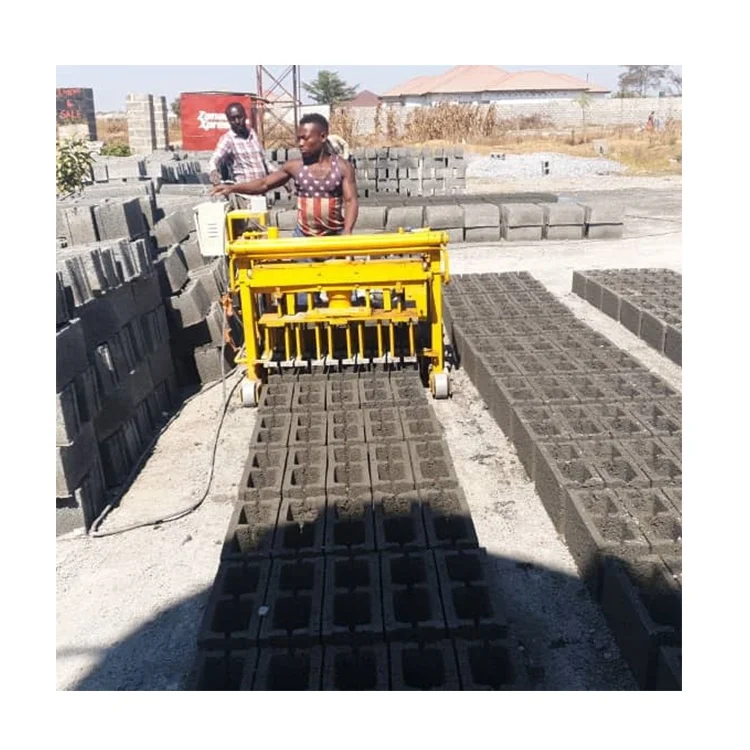

Description
Stocked for Fast Dispatch — This QMY4-30 mobile block machine is kept ready for container loading, letting your site start producing within weeks instead of waiting through a full manufacturing cycle.
Technical Specifications
| Parameter | Value |
|---|---|
| Model | QMY4-30 |
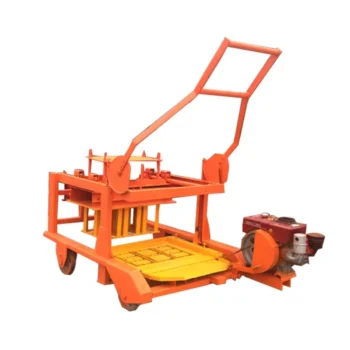
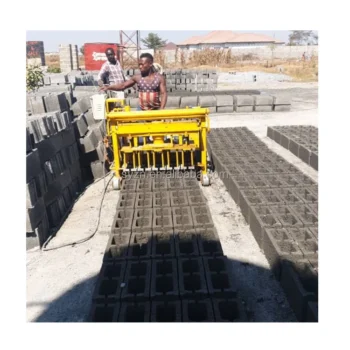
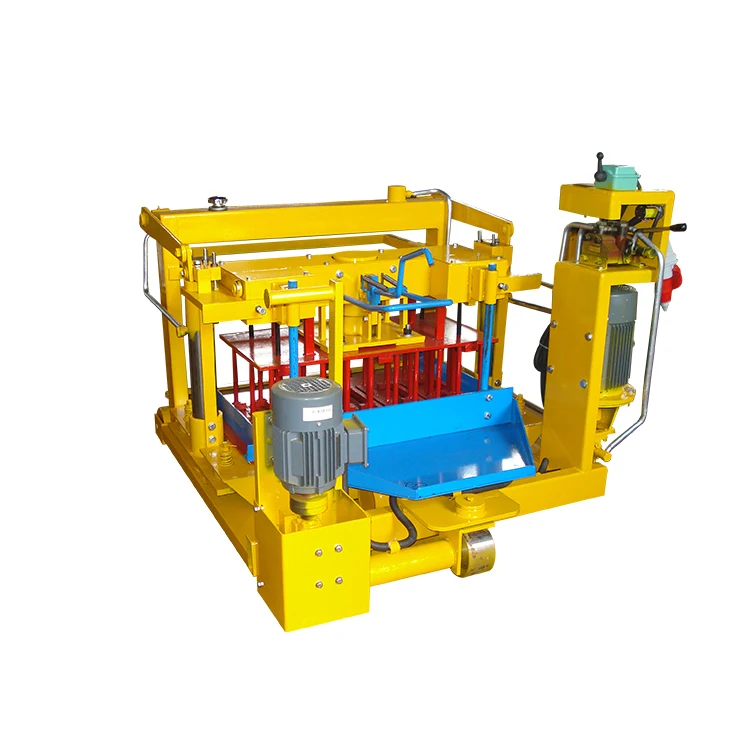
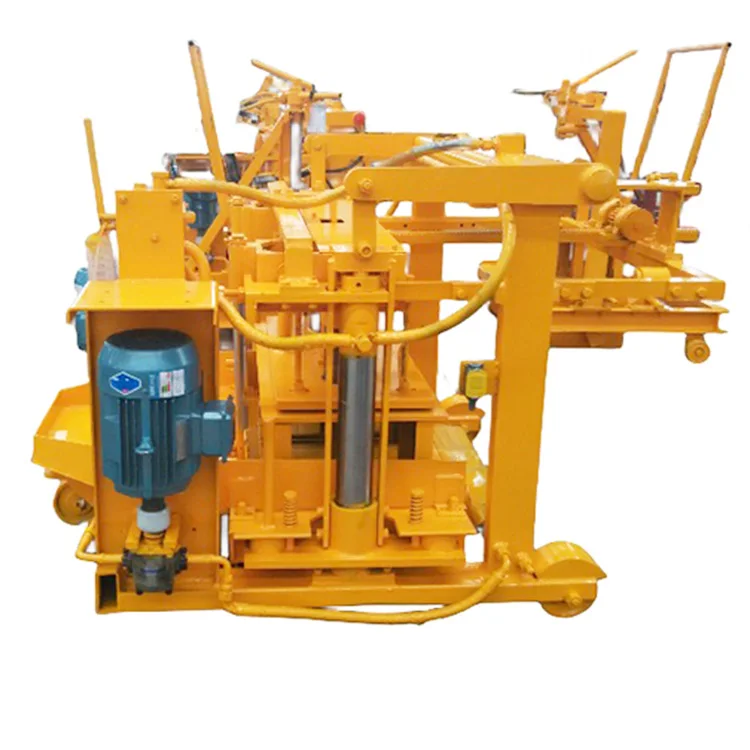
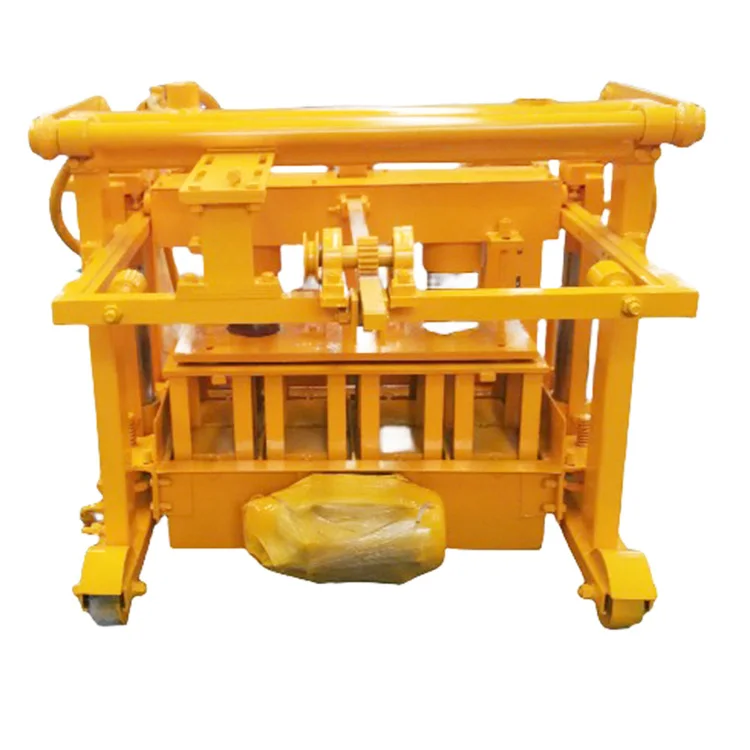
| Product Type | Mobile Egg-Laying Block Making Machine |
| Rated Power | 5 kW |
| Overall Dimensions (L×W×H) | 1200 × 1200 × 1100 mm |
| Net Weight | 950 kg |
| Cycle Time | 30 seconds (basis not stated in source — confirm block format / material / thickness) |
| Output Capacity | 480 pcs/h (based on 400×200×200 mm hollow block, 4 pcs/mould) |
| Output Capacity | 600 pcs/h (based on 400×150×200 mm hollow block, 5 pcs/mould) |
| Output Capacity | 840 pcs/h (based on 400×100×200 mm hollow block, 7 pcs/mould) |
| Daily Output | 3840 pcs/8h (based on 400×200×200 mm hollow block) |
| Daily Output | 4800 pcs/8h (based on 400×150×200 mm hollow block) |
| Daily Output | 6720 pcs/8h (based on 400×100×200 mm hollow block) |
| Mould Format | Hollow block and solid brick, interchangeable moulds |
| Raw Materials | Cement, sand, crushed stones, slag |
| Automation Level | Manual / mobile egg-laying type |
| Pallet Size | Not applicable (egg-laying / mobile type) |
Application Suitability
| Application | Material or Output |
|---|---|
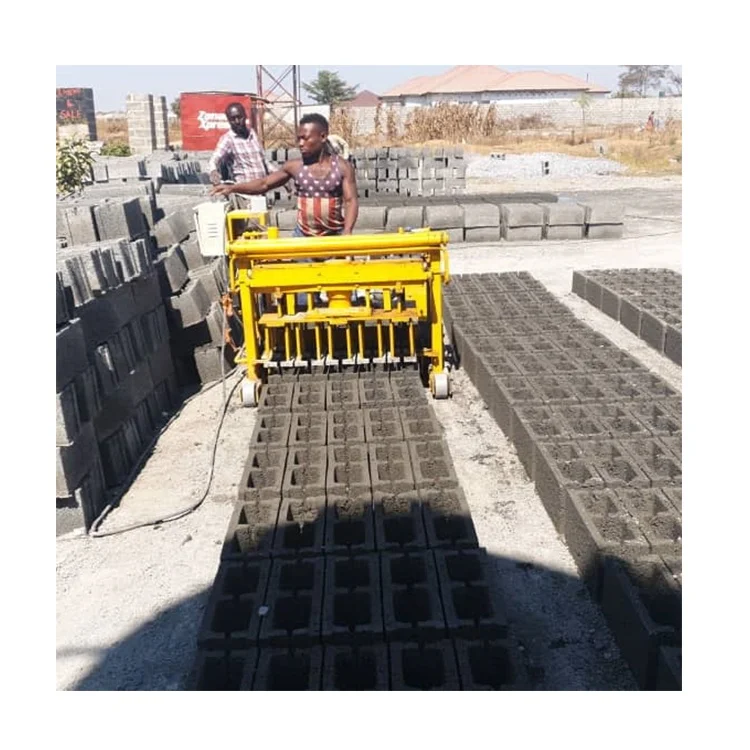
| On-site concrete block production | Cement, sand, crushed stones, slag without a fixed plant setup |
| Small-scale hollow block manufacturing | 400×200×200 mm and 400×150×200 mm hollow blocks |
| Contractor self-production of masonry units | Solid bricks and thinner partition blocks on active job sites |
| Entrepreneur start-up block production | Low-footprint operation with interchangeable mould formats |
| Remote or rural construction projects | Mobile deployment where fixed batching plants are not viable |
Why "Pieces per Hour" Means Nothing Without the Block Format
Capacity figures only matter when tied to the exact block size your market actually buys.
I have watched buyers celebrate a quoted hourly output, then discover on arrival that the number assumed a thin partition block their customers never order. The real daily tonnage drops hard once you switch to the 200 mm hollow block that sells locally. With this mobile block machine in stock, we state the output per format so you know exactly what an eight-hour shift delivers before the crate leaves the warehouse. [NEED_CITE: common discrepancy between quoted and actual block machine output across formats]
Dispatch Readiness and Container Loading
Buyers working against a project deadline cannot absorb a multi-week production wait. The QMY4-30 is a mobile block machine in stock that ships in a plywood crate of approximately 3 m³, which keeps container loading efficient and freight costs predictable. We confirm dispatch lead time in writing at the quotation stage so your site team can plan around a known arrival window rather than a hopeful estimate.
What Arrives With the Machine
Standard hollow block and solid brick moulds ship together when they are part of the stocked configuration. This avoids the common situation where the press arrives but the first mould set is still on a separate production schedule. Every dispatch includes packing photographs and a container loading plan so you can verify shipment readiness before the vessel sails. [NEED_CITE: container loading verification practices for heavy machinery exports]
Reading the Numbers on the Specification Sheet
The 5 kW rated power keeps site electrical demands straightforward — most construction sites and small yards can supply this without a dedicated transformer upgrade. The 30-second cycle time applies across the interchangeable mould formats, though actual throughput depends on mix consistency and operator rhythm. Because this is an egg-laying type, there is no pallet system to maintain; the machine lays blocks directly on the ground surface, which eliminates pallet cost but requires a level, cured concrete floor for acceptable block geometry. The 950 kg net weight means a standard site forklift can move the unit between production areas without heavy lifting gear.
The Cost of Skipping Voltage Confirmation
I once saw a block line sit idle for weeks because the motor was wound for 380V/50Hz and the site ran 220V/60Hz. The buyer had focused entirely on output figures and mould options during the order process, and voltage was an afterthought. A mobile block machine in stock is only fast if the electrical configuration matches your grid — confirm voltage, frequency, and any control labeling language in writing before dispatch to avoid a costly rewind or transformer rental on arrival. [NEED_CITE: voltage and frequency standards by export market]
Why Source This Machine Here
Block machinery is our single focus, so the QMY4-30 ships as a matched system with its moulds rather than assembled from unrelated suppliers. We configure the mould set against the block formats your market actually purchases, not a catalogue default. Automation level is selectable, so you can begin with manual egg-laying operation and plan an upgrade path later. Installation support and operator training are included so your crew is producing acceptable blocks within the first shift. Stocked models and standard moulds mean the dispatch conversation is about days and container slots, not production queue position.
Documentation & Verification
- Factory test record on your specified hollow block format before dispatch
- Machine specification sheet confirming voltage and frequency for your grid
- Mould drawing and format list covering every block size in your order
- Packing photographs and container loading plan shared before vessel departure
- Customs documentation support prepared for your destination port requirements
- Operation and maintenance manual in your confirmed control language
Installation, Commissioning & Support
- Level concrete floor required; the 1200 × 1200 mm footprint needs no special foundation
- 5 kW supply on a dedicated circuit with confirmed voltage and frequency
- Machine ships assembled; place on ground surface and connect power to begin
- First-run commissioning with mix adjustment to match your local aggregate
- Operator training covers cycle rhythm, mould change, and daily greasing points
- Wear parts list included so you can reorder before the first mould shows fatigue
Before You Request a Quote
Send us the block formats your customers actually order, along with your local voltage and frequency. Tell us the daily volume you need so we can confirm which stocked mould set covers your output target. If your site has an existing mixer or aggregate stockpile, let us know so we can advise on compatibility.
Frequently Asked Questions
Q: Is the QMY4-30 currently in stock, and what is the dispatch lead time?
A: Stock availability and exact dispatch lead time are confirmed in writing at the quotation stage. The QMY4-30 is a stocked model category, meaning it does not enter a full production queue. We provide a realistic departure date based on current warehouse inventory and your confirmed electrical specifications.
Q: How is the machine packed, and how many units fit in one container?
A: Each QMY4-30 ships in a plywood crate of approximately 3 m³. The compact dimensions allow multiple units or additional mould sets to share container space efficiently. We provide a container loading plan and packing photographs before the container is sealed so you can verify the loading arrangement.
Q: What voltage and frequency configurations can ship immediately?
A: Standard voltage configurations held in readiness ship fastest. If your site requires a non-standard voltage or frequency, the motor may need to be wound to order, which adds lead time. Confirming your grid specification early ensures we quote the correct configuration and avoid commissioning delays on arrival.
Q: Are standard hollow block and solid brick moulds included in the stock shipment?
A: Standard moulds for common hollow block and solid brick formats are available from stock and can ship with the machine. Custom mould designs or less common block sizes may require a separate production lead time. We confirm which moulds are stocked and which are made-to-order at the quotation stage.
Q: What customs and shipping documentation is provided?
A: We prepare commercial invoices, packing lists, bills of lading, and any certificates required for your destination port. CE declaration is provided where applicable. Customs documentation support is included so your clearing agent has what they need to process import procedures without unnecessary hold-ups.