Description
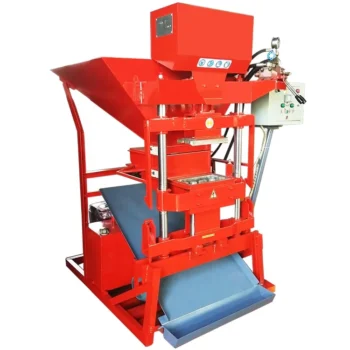
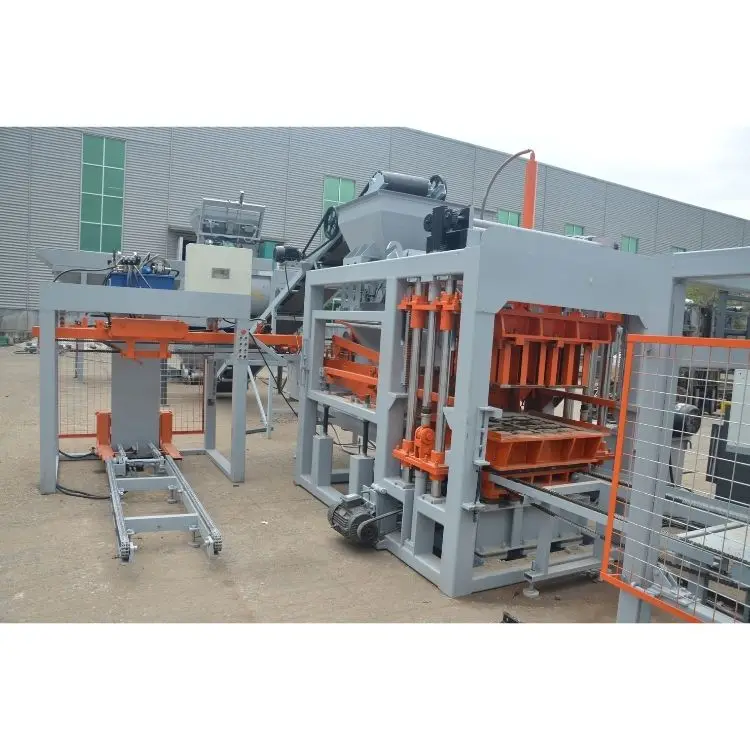
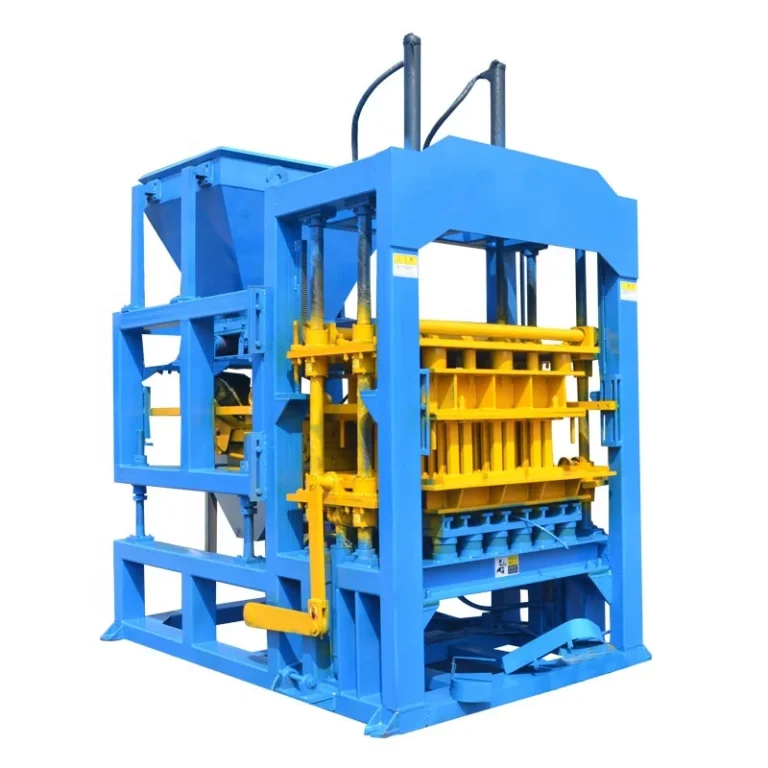
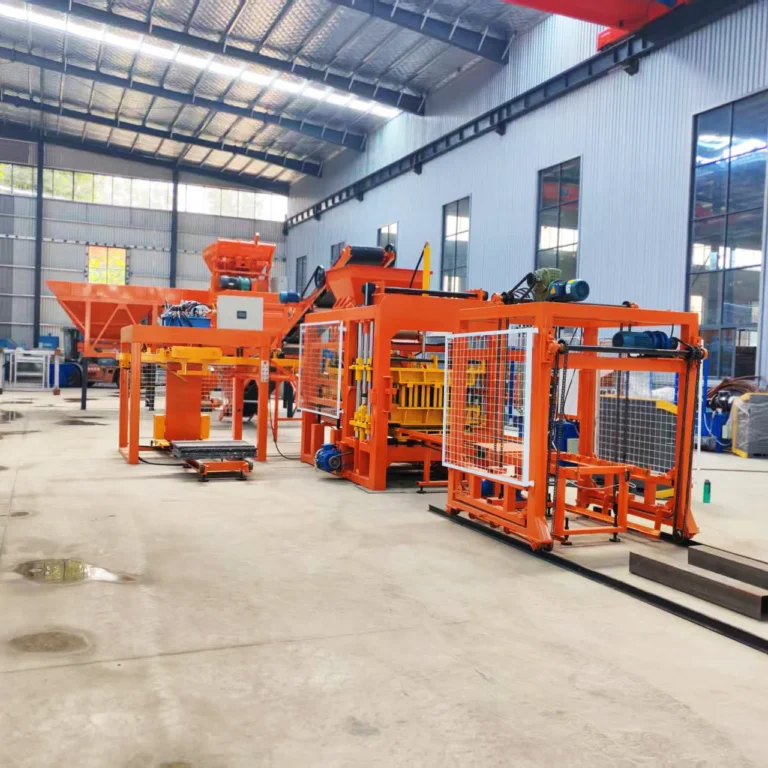
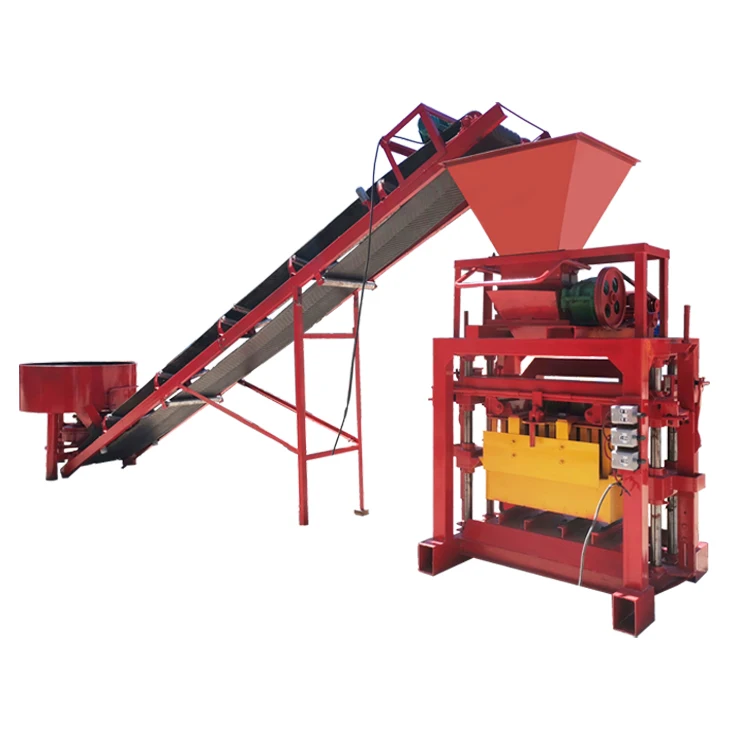
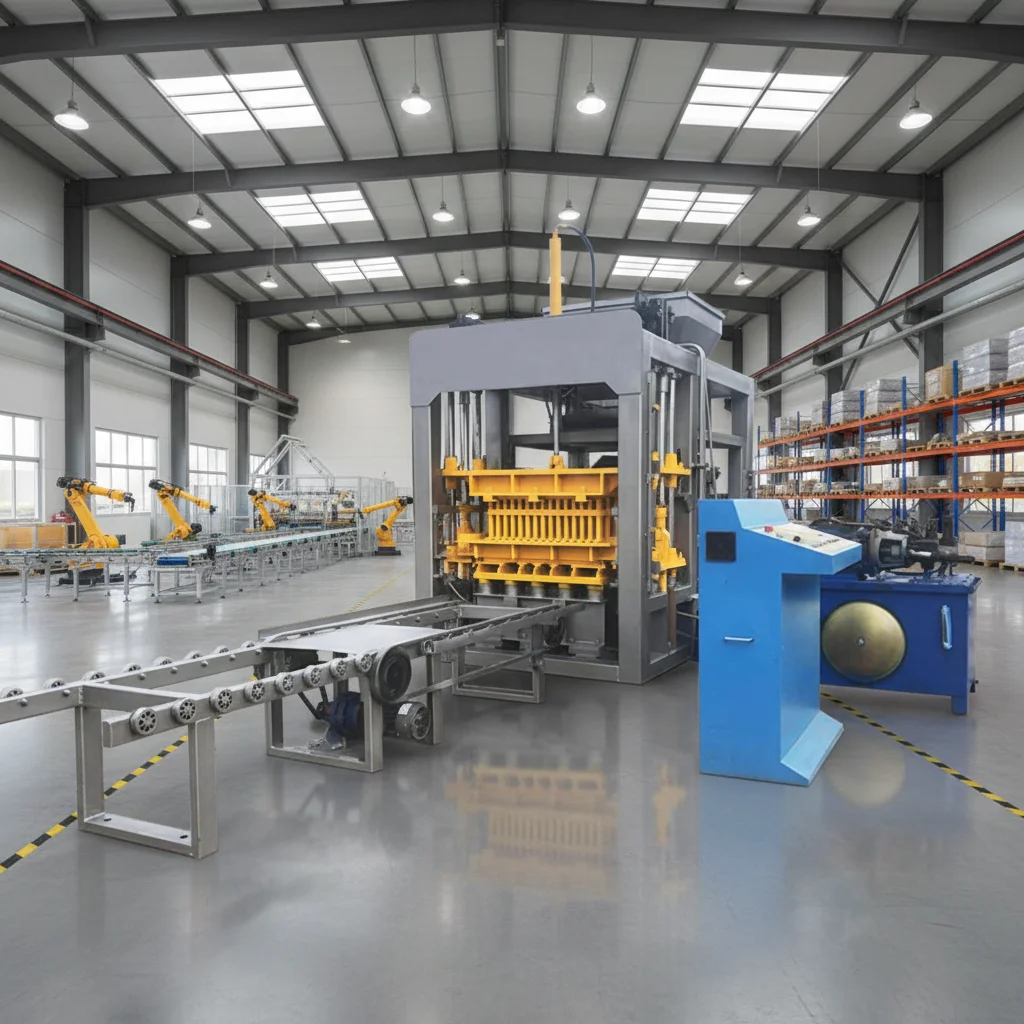
Configuration set against the buyer’s actual block format and dispatch timeline — the QT5-15 concrete block machine in stock fast delivery is held in a ready-to-ship state with mould, pallet and hydraulic stations matched before the container is booked.
Technical Specifications
| Parameter | Value |
|---|---|
| Model | QT5-15 |
| Product Type | Automatic Concrete Block Making Machine |
| Overall Dimensions | 7400 × 1950 × 2800 mm |
| Vibration Frequency | 0–60 Hz |
| Vibration Form | Platform Vibration |
| Vibration Force | 80 kN |
| Moulding Mode | Automatic loading with vibration moulding |
| Pallet Size | 1100 × 550 mm |
| Molding Cycle | 15–20 s (basis not stated in source — confirm block format / material / thickness) |
| Overall Power | 32 kW |
| Total Mass | 5000 kg |
| Demolding Method | Hydraulic |
| Required Factory Area | 1000 m² |
| Control System | PLC (Programmable Logic Controller) |
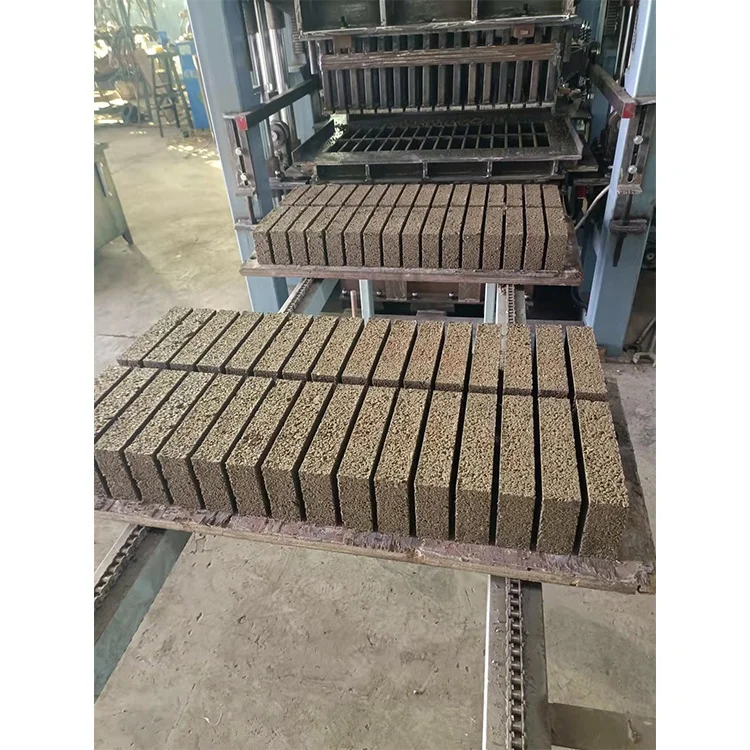
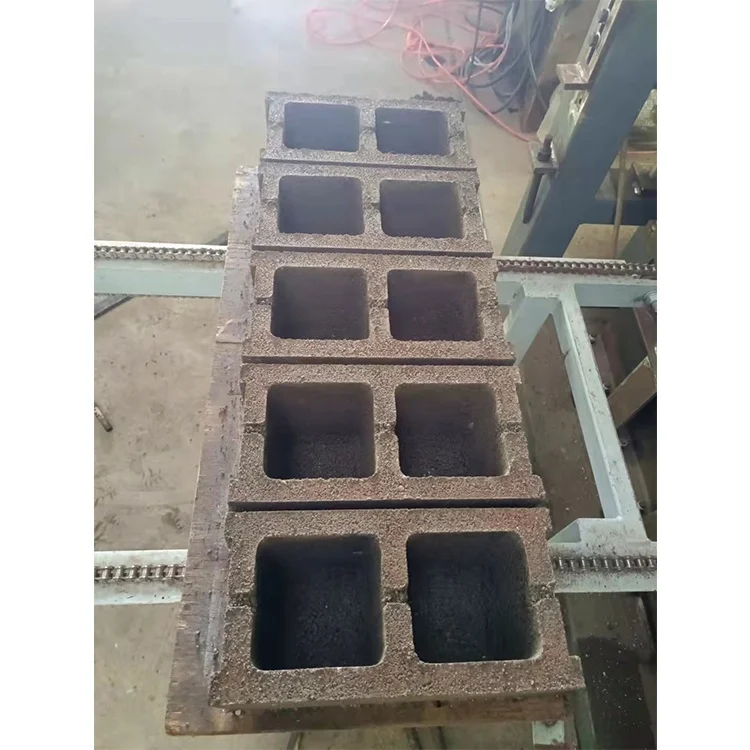
| Output Capacity (Hollow Block 400×200×200 mm) | 900–1200 pcs/h, 7200–9600 pcs/8hr |
| Output Capacity (Hollow Block 400×150×200 mm) | 1080–1440 pcs/h, 8640–11520 pcs/8hr |
| Output Capacity (Solid Brick 240×115×53 mm) | 5760–7680 pcs/h, 46080–61440 pcs/8hr |
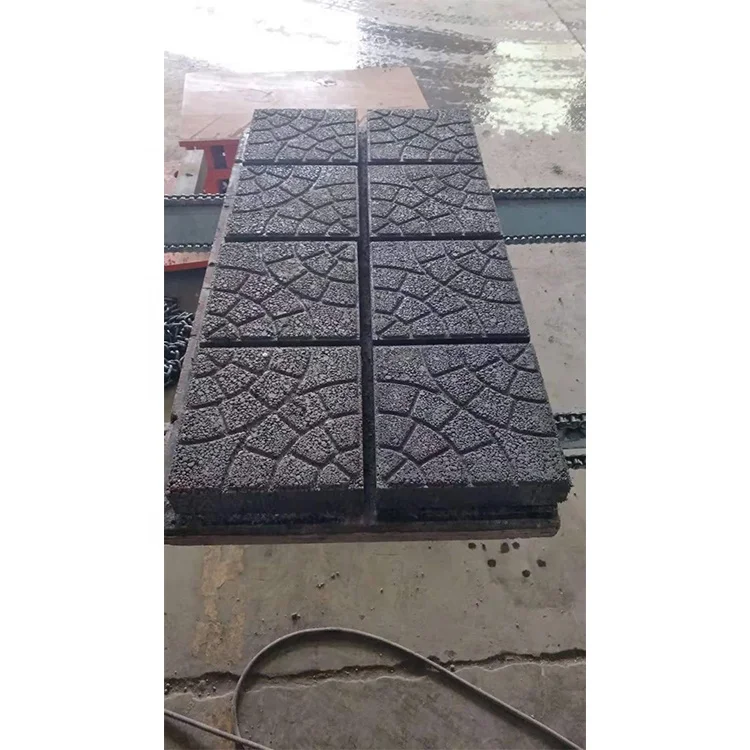
| Output Capacity (Rectangular Paver 200×100×60 mm) | 3600–4500 pcs/h, 28800–36000 pcs/8hr (cycle 20–25 s) |
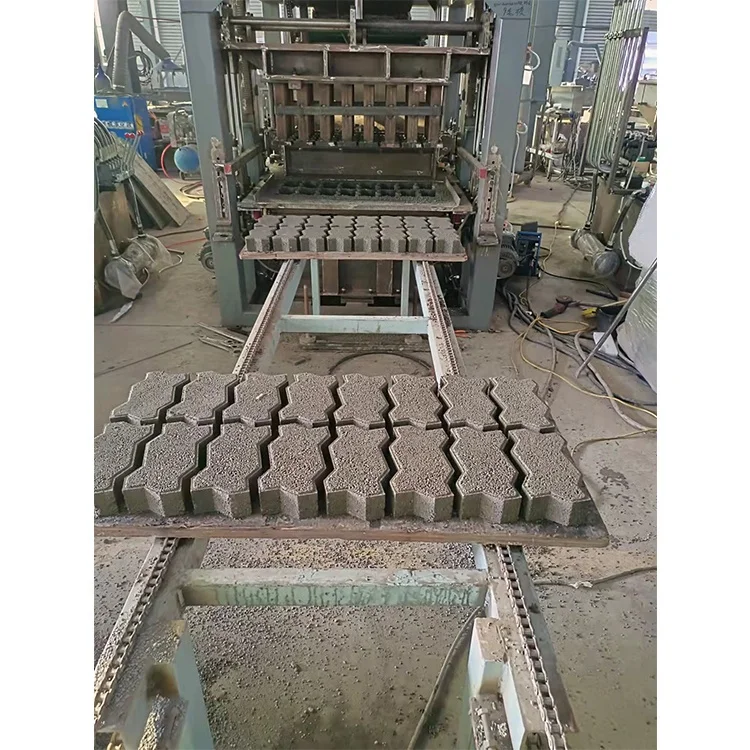
| Output Capacity (Zigzag Paver 225×112.5×60 mm) | 2304–2880 pcs/h, 18432–23040 pcs/8hr (cycle 20–25 s) |
| Compressive Strength of Blocks | > 15 MPa |
| Flyash Content Compatibility | Up to 70% |
| Raw Materials | Fly ash, slag, gangue, sand, crushed stone, cement, water, industrial residue |
| Hydraulic System | Independent integrated hydraulic station |
| Electrical & Hydraulic Components | Imported or China famous brand |
| Warranty | 1 year for the whole machine (excluding spare parts) |
| Standards | CE (verify against manufacturer catalog) |
Application Suitability
| Application | Material or Output |
|---|---|
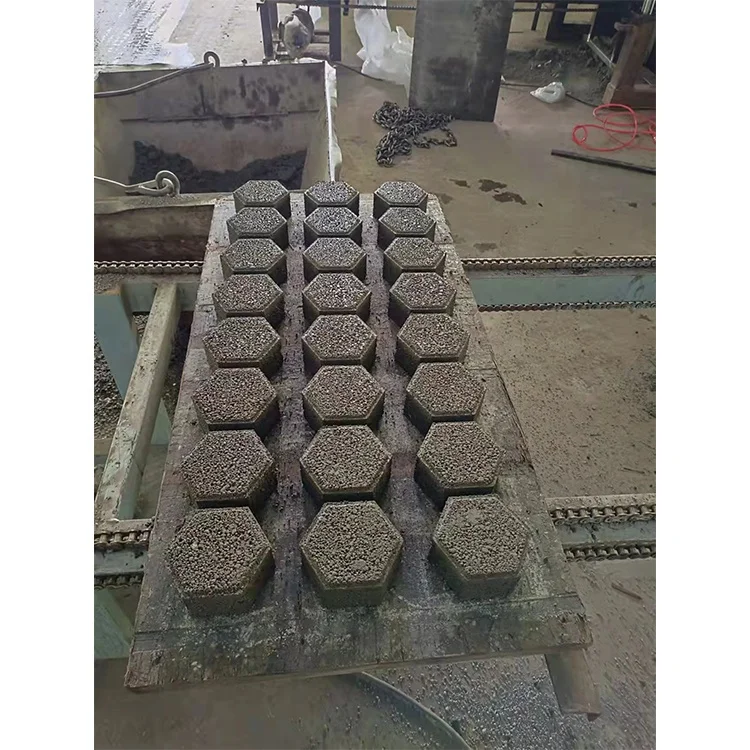
| Hollow block production for wall construction | Crushed stone, sand, cement, fly ash mix yielding 400×200×200 mm and 400×150×200 mm formats |
| Solid brick manufacturing for load-bearing structures | Fine aggregate and cement blends producing 240×115×53 mm bricks at higher cycle frequency |
| Rectangular paver production for roads and walkways | 200×100×60 mm interlocking pavers from coarse aggregate and cement at 20–25 s cycle |
| Zigzag interlocking paver for driveways and plazas | 225×112.5×60 mm format requiring matched vibration force and hydraulic pressure |
| On-site block production by housing project contractors | Local aggregate, sand and cement adapted to available raw material within project timeline |
What "900 to 1200 Pieces per Hour" Actually Means on a Job Site
The hourly capacity figure only holds true when the block format, mix design and local aggregate all match the conditions under which the machine was tested.
I once watched a contractor lose an entire week of masonry work because the block machine he ordered was rated at 1200 pieces per hour on paper, but the supplier never asked about the oversized river gravel available at his site. The vibration force was not sufficient to consolidate that particular mix, and actual output dropped to roughly half. When a project deadline is already tight, that kind of gap between quotation and reality cascades through every trade downstream. The QT5-15 concrete block machine in stock fast delivery is listed with capacity broken down per block format — hollow, solid, rectangular paver, zigzag — so a buyer can cross-reference the number that matters to the product they actually sell, not a generic headline figure. [NEED_CITE: common causes of block machine output shortfall on construction sites]
Dispatch Timing That Matches a Project Schedule
When a contractor is working against a construction deadline, the lead time on a custom-built press can push the entire masonry phase past the window where weather and labour align. The QT5-15 is held as a stocked configuration, meaning the pallet feed machine, block making press, storage hopper, conveyor, hydraulic unit and PLC control cabinet are already assembled and tested as a matched set. The buyer receives a dispatch lead time quoted before the order is confirmed, along with a container loading plan that accounts for the 7400 mm overall length and 5000 kg total mass. This removes the uncertainty of waiting for a machine to be built from scratch when the site crew is already mobilized.
Container Loading and Machine Dismantling for Shipment
A stocked machine is only fast if it fits cleanly into a standard shipping container without damage or delay at the port of loading. The QT5-15 is dismantled into its core stations — press, hydraulic unit, hopper, conveyor and PLC cabinet — each secured with blocking and bracing suitable for ocean transit. The pallet feed mechanism and the 1100 × 550 mm pallets themselves are packed to prevent warping during a multi-week voyage. Buyers receive packing photographs before the container is sealed, so they can verify that every station listed in the specification sheet is physically on board. This level of pre-shipment documentation is what separates a quick dispatch from a quick disappointment. [NEED_CITE: international container loading standards for heavy industrial machinery]
Vibration Force, Hydraulic Pressure and Block Density
The 80 kN vibration force and independent integrated hydraulic station work together to determine the compressive strength of every block that leaves the mould. Platform vibration at 0–60 Hz consolidates the mix from below, while the hydraulic demolding system applies controlled pressure to release the formed block without cracking. When these two forces are correctly balanced against the buyer’s specific mix — particularly the fly ash content, which can reach up to 70 percent in some formulations — the resulting block consistently exceeds 15 MPa compressive strength. If the vibration frequency is set too high for a coarse aggregate mix, the material segregates and the block surface becomes porous; too low and the mix does not fully compact, producing weak units that fail under load.
Pallet Size and the Curing Area You Already Have
The 1100 × 550 mm pallet size is not a random choice — it must match the curing racks and forklifts already on site. A buyer who orders a machine without confirming this dimension will find that freshly pressed blocks cannot be stacked on their existing racks, forcing them to either purchase new curing infrastructure or handle blocks manually. The QT5-15 ships with pallet specifications documented upfront, allowing the buyer to measure their curing area and confirm forklift tine spacing before the machine leaves the factory. This single check eliminates a bottleneck that has delayed commissioning on more sites than I can count.
When the Wrong Mould Choice Cancels Out the Flexibility You Paid For
A buyer who selects a machine with quick-change mould capability but never receives training on the actual changeover procedure will spend most of a shift swapping formats instead of producing blocks. The QT5-15 supports hollow block, solid brick, rectangular paver and zigzag paver formats through mould changes, but the time required to switch depends on operator familiarity and the availability of matching pallets for each format. If a plant intends to produce multiple formats in a single day, the production schedule must account for the changeover window — otherwise the theoretical flexibility of the machine never translates into actual product variety. [NEED_CITE: block machine mould change procedures and time allocation]
Why Buyers Source This Stocked Configuration Here
Shiyue Intelligent Machinery focuses exclusively on block machines, moulds, pallets and supporting handling equipment, which means every station in the QT5-15 line is specified as a matched system rather than assembled from unrelated suppliers. The machine configuration is set against the buyer’s actual mix design and local aggregate, not a catalogue default that may not suit the materials available at the job site. Voltage, frequency and PLC display language are confirmed in writing before dispatch, preventing the commissioning delays that occur when these details are left until the machine arrives on site. A factory test record and packing photographs are provided so the buyer can verify that the exact stocked unit matches the specification sheet before the container is sealed. Moulds and hydraulic wear parts are stocked alongside the machine, ensuring that the first replacement cycle does not halt production while parts are sourced internationally. [NEED_CITE: block machinery system integration best practices]
Documentation & Verification
- Line layout showing QT5-15 station positions within a 1000 m² factory area
- Capacity calculation stating the block format assumed for each output tier
- Mould drawing and format list for hollow, solid, rectangular and zigzag products
- Pallet specification confirming 1100 × 550 mm dimensions and material grade
- Hydraulic and electrical schematic matching the independent integrated station
- Voltage, frequency and PLC language confirmation in writing before dispatch
Installation, Commissioning & Support
- Foundation requirements for the 7400 × 1950 mm footprint with vibration isolation
- Dedicated electrical circuit for the 32 kW overall power draw at confirmed voltage and frequency
- Station-by-station reassembly of press, hydraulic unit, hopper and conveyor on site
- PLC parameter setting calibrated to the buyer’s local aggregate and target block format
- Operator training covering mould change procedure and daily maintenance of the 80 kN vibration system
- Wear parts list with first replacement intervals for hydraulic seals and vibration components
What to Include in Your Inquiry
To confirm that the stocked QT5-15 configuration matches your site conditions, provide the target block format and daily output requirement, the local raw materials available including aggregate size and fly ash proportion, and the voltage and frequency standard at your facility. If you already have curing racks or forklifts on site, share the pallet dimensions they accept so the 1100 × 550 mm pallet can be verified for compatibility. Confirm the PLC display language preferred by your operators, and note any existing upstream or downstream equipment that the block line must integrate with.
Frequently Asked Questions
Q: Which block format is the hourly capacity figure based on, and how does it change with different moulds?
A: The QT5-15 capacity is listed separately for each format: 900–1200 pieces per hour for 400×200×200 mm hollow blocks, 5760–7680 for 240×115×53 mm solid bricks, and 3600–4500 for 200×100×60 mm rectangular pavers. Each figure assumes a specific molding cycle and mix design. When you switch moulds, the cycle time and hourly output change accordingly, so the capacity table must be read against the format you intend to produce.
Q: What is the dispatch lead time for a stocked QT5-15, and how is it loaded into a container?
A: Stocked units are prepared for dispatch within a timeframe quoted before the order is confirmed. The machine is dismantled into its core stations — press, hydraulic unit, hopper, conveyor and PLC cabinet — and secured with blocking and bracing for ocean transit. Packing photographs are provided before the container is sealed so the buyer can verify every component against the specification sheet.
Q: Are voltage, frequency, and PLC language confirmed before shipment or only at installation?
A: These parameters are confirmed in writing before the machine leaves the factory. The QT5-15 electrical system is configured to the buyer’s local voltage and frequency standard, and the PLC display language is set to the operator’s preference. This prevents the commissioning delays that occur when electrical mismatches are discovered only after the machine arrives on site.
Q: Which moulds ship with the machine, and what is the lead time for additional custom moulds?
A: The stocked QT5-15 ships with moulds for the block formats listed in the capacity table. If the buyer requires a format not included in the standard set — such as a kerbstone or a custom interlocking profile — a mould drawing is prepared from the buyer’s specifications and manufactured separately. Lead time for custom moulds is quoted at the inquiry stage alongside the machine dispatch schedule.
Q: What does the on-site installation and operator training package include?
A: Installation covers station-by-station reassembly of the 7400 × 1950 mm machine within a 1000 m² factory area, electrical connection to the confirmed voltage supply, and PLC parameter calibration to the buyer’s local aggregate and mix design. Operator training addresses daily operation, mould change procedures, and maintenance intervals for the 80 kN vibration system and independent hydraulic station.