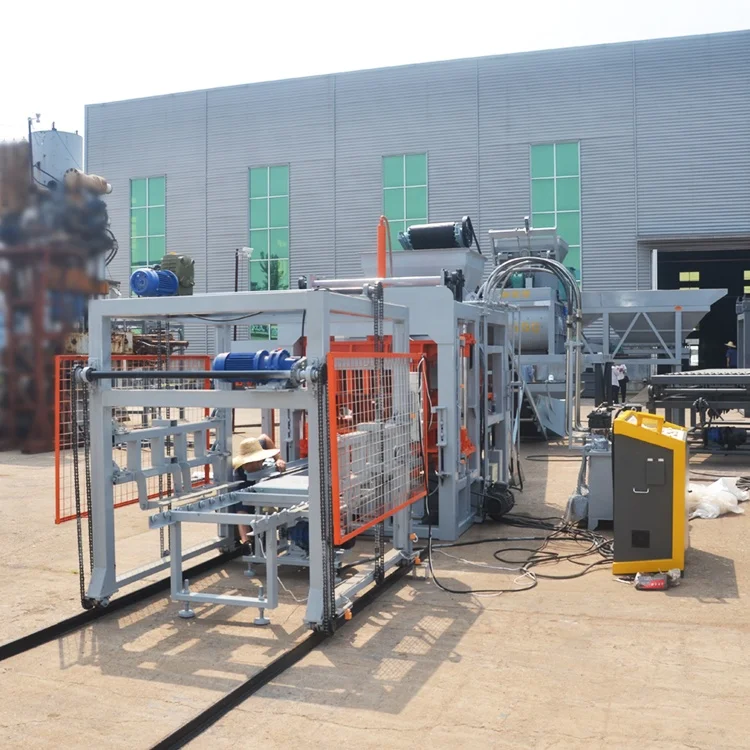
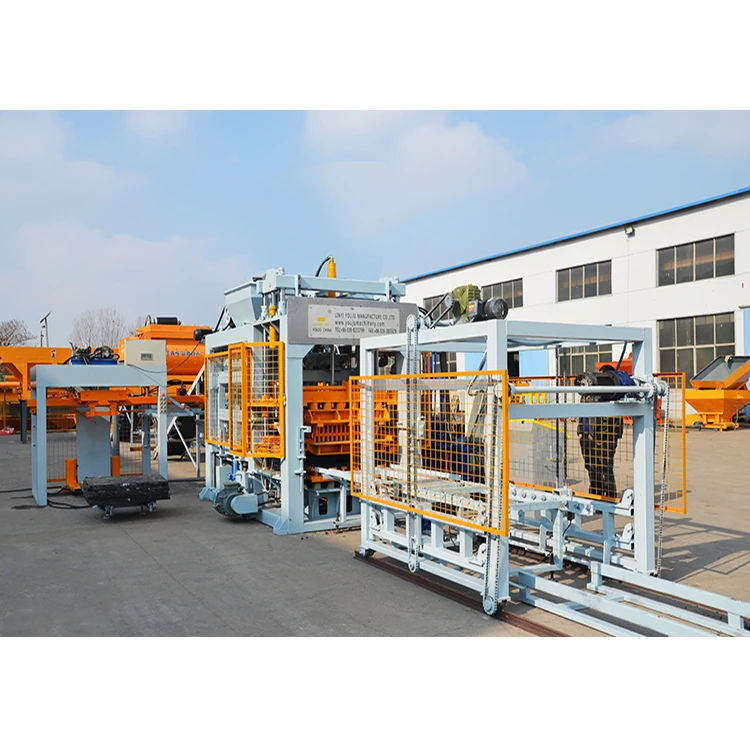
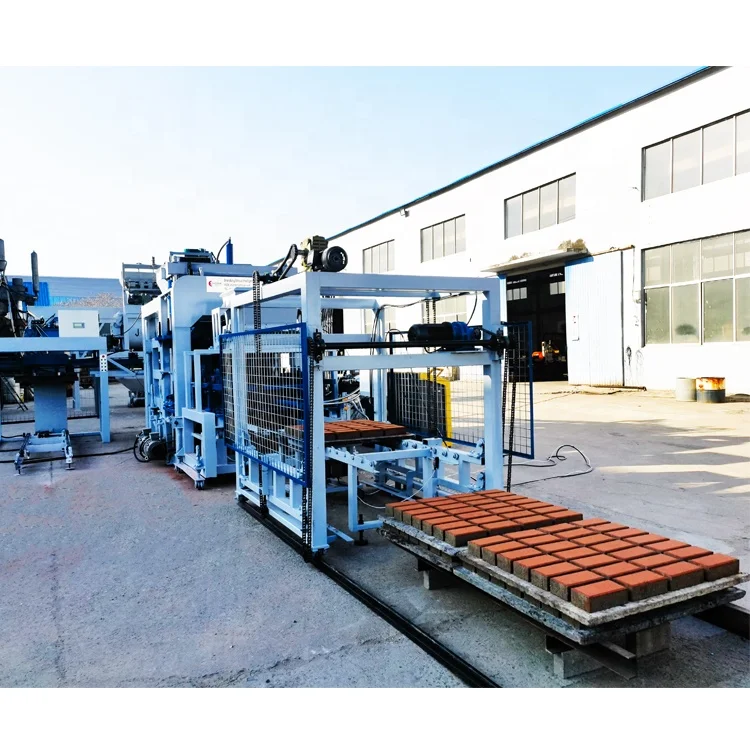
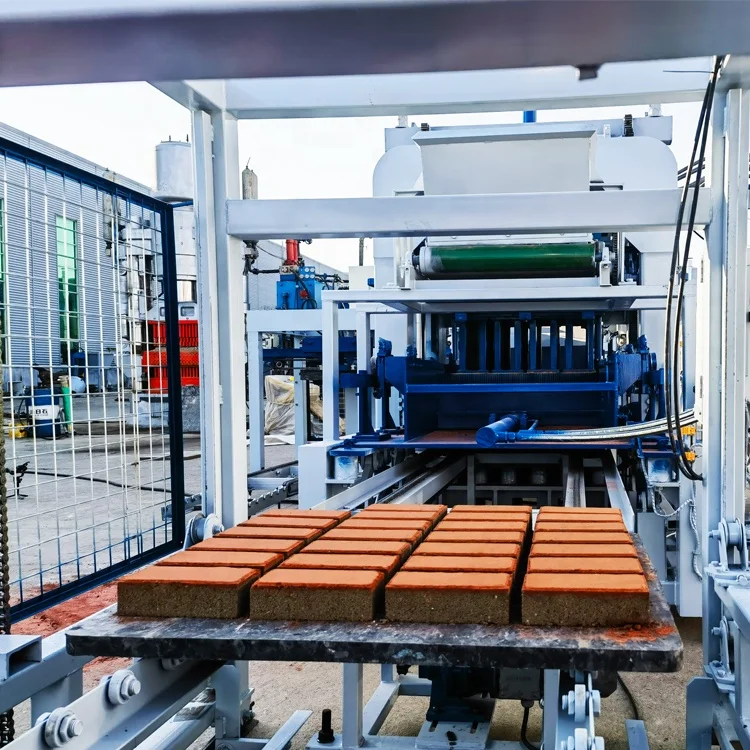
Description
Rapid Project Dispatch — Stocked QT6-15 block machines ship within confirmed lead times, so your construction deadline stays intact while container loading plans are finalized upfront.
Technical Specifications
| Parameter | Value |
|---|---|
| Model | QT6-15 |
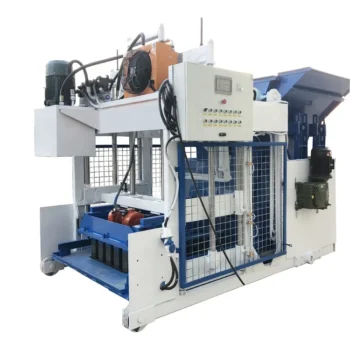
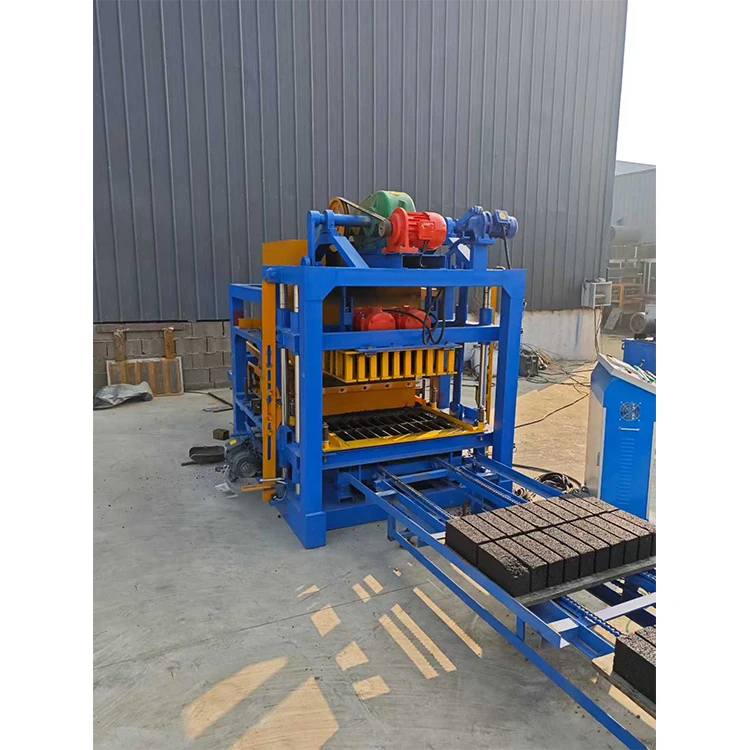
| Product Type | Automatic Hydraulic Concrete Block Making Machine |
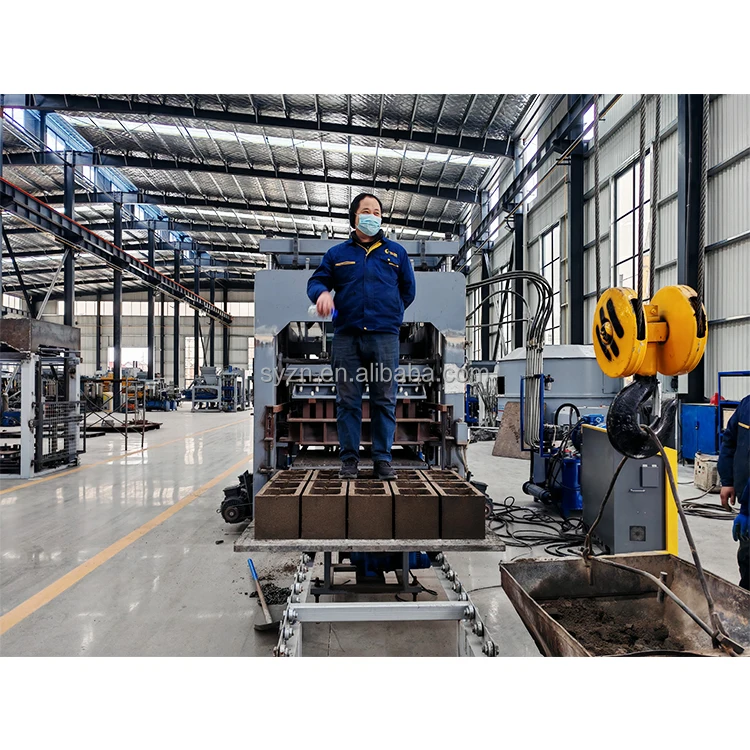
| Mould Capacity | 6 pcs per cycle (basis: standard hollow block format) |
| Overall Dimensions | 8300 × 1860 × 3000 mm |
| Molding Cycle | 15–20 s (basis to be confirmed by block format and material) |
| Exciting Power (Vibration Force) | 55 KN |
| Total Power | 37.2 kW |
| Mixer Model | JS750 |
| Pallet Size | 1020 × 900 mm |
| Total Weight | 8 T |
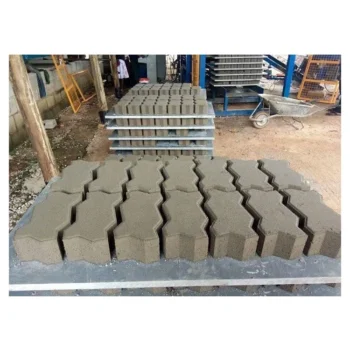
| Applied Products | Paver, solid block, hollow block, curbstone |
| Raw Materials | Crushed stones, sand, cement, dust, fly ash |
| Control System | PLC control system |
| Hydraulic Station | Included |
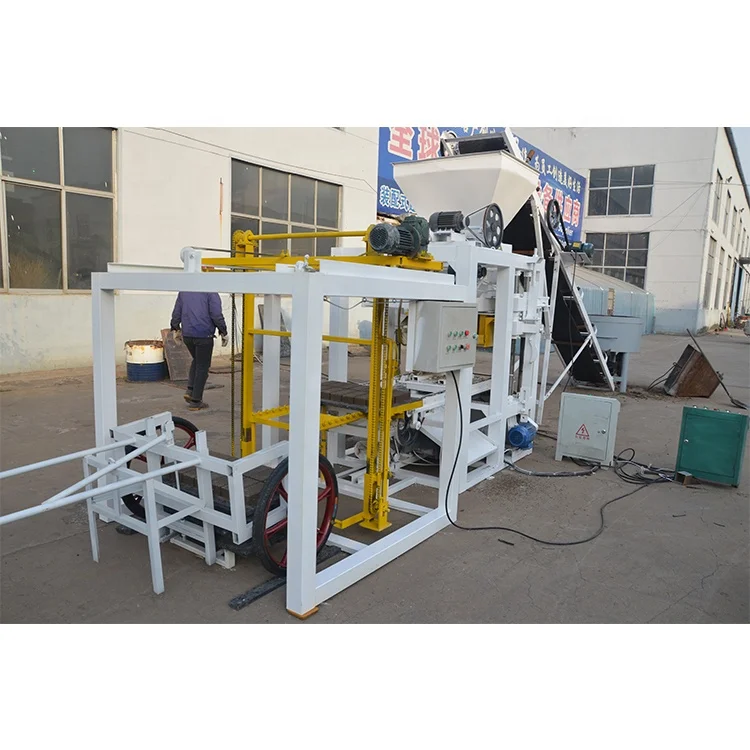
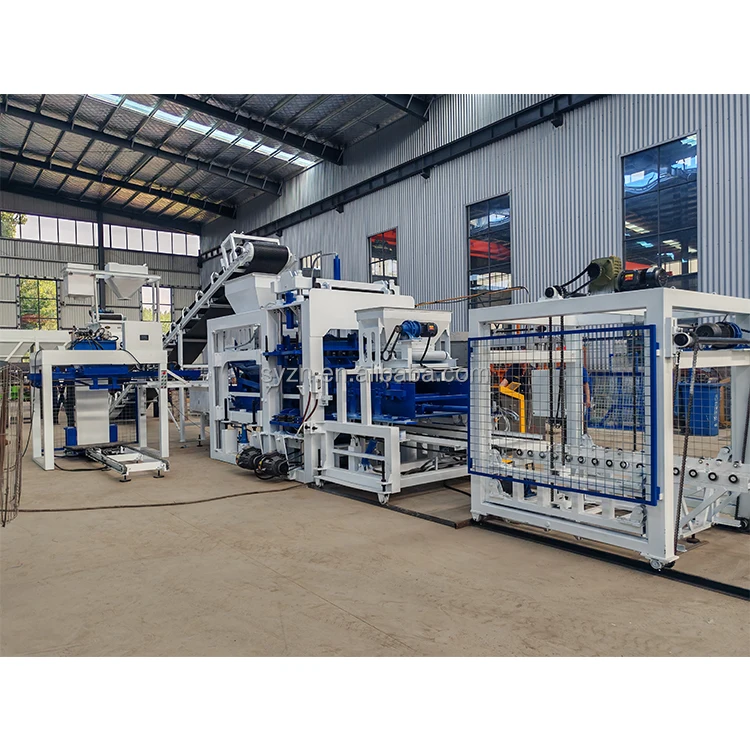
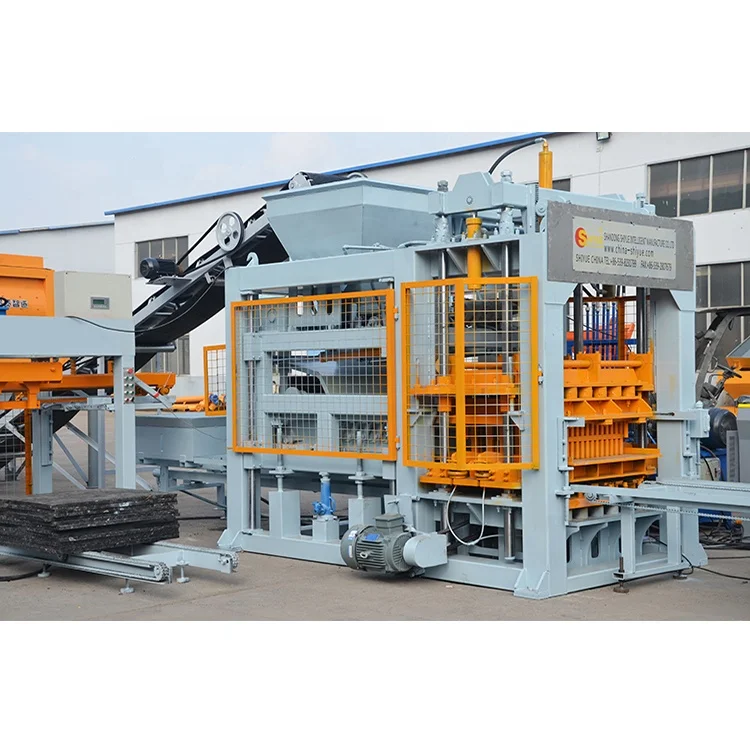
| Included Equipment | Block making machine, hydraulic station, PLC control unit, pallet feeder, block mould, material feeder, block conveyor, block sweeper, spare parts and tools |
| Automation Level | Automatic |
| Voltage & Frequency | Configurable to destination market (confirm before shipment) |
| Key Features | Hydraulic pressing combined with vibration, PLC-based cycle control, pallet feeder integrated |
Application Suitability
| Application | Material or Output |
|---|---|
| Hollow block production for residential and commercial walls | Crushed stone, sand, cement, fly ash blends |
| Solid block manufacturing for load-bearing structures | Dense aggregate and cement mixes |
| Interlocking paver production for driveways and walkways | Fine sand, cement, and pigment additives |
| Curbstone and kerb formation for road edging | Coarse aggregate with high cement content |
| On-site block production for housing and development projects | Locally sourced sand, dust, and crushed stone |
Why the "To Be Confirmed" Answer Kills Your Project Timeline
We quote dispatch lead time at the inquiry stage, not after payment clears.
When a buyer is racing to meet a construction handover date, every week of ambiguity on machine availability compounds into missed milestones. I have watched contractors in West Africa lose entire dry-season windows because a supplier needed weeks after the deposit to confirm whether the QT6-15 block machine in stock was actually the configuration they ordered. The QT6-15 block machine in stock on this page ships with its JS750 mixer, 1020×900 mm pallets, and standard mould set already accounted for — no phantom line items surface after the proforma invoice. [NEED_CITE: impact of equipment lead times on dry-season construction scheduling in Sub-Saharan Africa]
Container Loading and Machine Dismantling for Shipment
The QT6-15 block machine in stock is engineered for breakdown into container-friendly modules. At 8 T total weight and 8300×1860×3000 mm in assembled form, the main frame, hydraulic station, and pallet feeder separate for loading into standard 40-foot high-cube containers. We provide a dismantling layout drawing at the quotation stage so your freight forwarder can plan lashing and bracing without guessing at the center of gravity.
Stock Status and Dispatch Window Clarity
Every stocked configuration on this page has passed factory testing before it enters the dispatch queue. When you request a QT6-15 automatic block machine, we confirm the exact unit serial number, its factory test record, and packing photographs before crating begins. This eliminates the scenario where a buyer pays for a machine that still needs six weeks of assembly — a situation I have seen stall project mobilization more times than I can count. [NEED_CITE: common delays in industrial equipment procurement for African construction projects]
Reading the Specifications That Actually Matter on Site
The 55 KN vibration force works in tandem with the hydraulic station to compact the concrete mix during each 15–20 second molding cycle. That cycle range is not a blanket promise — it shifts depending on whether you are pressing a thin paver or a tall hollow block, and on how much moisture your local sand retains. The JS750 mixer feeds the material hopper at a rate matched to the press cycle so the machine does not idle between batches. Pallet dimensions at 1020×900 mm must align with the curing racks and forklifts already in your yard; ordering pallets that do not match your existing handling equipment creates a bottleneck no amount of press speed can fix. The PLC control system governs the full sequence from material feed to block ejection, and the display language is configurable — confirm this before the machine leaves the factory, not after it arrives at your port.
The Cost of Skipping Pre-Shipment Configuration Checks
Arriving at a job site to discover the voltage does not match your generator, or that the PLC display is in a language your operators cannot read, turns a commissioning visit into a troubleshooting marathon. I once saw a block line sit idle for days because the control language had not been specified and the default setting did not match the local crew’s working language. Equally costly is receiving pallets sized for a curing area you do not have — blocks end up stacked by hand on the ground, defeating the purpose of an automatic line. These are not engineering failures; they are specification omissions that a thorough pre-shipment checklist prevents. [NEED_CITE: electrical and control compatibility issues in exported industrial machinery]
Why Buyers Source This Machine Here
Block machinery is the single focus of this operation, which means the QT6-15 press, its moulds, pallets, and handling equipment are specified as one matched system rather than sourced from disconnected vendors. Dispatch lead time is confirmed at inquiry — not buried in fine print after the deposit clears. Standard mould sets for hollow block, solid block, paver, and curbstone formats are available from stock alongside the machine, so your first production run is not delayed waiting for a separate mould shipment. Factory test records, packing photographs, and full customs documentation are prepared before crating, smoothing port clearance on arrival. Installation support with operator training is part of the delivery scope, not an optional extra negotiated after the machine lands.
Documentation & Verification
- Factory test record run on your specified block format before dispatch
- Packing photographs of your exact QT6-15 unit prior to container loading
- Dismantling layout drawing for container loading and freight planning
- Voltage and control language confirmation sheet signed off before crating
- Operation and maintenance manual with wear parts and mould list included
- CE declaration documentation provided where applicable for your market
Installation, Commissioning & Support
- Foundation plan provided for the 8300×1860 mm footprint and 8 T operating weight
- Electrical connection schedule confirming 37.2 kW total power and local voltage match
- Dismantled shipping configuration with reassembly sequence for on-site technicians
- PLC control system commissioning with cycle parameters tuned to your mix design
- Operator training covering mould change, pallet feed, and daily maintenance routines
- Wear parts list and hydraulic component schedule for first-year replenishment planning
Planning Your Inquiry
To move from inquiry to confirmed dispatch date, share your target block format and daily volume requirement, the raw materials available at your project site, and your local voltage and frequency standard. If you already have pallets, curing racks, or forklifts on site, send their dimensions so the pallet size and handling configuration can be matched before the machine ships.
Frequently Asked Questions
Q: Which QT6-15 configurations are in stock versus built-to-order?
A: Standard configurations with the JS750 mixer, 1020×900 mm pallets, and hollow or solid block moulds are typically held in stock. Non-standard mould formats, custom pallet sizes, or specific PLC language requirements may require a short build cycle. We confirm exact stock status and unit serial number at the inquiry stage before any commitment.
Q: What is the dispatch lead time from payment to container loading?
A: For stocked QT6-15 units with standard mould sets, dispatch typically follows within a short window after payment confirmation and final specification sign-off. Built-to-order configurations with custom moulds or non-standard voltage requirements require additional production time. The exact timeline is quoted at inquiry, not after the deposit is received.
Q: How is the machine dismantled for container shipment and what container size is required?
A: The QT6-15 breaks down into main frame, hydraulic station, pallet feeder, and mixer modules for loading. At 8300×1860×3000 mm assembled and 8 T total weight, one or two 40-foot high-cube containers are typically required depending on ancillary equipment included. A dismantling layout drawing is provided with the quotation for your freight forwarder.
Q: Can I get an arrival estimate for my destination port before placing the order?
A: Yes. Once the dispatch date and container loading plan are confirmed, we provide an estimated transit time to your destination port based on current shipping schedules. This allows you to plan site preparation, foundation work, and crew mobilization around a realistic arrival window.
Q: Are standard moulds and pallets shipped with the machine or ordered separately?
A: The standard included equipment list covers the block making machine, hydraulic station, PLC control unit, pallet feeder, one block mould, material feeder, conveyor, sweeper, and spare parts. Additional mould formats and extra pallets are quoted alongside the machine so everything ships in the same container and arrives together.